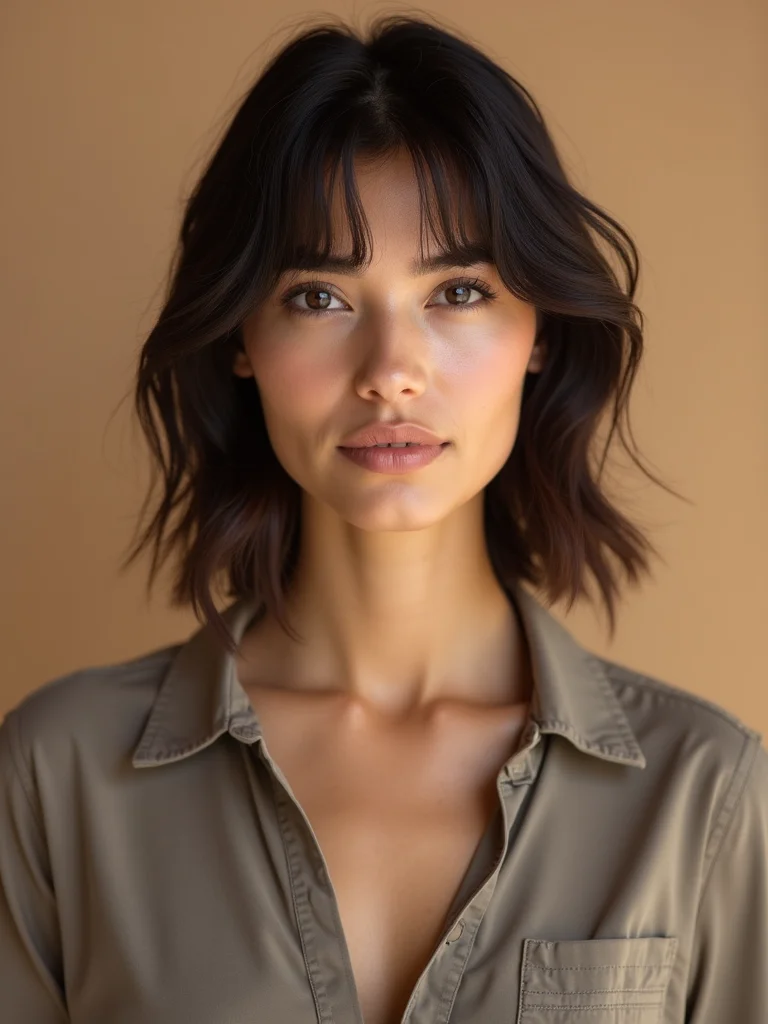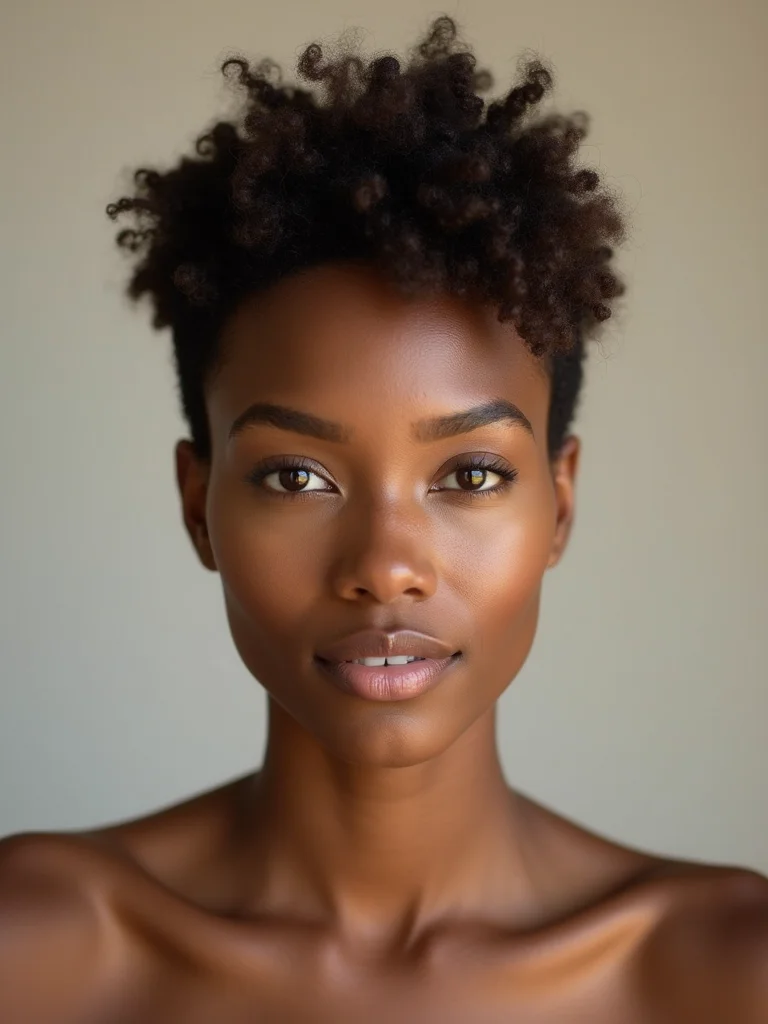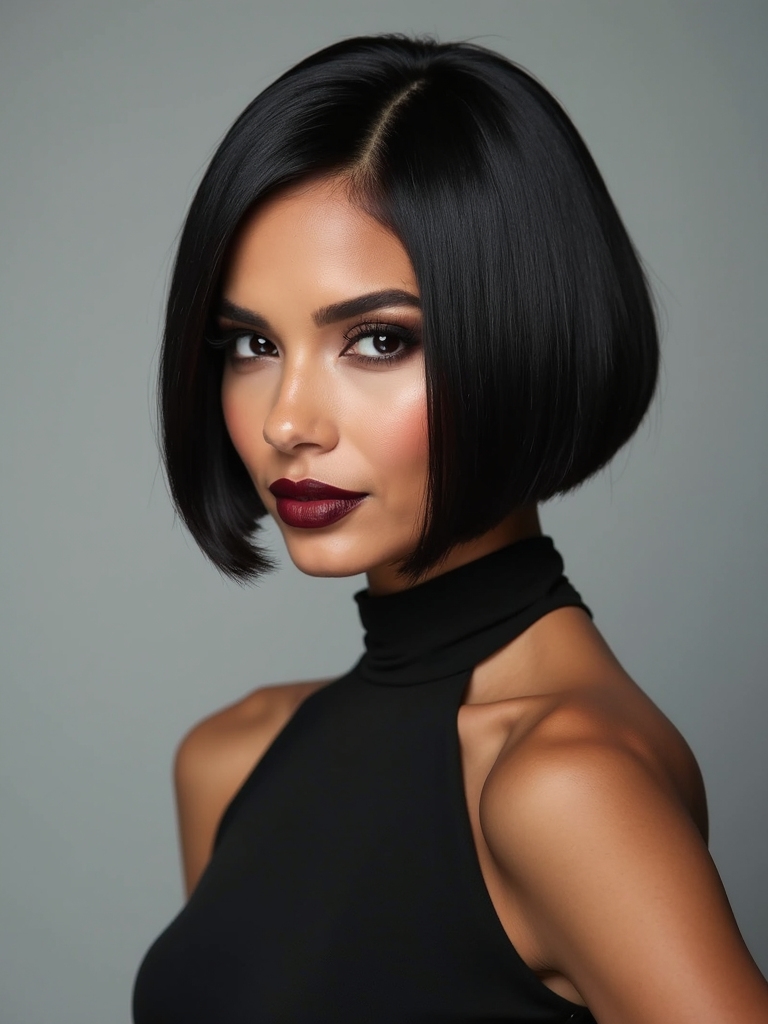
What makes a bob an A-line, exactly? It’s the angle. Cut shorter in the back and gradually longer toward the front, an A-line bob slopes forward into two longer pieces that frame the face, so the shape looks sharp from every side. The A-line bob has been a salon staple for decades because that one angled line does so much: it adds volume in back, length up front, and a graphic edge the classic blunt bob can’t touch.
These fifteen versions all keep that forward slope but take it in different directions, softer or sharper, shorter or longer, sleek or curly. For each you’ll get how the angle works on that hair and who it flatters, so you can find the A-line that fits your face and your texture.
The A-Line, Answered
What is an A-line bob? A bob cut shorter in the back and angled longer toward the front, so it slopes forward into two face-framing pieces.
Who does it suit? Almost everyone, since the forward angle draws the eye down and narrows a round or full face; the length and part fine-tune the rest.
Is it high-maintenance? Moderately. The angle wants a trim every six weeks or so to stay crisp, but the shape falls into place with little daily effort.
What Actually Makes a Bob an A-Line
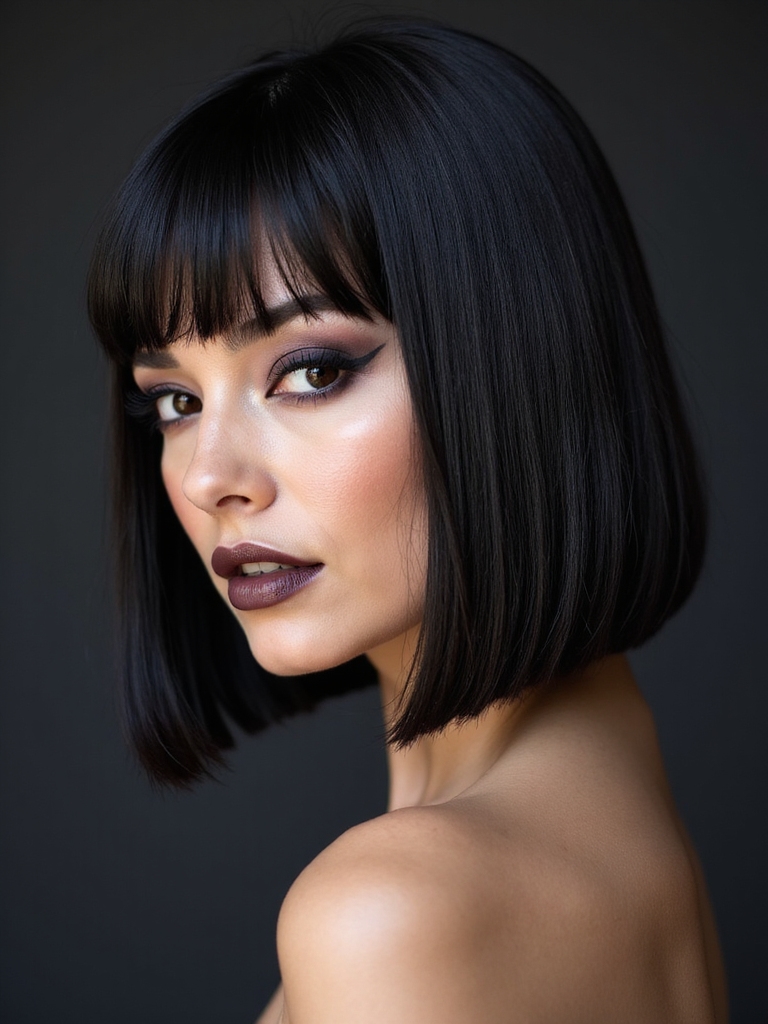
Every A-line bob comes down to one thing: the angle. The hair is cut shortest at the nape and gets gradually longer toward the front, so the two front pieces hang lower than the back. That forward slope is the whole signature, and a blunt A-line shows it off best, with a clean, unbroken line that makes the angle unmistakable.
The angle can be dramatic or barely there. A steep A-line drops sharply from a short back to long front pieces for maximum graphic effect, while a soft one slopes just a little for a subtler shape. Your stylist sets the degree, so it’s worth deciding how bold you want the slope before you sit down.
A true blunt A-line flatters strong features and suits straight to wavy hair that holds the line. It’s also a secret weapon for fine hair, since the concentrated weight at the front makes thin hair look denser. For a deeper look at the family, our angled bob guide covers every degree of slope.

The Softly Textured A-Line
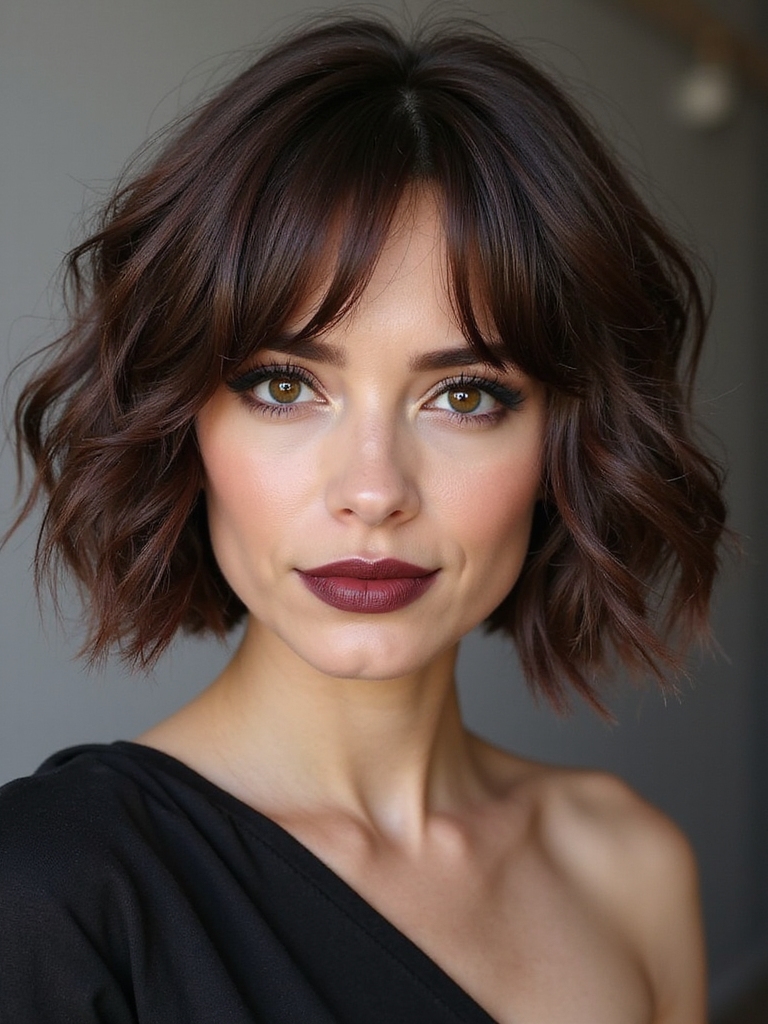
If a razor-sharp line feels too severe, a softly textured A-line keeps the forward angle but breaks up the ends for gentle movement. A little point-cutting or light texturizing at the tips loosens the shape, so it slopes forward without looking rigid.
It’s the more wearable, everyday version, and it suits people who want structure with a bit of softness. Wavy hair especially takes to it, since the texture plays up the wave while the angle keeps everything intentional.
Two things people get wrong about the A-line:
❌ Myth: Myth: an A-line always has to be short.
✅ Reality: Not true. The angle works at any length, from a chin-grazing crop to a collarbone slope; A-line is purely a shape description.
❌ Myth: Myth: the angle is high-maintenance to style.
✅ Reality: The cut does the sloping for you. Once it’s dry, the angle falls into place on its own, so day-to-day styling is minimal.
The Glass-Hair A-Line
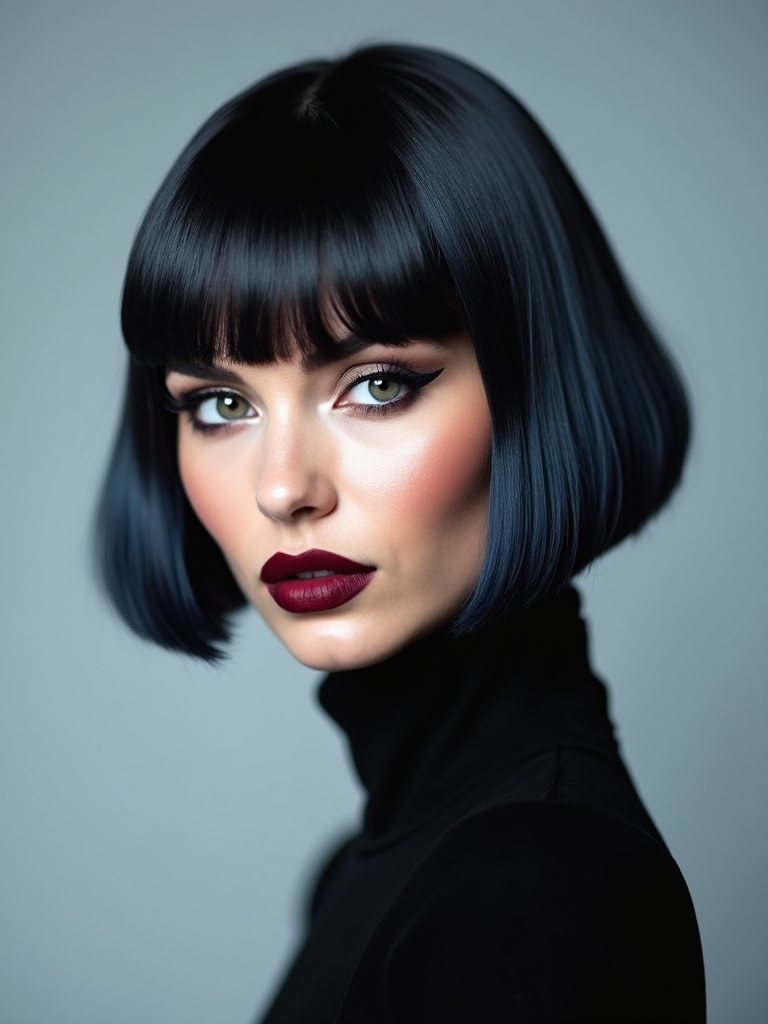
Finish an A-line poker-smooth and high-shine, and the angle turns architectural. On glass-smooth hair, the forward slope looks like a drawn line, precise and expensive, catching the light along its edge.
It’s the most polished version, and the shine only works if the cut underneath is exact, since a smooth finish exposes any wobble in the angle. A smoothing cream and a flat-iron pass keep the surface reflective and the slope crisp.
A Chin-Length A-Line for Sharp Framing
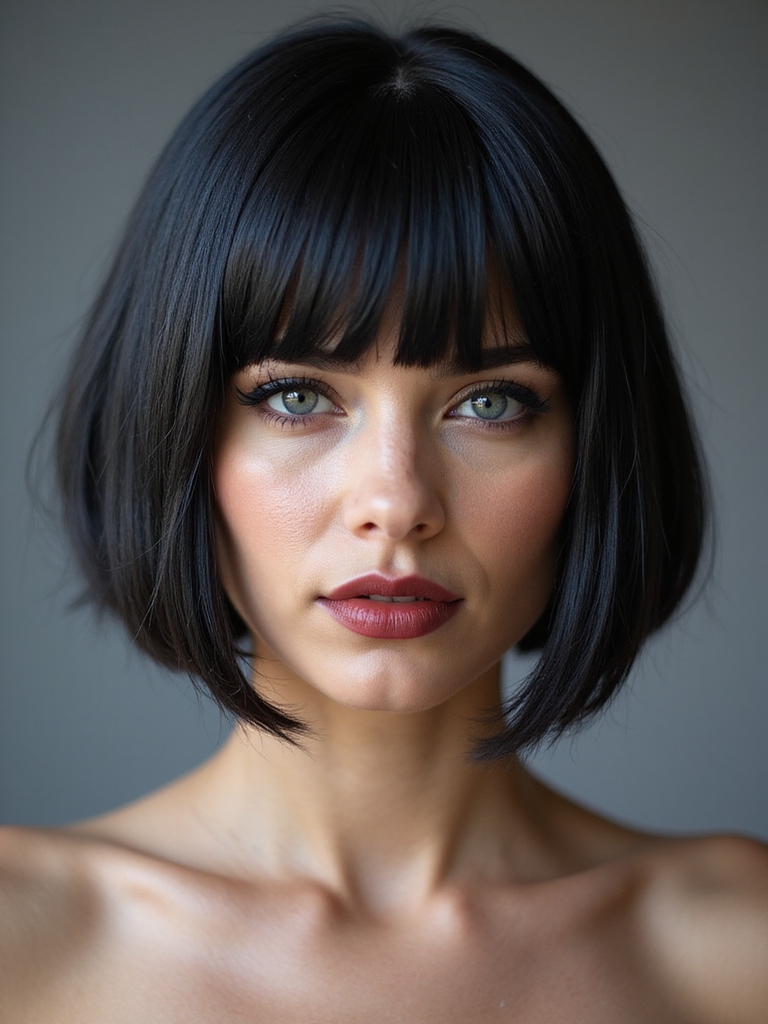
Take the angle up to chin length and you get the sharpest, most face-framing version. The short back sits high at the nape while the front pieces hit right at the chin, so the slope frames your jaw and draws the eye forward. To wear it:
- Ask for the back cut short at the nape, the front angled to the chin.
- Best on those wanting a bold, graphic, high-impact shape.
- Sharpens the jawline and highlights the cheekbones.
A Collarbone A-Line When You Want Length
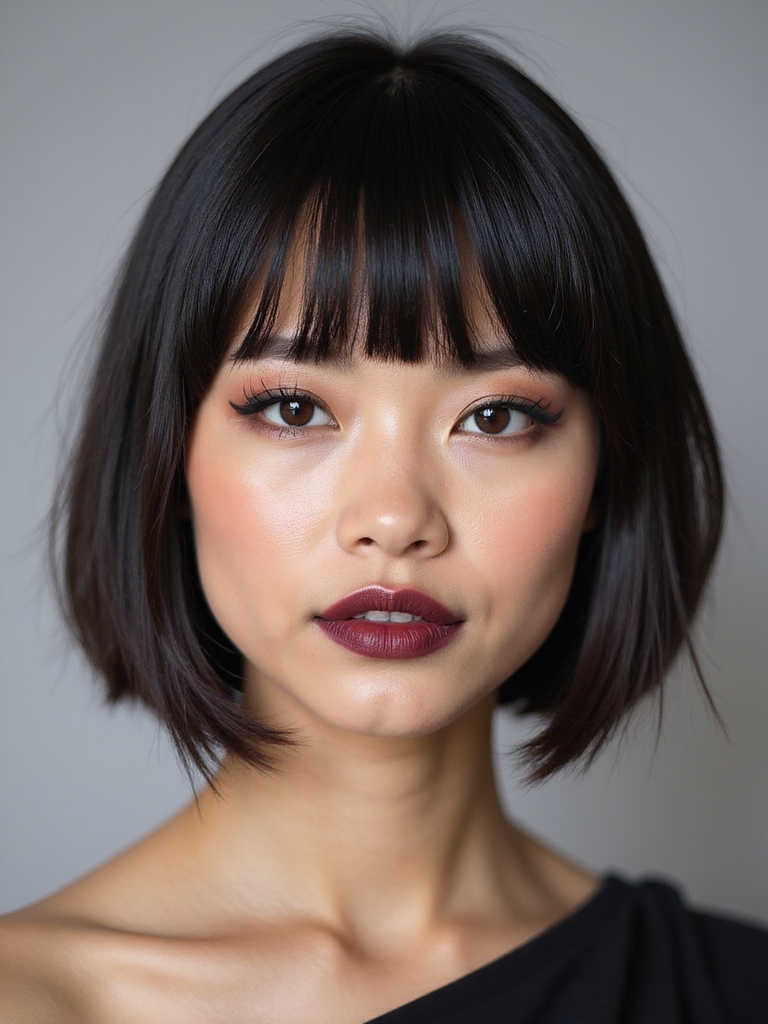
Not ready to go short? The angle works long, too. A collarbone A-line keeps real length, cut a little shorter in the back so the front pieces slope down toward the collarbone. It’s the most forgiving, versatile take, and long enough to pull back. To get it:
- Keep the back around the nape-to-shoulder and angle the front longer.
- A gentle slope reads soft; a steeper one keeps the A-line graphic.
- Grows out easily, since there’s length to work with as it goes.
A Layered A-Line for Volume
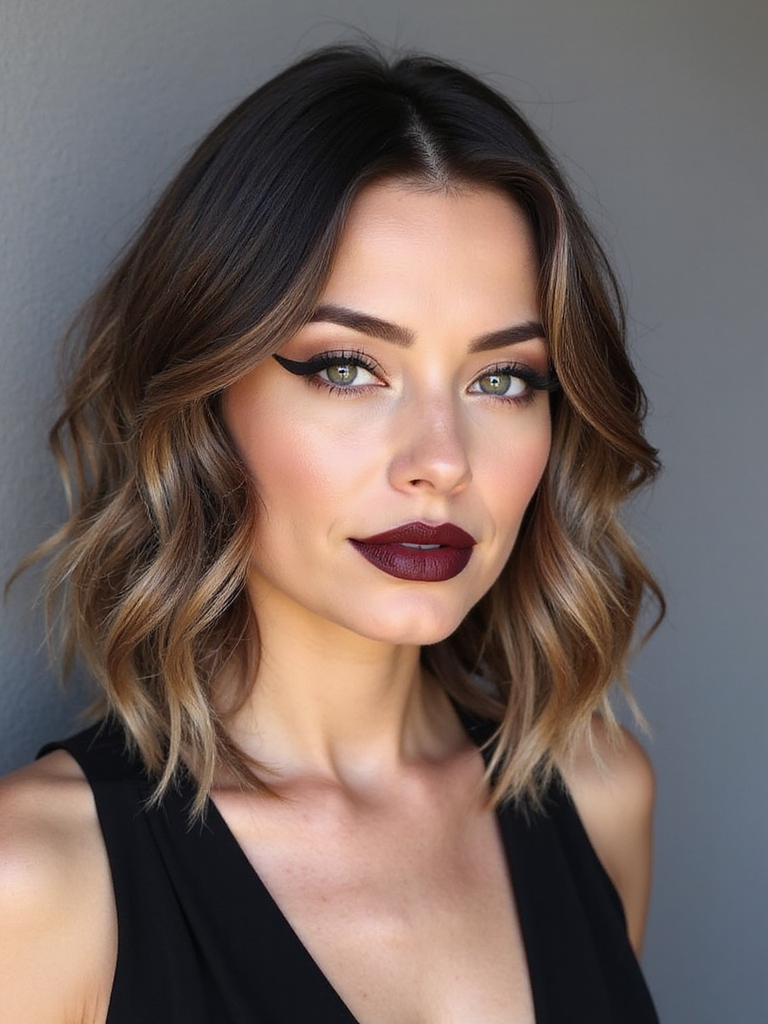
Add layers to an A-line and you trade some of the blunt sharpness for body and movement. It’s a fair swap. Layers cut into the back and through the lengths build volume where the shape is shortest, so the back looks fuller and rounder while the front keeps its angled length.
It’s the version for anyone whose hair falls flat, and it pairs naturally with a stacked bob, which graduates the back into short tiers for even more lift. Just keep the front pieces long and clean so the A-line angle still reads.
A Wavy A-Line With Soft Movement
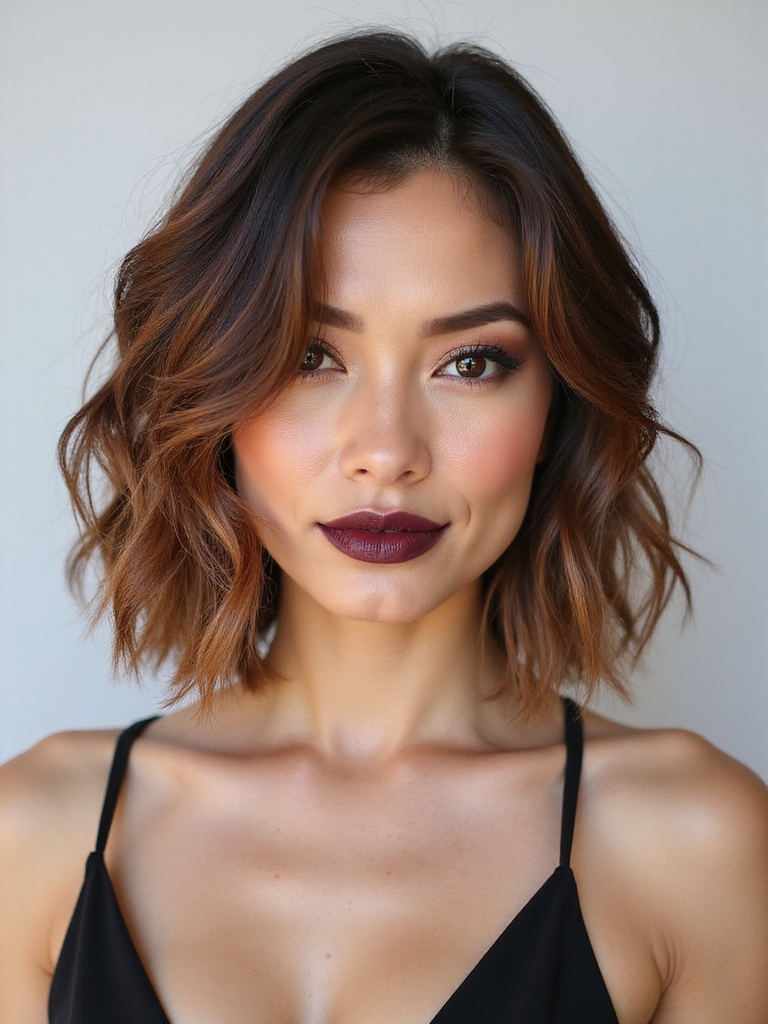
A natural wave and an A-line are a happy match. The angle gives the wave a clear shape to fall into, so it slopes forward with easy, undone movement and skips the puffiness entirely. It’s low-effort and flattering. To style it:
- Enhance the wave with a curl cream or salt spray on damp hair.
- Air-dry or diffuse so the wave keeps its bend and the angle holds.
- A steeper angle keeps a wavy A-line from looking shapeless.
“With a wavy A-line, let the front pieces do the talking. Even if the back goes a little wild, those longer angled pieces frame your face and keep the whole thing looking deliberate. Work with the wave, don’t fight it flat.”
A Curly A-Line, Cut Dry
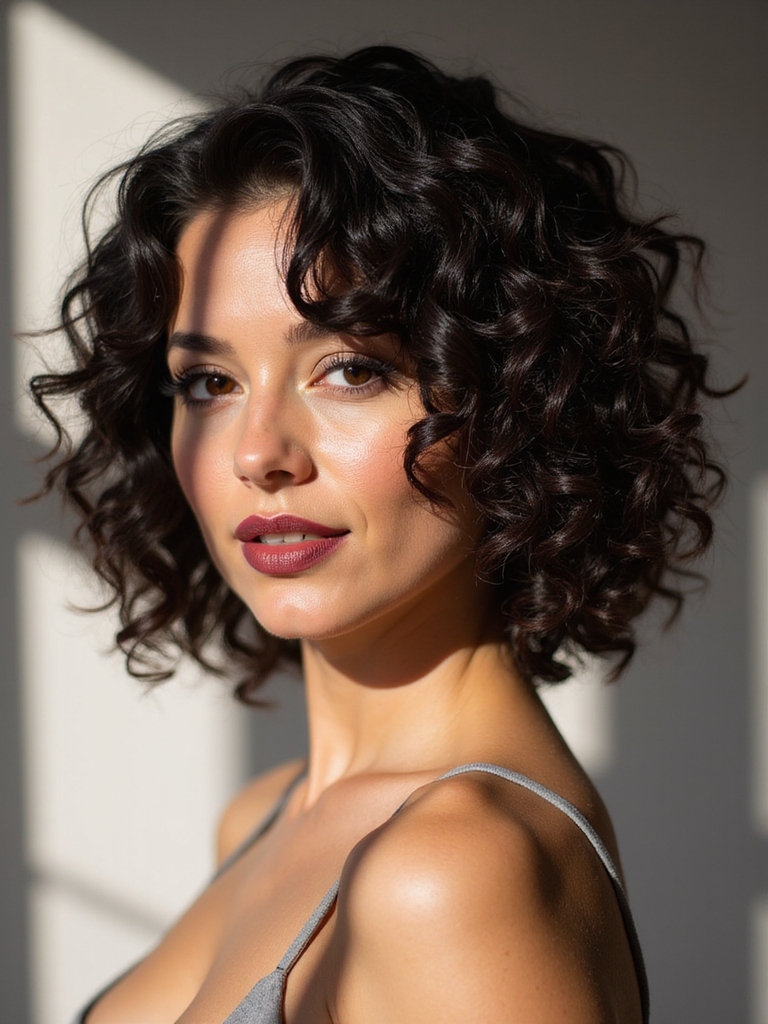
Curls and an A-line can absolutely work, but the cut has to happen on dry, natural curls so the angle lands right once they spring up. Cut wet, the slope disappears the moment the coils draw up, leaving a shape nothing like what you asked for.
Done right, a curly bob with an A-line angle is striking, the coils sloping forward into a rounded, structured shape. Build in extra length for shrinkage, and find someone who shapes curls dry as a matter of course.
- Cut on dry, natural curls so the angle survives shrinkage.
- Bank in extra length, since curls draw up shorter than they look.
- Keep the ends hydrated so the sloped shape stays defined.
Making Fine Hair Look Fuller
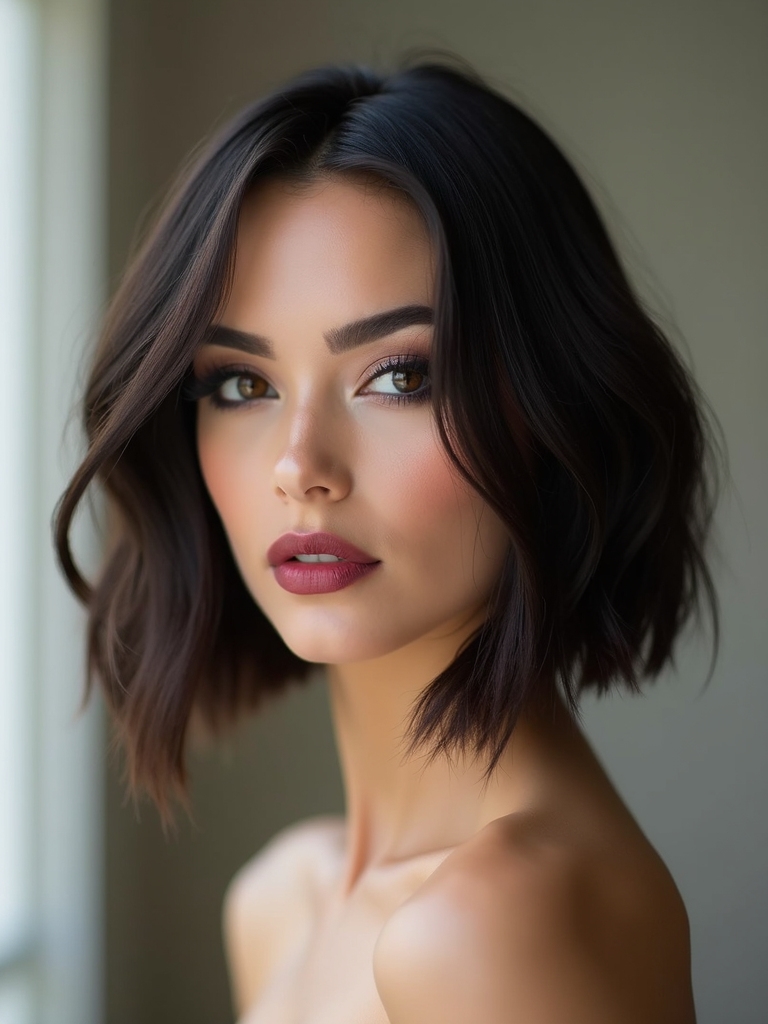
The A-line is quietly one of the best cuts for fine hair, and the angle is why. By keeping the front pieces longer and heavier while the back stays short and stacked, it concentrates weight where you notice it most, so thin hair looks denser and fuller than it is.
The stacked back adds the illusion of volume, while a blunt front edge keeps the ends looking thick and substantial. Skip heavy layering, which thins fine hair out, and let the angle and the weight do the work.
- The stacked back builds the look of volume fine hair lacks.
- A blunt front edge keeps the ends looking thick and substantial.
- Go easy on layers, which can thin fine hair rather than help it.
Taming Thick Hair Without Bulk
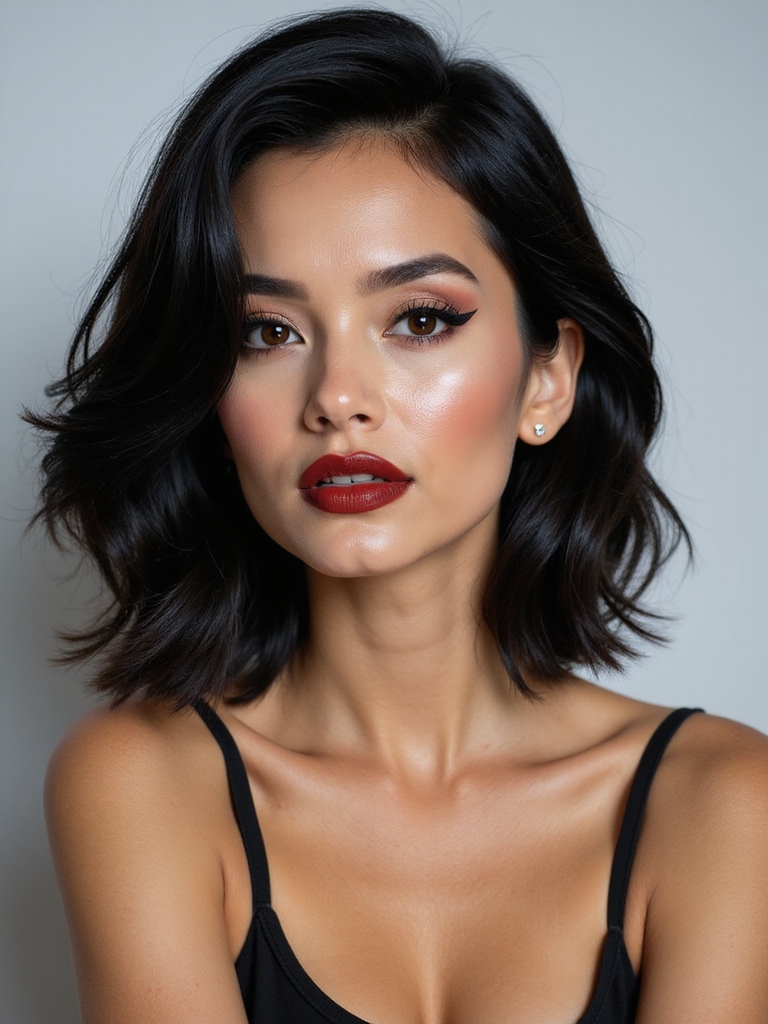
Thick hair can wear an A-line beautifully, but only if the weight is managed, or the short back puffs out into a triangle. The fix is internal debulking, thinning the weight from underneath so gravity does the work and the angle lies sleek. To get it right:
- Ask for internal thinning, not surface layers, to remove bulk.
- Keep the front edge blunt so the angle stays sharp and clean.
- A slightly longer back stops thick hair puffing at the nape.
A Side-Part A-Line for Extra Asymmetry
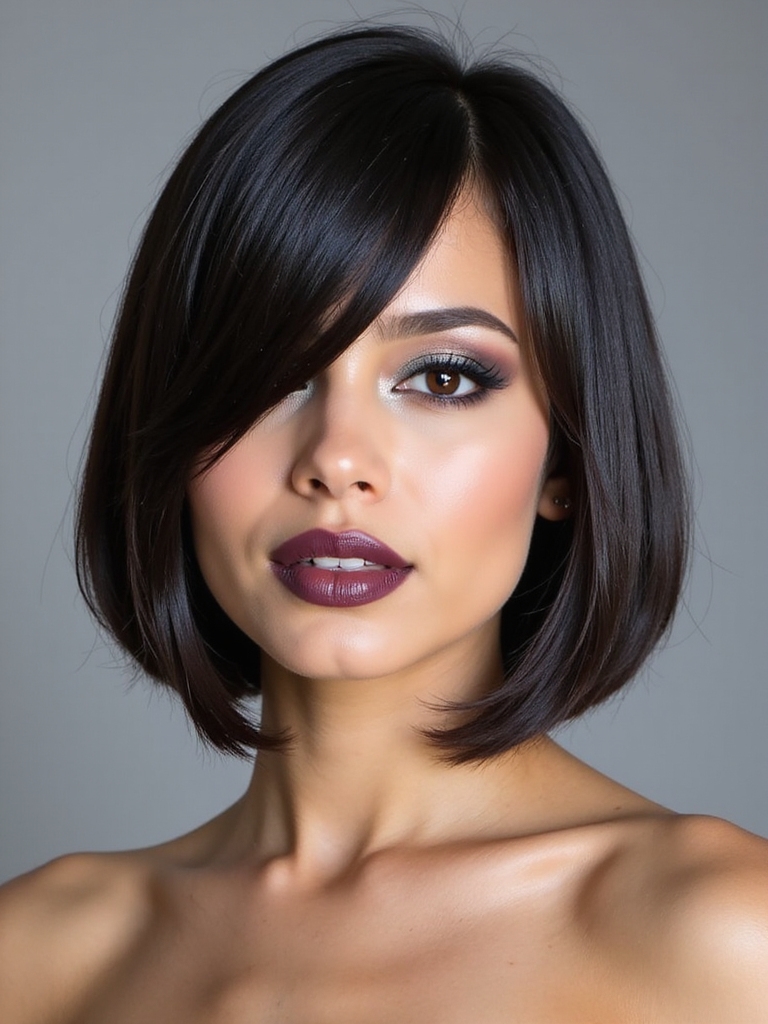
Part an A-line off to the side and you double down on its angled, asymmetrical mood. The deep part adds volume on one side and sweeps a curtain of hair across the forehead, so the whole cut feels dynamic and a little off-kilter, in the best way.
It works especially well on a steeper A-line, where the side part echoes the diagonal of the cut. The result is a shape with movement built into it from two directions at once.
A side part also softens a very graphic A-line, making it feel less severe and more wearable. It suits round and square faces particularly, since the asymmetry breaks up a strong, symmetrical shape.
Softening the Angle With Curtain Bangs
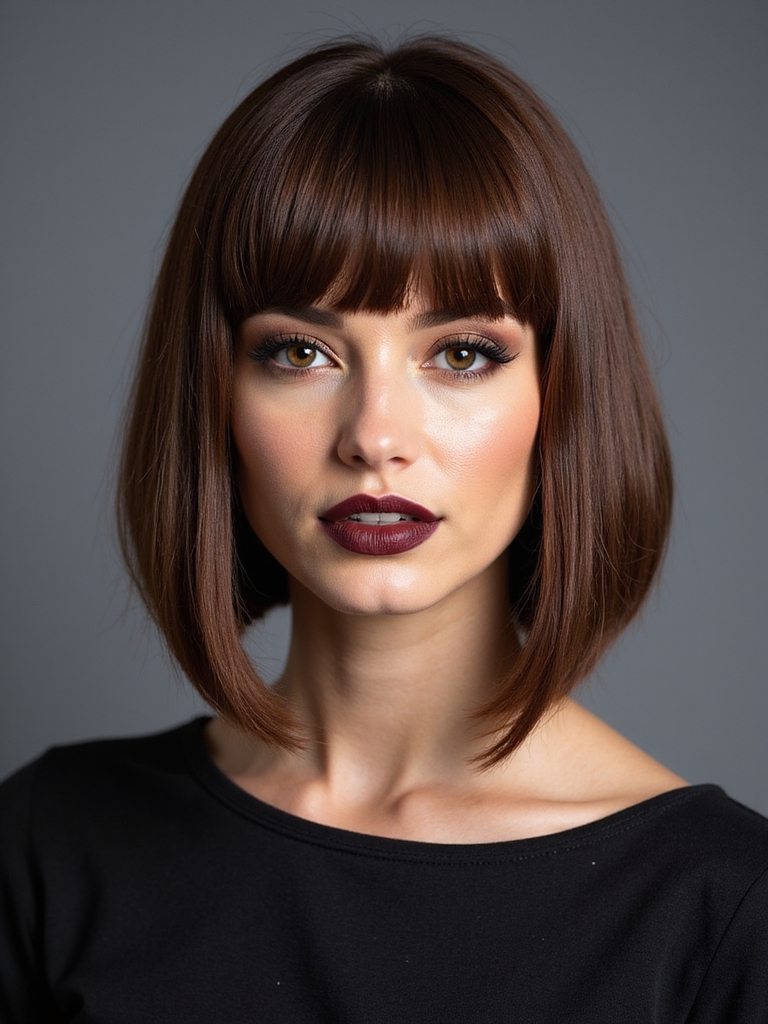
An A-line is all clean lines, so a soft fringe is a lovely way to warm it up. Curtain bangs, parted down the center and swept back to the cheekbones, add a face-framing softness that balances the graphic angle underneath.
Because the bangs grow straight out of the longer front pieces, they blend and lengthen into more framing over time, no separate stage to manage. It’s a low-commitment way to soften an A-line without losing its shape.
- Curtain bangs frame the face and soften a sharp angle.
- They blend into the front pieces for an easy grow-out.
- Best paired with a chin-length or collarbone A-line.
📋Deciding on bangs for an A-line
- ✓How bold do you want the overall shape to be?
- ✓How much fringe upkeep can you realistically manage?
- ✓Do you want to soften the angle or double down on it?
Micro Bangs for a Bolder A-Line
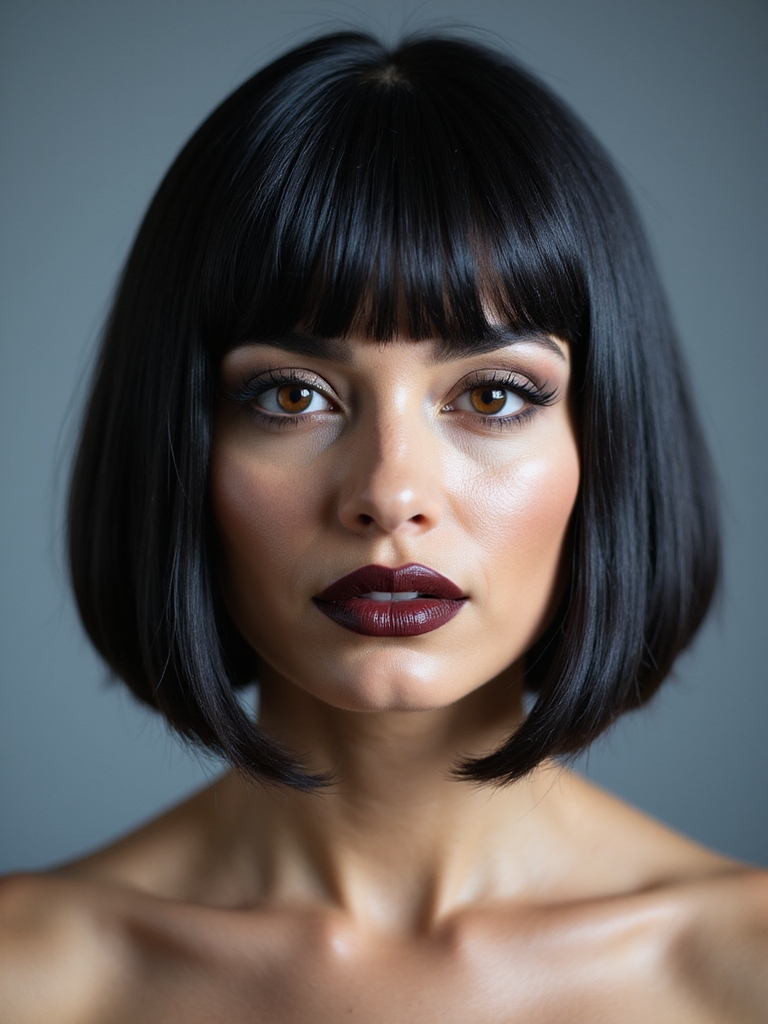
At the opposite end, a micro fringe pushes an A-line into full statement territory. Short, blunt bangs cut high on the forehead echo the cut’s graphic edge, so the whole look reads bold, artistic, and unmistakably intentional. It pairs beautifully with a sharp bob with bangs shape.
It’s the version for people who want their haircut to be the loudest thing about them, and it works best on a sharp, blunt A-line. The trade-off is upkeep, since a micro fringe needs frequent trims to keep its crisp line.
- Blunt micro bangs echo the A-line’s graphic, angled edge.
- Pairs best with a sharp, precise A-line for full graphic impact.
- Needs regular fringe trims to hold the short, blunt shape.
Keeping the A-Line Angle Sharp Day to Day
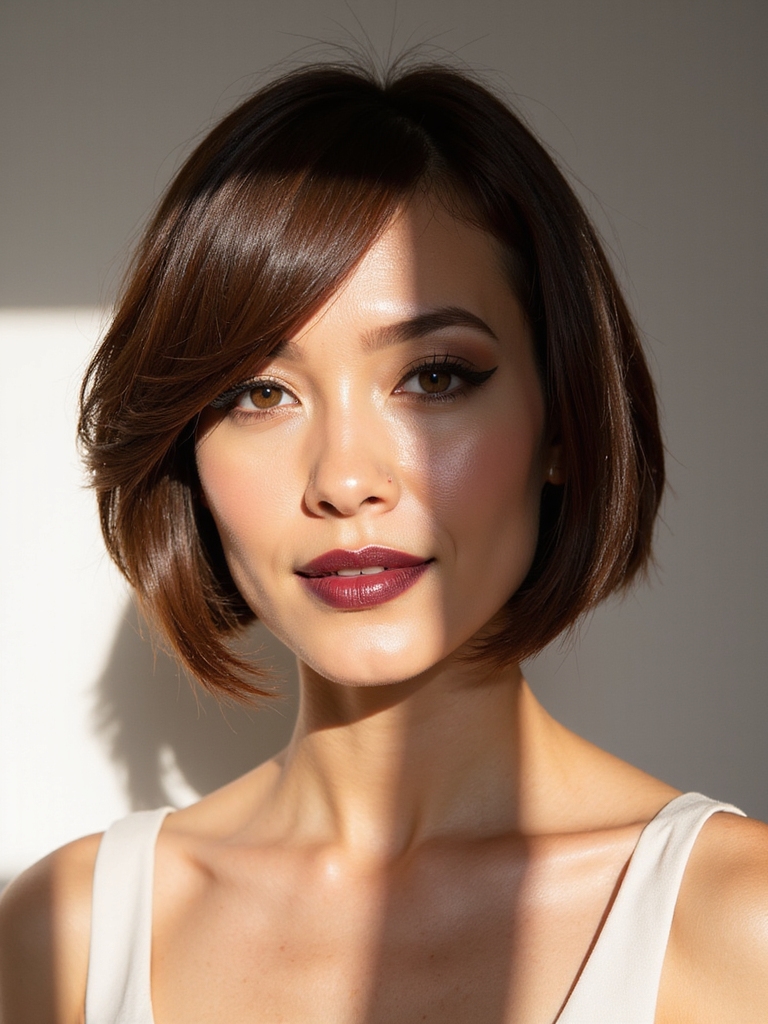
The whole appeal of an A-line is the angle, and a few small habits keep it looking crisp between salon visits. None of it takes long, part of the reason the cut is so livable. Here’s the routine:
- Smooth the front pieces and blunt edge, where the eye lands first.
- Rough-dry or lift the back for the volume the angle depends on.
- Book a shape-up roughly every six weeks, since the angle blurs as it grows.
A few A-line terms worth knowing at the consultation:
📖Graduation
The gradual change in length from short back to long front that creates the A-line angle.
📖Stacking
Short, layered tiers cut into the back to build the height and roundness an A-line’s short section needs.
Color That Plays Up the Angle
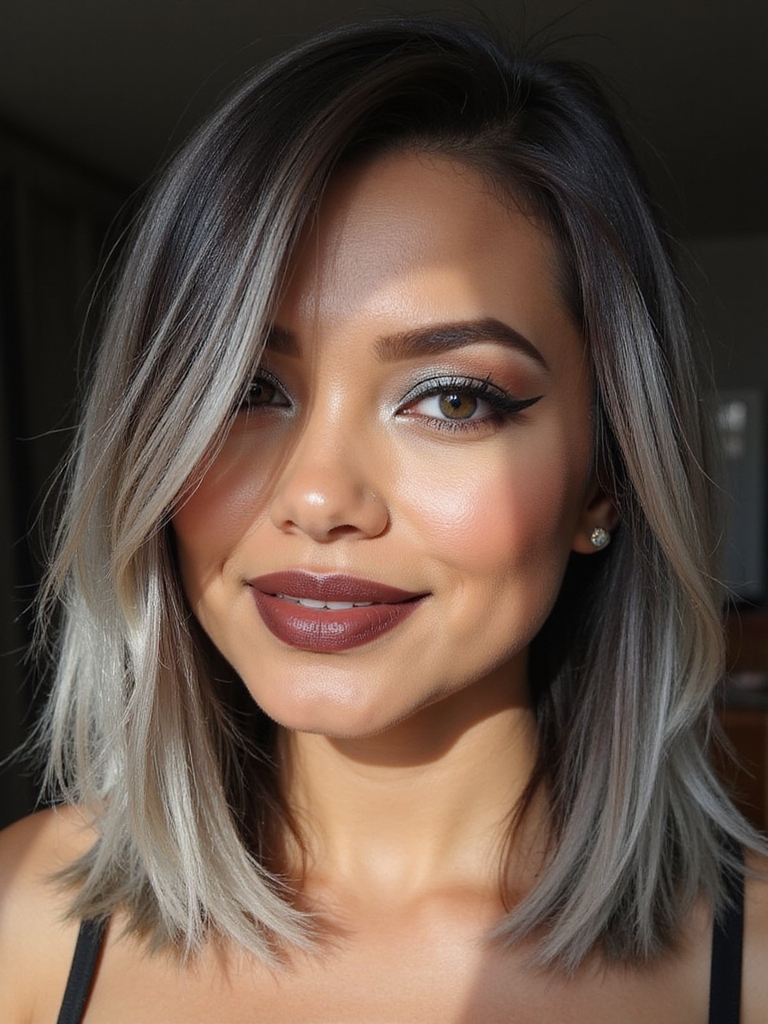
The right color can make an A-line’s angle pop. Because the shape has a strong directional line, color placed to follow it, brighter toward the front pieces, deeper at the back, exaggerates the forward slope and adds dimension.
A Note on Upkeep
A soft balayage that lightens toward the longer front is the most flattering way to do it, drawing the eye down the angle. Chunky, face-framing highlights are the bolder route, lighting up the front pieces where the A-line points.
Any color that concentrates around the face needs regular glossing to stay bright, since the front pieces catch the most light and fade fastest. Budget around $120 to $180 for a balayage with a gloss, and a quick toner between appointments keeps the angle’s color crisp.
What to Expect
Booking an A-line comes down to two decisions: how steep you want the angle, and what length you want the front pieces to hit. Bring a photo that shows both the back and the front, since the angle only makes sense from the side, and use the words graduation and stacking so your stylist knows you mean a true A-line specifically.
After that, it’s an easy cut to live with. The angle falls into place on its own, the daily styling is quick, and the main upkeep is a six-weekly trim to hold the slope sharp. Match the steepness to your nerve and your face, and let the A-line do the flattering.
A-Line Bob Questions People Ask
?How is an A-line bob different from a regular bob?
The angle. A regular bob is cut to one length all the way around, while an A-line is shorter in the back and longer in the front, sloping forward into two face-framing pieces. That forward angle is what gives it volume in back and a sharper, more structured look.
?Does an A-line bob suit round faces?
Especially well. The forward slope and the longer front pieces draw the eye downward and narrow the face, which balances a round or fuller shape. A slightly steeper angle and a side part flatter round faces even more.
?Can I get an A-line if I have curly hair?
Yes, as long as it’s cut dry so the angle survives shrinkage. On dry curls, a stylist can place the length where the coils actually fall and build in extra for spring-up. Cut wet, the slope tends to disappear once the curls draw up.
?How do I keep the A-line angle from growing out awkwardly?
Regular shape-ups are the answer, roughly every six weeks, since the back grows faster than the front and blurs the angle. Between trims, focus your styling on the front pieces and the blunt edge, which is where the A-line reads sharpest.
One Clean Angle, Endless Versions
For all its variations, the A-line bob is really one idea worn a hundred ways: a forward-sloping angle that adds volume in back, length up front, and structure everywhere. Whether you take it sharp and glass-smooth or soft and wavy, that single line is what makes the cut feel deliberate and modern.
If you’ve been after a bob with more shape than a blunt one, this is the place to start. Decide how bold you want the slope, bring a photo from the side, and let the angle do the flattering. It’s about as versatile a cut as you can ask for.
More Ideas Here