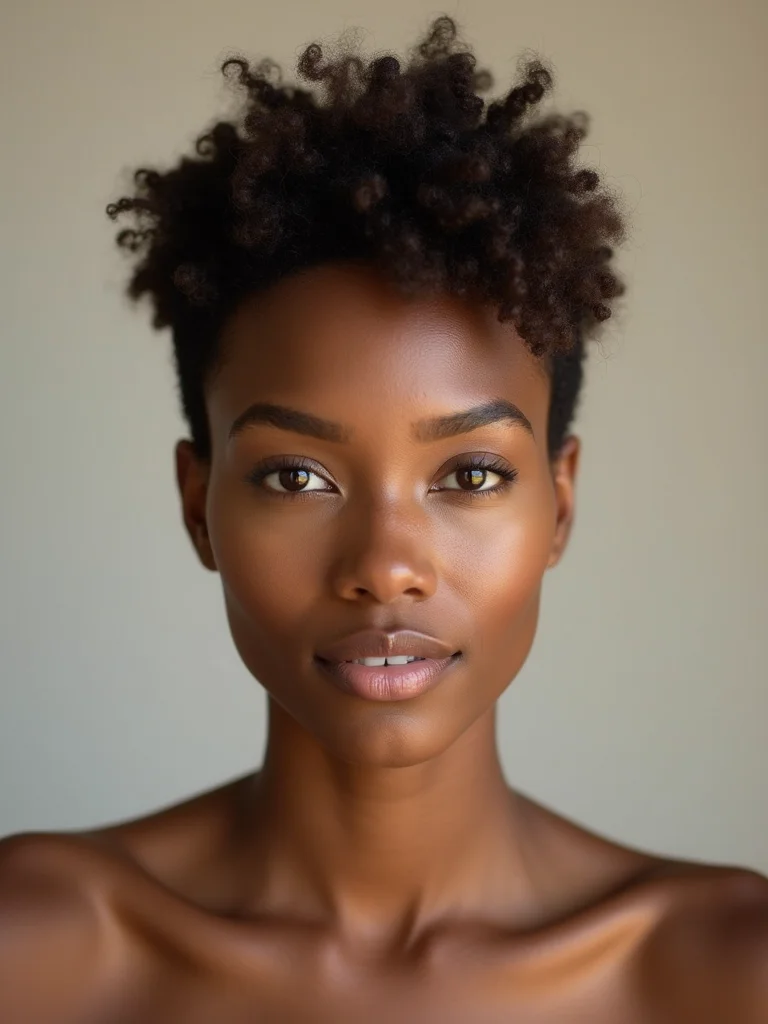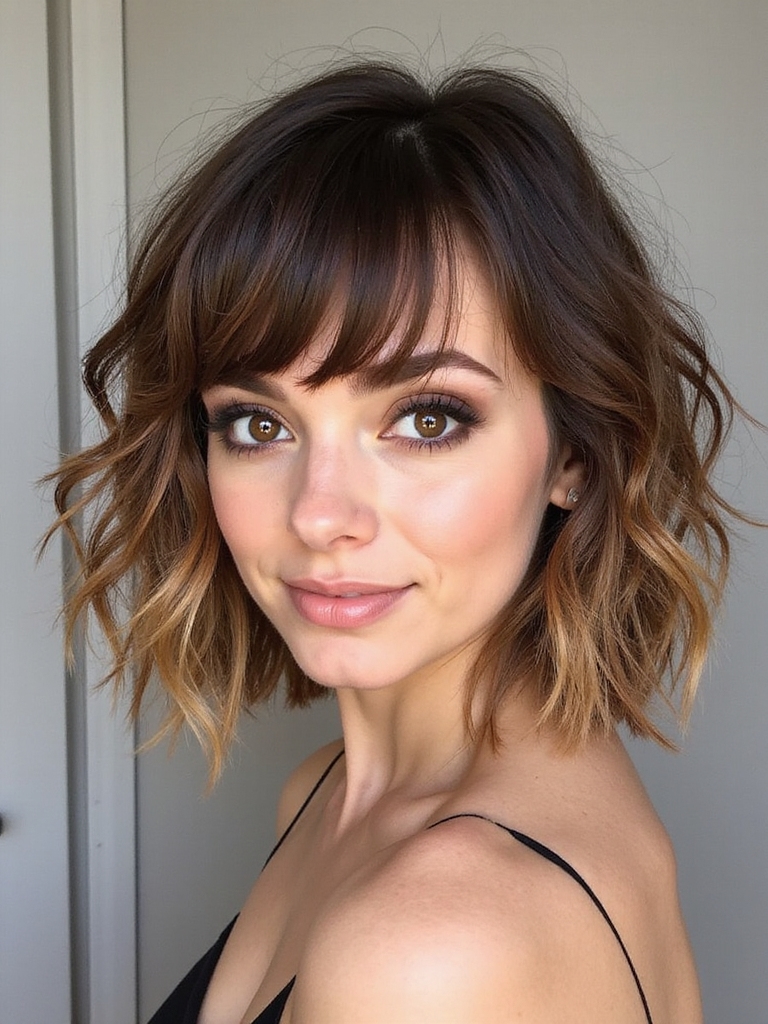
Steps. That is what your fingers find running up the back of a classic shag: distinct shelves where one layer ends and the next takes over. On a soft shag the same hand travels without catching, because every one of those transitions has been stretched out until it vanishes.
That is the entire difference, and it works as a spectrum. A soft shag haircut can sit two degrees away from a blunt cut or one degree away from a wolf cut, and where yours lands depends on a single instruction at the consultation. Sixteen versions follow, arranged along that dial.
What Soft Actually Changes
- Soft describes the transitions. A soft shag can carry as many layers as a classic one, and the difference is that each layer travels three or four inches before rejoining the length where a classic shag gives it one.
- The crown decides how shaggy it looks. Crown layers short enough to stand up read as a proper shag; keep them longer and the same cut reads as a layered lob with texture.
- It costs more to cut and less to maintain. A shag prices roughly half again above a standard trim, so where a trim runs $55 a shag lands nearer $85, and then it holds its shape for about ten weeks.
A Shoulder-Grazing Soft Shag
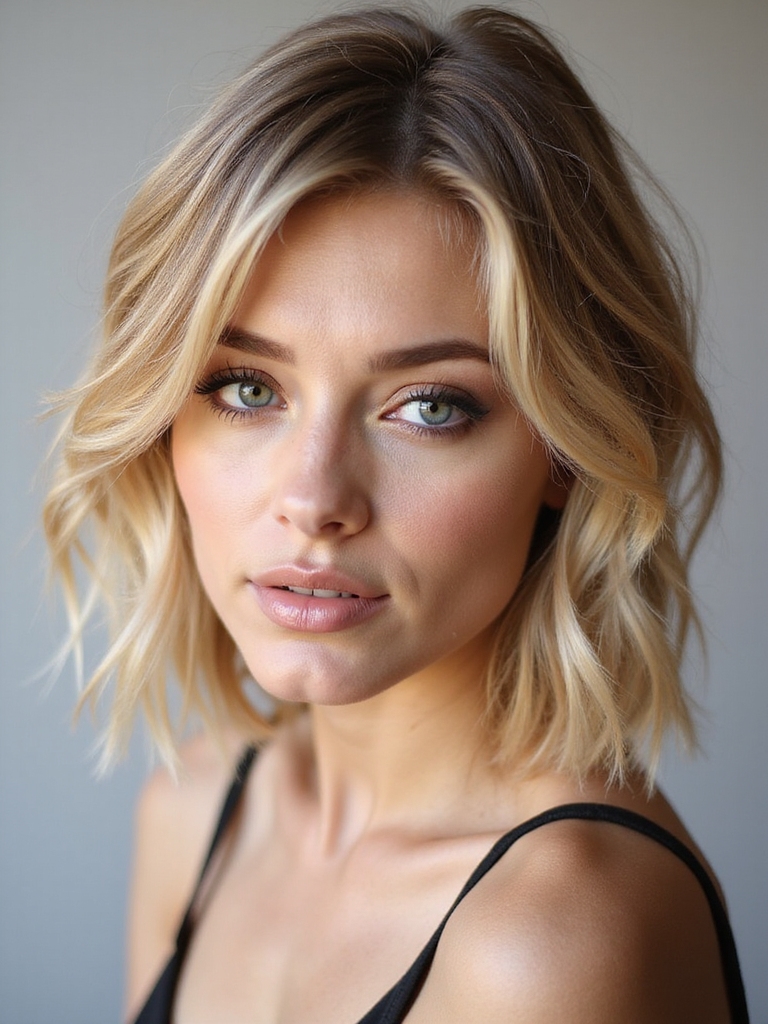
The middle of the dial, and the version most people mean when they say soft shag. Crown layers are present but kept long enough to lie down, the framing pieces start at the cheekbone, and the perimeter grazes the shoulder without sitting on it. By week six it has softened rather than grown out, which is why it holds so well.
- Ask for the perimeter to clear the shoulder by an inch, since hair resting on it flips outward
- Crown layers should reach the ear when pulled straight down, no shorter
- Rough-dry with fingers and stop at ninety percent; the last ten percent is where texture dies

A Chin-Length Soft Shag Bob
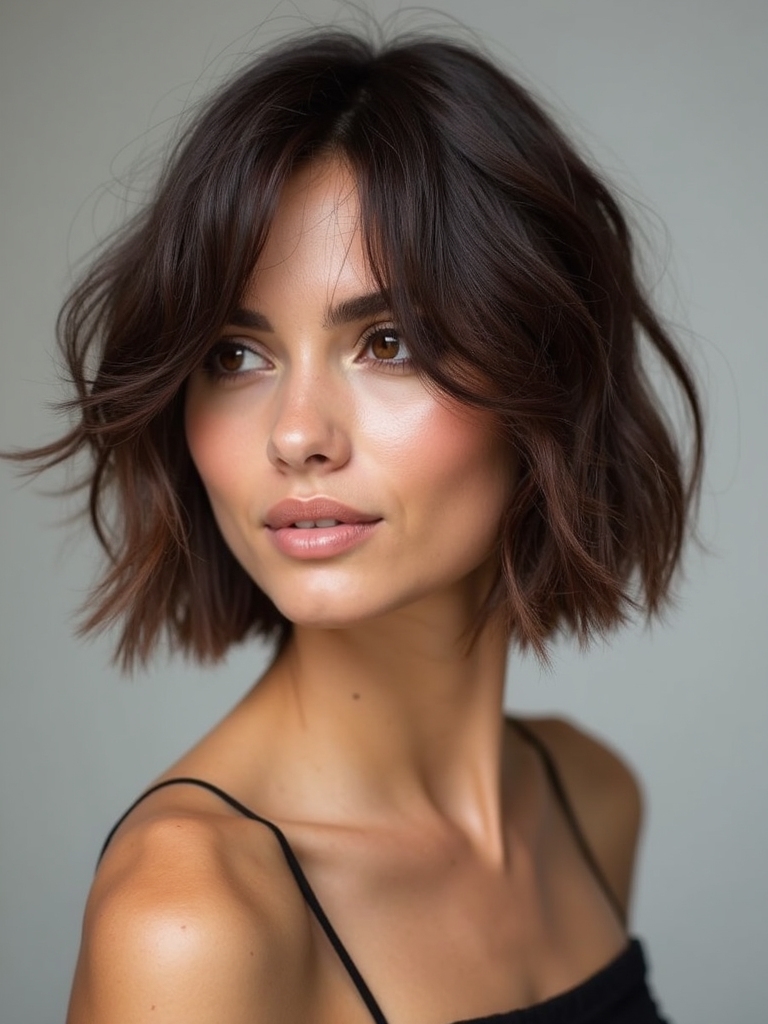
Bringing a shag up to the chin compresses everything, so the layers have less room to travel and the risk of visible steps climbs sharply. This is the version that most needs a stylist who cuts shags regularly.
Why Short Shags Are Harder
Wispy ends are what keep it soft at this length. Tapered tips break up what would otherwise be a series of short blunt shelves stacked above one another. I have had to correct more chin-length shags than any other version, and the cause is nearly always ends left blunt on a cut that needed them softened.
It suits people with strong jawlines and anyone whose hair is fine enough that a longer shag would go limp. Our shaggy bob guide covers the bolder end of the same length.
📋What to bring, and what to refuse
- ✓Bring a photo of hair moving, since a static portrait shows length and nothing about layering
- ✓Bring your usual part already in place, and say whether you air-dry or blow-dry
- ✓Refuse anything cut wet on curly or coily hair, where shrinkage moves every line
- ✓Refuse the word choppy, which is the fastest route to the version of this cut you did not want
A Long Soft Shag With Curtain Bangs
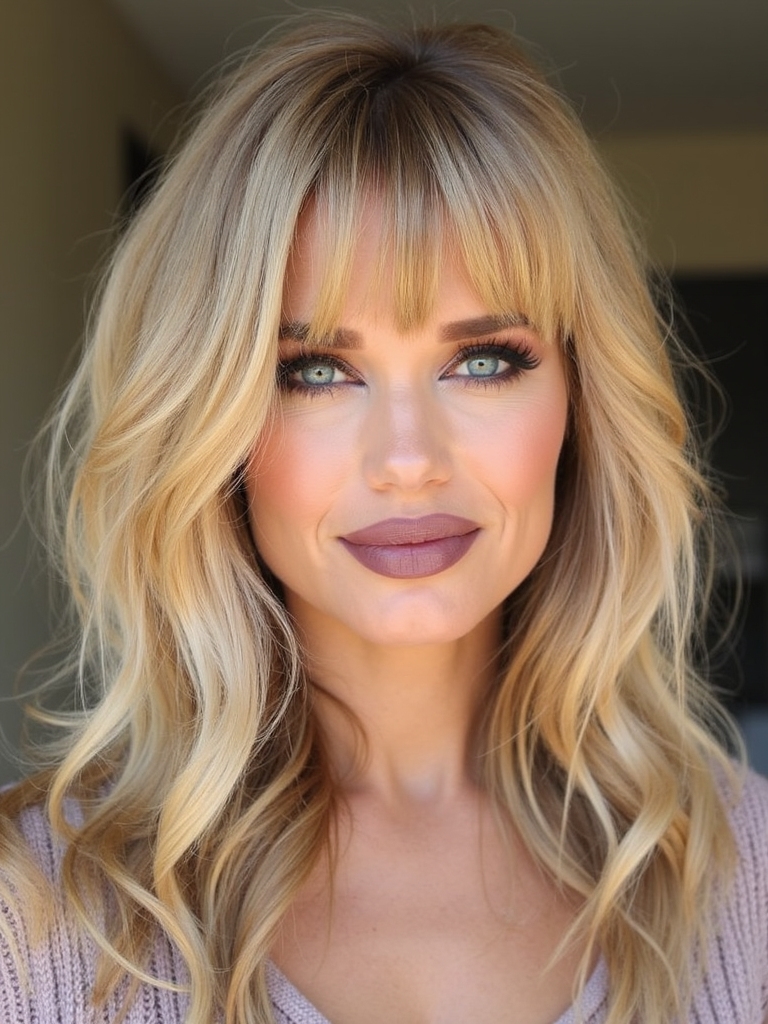
Length gives every transition room to disappear, which makes this the most forgiving position on the dial. Curtain bangs then supply the shape that long hair otherwise lacks, splitting at the center and lengthening into the framing layers behind. Our long shag hairstyles collection covers more at this length.
- Keep the shortest crown layer at chin level or below on long hair, or the top goes fluffy
- Have the fringe blended into the first framing layer with no visible break between them
- A wide-barrel iron on two or three mid sections is all the styling this needs
A Curly Soft Shag
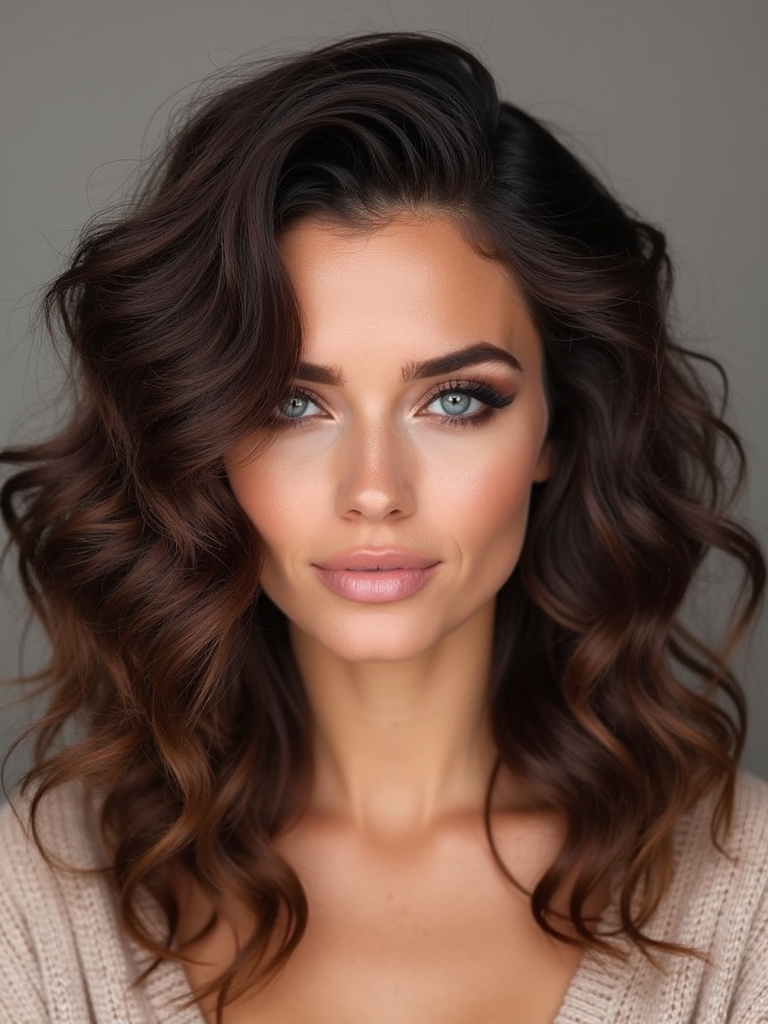
Curls and shags were made for each other. A curl already finishes in a soft point, and the pattern hides transitions that straight hair would expose, which makes this closer to a default than a style choice.
Dry Cutting Is Not Optional Here
The cutting has to happen dry, curl by curl, with the hair in the shape it will actually take. Anything cut wet lands an inch or two higher once it springs, and on a layered shape those errors compound.
Where this struggles is with over-layering. A curl removed from the interior takes its neighbors’ support with it, and a shag cut too aggressively on curls goes from full to stringy. Our curly shag haircut guide covers the shaping.
A Soft Shag for Fine Hair

Fine hair and shags have a difficult relationship, because layering removes density from a head with none to spare, and yet the crown lift a shag provides is exactly what fine hair cannot generate. The resolution is fewer layers placed higher. Two or three at the crown, where they create lift. Nothing through the lengths, where they would only cost you thickness at the bottom.
- Two or three crown layers only, with the perimeter left blunt to preserve the outline
- Skip the razor entirely, since a thinned tip on fine hair has nothing left to hold it up
- A mousse at the root before drying is doing half the work here
A Wavy Soft Shag With a Feathered Crown
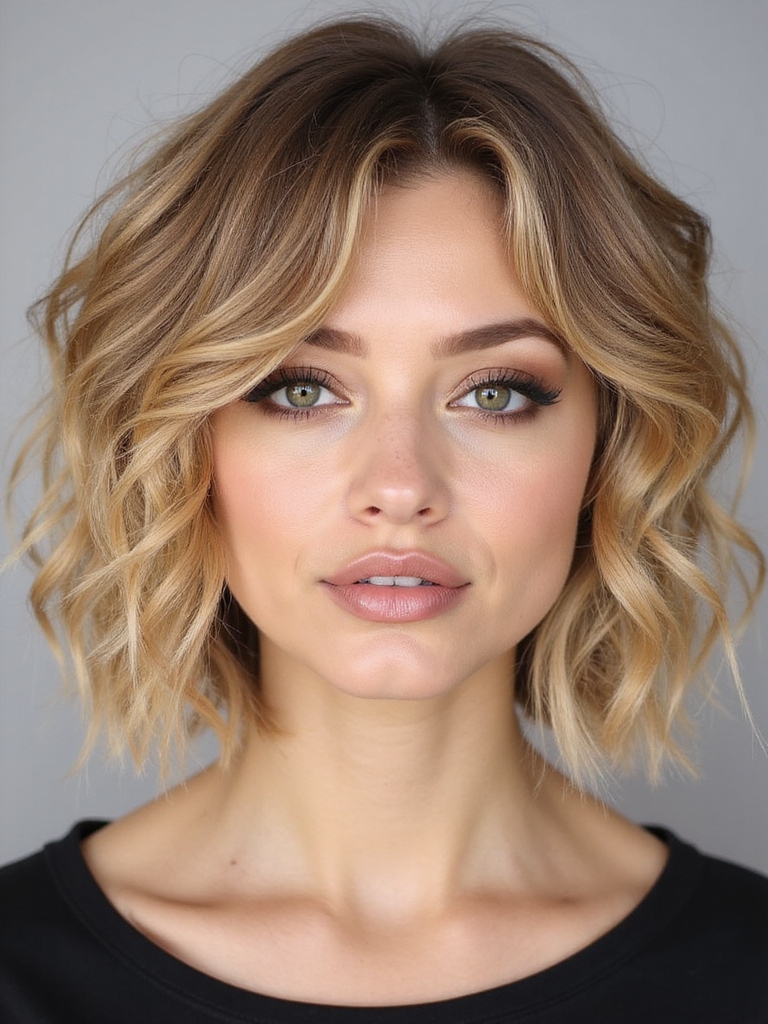
Natural wave is the ideal texture for this cut, and the reason is that a shag manufactures the movement wavy hair already produces. Everything the cut is trying to create, the wave contributes for free.
Feathering the crown adds lift on top of that. Short tapered pieces at the crown catch and hold the wave pattern where it would otherwise be weighed flat by the hair beneath.
- Scrunch a light cream into soaking hair, then air-dry or diffuse without touching it
- Refresh day two with water alone, since product builds up fast on wavy hair
- This is the lowest-effort version on the page once it is cut correctly
👍What the soft version gains
- +No visible shelves, so it survives being air-dried without styling
- +Holds its shape when air-dried, which a classic shag rarely manages
- +Works across straight, wavy, curly, and coily hair with adjustments
👎What it gives up
- –Less drama than a classic shag; the shape whispers where the original shouted
- –Takes longer in the chair and prices accordingly, since blending is slow work
- –On very fine hair the softening can tip into looking like nothing was done
A Soft Shag for Thick Hair

Density turns a shag into a pyramid if the weight is not managed, since layering adds volume by design and thick hair adds volume by existing. The answer is internal layering: bulk lifted out from beneath the surface, leaving the top of the hair untouched. The shape then falls close to the head. Left undone, it spreads outward from the ears down.
- Ask for the bulk to come out beneath the surface, spread across the whole head
- Refuse notched blades near the part or the hairline, where regrowth stands straight up
- Book extra time; a rushed debulk is how the ends end up kicking outward
A Soft Shag With Bottleneck Bangs
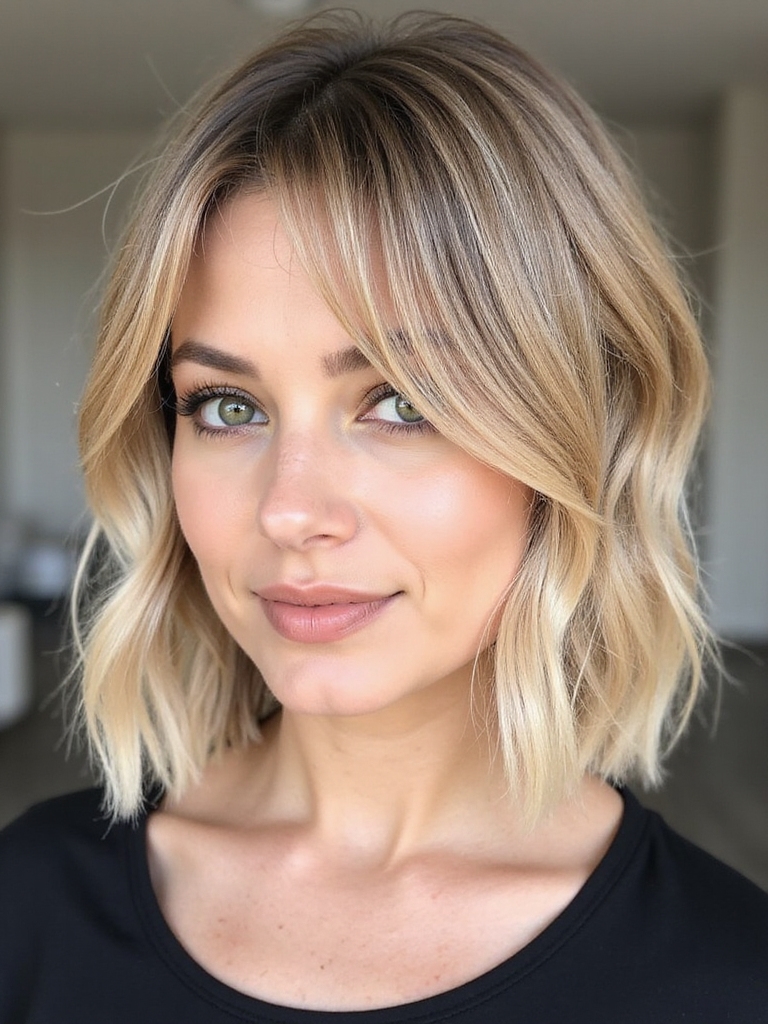
A bottleneck fringe is narrow and slightly rounded at the center, then flares outward as it reaches the cheekbones, and the resulting silhouette is where the name comes from.
Where the Name Comes From
Paired with a shag it solves a real problem. Curtain bangs on a heavily layered cut can drift and separate; the bottleneck shape has a defined center that holds its position and gives the whole front something to organize around.
It needs a trim more often than the rest of the cut, roughly every five weeks, because the narrow center is the part that grows into your eyeline first. Our shag with bangs guide covers fringe pairings in full.
ℹ️Fringe Names, Decoded
Curtain bangs split at the center and sweep outward. A bottleneck fringe is narrower and rounded at the center before flaring at the cheekbones. A birkin fringe is light and slightly grown out, splitting a little on the brow. All three grow into face-framing layers, which is why they pair so easily with a shag.
A Soft Shag With a Micro Fringe
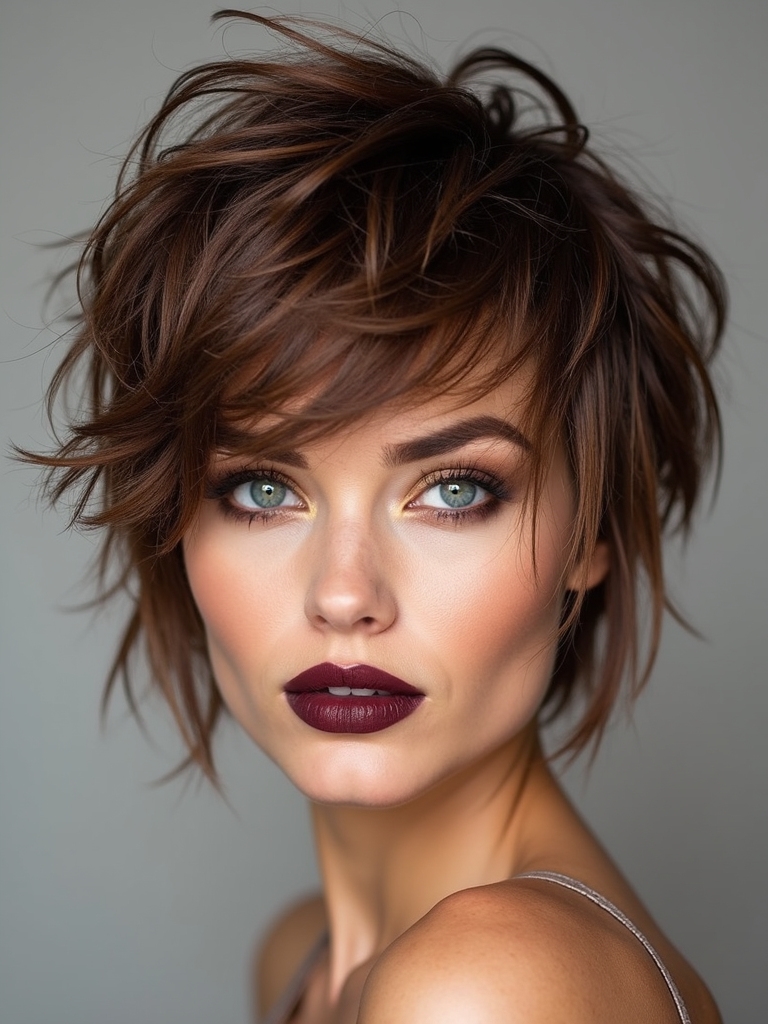
A fringe cut well above the brow is the boldest thing on this page and, oddly, one of the safest to try, since a micro fringe grows into a normal fringe in about eight weeks and into curtain bangs a few weeks after that. The soft layering behind it keeps the whole thing from reading costume, which is the risk a micro fringe carries on a blunt cut.
- Ask for it cut dry, since a micro fringe cut wet ends up shorter than anyone intended
- It suits high foreheads and strong brows, and it demands you like being looked at
- Trim it yourself between visits by pointing into the tips, never cutting straight across
A Mid-Length Soft Shag With Flipped Ends
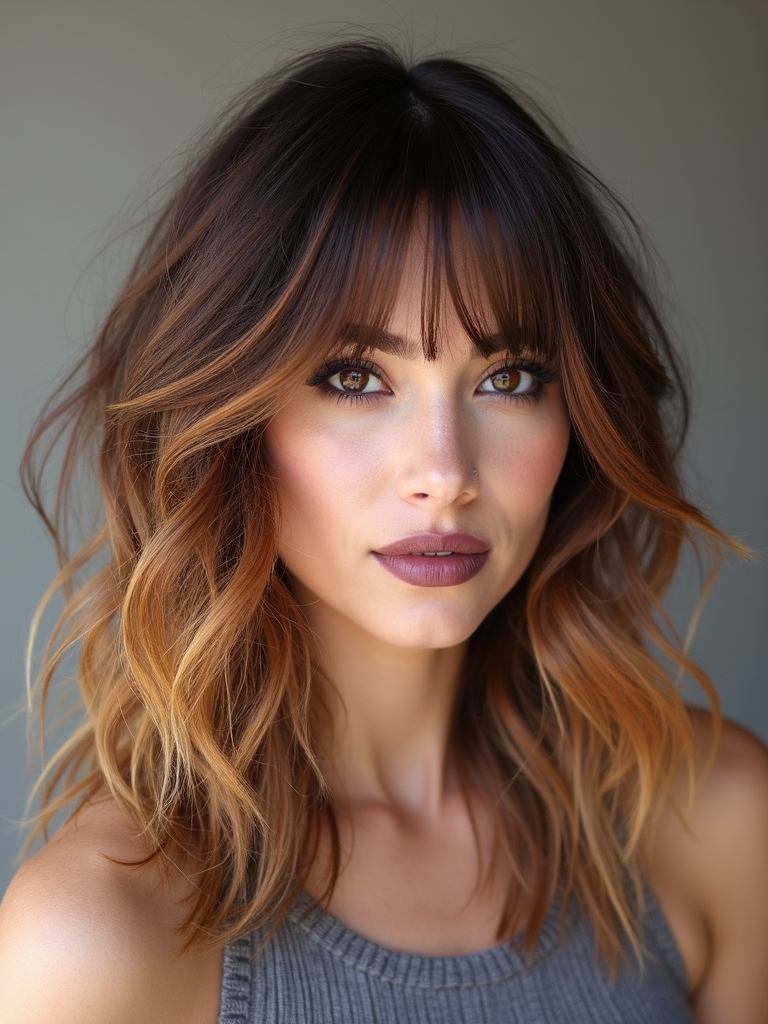
Letting the ends kick outward moves the whole cut a decade backward in the best way. On a shag it looks deliberate, because the layers above are already doing something similar.
The flip needs a little help on most hair. A flat iron turned outward on the last inch, or a round brush dried away from the neck, sets it, and a light texture spray keeps it from dropping by afternoon.
A Soft Shag With Wolf-Cut Influence
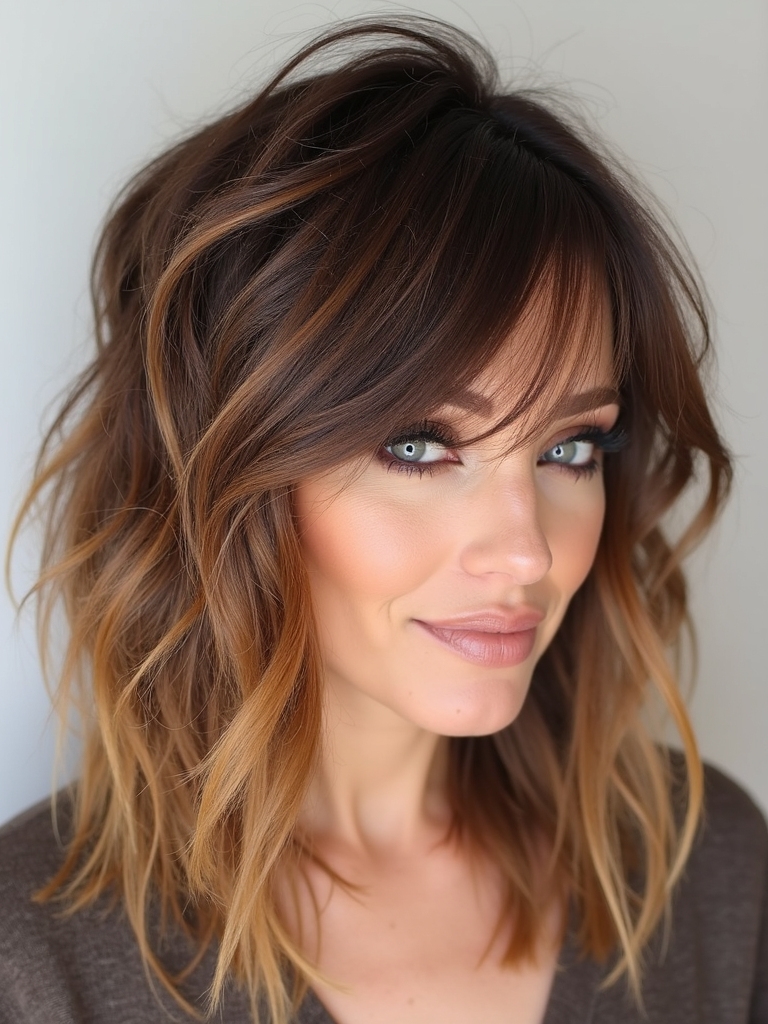
This is the far end of the dial. Crown layers get shorter and the disconnection between top and length becomes visible, which is the point at which a shag starts turning into a wolf cut.
How Far Is Too Far
Soft here means the transitions are still blended even though the lengths are further apart. You get the wolf cut’s drama at the crown without the hard shelf that makes a full wolf cut hard to grow out.
By month three the crown catches up and the whole thing settles back into a standard shag, which some people love and others find frustrating. Our wolf cut guide covers the full version.
A Shaggy Lob With Blended Layers

At the quiet end of the dial, a lob with shag layering keeps the collarbone-length outline everyone finds flattering and adds just enough interior movement to stop it hanging as a slab.
It is the version to ask for if a full shag feels like too much or if your workplace leans conservative. Nothing about it announces itself, and it grows straight back into an ordinary lob with no awkward stage in between.
“The word that gets misread most often at a shag consultation is textured. To a client it usually means soft and piecey; to a stylist it can mean thinning shears. Say blended and point-cut instead, and the cut you get will match the photo you brought.”
A Coily Soft Shag With Stretch Layers
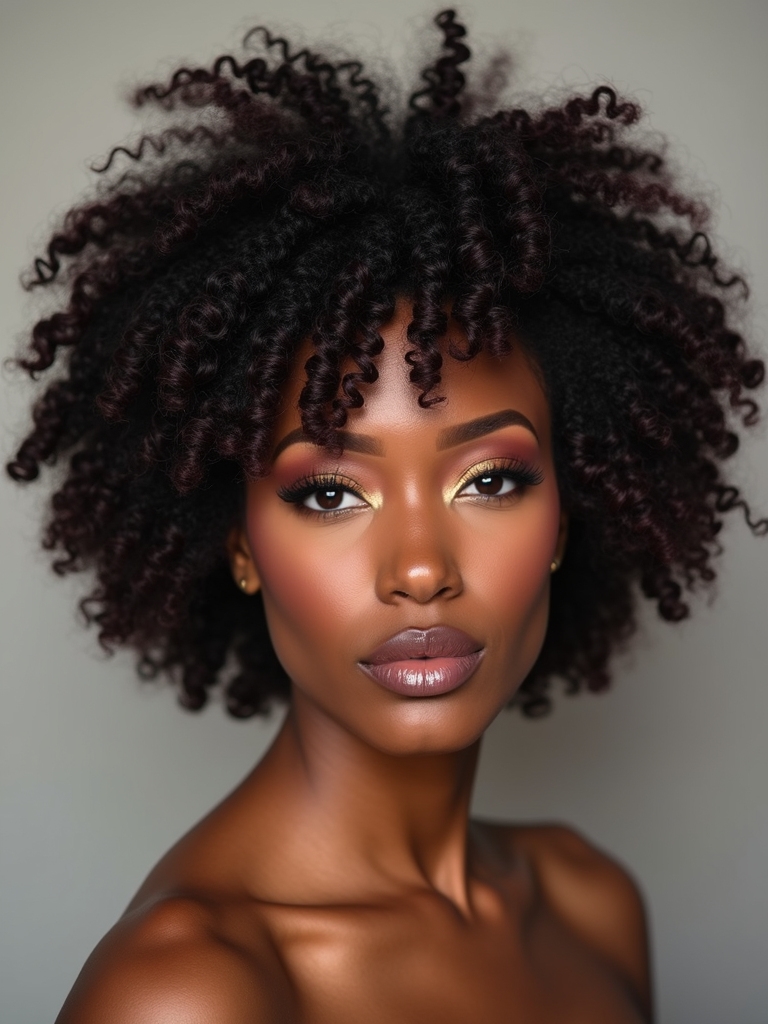
On coily hair a shag turns into a pure shaping exercise, since the texture is already there in abundance. Layers are placed to control where the volume sits, usually keeping fullness at the crown and easing it in toward the nape, and shrinkage means every one of those layers has to be judged on dry, stretched hair before it is cut.
- Have the shape cut on stretched or dry hair so shrinkage is accounted for at every layer
- Keep the layers longer than they look; coily hair rises considerably once it dries down
- Define with a light gel on soaking hair, then leave it entirely alone until dry
A Soft Shag Mullet

The mullet has been rehabilitated by softening it, and this is what that looks like: shorter through the sides and crown, longer at the nape, with every one of those transitions feathered until the outline stops being obvious.
By week eight the shape softens further and reads simply as a long layered cut, which makes it a lower-risk experiment than its reputation suggests. It suits people who like a cut with a point of view and dislike explaining it.
A Soft Shag With Grown-Out Bangs
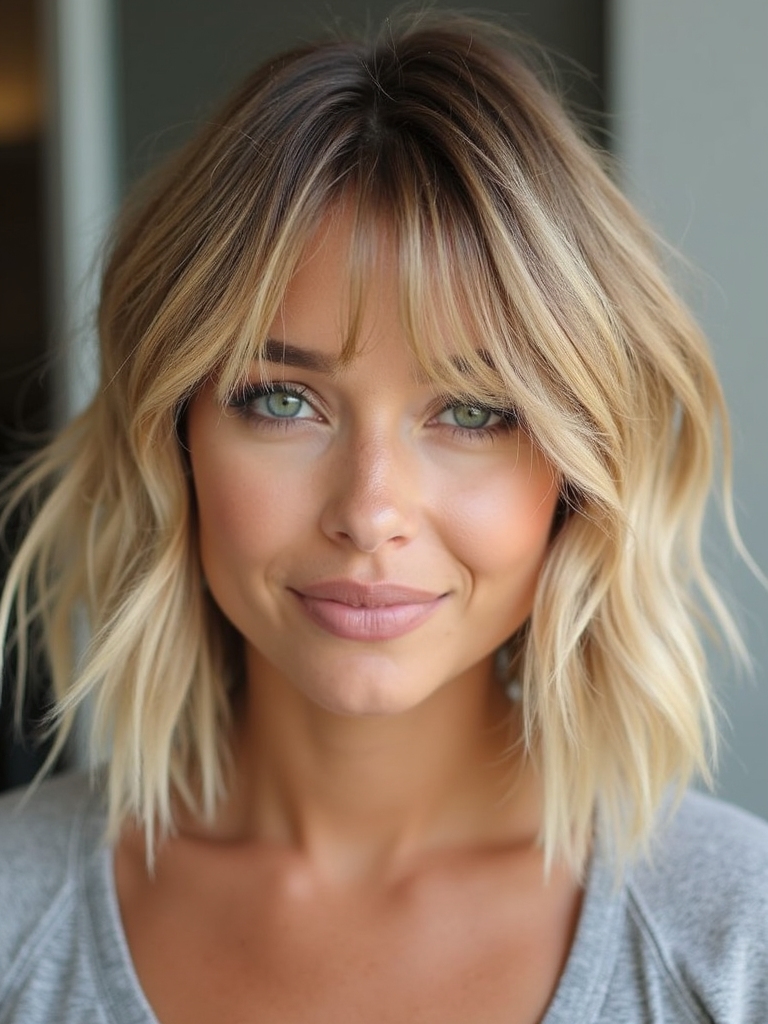
Grown-out bangs are the most common reason people end up in a shag. A fringe that has reached the cheekbone is already a face-framing layer, so building a shag around it is simply the next step.
Ask for this when you are mid-grow-out and tired of pinning. Six more months of waiting is one option. The other is layering the rest of the cut to meet the fringe where it sits today.
- Bring the bangs to the appointment unpinned so the stylist can see their real length
- Have the framing layers cut to connect to them, which ends the awkwardness immediately
- The fringe keeps growing, and the cut keeps making sense as it does
A Face-Opening Soft Shag With Razored Layers

Short-to-long layering around the face, cut with a razor, opens the whole front of the head and is the most flattering thing a shag can do. The shortest piece sits near the cheekbone, then each successive piece lengthens until it disappears into the length.
The Razor Is the Whole Difference
The razor is what makes it soft. Shears cut a strand flat. A razor thins it gradually along its length, so the framing pieces finish in a haze instead of a line.
The condition of your ends decides whether this works. Razoring healthy hair produces that haze; razoring bleached or damaged hair produces frizz that shows within two weeks. Our shag haircut guide covers the technique across variations.
Soft Shag Questions
?It came out too subtle and barely looks like a shag. What now?
Fixable in twenty minutes, and it is the better of the two mistakes to have made. Go back and ask for the crown layers to come up an inch with nothing else touched. Do not ask for more layers, since the cut is already layered. What it lacks is height at the top, and height comes from shorter crown pieces, not from quantity.
?Will a soft shag work if my hair is heavy and dead straight?
It will, provided the weight comes out from underneath and the layers stay long. Heavy straight hair drops back into a solid shape within hours of any short layering, so the instruction that matters is length in the transitions. Ask for long graduation and skip anything described as choppy.
?How much of this cut do I have to style?
Less than any comparable layered cut, which is most of its appeal. Rough-drying with fingers and stopping slightly early is the whole routine on wavy hair. Straight hair benefits from bending two or three mid-length sections with a wide iron, and curls need only a cream and no touching while they dry.
Pick Your Position on the Dial
Almost nobody walks in wanting a shag in the abstract. What they want is a specific amount of movement, and the useful thing about treating this cut as a dial is that you can name that amount out loud: quieter than the photo, or one notch louder.
So start one notch softer than you think. A shaggy lob or a shoulder-grazing version costs you nothing to try, and going shorter or shorter-layered at the next appointment takes twenty minutes. Going back the other way takes most of a year.
Favorites to Revisit