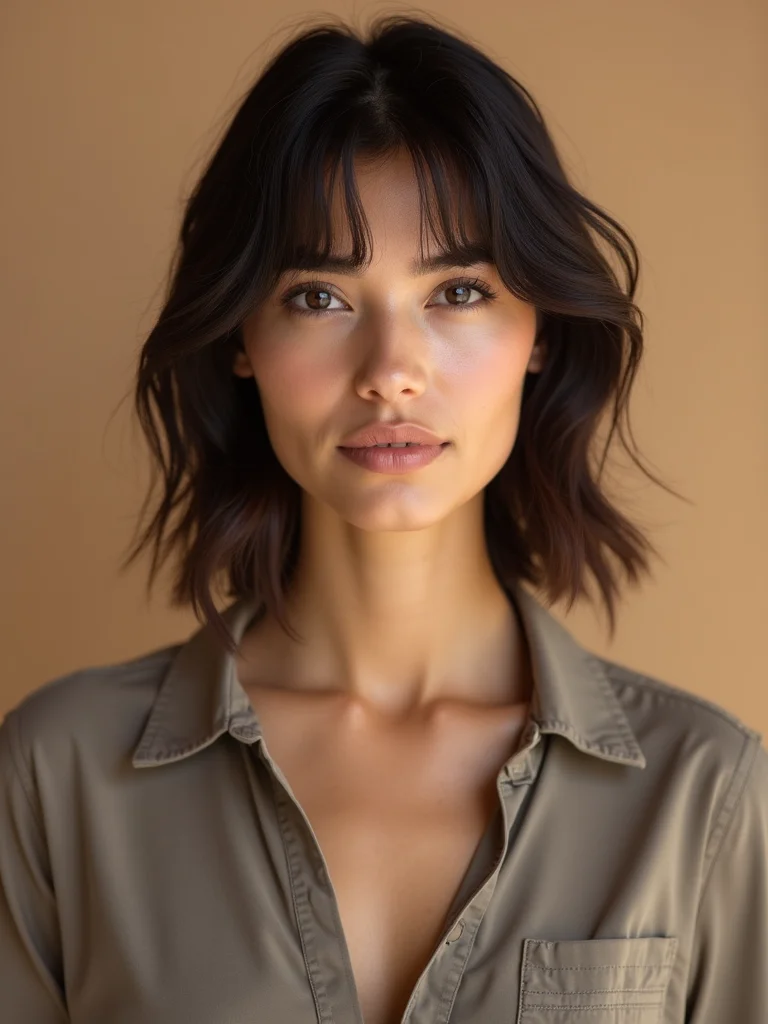
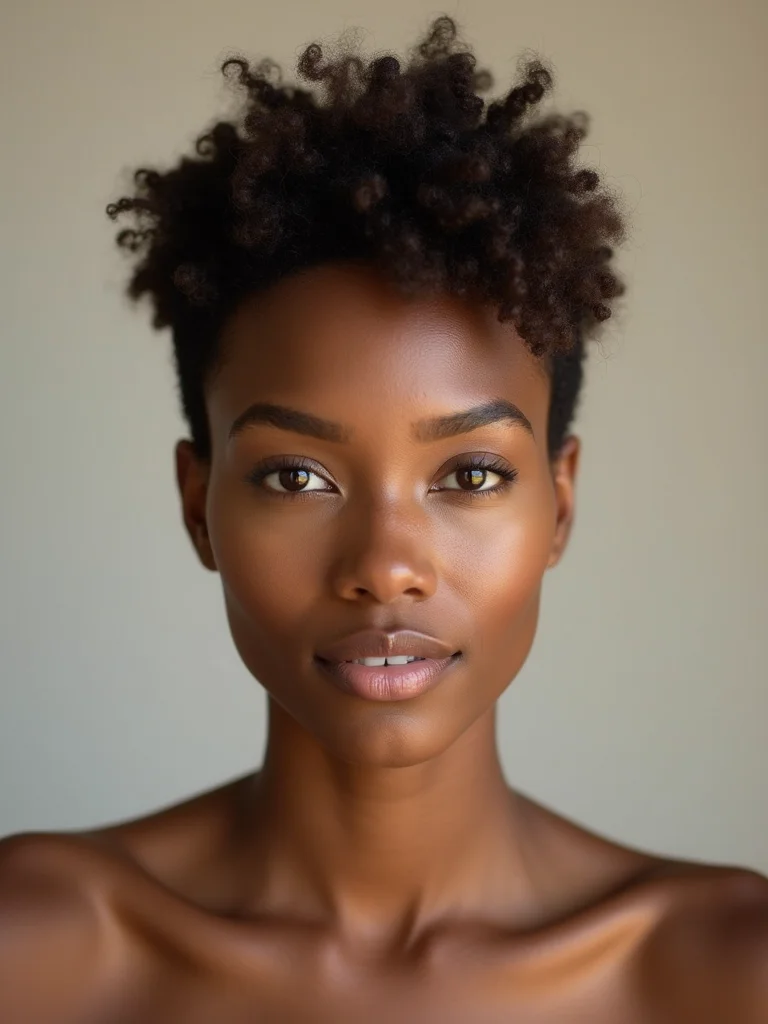
A short shag promises low-effort retro cool, and it can actually deliver that, but only once you understand what’s holding the shape together underneath the tousled surface. Choppy layers, real texture, and a length that lands somewhere between the chin and the shoulders are what separate a shag from a plain short cut that just happens to have a few layers cut into it.
The versions below range from a barely-there French shag to a bold wolf-inspired crop, each with the specific cut and styling habit that keeps it reading like a deliberate shag.
Before You Book a Shag
What separates a shag from any other layered short cut? The choppiness. Real shag layers are cut piecey and textured on purpose, at a length between the chin and shoulders; smoothed or blended layers just end up reading as an ordinary short cut.
How much daily styling does a short shag realistically need? Less than most short cuts. Layers are built to air-dry into shape with a scrunch of product, though the trade-off shows up at the salon: a reshape roughly every seven weeks keeps the choppy edges from growing soft.
Is there a hair type this cut doesn’t suit? Not really. Fine hair gains volume from the layering, thick hair loses bulk, and curls spring into a defined crown once cut dry, curl by curl.
Easy Feathery French Shag

The French shag is short shag styling at its most low-key, feathery layers and a soft fringe worn with an undone, Parisian sense of ease.
Where the Modern Shag Started
This is the version usually credited with reviving the modern shag, and it still sets the tone for most of what follows on this list. Our modern shag haircut guide covers the broader technique behind it. It suits a wide range of face shapes and air-dries into shape on its own, with the feathered layers doing most of the visual work.
A small amount of texture cream worked through with fingers, no comb involved, is usually all the styling this cut asks for.
How much time do you want to spend on this most mornings?
1Almost none?
The airy layered easy shag and the pixie shag both air-dry into shape with barely a scrunch.
2A few minutes is fine?
The French shag and the volumized crown reward a bit of intentional drying time.
Lightweight Tousled Layered Volume

Heavily layered and left deliberately tousled, this version is built around one goal: lightweight volume. Interior layers strip out weight so hair lifts and moves freely, giving even fine hair noticeable body.
Precision isn’t really the point here. A texture spray scrunched into damp hair, then rough-dried with fingers, builds the shape; the messier the finish, the more volume tends to show up. This is the one clients with fine, flat-by-noon hair ask for most, once they see how much lift the interior layers add.
Face-Framing Curly Shag Layers

On curly hair, face-framing shag layers carve softer, shorter pieces around the face, and the surrounding layers free natural curl to spring into its own shape. The result is a defined, bouncy crop that works with the pattern already there. Cutting it dry, curl by curl, lets a stylist see exactly where the shortest pieces will land once they spring up. Our curly shag haircut guide goes deeper on the technique.
- Among the more forgiving ways to wear curls this short
- A curl cream on wet hair keeps definition without weighing curls down
- Refresh with water and a little leave-in between wash days
Razor-Cut Shag With a Fringe

A razor gives a short shag its airiest, most feathered finish. Paired with a soft fringe, the razored ends taper to fine points that float and separate, while the fringe frames the eyes for a light, undone shape with a graphic edge underneath.
- Razored ends float and separate for real, airy texture
- Best on healthy hair; a razor is harder on already-fragile strands
- Define the fringe and ends with a small amount of wax
Shaggy Jaw-Skimming Bob
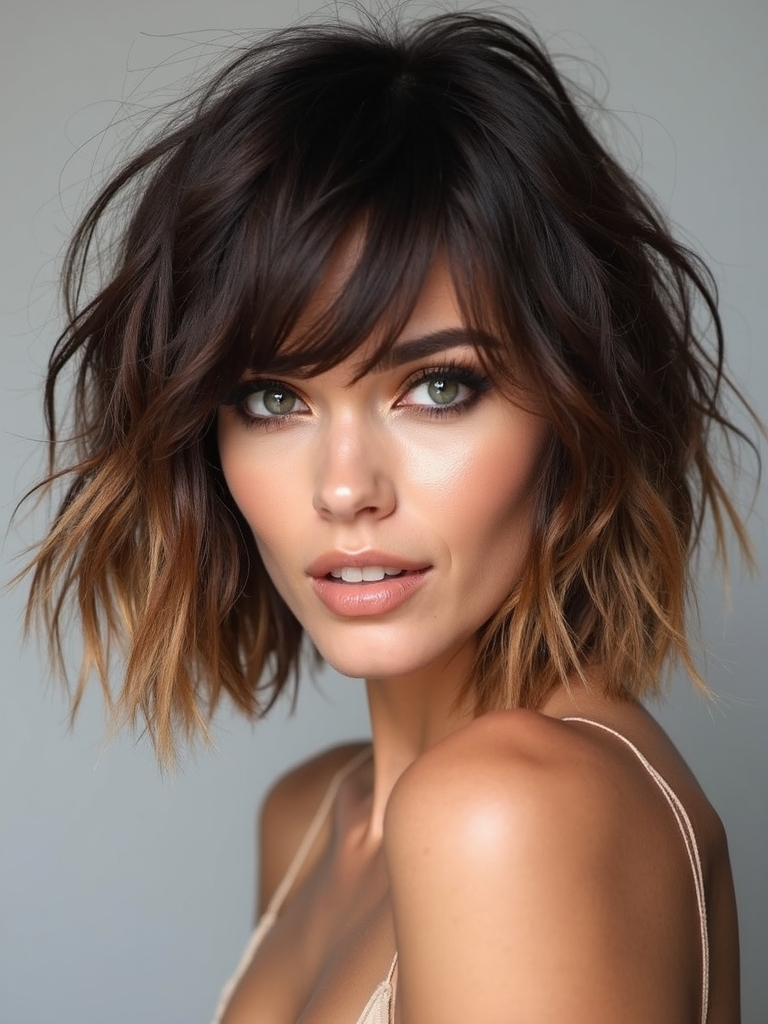
For a shag with more containment, this version skims the jaw while layering heavily through the interior for soft, undone volume without the length going anywhere near the shoulders. Our shaggy bob guide has more variations at this length.
It sits as a wearable middle ground: enough texture to read as a proper shag, short enough to stay low-fuss. Working a texture spray through damp hair with the fingers is close to the entire routine most mornings.
Soft Wolf-Inspired Bob

This version borrows the wolf cut’s heavy crown layering and brings it down to a bob-length shape, dialed back just enough to stay wearable outside a photo shoot. Our wolf cut guide covers the full, bolder version of this technique. The choppy crown adds noticeable volume and edge, while the shorter overall length keeps it from looking like a costume.
- Built on aggressive crown layering, softened by a shorter overall length
- Style the crown with a matte paste worked in while damp
- A bolder pick for anyone who already wants attitude over polish
👍Why People Choose This One
- +Serious volume built into the cut itself, not just propped up with product
- +Carries visible edge without going as short as a full pixie shag
- +Grows out with texture still intact, no hard line to fight
👎What It Asks For
- –Needs a stylist truly comfortable cutting aggressive layers
- –Crown volume fades fast without regular reshaping
- –Can look unfinished on very fine hair without enough density to layer
Airy Layered Shag for Waves

For natural waves, an airy layered shag gives the texture real room to move. Light layering lets waves clump and spring into their own shape, turning ordinary wavy hair into a cut built around soft, beachy movement.
- Light layers lift and define natural wave without any added weight
- Among the lower-effort options on this list to style day to day
- A sea-salt spray worked through with fingers, then left to air-dry, finishes it
Tousled Choppy Pixie Shag

At the shortest end of this list, a tousled choppy pixie shag crops the whole idea down into a textured, piecey crop with plenty of attitude to spare. Our pixie shag haircut guide covers this length specifically.
The Boldest, Lowest-Effort Version
The choppy layers and deliberately undone finish give it edge and constant movement, and it asks for less daily effort than almost any other version here.
A small amount of matte paste scrunched through dry or towel-dried hair, then tousled by hand, is the entire routine.
Textured Bottleneck Bangs

Bottleneck bangs bridge the gap between a curtain fringe and a full one: shorter and narrower through the center, longer toward the sides. On a short shag, they frame the face directly and tie the choppy layers together into one cohesive shape.
- Especially flattering on round and square face shapes
- Dry with a round brush, curving the sides back toward the face
- Grows out into a wider curtain fringe with almost no awkward stage
A bottleneck fringe is the detail that convinces people a shag was planned on purpose.
Precision-Cut Glossy Shag

Not every shag needs to look undone. This version keeps the same choppy layering but finishes it smooth and shiny, landing on something polished enough for an office that expects a more buttoned-up look.
- Blow-dried smooth with a round brush, not left to air-dry
- A drop of glossing serum through the ends keeps the shine even
- Suits anyone who wants the shag’s shape without its usual undone finish
Volumized Crown Shag

A volumized crown is what gives an otherwise flat-leaning shag real lift at the root. Short, stacked layers at the top build height and body exactly where fine or limp hair tends to need it most, while the lengths stay choppy and textured.
Building Lift That Holds All Day
Drying the crown up and back while it’s still damp does most of the structural work; a texture spray afterward just defines what the cut already built.
This is the crown lift worth asking for specifically if root volume, not overall texture, is the specific problem.
Wispy Baby-Bang Shag

For a shag with serious fashion-forward energy, wispy baby bangs sit high and soft above the brow, cut light enough to move freely.
A Bold Fringe, Balanced by the Rest
The choppy layers elsewhere in the cut balance the boldness of such a short fringe, keeping the overall look feeling deliberate rather than accidental.
It’s the version I’ve had the most clients come back thrilled with after seeing their own photos, and it needs surprisingly little daily upkeep for how bold it looks.
Layered Shag for Thick Hair

Thick hair takes to a short shag especially well, provided the stylist cuts for the specific problem: too much mass, not too much length.
I usually explain it to clients this way: picture the hair in layers like a stack of paper, and the goal is thinning out the middle sheets while leaving the top and bottom ones alone. Cut that way, the head keeps its shape while everything underneath loses its bulk and starts moving on its own.
Ask specifically for internal thinning at the consultation rather than a general trim; a stylist who only shortens the surface will leave the same heavy mass underneath, just in a slightly shorter shape.
A couple of assumptions about thick hair and shags worth correcting:
❌ Myth: Myth: cutting weight out of thick hair leaves it permanently thinner.
✅ Reality: Fact: it only reduces bulk in that section; new growth comes in at its normal density, so it fully reverts if the internal thinning is skipped at later trims.
❌ Myth: Myth: thick hair can’t hold a shag’s texture.
✅ Reality: Fact: thick hair often holds shag texture longer than fine hair does, once the bulk is properly removed.
Beachy Sun-Kissed Shag
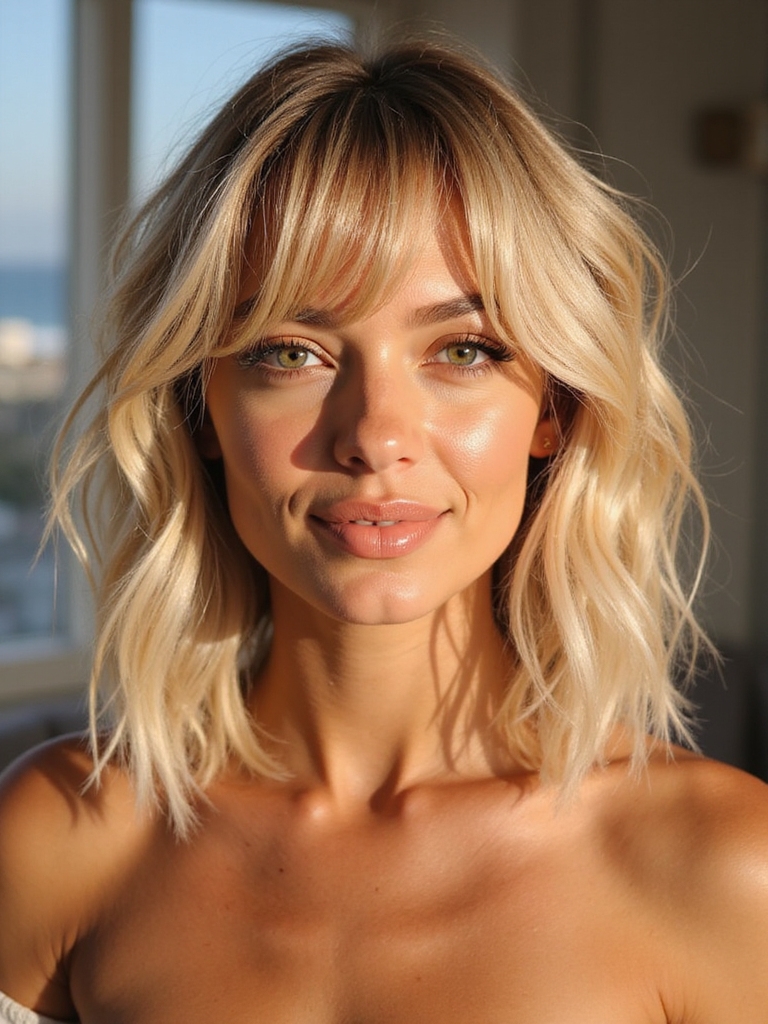
This version pairs the shag’s usual choppy layering with soft waves and lightened, sun-kissed ends for a relaxed, summery, warm-toned finish.
Built to Look Like It Happened Naturally
The waves and the brighter ends work together to read like the aftermath of a week at the beach.
A salt spray scrunched in before air-drying brings out the waves, and a touch of balayage at the ends adds the lightened glow without a full-head lightening service. Darker hair usually needs two sessions spaced a few weeks apart to reach this shade safely.
Airy Layered Easy Shag

This version is built for anyone who wants to stretch the time between salon visits as far as it will realistically go.
For the Longest Stretch Between Visits
The layers are spaced deliberately so the shape grows out evenly, staying intentional-looking well past the point most short cuts start to lose their line.
It’s the practical choice on this list, built around a busy schedule rather than a daily styling ritual. Raking a little cream through damp hair most mornings is really all it takes to keep the shape looking pulled-together.
Choppy Layered Shag With Shine
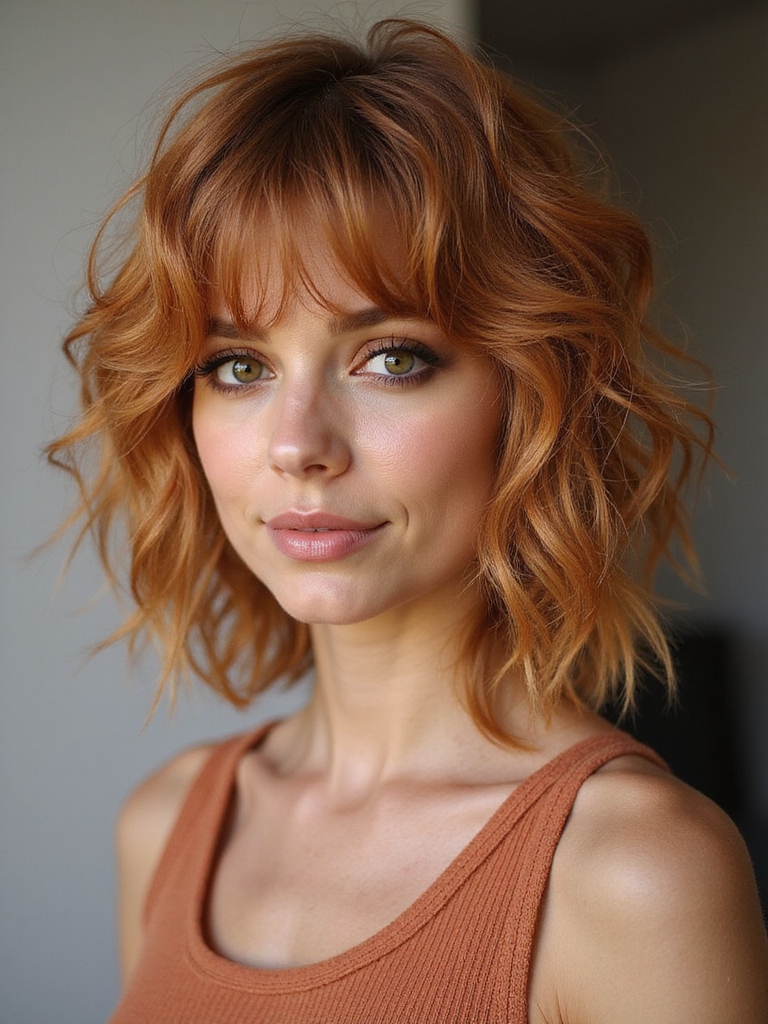
This is where a salon gloss earns its cost. A clear or lightly tinted glaze laid over the choppy layers seals the cuticle, so the texture keeps its edge while the surface visibly reflects light.
A gloss typically runs about $35, well under what a full color service costs, and lasts several weeks. At home, a shine spray fakes a lighter version of the same effect between appointments.
- Seals the cuticle without softening the choppy texture underneath
- Costs meaningfully less than a full color service
- A shine spray at home extends the effect between salon visits
Short Shag Questions Worth Asking First
?Can a short shag be styled straight instead of tousled and choppy?
It can, occasionally, and the precision-cut glossy version above is built for exactly that look. Worn perfectly sleek every single day, though, most versions start to lose the piecey texture that makes a shag a shag rather than a standard layered cut.
?Will a shag work if my hair has never been layered before?
Yes, though the first cut removes more length and weight than people expect, since building the layering from scratch takes real material to work with. Later trims maintain the shape with far less taken off each time.
?Can a shag be grown out into a longer style without starting over?
Usually, yes. Because the layers are already built into the shape, growing one out mostly means letting the shortest pieces catch up, though a couple of shaping trims along the way keep the in-between stages from looking ragged.
?Does a shag suit hair that’s already color-treated or a little damaged?
It can, though a stylist should check the hair’s condition before committing to heavy texturizing, since already-fragile strands hold up worse under a razor specifically. A scissor-cut version of the same shape is usually the safer route for compromised hair.
A Cut That Rewards Knowing What You Want
A short shag works because it does something most short cuts can’t: it carries texture and movement on a length short enough to feel bold, without asking for a daily styling routine most mornings can’t spare.
Match the version to the texture actually growing on your head and the upkeep realistically available, not just the photo that caught your eye first. Do that, and the cut earns its place in the routine.
More Inspiration