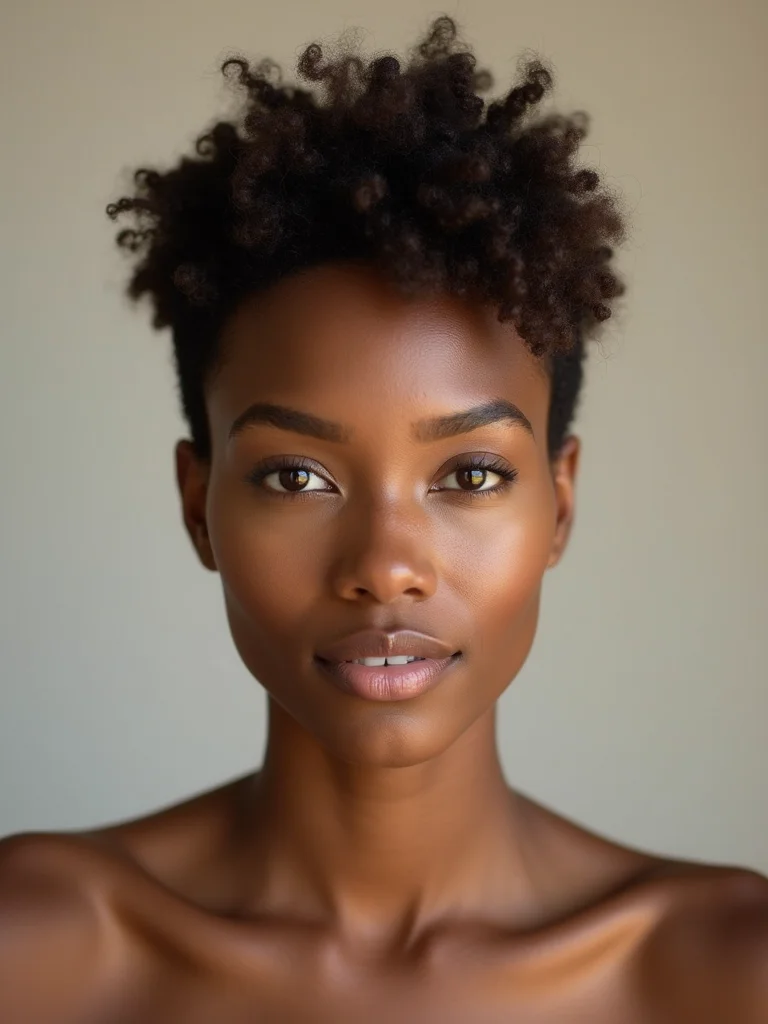
People treat a short shaggy bob like one fixed haircut, the kind you either get right or don’t. It’s actually a stack of separate decisions: where the length lands, which bangs, how much texture, how it’s colored. Getting one of those wrong is usually what turns a great cut into a so-so one.
This breaks the cut down piece by piece, so by the end you can ask for the exact version in your head, no crossed fingers required.
Quick Answers Before You Book
Is a short shaggy bob hard to style day to day? No, it’s built to air-dry. Most days it just needs a little texture product worked through with fingers, no round brush required.
Does the cut change much between hair types? The layering does. A stylist adds more internal thinning for straight or thick hair and keeps it more conservative for wavy or fine hair, so the same silhouette lands correctly on each.
How often does it need a trim to hold its shape? Roughly every two months keeps it sharp, though the broken-up structure forgives stretching that further than a blunt bob ever could.
What Actually Makes a Bob ‘Shaggy’

Take a short bob, somewhere between the jaw and the chin, and break its clean line with choppy internal layers and a soft fringe. That combination, the structure of a bob plus the movement of a shag, is the whole definition. A blunt bob sits still and polished; this one has pieces that separate and swing.
In my chair, it’s the cut women ask for when they want short hair without the upkeep a sharp blunt line demands. The layers do the actual work. Skip them and you’re just getting a plain bob with a different name.

The Three Features That Define It

Three features turn a plain bob into a shaggy one, and naming them is what gets you the right amount of each at your next appointment. Choppy internal layers remove weight so the ends separate into pieces, no single solid line surviving to the ends. A soft, broken fringe blends into that same texture. And the finish stays undone, styled on air-dried hair with barely any blow-dryer time.
- Choppy internal layers that remove weight and let ends separate
- A soft, broken fringe with real movement through it
- A finish meant to look deliberately undone
Where the Length Lands Changes Everything
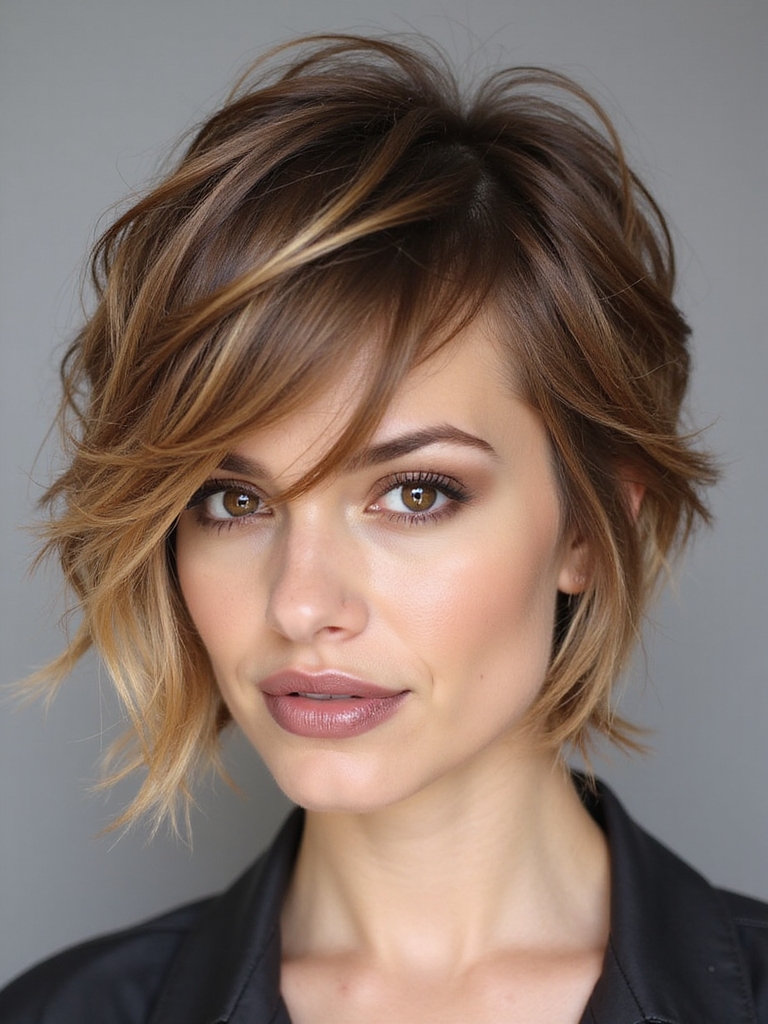
An inch in either direction is the difference between flattering and frustrating on this cut. The classic version lands between the jaw and the chin, the spot that draws the most attention to the face.
By the second trim, most people wish they’d gone slightly longer at the start. Extra length is easy to remove later; a too-short first cut has nowhere to go until it grows.
- Jaw-length carries a sharp, modern edge but can widen a round or square jaw
- Chin-length is the most broadly flattering, softening the lower face
- Just below the chin gives the most room to adjust at the next visit
Matching Bangs to Your Face Shape

Bangs are the single most face-changing decision on this cut, and a shaggy bob wears nearly every version of them well.
The One Fringe That Doesn’t Belong
A soft, center-parted curtain fringe is the safest choice, framing the face and growing out without a hard reset. Wispy, broken bangs read younger and blend straight into the shag’s texture, while a longer, side-swept bang cuts a flattering diagonal across a round or square face. Our curtain bangs guide has more on that specific pairing.
A heavy, blunt fringe is the one pick that fights this cut’s spirit, since it sits stiff against layers built to move.
📋Before You Commit to a Fringe
- ✓Decide how much forehead you actually want to show day to day
- ✓Ask for the fringe blended directly into the layers
- ✓Bring a photo of the specific bang style you want
Small, Face-Specific Adjustments

Beyond length and bangs, small adjustments tailor the same cut to any face. The levers are where the layers start, how much they frame the face, and where the volume actually sits.
Round faces do best with longer, face-framing pieces and a little extra height at the crown. Square jaws soften under wispy layers that break up the corners. Long faces balance out with fullness kept low, at the sides.
None of this needs a face-shape chart. Just name the feature you want played up or toned down. A good stylist places the pieces from there.
How the Cut Changes Across Textures
Every texture can wear a short shaggy bob, but the cut itself has to change to suit each one. What looks airy on straight hair behaves completely differently on coils.
The constant across all of them: a good stylist shapes the cut for the hair actually growing out of your head.
- Straight hair shows choppy ends crisply but may look flat without product
- Wavy hair falls into the piecey shape with almost no styling effort
- Curly and coily hair should be cut dry, in its natural state, so layers land on the real pattern
The Daily Styling Routine, Realistically

Daily styling is the reason a lot of people fall for this cut. There’s no round-brush ritual and no chase for a smooth finish; the shape is designed to look its best a little undone, which forgives a rushed morning more than almost any other short cut.
- Rough-dry or air-dry with fingers, scrunching to encourage the pieces
- Mist a texture or salt spray through the mid-lengths and ends
- Break up pieces with a small amount of paste; resist over-smoothing
The Sprays and Pastes That Actually Belong

Product choice can make or break this texture, and the rule is light and gritty beats heavy and slick every time. Rich creams and shiny serums weigh the pieces down until they clump into something heavy and dense.
- A texture or sea-salt spray for grit and piecey separation
- A matte paste or clay, used sparingly, for definition and light hold
- Dry shampoo to revive lift on second- and third-day hair
🅰️Light, Gritty Products
Texture sprays, matte paste, dry shampoo. Builds the separated, piecey look this cut depends on.
🅱️Rich, Shiny Products
Glossing creams, smoothing serums. Weighs pieces together into a different, sleeker cut entirely.
Color That Matches the Cut’s Undone Energy

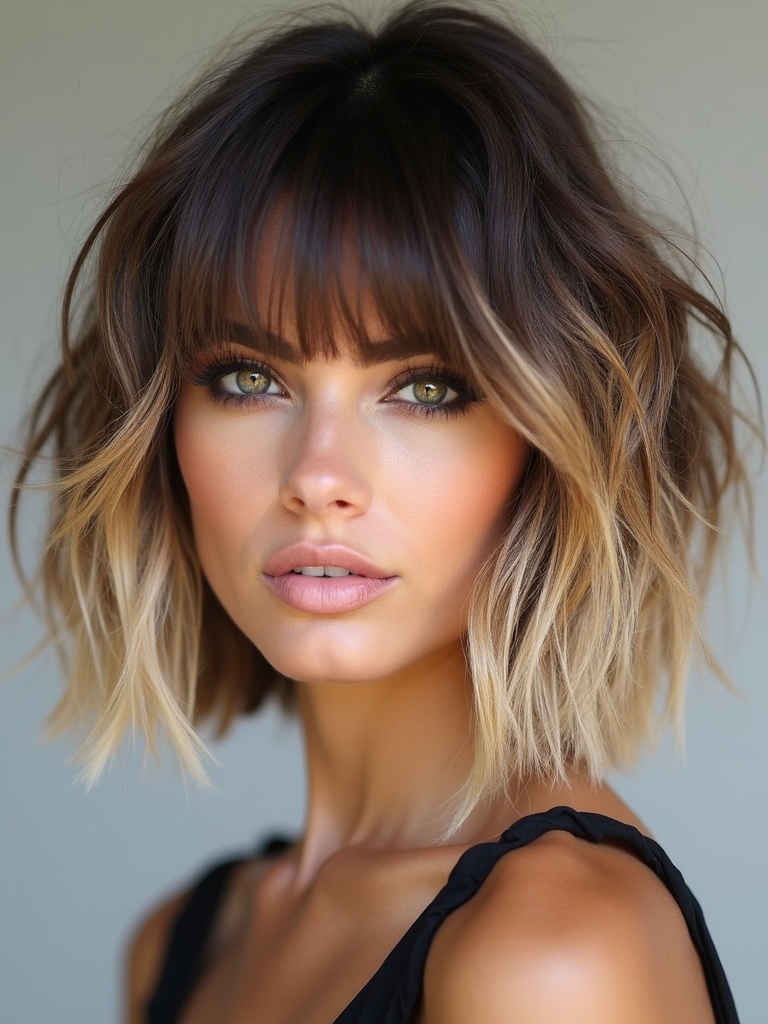
Color and this cut share a spirit, so the most flattering options stay soft and grown-in. Dimensional color makes the choppy texture actually show up in photos, catching light as the pieces separate in a way one flat shade never will.
- A soft balayage catches light as the pieces move throughout the day
- Grown-in placement with a root shadow keeps upkeep low on purpose
- A hard-line, high-contrast color fights the cut’s relaxed, broken-up feel
Bringing Photos and Naming the Length

A clear request is what actually gets you the version in your head. Name the length against your own face, not just the word ‘short.’ Specify the bangs by name too, and say the two words that matter most: piecey layering. Our fringe hairstyles guide can help narrow down exactly which fringe to name.
- Say the length against a landmark: ‘ending just below my chin’
- Name the bangs specifically: ‘a soft curtain’ or ‘wispy, blended bangs’
- Ask for piecey internal layering, finished to air-dry
Growing It Out Without It Going Shapeless

A short shaggy bob is one of the more forgiving short cuts to grow out, since the shape is already broken up. The in-between weeks still read intentional, at least for a while.
Left completely alone, though, even this cut eventually loses its shape. Small ongoing trims, timed with your stylist, are what keep the grow-out looking like a plan.
A reshape trim between full cuts usually runs $25-45, well under the $55-90 a full short-hair cut typically costs, since it’s a quick clean-up rather than a full haircut.
| Weeks Since Cut | What’s Happening | What to Ask For |
|---|---|---|
| 0-4 weeks | Shape is at its sharpest and most piecey | Nothing yet, just maintain with product |
| 5-8 weeks | Layers soften and length starts blending toward a lob | A light reshape trim if the ends feel heavy |
| 9+ weeks | Structure starts to blur into an undefined length | A full trim before it loses the shag shape entirely |
Shaping It Differently for Thin vs. Thick Hair

The same short shaggy bob gets shaped two opposite ways depending on density, and matching the approach to your actual hair is most of what makes it work. Fine hair wants conservative, crown-focused layers for lift; the shaggy bob for fine hair guide covers that version in depth. Thick hair wants internal debulking so the cut moves freely without ballooning into a triangle shape.
- Fine hair: keep layers conservative and crown-focused, ends a touch fuller
- Thick hair: ask for internal debulking so weight comes out from underneath
- Both aim for the same thing: movement, just built from opposite directions
The Dry-Trim Detail That Keeps Texture Airy

This is a detail worth requesting by name: a dry-trim finish. It’s a pass over the dry, already-styled hair after the main cut, lightly point-cutting the ends to refine the texture.
Wet hair hides exactly how the pieces will fall once they dry, so a dry pass lets a stylist thin and separate precisely where it’s actually needed. Skipping it is the difference between a sharp shaggy bob and a flat one.
If your stylist doesn’t offer it without being asked, request it directly at the end of the appointment.
How a dry-trim finish actually works:
1Style the hair as usual first
Air-dry or diffuse with product exactly like a normal day, before any trimming happens.
2Point-cut into the dry ends
The stylist thins and separates pieces based on exactly how they’re falling once dry.
3Check the shape from every angle
A quick pass around the whole head catches any piece still sitting too heavy.
Setting Texture Overnight, No Heat

If hair tends to dry flat, texture can be set overnight with zero heat involved, which keeps the ends healthier through frequent trims. It takes about two minutes before bed.
Work on slightly damp hair, twist a few small sections at the mid-lengths, and pin or leave them to set overnight. By morning, a scrunch of texture spray and a little finger-work finishes it.
- Twist small sections at the mid-lengths, leaving the roots alone
- A satin or silk pillowcase cuts the friction that causes frizz
- In the morning, unravel and scrunch in a little texture spray
Turning the Inspiration Into Something Yours

Once each piece is decided, the fun part is mixing them into something unmistakably your own. The same base cut turns soft and romantic with a curtain fringe and grown-in color, or sharp and current with wispy bangs and a bolder shade.
That’s the actual appeal of a short shaggy bob: it behaves less like one fixed haircut and more like a framework. Our shag bob guide has more variations if you want to keep browsing before you book.
Who This Cut Actually Suits
By week three after the cut, this is the style that still looks intentional, which is the real test a shaggy bob is built to pass. It works especially well for anyone moving from long layers into their first short cut, since the choppy texture hides the transition, and for anyone tired of a blunt bob’s unforgiving grow-out line.
Where it struggles: very fine, straight hair with almost no natural texture needs real product commitment to keep the piecey look from going flat by noon. Anyone chasing a sleek, polished silhouette should look at a different cut entirely.
Short Shaggy Bob Questions, Answered
?How short is too short for a shaggy bob?
It’s rarely about the length itself, more about how it meets your features. Above the jaw can widen a round or square face and exposes more neck than some people want. Starting at or just below the chin leaves room to go shorter later.
?Will this cut make thin hair look thinner?
Done right, the opposite happens. Choppy layers add separation and lift that read as fuller, as long as the stylist removes weight from underneath rather than thinning the visible ends.
?Can this cut work if I have a cowlick or a strong part pattern?
Usually, yes. A shaggy bob’s broken-up structure hides an odd growth pattern better than a smooth blunt line would, since there’s no single unbroken edge for the cowlick to disrupt.
?Is it possible to go from a shaggy bob into a longer shag later?
Yes, and it’s one of the easier grow-out paths. Since the layering is already there, a stylist just keeps blending new length into the existing shape as it grows.
One Takeaway Before You Book
Decoded, a short shaggy bob stops being a gamble: it’s a length you choose, a fringe you choose, layers shaped for your specific texture, and a finish that takes about two minutes most mornings. Walk into the appointment able to describe all four, and you walk out with the cut you actually pictured.
Don’t Miss These