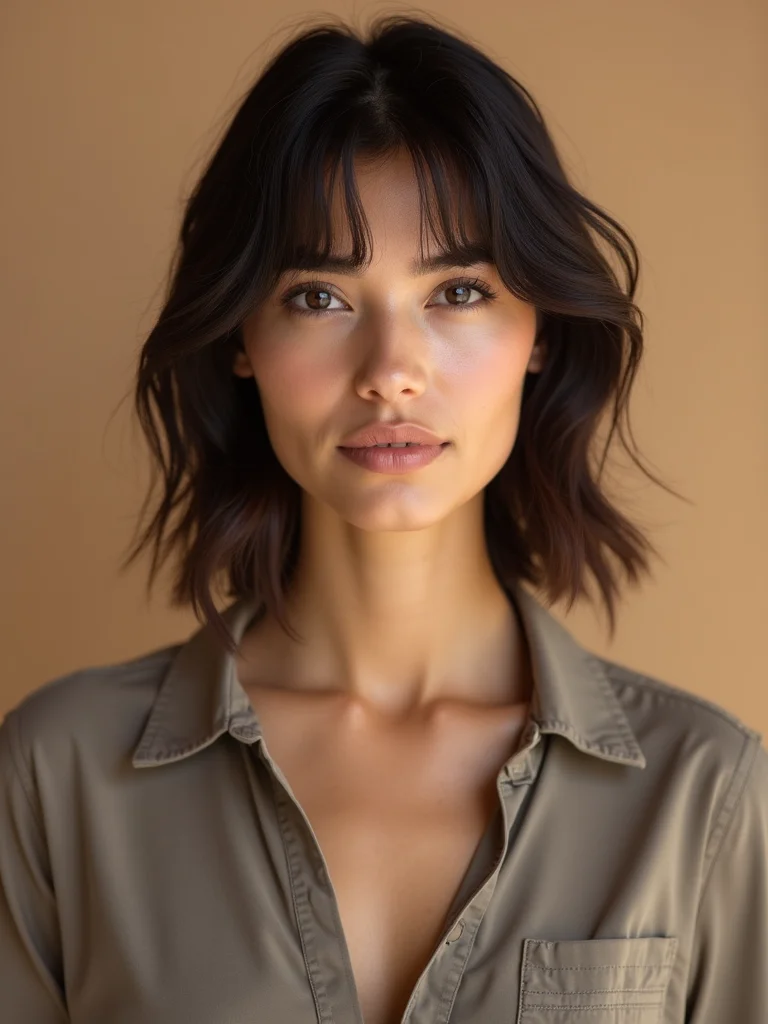
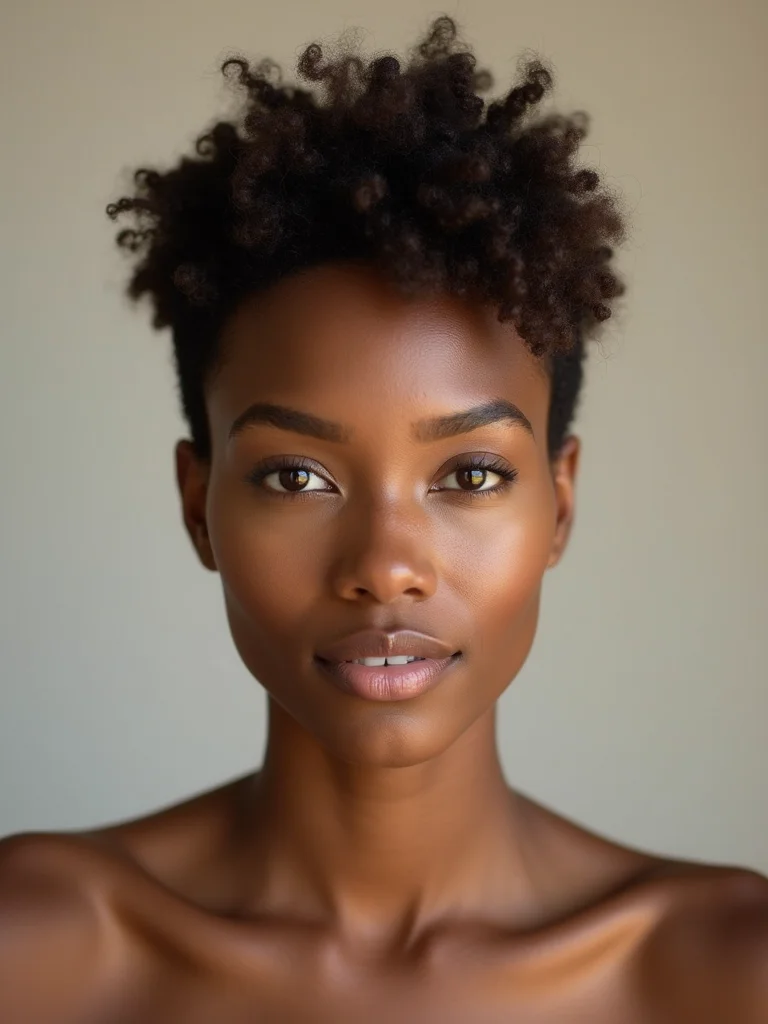
A client sat in my chair last month, arms crossed, and said the sentence I hear constantly: my hair could never do a shag. She had fine, poker-straight hair and was sure the look only worked on thick, wavy heads. Twenty minutes later she was turning her head in the mirror, watching it move.
That’s the thing nobody tells you about shaggy hairstyles: the shag isn’t one cut for one hair type, it’s a method that bends to whatever you’ve got. This guide walks through the version for every texture and length, so you can stop wondering whether yours qualifies. It does.
The Shag for Your Hair, In Short
- The shag is a layering method, not a fixed shape, so it adapts to every hair type.
- Fine and straight hair get texture and lift the hair won’t make on its own.
- Thick, curly, and coily hair get weight removed so they move instead of sitting heavy.
- Every texture has an ideal length too, from a fine-hair pixie to a long wavy shag.
- Curly and coily hair must be cut dry; the rest can be cut wet or dry.
The Shag That Works for Everyone

The reason the shag flatters such a wildly different range of people comes down to one idea worth holding onto as you read: it isn’t a single cut you either suit or don’t. It’s a way of layering hair that gets adapted to whatever you bring. So the real question is never whether your hair can do a shag, but which version is yours. Three levers get adjusted for everyone:
- Length: from a cropped pixie to long, layered length, chosen for your hair and your life.
- Layering: how much weight comes out and where, tuned to your density and texture.
- Fringe and framing: the pieces around your face, placed to flatter your features.
Finding Your Shag by Face Shape

Before texture even comes into it, the shag flatters your face by where the layers and fringe fall, and a good stylist tailors that to you. This is the part that makes the same method look custom on everyone. The quick map:
- Round or full face: longer face-framing and vertical layers that lengthen rather than widen.
- Long face: width at the sides and a fringe to visually shorten the face.
- Square jaw: soft, wispy pieces around the jawline to gentle the angles.
- Heart face: a touch more fullness toward the chin to balance the forehead.
ℹ️Good to Know
The shag has outlasted nearly every trend of the last fifty years for one reason: it’s a cutting method, not a single shape. That’s why it keeps coming back and why it works on hair the original seventies version never considered, from tight coils to fine, straight strands. When you ask for a shag, you’re asking for an approach to layering that gets customized to your hair, not a one-size template.
The Shag for Fine Hair

Fine hair is the type most people assume is disqualified, and it’s actually one of the best candidates. The choppy layers create separation that makes thin hair read fuller, and the lack of weight lets the roots finally stand up. My straight-haired, fine-haired client from the intro is proof.
The whole strategy is lift and the illusion of density, built with a careful hand:
- Keep it shorter, chin to collarbone, so weight doesn’t drag the lift flat.
- Ask for soft crown layers but conservative layering elsewhere, since over-thinning is the real risk.
- Rough-dry the roots for a minute and add dry texture spray for grip; see more for fine hair.
The Shag for Thick Hair

Thick hair has the opposite problem: not too little body, but too much weight, so it reads as a heavy, blocky mass instead of light, moving hair. The shag fixes that by removing bulk from the interior so the hair finally swings.
Say De-Bulking
The key word to bring to your stylist is de-bulking, removing internal weight while keeping the outer shape clean. Get that balance right and thick hair becomes the easiest texture to wear in a shag, with natural body the cut just has to shape.
Get it wrong, with weight taken from the wrong places, and thick hair puffs out into a pyramid. So the cut is everything here, which is why thick-haired clients should seek out a stylist who clearly knows how to remove weight, not just length.
| Hair type | What the shag does | Cut dry? |
|---|---|---|
| Fine / straight | Adds lift, texture, the look of density | Either |
| Thick | Removes weight so it moves, not blocks | Either |
| Wavy | Amplifies the natural bend, easiest match | Either |
| Curly / coily | Shapes volume, skips the triangle | Dry, always |
The Shag for Straight Hair

Straight hair doesn’t make its own texture, so the shag supplies it through the cut. The layering and piecey, shattered ends create the movement straight hair lacks on its own, which is exactly what my intro client was missing. How to make it work:
- Ask for plenty of shattered, piecey ends, since straight hair shows every blunt line.
- Keep it shorter or add a fringe to give straight hair somewhere to hold movement.
- Style with a texture spray and a slight bend, since poker-straight reads flattest of all.
The Shag for Wavy Hair

If your hair is naturally wavy, you have the shag’s dream texture. The wave already creates the movement the cut is built to show off, so the two work together with barely any effort on your part.
The Dream Texture
All the layering does is free the waves to fall with body instead of being weighed flat. Scrunch in a little sea-salt spray, let it dry on its own, and that’s the whole routine, which explains why wavy-haired clients tend to love this cut the most.
It works at any length, but a wavy shag really shines at medium length, where there’s enough hair to show the layers without the weight that would stretch the waves out straight.
The two things I most often have to talk clients out of:
❌ Myth: My hair is too fine or straight for a shag.
✅ Reality: The opposite is true. Fine and straight hair gain the most from a shag, because the cut adds the texture and lift they can’t grow on their own.
❌ Myth: A shag is the same cut for everyone.
✅ Reality: It’s a method, not a template. The layering, length, and fringe all shift by hair type, which is exactly why it flatters such a wide range of people.
The Shag for Curly Hair

Curly hair and the shag want the same thing: shaped, bouncy volume instead of a heavy triangle. The layers free the curls to spring up evenly rather than piling flat on top and wide at the bottom. The rules that make it work:
- It must be cut dry, curl by curl, so the layers land where each curl springs once it shrinks.
- Take weight out through the body so the curls lift evenly and skip the triangle.
- Define with a curl cream on soaking-wet hair and diffuse on low; explore more curly looks for the full shape.
The Shag for Coily Hair

Coily and kinky type 4 hair wears a shag beautifully, and in my chair it’s one of the most rewarding cuts to shape, because the volume is the asset. The approach is the most deliberate of all, because shrinkage is dramatic and the curl pattern is tight, so the cut sculpts a structured, intentional shape rather than just removing length.
Always cut on dry, stretched-out hair, since coils can shrink by half or more, and remove weight without thinning the curl so the coils keep their definition. Keep moisture high with a leave-in and a custard or butter, handle the hair gently with no tight tension on the strands or edges, and the coily shag holds a sculpted, healthy shape that celebrates the texture.
Match the Stylist to Your Hair
The single biggest factor in a good shag is a stylist who knows your specific hair. Curly and coily hair need someone who cuts dry, curl by curl; thick hair needs someone who removes weight skillfully; fine hair needs someone who texturizes rather than over-thins. Before you book, ask to see their work on hair like yours, not just a portfolio of one texture. The right cut flatters; the wrong hands on the right cut still disappoint.
The Shaggy Pixie for the Bold

Once you’ve found your texture’s shag, length is the next choice, and the shaggy pixie is the boldest, shortest end of the spectrum. With so little hair, there’s nothing to drag the crown down, so it delivers the most lift of any length.
It’s a statement, and a surprisingly low-fuss one. Who it suits:
- Fine hair especially, since the short length turns sparse hair into full, piecey texture.
- The confident, low-maintenance type who wants a bold look and a two-minute routine.
- Anyone happy with a trim every four to six weeks to keep the short shape sharp.
The Shaggy Bob for Versatility

If a pixie feels like a leap, the shaggy bob is the versatile middle ground at the shorter end, chin-to-jaw length with all the choppy texture and none of the wild drama. It’s tidy enough for work and easy to wear down or tucked.
The Gateway Shag
It keeps the shag’s body and movement in a contained, grown-up shape, which is why it’s the cut I’m asked for more than almost any other. It suits people who want texture that still reads polished.
Pair it with curtain or wispy bangs to soften it, and you have a cut that goes from desk to dinner without a restyle. The shaggy bob is the gateway shag for a reason.
The Medium Shag for Most

If you asked me to recommend one length sight unseen, it would be the medium shag, collarbone to shoulders. It’s the most universally flattering length, and the one I steer most undecided clients toward.
It keeps weight low while the layers above add lift and movement, frames the face with soft pieces, and works across every texture on this list. It’s long enough to tie back and short enough to keep its body.
Best of all, it grows out gracefully, with no awkward stage, so there’s little risk if you’re testing the shag for the first time. It’s the safe, flattering default for almost anyone.
The Long Shag for Length-Lovers

If you’ve worked hard for your length and refuse to lose it, the long shag is proof you don’t have to. It threads soft layers through long hair to add movement while keeping every inch, so flat, heavy hair finally swings. Why length-lovers pick it:
- The layers remove weight, not length, so you keep the hair you’ve grown.
- It’s the lowest-commitment shag, since long layers grow out almost invisibly.
- It adds the body and movement long hair usually loses to its own weight.
Bangs Tailored to Your Face

Whatever your texture or length, the fringe is where you fine-tune the shag to your face, and it changes the whole personality of the cut. The same shag reads completely differently under different bangs.
Choose by Confidence
Curtain bangs flatter the widest range of faces and grow out easiest, so they’re my default suggestion; wispy bangs suit fine hair and the nervous; and a bolder micro or full fringe makes a statement for the confident. See how curtain bangs settle the shape around the face.
On curly and coily hair, the fringe needs the same dry-cutting treatment as the rest of the shape, or it settles somewhere unexpected. A curly bang cut wet is a reliable way to end up with a fringe shorter than intended.
Styling Any Shag

Here’s the reassuring part: once it’s cut, the styling is nearly identical no matter your texture, and it’s gloriously simple. The cut does the heavy lifting; your job is just to coax out what’s already there. The universal routine:
- Work a light product into damp hair, scrunching upward toward the scalp for texture.
- Air-dry, or diffuse on low if you’re curly or coily, and skip the round brush.
- Once dry, break the pieces apart with your fingers for that undone finish.
Color for a Shag

Color is optional, but it makes a shag’s texture work harder. Dimensional color follows the movement of the layers, so lighter and darker pieces make the cut look fuller and busier than a single flat shade. If you want to add it:
- A soft, grown-out-looking balayage suits the shag’s undone spirit and grows out gently.
- Place brighter pieces around the face and through the layers to make the texture pop.
- Expect roughly $150 to $300; it’s the priciest part of the look but lasts months.
Maintenance and Care for Your Shag
Whatever version you land on, a shag stays beautiful only if you keep up with its shape and feed your hair what its texture needs. The upkeep is light, but it’s not nothing, and it’s worth knowing before you book.
Here’s the honest care picture by the numbers:
- A reshape every six to twelve weeks, or four to six for short crops, before the layers drop.
- A salon cut runs about $50 to $100; many salons trim a fringe free between visits.
- Curly, coily, and color-treated hair want a weekly deep-conditioning treatment to stay healthy.
- Daily, almost nothing: a scrunch of product and an air-dry is the whole job.
Shaggy Hairstyle Questions, Answered
?Can any hair type really pull off a shag?
Yes, because the shag is a layering method that gets customized, not a single fixed cut. Fine and straight hair gain texture and lift; thick hair gets weight removed; wavy hair gets amplified; curly and coily hair get shaped volume without the triangle. The version changes, but there’s a flattering one for every type.
?Which hair type is the shag easiest on?
Naturally wavy hair, hands down. The wave already makes the movement the cut is designed to show off, so it works with almost no styling, often just product and an air-dry. Curly hair is close behind once it’s cut dry. Fine and straight hair look fantastic but ask for a little more styling help.
?Is a shag a good idea if my hair is thinning?
It can be one of the better choices, with a light hand. The texture and separation make thinning hair look fuller than a blunt cut would, and the lack of a hard line hides sparse spots. Ask your stylist to keep weight at the ends and texturize gently rather than thinning further, and lean toward a shorter length where the lift shows most.
There Is a Shag for Your Hair
My intro client walked out converted, and she’s the rule, not the exception. Whatever your hair type, fine or thick, straight or coily, there’s a version of the shag built to flatter it, because the shag was never one cut; it’s a method that adapts to you.
Find your texture’s version and the length that fits your life, take a photo of someone with hair like yours to a stylist who knows that texture, and let the cut do the rest. Still think your hair can’t do a shag? I’d bet it can.
More Ideas Here