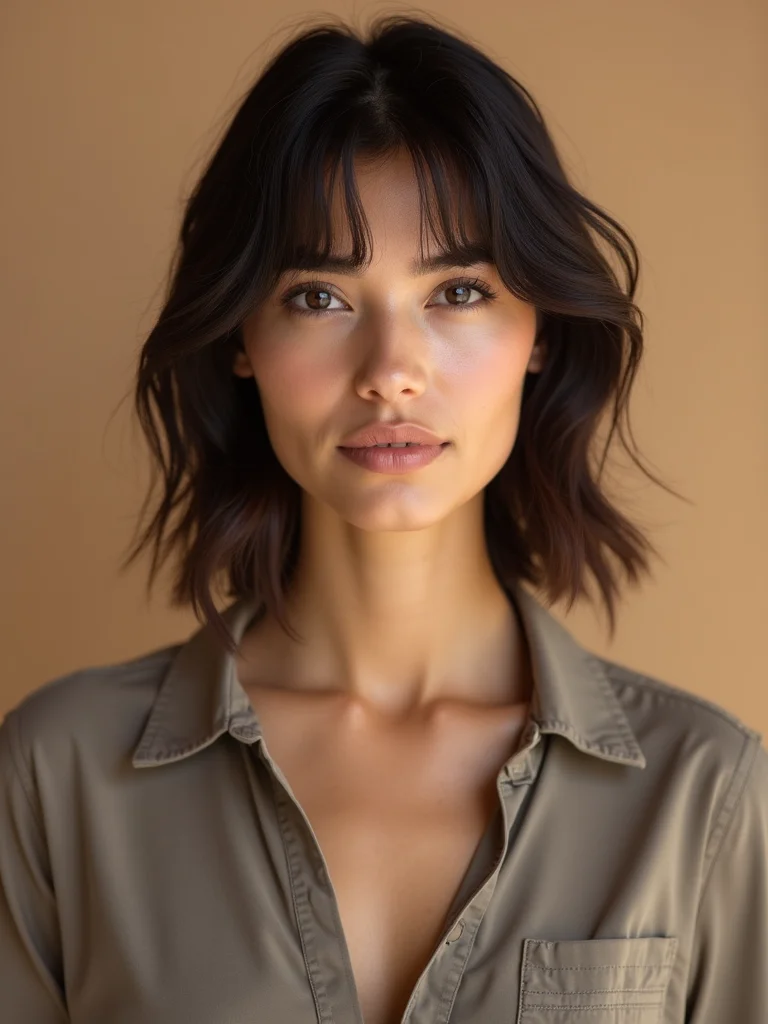
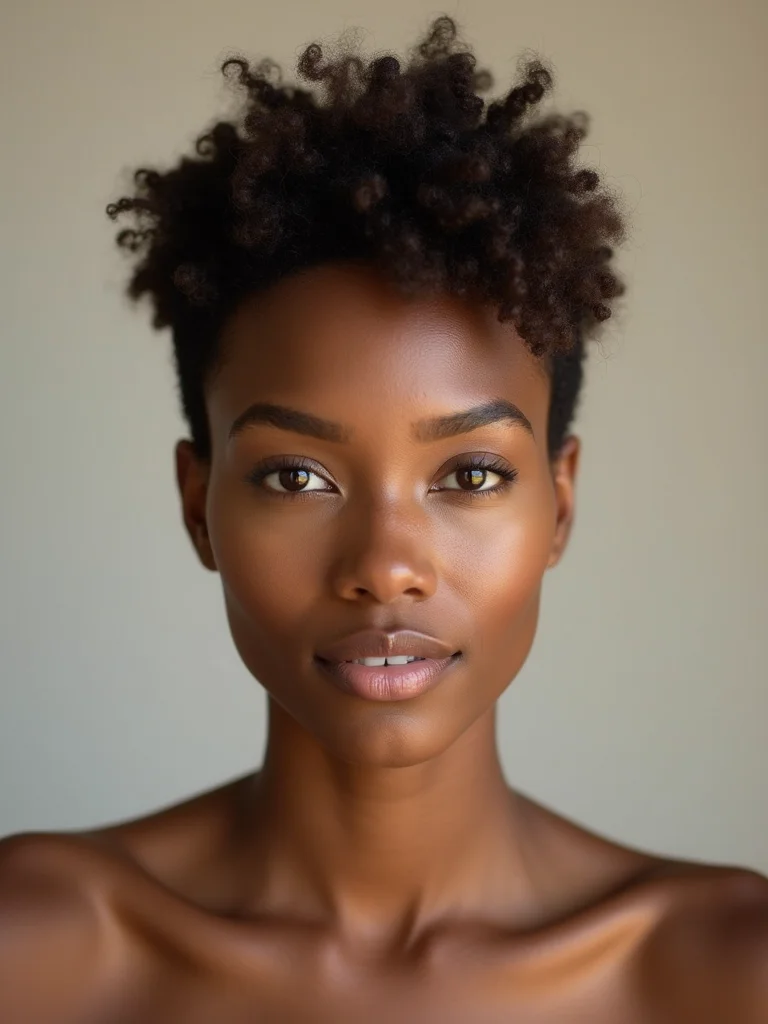
A shaggy layered haircut is really just its layers doing all the work. Take the layering away and what’s left is a one-length shape that hangs there, doing nothing. The specific type of layer, and exactly where it’s cut, decides whether hair swings with movement or sits flat under its own weight.
What follows breaks the technique into its named forms, feathered, carved, razored, shattered, and butterfly, and shows how each behaves once it meets long, midlength, short, curly, or wavy hair. Most pros point to the same starting question before touching scissors: how much weight actually needs to come out, and where.
Shag Layers, Quick Answers
What do shag layers actually do? They mix short and long pieces across the same head of hair, and that mix creates the separation that lets hair actually move.
Are all shag layers interchangeable? No. Feathered, carved, razored, shattered, and butterfly layers are each cut with a different technique and land differently, from soft and airy to bold and disconnected.
Which layer type suits which hair? Fine hair usually calls for feathered or shattered ends, thick hair benefits most from carved internal layers, and curls need the cut done dry so the pattern lands where it actually falls.
What Shaggy Layers Actually Do

Flat hair hangs as one solid mass, reflecting light evenly and barely moving because nothing inside it is cut to a different length. A shag haircut solves that by working three separate levers at once, and a stylist usually adjusts all three to match the hair in the chair:
- Separation: shorter pieces fall against longer ones, so the hair breaks into sections that move independently.
- Weight removal, taking bulk out of the interior so hair lifts and moves at the crown and sides.
- Direction, where face-framing and crown layers point the movement exactly where it’s wanted.

Long Hair: Where Layers Matter Most

Long hair has the most to gain from layering; skip it and all that length just hangs as a heavy, static curtain. Cutting layers throughout the interior, not only at the ends, removes the dead weight that keeps long hair still, and the length finally shows real movement.
The size of the transformation tracks with how much length there is to work with, which is why long hair sees the most dramatic before-and-after of any category covered here. For the version built specifically around this idea, the long shag guide covers it in full.
ℹ️Layer Logic
Layering is a category, not one haircut. A blunt style with a couple of long face-framing pieces barely counts, while heavy internal layering can turn the same base length into something completely different. The named types below (feathered, carved, razored, shattered, butterfly) each describe a meaningfully different cutting technique with its own tools and result.
Midlength: The Easiest Range to Layer

At a collarbone-to-shoulder length, shag layers land in their easiest range, with enough hair to show the layering clearly but not so much weight that the movement gets pulled back down.
It rarely goes wrong. It tends to be the default recommendation for anyone new to the look, mostly because it forgives small variations in exactly where the layers are placed:
- Holds movement on its own, with little to no heat styling.
- Suits a broad mix of face shapes and hair textures.
- Grows out into softer layers rather than a hard blunt line.
Short Hair: Crown Lift From Layers

On short hair, layering shifts its job from flowing movement to pure lift, stacking short pieces through the crown so the hair gains height right at the root. Height replaces flow entirely. For a full breakdown of this length, the pixie shag guide goes deeper.
- Stacked crown layers force height where short hair otherwise sits flat against the scalp.
- Piecey, separated ends keep the shape textured, with real separation right at the roots.
- It suits fine hair particularly well, since there’s little length left to weigh the lift back down.
Curly Hair: Layers That Shape, Not Swing

On curly hair, layers are chasing shape more than swing, freeing each curl to spring into a defined, bouncy form at every length. The curly shag haircut guide covers cutting and styling coils in detail.
Curly layering runs on one non-negotiable rule: hair gets shaped strand by strand while fully dry, so the stylist can see exactly where each spring lands once it’s finished shrinking.
- Weight comes out from the interior so curls lift evenly through the crown and sides.
- On tighter coil patterns, hair is typically cut on stretched sections and thinned carefully, preserving the curl pattern itself.
- Wet cutting is the most common mistake here, since curls shrink after the cut and throw off the whole shape.
Wavy Hair: Layers That Work With the Bend

Wavy hair and shag layers pair naturally, since the wave already wants to move and the layers simply give it somewhere to go. The two elements were made for each other. Cut into the bend, layers and wave pattern move together, and the hair settles into loose, flowing pieces with very little effort.
The one real risk is over-layering fine waves, which can leave them looking sparse. Kept moderate, wavy shag layers rank among the lowest-effort styles covered here: a scrunch of product into damp hair, then an air-dry.
Feathered Layers, the Original Shag Cut

Feathered layers are cut and angled so the ends flick and taper the way a feather narrows toward its tip, light at the ends and fuller through the body. It’s the layer type that built the original seventies shag.
Most stylists still reach for feathering first on hair that’s straight or gently wavy, since it suits nearly any face shape and rarely demands much upkeep.
- Soft, rounded movement that flicks back and away from the face.
- Light, airy fullness through the mid-lengths.
- A gentle finish that suits fine to medium density best.
Carved Layers for Heavy Hair
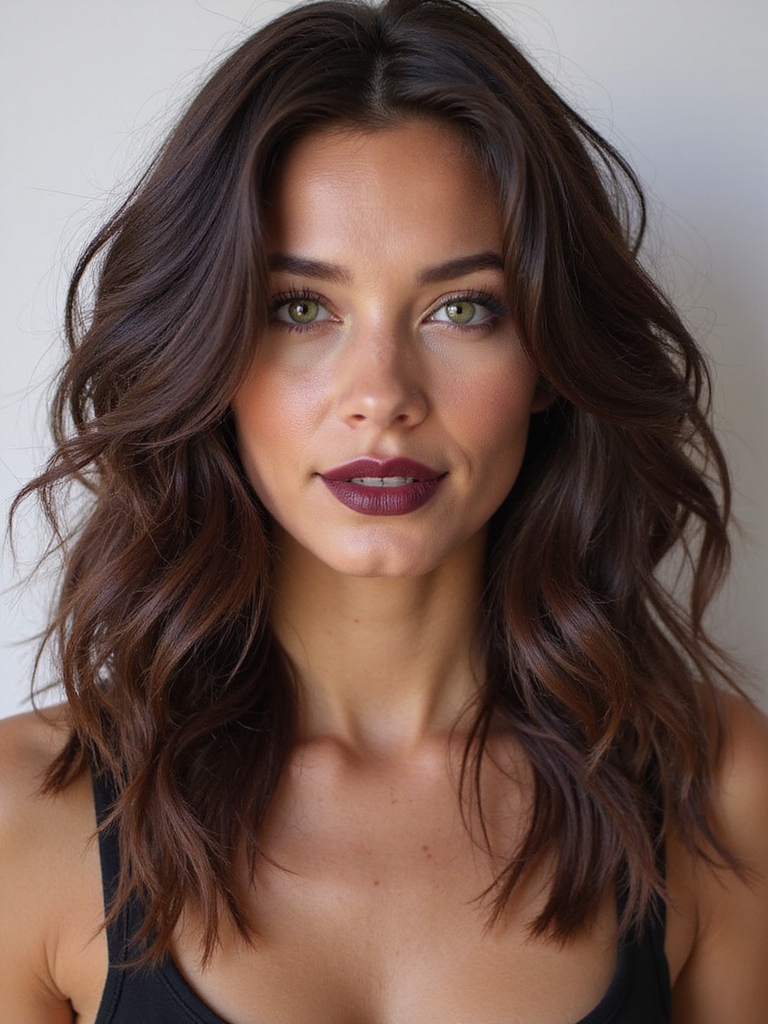
Carved layers answer for hair that’s simply too heavy to move. Rather than shortening pieces from the ends, a stylist carves weight out from inside the hair, hollowing the interior bulk so what’s left can finally flow.
Best for Thick, Dense Hair
Thick-haired clients rarely have too little hair. The problem is almost always too much density sitting like a solid block, and carving removes that interior weight while leaving the outer shape intact, so the silhouette stays the same even as the hair underneath gets lighter and starts to move on its own.
Done well, carving produces some of the airiest movement of any technique on heavy hair. Done carelessly, it leaves gaps. Worth confirming: a stylist’s real experience with the specific carving or slide-cutting method, before booking anything on hair that can’t easily hide a mistake.
Not sure which layer type your hair actually needs? Start here.
1Hair is heavy and slow to move
Carved layers remove interior weight while keeping the outline the same length.
2Hair is fine and goes flat fast
Feathered or shattered ends fake density through texture alone.
3Hair is curly or coily
Layers get shaped fully dry, one curl at a time, so the shrinkage lands correctly.
Feathered Layers Paired With Curtain Bangs

Pairing feathered layers with curtain bangs carries the movement up to the face, exactly where it flatters most. The bangs function as the front-most feathered layer brought forward, so nothing about the transition looks separate or added on.
Movement Concentrated at the Face
It’s a combination stylists suggest often, since both pieces speak the same soft, feathered language and grow out together with minimal reshaping needed in between.
The trade-off is minor: the bangs need occasional trims to stay at the right length, roughly every 3 weeks for a crisp line, though a slightly longer, blended fringe can stretch that window considerably.
Textured Layers With a Micro Fringe
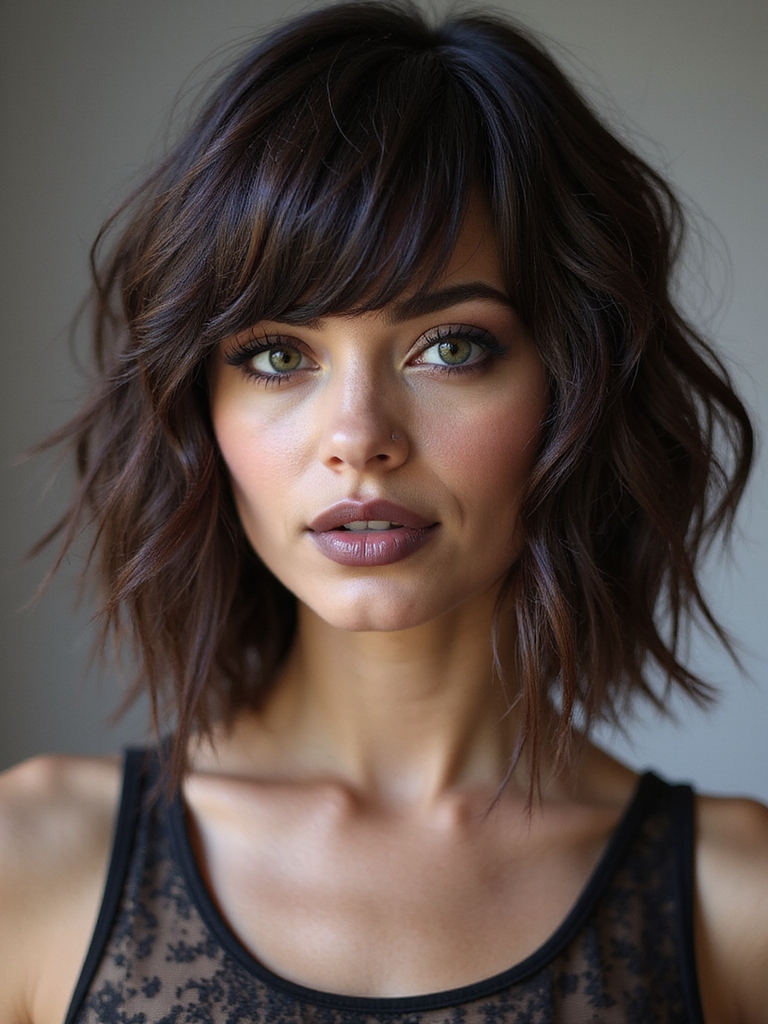
Pairing textured layers with a short micro fringe gives all that movement a sharp focal point. The eye goes straight up. Crisp, blunt-ish bangs sitting above piecey, moving layers below come across as deliberate and editorial.
- The micro fringe draws the eye upward and sharpens the cheekbones.
- It’s a bold choice with real upkeep, since a short fringe needs trims on a noticeably tighter schedule than the rest of the layers.
- Keeping the surrounding layers textured and piecey helps the bang read as intentional, not disconnected.
Airy Layers on a Lob

A long bob ranks among the most requested cuts in any salon, and airy shag layers are what take it from a heavy, blunt shape to something with real motion. The collarbone length stays versatile while the layering adds flow a single-length lob simply doesn’t have. The shag bob haircut guide has more on where to draw that line.
- Keep the layers soft so the lob still looks put-together at the everyday length.
- Add face-framing pieces so the movement reaches the front, not only the back.
- Leave weight at the perimeter so the lob holds its clean outline.
Wolf-Cut Layers, the Boldest Version

For the most dramatic layering covered here, wolf-cut layers push the technique to its extreme, stacking a short, heavily disconnected crown over longer, piecey lengths below so the two zones of the head almost read as separate haircuts sharing one part line. It works. The sharp jump in length between top and bottom is what creates the wild, high-volume movement the wolf cut is known for.
It needs hair with some natural body to hold the disconnected shape, and it’s the one layer type here that tends to photograph better a little undone than freshly smoothed.
| Layer type | Best for | Trade-off |
|---|---|---|
| Feathered | Soft, everyday movement | Needs a healthy blow-dry routine to show its shape |
| Carved | Heavy, dense hair | Requires a skilled hand to avoid visible gaps |
| Razored | Airy, weightless ends | Fragile on already-thin or damaged hair |
| Shattered | Fine, flat hair | Grows out unevenly around the face |
Razor-Cut Layers for the Airiest Finish

When layers look impossibly light and feathered, a razor is usually behind it. Instead of a blunt scissor line, the blade tapers each strand to a fine point, producing the lightest, most weightless ends of any technique covered here, the kind that catch light differently depending on how the hair falls that day.
- Works best on healthy, medium to thick hair, since fragile or very fine ends can fray under the blade.
- Demands real skill; a razor in the wrong hands damages hair quickly.
- Not the layer type to gamble on at an unfamiliar chair, given how much technique it takes.
Shattered-End Layers for Fine Hair

Shattered layers focus entirely on the ends, cut in deep, irregular, piecey snips that break up any smooth line. It’s an easy cut to spot. Where feathering stays quiet, shattering makes noise, and it works especially well on fine, straight hair that needs help faking density.
The irregular pieces create separation that adds visible texture, and the cut is among the most forgiving to grow out, since there was no clean line to lose in the first place. Most stylists suggest starting here for anyone still deciding how much texture they actually want.
🅰️Want the airiest possible ends
Ask for a razor. It shaves weight straight off the surface for the lightest possible finish.
🅱️Want a safer, more forgiving cut
Stick with scissor-point cutting. It gives similar texture with far less risk to already-fragile hair.
Butterfly Layers: Lift Without Losing Length

The butterfly cut answers for anyone who wants lift and movement up top but refuses to give up length. It works in two tiers: short, curled-under pieces around the face and crown for volume, and long layers underneath that keep the overall length intact.
- The short upper layers create face-framing fullness when styled with a slight curl under.
- The long lower layers stay largely untouched, preserving length.
- Blended well, the two tiers settle into one soft shape across the whole head.
Styling Tips for Layered Movement
Even well-cut layers can fall flat with the wrong routine, and most of the fixes are simple once they’re identified. The goal at every step is encouraging the separation the layers were cut to create, not smoothing it away.
Scrunching a texture spray or light mousse into damp hair wakes up the separation before it dries. Air-drying or diffusing works better than a smoothing blow-dry, which flattens layers into one sheet, and breaking pieces apart with fingers once dry keeps the movement intact. A full reshape every 8 to 12 weeks keeps the layers from growing heavy and losing their swing, well before that point on shorter, more heavily layered cuts.
Shaggy Layered Haircut Questions, Answered
?What’s the real difference between feathered and shattered layers?
Feathered layers are soft: ends are angled and tapered so they flick and float gently, the classic seventies shape. Shattered layers are bolder, sliced into jagged, uneven pieces for a choppy finish with real edge. Feathered suits gentler textures; shattered gives fine, flat hair the most separation.
?Can layers add movement without cutting hair shorter?
Yes. Internal layering, where a stylist carves layers through the body of the hair while barely touching the visible length, adds movement without a noticeable length change. It’s a common request for anyone growing hair out who still wants some shape.
?Do curly and coily layers cost more than a standard cut?
Often, yes, since a dry cut on curls or coils takes longer and demands more precision than a wet cut. A dry curl cut typically runs $90 to $150, a step above the $45 to $70 a standard wet cut usually costs, reflecting the extra time it takes to see each curl’s true, shrunken position.
?How do I know if my hair needs carved layers versus feathered ones?
Density is the main signal. Hair that feels heavy and barely moves on its own usually calls for carved layers to remove interior weight. Hair that’s already fine or moves easily generally does better with feathered or shattered ends, which add visible texture even on hair that has little density to spare.
Flat Hair Was Rarely the Real Problem
Hair that’s always felt flat and lifeless usually wasn’t the issue on its own; the layering, or the lack of it, tends to be doing most of the work either way. Cut correctly, whether feathered, carved, razored, or shattered, even fairly stubborn hair starts to move.
Worth bringing to a consultation: how heavy the hair actually feels day to day, how much movement is wanted, and where that movement should start. A stylist who treats layering as a set of separate tools, not one universal cut, tends to land closer to the right answer on the first visit.
More to Try