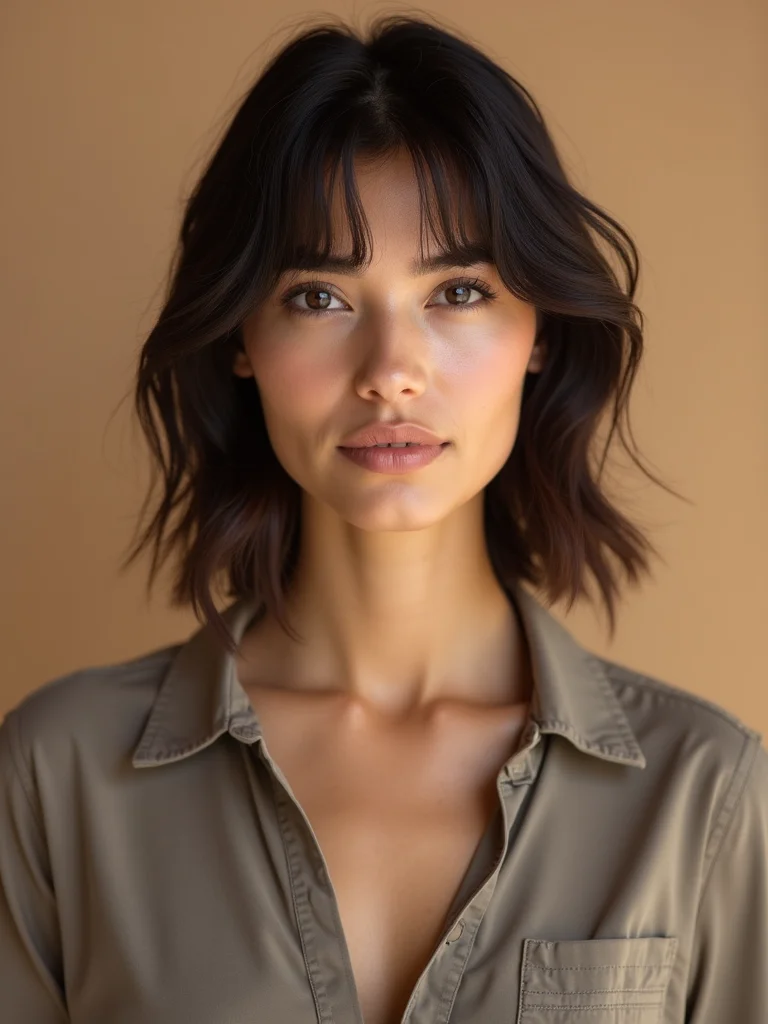
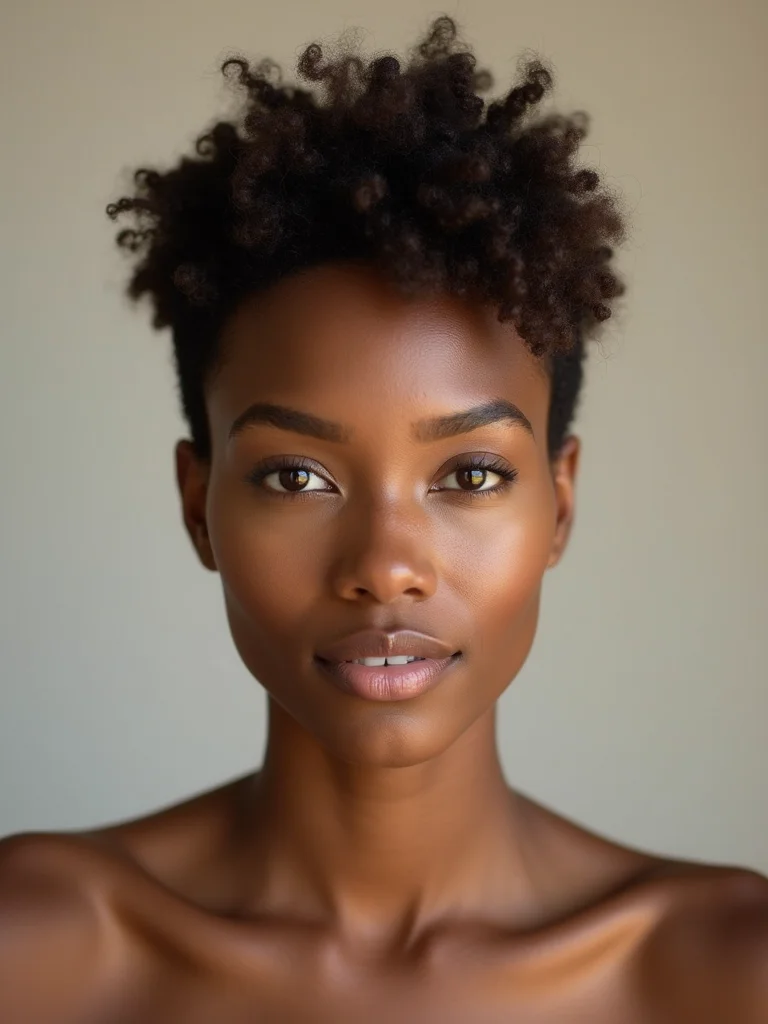
What actually flatters a round face? After years of fielding that exact question in my chair, my answer never changes: anything that adds vertical length and a little angle, and almost nothing that piles width at the cheeks.
That single idea explains every cut below. I’ve grouped sixteen round face haircuts by how they create that lengthening effect, with honest notes on the upkeep each one asks for and the one or two looks I gently steer round-faced clients away from.
The Short Version
A round face has roughly equal width and length with soft, full cheeks, so the goal is to draw the eye up and down rather than side to side. Length below the chin, height at the crown, off-center parts, and face-framing layers all do that work, while blunt chin-length cuts and center-parted volume tend to widen the face further.
Not sure round is even your shape? Our face shape quiz settles it in under a minute, and the advice shifts quite a bit for an oval face, where almost anything works.
None of this is a rule you have to obey. Round is a lovely face shape, and plenty of people wear the so-called wrong cut beautifully. Use these as starting points, then bring a photo to your stylist so the two of you can adjust for your texture and lifestyle.
What a Round Face Wants From a Haircut
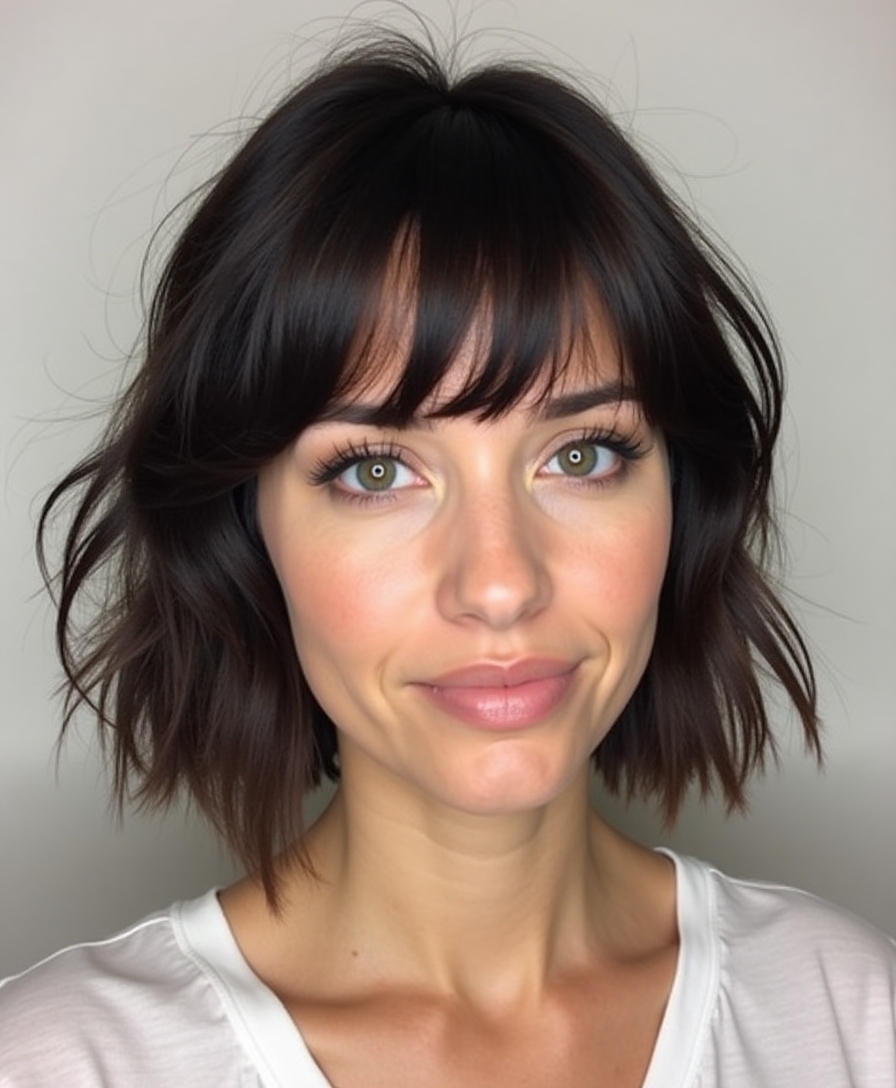
Before the cuts, it helps to know what you’re working with. A round face reads as soft and youthful, with the width across the cheeks close to the length from hairline to chin. You’re not trying to fix that, just balance it. Three levers do most of the work:
- Vertical length: anything that pulls the eye downward, like layers that fall past the chin or a long, narrow shape.
- Height at the crown: lift on top adds the illusion of length the way a low cut at the cheeks never will.
- Angles and asymmetry: off-center parts, side-swept pieces, and clean edges break up the roundness.
Long Layers With Side-Swept Bangs
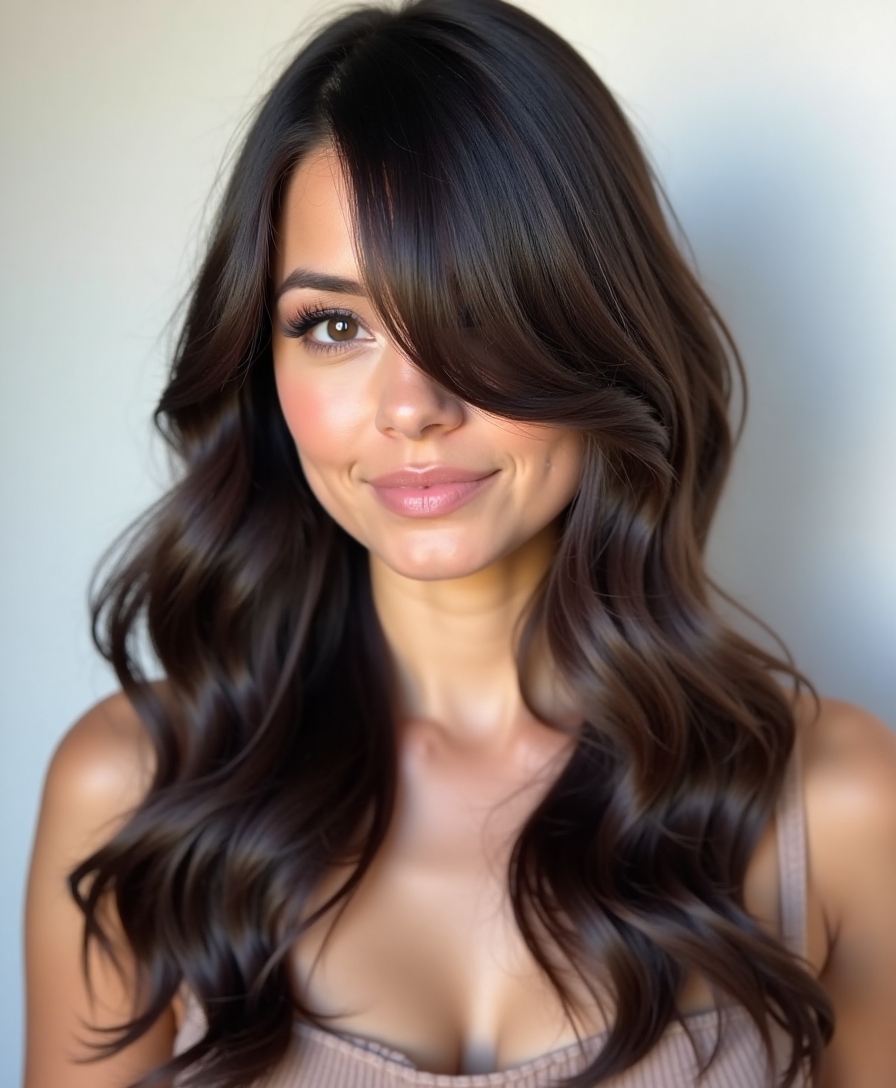
This is the cut I reach for first when a round-faced client wants something low-maintenance that just works. Long layers keep the weight low and the line vertical, while side-swept bangs cut a diagonal across the forehead that instantly slims. Ask for:
- Layers that start at or below the chin so they lengthen rather than puff at the cheeks.
- Bangs swept to one side and blended into the face-framing pieces, not a blunt straight fringe.
- A long, soft shape overall; the more vertical the silhouette, the more flattering.
What to Skip
The two looks I steer round-faced clients away from are a blunt, chin-length bob that stops right at the widest point of the face, and lots of volume built at the sides or a center part with heavy, cheek-level curls. Both add width exactly where a round face already has it. If you adore a blunt bob, lengthen it past the jaw and add a side part to keep it flattering.
An Asymmetrical Bob With One Longer Side
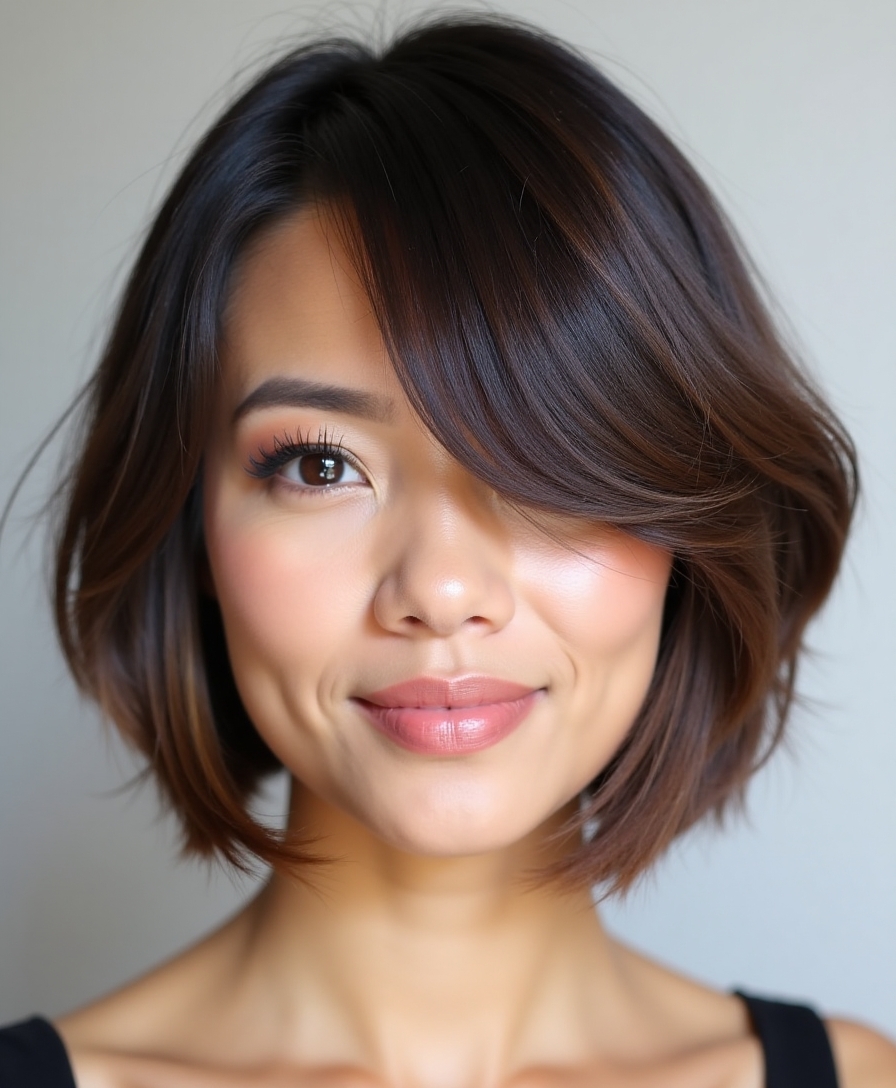
If you love a bob but worry it widens your face, asymmetry is your friend. One side cut longer than the other creates a built-in diagonal that the eye follows down and across, breaking the circle.
The trick is committing to enough difference between the sides that it reads as intentional. A timid half-inch looks like a mistake; an inch or two looks designed.
- Keep the longest point below the jaw so it skims past the widest part of the face.
- Pair it with a deep side part to double down on the asymmetry.
- Style the shorter side tucked behind the ear for extra angle.
A Face-Framing Pixie With Height on Top
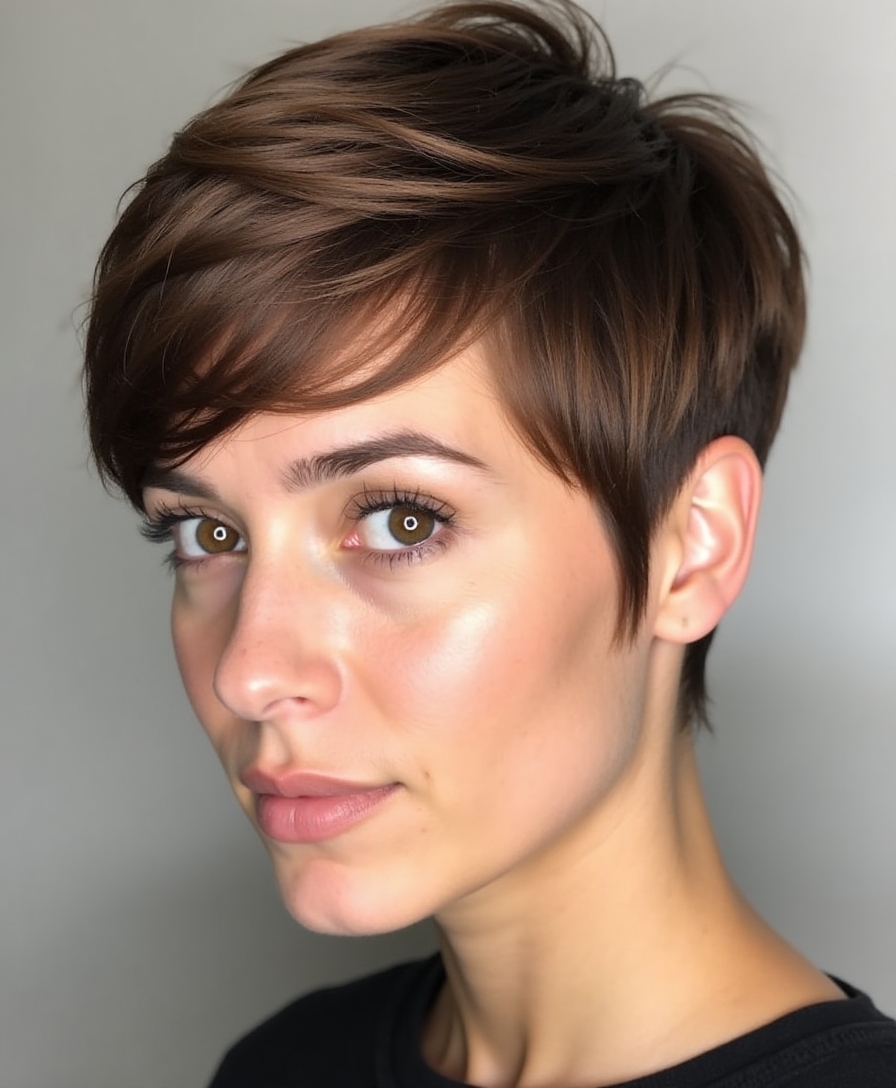
A pixie can absolutely flatter a round face, but only if it goes tall, not wide. The whole game is volume up top and close sides, which stretches the face vertically. Here’s how to keep it from rounding out:
- Ask for length and texture through the crown and fringe so you can style height.
- Keep the sides and the area around the ears short and tight.
- Style with a matte paste, pushing the top up and back rather than flat to the head.
“Bring a photo, but bring one of a person whose face shape is close to yours, not just a haircut you like on someone with a long, narrow face. The same cut reads completely differently on a round face, and the small adjustments, where the layers start, how deep the part sits, are what make it work for you.”
A Textured Shoulder-Length Lob
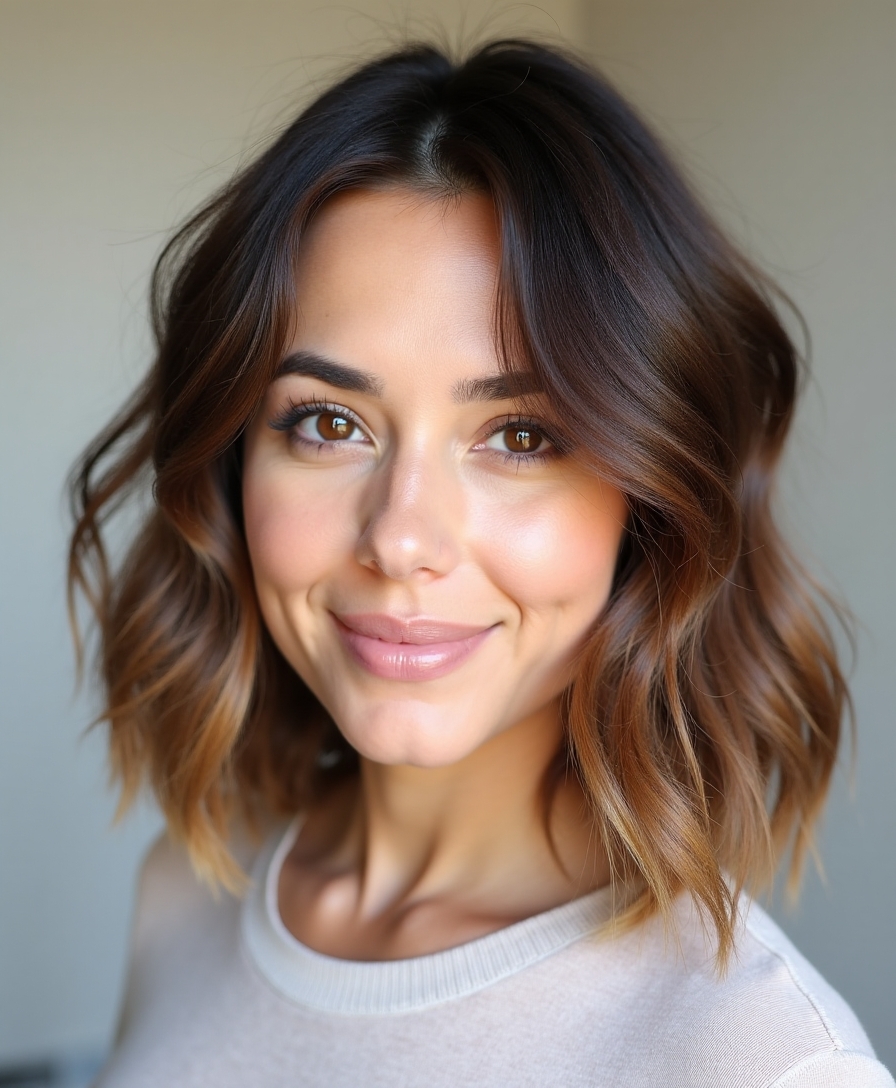
The lob lands at that flattering point just past the chin, which is exactly where a round face wants its weight. Add texture and it stops looking like a heavy helmet and starts moving, which keeps the focus off the cheeks. Among the medium-length options, this is an especially forgiving cut for a fuller face.
- Aim for the longest part to graze the collarbone, never cut bluntly at the chin.
- Have your stylist point-cut the ends so they break up and feather.
- Tuck one side behind the ear to add the asymmetry round faces love.
A Deep Side Part for Instant Asymmetry
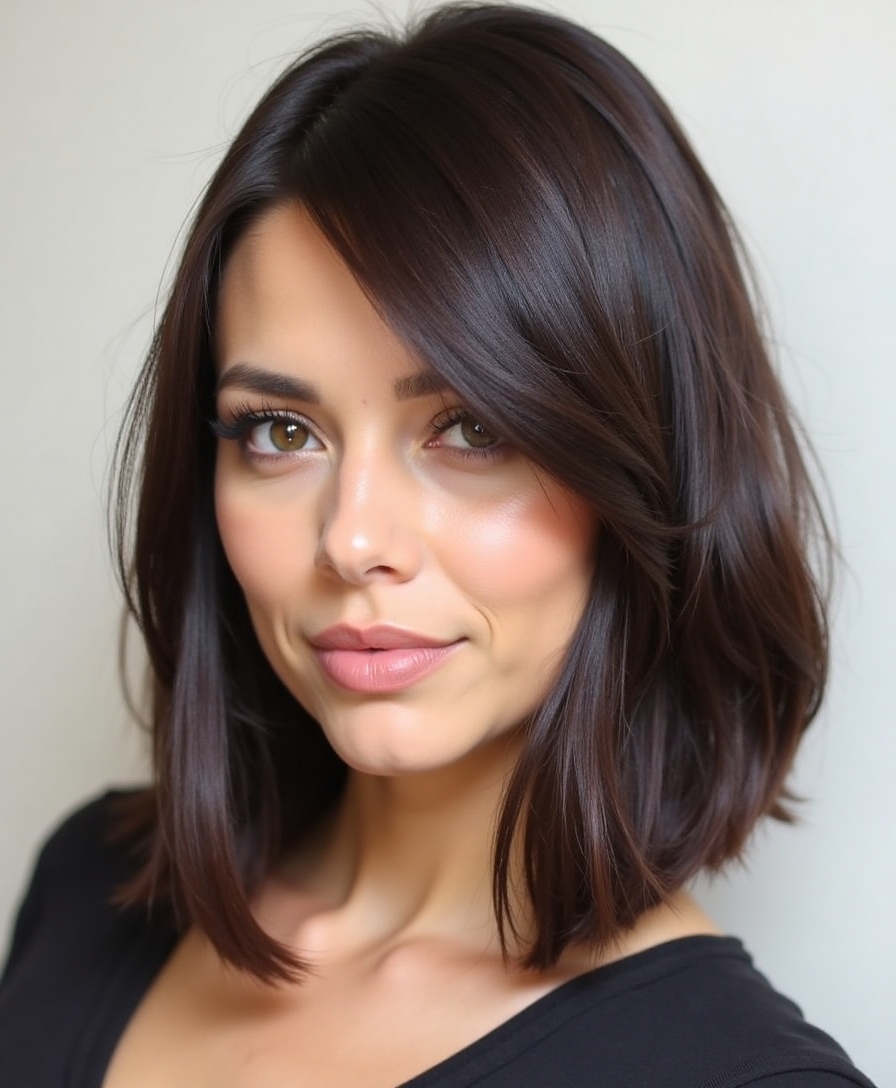
This isn’t a cut so much as a styling decision that flatters round faces no matter what your length is. A deep side part throws your hair off-center, which immediately introduces the diagonal a round face benefits from.
How to Set It
Clients are always surprised how much a part placement changes their face. Move it from the center to well past the arch of one eyebrow and the whole face looks longer and more angular in the mirror.
It works on everything from a pixie to long layers, which makes it the cheapest flattering change you can make, since it costs you nothing but a comb.
ℹ️Good to Know
Your hair’s texture changes the math. Curly and coily hair adds width at the sides naturally, so round-faced clients with texture often want more length and a little more weight removed near the ears, while fine, straight hair needs the opposite: layers kept longer so the cut doesn’t go limp and lose its lift.
Curtain Bangs With Long Layers
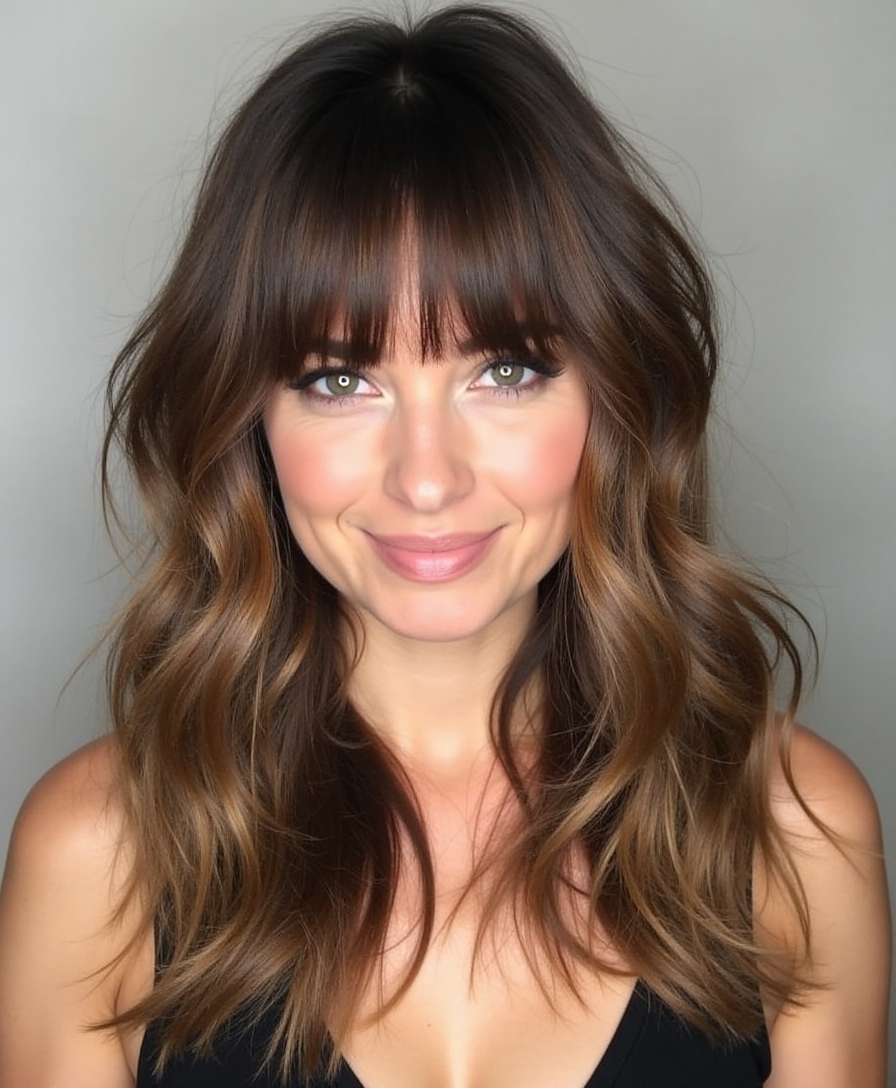
Curtain bangs are a round face’s quiet best friend. Parted in the middle and sweeping out toward the cheekbones, they frame the face with two soft diagonals that draw the eye inward and down rather than across.
Because they blend into the lengths instead of sitting heavy on the forehead, they grow out gracefully, which matters because any fringe needs regular trims to keep its shape.
Pair them with long layers and you get a frame top and bottom. If you’re bang-curious but nervous, these are the most forgiving fringe to try because they don’t demand a blunt, precise edge.
A Choppy Medium-Length Shag
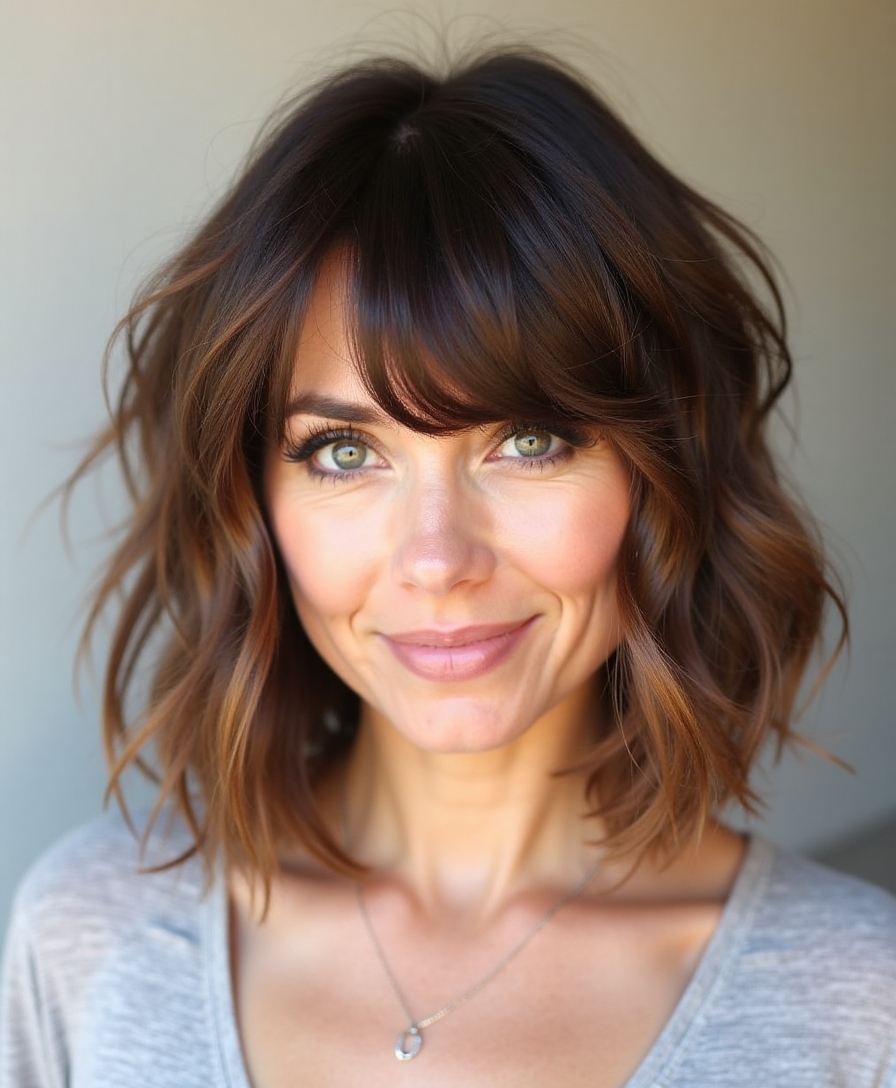
The shag is built from layers and movement, which is precisely what softens and lengthens a round face. Choppy pieces around the face create angles, while the layered crown adds the height that balances full cheeks.
It’s a fine pick for anyone who wants a relaxed, undone look rather than something polished. Just know that a true shag needs texture spray to look right; smoothed perfectly flat, it loses the broken-up effect that does the flattering.
Confused by the four bobs on this list? Here’s the one thing that sets each apart:
🎯Asymmetrical bob
Drama from uneven sides; the boldest, most fashion-forward of the four.
🎯Angular stacked bob
The sharpest diagonal line and the most aggressive crown height; best if you want structure.
🎯A-line bob
Maximum lift at the crown with a smooth front sweep; the most lengthening on its own.
🎯Graduated bob
The softest and most wearable; gentle stacking, easiest to live with day to day.
An Angular Bob Stacked at the Back
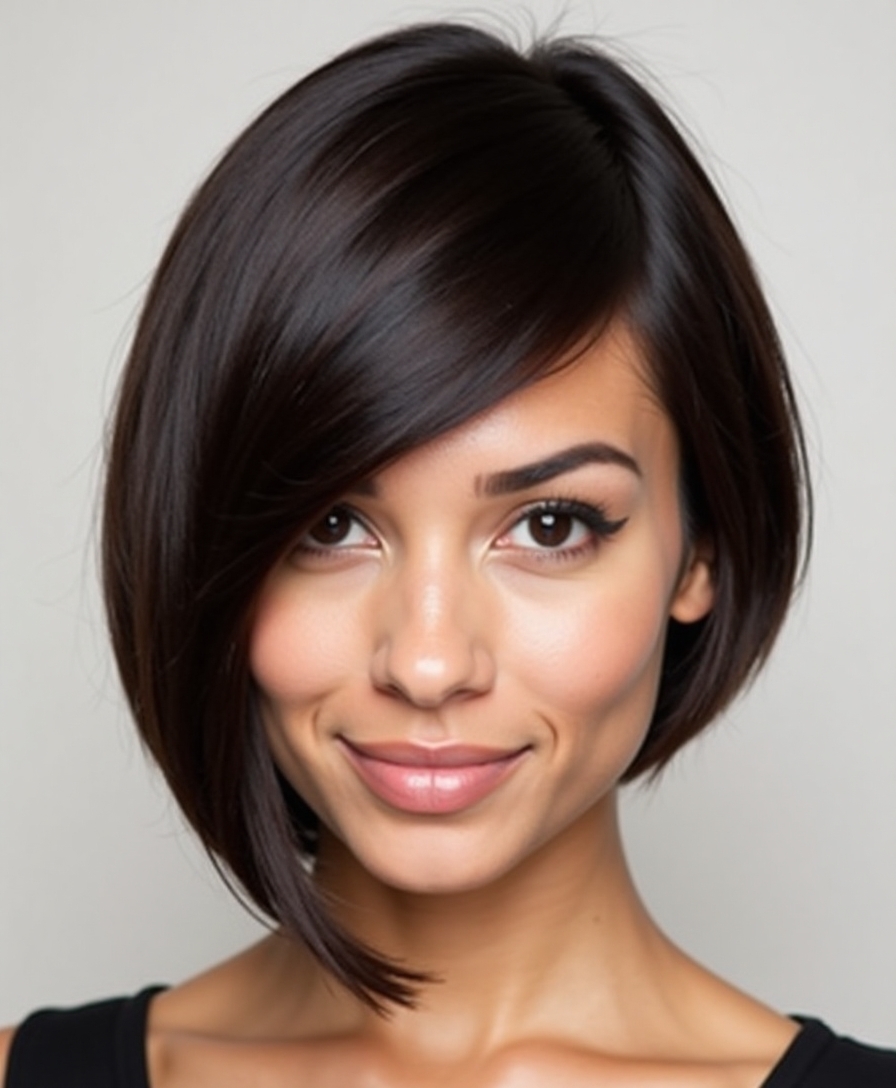
Where a blunt bob can widen a round face, an angled, stacked bob does the opposite. The back is cut shorter and stacked to build height, while the front angles longer toward the chin, creating a sleek diagonal line.
Keeping the Shape
That stacked weight at the crown is the secret. It lifts the silhouette upward, which is the exact effect a round face is after, and the longer front pieces graze past the cheeks instead of stopping at them.
It does ask for regular shaping; the stacked layers lose their lift within a couple of months, so this is a cut for someone happy to visit the salon on a schedule.
Wispy Bangs With Feathered Layers
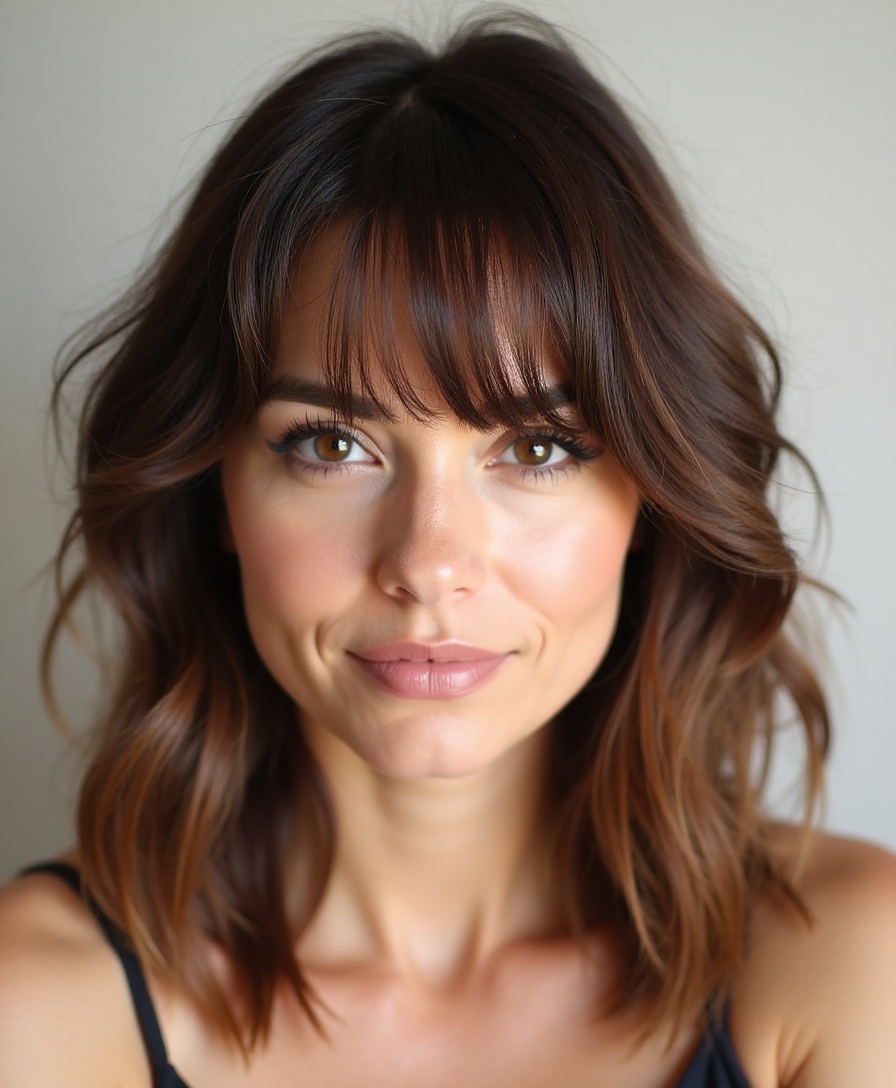
Wispy, feathered bangs are the gentlest way to add a fringe to a round face without the width a heavy blunt bang brings. They sit light on the forehead, see-through and airy, so they soften without closing the face in. Ask for:
- Bangs textured and thinned so light shows through, never a solid curtain.
- Feathered layers through the lengths so the whole cut stays soft and vertical.
- A length that brushes the brows or just below, keeping the forehead from looking short.
A Long V-Cut With a Center Part
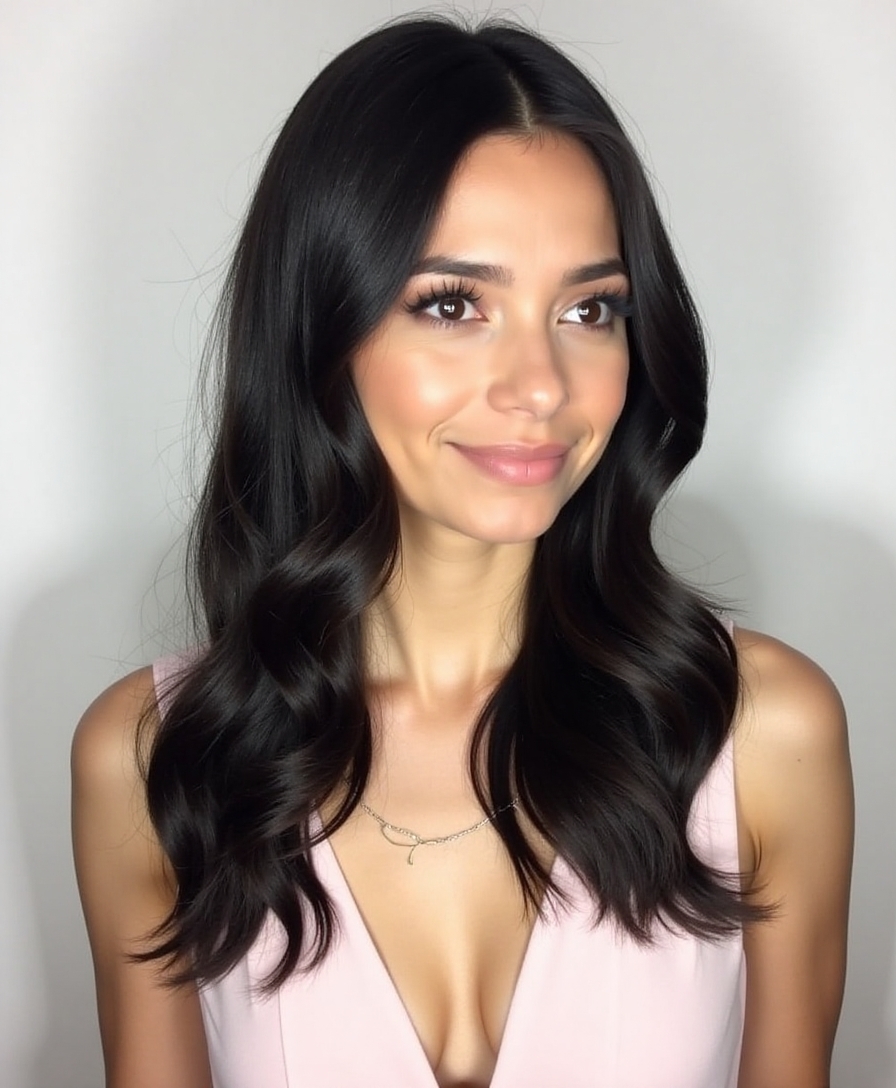
For long hair, a V-cut is the most slimming shape there is. The layers angle down to a point at the back, drawing one long vertical line that the eye follows all the way down, well past the face.
Why It Slims
This is the rare case where I’m fine with a center part on a round face, because the sheer length and the V-shape do so much lengthening that the part placement matters less. The vertical pull wins.
Keep the face-framing layers long here, starting at the collarbone, so the frame lengthens rather than widens. This is a strong option among longer styles for round faces.
A Textured Crop With a Side-Swept Front
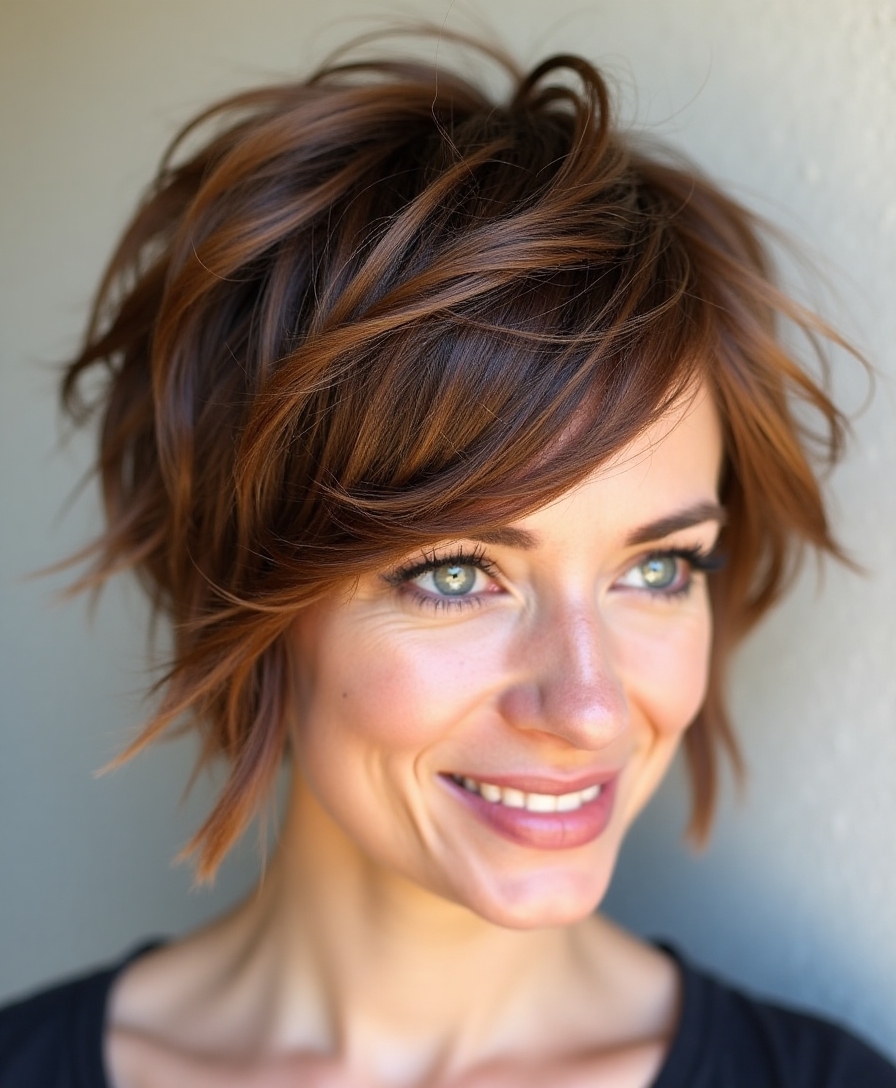
A short crop on a round face lives or dies by the front. Kept choppy with a side-swept piece falling across the forehead, it adds the angle and asymmetry that short hair can otherwise lack on a fuller face.
The body stays textured and slightly tousled, never round and helmet-like. This is a bold, freeing choice for fine hair especially, since cropped texture reads as fullness; see more fine-hair ideas if that’s your texture.
An A-Line Bob With Crown Volume
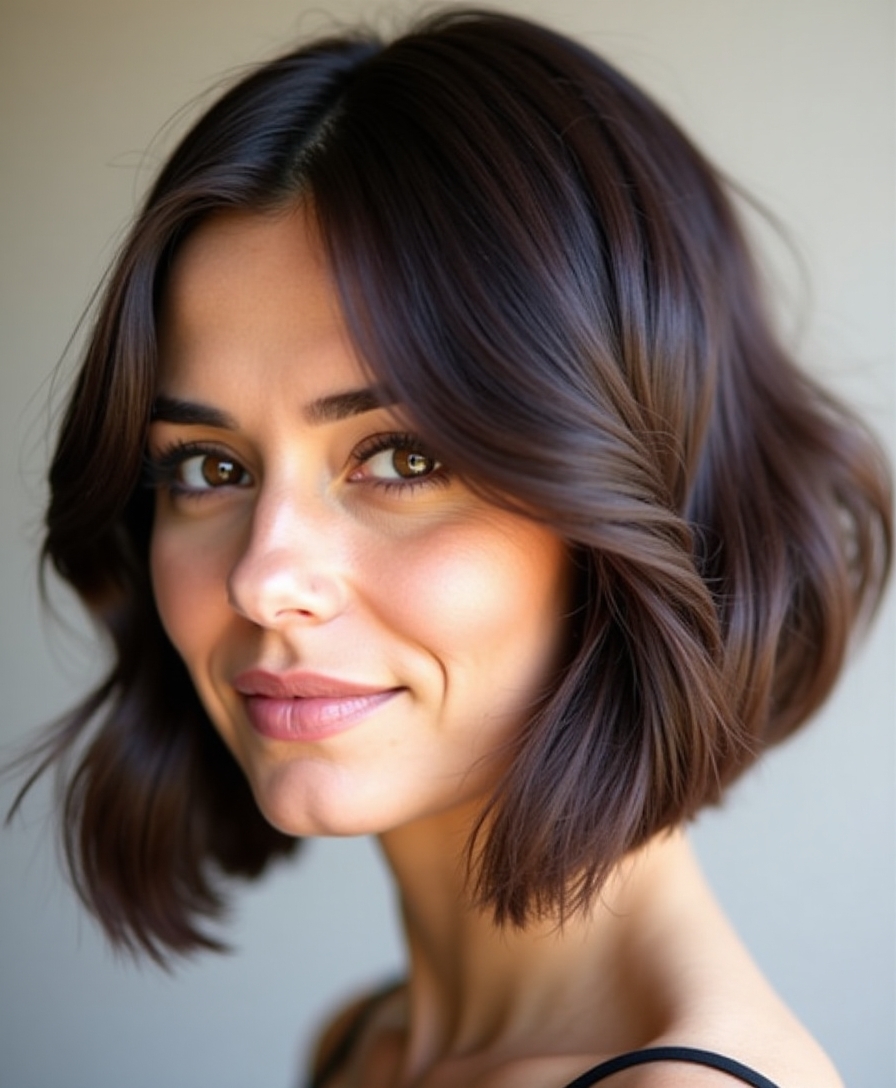
The A-line bob angles from shorter at the back to longer at the front, and when you build volume at the crown, it does real balancing work for a round face. The lift up top adds length; the longer front pieces slim the sides.
Building the Lift
I tell clients the crown volume is non-negotiable here. Without it, the A-line can still read a little wide, but a two-minute round-brush blow-dry lifting the roots stretches the whole shape upward.
It pairs naturally with an off-center part and a touch of root powder on fine hair. Compare it to a softer A-line shape if you want less drama in the angle.
Beach Waves With Face-Framing Layers
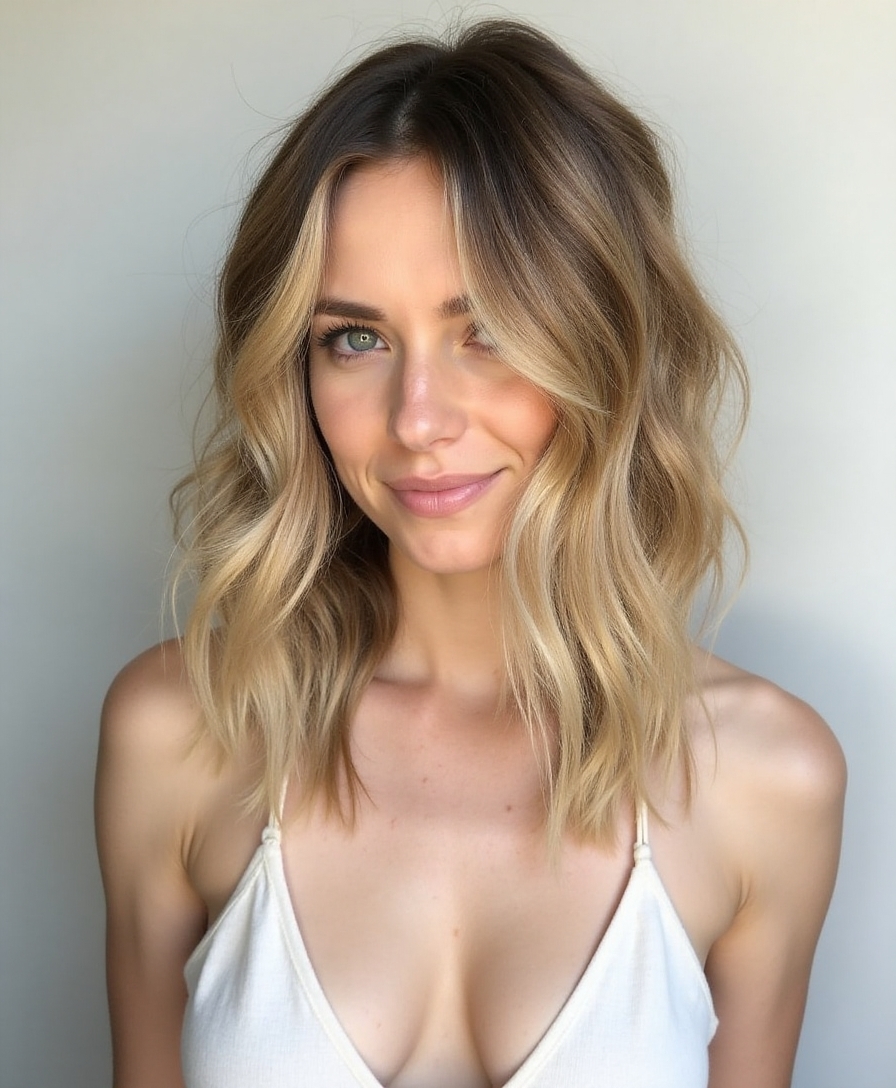
Loose, undone waves flatter a round face because they add irregular, vertical movement that breaks up any roundness. The key is where the waves sit: you want them falling below the cheeks, not bending outward at them.
Wave Placement
I always bend the waves away from the face with a curling iron or a flat iron, and leave a little length straight near the roots so the volume doesn’t start too high and widen the top of the face.
Face-framing layers turned outward at the bottom finish the effect, keeping the frame soft and the silhouette long rather than puffed at the sides.
A Graduated Bob With Side-Swept Bangs
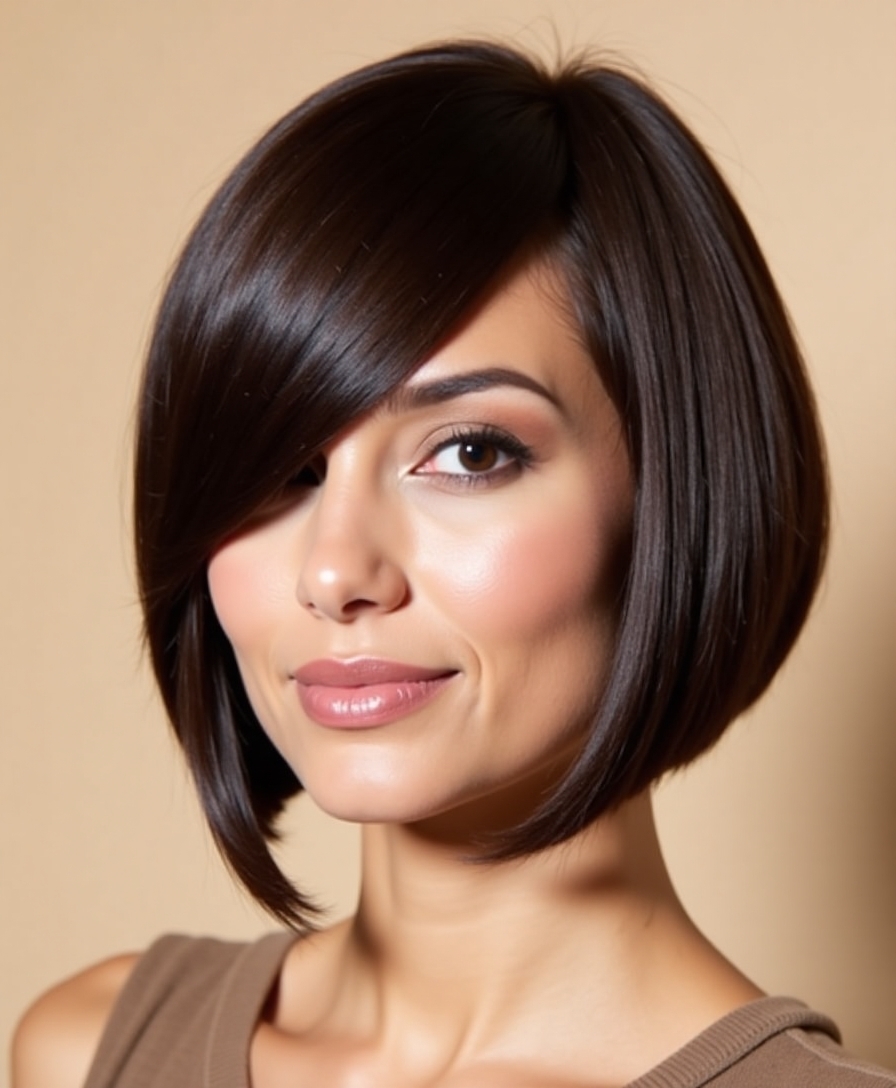
A graduated bob stacks gently at the back for height while the sides angle longer, and paired with side-swept bangs it hits every round-face goal at once: lift up top, length at the sides, and a diagonal across the forehead.
Think of it as the structured cousin of the long-layers look, for someone who wants something shorter and a little sharper. The graduation keeps the back from falling flat, which is where round faces lose the lift they need.
If you want this shorter still, a chin-skimming version works too, as long as you keep the front pieces angling past the jaw rather than stopping at the cheek.
How to Style a Round-Face Haircut
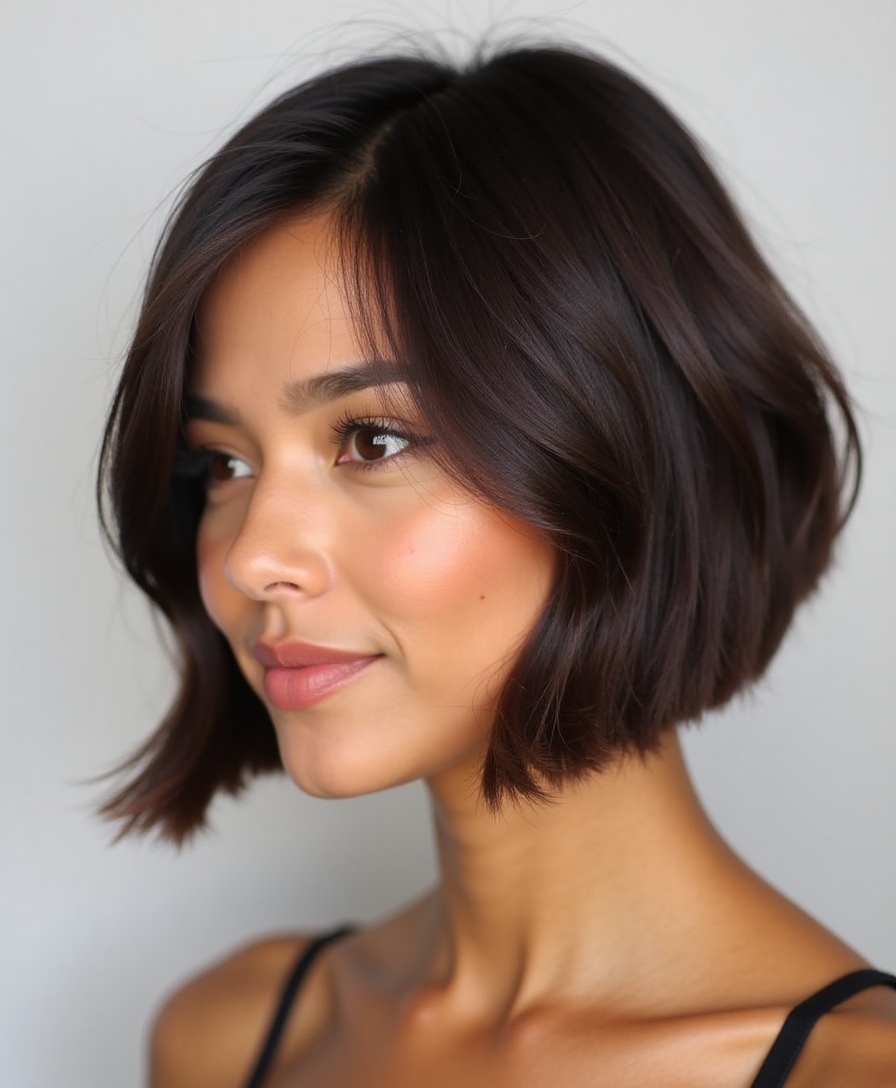
The cut sets you up, but how you style it day to day is what holds the flattering effect. A few habits make every look on this list work harder:
- Lift the roots at the crown: a round brush works, or just flip your head upside down under the dryer for a few seconds.
- Bend face-framing pieces away from the face, never curling them inward at the cheeks.
- Default to an off-center or deep side part rather than dead center.
- Keep volume low and vertical, building it at the crown and the ends, not at the sides.
The Right Products for Lift and Movement
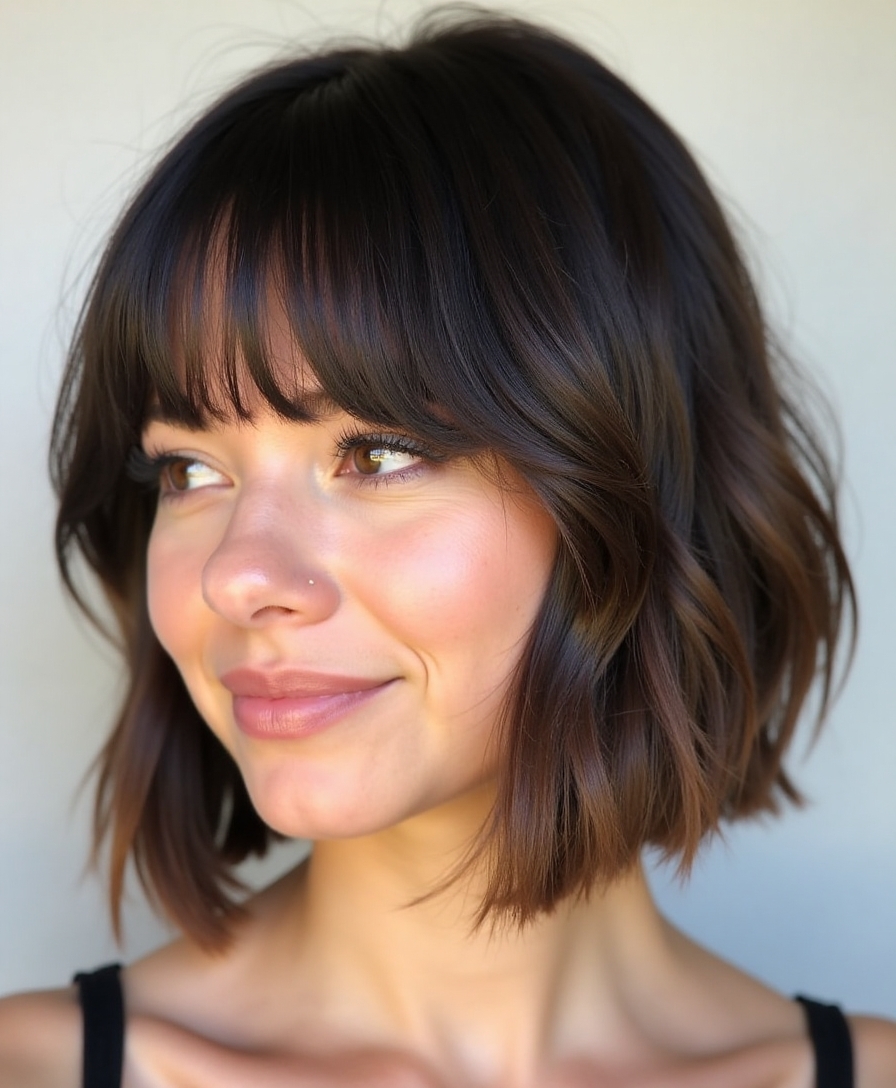
You don’t need a shelf full of products to make these cuts behave, just two or three that build height and texture rather than weighing hair down. Heavy creams and oils are the enemy here; they flatten the crown and pull the shape wider.
For lift, a root-lifting spray or a light mousse worked in at the roots before drying does the real work. For separation and that broken-up, vertical movement, a texture spray or a dry texturizing mist is worth more than any pricey serum.
On fine hair, a little root powder at the crown buys you height that lasts all day. The whole kit runs maybe $40 to $60 and lasts months, which is a small price for hair that flatters every morning.
What to Expect From the Cut and the Upkeep
A flattering round-face cut is partly the haircut and partly the maintenance, and it’s worth being honest about that before you book. The shapes that lengthen best, the stacked bob, the A-line, anything with bangs, are also the ones that need the most regular shaping.
Here’s a realistic picture of what these cuts ask of you:
- Bangs of any kind: plan on a quick shape-up about once a month, often free at your salon.
- Stacked and A-line bobs: a reshape roughly every two months, before the layers start falling flat.
- Long layers and V-cuts: the most forgiving, easily ten to twelve weeks between cuts.
- A salon cut with a blow-dry typically runs $45 to $90 depending on your area; the part change costs nothing.
Finding Your Most Flattering Cut
Every cut on this list comes back to the same simple idea: lengthen and add angles, keep width off the cheeks, and build a little height up top. Once you see your hair through that lens, choosing becomes easy, and even a cut that breaks the rules can work when you style it with length and lift in mind.
Pick the one that fits the upkeep you’ll realistically keep, take a photo to a stylist you trust, and remember that round is a soft, youthful shape worth flattering, not fixing. You’ve got more good options than you think.
Where to Next