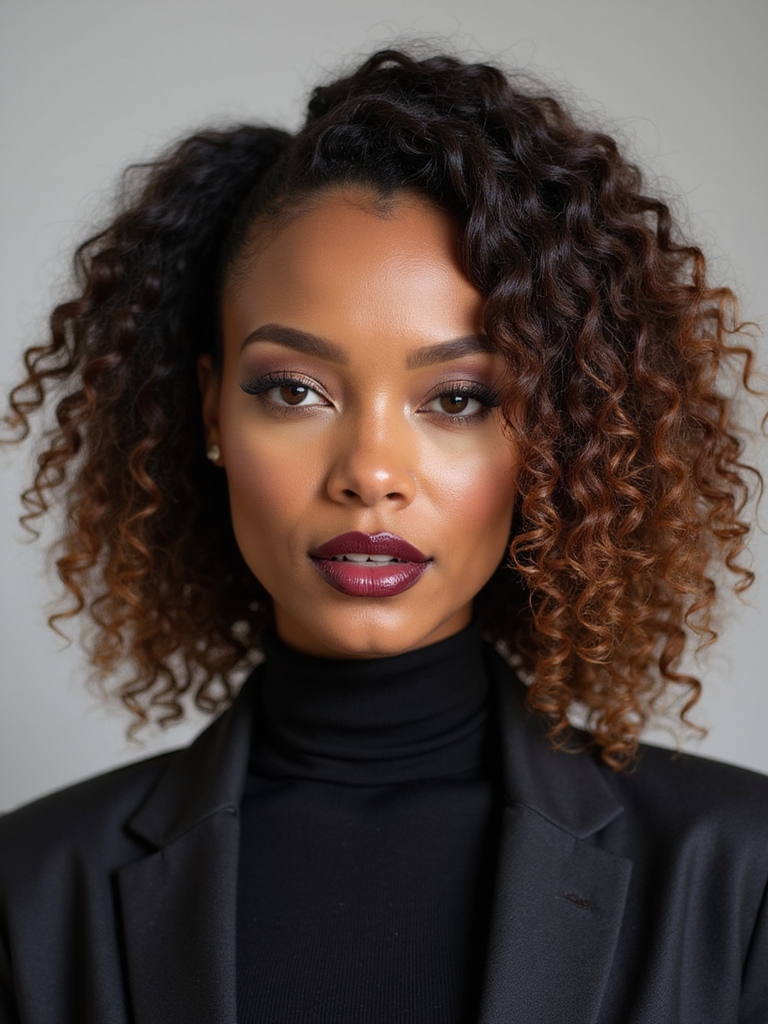
Hats get blamed for ruined winter hair, but hats are rarely the real problem. A coat collar crushes a bun before a hat ever enters the picture, and a wool scarf tangles loose strands a hood never even touches.
Once the actual culprits turn out to be outerwear rather than headwear, the styles that survive winter start making sense: worn low, contained, and smooth enough to slide against fabric instead of catching on it. Sixteen of them below.
Winter Hair, the Short Version
- Low styles beat high ones in winter, since anything above the collar gets crushed or pushed sideways.
- Contained shapes, braids and tucked buns, leave no loose strands to tangle against a scarf.
- Silk and satin cause far less friction against hair than wool, whether in a scarf or a hood lining.
- A style a hood can pass over without disturbing it holds up best on the coldest, most bundled-up days.
Low Sleek Nape Bun for High Collars
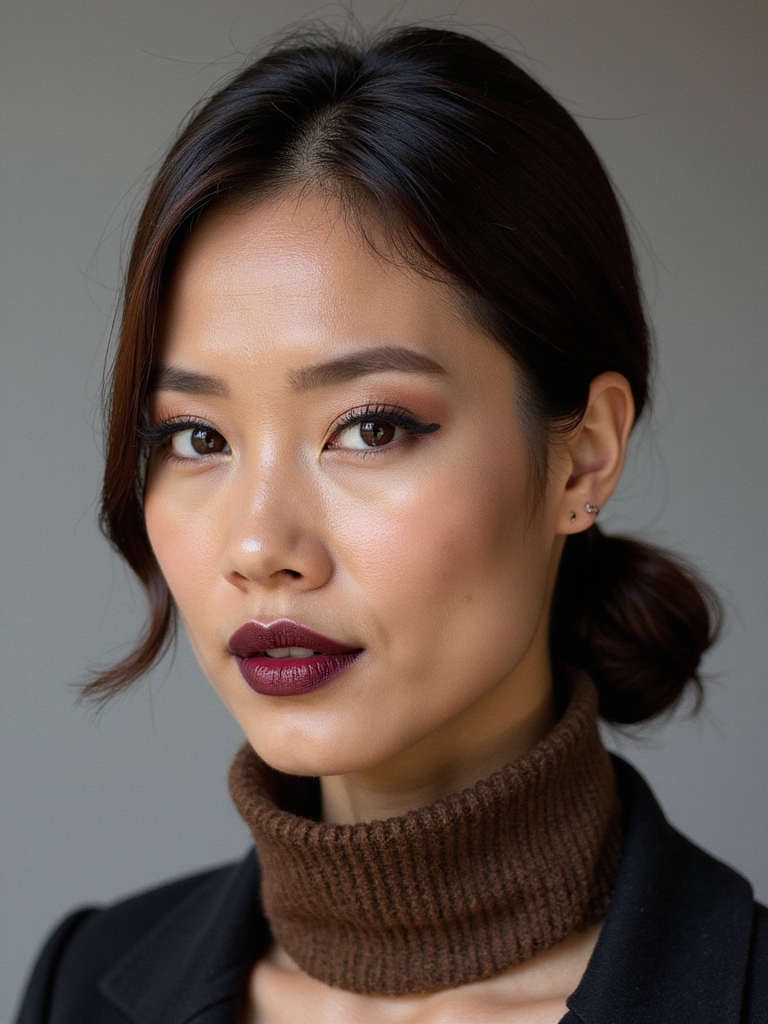
A bun sitting right at the base of the skull, below where a turtleneck or coat collar ends, stays entirely out of reach of both.
Why the Placement Matters More Than the Finish
Smoothed down and pinned close, it holds its shape regardless of how high a collar sits, which is why it works so reliably under chunky knitwear.
A little smoothing serum tames flyaways and cuts down on the static a wool collar tends to create.

Scarf-Tucked French Twist
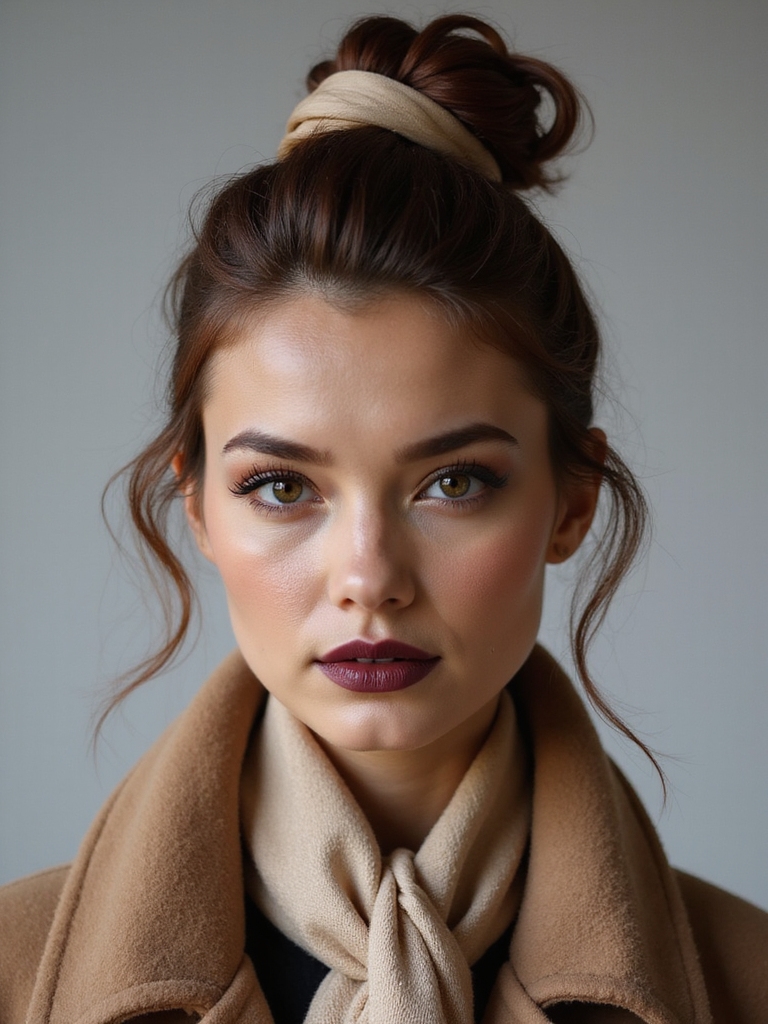
Rolling all the hair up and pinning it vertically against the back of the head leaves nothing loose for a scarf to catch on.
Simpler to Pin Than It Looks
The smooth, contained shape of a French twist slides neatly under a coat collar without shifting, which makes it a solid pick for dressed-up winter plans.
It looks far more complicated to build than it actually is, which is most of its appeal for a party or a formal cold-weather event.
ℹ️Why Wool Causes Static
Dry winter air already strips moisture from hair, and wool fibers rubbing against that dry hair generate friction that builds a static charge fast. Swapping the fabric touching the hair, not the hairstyle itself, is often the actual fix.
Textured Low Ponytail With Face-Framing
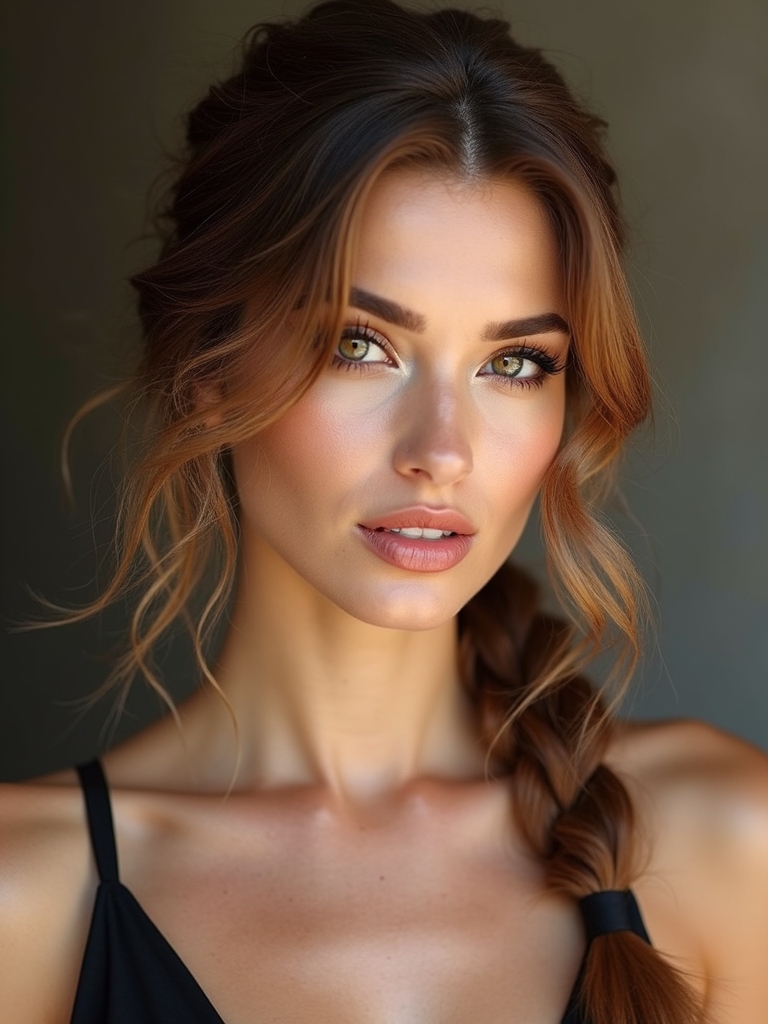
A ponytail tied low at the nape sits below where a collar ends and stays clear of a scarf entirely, which is more than most higher placements can promise. Building it takes a few small choices:
- Tie it low enough that a collar can’t push against it.
- Rough up the length for texture, so it doesn’t sit flat.
- Leave a couple of face-framing pieces loose at the front.
- A drop of oil over the surface cuts down on collar static.
Chunky Braid Pulled Through a Hood
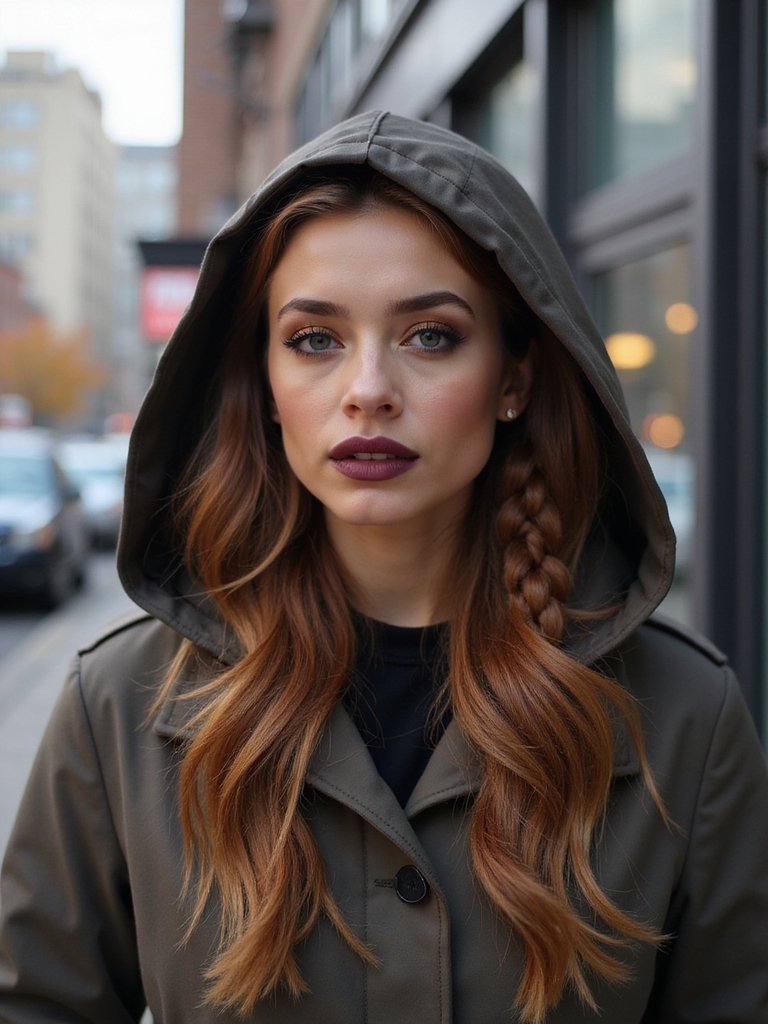
One thick braid contains an entire head of hair in a single rope, which is exactly what a hood needs to pass over without catching on anything loose. Here’s the build:
- Braid all the hair into one wide, secure rope from crown to end.
- Tug each section slightly for a fuller, less severe finish.
- Wear it forward over one shoulder to keep it fully clear of a hood lining.
Beanie-Proof Short Layered Waves
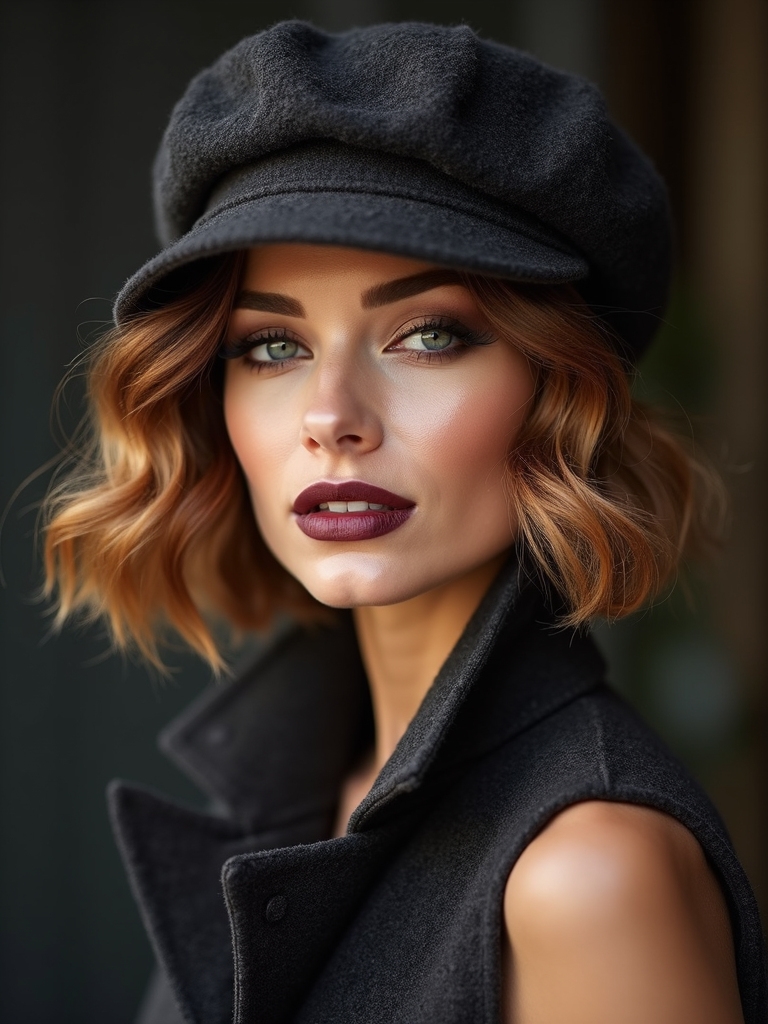
Short, layered waves are one of the few down styles that actually survives winter intact, since there isn’t enough length to tangle inside a scarf or flatten under a winter beanie the way longer hair does. The layers also mean a compressed section springs back on its own once the hat comes off.
- Suits a bob or anything shorter especially well.
- A little texture makes hat-flattened ends look deliberate rather than accidental.
- A spritz of water and a pinch of product revives the wave after a beanie comes off.
Half-Up Twisted Topknot for Volume
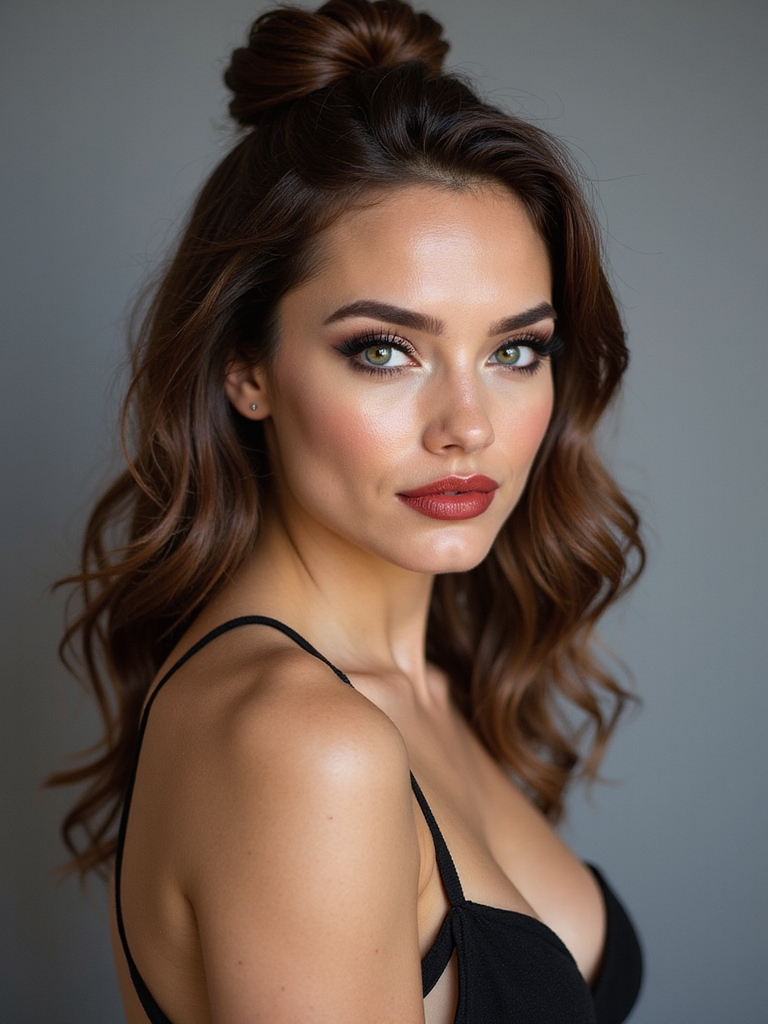
Twisting only the top section up solves two problems at once: it keeps volume off a crushed crown while leaving the length down below it for warmth around the neck. Here’s the shape:
- Twist the crown section up and pin it firmly to lift the top away from a hood.
- Leave the remaining length down for warmth around the neck.
- Loosen a strand or two near the temples so the line doesn’t look severe.
- Holds up better than a loose half-up under a snug hat, since the twist has less bulk to squash.
Side Braid Snug Under a Collar
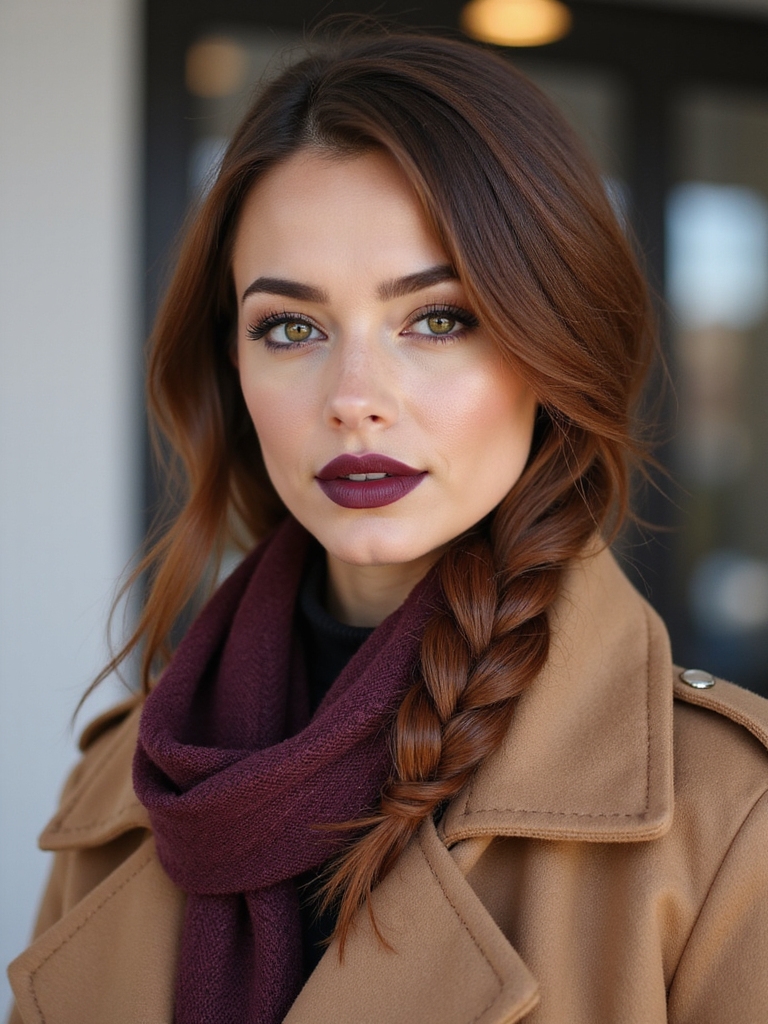
A braid swept fully to one shoulder keeps the length away from a collar entirely, so it never gets pinned awkwardly behind it when the head turns. The build is simple:
- Gather everything to one side before starting the braid.
- Keep the braid smooth rather than loose, so it resists tangling against fabric.
- Finish with a light serum along the surface for a polished line.
🅰️Side Braid
Sits fully off one shoulder, away from any collar; smooth and controlled.
🅱️Center Braid
Sits down the back, which can still catch on a coat collar depending on length.
Soft Curtain Bangs Peeking From Beanies

Curtain bangs solve a specific winter problem: everything else disappears under a hat, but a soft, parted fringe stays visible and keeps the whole look from feeling hidden.
- Frames the face even when a beanie covers everything else.
- Needs almost no upkeep beyond a quick finger-reshape after a hat comes off.
- Works whether the length underneath is up, down, or tucked away entirely.
Sleek Center-Part Lob for Scarves
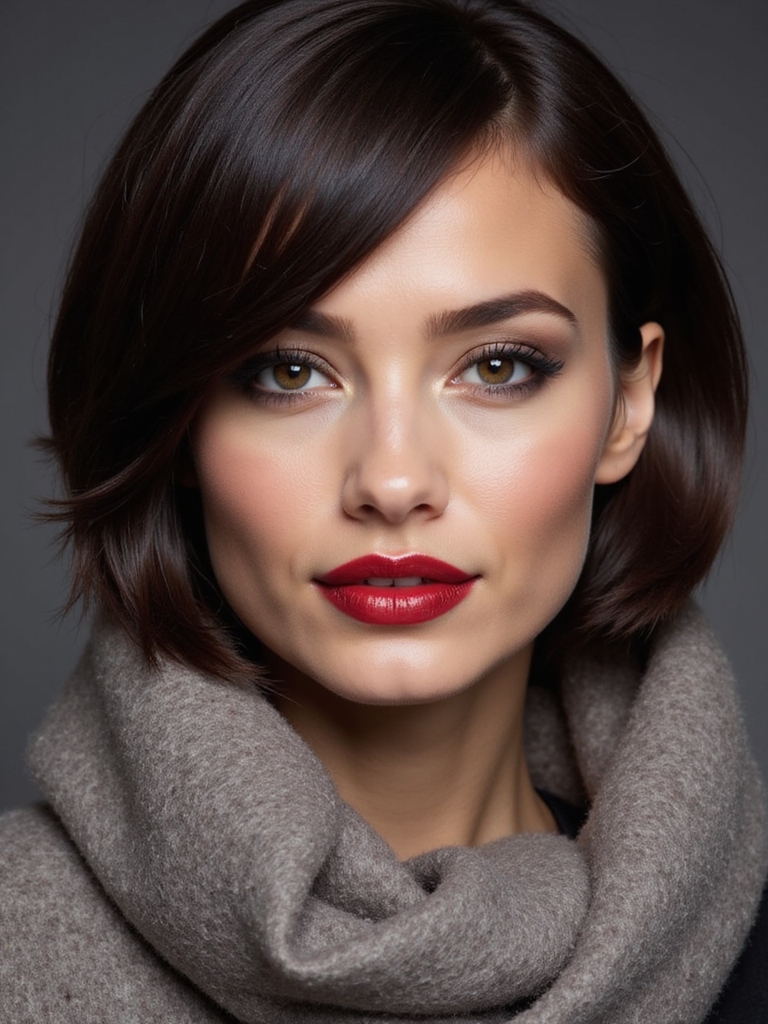
A smooth, glossy lob handles scarves better than most longer styles, since a polished finish glides easily against fabric without ever catching on it.
The shorter length also means less of it ends up trapped under a coat, and a center part keeps the whole look symmetrical no matter what’s layered on top.
Loose Low Nape Bun
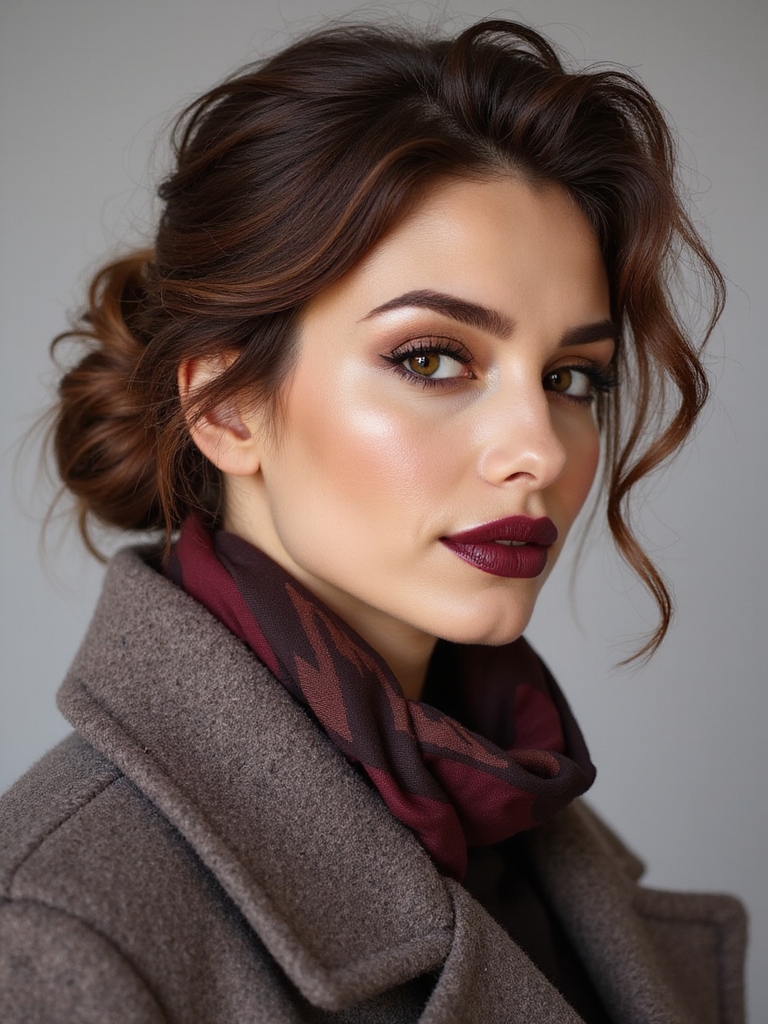
The undone version of a low bun keeps every high-collar advantage while trading polish for a relaxed, lived-with finish. It’s worth reaching for on a day the sleek version feels like too much effort:
- Gather low and twist loosely rather than smoothing it flat.
- Pull a couple of pieces free to soften the shape.
- Forgives second-day hair better than most other options here.
Rope Braids Into a Cozy Low Updo
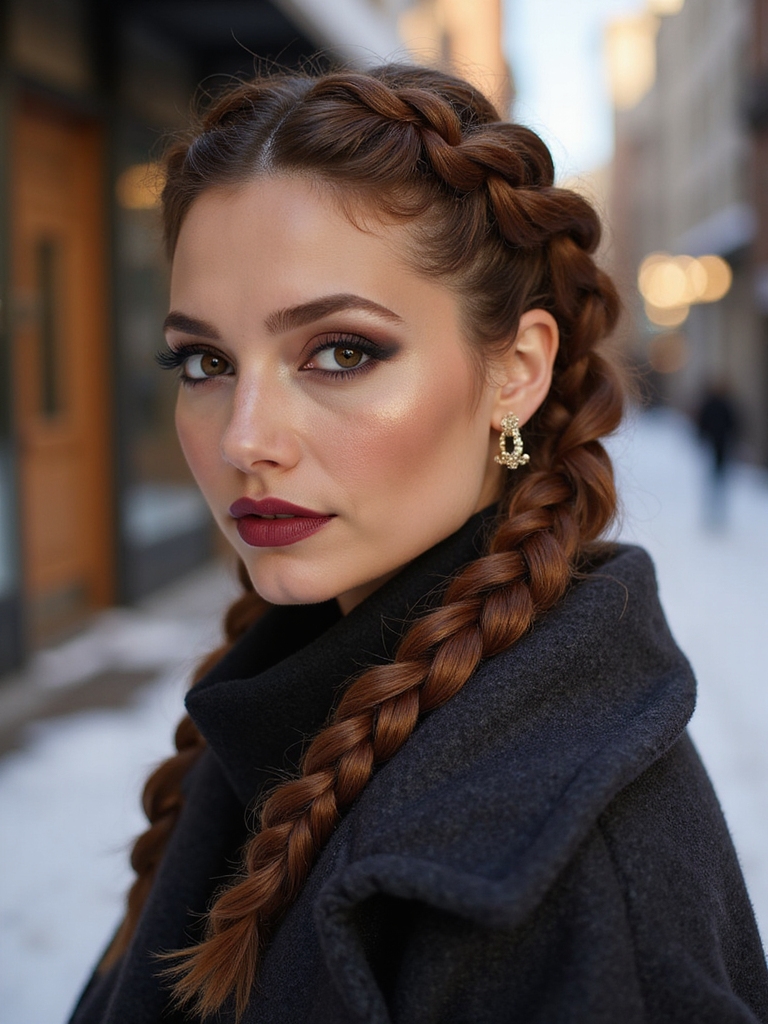
Twisting two sections into rope braids, then pinning them into a low knot, secures every strand and leaves nothing loose to tangle or flatten.
- Looks intricate enough for an occasion despite being surprisingly simple to build.
- Sits low and tight enough to survive both a scarf and a hood.
- Holds through a full day without needing a mid-afternoon fix.
Low Chignon With Decorative Pins
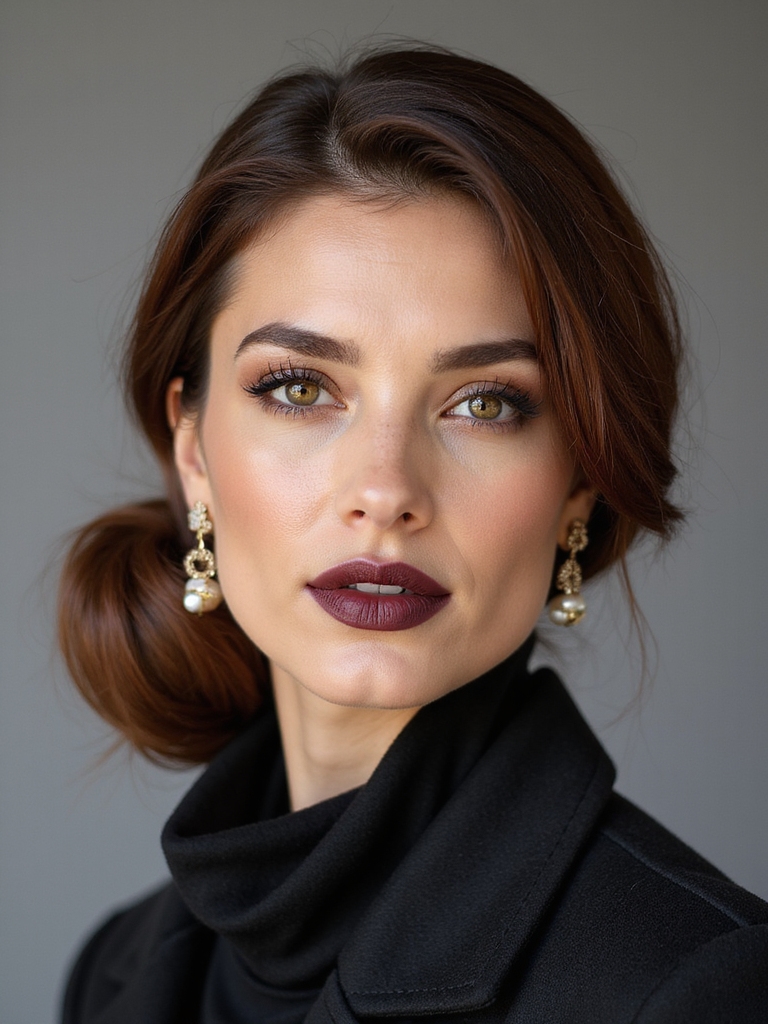
A smooth knot coiled low at the nape counts as one of the more formal options here, and a chignon dresses up quickly with a few decorative pins.
Because it sits so low and is fully pinned, it holds through an entire evening no matter what gets layered over it for the walk there.
- Pearl or crystal pins turn it festive for a holiday event.
- Survives a coat and scarf without disturbance.
- A salon updo like this typically runs somewhere around $50 to $80, though it’s simple enough to pin at home with a little practice.
Deciding how formal the occasion actually calls for?
🎯A casual day that still needs to look put-together
The loose low nape bun or a simple side braid covers it.
🎯An evening event or a holiday party
The chignon or the French twist reads considerably more finished.
Braided Crown That Won’t Flatten

A braid wrapped around the head like a headband lies flat enough that a hood can go directly over it without crushing anything. Building it:
- Braid back along the hairline, then pin the tail around the crown.
- Keep the braid close to the scalp so nothing sits high enough to flatten.
- Holds up especially well on hair with a little grip left from the day before.
- Doubles as a way to keep bangs or shorter layers pinned back through a whole commute.
Textured Pixie With Matte Paste
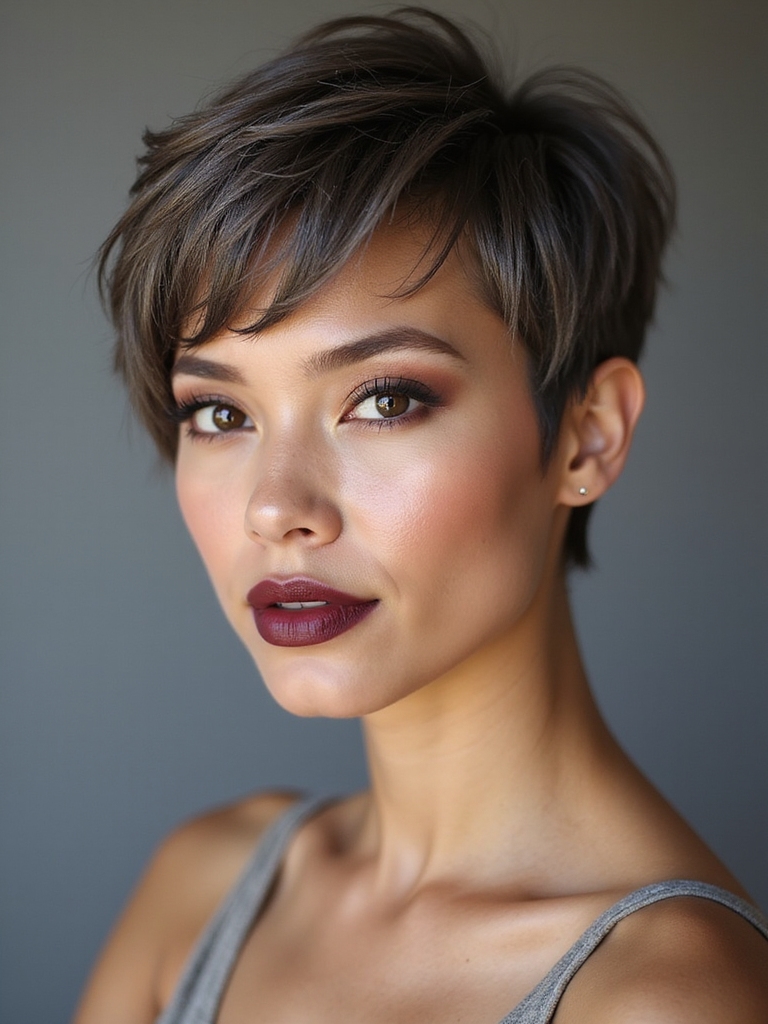
A pixie cut is close to the most winter-proof haircut there is, since there’s simply not enough length to tangle, flatten badly, or trap under a collar.
A matte, piecey finish only looks better after a hat comes off, since the texture hides the compression a beanie leaves behind.
- A quick finger-tousle revives it in seconds.
- Shrugs off a scarf and a beanie both without much thought.
- Among the lowest-effort options on this entire list.
“Ask specifically for a matte, non-shiny paste when buying styling product for a winter pixie; a glossy pomade looks great fresh but tends to fall flat the moment a hat presses it down.”
Loose Waves With Hidden Elastics

For anyone determined to wear waves down through winter, small elastics hidden underneath the top layer keep the bulk off a slim collar without turning the look into an obvious updo.
The Halfway Point Between Down and Up
Securing just the back sections leaves the top and sides free to fall loose, so from the front it still reads as simply down.
The hidden ties do the real work, holding the length back just enough that it stops bunching against a coat while the visible hair up front stays soft and untouched.
A Low Claw-Clip Twist for Zero-Effort Days
Twisting the length once and catching it with a claw clip at the nape takes the contained-and-low logic to its fastest possible version: no pins, no braiding, no real technique required.
It won’t hold up for a formal event, but for a quick errand or a commute, it keeps hair off a collar and out of a scarf’s way just as effectively as anything else on this list, in about ten seconds flat.
How to Get the Look
Most of these styles share the same short list of tools: bobby pins, a smoothing serum or light oil, and something to add texture, whether that’s a texturizing spray or just a little matte paste worked through by hand. None of it needs to be expensive or specialized to work well.
The bigger shift is in habit, not product: reaching for a silk or satin scarf over a wool one, and thinking about where a coat collar actually sits before choosing a style, does more for winter hair than any single product on the shelf. A five-minute change in routine tends to outperform an entire new styling kit.
Cute Hair, Coats and All
None of this is really about avoiding hats. It’s about picking a style that already knows what coat, scarf, or hood is coming for it, so the two stop fighting each other.
Try one of the low, contained options next time bundling up is unavoidable, and notice how much of the usual winter hair frustration simply disappears.
More Worth Saving