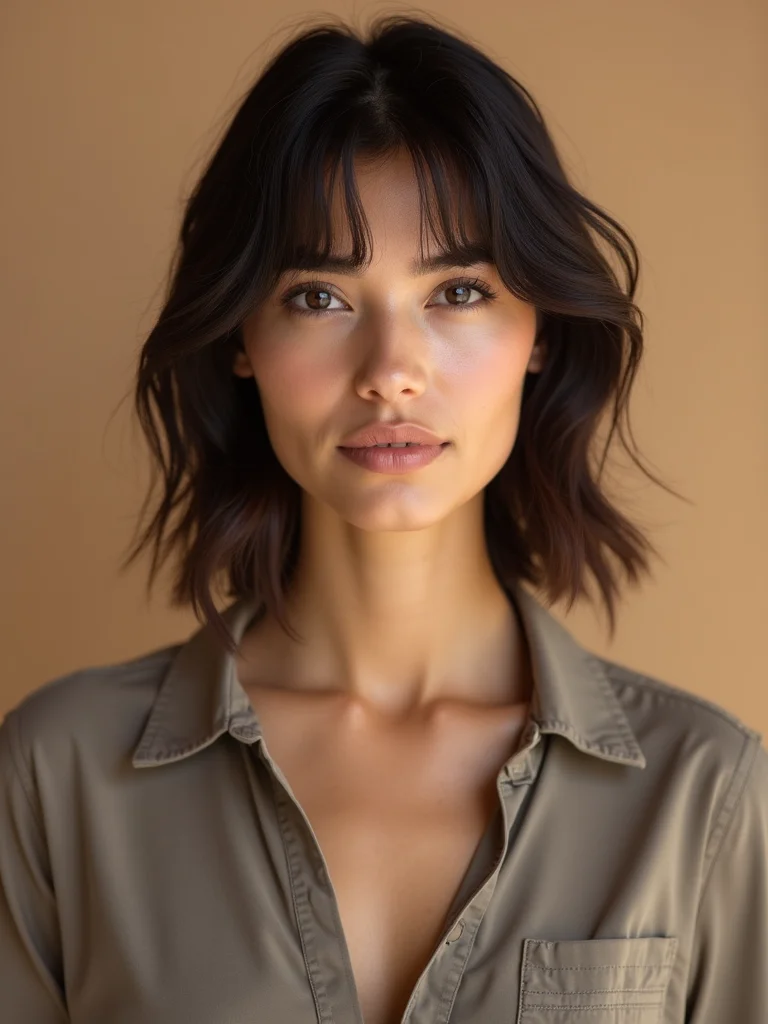
Run your fingers up the back of a classic wolf cut and somewhere around the occipital bone they stop. There is a shelf there. The long length underneath ends, the short crown layers begin, and your fingers find the join without looking.
A soft wolf cut is the same haircut with that shelf sanded down. The volume stays. The crown still lifts. The gap between the two lengths gets bridged until nothing catches. Fifteen versions follow, arranged by how much of that gap each one leaves open.
Soft Means the Gap Is Bridged
- Disconnection is the defining feature of a wolf cut: a deliberate jump between short crown layers and long length, with nothing joining them. Softening means filling that jump in.
- You keep the volume either way. Crown lift comes from the short layers themselves, so bridging the gap costs you nothing in height and buys you a shape that survives air-drying.
- It is slower to cut and cheaper to live with. Expect a longer appointment than a standard layered cut, which is why a proper wolf cut lands nearer $95 than the $60 a trim costs, and then roughly ten weeks before the crown catches up.
A Soft, Layered Wolf Cut

This is the version people mean when they say they want a wolf cut but not that wolf cut. Crown layers sit high enough to build volume, and every length between them and the perimeter gets filled in, so the eye travels down the back without hitting anything.
Two Instructions, Both Necessary
You will notice the difference on day two. A disconnected wolf needs product to hold the crown away from the length beneath it; a bridged one holds its own shape because the weight is distributed rather than stacked in two places.
Ask for blended layers with the crown still short. Those two instructions sound contradictory. They are not. Saying both is what stops a stylist defaulting to one.
Tousled Shoulder-Length Wolf Layers

Shoulder length is where a wolf cut is easiest to wear, because there is enough length below the crown for the bridge to happen gradually.
Above the shoulder the same cut compresses. The gap has less room to close, and the shelf reappears however carefully anyone blends.
Expect the perimeter to matter more than you think here. Hair landing exactly on the shoulder pushes back up and kicks outward, so ask for it to clear the shoulder by an inch. Our shoulder-length version guide goes into the length specifically.
A Whisper-Light Layered Wolf Cut

Fine hair can wear a wolf cut, and the version that works is this one: fewer layers, all of them placed high, with the perimeter left completely solid. The crown supplies the lift that fine hair cannot generate for itself, and the untouched outline keeps the ends looking dense rather than wispy.
- Two or three crown layers only, and nothing at all through the lengths
- Keep the perimeter blunt; it is the thing making your hair look thick from behind
- Root mousse carries most of the daily effort on this version
Fine Hair Has a Ceiling Here
Layering is subtraction, and a fine head has almost nothing spare to subtract from. A wolf cut with the full complement of layers on fine hair produces crown volume and sparse ends at the same time, which is the trade nobody warns about. Two or three crown layers is the honest limit, and the perimeter should stay untouched.
A Voluminous Layered Wolf Cut

Turn the crown layers up and this becomes the biggest shape on the page. The lift is built in. It survives a night on a pillow, which a blow-dried version never does.
The risk on thick hair is width. Volume at the crown is flattering; volume that spreads sideways at the ears is the shape everyone is trying to avoid, and the difference comes down to how much bulk was removed from underneath.
You will know within a week whether yours went too far. Hair that stands away from the head at ear level rather than lifting at the top has too much left underneath it, and that is a twenty-minute correction. Our fuller fine-hair version guide covers building volume on hair that has none.
A Soft Wolf Shag

A shag layers continuously from crown to ends. A wolf cut jumps. This version sits between them, with shag-style blending through the middle and a wolf’s short crown on top, which is the most wearable hybrid available and the one most people actually leave the salon with.
- Ask for shag blending through the mid-lengths with wolf-height layers at the crown only
- It reads softer than a wolf and bigger than a shag, which is the point of asking for both
- Grows out as a layered cut, so there is no stage where it looks like it needs fixing
A Chin-Length Textured Wolf Bob

Bringing a wolf cut up to the chin compresses everything into a few inches, and the gap has almost nowhere to close. That makes this the version that most depends on the person cutting it, because at this length a bridge that has been rushed shows immediately as a step across the back of your head.
- Ask specifically whether your stylist has cut this length as a wolf before
- The crown layers should reach your ear when pulled straight down, no shorter
- It needs reshaping sooner than the longer versions, closer to every seven weeks
“The sentence that gets a soft wolf rather than a classic one is keep the crown short but blend everything below it. Asking only for a wolf cut usually returns the disconnected version, because that is what the name refers to and that is what most reference photographs show.”
An Airy, Wavy, Feathered Wolf Cut

Natural wave does the bridging work for you. A wave breaks up any line in the hair. The gap between crown and length disappears without anyone blending it carefully.
That makes wavy hair the easiest texture to wear this on and the one that needs the least styling. Scrunch a light cream into soaking hair, diffuse on low or leave it, and the shape arrives on its own. Our wavy wolf cut guide covers the pattern specifically.
Long Wolf Layers With a Sleek Finish

Smoothing a wolf cut sounds like undoing it and is actually the hardest test of whether it was bridged properly. A sleek finish strips out every bit of texture that might hide a step. Anything unblended shows.
Which makes this the version to ask for if you want proof of a good cut. Iron it flat once and you will see immediately whether the layers travel or whether they stop.
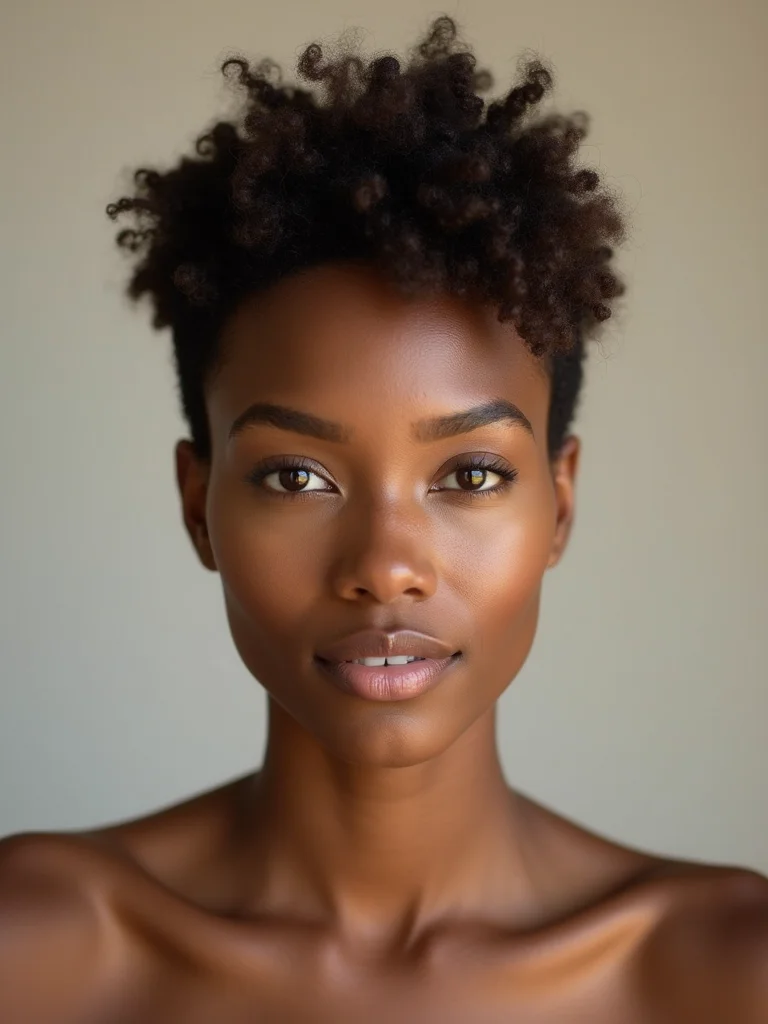
Defined Coils on a Layered Wolf Cut

Coily and tightly curled hair takes a wolf cut naturally, because the pattern already creates the volume the cut is built to produce. What changes is how the shaping happens.
The Pattern Does the Bridging
Every layer gets judged on dry, fully sprung hair. A coil cut while wet sits a great deal higher once it dries, and on a shape built around specific lengths that error compounds through the whole head.
Bridging matters less here, since coils fill any gap by themselves. The outline is what matters: rounded to follow the head, and never carved flat. Our curly wolf cut guide covers pattern-specific shaping.
A Soft Wolf With a Micro Fringe

A very short fringe against soft layers is the most fashion-forward combination here, and it works because the two halves are doing opposite jobs. The fringe is sharp and deliberate; everything behind it is deliberately not.
Sharp at the Front, Soft Behind
That contrast is what keeps a soft wolf from tipping into shapeless. Without something crisp at the front, heavily blended layers can read as hair that simply grew this way.
Expect the fringe to need its own schedule, roughly monthly, while the rest of the cut goes twice that long. Our curtain-bang version guide covers the gentler fringe pairing.
Chin-Skimming Layers for Elongation

The shortest face-framing piece in a wolf cut does more for your face than anything happening at the crown, and where it lands changes the whole effect. At the chin it draws a vertical line down the side of the face and elongates; at the cheekbone it widens.
- Round and square faces gain most from the chin placement, since it lengthens
- Long or narrow faces do better with the shortest piece higher, around the cheekbone
- Say the landing point out loud at the consultation; it is the single most adjustable detail
The crown is what people photograph. The mid-lengths are what decides whether the cut works.
A Piecey Wolf Cut With Softened Layers

Piecey and soft sound like opposites and describe different things. Piecey describes ends separating from each other. Soft describes layers connecting to each other, and a cut can do both at once.
The combination is what most people are actually picturing when they save a wolf cut photograph. Separation at the tips, continuity through the lengths.
- Ask for point-cut ends and blended layers in the same sentence
- Refuse notched thinning blades, which produce separation and short regrowth together
- A texture spray through the mid-lengths keeps the tips apart without stiffening the shape
Soft Wolf Cut Layers Through the Mid-Lengths

Most attention on this cut goes to the crown, and the mid-lengths are where it either holds together or falls apart. This is the zone doing the bridging, and it is the part a rushed appointment skips.
You can check it yourself in a mirror. Lift the top section away and look at what is underneath: layers that step down gradually mean the bridge is there, and a jump means it is not.
- Ask for the mid-lengths to be checked with the top section clipped away
- This is where a second stylist opinion is worth having if a cut felt wrong
- It costs the extra chair time that separates a good wolf cut from a fast one
How much of the gap do you want left open?
1As little as possible
Ask for fully blended layers with a short crown. You keep the volume, you lose the shelf, and the cut holds up when you air-dry it.
2Some of it, visibly
Ask for partial disconnection: the crown layers left to sit above the length rather than joined to it. More drama, more product, and a shape that needs styling most days.
A Minimalist Soft Wolf

Stripped back to its quietest version, a wolf cut is a few crown layers and a fringe, with everything else left alone. It looks like long hair with shape, and nobody asks what it is called.
The One Nobody Argues With
This is the version to ask for if you work somewhere conservative, or if you have been talked out of a wolf cut before by someone who saw a photograph of the loudest one.
It also grows out into nothing in particular, which is its own argument. Nothing about it needs managing, and in four months it is simply long layered hair.
A Textured, Razor-Layered Wolf Cut

A razor tapers each strand along its length instead of cutting it flat, and on a wolf cut that does something specific: it makes the bridge invisible. Layers ending in a point blend into whatever sits below. Blunt ends stop in a line the eye can find. The condition of your hair decides whether this is available, since a razor on bleached or brittle ends produces frizz within a couple of weeks.
- Best on healthy, medium to coarse hair with ends that have not been lightened
- Ask directly how often your stylist uses a blade; it is a practiced skill, not a default one
- Add twenty minutes to the appointment, since it is done section by section
Soft Wolf Cut Questions
?What actually separates a wolf cut from a shag?
Disconnection. A shag layers continuously from the crown down, so every length joins the one below it. A wolf cut leaves a deliberate jump between the short crown and the long length, which is what produces its top-heavy silhouette. A soft wolf closes that jump while keeping the crown height, which is why it ends up so close to a shag in practice.
?Will this work if my hair is heavy and straight?
Yes, with the weight managed from beneath and the layers kept long. Straight hair shows every unblended step, so the instruction that matters is length in the blending rather than more layers. Ask for the bulk to come out under the surface and skip anything described as choppy.
?How long before it stops looking like a wolf cut?
About ten weeks on most heads. The crown grows at the same rate as everything else but it started far shorter, so proportionally it catches up fast. When the top stops lifting on its own, the shape has drifted back toward ordinary layers.
?Can I get this without losing length?
Almost entirely. The crown layers are cut from hair on top of your head, so nothing needs to come off the perimeter at all. Say that explicitly, since a stylist working from a photograph may assume the length in the image is part of the request.
The Word to Bring Is Blended
One thing here is worth taking to a salon: soft and wolf are compatible requests. The volume you like in the photographs comes from short crown layers, and every bit of it survives being blended into the length below.
So bring the reference image and one sentence with it: keep the crown short, blend everything below. Say that and you get the version of this cut that still looks like itself on a Wednesday morning when you have not touched it.
Favorites to Revisit