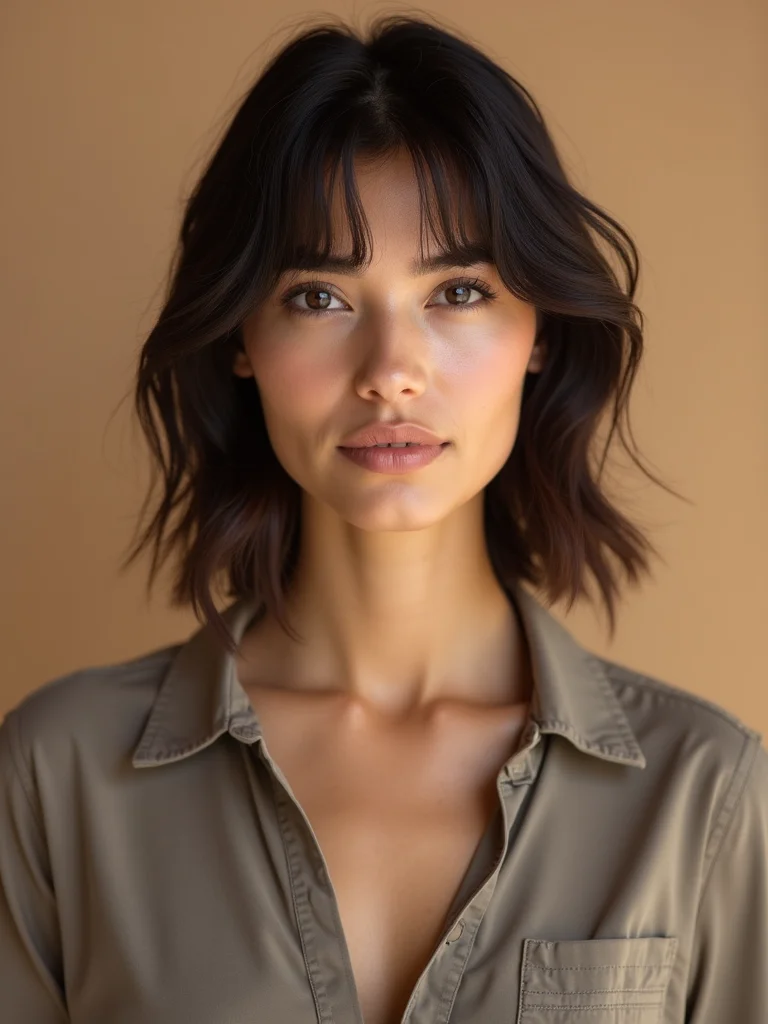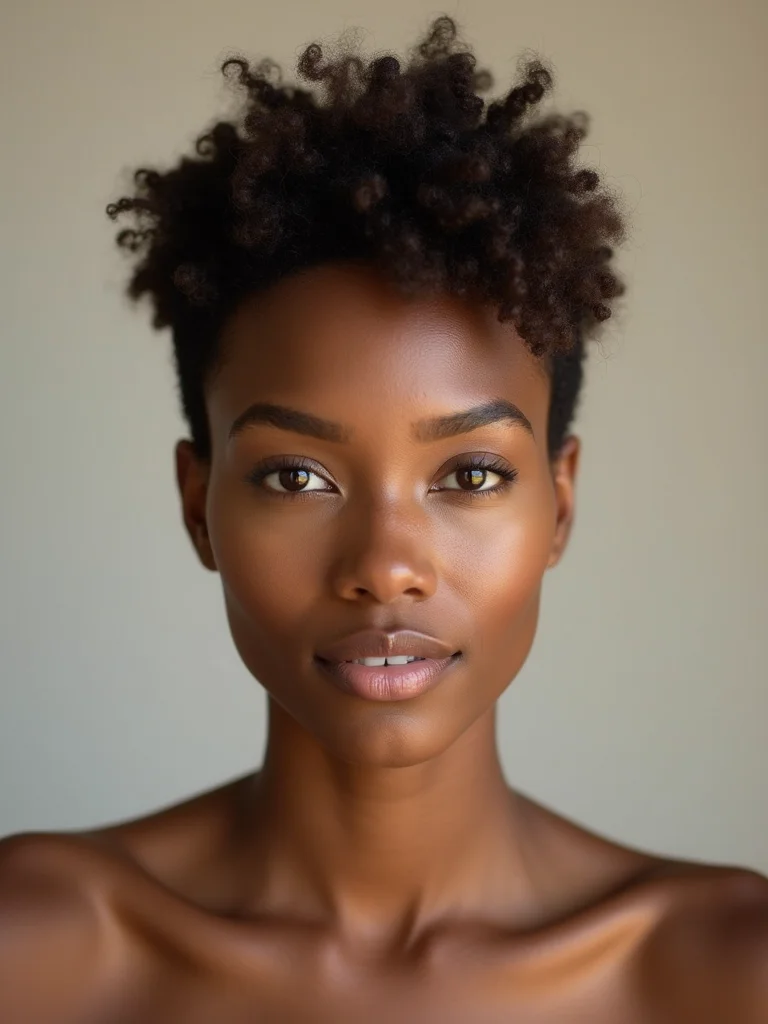
A side part alone can shift how a curtain fringe reads, before a single strand gets cut. Move the part from center to the side and the same fringe suddenly sweeps rather than splits, framing one side of the face more than the other.
Fifteen versions follow, each built on that same side-part logic across different lengths, textures, and finishes. The side-swept bangs guide covers the more dramatic end of the same idea.
What the Part Actually Changes
- A side part changes how curtain bangs fall without requiring a new haircut at all.
- The deeper the part, the more dramatic the sweep; a subtle shift reads as barely-there.
- Most of these styles need a round brush or diffuser to train the sweep in the intended direction.
Soft Side-Parted Curtain Fringe for Everyday

A soft side part keeps the sweep gentle, just enough of an angle to shift the fringe off-center without committing to a dramatic diagonal. It works as the default, everyday version of this whole family, the one most people land on after trying a few of the bolder options first.
- A light shift in part placement, not a hard diagonal
- Reads natural rather than deliberately styled
- The easiest version to maintain day to day
Deep Side Part Curtain Bangs
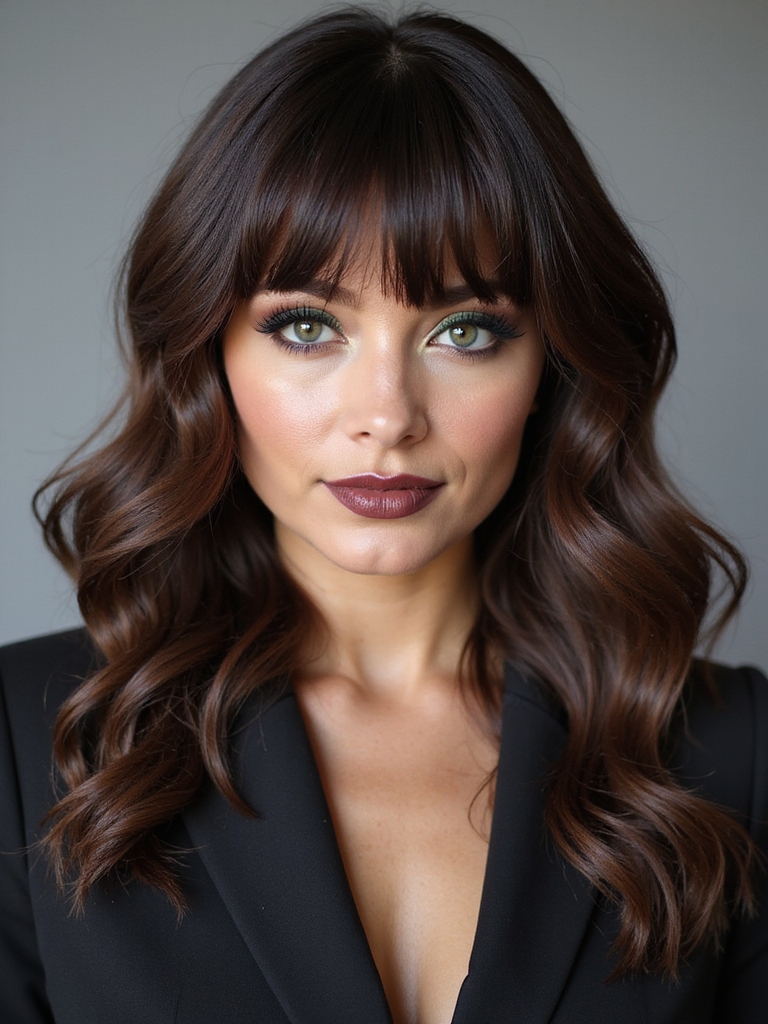
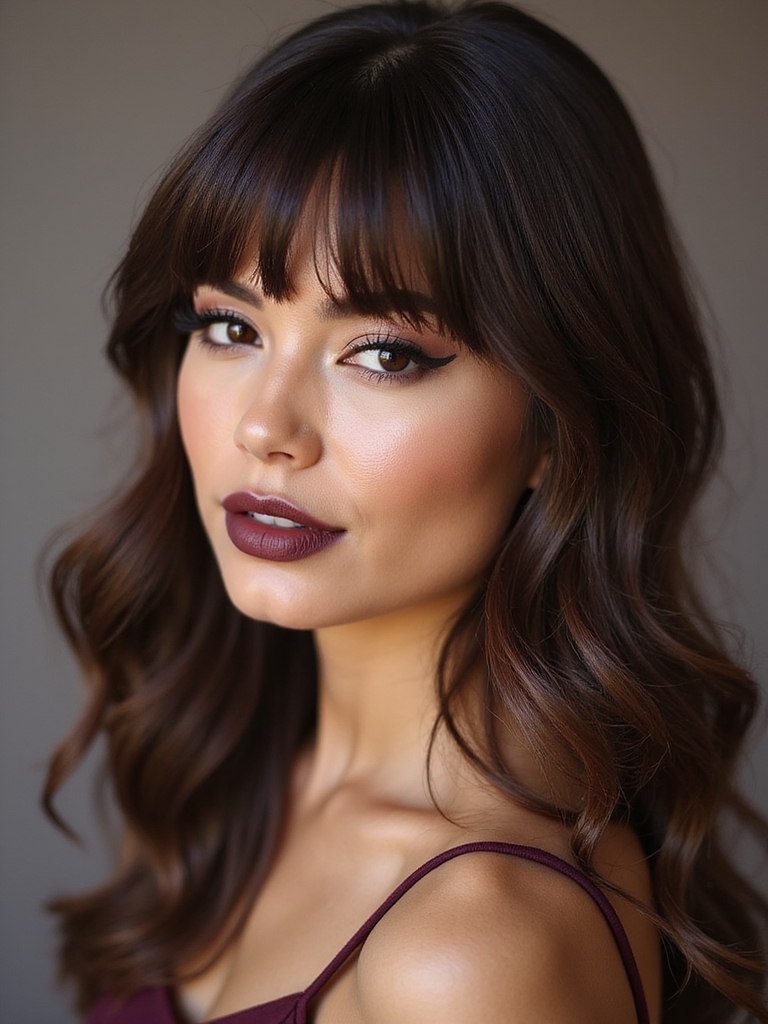
A deep side part pushes the divide well past the arch of the brow, sending most of the fringe to one side and leaving only a small piece on the other. The effect reads considerably more dramatic than a soft side part, closer to a full face-framing sweep than a subtle shift.
The catch is upkeep: a deep part shows regrowth at the part line faster than a soft one does, so it asks for more frequent attention to stay looking deliberate rather than simply grown-out. A quick reset with a comb and a little product usually fixes it between washes.
Tousled Beachy Curtain Bangs

Tousled curtain bangs give up a crisp, trained sweep in favor of loose, textured movement, more like the fringe left the house without a second thought than sat under a hair dryer.
A texturizing spray on dry hair, worked in with fingers, gets there without a curling iron. The fringe gets scrunched loosely toward the side rather than smoothed in one direction.
Where this struggles is humidity. The looser the intended texture, the more a humid afternoon can push it toward frizz instead of the tousled movement it’s meant to have. A small amount of anti-humidity cream applied before leaving the house helps hold the line between texture and frizz.
Sleek Blunt Lob With a Side-Swept Fringe

A blunt lob keeps a clean, straight-across perimeter while the side-swept fringe softens the sharpness right at the face.
The contrast between the two is the whole appeal: a precise cut below, a relaxed, sweeping fringe above it.
- A straight, blunt perimeter through the length
- The fringe softens the cut’s sharpest edge
- Pairs well with a side-part bob for a similar shorter version
Before Trying the Tousled Version on Fine Hair
Texturizing spray can weigh fine hair down instead of adding grip. A lighter, salt-free formula applied sparingly usually works better than the heavier sprays made for thicker textures.
Off-Center Part on Curly Curtain Bangs
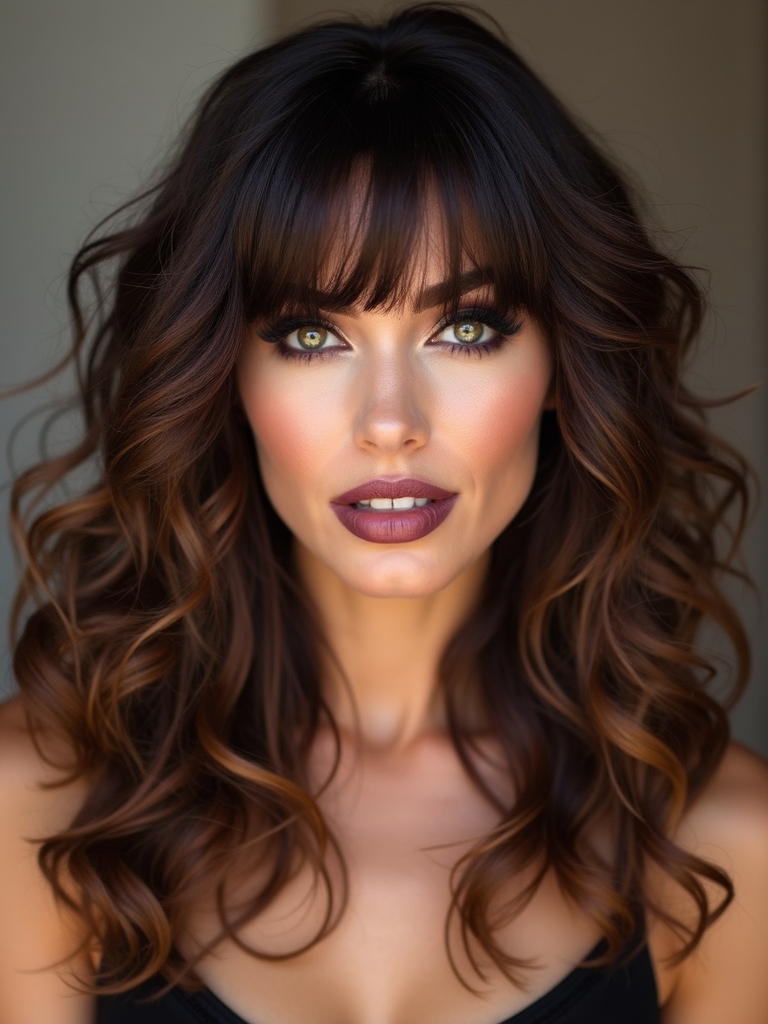
On curly hair, an off-center part changes how a curly curtain bangs fringe frames the face without changing the cut underneath.
Curl pattern reacts to a side part differently than straight hair does; the curls closest to the part often sit higher, so the sweep looks less like a flat line and more like a gradual curve.
- Same cut, different frame, just from shifting the part
- Curls near the part sit higher than a straight-hair version would
- Works with the natural spring instead of fighting it flat
Long Layers With Airy Side-Parted Bangs

Long layers give a side-parted fringe somewhere to blend into, rather than sitting as a separate, disconnected piece at the front.
Why the Layers Have to Match the Part
The layering has to be angled to match the part’s direction, or the fringe and the length end up moving against each other instead of together.
It’s a low-maintenance pairing once cut correctly, since the length does most of the framing work and the fringe simply extends it.
Shag Cut With Side Curtain Bangs

A shag with bangs built around side curtain bangs pairs two already-textured elements into one cohesive shape rather than two competing ones.
Two Textured Elements, One Shape
The shag’s internal layering picks up where the fringe leaves off, so the eye reads one continuous texture instead of a distinct fringe sitting on top of a separate cut.
This combination asks for more regular texturizing than a smoother pairing would, since both elements rely on visible movement to work.
Two assumptions worth dropping about long, layered curtain bangs:
❌ Myth: Myth: longer layers mean less maintenance than a blunt fringe.
✅ Reality: Fact: the fringe portion still needs its own trim schedule, separate from the rest of the length.
❌ Myth: Myth: any layering works with a side part.
✅ Reality: Fact: layers cut for a center part often fight a side-swept direction instead of blending with it.
Polished Side-Set Curtain Fringe

A polished, side-set fringe takes the same sweep as the looser versions but smooths it out completely. A round-brush blowout, finished with a small amount of glossing cream worked through the ends, gives it that controlled edge the tousled versions never aim for.
It looks more formal than a tousled version, closer to what an actual salon blowout would produce than an air-dried, low-effort style. Expect to spend real time with a hair dryer to get there, since air-drying alone won’t smooth the fringe this completely.
Short Bob With Feathered Curtain Bangs

A short bob with feathered curtain bangs keeps the fringe soft at the edges rather than blunt, so it blends into a shorter length without a hard line where the two meet.
Feathering removes just enough weight from the fringe’s ends to let it move with the rest of the short cut instead of sitting stiffly apart from it. On a bob specifically, that softness matters more than on longer lengths, since there’s less length overall to soften a hard edge if the fringe were left blunt.
Textured Mid-Length With Side-Swept Movement
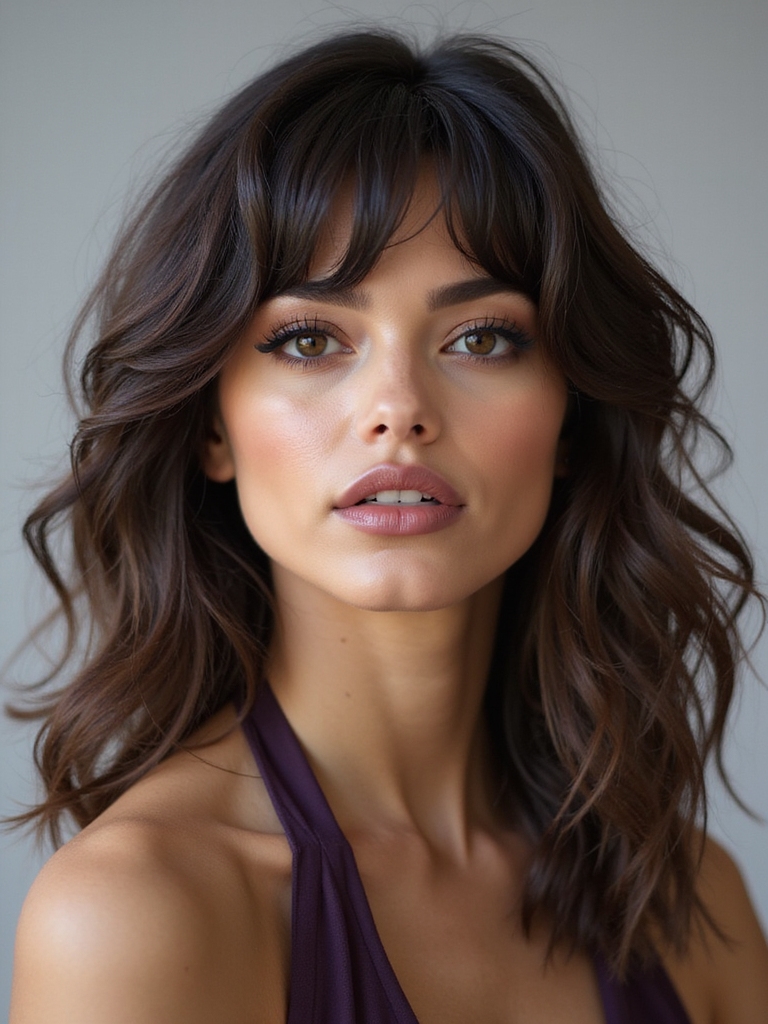
Mid-length hair carries a side-swept fringe particularly well, since there’s enough length below to give the whole head a sense of movement, not just the front section. Shorter lengths sometimes struggle to keep up with a dramatic sweep at the front, but mid-length has the weight to match it.
Enough Length to Move, Short Enough to Show It
Texturizing throughout, not just at the fringe, keeps the two areas reading as one cohesive style rather than a styled front and a plain back.
It’s a properly flexible length: enough to tie back on busy mornings, short enough to still show real, visible movement when worn down.
Wispy Curtain Bangs for Fine-Hair Volume

Wispy, see-through bangs work especially well on fine hair, where a denser fringe would look thin and gappy instead of deliberately light. The wispy curtain bangs guide covers the technique on any hair type, not just fine strands specifically.
- Thin, feathered pieces instead of one dense block
- Suits fine hair that can’t support heavier fringe weight
- A dry-texturizing spray adds grip without extra weight
Matching texture technique to hair type:
🎯Fine or thin hair
A light texturizing spray at the roots avoids weighing the style down
🎯Thick or coarse hair
A heavier cream or paste controls frizz while still allowing movement
Blended Side Curtain Fringe for Thick Hair

Thick hair asks for the opposite approach: heavy internal thinning so the fringe sits light instead of forming a dense, heavy block at the front.
The catch with thick hair specifically is that under-thinning is a common mistake; a fringe that looks fine right after cutting can still read too heavy once it’s washed and styled a few times.
- Internal thinning removes bulk without shortening the length
- Under-thinning is the most common miss on thick textures
- A blended edge, not a hard line, keeps it from looking blocky
Side-Parted Curtain Bangs in an Updo

Pulling everything else up while leaving a side-parted fringe down softens an updo that would otherwise look severe on its own.
The fringe becomes the only loose element in the whole style, which is exactly the point: structure everywhere else, movement right at the face. It also gives an otherwise formal style a slightly undone, less rigid feel without touching the actual updo technique.
Heatless Side Curtain Shaping

Training a side-swept direction without heat takes patience rather than any special tool: clip the damp fringe in the direction it should fall and let it dry undisturbed.
Overnight setting works even better than a daytime clip-and-wait, since the fringe has hours instead of minutes to take the shape.
It won’t hold quite as crisp a line as a round brush and blow-dryer would, but for anyone avoiding daily heat, the trade-off is a fair one.
💡Ask for This Specifically on Thick Hair
Request point-cutting or razor work through the fringe, not just scissor-over-comb thinning underneath. The visible edge needs softening too, or the fringe can still look heavier than intended even after internal weight is removed.
Micro-Trim and Reset Routine
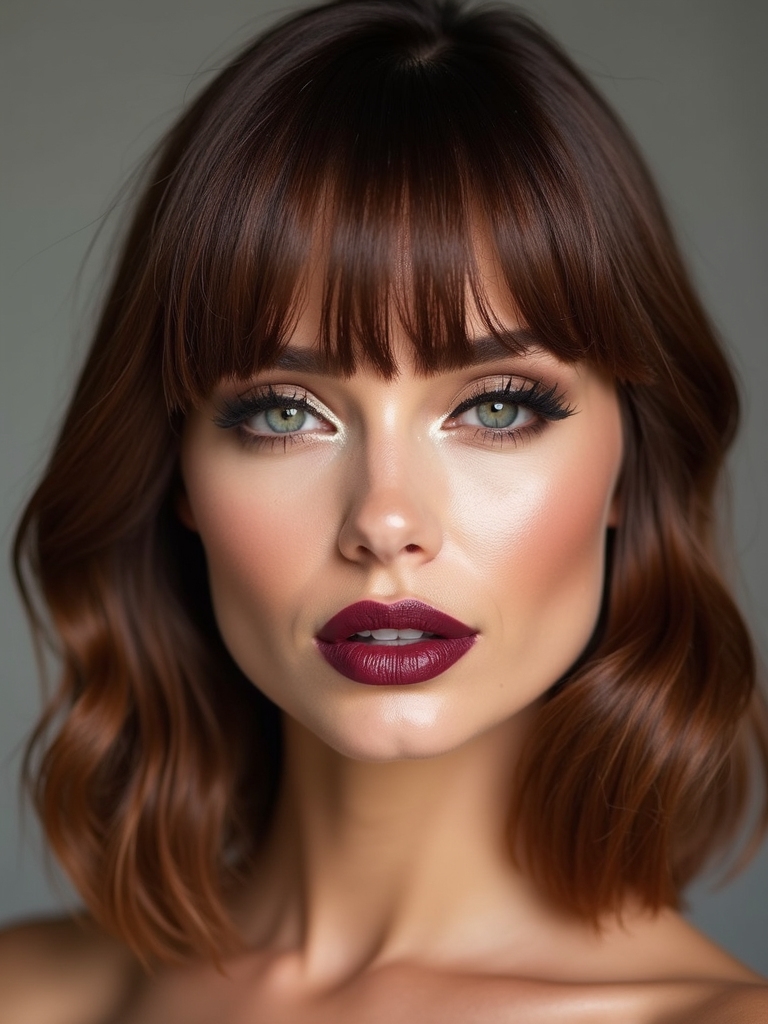
A micro-trim removes only the very ends of the fringe, just enough to sharpen the shape without committing to a full salon visit.
Doing this at home costs nothing beyond a pair of proper hair-cutting shears already owned, while a professional micro-trim between full cuts runs around $15 as a quick add-on at most salons, a fraction of what a full fringe appointment would cost for the same few millimeters.
Side-Part Curtain Bangs Questions, Answered
?Can a center-part fringe be changed to a side part without cutting it again?
Often yes, especially with a soft or moderate side part. A deep side part usually needs at least a light reshaping cut, since a fringe grown for a center part is layered differently.
?Does a side part work on very short bangs, like a micro fringe?
Less reliably. Short fringes don’t have enough length to sweep convincingly to one side; side parts read best on curtain-length bangs with enough weight to fall in a clear direction.
?How long does it take to train a fringe into a new side-part direction?
Most people see the new direction hold within one to two weeks of consistent styling. Sleeping with the fringe clipped in the new direction speeds up the process considerably.
The Part Does More Work Than People Expect
Every version here comes back to the same lever: where the part sits changes how the fringe behaves, often more than the cut itself does.
Save whichever depth and texture matched the current hair length, and bring it along to the next appointment.
More Worth Saving