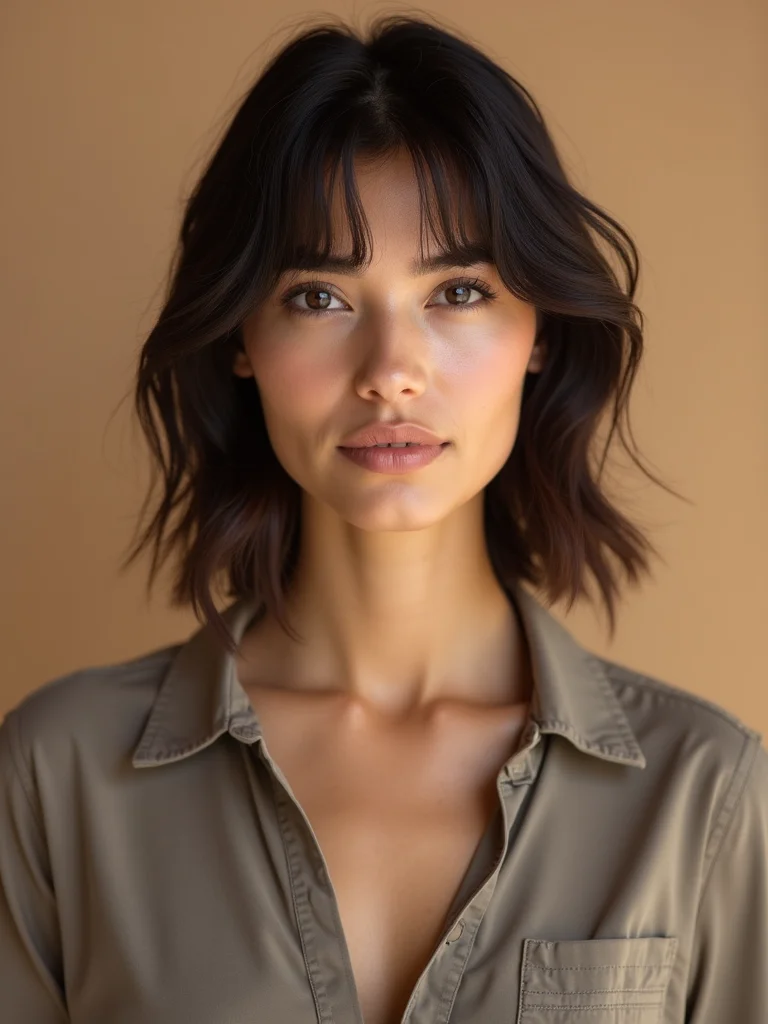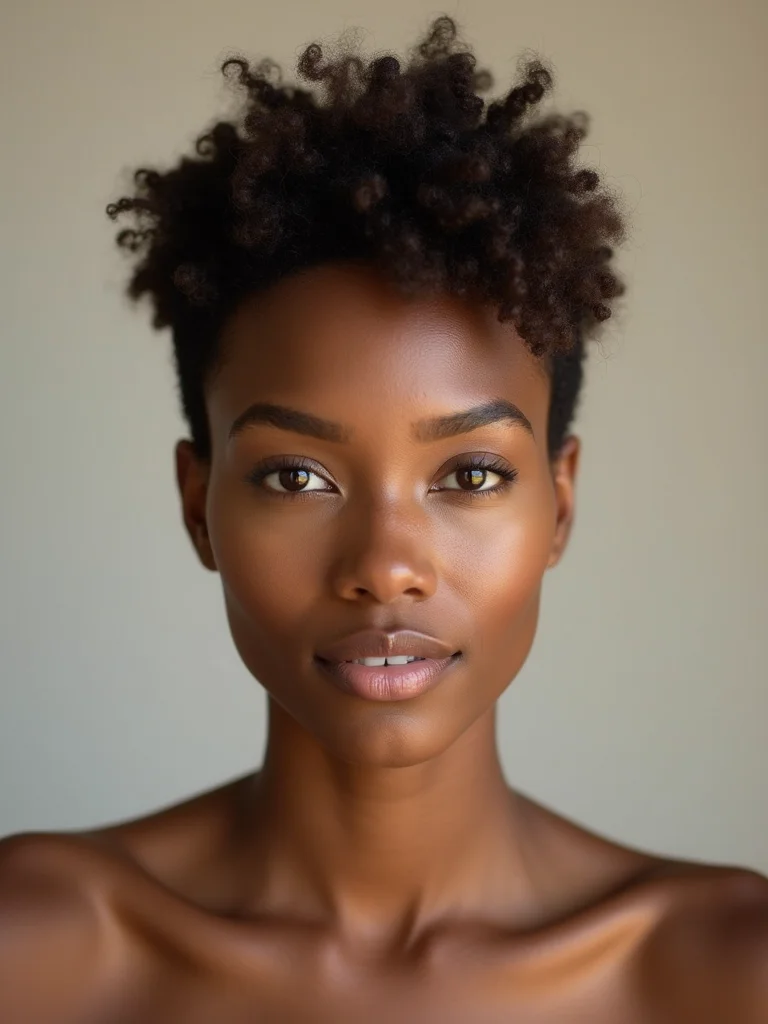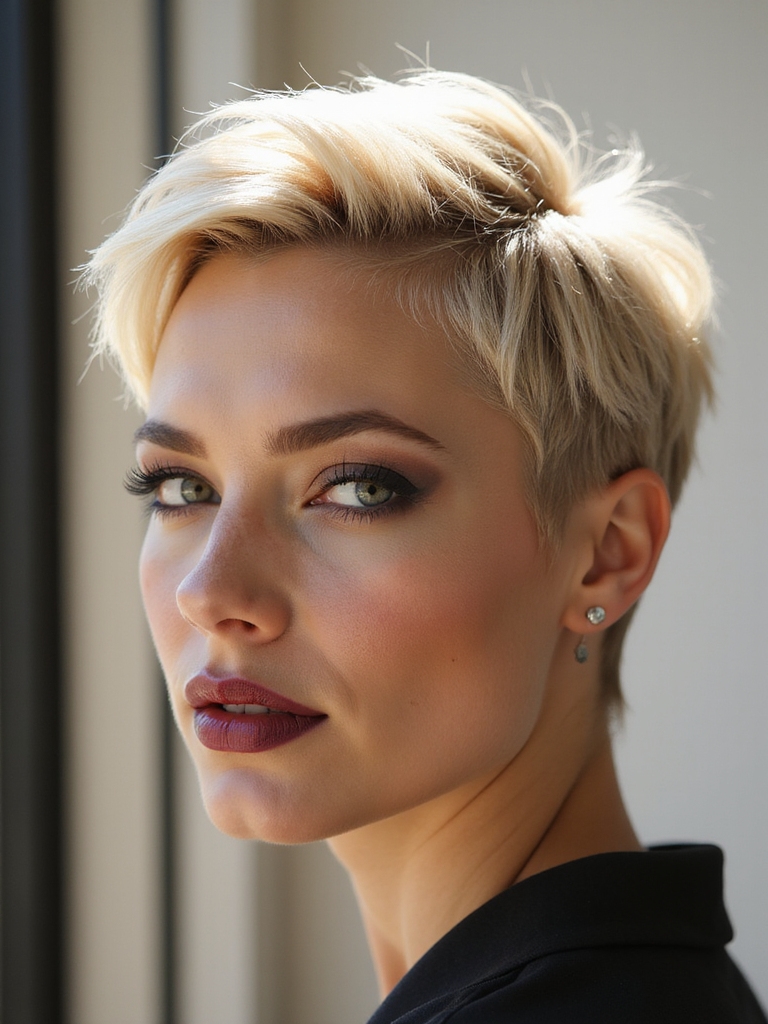
The thing I hear most often before someone goes blonde is that they are scared it will wash them out. Most of the time, blonde isn’t the problem; the wrong blonde is. A shade can be beautiful on its own and still drain the color from your face when it fights your skin’s undertone, and on a crop there is nowhere to hide. That is the whole challenge with blonde pixie cuts.
A pixie sits the color right against your cheeks and jaw, so on short hair, undertone-matching isn’t optional the way it can be on a longer style. Below are 15 shades grouped by who they suit, each with a note on upkeep and what to expect in the chair, so you can pick a blonde that lights you up.
Quick Answers Before You Go Blonde
Which blonde suits my skin? Cool, pink-based skin glows with icy, ashy, silver, and pearl blondes. Warm, peachy or olive skin comes alive in golden, honey, buttery, and rose-gold. Neutral skin can wear champagne, sandy, and beige almost across the board.
How much upkeep is a blonde pixie? Plan on a trim every four to six weeks ($40-70) plus a toning gloss every four to eight weeks ($30-60). A shadow root stretches your color appointments; full platinum shortens them.
What keeps the upkeep low on any shade? A soft, deliberately darker root. It’s the one request that turns a demanding blonde into a manageable one, since regrowth blends instead of announcing itself in a hard line.
Icy Platinum Blonde Pixie

Platinum is the brightest, coolest blonde there is, lifted to a near-white with the warmth toned out. It looks sharp and modern against cool, pink-based skin and pale eyes, and it is the boldest, brightest shade on this list.
The catch is honesty about your hair: lifting to platinum is the most demanding service a colorist does, and on very warm skin it can read a little stark, so a softer white-blonde sometimes flatters more. If you love it, commit to the routine that keeps it from going yellow. The look pairs naturally with an icy blonde base.
- Toning: a purple shampoo once or twice a week, with a salon toner roughly once a month to keep that icy tone from warming up.
- Cost reality: reaching platinum from dark hair often runs $150-300 and a long session, sometimes two visits.
- Best on cool undertones; warm skin usually softens it toward a creamy white instead of true ice.
Sun-Kissed Blonde Pixie With Feathered Layers

This is the blonde that looks like a summer spent outdoors, lightened unevenly so the brightness lands where the sun would naturally hit. Feathered layers keep it soft and moving rather than helmet-like, and the warmth in the shade flatters peachy and olive skin. It is forgiving to grow out, too. There is no hard line of regrowth to track. To keep it looking soft, ask for these:
- Face-framing brightness around the crown and fringe, kept deeper at the nape for natural depth.
- A feathered, point-cut layer through the top so the pieces separate cleanly.
- Book a gloss on a roughly two-month cycle to revive the warmth. It costs far less than a full color and protects the tone.
📋Spot Your Undertone in 30 Seconds
- ✓Check your wrist veins in daylight: blue or purple points cool, green points warm, a mix points neutral.
- ✓Hold silver and gold jewelry to your face; the metal that makes your skin look brighter matches your undertone (silver cool, gold warm).
- ✓Notice how you react to sun: skin that burns before tanning usually skews cool, skin that tans easily usually skews warm.
Golden Blonde Crop With a Textured Crown

Golden blonde leans deeper and richer than the sun-kissed version, with real warmth running through it. It is made for warm undertones, the kind of peachy or tan skin that looks healthier next to a buttery gold. Anything ashy tends to dull it. A textured crown gives the crop lift and keeps a deeper blonde from sitting heavy on top.
Where I see this go wrong is on cool undertones, where golden can tip brassy and pull orange within a few weeks. If that is you, an ashier shade will hold truer. To keep gold rich, a colorist usually adds a warm gloss at refresh visits, and a texture paste worked through the crown keeps the lift without crunch.
Ash Blonde Pixie With a Shadow Root
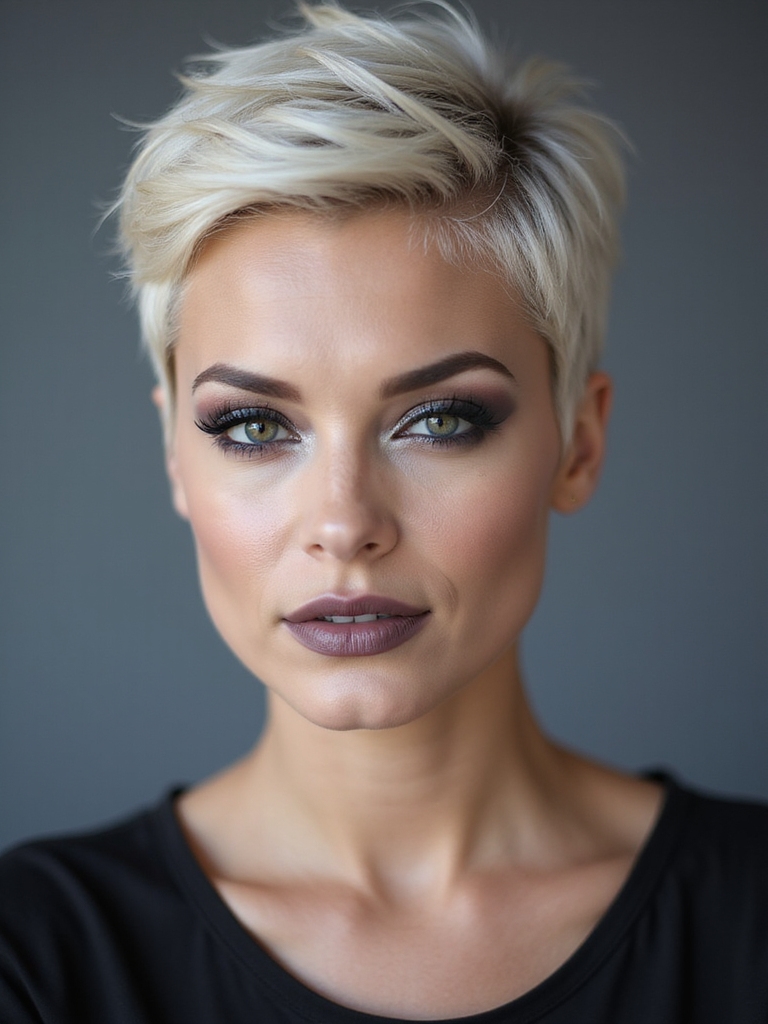
Ash blonde takes a naturally cool base and strips out the gold on purpose, and pairing it with a shadow root is what makes it livable day to day. Leave the roots noticeably darker than the ash lengths and the whole thing blends upward instead of announcing a hard line the second it grows out.
It is the single change I push hardest for anyone who wants blonde without living at the salon. A toned, grown-in ash blonde looks deliberate and put-together. Here is how it earns its keep:
- The shadow root stretches color appointments out to two months or more, instead of dragging you back every four weeks.
- Toning keeps the ash from warming up; a blue or purple toner counters any yellow that creeps in.
- It suits cool and neutral skin best, where the muted finish stays soft and refined.
A shadow root gets a bad reputation it doesn’t deserve.
❌ Myth: A shadow root just looks like grown-out roots.
✅ Reality: A shadow root is placed and blended on purpose, melting a deeper base into the blonde. Real neglected regrowth has a hard line; a shadow root has a soft gradient, and most people read it as dimension, not laziness.
❌ Myth: Going blonde always means a salon visit every month.
✅ Reality: Only the brightest, rootless blondes need that. A shadow root or balayage is designed to grow out softly, stretching color appointments to two or three months.
Champagne Blonde Pixie With a Side-Swept Fringe

Champagne sits right in the middle, a warm-but-soft blonde with a faint glow that flatters a wide range of skin. It is the shade I reach for when someone is unsure of their undertone, because neutral blondes rarely clash either way. A side-swept fringe softens the whole look and gives you a little extra to work with whenever you want more than a bare crop.
The fringe is the part people underestimate. It grows fast. Within a few weeks it will start poking your eyes, so build a quick fringe trim into your routine, often free between cuts at most salons.
- Sweep the fringe with a small round brush and a touch of heat so it falls cleanly to the side.
- A soft gloss every six weeks keeps champagne from dulling.
- Neutral skin wears it most easily, but it bends warm or cool with a quick toner.
Honey Blonde Tousled Pixie

Think deep amber-touched gold, the warmest blonde on this list. Honey warms up golden and olive skin beautifully. Tousled styling suits it because the movement catches the light and shows off the depth, where a sleek finish would flatten it. If you tan in summer, this is the blonde that keeps pace with your skin. A rich honey blonde asks less of you than almost any cooler shade.
It earns that reputation because warm tones grow out gently and do not need aggressive lightening. A texture spray scrunched into damp hair builds the tousle, and there’s no purple-shampoo ritual to keep up with here, since warmth fading toward more warmth was never a problem to solve. The upkeep stays gentle.
A simple at-home routine to keep cool blondes from turning brassy:
1Use purple shampoo once or twice a week
Leave it on for two to three minutes; longer if your blonde is very pale, shorter if you only need a light correction. Daily use can leave a dull violet cast, so do not overdo it.
2Book a salon toner every four to eight weeks
Purple shampoo maintains; it does not replace a real toner. A gloss or toner at the salon resets the tone and adds shine for roughly $30-60.
Silver-Blonde Sculpted Pixie

Silver-blonde takes the cool family one step further, toning the blonde toward a clean metallic sheen. It is striking on cool, fair skin and looks sharp and deliberate, especially when the cut is sculpted close with defined lines. This is a high-commitment shade, both to reach and to hold.
I am blunt with clients about this one before they fall for it. Silver needs the same heavy lifting as platinum plus consistent toning. The moment the tone fades, you are left with yellow.
- Tone every two to four weeks at home with a silver or purple product to hold the metallic finish.
- A flat iron and a little smoothing cream sharpen the sculpted lines.
- Strictly a cool-undertone shade; warm skin tends to clash with true silver.
Buttery Blonde Curly Pixie

Buttery blonde is a soft, creamy gold that looks especially rich on natural coils and curls. The warmth suits warm and neutral skin, and a cropped curly pixie shows the color off across every bend of the curl. Done well, it makes textured hair look luminous in a way few other blondes manage.
Caring for color on textured hair
The cut matters as much as the color here. A curly pixie should be cut dry, in its natural curl pattern, so the stylist can see exactly where each coil falls and shape around it. Cut wet, curly hair springs up shorter and unevenly once it dries.
Lightening textured hair asks for extra care, because coily and curly strands are more fragile when lifted. A good colorist works in stages and uses a bond builder to protect the curl, and at home a curl cream plus a satin bonnet at night keeps both the shape and the tone intact. For more on the cut itself, see our guide to curly pixie cuts.
ℹ️Good to Know
Lightening curly and coily hair is more fragile than lightening straight hair, because the bends in each strand are natural weak points. A careful colorist lifts in stages over more than one visit if needed, and always pairs it with a bond builder. Rushing the lift is the fastest way to lose your curl pattern.
Vanilla Blonde Pixie-Bob Hybrid

Think of vanilla as platinum’s softer cousin: pale and cool, but without the stark, almost-white edge that scares people off. Pairing it with the pixie-bob hybrid, which keeps a little more length than a classic crop, gives you styling options and an easier grow-out if you decide to keep going longer.
It is an easy first step into blonde. This is a smart pick for a first-timer who wants brightness with a soft edge, and the extra length also means slightly less frequent trims than a tight pixie, so it suits a lower-fuss routine.
- A round brush gives the hybrid its shape and a bit of bend at the ends.
- A light toning session keeps the cream from drifting warm; it’s a gentler routine than platinum demands, but not nothing.
- Trims can wait a little longer here than on a tight pixie, closer to the two-month mark.
Sandy Blonde Choppy Pixie

Sandy blonde is the one nobody clocks as dyed. It is soft and natural with just a hint of warmth, the kind of believable color you might have had as a kid. It suits neutral skin and works for anyone who wants to be blonde quietly, without the look announcing itself.
Why the texture matters
A choppy cut is what gives it life. Without the texture, a soft sandy tone can fall flat, so the layers and piecey ends are doing real work here, adding shape that the color alone would not. The same choppy energy carries a choppy pixie cut in any shade.
Keep it modern with a matte paste worked through dry ends. Scrunch it by hand so the chop stays separated and textured.
Pearl Blonde Pixie With Piecey Ends

Pearl blonde has a faint iridescent quality, a cool blonde with a soft sheen that shifts in the light. It glows against cool, fair skin. That subtle dimension makes it feel more special than a flat platinum, and piecey ends keep the crop from looking too polished.
Holding the pearly tone
Reaching pearl is similar work to platinum, a strong lift followed by a careful tone that leaves just a whisper of cool color behind. That tone is delicate and fades faster than most blondes, so expect to refresh it more often.
A matte paste pinched through the ends defines the piecey finish. At refresh visits, ask your colorist for the pearly toner specifically, since a standard purple toner misses that iridescent cast.
Beige Blonde Pixie With Undercut Detail

If you have ever stood in front of swatches unsure whether you run warm or cool, beige blonde is your answer. It doesn’t lean either direction, so it works even when your undertone stubbornly refuses to declare itself, flattering almost everyone and rarely tipping brassy or ashy.
An undercut adds the modern edge. By taking the sides or nape shorter and tighter, you get a sharper shape and less bulk, which suits thick hair especially well. It is also a low-key way to make a soft neutral blonde feel intentional and current.
The undercut does need its own upkeep, a quick clipper trim about every three weeks so it does not lose that sharp edge, and you can often fit it between full cuts. The beige itself holds well with a balanced toner and the occasional gloss.
Rose-Gold Blonde Pixie

Rose-gold is the playful one, a blonde tinted with a soft pink-gold warmth that looks creative without going full fantasy color. It works on warm and neutral skin, where the rosy cast picks up the natural warmth in the complexion. On a crop it feels bold but still wearable to work.
The pink is the part to manage. Rose-gold is a toner-based color sitting over a blonde base, and pink tones fade quickly, often within a few weeks, softening as they go. Some people like that fade; others top it up.
If you want to stretch it, ask your colorist for a slightly deeper rose so it fades to a pretty soft blush rather than washing out to plain blonde. A color-depositing conditioner at home keeps the tone alive between visits.
Balayage Blonde Pixie

Balayage is the most adaptable blonde here because it is hand-painted, which means the colorist can place the brightness exactly where it flatters you and warm or cool the blend to match your skin. That is also why it suits most undertones, since it is built around your face rather than applied uniformly.
On a pixie, balayage adds dimension. A short cut suddenly looks fuller and more deliberate. It is more painting than process. A skilled hand matters most here.
- Ask for brightness concentrated around the face and crown, kept softer underneath for depth.
- Because it is blended, grow-out is gentle and color visits can stretch to every eight to twelve weeks.
- Warm the blend for warm skin, cool it for cool skin; that flexibility is the whole point.
Beachy Blonde Pixie With Airy Movement

Beachy blonde is soft, sandy, and relaxed, lightened to that sun-and-salt tone that looks easy and unfussed. It suits warm and neutral skin, and the airy, lifted styling is what sells it. Lately it is the blonde clients ask for when they want short hair that still looks loose and undone.
The styling is half the look. Mist on a texturizing salt spray while hair is still damp, then scrunch upward with your fingers to encourage separation instead of smoothing it flat. The crop keeps its lift all day.
- Use a sea-salt or texture spray on damp hair, then air-dry or diffuse for lift.
- A soft gloss keeps the sandy tone from fading dull; skip heavy toning since a little warmth suits it.
- It pairs well with face-framing brightness for a true beachy effect.
Blonde Pixie Cut Questions
?Will a blonde pixie damage my hair more than longer blonde?
The lightening is the same chemically, but a pixie is cut so often that damaged ends get trimmed away quickly, which is actually a small advantage. The bigger factor is how high you lift; platinum stresses hair far more than a soft sandy blonde.
?How often will I need to tone a blonde pixie at home?
Cool blondes like platinum, silver, and pearl usually need purple shampoo once or twice a week. Warm blondes like honey and golden need far less, sometimes none, since you actually want to keep their warmth.
?Can I go blonde on a pixie in a single salon visit?
If you are going one or two levels lighter, usually yes. Dark hair headed all the way to platinum or silver is a bigger job, typically spread across a long visit or two, with a strength-repair step folded into the process so the hair isn’t left in rough shape.
?What if my undertone is somewhere between cool and warm?
That is neutral, and it is honestly the easiest case to color. Champagne, beige, and sandy blondes are built for you, and a colorist can nudge almost any shade slightly warmer or cooler with the toner to fine-tune the match to your skin. You have more options than either a strictly cool or strictly warm undertone does.
?How often will I actually be in the salon for a blonde pixie?
Two separate clocks run here. The cut needs a trim every four to six weeks to hold its shape, since a pixie grows out fast. The color runs on its own schedule, anywhere from monthly for bright rootless platinum to every two or three months for a balayage or shadow-rooted shade. Picture roughly one trim a month and a color visit a few times a year.
The Blonde That Lights You Up
The blonde that suits you is almost always the one matched to your undertone, not the one that looked best on someone else. Cool skin glows in icy, ashy, and pearl shades; warm skin warms up in golden, honey, and rose-gold; neutral skin gets to play across champagne, sandy, and beige. A crop leaves nowhere for the wrong choice to hide, which is exactly why this decision deserves more thought than the cut itself.
Nail down your undertone using the wrist-vein or jewelry trick above, then bring a couple of clear photos and let your colorist confirm it against your actual skin before anything happens. If you are not ready for a hard line of regrowth, a shadow root or balayage will keep the upkeep gentle while you grow comfortable being blonde. And if you are still deciding on shape over shade, our roundup of the best pixie hairstyles is a good next stop.
Next Up