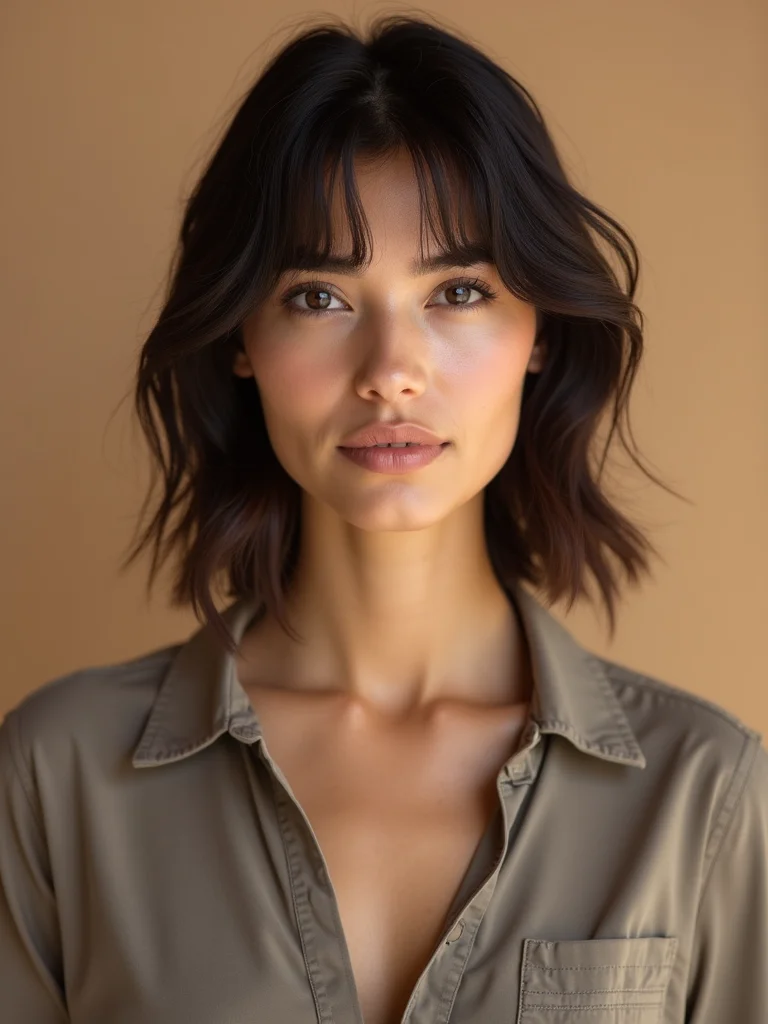
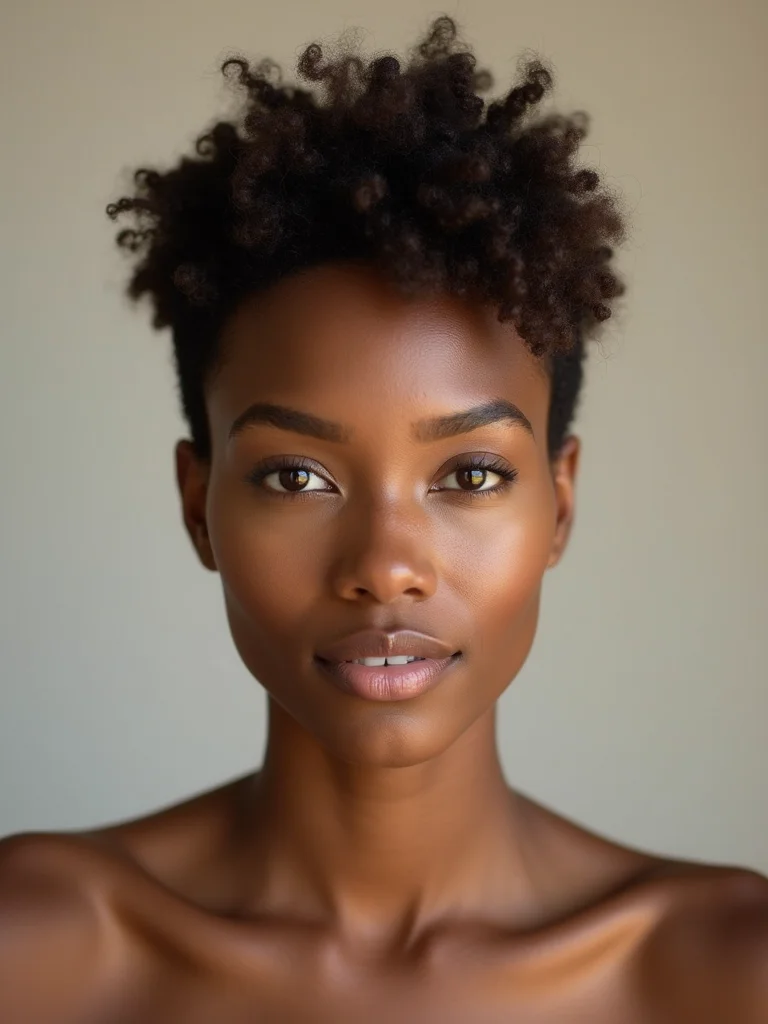
Feathered ends catching light mid-turn, a fringe swept just off-center, hair with enough movement that it never quite sits still. That’s the specific image this cut keeps returning to, decade after decade, without ever fully disappearing in between.
Sixteen versions follow, each one dialing the throwback up or down on its own terms. Some lean hard into a set, flicked seventies finish; others borrow only the underlying shape and style it thoroughly modern. Every one starts from the same basic idea.
What Makes a Shag Read Retro
Three things separate this cut from ordinary layering: feathered ends, real volume through the crown, and a fringe that moves with the rest of the shape instead of sitting apart from it. How retro the finished look reads has less to do with the cut itself and almost everything to do with styling — a set, flicked blowout pulls it toward the original era, while an undone, air-dried finish reads current.
Hair type changes the technique, not the underlying concept. Curls get cut dry to track the actual pattern; fine hair gets layered for the illusion of density it doesn’t naturally have; thick hair gets thinned from the inside out. The shape bends around whatever you bring to the chair.
Classic ’70s Shag Reimagined

This is the shape everything else on this list borrows from: feathered layers brushed back into soft wings, with real seventies attitude built into the silhouette itself. For the shape this whole family descends from, our layered shag guide goes deeper.
The finish is what actually decides the era here. Blown out section by section with a medium brush and flicked outward at the ends, it leans fully into the throwback; left to dry with just fingers and a texture product, the exact same haircut reads current without a single layer changing.
Everything else on this list is a variation on this one idea, different lengths, different textures, different degrees of throwback. Start here if you’re not yet sure which direction to take it.
Soft Shaggy Lob

Taking the retro layering down to a shoulder-skimming length produces something considerably easier to wear into an office than a full throwback ever was.
The shorter length keeps the worn-in texture without tipping into costume territory, which is exactly why most people land here when they want the reference without fully committing to looking like they stepped out of an old photograph.
Where this struggles is on very fine hair at this specific length: there’s not always enough density left after the layering to keep the ends from thinning out visibly. Ask your stylist about your actual density before locking in this length.
Pick your throwback level:
🎯Full seventies flick
Round brush, set with a cool shot at the end, ends curled outward at the finish.
🎯Somewhere in between
Rough-dry most of the way, then a light curl at just the very ends.
🎯Barely there
Air-dry with a texture spray only; let the layers do the work alone.
Curly Shag With Defined Coils
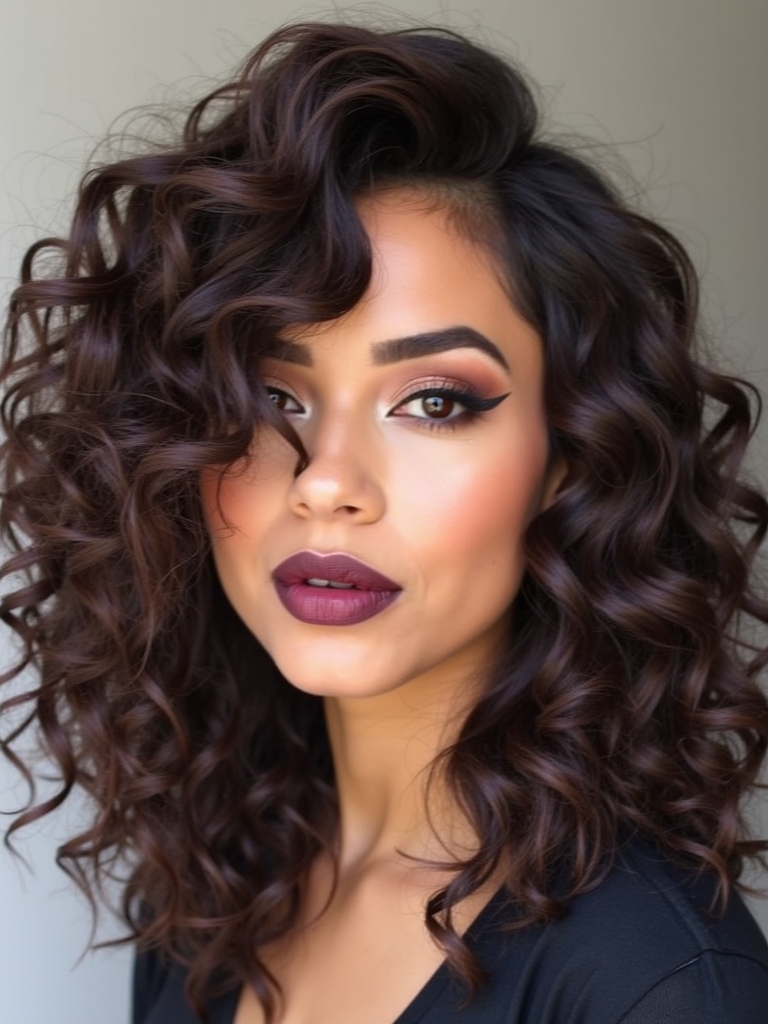
Curls and this cut have an old relationship. The layering gives each coil somewhere to spring instead of piling into one dense shape near the bottom, and the resulting volume comes close to what the original silhouette was actually built around.
- The cut happens dry, one section at a time, so the stylist can see exactly where each curl lands.
- A defining cream on damp hair keeps the shape crisp through the day.
- Delivers convincingly vintage volume without any real styling effort.
Wavy Airy Midlength Shag

At a midlength with soft waves already doing most of the work, this version captures the loose, sun-bleached feeling of the era without anyone having to try particularly hard.
The wave bends the layers into movement on its own, and the midlength keeps the whole thing from tipping into anything fussy or over-styled.
- Among the lowest-effort versions on this entire list.
- A salt spray on damp hair plus an air-dry covers nearly the whole routine.
- A solid entry point for anyone unsure how far to take the retro reference.
Fine-Hair Volumizing Shag

On fine hair, choppy layering fakes a level of density the hair doesn’t actually have, borrowing directly from the big, bouncy silhouettes the era is best known for. Length works against that specific goal here, so keeping things shorter to midlength stops the illusion of volume from collapsing under its own weight.
- Shorter to midlength holds the illusion of volume better than anything longer.
- A lightweight texture spray plus a lift at the root does most of the remaining work.
- One of the more forgiving cuts for hair that struggles to hold shape at all.
Two things people get wrong about this cut on fine hair:
❌ Myth: Myth: shorter always means less volume.
✅ Reality: On fine hair specifically, shorter often holds more apparent volume, since there’s less weight pulling the layers flat.
❌ Myth: Myth: more layers always means more body.
✅ Reality: Past a certain point, more layers on fine hair just means more visible ends. Placement matters more than sheer count.
Thick-Hair Debulking Shag

Thick hair gets the opposite treatment: layering removes real weight from inside the cut so the shape can move the way the original silhouette always did, rather than sitting as one heavy mass. Internal thinning, rather than simply shortening the ends, is what accomplishes this without sacrificing length.
- Removes bulk from inside the cut rather than shortening the length.
- Delivers feathered texture instead of a dense, helmet-like shape.
- Keeps the length intact while still solving the weight problem underneath it.
Micro-Fringed Mullet-Shag

Pairing a short, blunt micro fringe with mullet-leaning proportions pushes this cut toward its most aggressively retro, least apologetic version. It borrows more from punk-era reinterpretations of the shape than from the original soft silhouette.
- The boldest, least subtle version on this entire list.
- Works best on someone truly comfortable drawing attention.
- A shorter crown paired with longer length at the back defines the proportion.
“Clients who ask for this exact combination usually already know they want something loud. My only real pushback is on the fringe length — cut even a quarter-inch too long, and it loses the sharp, current edge that makes the whole pairing work in the first place.”
Wolf Cut With Retro Texture

The wolf cut borrows the heaviest texturizing from this family and pushes it further still, choppier layers and more aggressive thinning stacked on the same basic silhouette. It reads as this cut’s more chaotic, more current cousin rather than a direct throwback.
- More aggressively texturized than a traditional retro version.
- Reads current and slightly edgy rather than strictly vintage.
- Works especially well on hair that already carries some natural texture to exaggerate.
Shag With Curtain Bangs

Curtain bangs and this cut share the same underlying idea, so pairing them feels less like adding a separate element and more like extending the same layering forward onto the face. The fringe sweeps open at the center and blends directly into the surrounding shape.
- The fringe grows into the surrounding layers with very little separate maintenance.
- Works across nearly every face shape, unlike a blunt, structured fringe.
- One of the lowest-commitment ways to add a face-framing element here.
Shaggy Pixie-Bob Hybrid
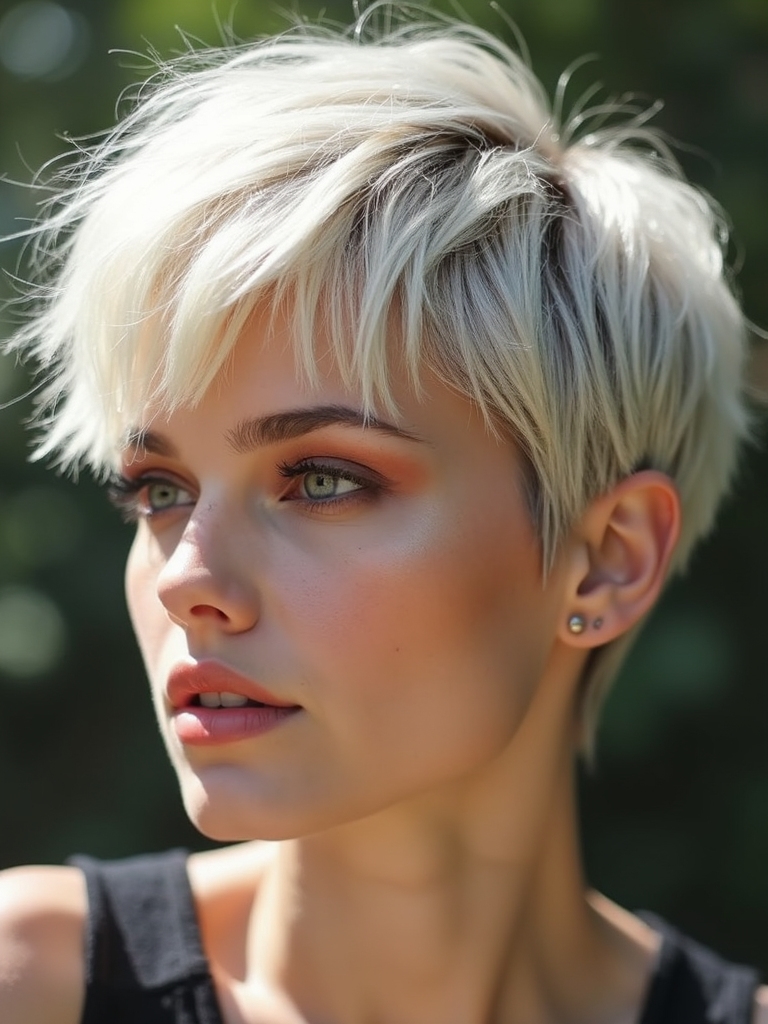
Shorter than a true lob but longer than a pixie, this hybrid borrows the choppy texturizing from this whole family and applies it at a length most people find noticeably easier to manage day to day.
The proportions land somewhere specific: enough length to still move, short enough that the actual styling stays quick.
- A true in-between length, neither fully short nor fully long.
- Carries the family’s signature texture at a lower-maintenance length.
- Suits someone transitioning out of a longer cut without going all the way short.
Long Layered Shag With Face-Framing

Taken to real length, this version keeps every bit of the original silhouette’s movement while adding face-framing pieces specifically at the front.
Those framing pieces do focused work around the cheekbones and jaw, while the rest of the length simply carries the layering’s texture without much additional styling required.
This is the version for someone who wants the reference without giving up any length at all — the layering does the work, not a shorter overall cut.
Shag With Shattered Ends

Shattered ends push the texturizing at the perimeter further than a standard feathered finish, breaking the very ends into distinct, separated pieces rather than one continuous edge.
- Reads more editorial and less strictly vintage than a softly feathered finish.
- Needs a stylist comfortable with heavier point-cutting at the perimeter.
- Pairs especially well with a fully undone, unstyled finish.
👍Why people choose it
- +Adds real editorial edge to an otherwise soft silhouette
- +Looks intentional even when styled minimally
- +Works on nearly any length within this family
👎What to weigh first
- –Needs a stylist skilled with heavier point-cutting
- –Can look unfinished on very fine, sparse hair
- –Ends need more frequent trims to keep the shatter crisp
Modern Shag With Micro Bangs
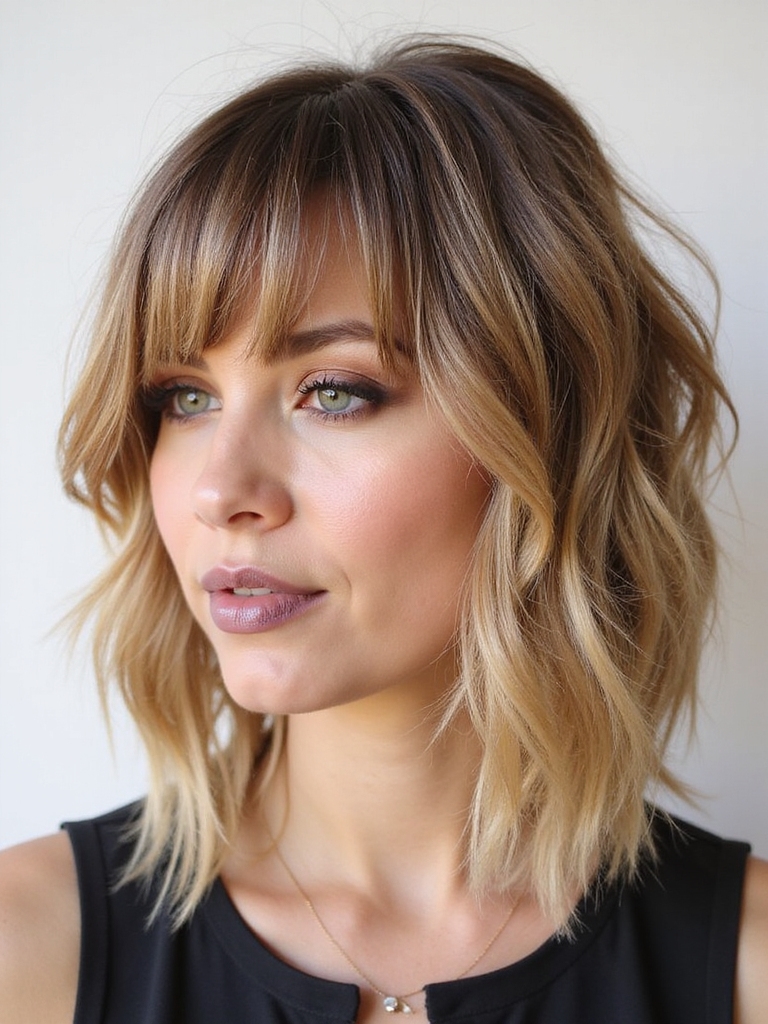
Pairing this cut with a short, blunt micro fringe pulls the whole look toward its most contemporary end, since a true micro fringe is a distinctly modern styling choice rather than anything from the original era.
A structured fringe against loose length
The contrast between the structured little fringe and the loose, textured length behind it is what makes this version feel current rather than nostalgic.
Keeping the fringe truly blunt, not softened or feathered at the edges, is what preserves that contrast against the rest of the length.
Tousled Shag With Undone Waves

This version leans entirely on a deliberately undone, tousled finish rather than any set style, hair scrunched and left to dry with minimal interference from a brush.
- The lowest-effort finish on this entire list, styling-wise.
- Works especially well on hair with some existing natural texture.
- A rough, unbothered finish is the actual goal, not a mistake to fix.
Color-Blocked Retro Shag

Placing two contrasting colors across the layers adds a visual dimension the cut doesn’t get from shape alone, each section catching a slightly different tone as it moves. This functions as a distinctly modern addition to an otherwise vintage-leaning silhouette.
- Color placement follows the layers, not a flat, single-tone application.
- Reads as a distinctly current update to a decades-old shape.
- Needs periodic toning to keep the contrast between the two tones sharp.
Low-Maintenance Retro Shag Styling

Across nearly every version here, day-to-day upkeep stays light, since the texture and movement are already built into the cut before any product goes on.
A texture spray or light mousse on damp hair, followed by an air-dry or a quick scrunch, gets most versions on this list to a finished-looking result in well under ten minutes.
The exception is anything styled for a fully set, flicked-out seventies finish. That specific look does take real blow-dry time with a round brush, even though the cut underneath is the same low-maintenance shape. A trim to keep the layers sharp typically runs around $65, roughly what a standard haircut without the layering would cost anyway. For more everyday styling options at other lengths, see our medium shag hairstyles.
Retro Shag Hairstyle Questions People Ask
?Does this cut look dated if I skip the seventies-style blowout?
Not at all. The layering and volume that define this shape work just as well with a completely modern, air-dried finish. The retro reference lives in styling choices, not in the cut itself.
?Can I try a lighter version before committing to heavy layering?
Yes. Starting with soft, blended layers rather than choppy, heavily texturized ones gives a much subtler nod to the shape, and a stylist can always add more texture at a later appointment.
?How do I know if my face shape works with this style?
The layering and fringe placement adapt to nearly any face shape, since the framing pieces at the front can start higher or lower depending on what needs softening. It comes down to fringe placement far more than face shape itself.
?Will heavy layering make my hair harder to grow out later?
Less than most people expect. Because the layers are already blended through the length, growing out mostly means the layers become less pronounced over time rather than creating an obvious, awkward stage.
Pick Your Decade, Then Pick Your Effort Level
What makes this cut worth revisiting decade after decade is how little the underlying shape actually has to change. The same feathered, volume-built silhouette adapts to whatever finish, fringe, or color treatment you bring to it.
Start by deciding how retro you actually want the result to read, then let your stylist adjust the specific layering and finish from there. The shape does most of the work either way.
More to Explore