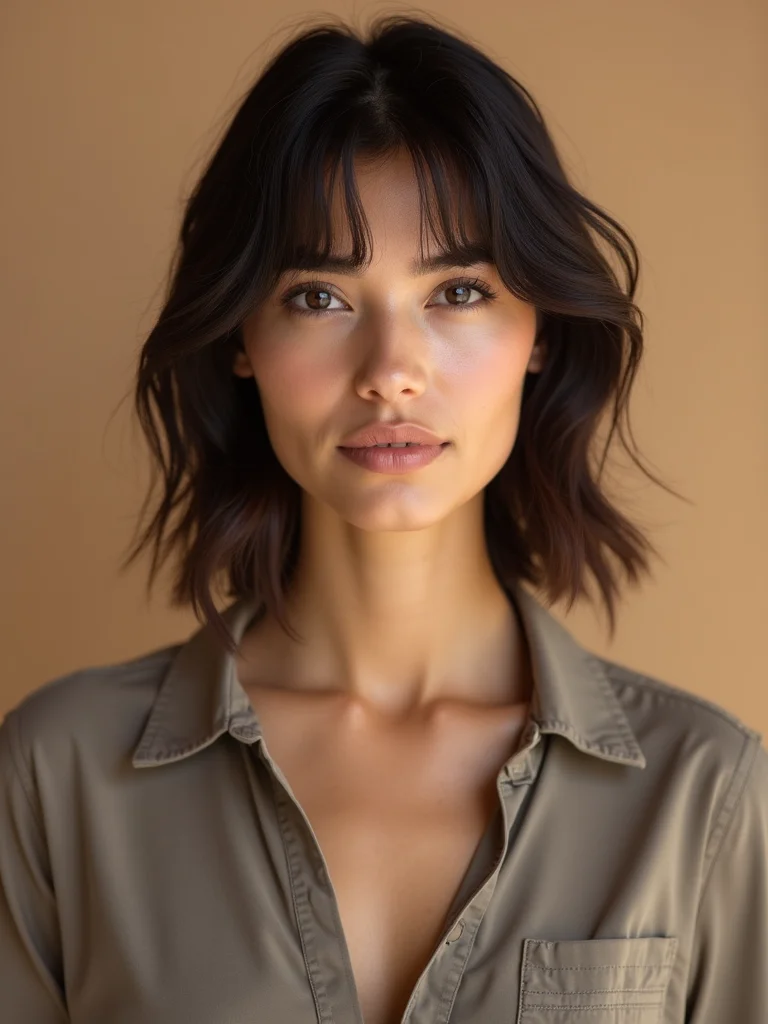
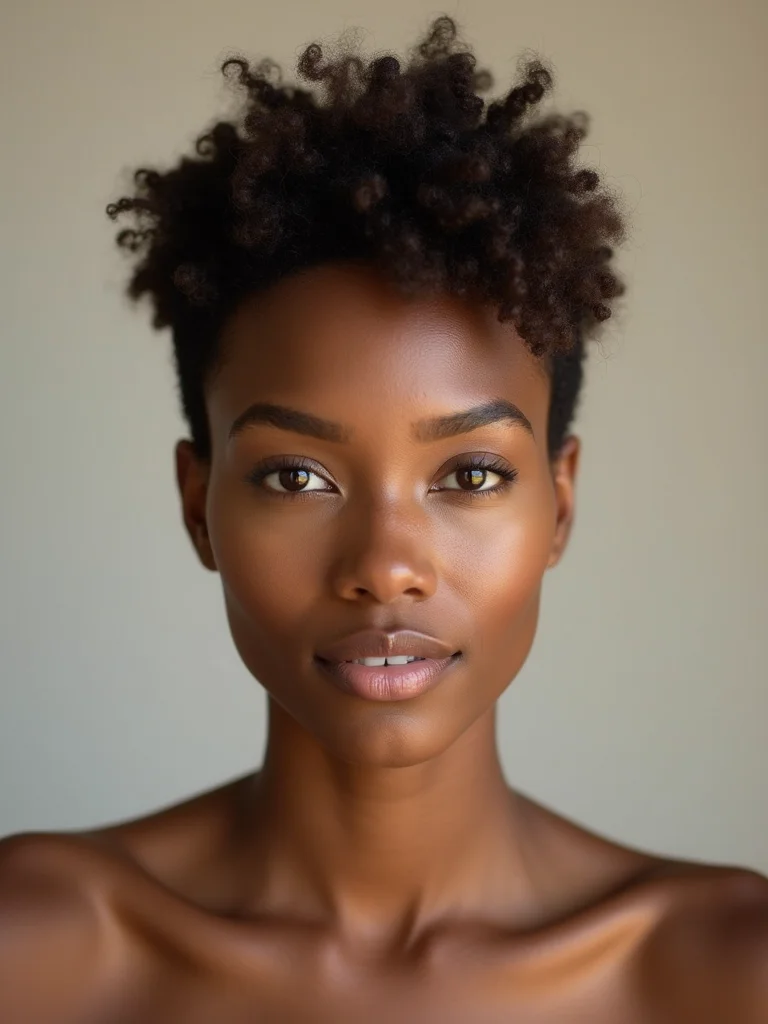
Medium-length hair sits in a no-man’s land. It’s too short to fall in one smooth cascade and too long to hold its own shape, so by the six-week mark it usually just sits there: dense at the ends, flat through the crown. Choppy layered haircuts for medium hair break that stall. They chip weight out of the length in uneven pieces, giving the hair somewhere to move.
Fifteen versions follow below. They’re sorted less by name than by what actually decides how a cut wears: your natural texture, your density, and the daily effort you’ll really put in. Get those three right and the look holds past the salon mirror. Skip that step, and a great cut can still photograph better than it lives.
What Actually Decides the Look
- Medium hair falls in the gap between a bob’s crisp line and long layers’ natural drape, and choppy cutting is built to close exactly that gap.
- Texture and density pick which version actually works; the photo you bring in is only a starting point.
- Plan on a reshaping visit roughly every two months to keep the piecey edges from going soft.
A Tousled Lob With Feathered Ends
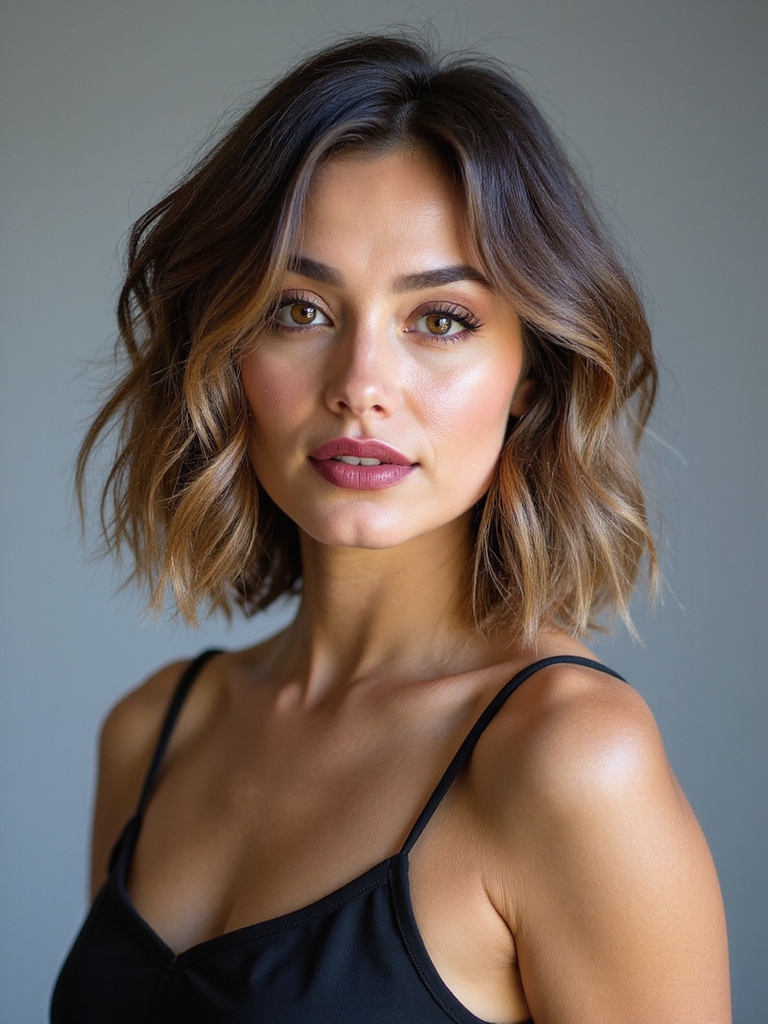
A tousled lob is usually where the choppy conversation starts at this length, mostly because it flatters nearly every face and takes the least daily effort of any cut here. The length lands around the shoulder. Feathered, piecey ends break up what would otherwise be one blunt slab, catching light differently depending on which way the hair falls that day.
Styling stays minimal: rough-dry with fingers instead of a brush, twist a few random sections while damp, then scrunch in a light texturizer once dry. That five-minute routine is the main reason stylists hear this request more than almost any other cut here.
- Shoulder-grazing length that moves easily between down and pulled-back styles
- Feathered perimeter replaces one heavy line with layered points
- Works most cleanly on straight or loosely wavy hair; tight curl patterns tend to hide the feathering
A Shaggy Mid-Length With Face-Framing Layers
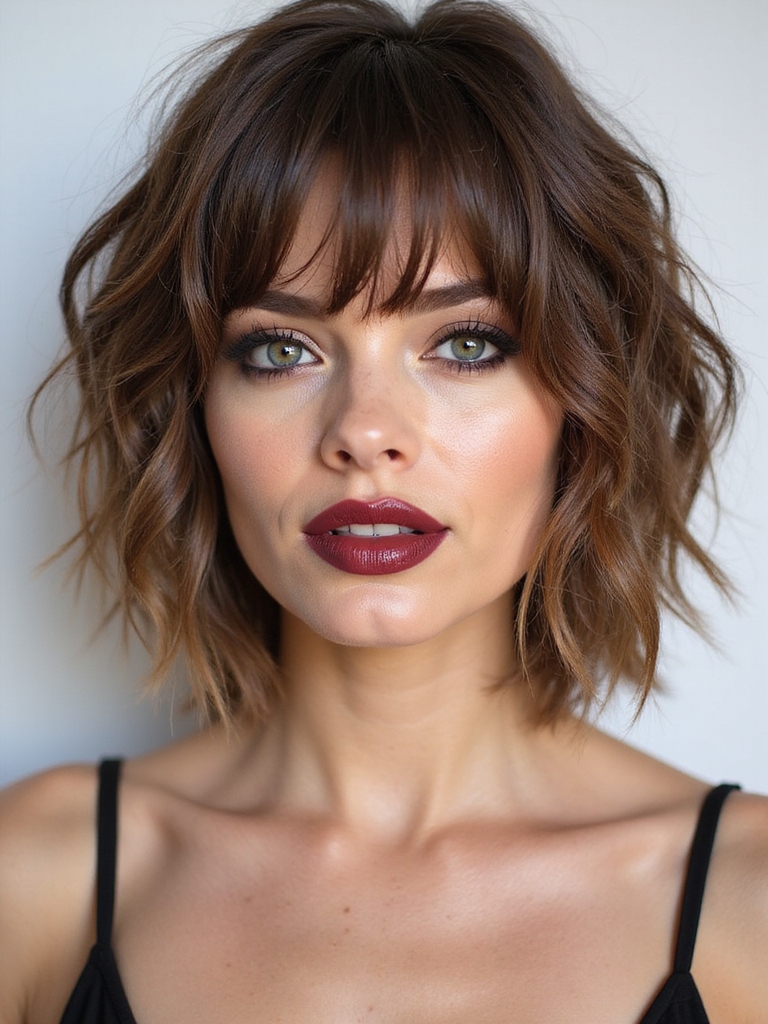
The shag’s stacked, wolf-inspired layering usually gets built for long hair, but scaled down to medium length it looks cleaner, since there’s less hair for the volume to get lost in. Layers stack through the crown for lift. Framing pieces drop around the face, cut a few inches short of the rest so they move on their own.
It photographs messier than it feels to wear. Air-drying with a light mousse gives the shag its rough texture; a round brush smooths it out for anyone after a tidier finish for work. See our best medium shag hairstyles if this particular balance of edge and polish isn’t quite it.
- Crown layering adds lift without backcombing
- Face-framing pieces are cut short and grow out first, so plan on trimming them sooner
- Works loose or tied back, which makes it practical for daily wear
A Piecey Wolf-Cut Hybrid
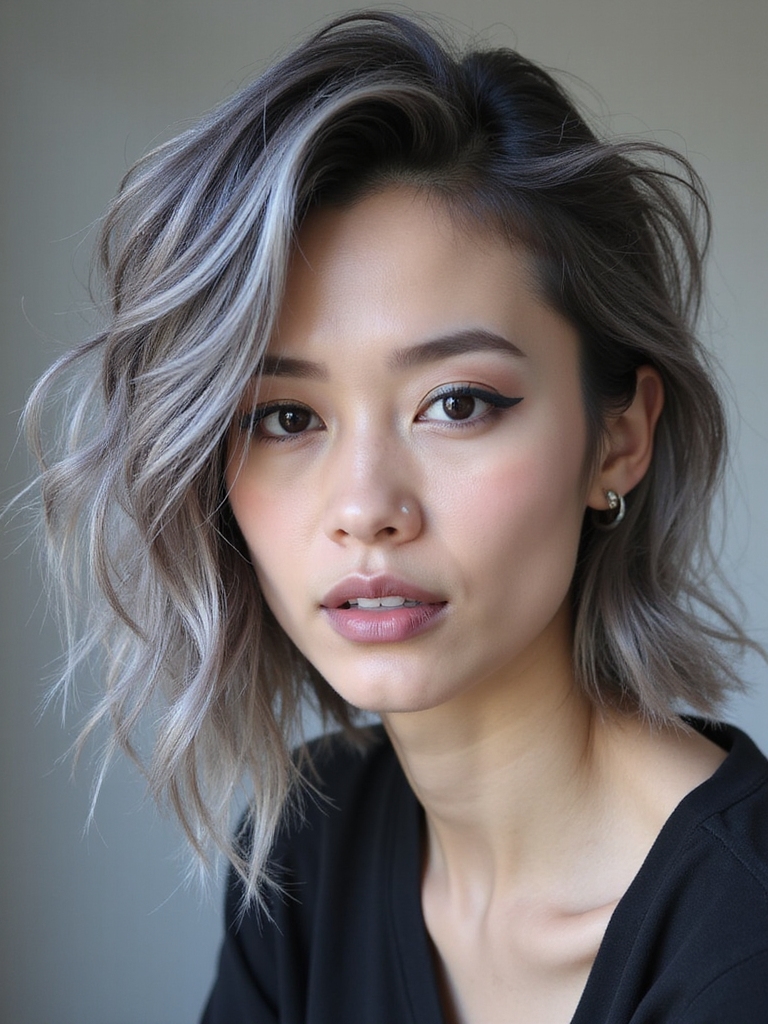
On very long or very short hair, a wolf cut can tip into costume territory. Scaled to medium length, the same shag-meets-mullet DNA still looks bold without swallowing the whole style. The crown gets heavily textured while the perimeter stays controlled, giving the volume somewhere to land.
Ask for Internal Texturizing at the Ends
Density matters more here than with most cuts in this group. Thick hair holds shape without much product. Fine hair needs a mousse combed through damp roots to fake the same lift, or the layering looks thin. Compare it against a fuller medium wolf cut to see how much the balance shifts once the length grows out.
Ask specifically for internal texturizing, not blunt point-cutting, at the ends. That’s what keeps a wolf cut from sliding into unkempt. I’d rather a client book a crown refresh every two to three months, usually $45 to $90 at most salons, than let the whole shape soften into a generic shag.
Two ways to finish a mid-length shag, depending on the day:
🎯Air-Dried and Rough
Scrunch a light mousse through damp hair and let it dry loose for maximum piecey texture.
🎯Round-Brushed and Smooth
Blow it out and finish with a large round brush; the result is tidier but still keeps the face-framing movement.
A Collarbone Cut With Shattered Lines
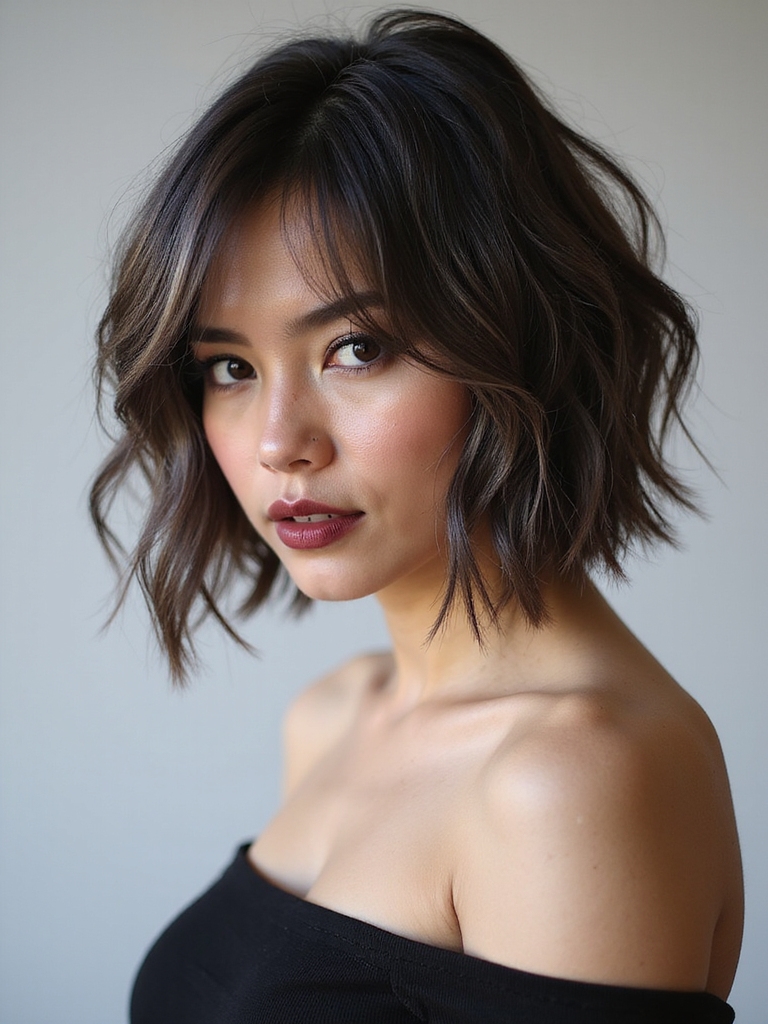
Push the choppy texture further and you land on a collarbone cut with shattered lines: layers cut into deliberately broken pieces that look torn on purpose. It’s the most aggressive texture here. It lands edgy, a little undone, closer to grunge than polished.
The deepest shattering is hard to walk back once it’s cut, so it’s worth being certain before asking for it. A matte clay defines the separated pieces without adding shine, keeping the broken-up effect from smoothing out over the course of a day.
- Collarbone length keeps the drama from tipping into costume
- Best suited to those who want real texture over polish
- Grows out into a softer shag on its own, with no emergency trim needed
A Layered Midi With Curtain Bangs
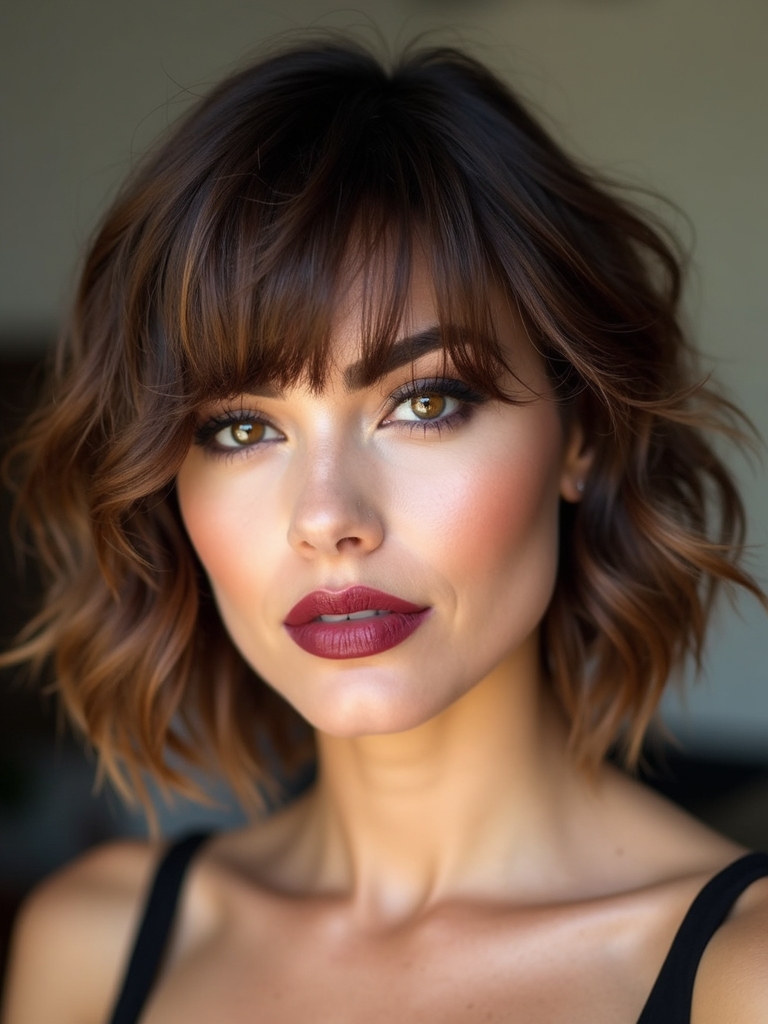
A choppy layered midi sits between shoulder and collarbone, and curtain bangs soften the whole effect by sweeping open at the center instead of cutting straight across the forehead. The bangs blend fully into the layering, so the two move as a single cut.
- Blow-dry the bangs with a small round brush, curving them away from the face
- Point-cut the ends of the bangs so they feather into the layers below
- Finish with a flexible-hold spray; anything stiffer fights the movement
An Airy Razor Cut for Fine Hair
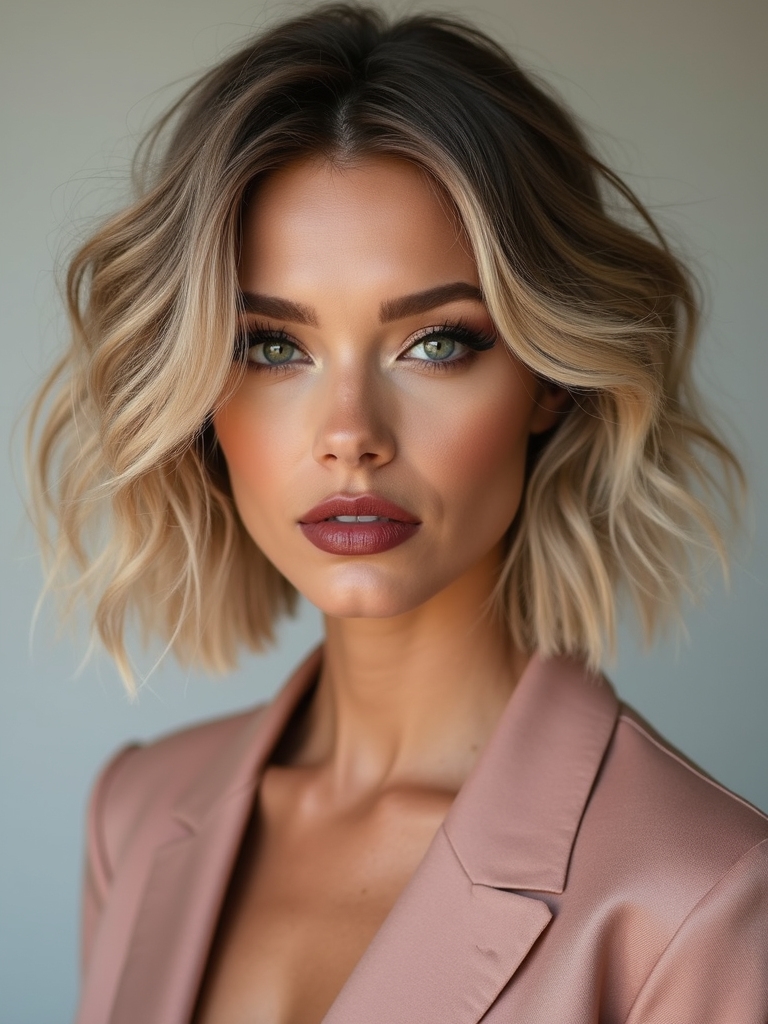
Fine medium hair has a specific failure mode: it goes flat by midday no matter how it’s cut. A razor, used with a light hand, tapers the ends into thin, airy pieces that catch more movement than a scissor-cut edge, which looks fuller even with less weight at the perimeter.
The Line Between Airy and Thin
Heavy razoring is the real risk here. Over-thin fine hair turns stringy at the ends. The safer version keeps the razoring light and concentrated at the very ends, leaving the mid-lengths alone to preserve density.
A lift-boosting mousse at the roots, then a quick pass with a diffuser or round brush, gives fine hair what it needs before the razored texture can do its job. Skip the roots and the whole effect collapses by early afternoon.
ℹ️The Split-Point Rule
Curtain bangs part naturally down the center once they’re layered into the cut. Fighting that part with a comb for a day usually loses. It’s easier to work with where the hair wants to fall than to force it flat.
Internal Layers for Quiet Movement
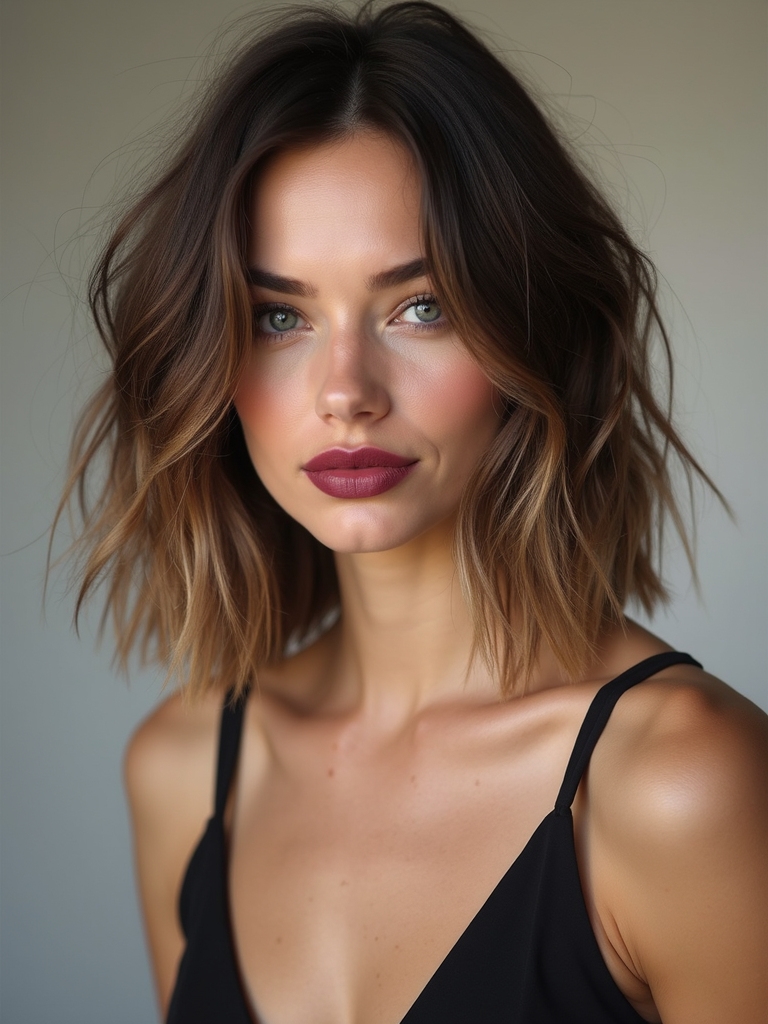
Not everyone wants the surface of their hair to look obviously cut. Internal layering solves for that: the choppy pieces are cut underneath the top layer, invisible from the outside, so the hair still moves and falls naturally while the crown stays dense and smooth.
It’s the version I point quieter-texture clients toward, since it delivers movement without the upkeep of a visible layered edge. There’s no fringe line to grow out. There’s no piecey perimeter to reshape either, and the cut grows out evenly because nothing on the surface was ever cut short to begin with.
Wavy Mid-Length With Choppy Face Layers
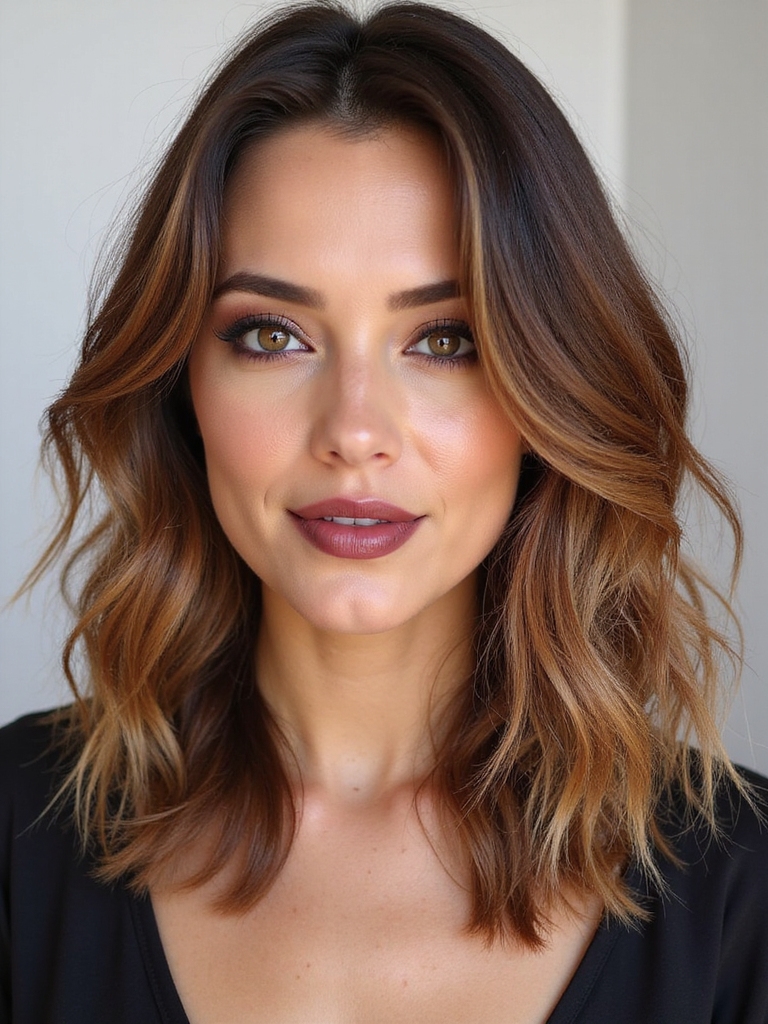
Wavy medium hair often needs help springing into its own texture, and face-framing choppy layers do exactly that by removing weight right where the wave wants to bend. Cut a touch short of the rest of the length, those pieces free up movement so the wave pattern can show.
A salt spray, scrunched in on damp hair, brings out the beachy texture these layers are built for. It looks unstudied in photos, though it usually takes a visit or two before a stylist finds exactly where to cut the face pieces for a given wave pattern.
- Face-framing pieces release the weight that flattens waves
- Cut short of the rest so the wave pattern can spring
- A salt spray is the one product this cut consistently needs
🅰️Internal Layers
Movement built underneath; the surface stays smooth and dense. Lower upkeep, no visible edge to grow out.
🅱️Visible Surface Layers
Texture cut right at the top layer, more dramatic and noticeable, but needing more regular reshaping to hold the effect.
A Shoulder-Grazing Cut With a Wispy Fringe
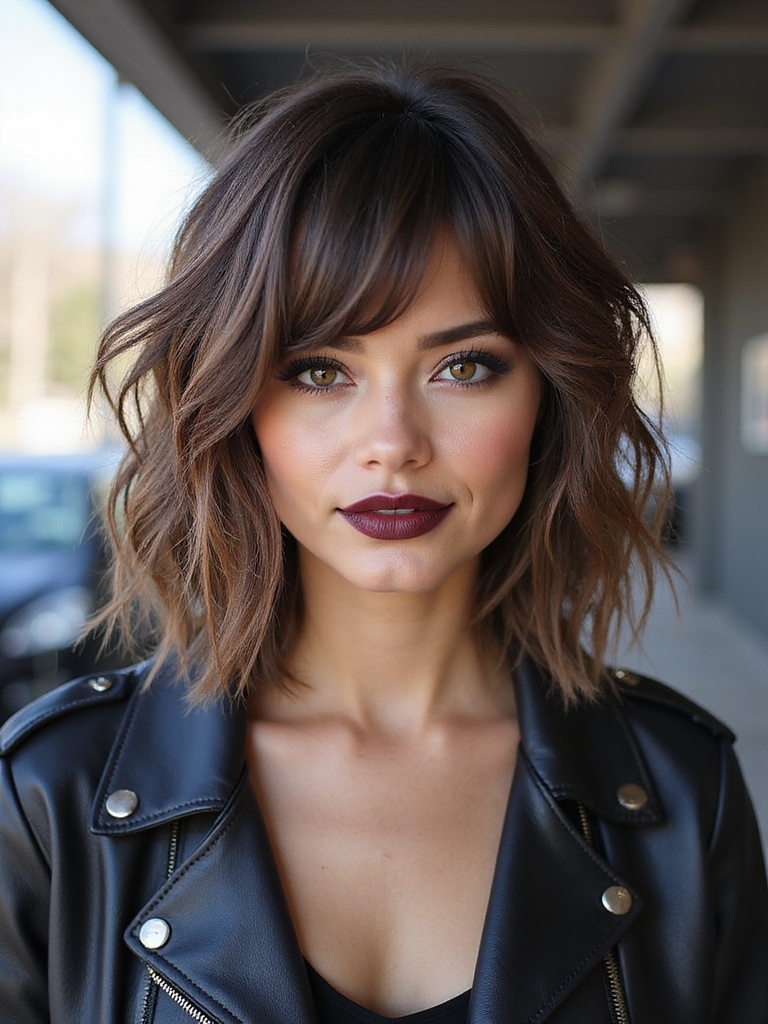
Pairing a shoulder-grazing choppy cut with a wispy, see-through fringe softens the whole look, framing the eyes without adding visual weight up top. The fringe is thinned enough to barely skim the brows, letting the choppy layers below carry the texture instead.
It’s a low-commitment way to try bangs, since a fringe this thin grows out into face-framing pieces, skipping the awkward in-between stage most blunt bangs go through. It also pairs naturally with any shoulder-length layered hair you’re already considering, if the full fringe feels like too much of a leap.
A light serum, worked through just the fringe, keeps it soft. Heavier products weigh thin bangs down fast, so less truly helps more here than with most other cuts in this group.
A Blunt-Perimeter Midi With Soft Top Layers
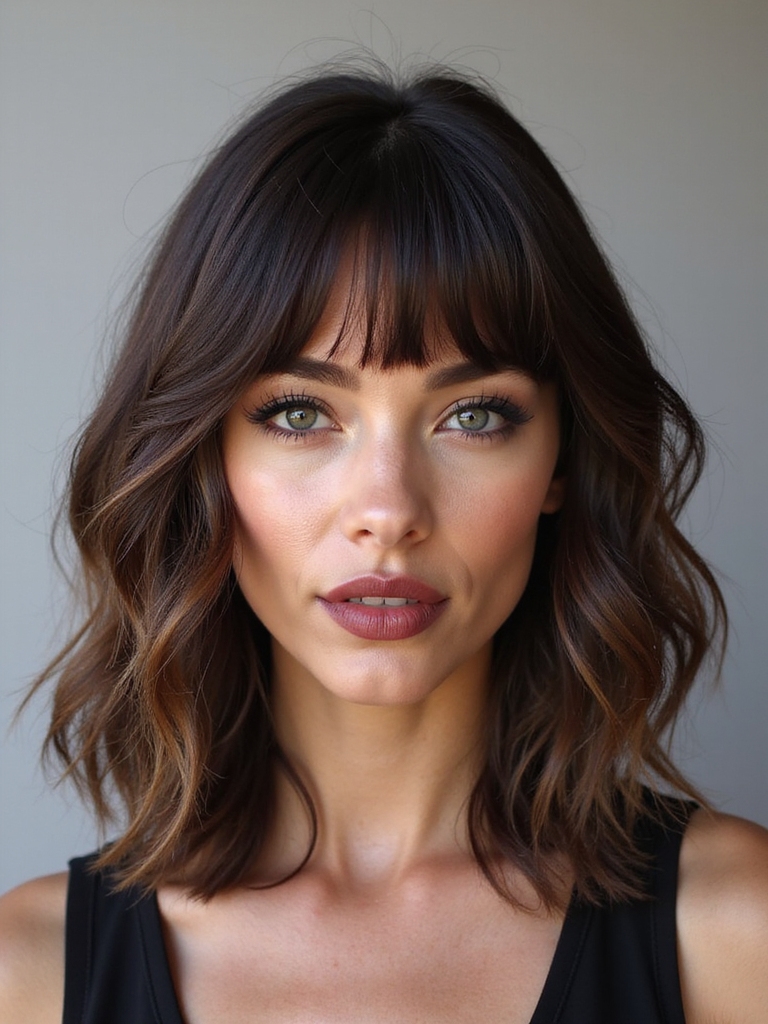
For hair that needs to look full, keeping the perimeter blunt while adding soft choppy layers only through the top is the compromise that works. The dense bottom line preserves the illusion of thickness while the layered crown adds enough movement that the cut doesn’t look stiff.
Where the Product Goes, and Where It Doesn’t
This suits fine or medium-density hair best. The blunt line does real structural work at the bottom that thicker hair doesn’t need as much.
A texture cream stays confined to the top layers, separating that movement without ever touching the blunt ends, which stay smooth and untouched by product on purpose.
Curly Medium Layers for Defined Shape
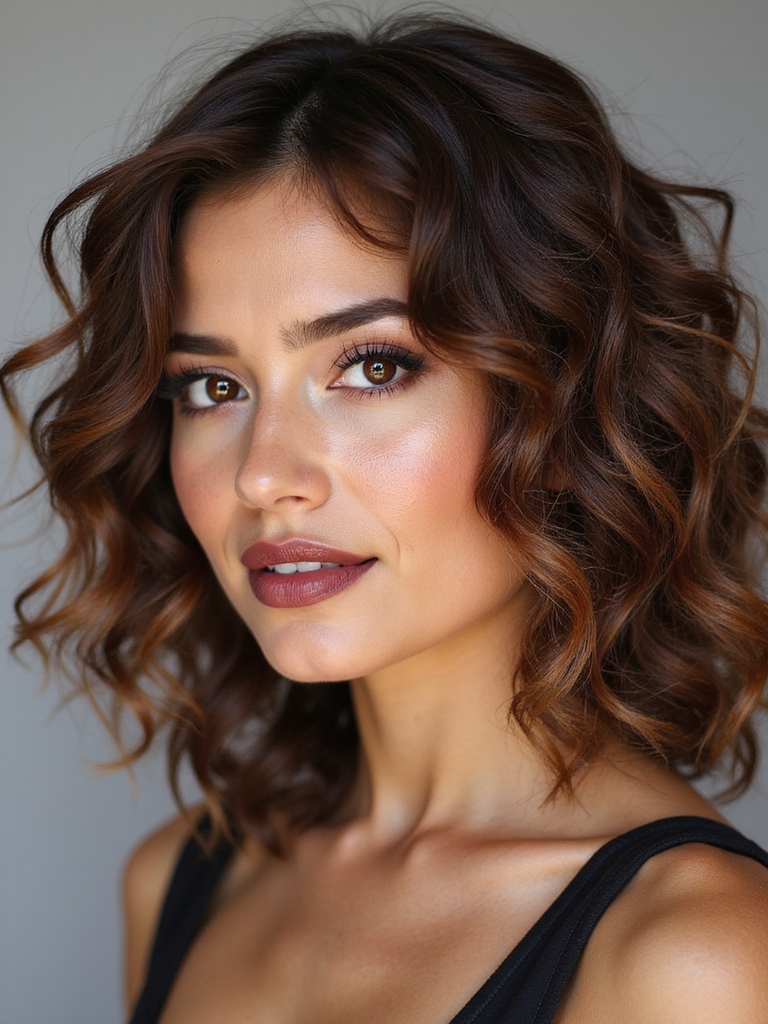
Curly medium hair tends toward a triangle silhouette once it grows past the chin: narrow up top, wide at the bottom. Choppy layers cut through that bulk break the triangle by removing weight unevenly, letting individual curls spring into a rounder, more balanced shape.
The cut needs to happen dry, curl by natural curl. A stylist working on wet hair has no reliable way to predict where a curl will land once it shrinks up. The layers show their shape best when diffused with a curl-defining cream; air-drying flat undersells them. For more built around natural texture, see layered curly hair.
Flippy Layered Ends With Modern Texture
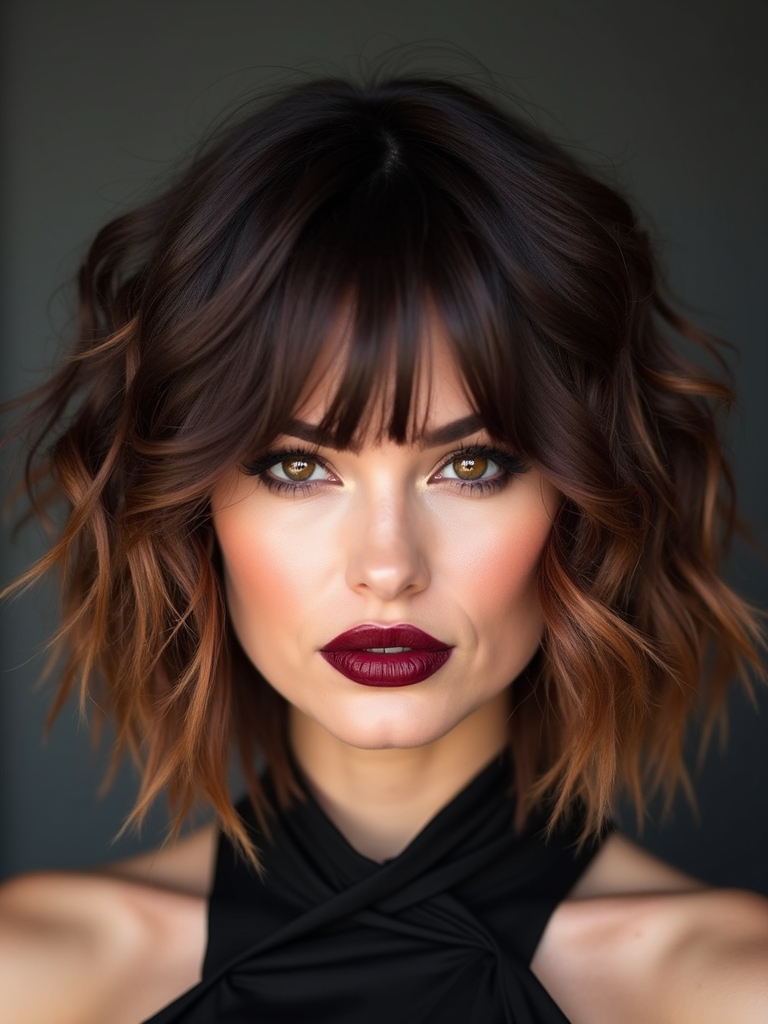
Turning the ends outward instead of under is a small styling choice that changes a lot. It gives an otherwise straightforward layered cut a playful, slightly retro edge, especially at a length that sits between the collarbone and shoulder, where the flip has enough hair to work with but not so much that it falls flat under its own weight.
- Section hair into large pieces and curl the ends outward with a round brush or flat iron
- Point-cut a few pieces at the very ends to keep the flip from looking stiff
- Set with a flexible-hold spray so the flip holds without turning crunchy
A Soft Mullet-Inspired Mid-Length
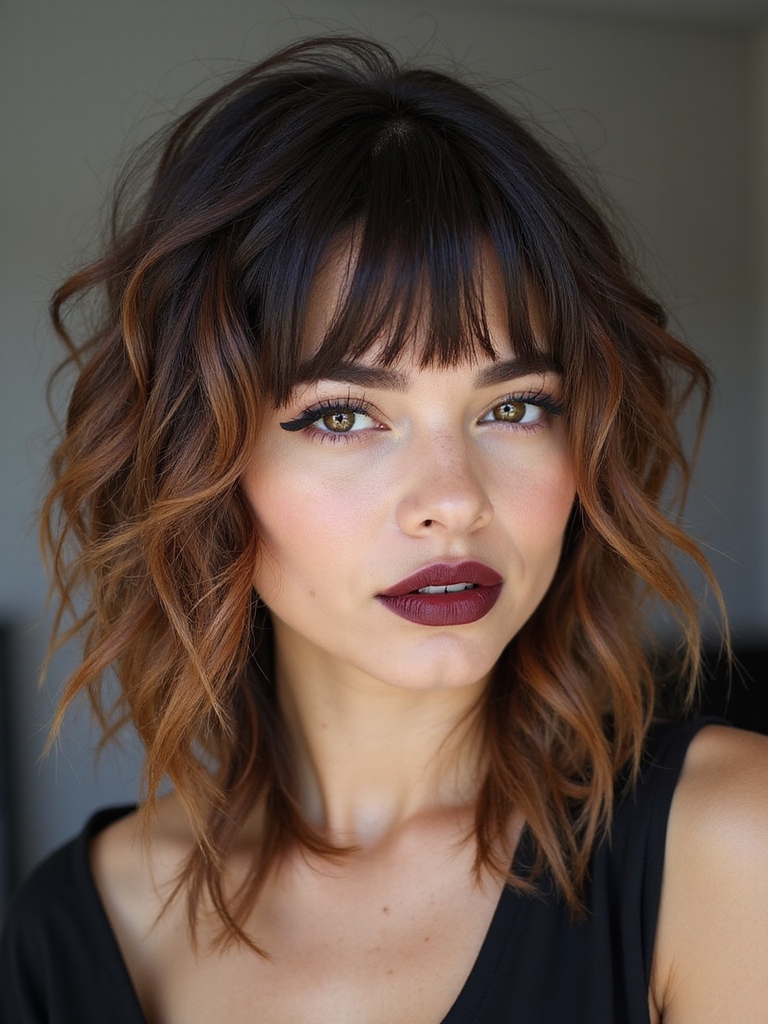
Keeping the back slightly longer than the front and sides, then choppy-layering the whole thing, nods to the mullet’s bold shape without the full drama of the original. The layering is what makes it wearable. A straight-up mullet at medium length can look unfinished; chopped layers give the silhouette enough texture to look intentional.
It suits someone who wants a real style statement but still needs the cut to work for an office five days a week. A texture paste, concentrated at the back, keeps the longer pieces from going flat by midafternoon.
- Back stays longer than the front, the defining trait of the shape
- Chopped layers keep it from looking like an unfinished grow-out
- Works in an office setting, which the original mullet rarely did
Choppy Layers That Debulk Thick Hair
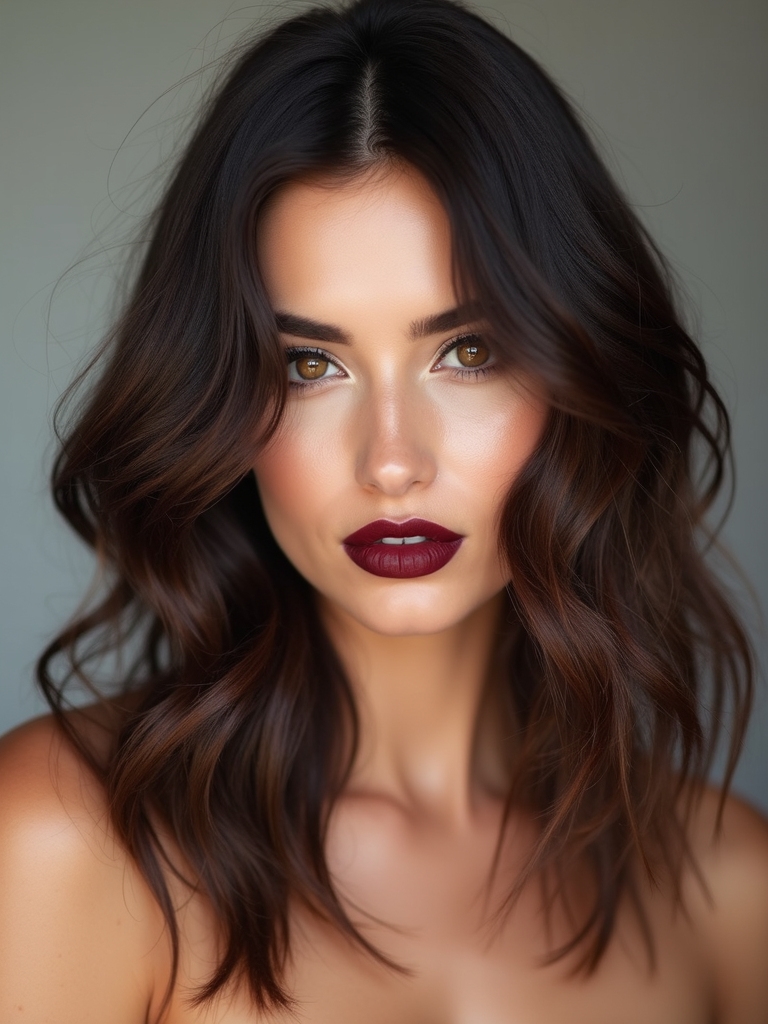
Thick hair at a medium length often sits heavy and shapeless no matter how it’s blow-dried, and choppy layers solve that by physically removing weight. The chopping breaks a dense mass into visible, separated pieces that look like real texture.
- Removes bulk without shortening the overall length
- Cuts drying time noticeably; less density means less time under heat
- A light cream, not a heavy oil, keeps the newly visible layers from flattening back down
📋Before Booking a Soft Mullet
- ✓Confirm how much longer the back should stay versus the front and sides
- ✓Ask for chopped, not blunt, layering through the length so it doesn’t look stiff
- ✓Bring a photo. Mullet means wildly different things to different stylists
Beachy Mid-Length With Piecey Ends
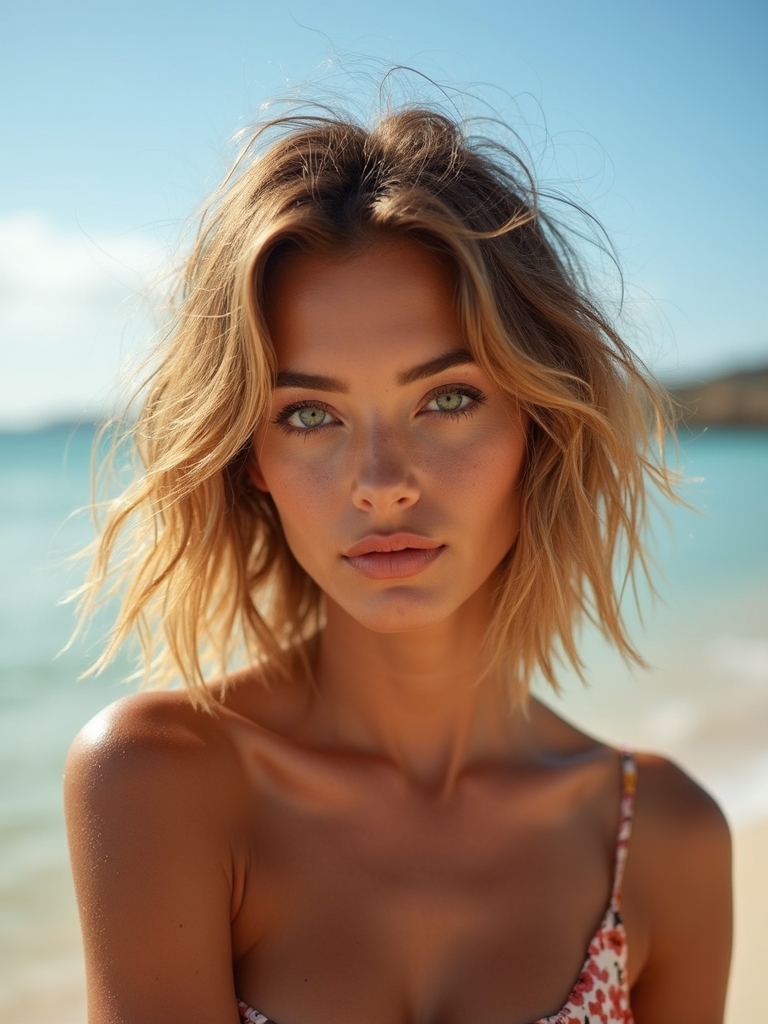
The most low-effort version here pairs soft beachy texture through the lengths with choppy, separated ends. It’s built to look a little undone. That’s exactly why it actually improves on day two or three instead of needing a fresh blow-dry every morning.
A salt spray, scrunched into damp or dry hair, builds the texture. A matte cream on just the ends keeps them separated without adding shine. For a glossier, softer take on the same length, a Korean layered haircut swaps the piecey ends for smoother, rounder movement, worth a look if the undone version feels like too much upkeep.
Who It Suits Best
Choppy layers at medium length suit hair with at least some texture to begin with. Straight, fine hair with zero natural movement has to work harder to keep the piecey effect from going stringy by midday, while thick or wavy hair tends to hold the shape with barely any styling at all. Browse the full range of medium layered haircuts if none of these fifteen quite match what you’re picturing.
One group won’t love this. Anyone chasing a fully low-maintenance grow-out should look elsewhere, since choppy layering, by design, needs periodic reshaping to keep the broken-up ends from softening into a plain shag. A blunt, single-length trim holds its shape longer between salon visits if a wash-and-forget cut is the real goal.
It’s the Hair Type That Decides, Not the Name
Fifteen cuts, one underlying idea: medium-length hair needs layers with real separation, not just thinning, to move the way it’s capable of moving. The differences between these versions come down less to what they’re called and more to texture, density, and how much daily styling is realistic for you.
If nothing here matches exactly what’s in your head, that’s fine. Bring the closest photo to your next appointment and talk through which pieces of it actually fit your hair type. A good stylist will tell you honestly which parts will hold and which won’t.
More Inspiration