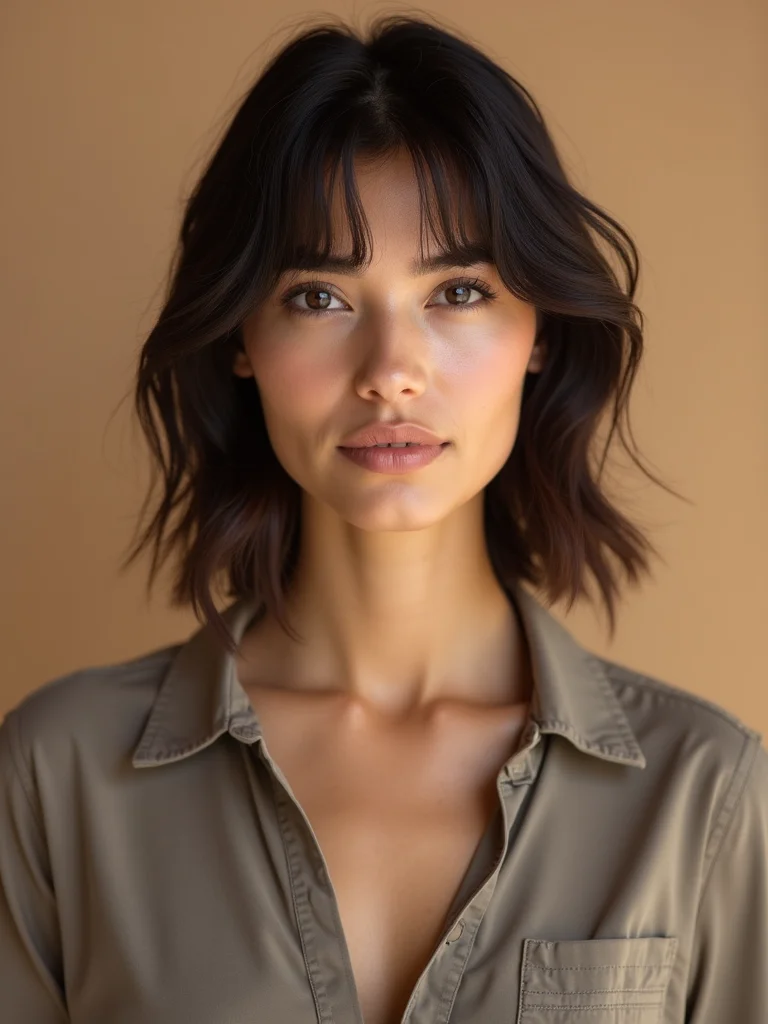
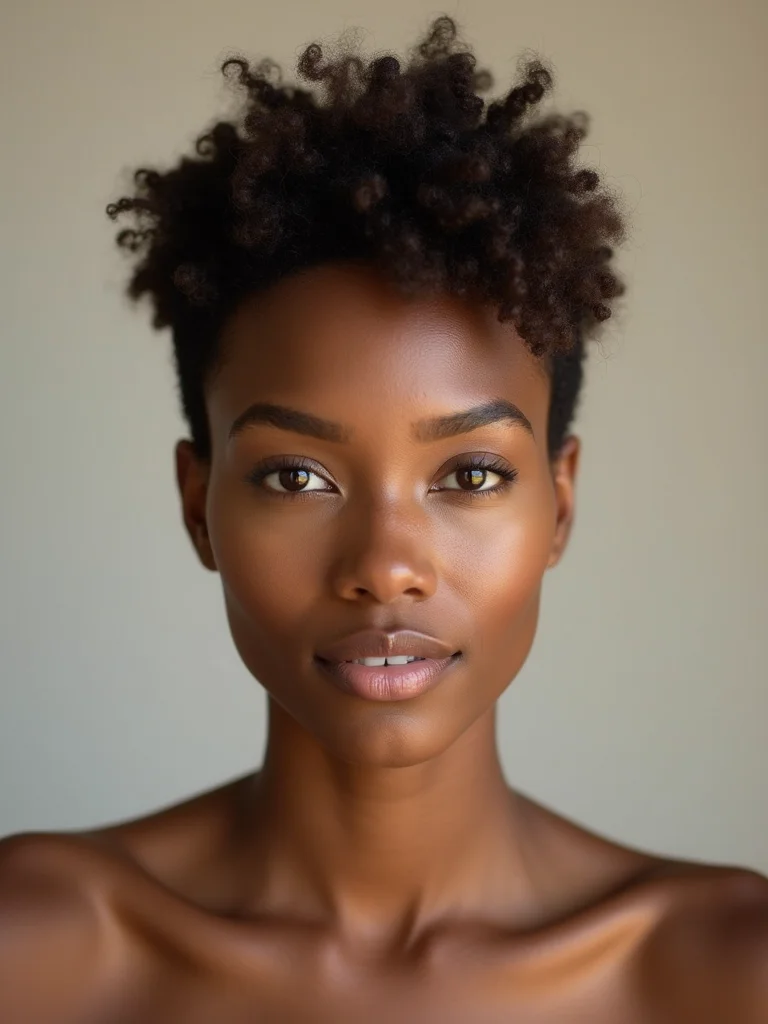
A one-length fringe stops right where it started: a straight edge across the forehead, cut off from everything happening in the rest of the hair. Curtain bangs with layers fix that split by giving the fringe somewhere to go. It lengthens, softens, and folds into the cut instead of sitting on top of it like an afterthought.
That’s the entire case for pairing curtain bangs with layers, and it holds up across nearly every length and texture. Softer, more blended versions are outpacing anything with a hard edge right now, but the pairing itself has held up for decades. The fifteen versions below run from a wispy fringe on medium layers to a full, retro-leaning sweep, with the cutting and styling notes that keep each one blended rather than pasted on.
Why the Pairing Actually Works
Curtain bangs and layers solve each other’s weak spots. A fringe cut on its own has nothing to blend into. Layers cut on their own have no soft framing up front. Put the two together and the layers catch the fringe on the way down, so it lengthens into the cut with no hard line left to grow out.
The layers that do this job best start right around the fringe and graduate outward, whether the rest of the cut is a lob, a shag, or full length. Ask for that graduation specifically, not just layers in general, and the blend takes care of itself.
A Wispy Fringe Melting Into Medium Layers
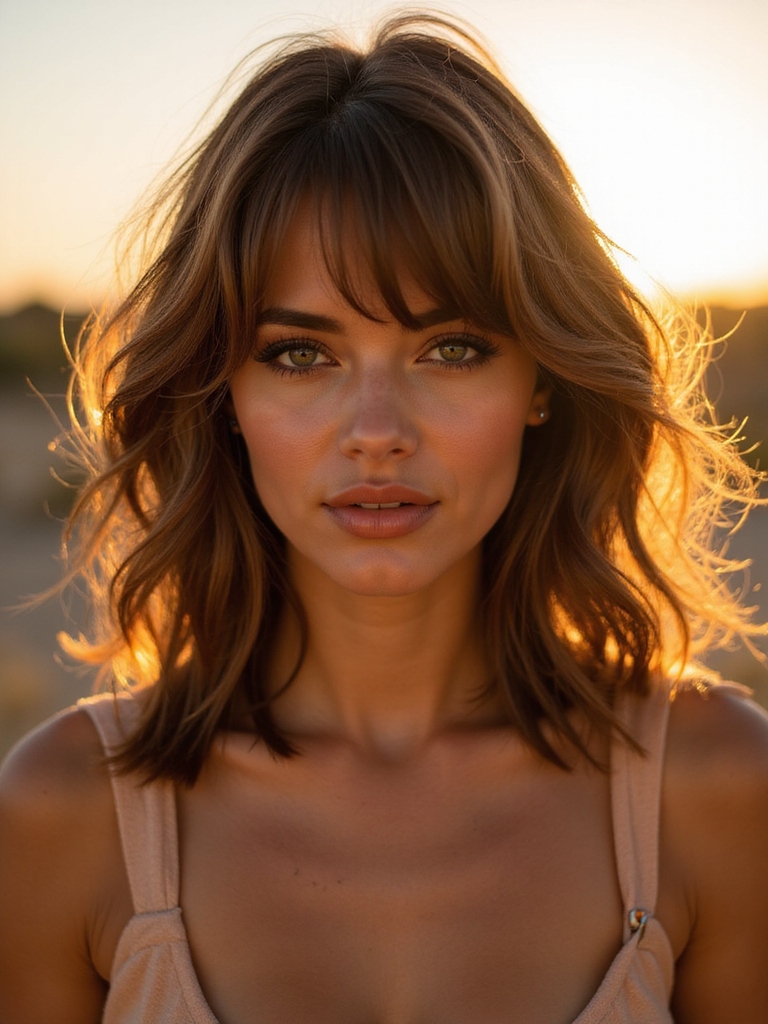
A wispy, see-through fringe on medium layers is the entry point most people start with, since the thin strands melt into the surrounding layers almost on their own.
- The bangs are cut thin enough to read as see-through, not a solid block across the forehead.
- A texture spray through damp hair keeps the strands separated instead of clumping together.
- It’s the lowest-commitment version here, growing out into face-framing pieces with almost no awkward stage.
Long Curtains Blended Into Shag Layers
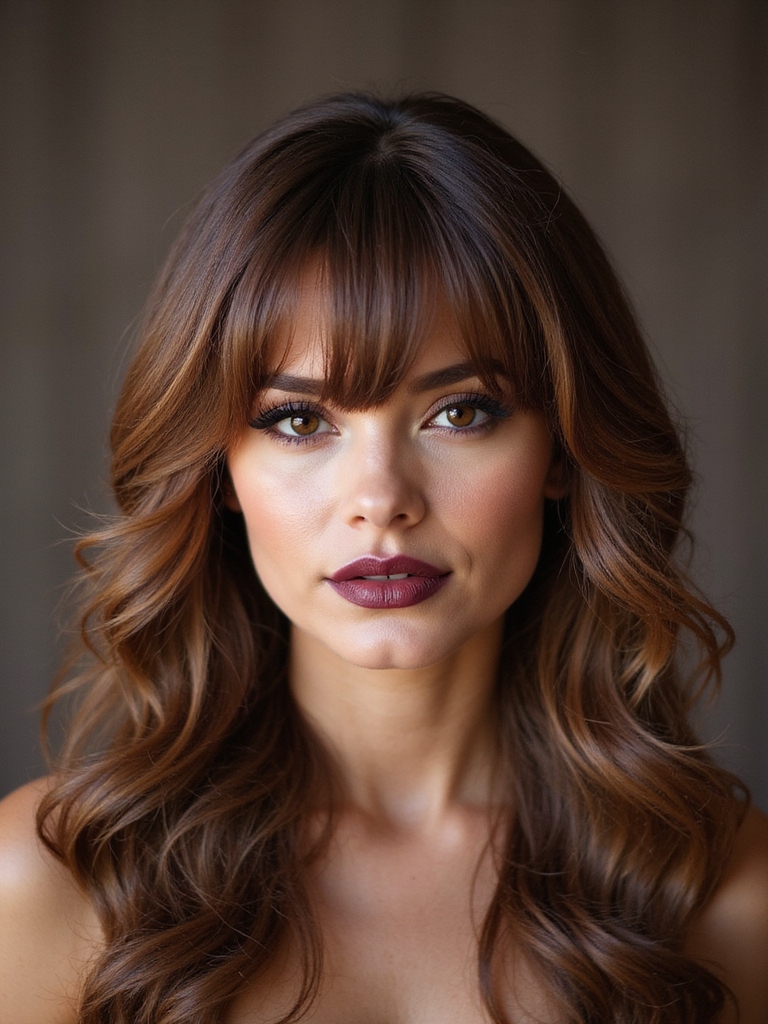
Long curtain bangs stretched to blend with face-framing shag layers pull toward a rockier, more undone attitude than a shorter fringe would.
Keeping the Shag From Going Flat
The choppy ends of the shag and the length of the fringe share the same grown-in movement, so the two pieces read as a single shape instead of two separate decisions.
Where this version struggles is on very fine hair. Shag layers can thin the ends out past the point of holding shape, so a stylist working on finer strands usually leaves a little more weight through the fringe to compensate.
📋Before Asking for This Combination
- ✓Bring a photo of the length you want the fringe to land at once it’s grown in a little
- ✓Mention if your hair is fine, since the shag layers may need adjusting to avoid thinning it out
- ✓Ask whether a texturizing cream or a salt spray suits your hair type better
A Chin-Length Curtain on a Layered Lob
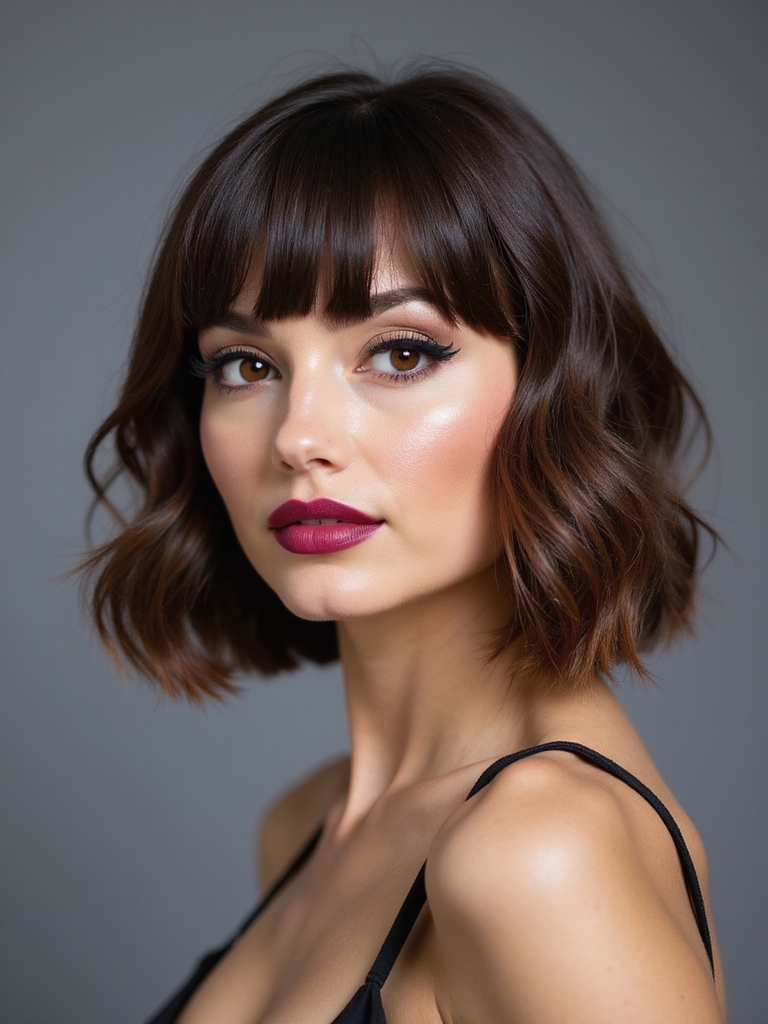
A chin-length curtain on a layered lob frames the face without covering much of it, landing right at the jaw where most face shapes read as flattering.
The lob’s internal layers pick up where the fringe leaves off, so the curtain grows down into the cut rather than stopping abruptly at one length.
Curl-Powered Volume Under Feathered Curtains
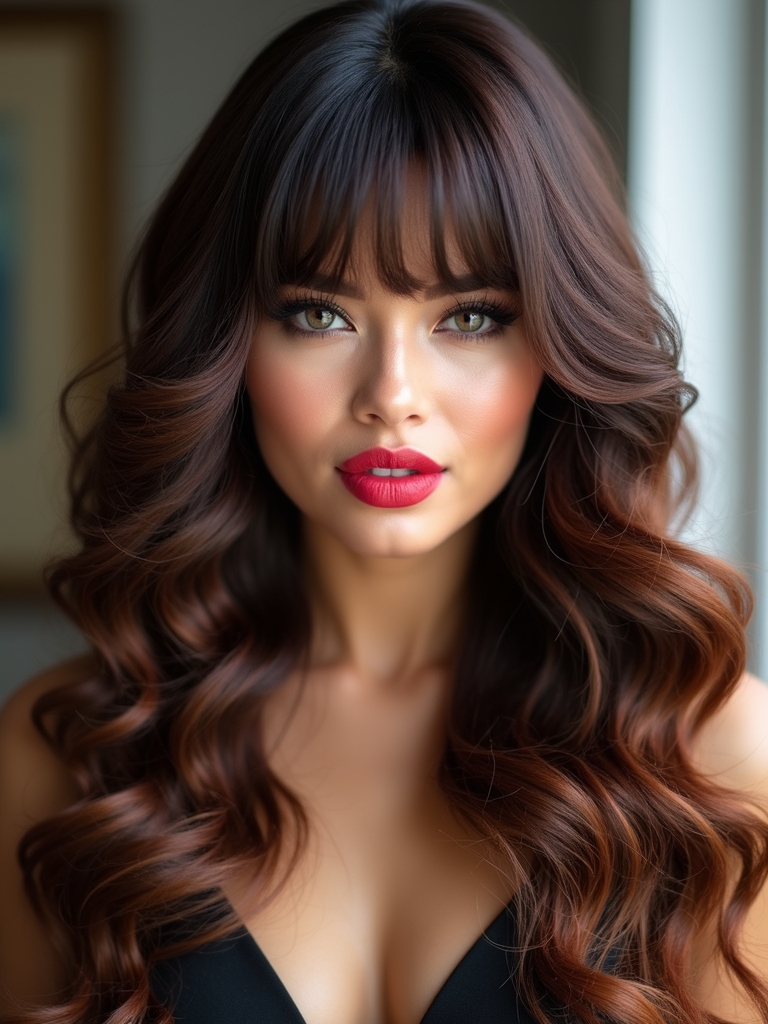
Natural curl brings its own volume to this pairing, springing the layers into a fuller shape while the soft curtain frames the face around it.
The cut has to account for curl shrinkage before the fringe is finished, since curl pulls up as it dries and a fringe cut to length wet can land shorter than planned.
- Curl pattern does most of the volume-building here, so heavy product isn’t needed.
- A curl cream, worked through with a diffuser, keeps the definition without weighing the fringe down.
- Cutting dry, not wet, is what keeps the fringe landing where it’s supposed to.
Airy Layers With an Eye-Skimming Fringe
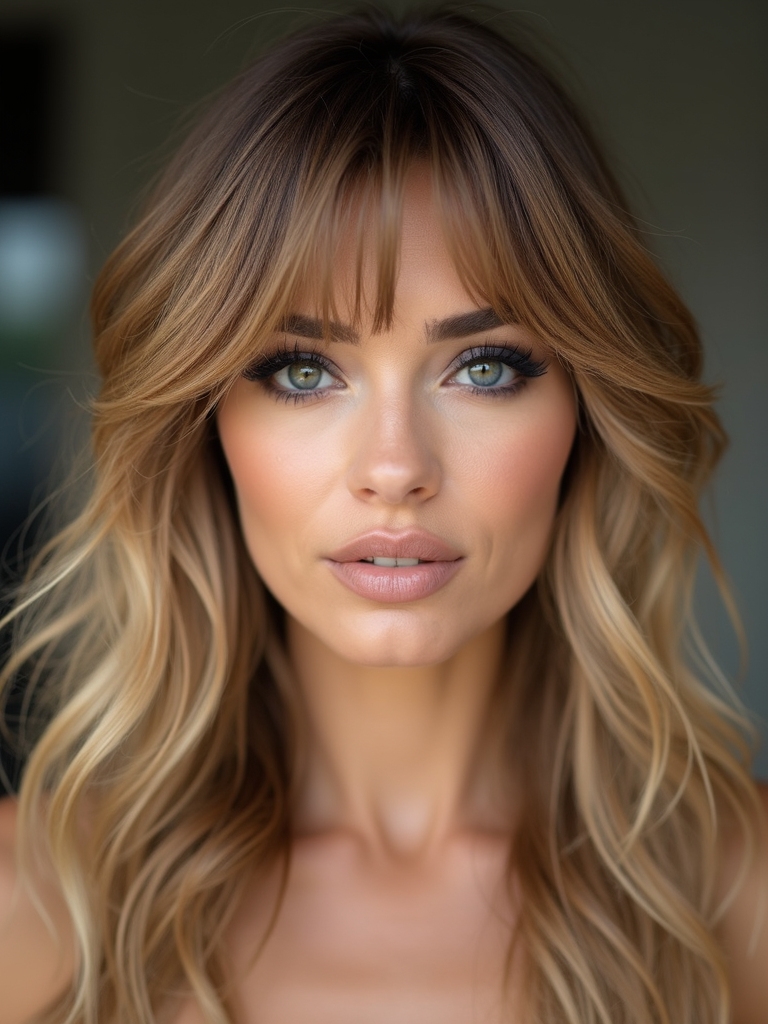
Airy, textured layers paired with an eye-skimming fringe keep the whole cut light, with the longer bangs just brushing the lashes instead of sitting heavy on the brow.
It works on fine and medium textures alike, which isn’t true of every fringe length. A longer curtain like this one usually needs some texture underneath it to avoid looking flat.
The catch is humid days. Without a texturizing spray, the lightness that makes this version appealing can also make it separate unevenly by afternoon.
| Face Shape | Fringe Length | Why It Works |
|---|---|---|
| Round or square | Longer, eye-skimming | Elongates without adding width at the cheek |
| Oval or heart | Shorter, brow-grazing | Shows more of the eyes without overwhelming the face |
Blunt Lengths Softened by Curtain Framing
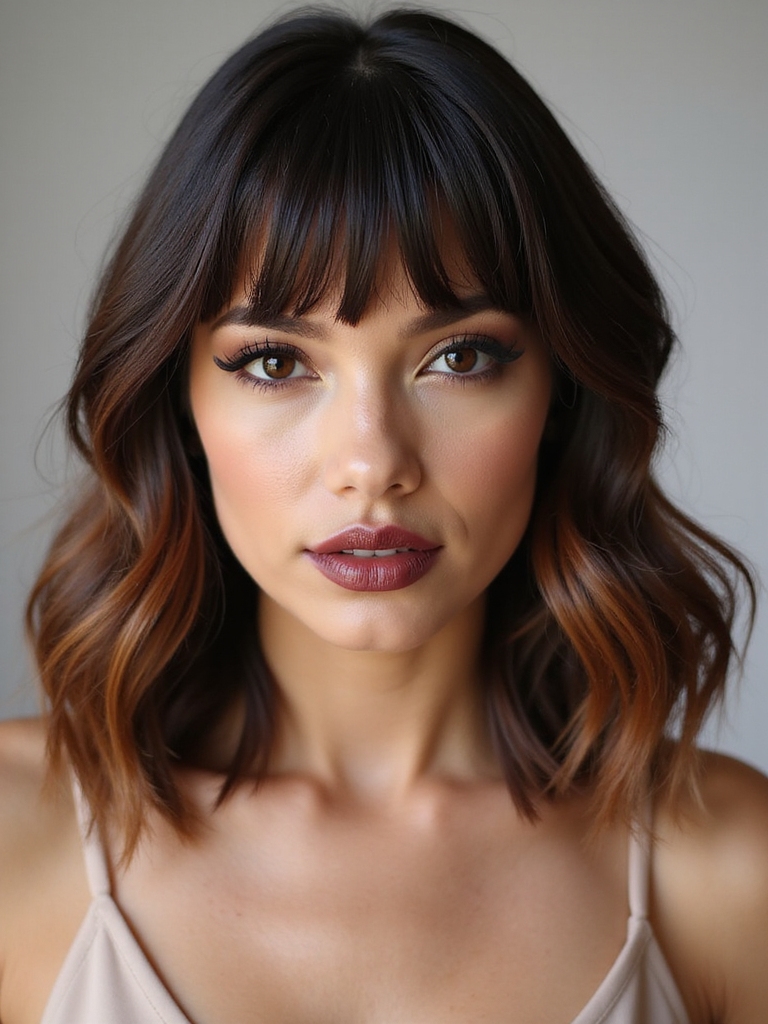
Pairing blunt, straight-across ends with a soft curtain fringe puts two opposite textures in the same cut on purpose.
The blunt length keeps the shape modern and a little severe, while the curtain framing softens the front so the whole thing doesn’t read too sharp.
A sleek, smooth finish plays up that contrast best. Add texture to the ends and the balance tips, since the blunt line needs to stay crisp for the pairing to make sense.
Butterfly Layers With a Swoopy Fringe
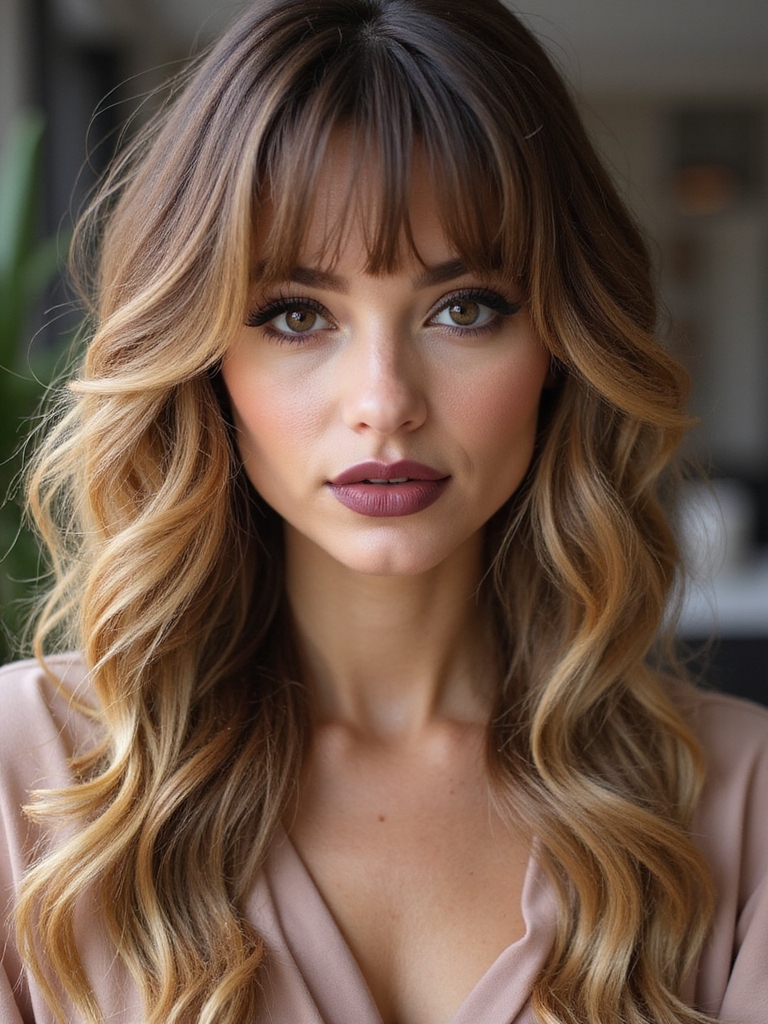
Butterfly layers with a swoopy curtain fringe are built entirely around movement, with shorter, rounded layers lifting the crown while the fringe flows into that shape instead of hanging separately.
- A round-brush blowout is what builds the signature lift and bounce.
- Shorter layers around the crown are what separates this from a plain layered cut.
- It asks for a blowout most wash days. Air-drying alone doesn’t hold the same shape.
Shoulder Layers With a Center-Parted Curtain
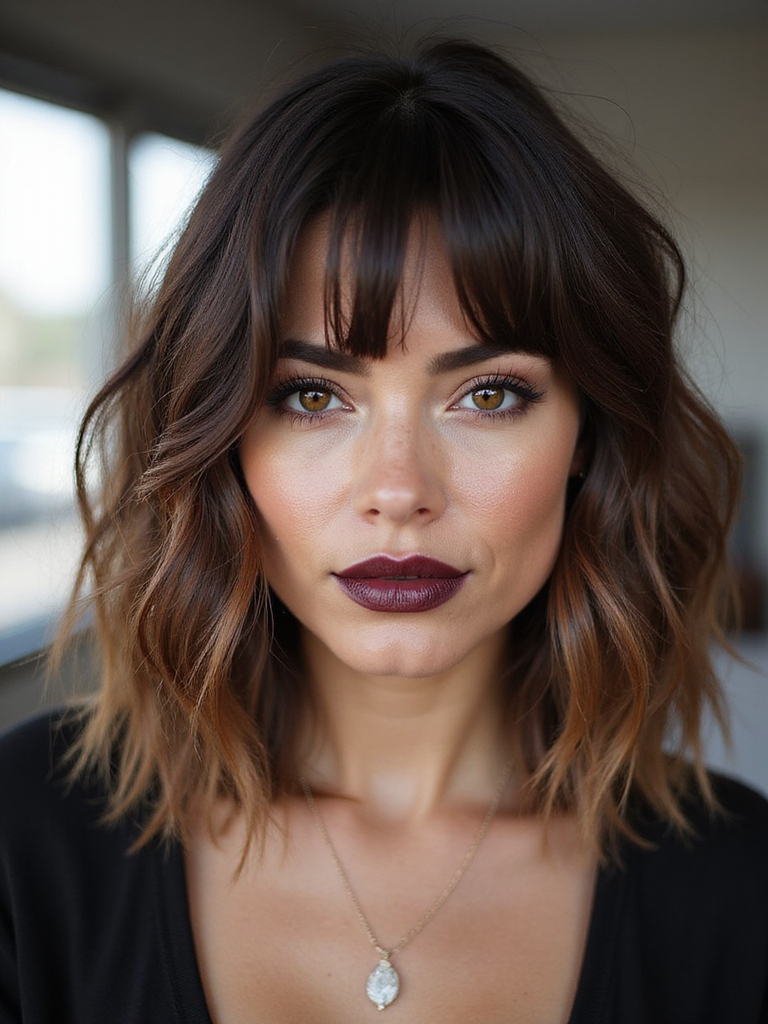
Piecey, shoulder-length layers with a center-parted fringe lean undone rather than polished, and the look suits straight and wavy hair about equally well.
The shoulder length does double duty here: long enough to pull back on a busy day, short enough that the layers still show texture instead of disappearing under their own weight. A deeper side part works just as well on this length as the center part does; see curtain bangs with a side part for that version.
Curtain Shaping That Cuts Bulk From Thick Hair
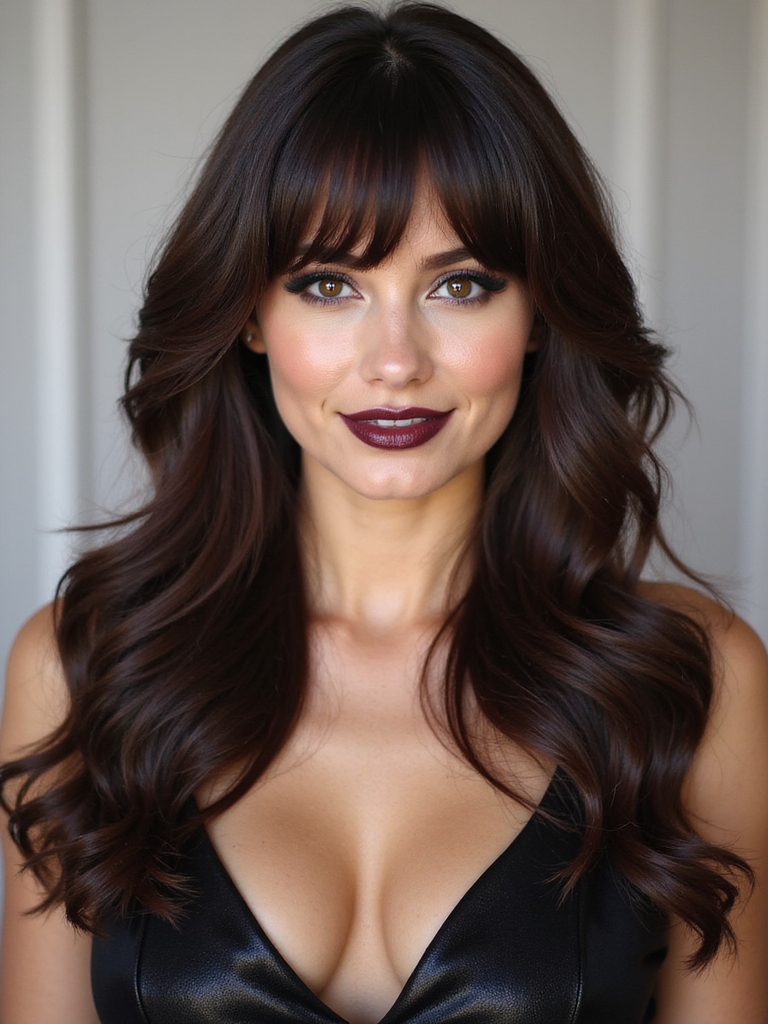
On thick hair, curtain bangs and layers work together as a weight-removal tool as much as a style. The layers thin out the density while the fringe frames the face without adding more bulk up front.
Clients carrying hair that feels like too much to manage day to day are usually the ones who ask for this combination, and the relief once the excess weight comes off tends to be the real selling point, more than the shape itself.
Layered Curtains Built for Lift on Fine Hair
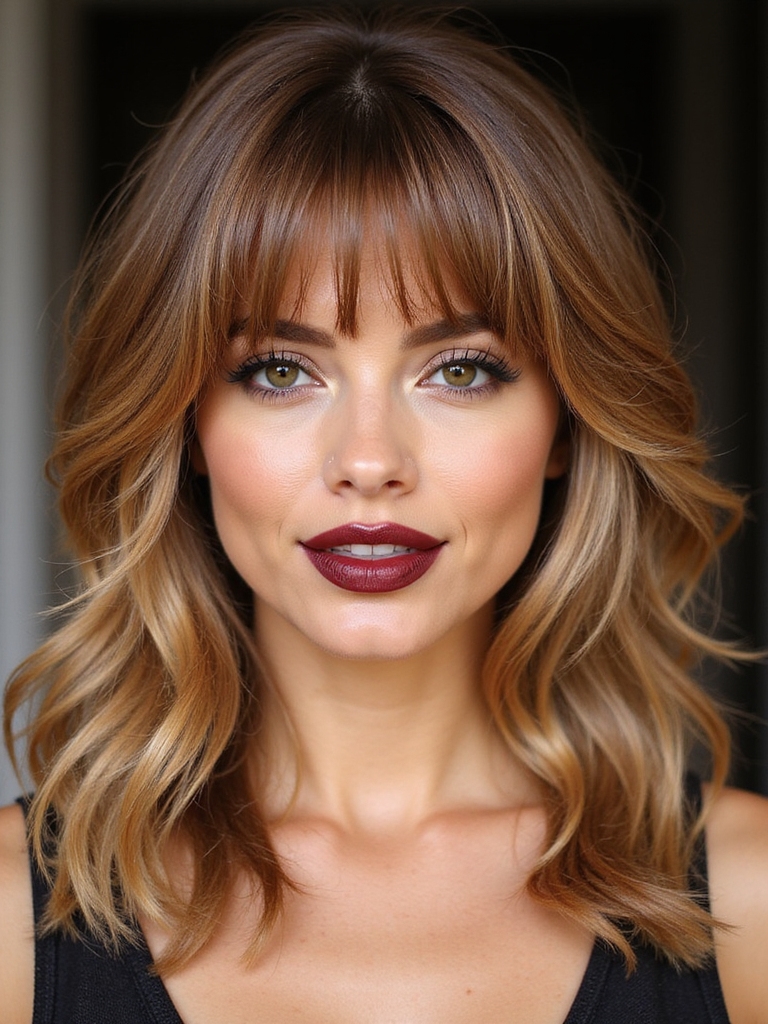
Fine hair benefits from layered curtains in a way that runs counter to instinct. Instead of adding more hair, the layers build the illusion of body by controlling how the existing strands fall.
- Soft layers through the mid-lengths build the appearance of density without extra weight.
- A round brush lifts the curtain at the root during blow-drying.
- A lightweight texture spray adds fullness without flattening the lift by midday.
A Tousled Curtain on Wavy, Grown-In Layers

Wavy, grown-in layers with a tousled curtain fringe come close to a no-effort cut, since the natural wave already does most of the styling work for both the fringe and the length. For more on cutting a fringe specifically for wave pattern, see curtain bangs for wavy hair.
- A sea-salt spray wakes the texture back up between washes.
- The curtain blends into the waves rather than sitting on top of them.
- Air-drying is the default here. Heat tools are optional, not required.
One Thing to Watch
Wave pattern isn’t always even across the whole head, so the fringe can dry a little differently side to side. A quick scrunch with a little product while it’s still damp evens that out before it fully sets.
Tapered Curtains on Sleek Straight Layers
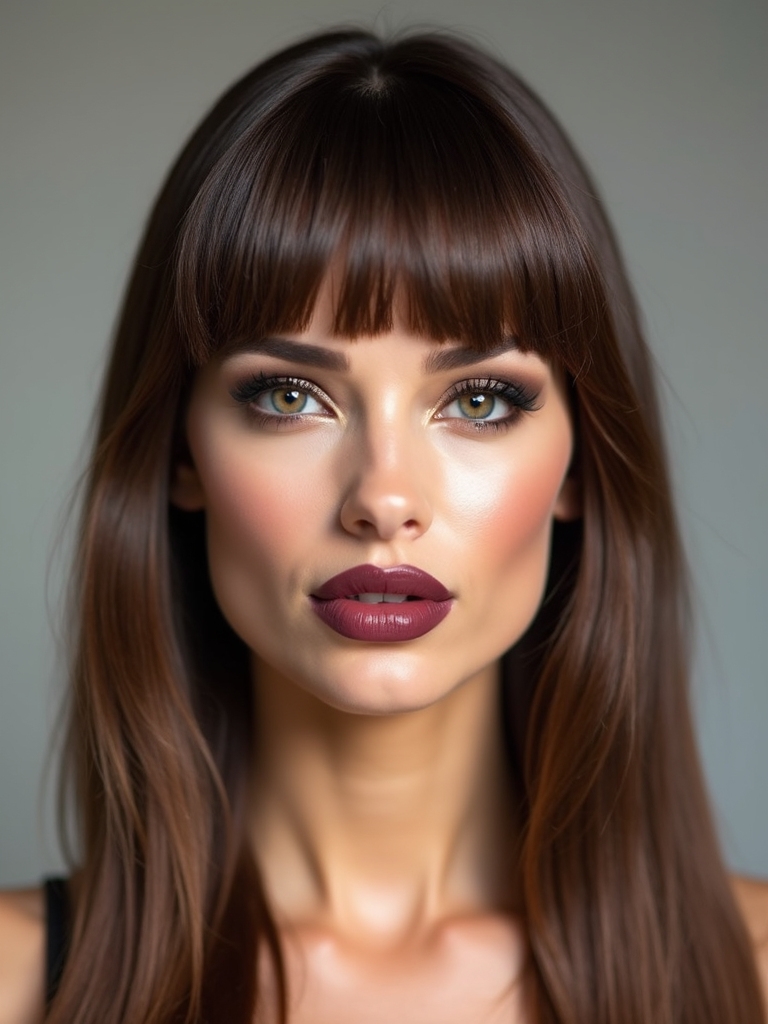
Sleek, straight layers with a tapered curtain fringe lean polished and deliberate, with clean lines instead of movement doing the work.
A flat iron paired with a light shine product keeps the finish glassy, and a heat protectant matters more here than on any other version on this list, since the style depends on regular direct heat to stay smooth.
A Micro Fringe on a Short Layered Crop
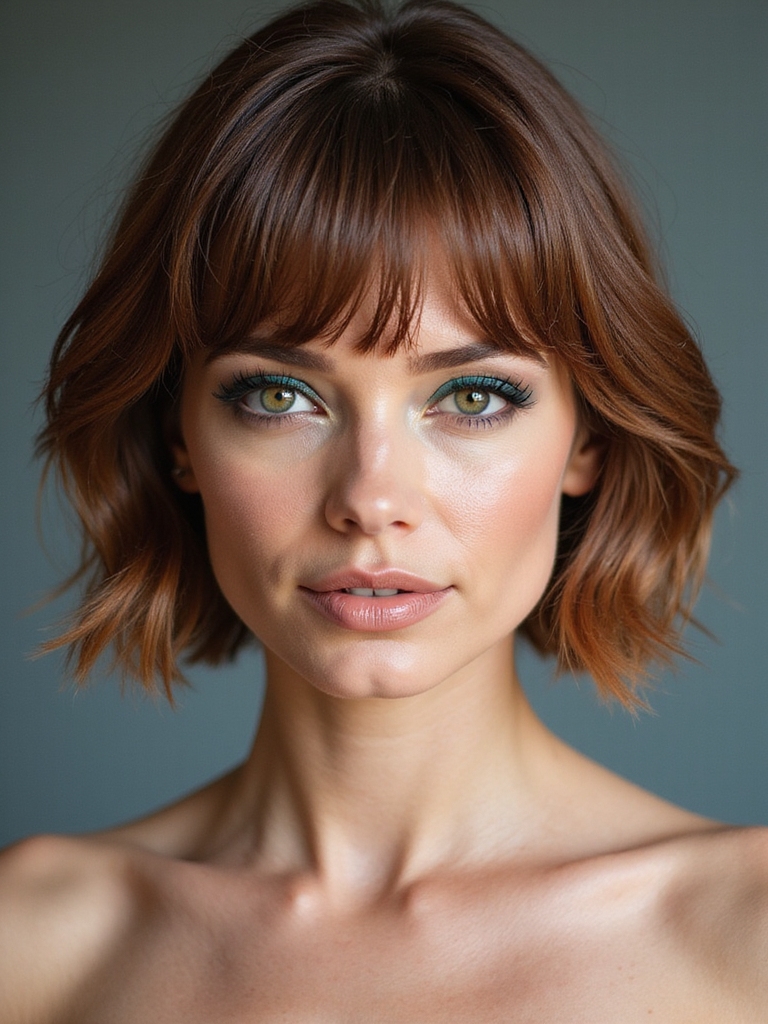
A short layered crop with a micro curtain fringe crops everything up for a bold, graphic shape that comes across as more editorial than the longer versions on this list.
The tiny, center-parted bangs match the short layers underneath, and the combination sits close to a pixie or a short shag, depending on how much length stays at the crown.
The trade-off is upkeep. At this length the fringe grows into the eyeline within weeks, not months, so a quick $15 to $25 bang-only trim between full cuts becomes part of the routine. Anyone unsure about committing this short can start with the broader curtain bangs for short hair options first.
A couple of assumptions about short curtain fringes that don’t hold up:
❌ Myth: A micro fringe only works on straight hair.
✅ Reality: Wavy and curly textures can wear it too, cut dry and left a little longer to account for how much the pattern pulls up once it finishes drying.
❌ Myth: Center-parted bangs this short always look severe.
✅ Reality: Soft, feathered ends at the part keep it from reading harsh. The severity comes from blunt-cut ends, not the length itself.
Elongated Curtain Pieces Through Coily Layers
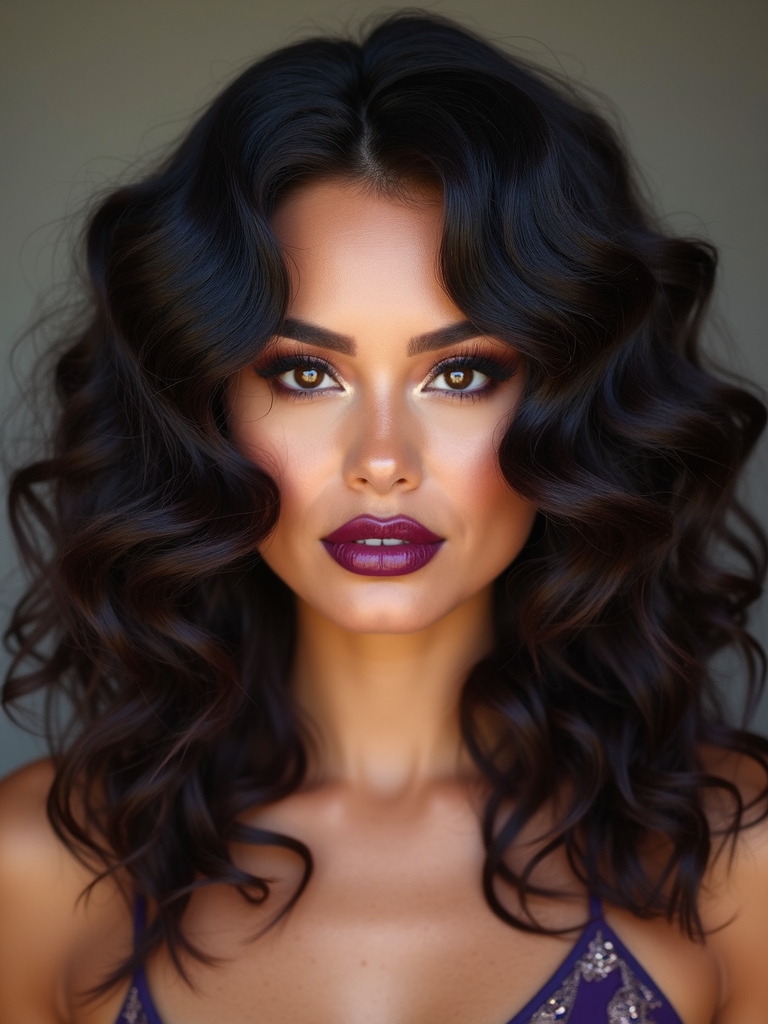
Coily layers with elongated curtain pieces let tight texture stay the star, with the longer curtain sections left to spring rather than forced into a strict shape.
Cutting has to account fully for shrinkage before the curtain settles at the right length once dry, and a curl cream with a diffuser keeps the coils defined while holding the framing in place. This is skilled, specialist work. Ask specifically whether a stylist cuts coily hair dry as their default, not an occasional exception.
Full, Flowing Curtains on Retro Layers
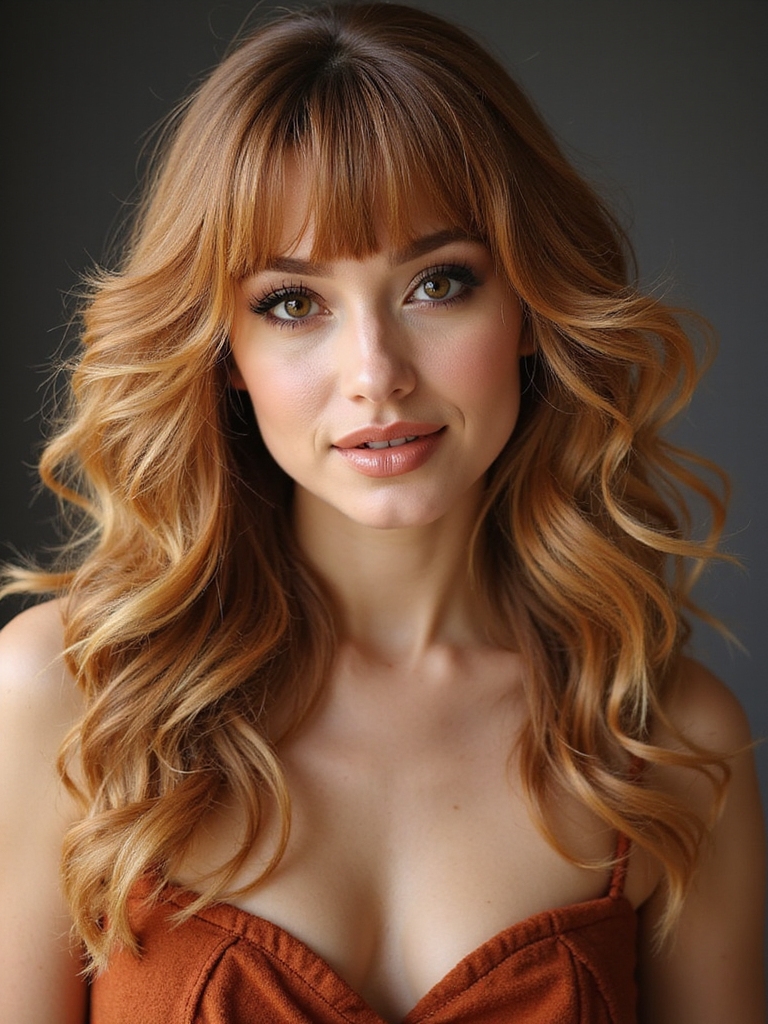
Full, flowing curtain bangs over feathered, flicked-back layers are close to where this whole pairing started, decades before it came back around.
Getting the Flick Without the Flatness
The fuller fringe and the flicked layers nod directly to that original decade, worn loud rather than hinted at.
This is the version clients ask for when they want the reference obvious, not softened for modern taste. A round brush rolling both the fringe and the layers back and away from the face is the entire technique.
Curtain Bangs and Layers Questions Worth Asking
?Why does a curtain fringe look separate from the rest of the cut without layers?
A fringe on one-length hair has nothing to blend into, so it sits on top of the cut like a piece added on afterward. Layers graduated around the fringe catch it on the way down, so it lengthens into the surrounding lengths rather than stopping at a hard edge.
?What kind of layers actually work with a curtain fringe?
Face-framing layers that start close to the fringe and graduate outward, not layers cut evenly through the whole head. That graduation is what lets the bangs melt into the cut instead of standing apart, no matter the overall length.
?Does this combination grow out easier than a fringe on its own?
Yes, noticeably. Because the bangs blend into the surrounding layers, the fringe lengthens down into the cut over time instead of leaving an obvious line to grow past, which is the main complaint people have with a standalone fringe.
?Can curly or coily hair wear curtain bangs with layers?
Yes, with one adjustment: the cut has to account for shrinkage, since curl pulls up as it dries. A stylist cutting dry, pattern by pattern, keeps the fringe from finishing shorter than planned. For more on the technique, see curtain bangs for curly hair.
?How much shorter should I expect a curtain fringe to feel once it’s blended into layers?
Barely shorter at all, if it’s cut right. The graduated layers create the illusion of extra length in the fringe, since it tapers into hair that’s still long rather than stopping cold. It’s a cutting effect, not an actual length change.
The Fringe That Grows Into the Cut
Whatever length or texture you’re starting from, the same rule holds across all fifteen versions here: layers give a curtain fringe somewhere to go, and the fringe gives the layers a softer front. Neither piece works as well without the other.
Say the word graduation when you ask, not just layers, so your stylist knows the cut needs to build from the fringe outward. Get that right and the low-maintenance, no-hard-line grow-out follows on its own. Anyone still deciding on length can compare notes against curtain bangs for medium hair or curtain bangs for long hair before booking.
More Inspiration