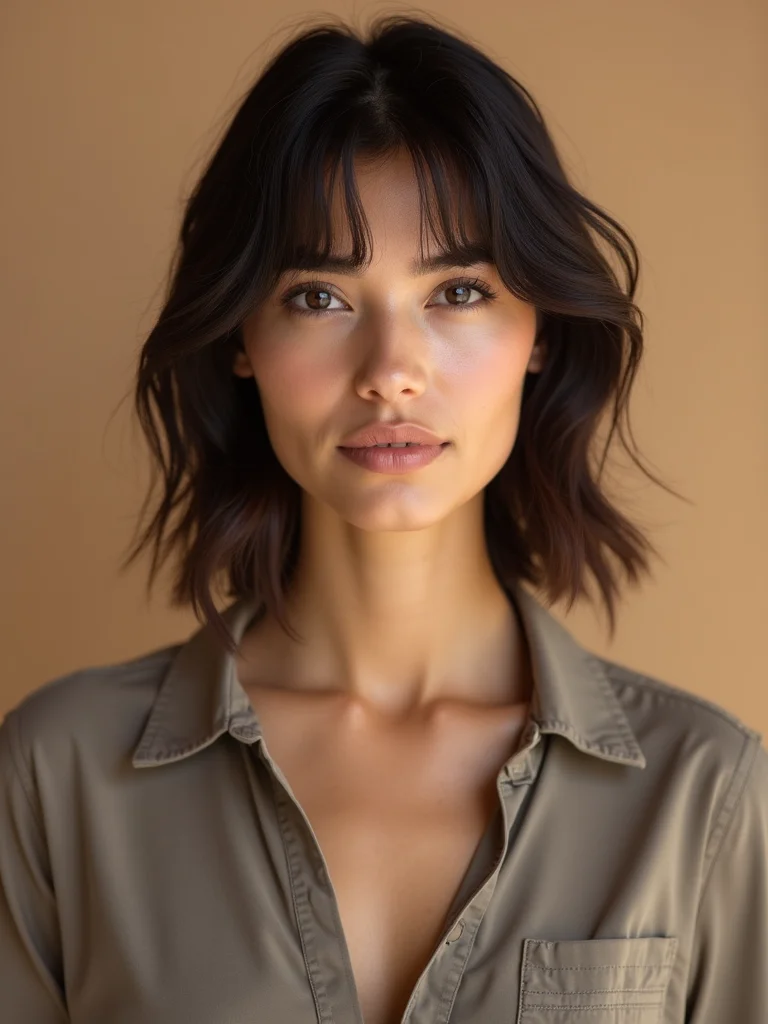
A fringe parts just off-center, sweeps back past the cheekbones, and settles into a shoulder-skimming cut that shifts with every turn of the head. That specific picture is curtain bangs on medium hair, and it’s become close to a salon default for good reason: medium length gives the fringe exactly the room it needs, without the extra weight long hair adds.
What follows covers the whole decision, not just a look: face shape, length, density, the cuts it pairs with, and three separate ways to style it depending on the morning.
The Decisions That Actually Matter
- Medium length hits a genuine sweet spot: enough hair for the fringe to flow into face-framing layers, without the weight that slows a curtain fringe down on longer hair.
- Length and density are two separate decisions. Where the shortest piece falls decides the framing; how dense the fringe is decides how bold it reads.
- Grow-out is close to painless at this length, since the fringe simply lengthens into the surrounding layers instead of passing through a blunt stage.
Why Curtain Bangs Suit Medium-Length Cuts
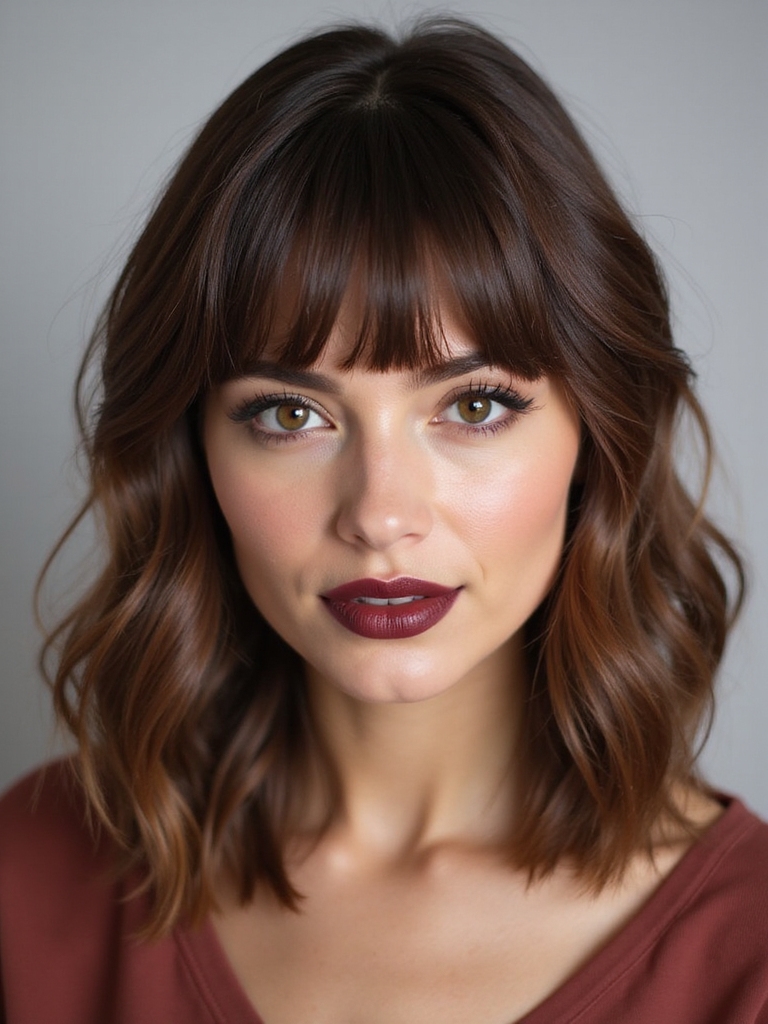
Medium length occupies a specific middle ground for a curtain fringe: long enough to flow, short enough to stay light. Neither long hair’s extra weight nor short hair’s limited room gets in the way of the sweep.
On a lob or a shoulder-length cut specifically, the fringe sits at the cheekbones and melts directly into the lengths, so the front reads as one continuous frame rather than a fringe stapled onto a separate haircut.
Most pros point to this length as the reason curtain bangs show up so often in client requests: it asks for the least adjustment while delivering the most noticeable face-framing change.
Face Shapes That Pair Best
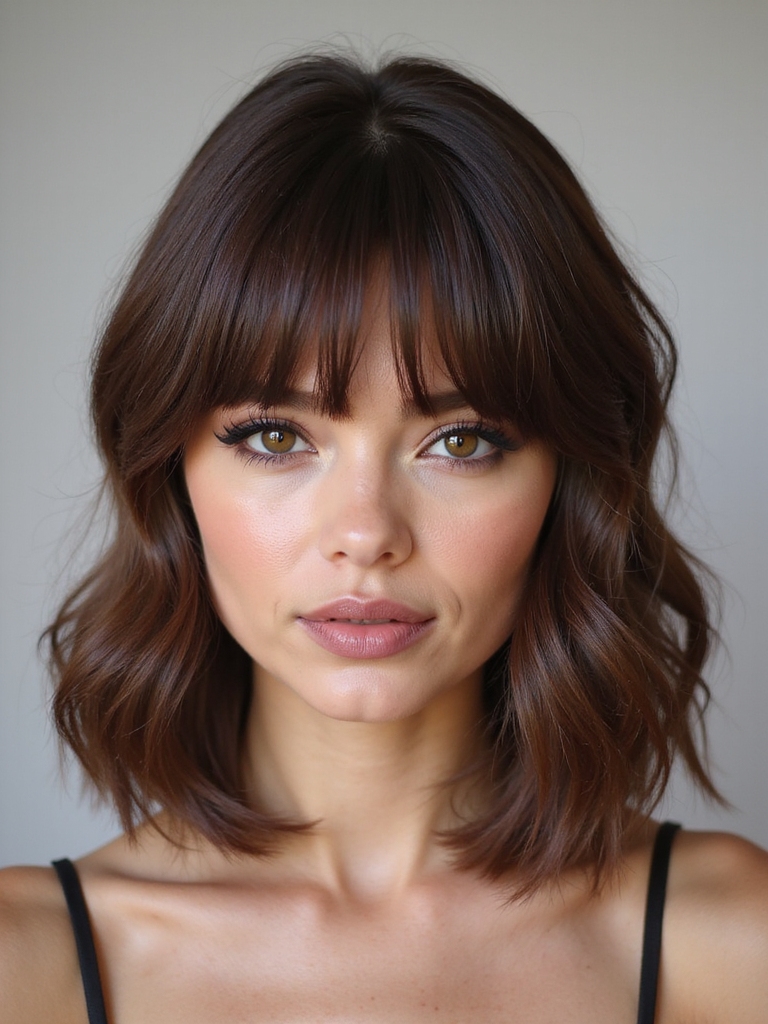
Curtain bangs flatter most face shapes, but the sweep and the length of the shortest piece should shift depending on which features need softening or balancing.
- Round faces: a longer, side-leaning sweep adds slimming angles
- Square jaws: a softer, wispy fringe eases the corners
- Long faces: a fuller, slightly shorter fringe adds width
- Heart or oval faces: cheekbone-grazing pieces work with almost any version
🅰️Medium Length
Enough hair to flow into face-framing layers, light enough to move on its own without weighing the sweep down.
🅱️Long Hair
More length to work with, but the extra weight can pull the sweep flatter and slower to set.
Choosing the Right Length and Density
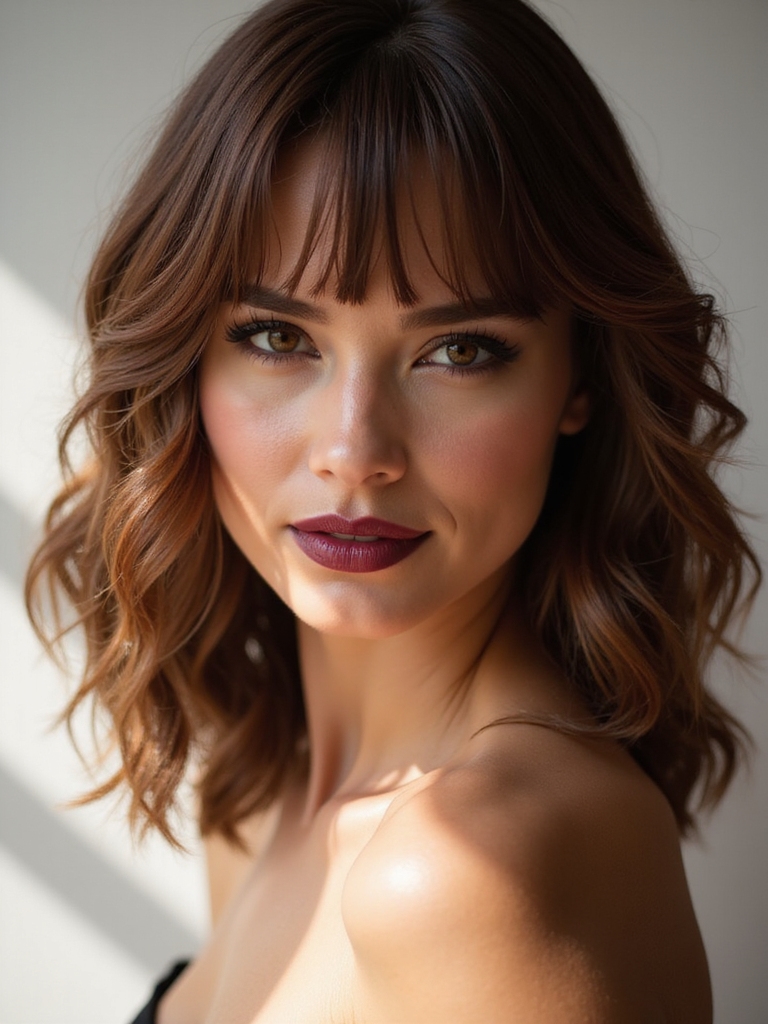
Two separate decisions shape how a curtain fringe actually looks: how long the shortest piece sits, and how dense the fringe reads overall. They aren’t the same choice, even though they get discussed as one.
Two Decisions, Not One
Length decides where the framing lands. Cheekbone-grazing tends to be the most forgiving option, flattering a wide range of faces without demanding much daily styling.
Density decides how bold the whole thing reads. A lighter, wispier fringe suits fine hair and softer overall looks, while a fuller fringe makes more of a statement and needs the extra density thicker hair naturally provides.
Layering That Connects the Fringe
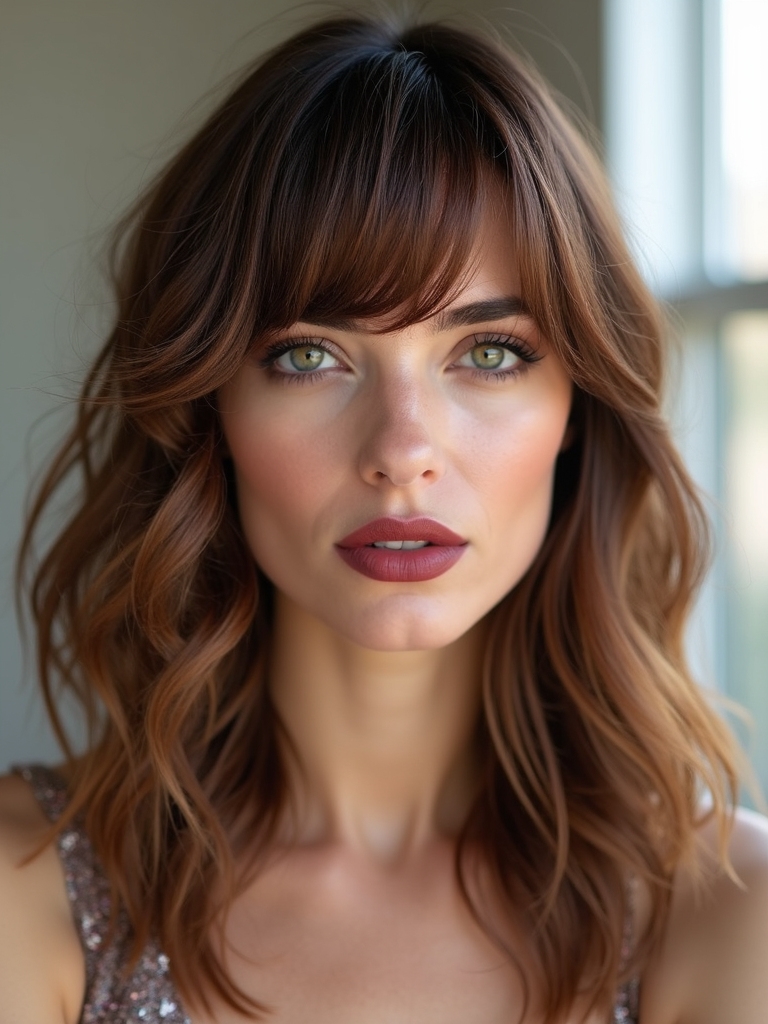
A curtain fringe looks its best when it connects directly into the cut through soft, face-framing layers rather than sitting as an isolated piece. Point-cutting the ends, paired with soft layering around the front section, lets the fringe flow into the lengths instead of reading as a separate add-on. Our curtain bangs with layers guide goes deeper on the layering technique itself.
- Point-cutting softens the ends so the fringe blends rather than stops abruptly
- Soft front layers connect the fringe directly into the surrounding lengths
- The right layering gives the fringe actual movement instead of sitting flat
| Choice | Lighter/Shorter Option | Fuller/Longer Option |
|---|---|---|
| Length | Brow-skimming, bolder statement | Cheekbone-grazing, most forgiving |
| Density | Wispy, suits fine hair | Full, suits thicker hair |
Curtain Bangs With Lobs, Shags, and Bobs
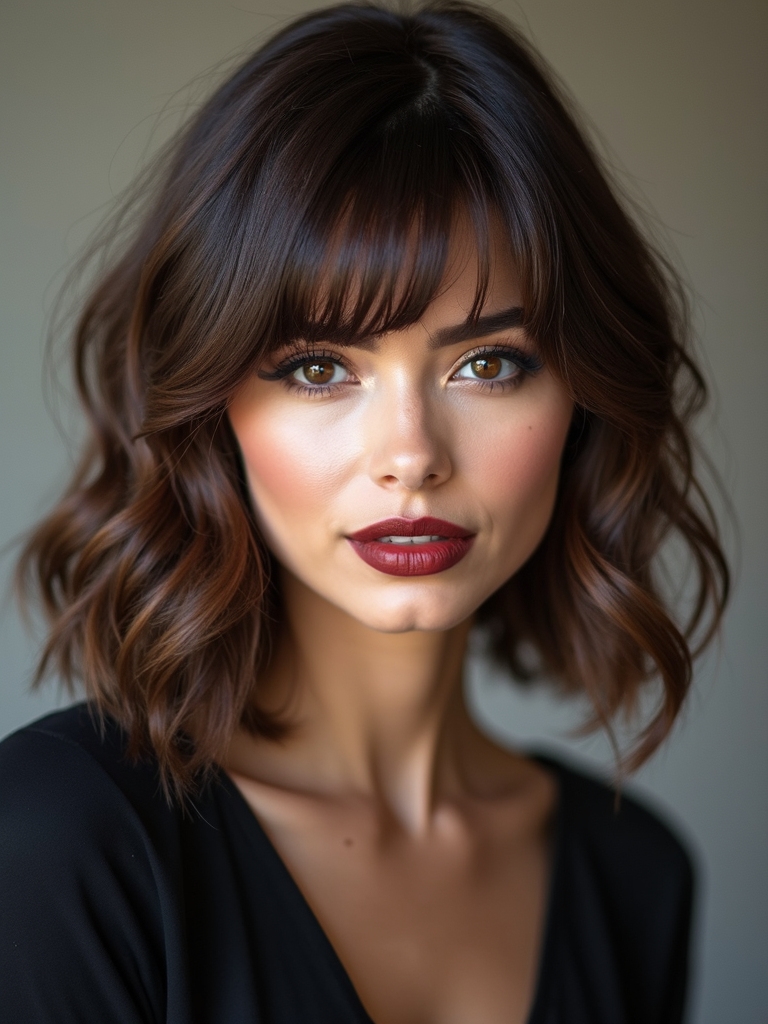
Three medium-length cuts pair especially well with curtain bangs: the lob, the shag, and the longer bob. Each shifts the feel of the same basic fringe without asking for a fundamentally different technique.
A lob keeps the whole look polished and versatile day to day. A shag layers in choppy texture that plays well against the fringe’s softness. A longer bob keeps the shape clean and current.
- Lob: polished, everyday versatility
- Shag: choppy texture that contrasts the fringe’s softness
- Longer bob: a clean, modern shape that still shows the fringe clearly
Tools and Products You Actually Need
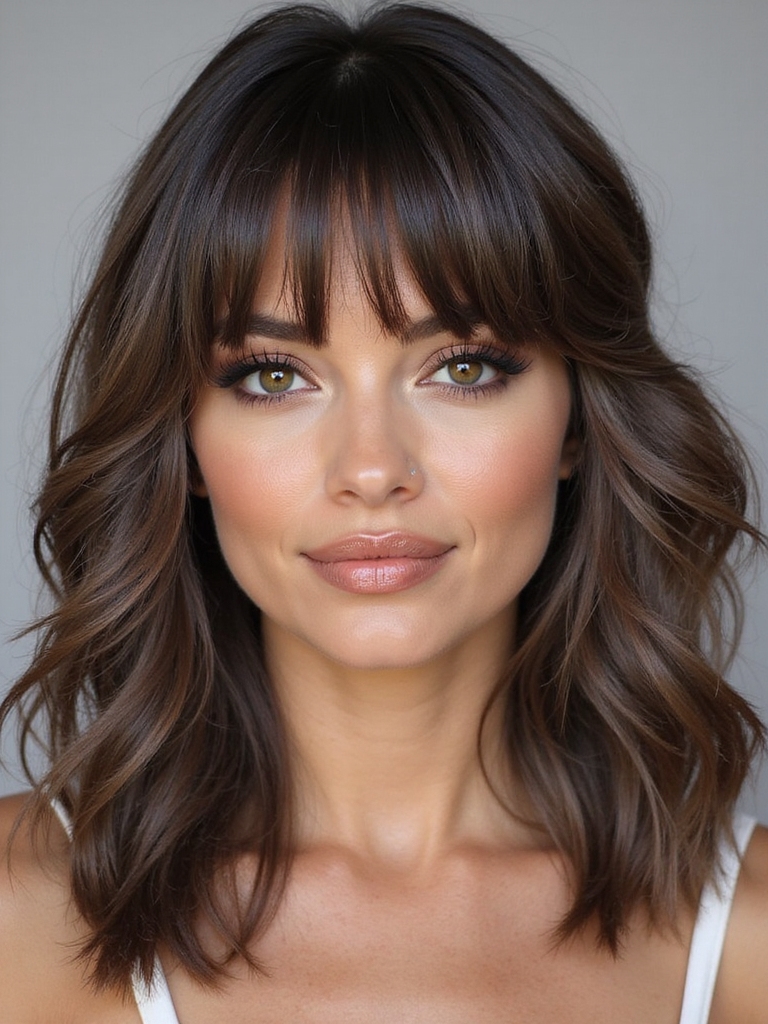
Styling a curtain fringe on medium hair doesn’t call for much: a round brush for sweeping it back, a light texture spray for grip, and heat protectant on any day heat tools come out.
Less Product, Applied More Precisely
Keeping product light matters more than the specific brand. A heavy cream weighs the fringe down fast and turns the whole thing greasy-looking well before the rest of the hair needs a wash.
A light dusting of dry shampoo, worked in right at the fringe’s roots, buys an extra day before it needs attention. The fringe tends to look oily before the rest of the hair does, simply because it sits closest to the forehead.
Heatless Methods for a Soft Sweep
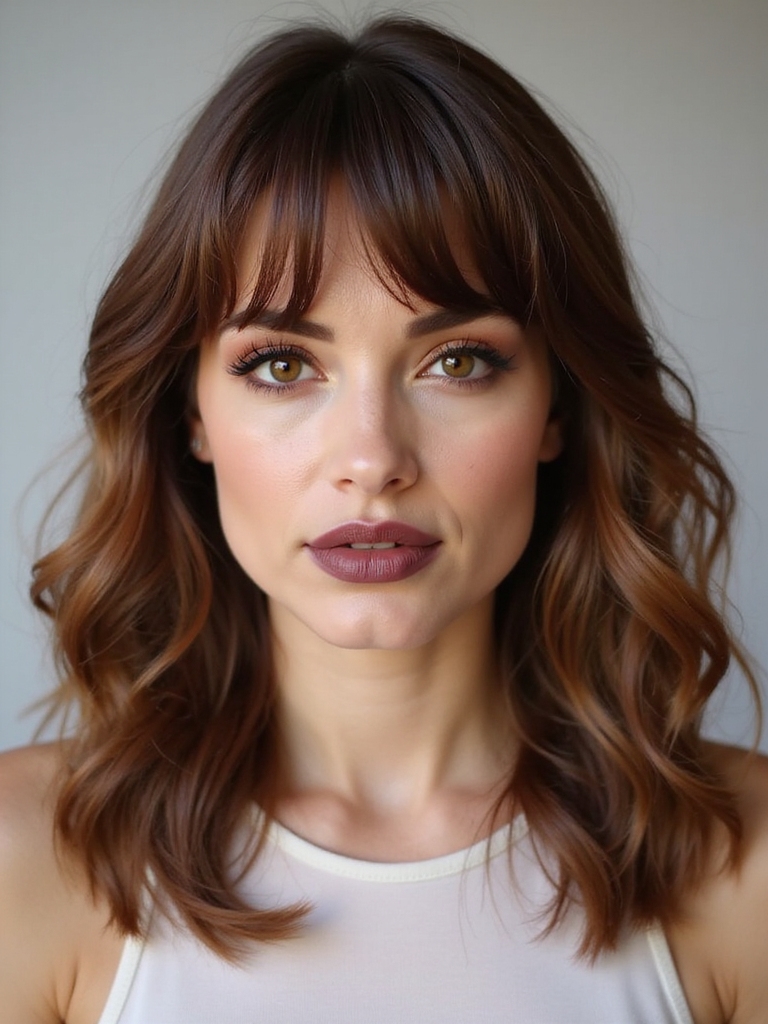
Curtain bangs don’t require daily heat to hold their sweep, which both protects the fringe and saves real time on a rushed morning.
Training the Sweep Overnight
Wrapping the damp fringe back and to the sides as it air-dries trains the curtain shape without a single hot tool involved. A silk or satin pillowcase helps the direction hold overnight instead of getting rumpled against cotton.
Heat is what wears a fringe out fastest over time, since it’s finer and takes more repeated damage than the surrounding lengths. The more this gets trained without heat, the longer it holds its condition.
The minimum kit, in order of how often it actually gets used:
1Texture Spray
A light mist at the roots and through the fringe for grip on any styling day.
2Round Brush
For sweeping the fringe back during a blow-dry or touch-up.
3Dry Shampoo
Targeted at the fringe specifically between full washes.
Blowout Steps for a Polished Finish
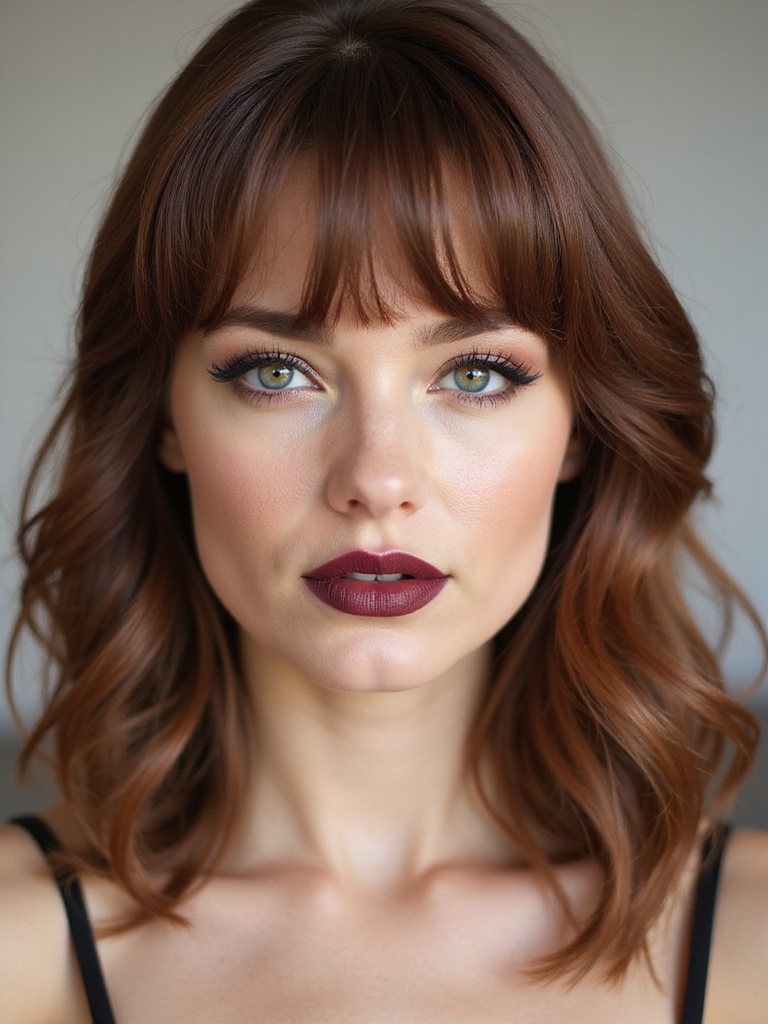
For a polished, salon-style finish, a round-brush blowout gives both the fringe and the surrounding lengths real bounce. The fringe gets rolled back and away from the face specifically, which is what creates that signature curtain shape.
A simple sequence covers it: rough-dry to roughly eighty percent first, then roll the fringe back with a round brush on medium heat, work through the lengths in sections, and finish with a cool-air pass to set the shape before any product goes on.
Air-Dry Tips for Natural Flow
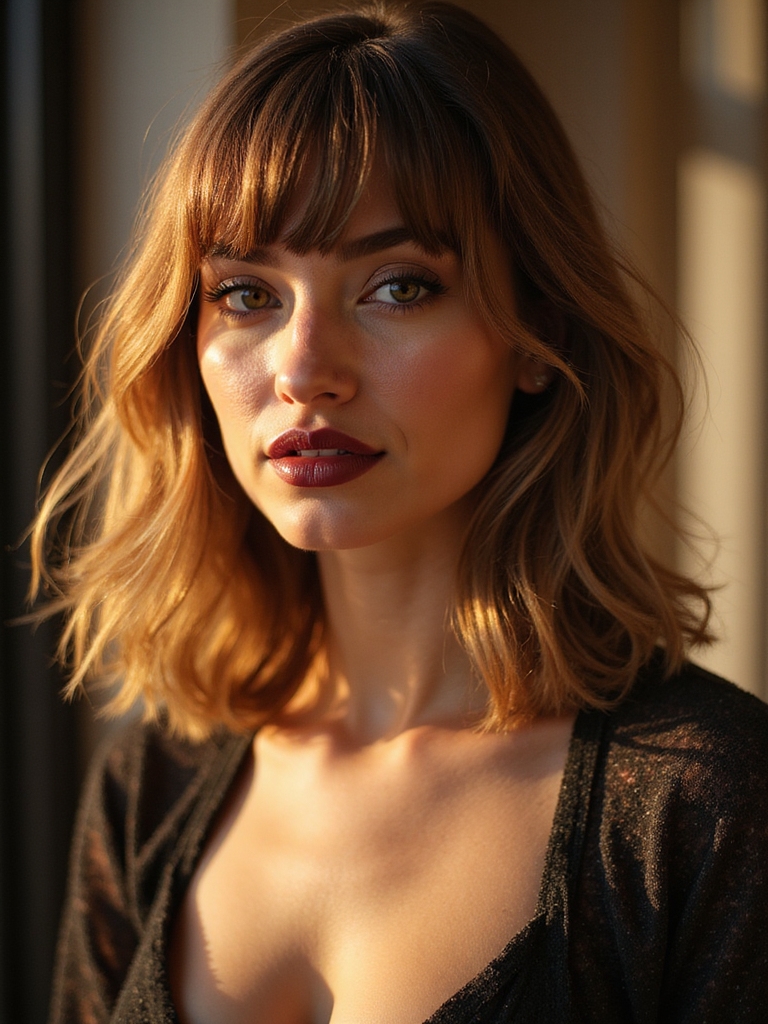
For a more natural finish, air-drying lets both the medium lengths and the fringe fall into soft, undone texture on their own. A light cream worked through damp hair, then a gentle scrunch, brings out that flow without forcing it.
- A light cream through damp hair, scrunched rather than combed
- The fringe swept to the sides while still drying, never left flat
- Otherwise the lowest-effort version of the style by a wide margin
Trims and Easy Grow-Out Plans
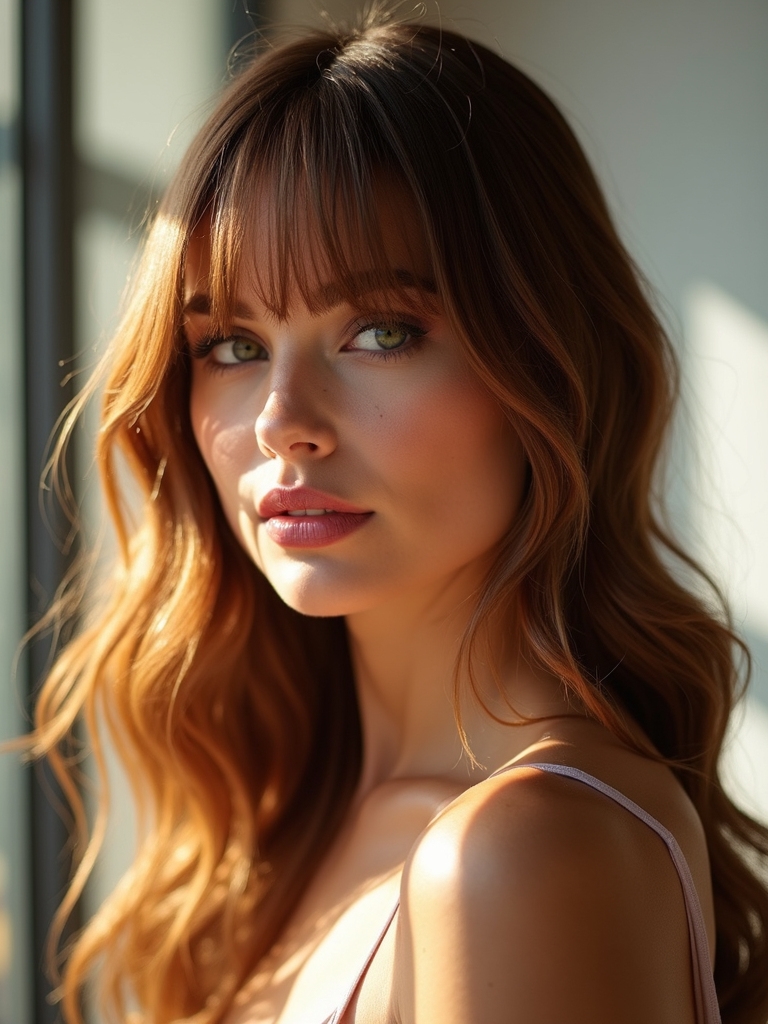
Curtain bangs on medium hair carry a real reputation for low upkeep, and it holds up: an occasional trim keeps the sweep in shape without demanding a fixed weekly routine.
Because the pieces are long and side-sweeping to begin with, they grow directly into the surrounding face-framing layers rather than passing through a blunt, awkward stage. The grow-out itself is close to painless.
- A trim keeps the sweep defined without a strict weekly schedule
- Grows into face-framing layers, skipping the blunt in-between stage
- A fringe-only trim usually runs $15 to $25, a quick add-on rather than a full service
Working With Wavy, Curly, or Coily Texture
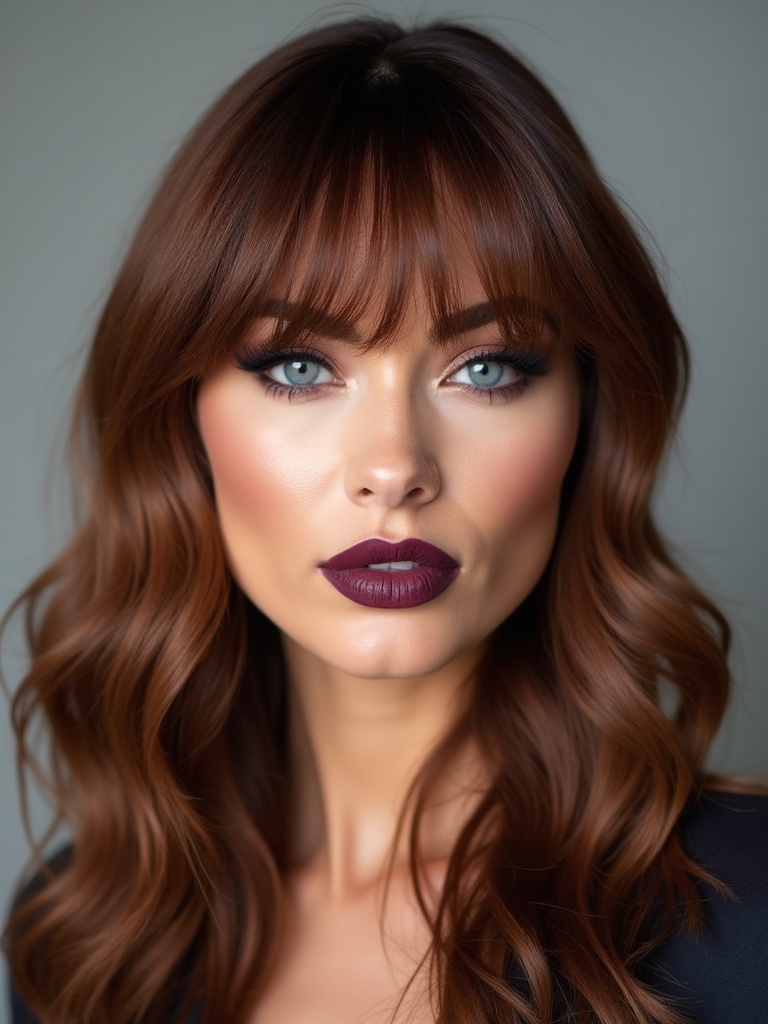
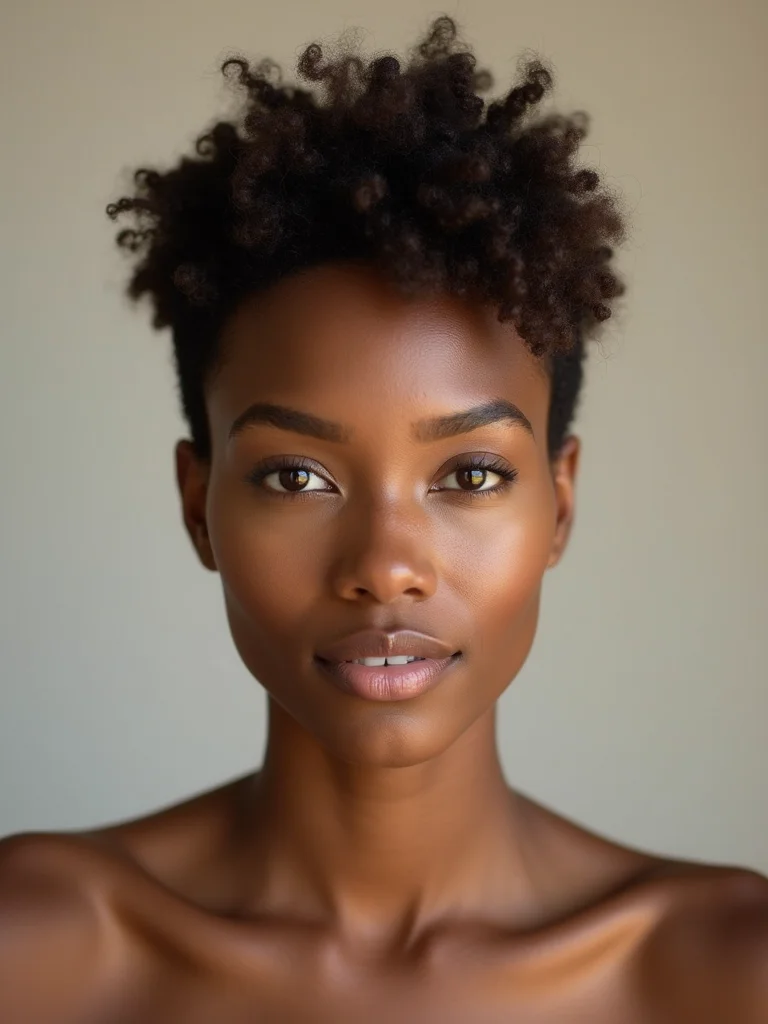
Curtain bangs adapt across textures, framing the face with soft waves, springy curls, or defined coils depending on what the rest of the medium cut is doing. The fringe simply follows whatever pattern the hair already has.
For curls and coils specifically, the fringe needs a dry cut, in its natural state, so a stylist can account for shrinkage before cutting. A textured fringe pulls up noticeably shorter than it looks wet. Our curly bangs guide covers the technique in more depth.
- The fringe follows the existing wave, curl, or coil pattern
- Curls and coils need a dry cut to account for shrinkage properly
- A little leave-in keeps a textured fringe defined without weighing it down
Tailoring the Cut for Fine and Thick Hair
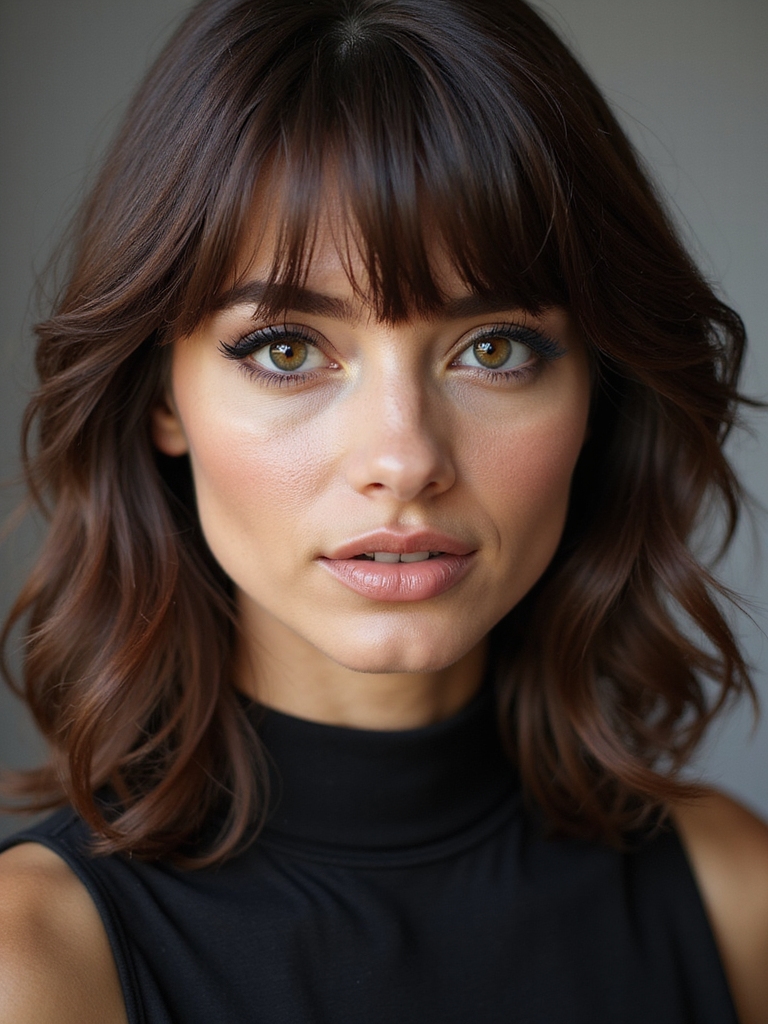
Fine and thick medium hair need the same curtain shape adjusted in opposite directions. On fine hair, a lighter, wispier fringe avoids drawing attention to lower density, while a little root lift keeps it from sitting flat. On thick hair, the fringe needs real thinning so it sweeps open instead of sitting like a heavy panel.
- Fine hair: a light, wispy fringe plus root lift at the front
- Thick hair: point-cut and thinned so it sweeps rather than sits flat
- Same underlying shape, just adjusted for how much density is actually there
Parting Strategies That Flatter
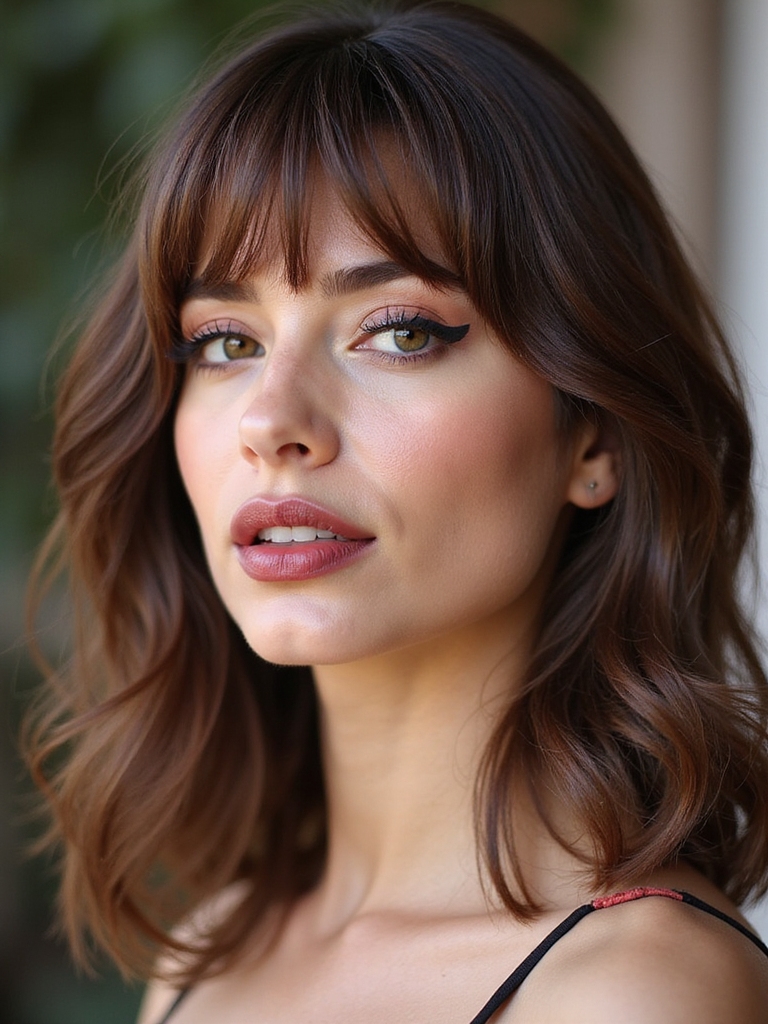
How a curtain fringe gets parted changes its whole effect, often more than the length or density decisions get credit for. A center part frames the face symmetrically and suits already-balanced features.
A slightly off-center part adds soft asymmetry, an easy win for round or heart-shaped faces, while a deeper side part sweeps more of the fringe to one side, adding both volume and a slimming diagonal line. Testing all three in front of a mirror before committing costs nothing and settles the question fast. Our curtain bangs side part guide covers the deep-side version in more detail.
Color and Highlight Placement
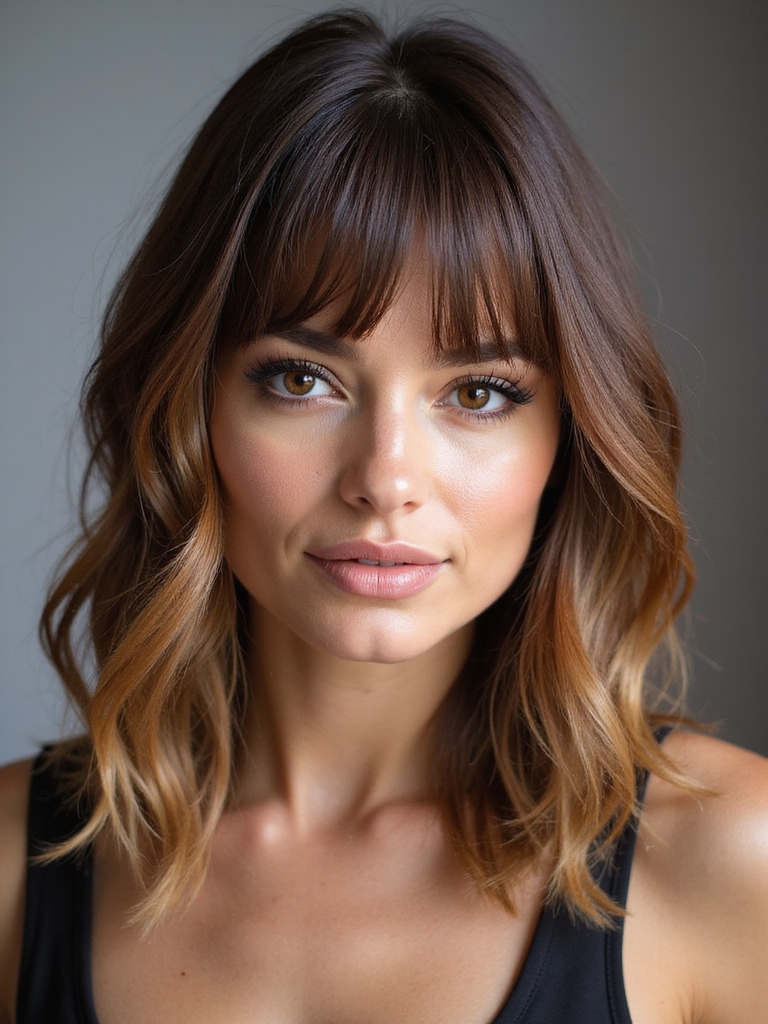
Brightening the fringe and the pieces directly around it draws the eye toward the face and adds real dimension to the whole front section. Our face-framing curtain bangs guide covers placement options built around exactly this effect.
Contrast Versus Uniform Tone
For a quieter effect, keeping the fringe the exact same tone as the rest of the hair lets the shape itself do the framing work, without any color contrast pulling extra attention.
Both approaches hold up well in practice; the choice comes down to how much visual contrast feels right rather than one option being objectively better than the other.
Parting terms worth knowing before the next trim:
📖Center Part
A fringe split evenly down the middle, symmetrical framing on both sides.
📖Off-Center Part
A slight shift away from center, adding gentle asymmetry without a dramatic sweep.
📖Deep Side Part
The fringe weighted heavily to one side, creating volume and a diagonal line.
Inspiration and Consultation Tips
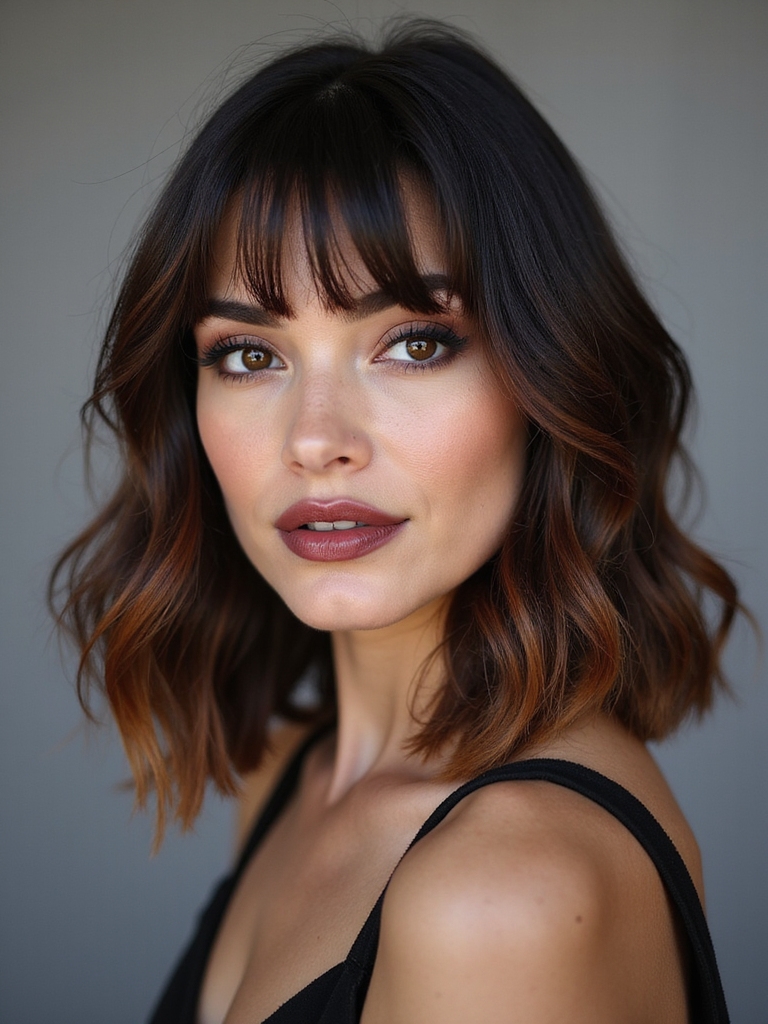
Bringing clear inspiration photos to an appointment remains the most reliable way to walk out with the fringe actually pictured going in. A few saved looks on a similar length, texture, and face shape give a stylist something concrete to work from.
Leave It Longer Than It Feels Like It Should Be
At the consultation itself, mentioning face shape alongside the photos helps a stylist adjust where the sweep should land, rather than copying a reference photo exactly onto a different face shape.
One habit worth adopting specifically: asking a stylist to leave the fringe slightly longer than feels necessary at first. Taking more off later is simple; adding length back is not.
Maintenance & Care
Medium-length curtain bangs ask for less ongoing attention than most fringe styles, but a few consistent habits keep the shape looking intentional rather than accidental. Training the sweep direction while the hair is still damp matters more than any single product used afterward.
Beyond that, the main commitment is simply showing up for occasional fringe-only trims to keep the sweep from drifting too long. Our layered curtain bangs guide covers how the surrounding layers factor into keeping the whole front section blended over time.
Medium-Length Curtain Bang Questions Worth Asking
?Does a curtain fringe work with hair that’s naturally straight and fine, or does it need some texture to hold the sweep?
It works on straight, fine hair without any texture required, though the sweep needs slightly more help to hold since there’s less natural grip. A light texture spray and training the direction while damp does most of the work that texture would otherwise provide for free.
?How long does it actually take for a curtain fringe to blend into medium-length layers if it’s cut a little shorter than planned?
Usually a few months of steady growth, since the fringe simply lengthens into the surrounding face-framing layers rather than needing a distinct grow-out haircut. A stylist can speed the blending along at a regular trim by tapering the transition points slightly.
?Can a curtain fringe be added without changing the rest of a medium-length cut at all?
Yes, in most cases. The fringe gets cut as its own section at the front, with the rest of the cut left untouched, though a few soft layers around the face sometimes get added to help the fringe blend rather than sit as a separate piece.
?What actually happens if the fringe grows out unevenly on one side?
Uneven growth is common and usually comes down to natural hair growth patterns rather than a cutting mistake. A quick trim at the next visit evens it back out; between appointments, adjusting the part slightly toward the longer side usually disguises the difference.
?Is it possible to try a curtain fringe temporarily before committing to a real cut?
Clip-in fringe pieces exist specifically for this, giving a reasonably accurate preview of the length and sweep without any actual cutting involved. They’re not a perfect substitute for the real thing, but they answer the basic question of whether the shape suits a face before committing.
The Length That Asks the Least and Gives Back the Most
Medium hair gives a curtain fringe nearly everything it needs at once: enough length to flow, enough lightness to move freely, and a grow-out phase with no real awkward stage to sit through.
Choosing a cheekbone-grazing length, tuning the density to match actual hair type, and picking a styling method that fits real morning routines covers most of the decision. The rest tends to sort itself out once the fringe is actually growing in and being lived with day to day.
Worth a Look