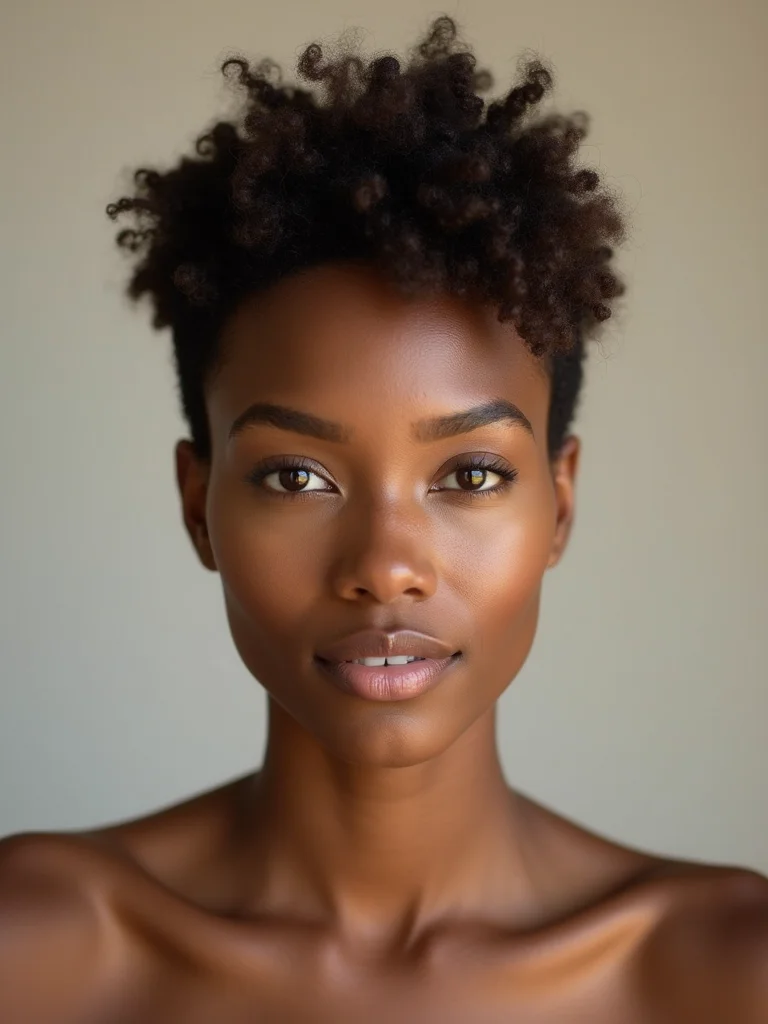
A short shag might be the most forgiving haircut in the entire chin-to-shoulder range. The whole shape is built on choppy, air-dried texture, so it actually looks better the less effort you put into it.
This cut sits in its own lane. It’s shorter and softer than a wolf cut, longer and easier to wear than a pixie. What follows covers the versions that flatter, the fringe and texture choices that shift the whole personality, and the honest costs of keeping it sharp.
What to Know Before You Book
- Sits in the chin-to-shoulder range, longer than a pixie and shorter than a full shag.
- Built on choppy internal layers, not a smooth, blunt perimeter.
- Daily styling runs a couple of minutes; most versions skip heat entirely.
- A reshape typically costs around $55, roughly half of a full color-and-cut visit.
The Air-Dried Texture That Makes It Work
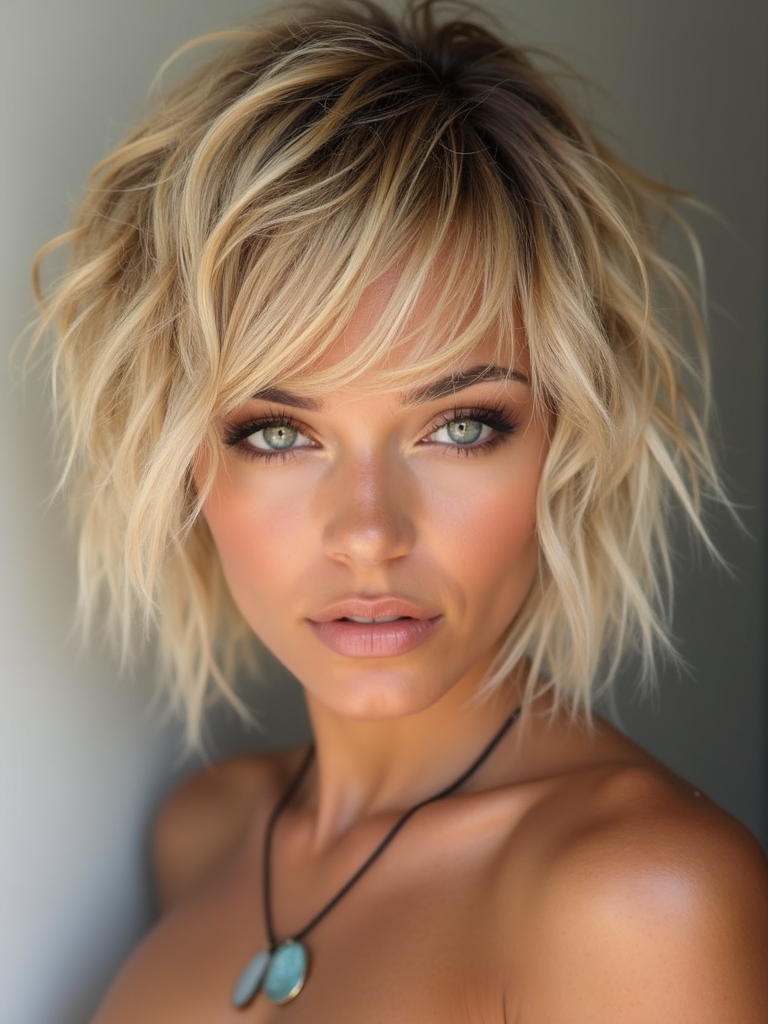
One decision drives the whole look: the cut is built to look undone on purpose. Heavy internal layers and broken ends create movement a blunt cut can’t fake, so the shape falls into place straight out of the shower, no brush required.
- Varied, choppy layers keep the hair in constant, deliberate movement.
- Skims anywhere from the jawline to the collarbone, so it reads as neither a crop nor a true long shag.
- Comes across confident rather than polished, which is exactly the point.

Face-Framing Pieces That Do the Real Work
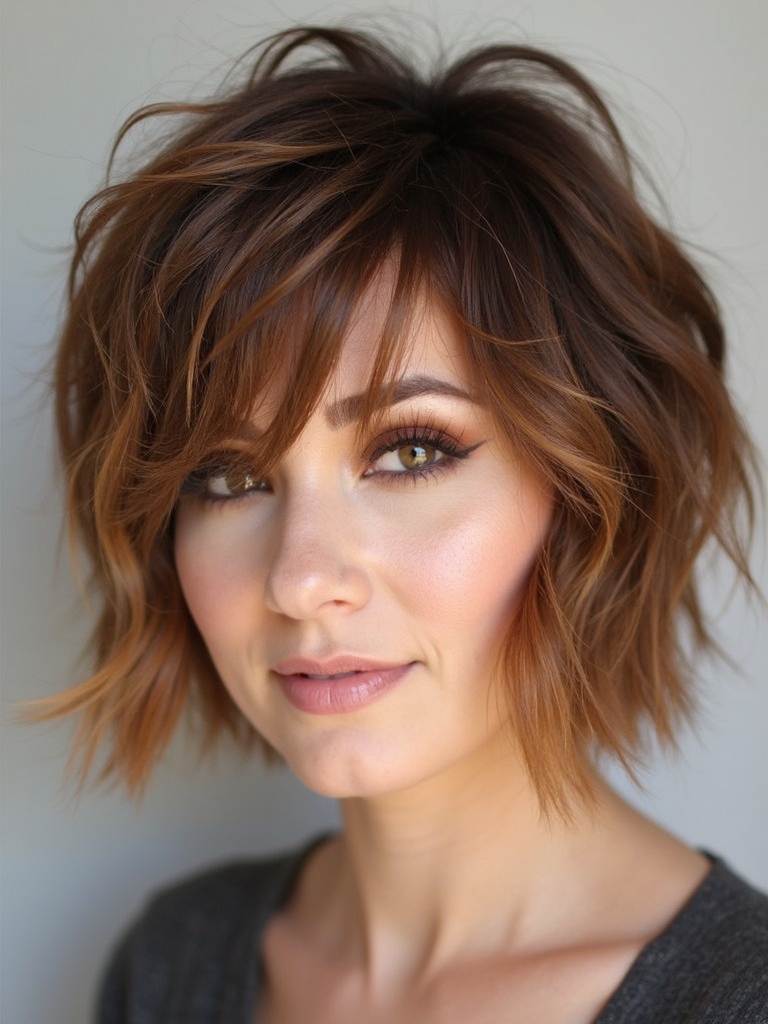
The pieces skimming the cheekbones and jaw are the quiet workhorse of this cut, doing more to change a face’s proportions than the overall length does. Placement decides the effect. Length barely matters here.
- Pieces landing at the cheekbone lift the eye and add height.
- Longer framing toward the jaw softens a strong or square jawline.
- Naming the specific feature you want softened turns the appointment into a targeted request the stylist can act on.
Two quick questions before choosing a fringe.
1You want something that grows out without a salon visit for weeks.
A soft curtain fringe is the most forgiving choice; it blends into the layers as it grows.
2You want maximum edge and don’t mind more frequent trims.
A choppy, blunt-cut fringe pushes the look bolder but needs upkeep on roughly a three-week rhythm.
Choosing How Much Fringe Commitment You Want
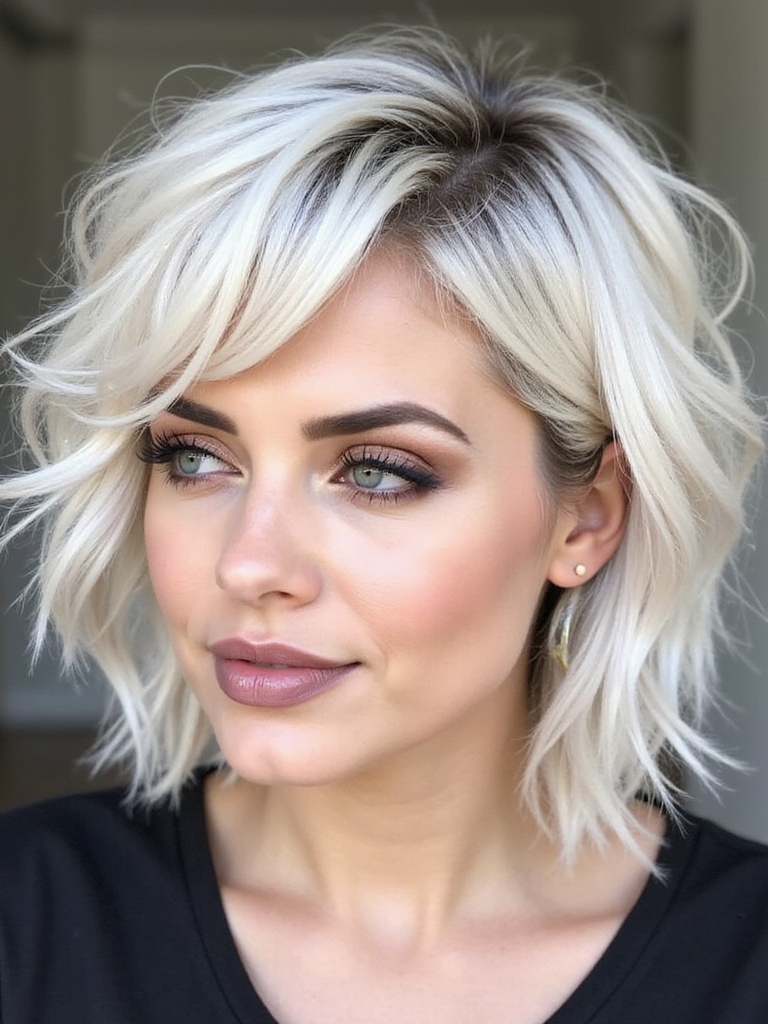
No single choice shifts the personality of this cut more than the fringe. A short shag wears almost any version of one, and I ask about fringe commitment before anything else once a client sits down.
A soft, center-parted curtain fringe keeps things romantic and low-commitment; it blends into the surrounding layers as it grows, so there’s no hard reset to plan around.
A choppier, blunter fringe pushes the whole shape younger and bolder. The shorter and more defined it goes, the tighter the trim schedule gets, since even a little growth changes how it frames the face.
Shattered Ends for Grit
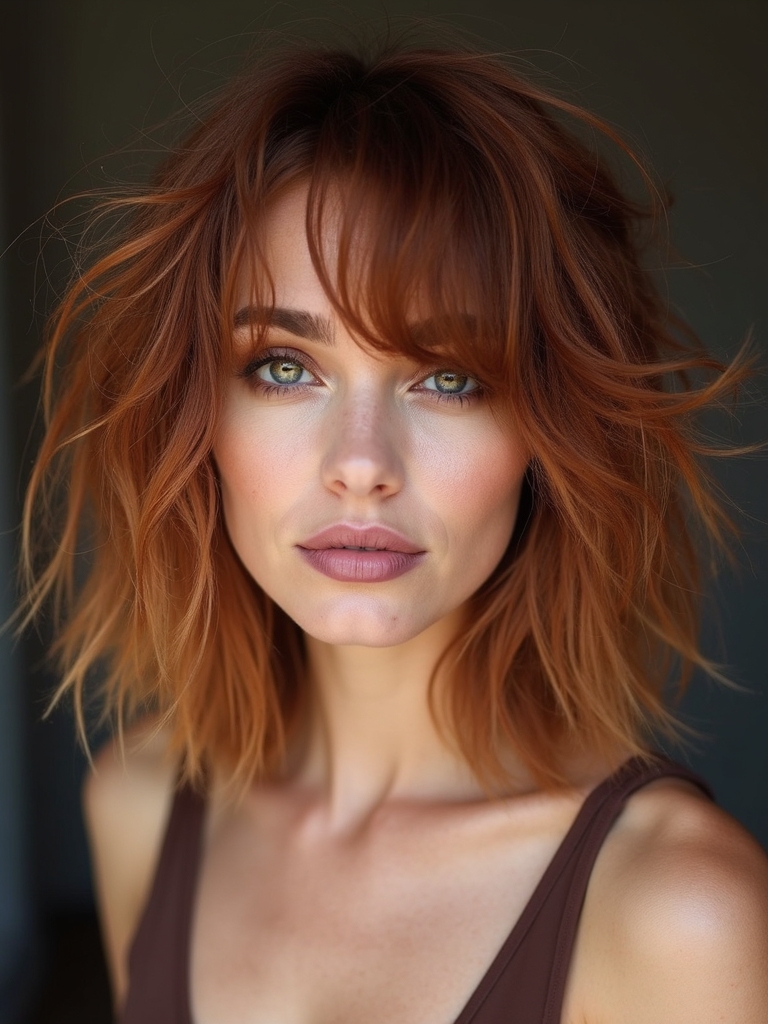
For an edgy result, the ends carry the message. Cutting them into deep, irregular points is what gives this version its grit and keeps it from reading too neat.
- Hair with a little natural body holds the irregular shape better than very fine, limp strands.
- A matte paste worked through with fingers, not a comb, keeps the pieces separated.
- Ask specifically for point-cut or razored ends depending on how much stress your hair can take.
How Curly Definition Solves Its Own Volume Problem
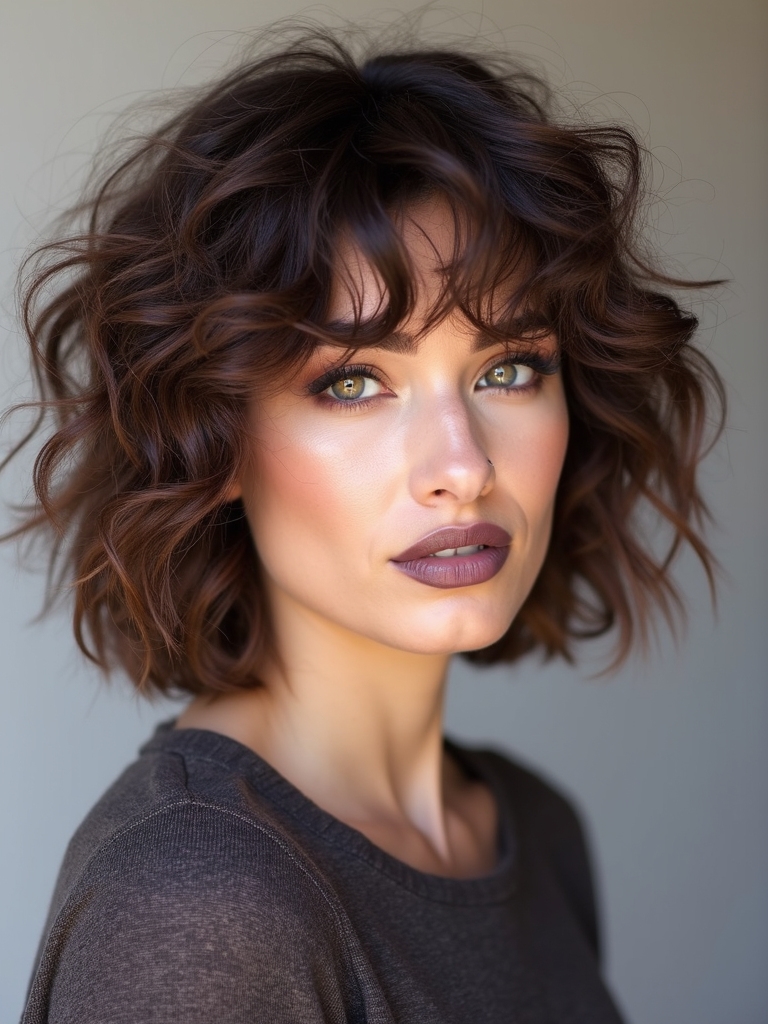
Curl and coil patterns solve a problem this cut would otherwise have to engineer by hand: the layering stops short curly hair from ballooning into the classic triangle shape, letting the natural pattern lead instead.
- Cutting dry, once the curl has fully settled, is the only reliable way to see where each piece actually lands. For a look at how the same idea plays out with a bit more length, the curly shag guide picks up right where this leaves off.
- 4A to 4C patterns wear this as a low-manipulation, wash-and-go style with minimal daily effort.
- A leave-in followed by a curl cream, applied to soaking wet hair, holds definition better than reapplying later.
“For curl patterns tighter than 3C, expect the cut to look noticeably shorter the moment it dries; ask your stylist to cut a little longer than the target length and let it settle for a week before deciding it’s wrong.”
Airy Waves Are the Easiest Match
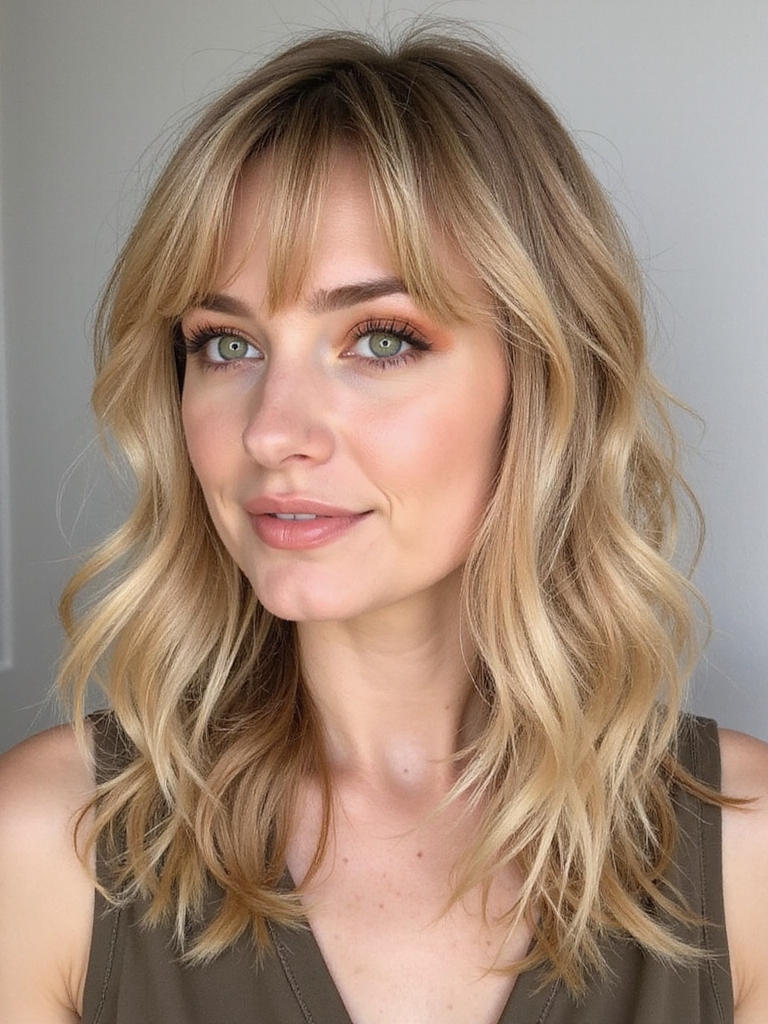
Waves fall into the airy bounce of this cut with almost no effort, making it the lowest-maintenance version of the entire lineup.
A salt or texture spray misted onto damp hair, scrunched to coax the bend, then left to air-dry, covers most mornings. A light mousse at the roots first helps limp waves hold their lift past midday. Growing it out a few inches leads straight into a wavy shag haircut, so nothing about this cut is a dead end.
Straight Hair Needs a Little Extra Help
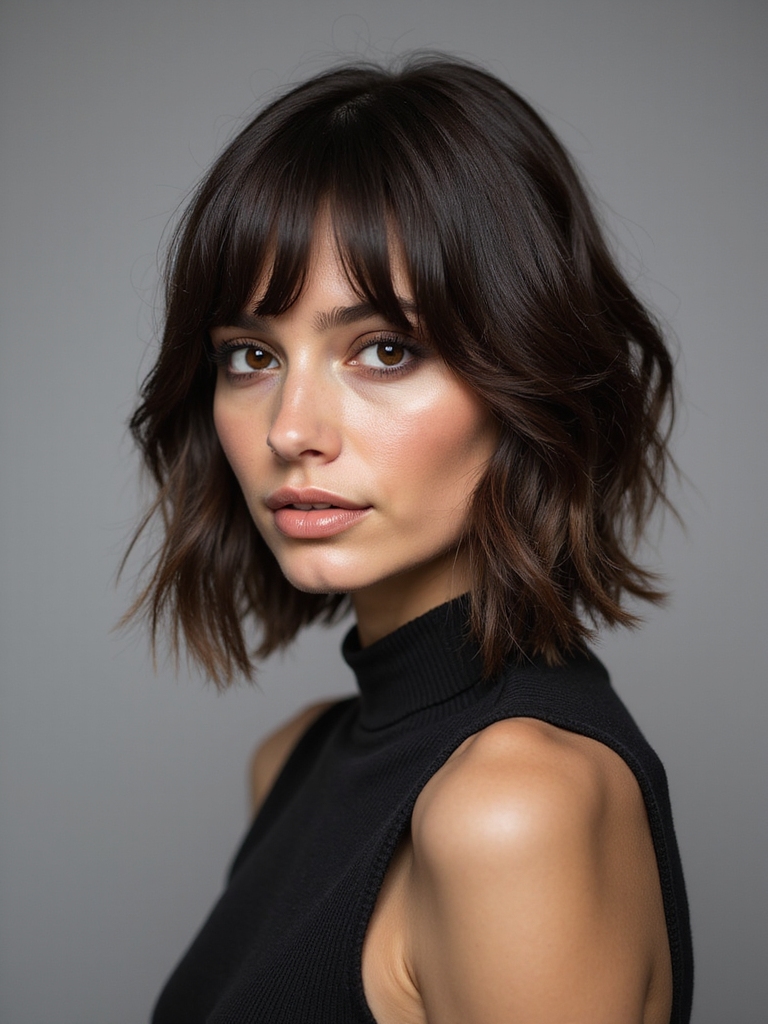
Straight hair produces a sharp, sleek version of this cut. It supplies none of its own movement, though. Clients who end up disappointed usually got a version cut too cautiously, since the layering has to do all the work here.
- Ask for heavier internal layering than feels necessary; straight hair shows every blunt edge otherwise.
- A texturizing spray or dry shampoo builds the grit straight strands won’t create on their own.
- A quick bend at the ends with a flat iron fakes piecey movement on days that call for sharper definition. Browsing a wider set of short shag haircuts before the appointment helps pin down exactly how much texture to request.
A Real Advantage on Fine Hair
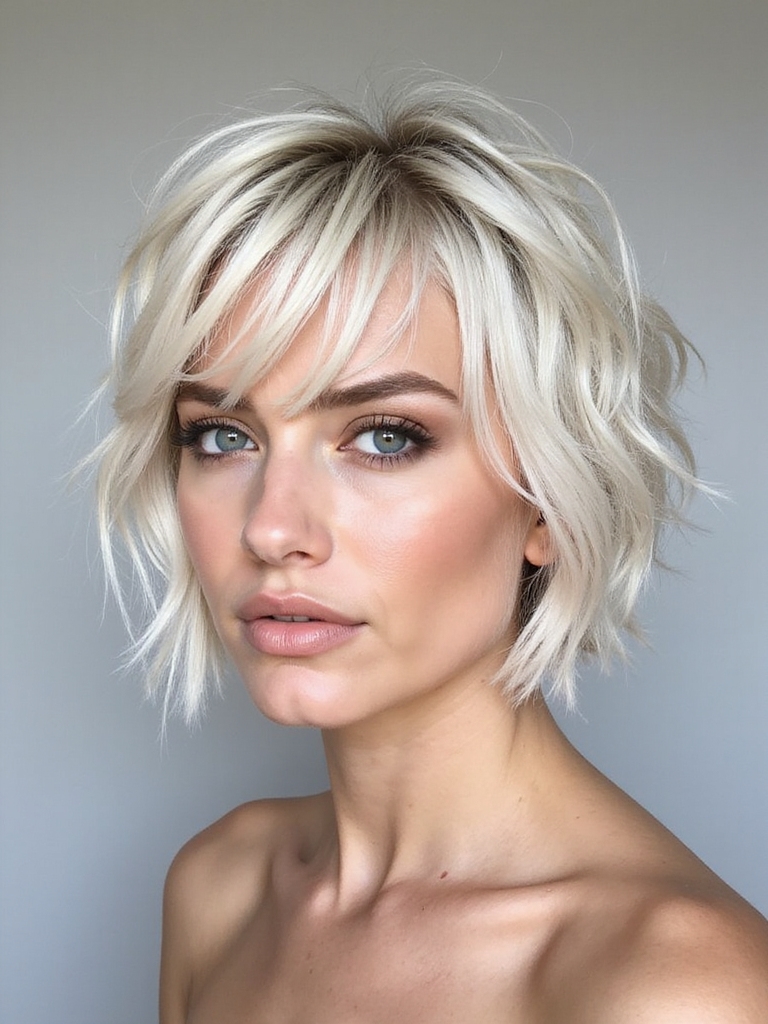
Fine hair may get more out of this cut than any other texture, mostly because the chin-to-shoulder length has enough surface area for internal layering to actually register as volume, unlike a cropped pixie where there’s barely any length to work with.
Why It Works Better Here Than Elsewhere
The visual math is simple: a section of hair that would hang flat at longer lengths gets cut to stop and lift at the crown instead, tricking the eye into reading density that isn’t quite there.
Technique matters more than product here. Layers stay concentrated near the crown, and the perimeter holds onto a bit of extra weight, since there’s nothing to spare on fine strands.
ℹ️A Trick for Stubborn Cowlicks on Fine Hair
If a cowlick fights the crown layers, ask for the first layer cut slightly shorter right at the cowlick itself instead of blending it in gradually. It breaks the growth pattern’s grip faster than a standard graduated cut.
Debulking Thick Hair Without Losing Shape
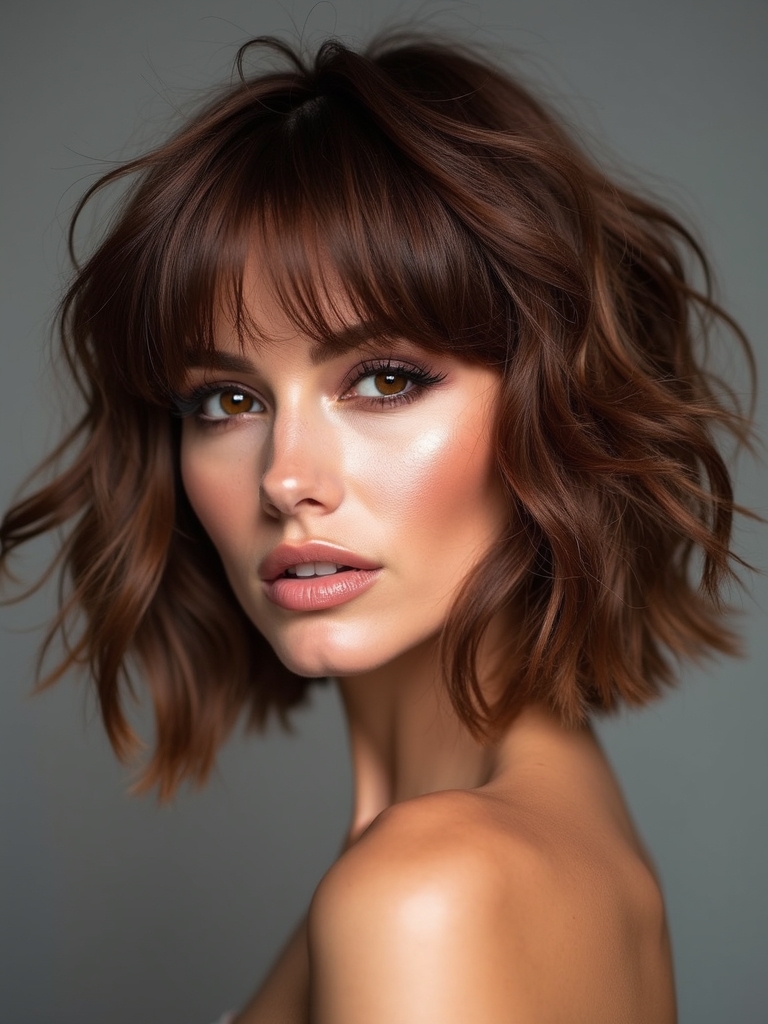
Thick hair brings the opposite challenge. Left alone, a short cut can expand into a heavy, shapeless mass by afternoon.
I carve the bulk out from the underlayers first and leave the top layer nearly untouched, which is the reverse order most clients expect. Done correctly, thick hair ends up with real fullness here and none of the bulk.
- Ask specifically for interior debulking; it removes bulk from underneath, where it doesn’t show, and leaves the outline crisp.
- Slightly longer layers let the remaining weight settle close to the head.
- A lightweight smoothing cream tames frizz on humid days without flattening the texture.
Color That Gives the Layers Somewhere to Go
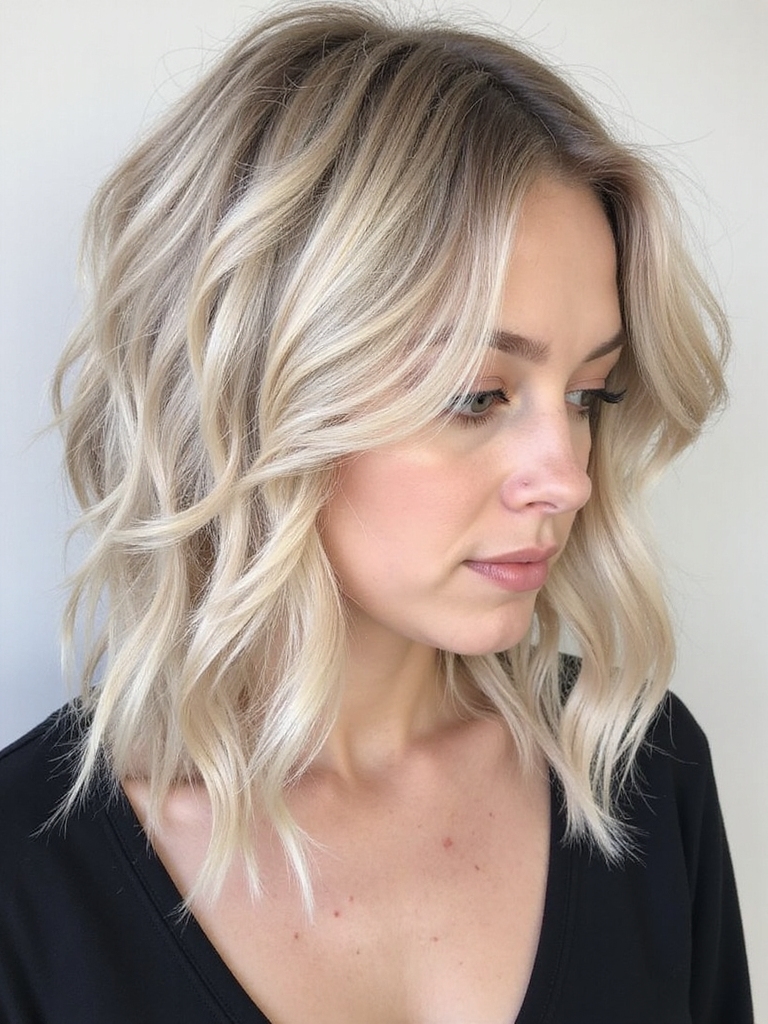
All those layers act as a canvas. Dimensional color, lowlights and babylights woven through, makes the texture read in photographs the way a single flat shade never quite manages.
The appointment itself costs less than the same service on longer hair, but the regrowth line appears weeks sooner, so where the color gets placed counts for more than it would on longer strands.
- Lowlights make fine hair look denser without extra product.
- Face-framing babylights brighten the complexion without a full head of foils.
- A dimensional color service typically runs $90 to $180 depending on how much lightening is involved.
Two color terms worth knowing before the appointment.
📖Lowlights
Strands colored darker than the base shade, used to add depth rather than brightness.
📖Babylights
Very fine, subtle highlights placed close to the face, mimicking natural sun-lightened hair.
The Two-Minute Morning Routine
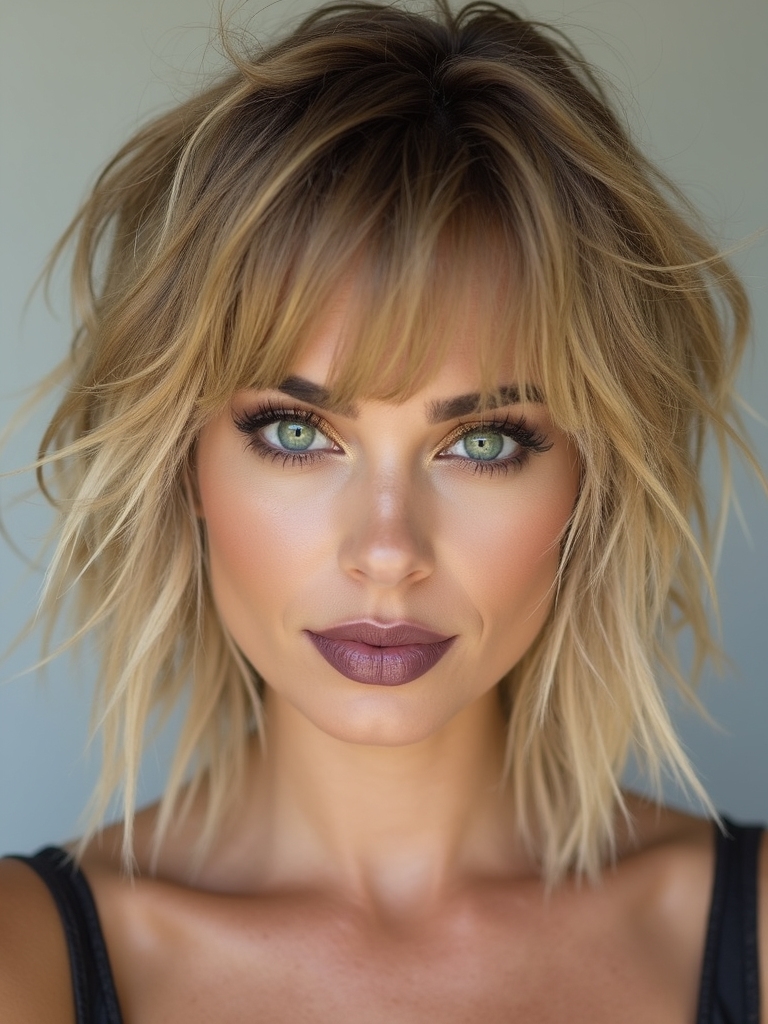
Out of the shower, a little leave-in or mousse scrunched through damp hair and left alone to dry while getting ready covers most of the work before a single tool comes out.
The Entire Commitment, Start to Finish
Once dry, a pea-size amount of matte paste or a couple of spritzes of texture spray, warmed between the palms and pushed up through the layers with fingertips, separates the pieces and restores any lift the air-dry missed.
On day two or three, a little dry shampoo at the roots brings the whole style back to life without a wash.
Products That Actually Match the Texture
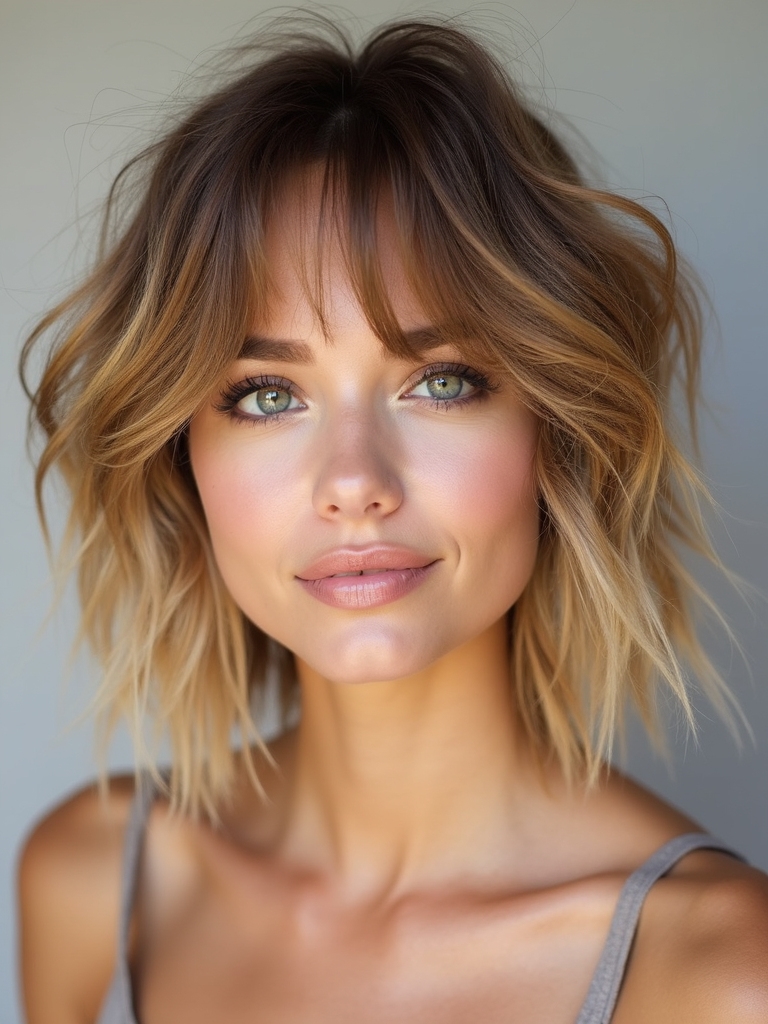
Grit beats shine here. Heavy, glossy formulas work against the texture, weighing it down until the piecey separation collapses into greasy clumps.
Matte Beats Shiny, Every Time
Matte, lightweight products do the opposite: a texture spray or sea-salt spray for grip, a matte paste or clay for definition, and dry shampoo to revive day-two hair without a wash.
One good matte texture spray covers most of what this cut actually asks for; the rest of the shelf is optional.
Upkeep and How It Grows Out
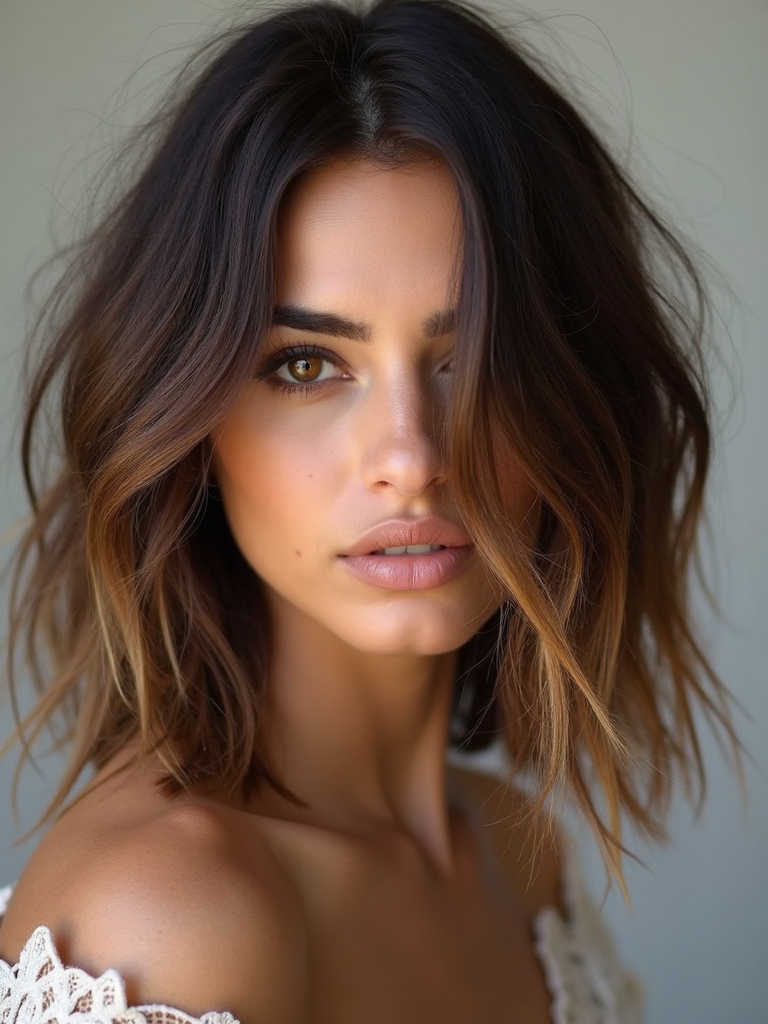
This cut asks for one real commitment: a reshape on a steady schedule to keep the layers crisp. Skip too many visits and the texture loses its definition, drifting from intentional into simply overgrown.
The upside is that it grows out more kindly than almost any other short cut. Because the shape is already layered and piecey, the in-between stage looks deliberate, and a stylist can guide it into a longer shaggy bob with a few well-timed trims along the way.
Getting the Right Cut at the Consultation
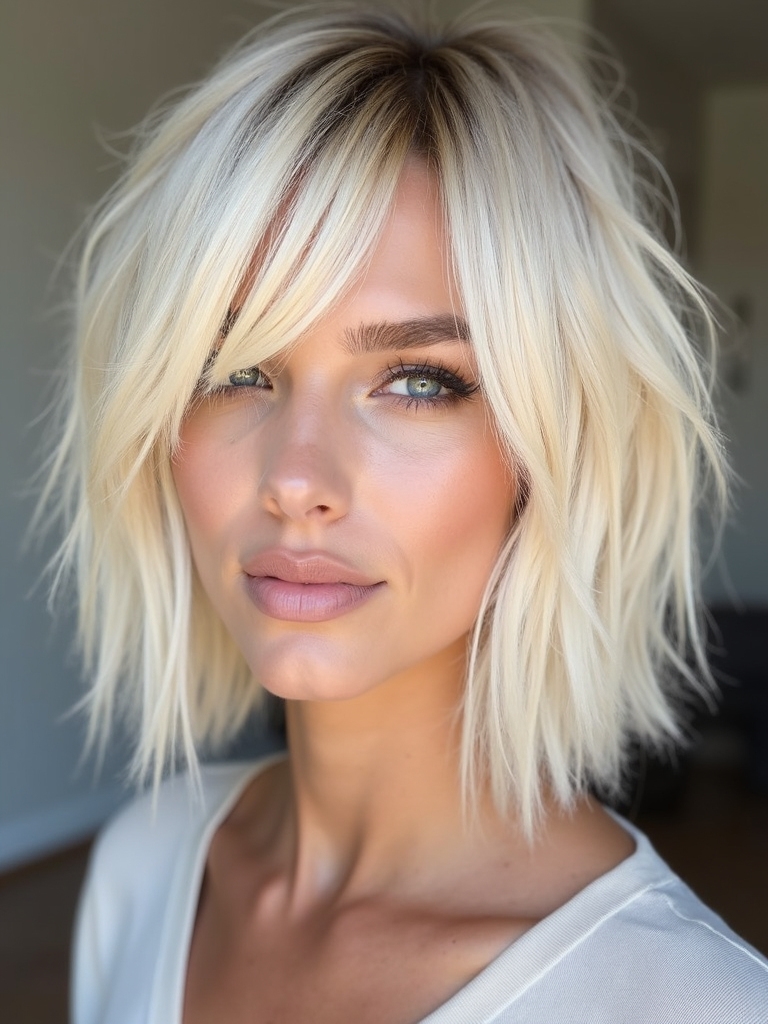
The consultation carries more weight than the photo itself for this particular cut. Bringing two or three images and being specific about what draws you to each, the fringe, the length, the texture, gives a stylist far more to work with than one picture alone.
The One Sentence Worth Memorizing
Being honest about the rest matters just as much: your natural texture, whether a cowlick fights certain directions, how many minutes styling actually gets in the morning, and how often you can realistically get back for trims.
One phrase worth using directly: ask for internal layering with piecey, disconnected ends finished to air-dry, not blown out smooth. I hear that exact sentence maybe twice a year, and both times the client walked out with exactly what they pictured.
One Cut, Several Different Trend Variations
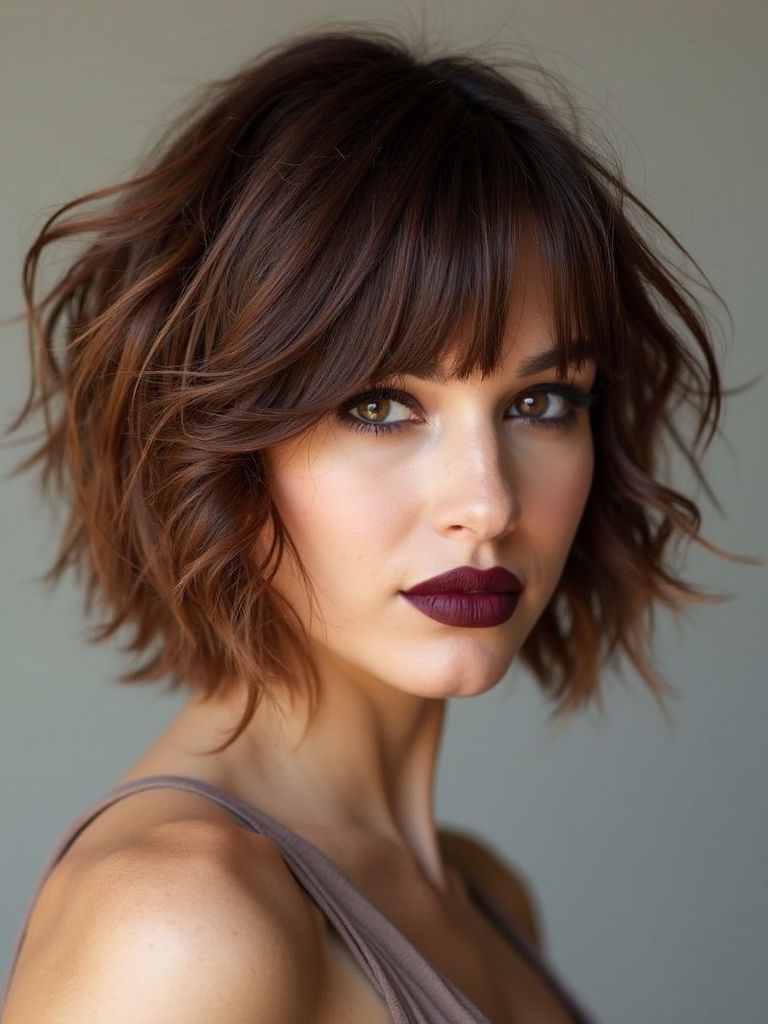
What keeps this cut fresh is its range. Keep the layers soft and the fringe long, and it settles into something romantic and grown-up.
Shatter the ends, add a blunt micro-fringe, and push the texture closer to the scalp, and the same base length turns sharp and editorial instead. A single grow-out cycle can pass through two or three completely different moods just by changing how it’s finished.
Real Questions About This Cut, Answered
?How is a short shag different from a wolf cut?
They share choppy, layered DNA, but a wolf cut keeps a heavier, fuller crown for a bigger, wilder shape. A short shag sits shorter overall and reads as the tamer, more wearable cousin of the two.
?What layer placement flatters a round face here?
Height at the crown paired with face-framing pieces that fall past the chin draws the eye downward and lengthens the face, keeping the visual weight below the cheeks instead of adding width at the sides. Mention the round-face concern out loud at the consultation so the layering gets built with that goal specifically in mind.
?Can I switch between a soft look and an edgy one without cutting again?
To a real degree, yes. Styling choices, curtain fringe versus blunt, smooth versus shattered ends, shift the mood noticeably within the same base cut, though a fresh trim sharpens whichever direction you lean toward.
?Does this cut work on hair that’s already color-damaged?
Often, though a stylist should see the hair in person first. Heavily processed strands may need the layering built more conservatively at first, with texture added gradually over a couple of visits as the hair’s condition allows.
A Cut That Rewards Letting Go a Little
The short shag earns its following honestly. It flatters nearly every face and texture once tailored, and the entire daily upkeep fits into the time it takes coffee to brew.
The fastest way to a good result is arriving with photos and leaving the exact styling routine on the table for discussion, nothing held back. Curious how much shorter this can go? The shaggy pixie guide covers that end of the spectrum.
More to Explore