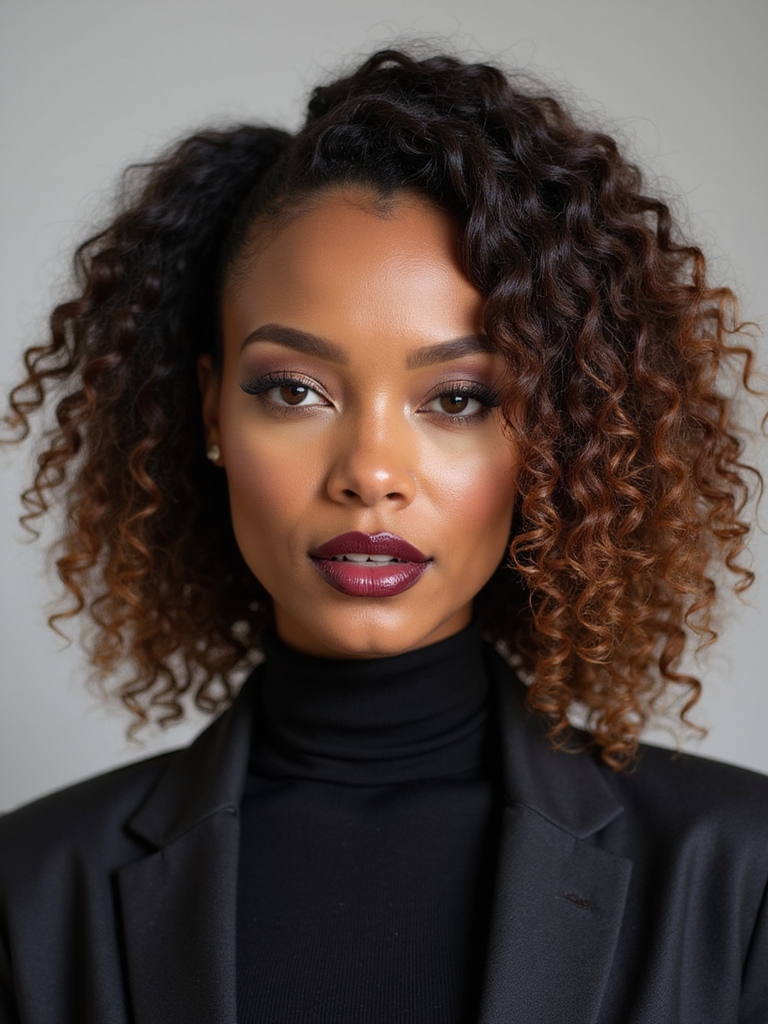
Let me be honest about protective styles: they only protect your hair if you actually care for it underneath. An install you ignore for two months, or one braided so tight it pulls, can do more harm than wearing your hair out all winter. Done right, though, a protective style is the single best thing for coily and curly hair in the cold.
This is the full guide, not just a gallery of looks. These winter protective hairstyles cover how to prep your hair, which styles last, and exactly how to maintain them so they actually protect your hair all season. From twists and cornrows to crochet, wigs, and extensions, plus the scalp care that keeps it all healthy through the season.
Winter Protective Styling, in Order
- Prep first: cleanse, deep-condition, and seal in moisture, since a protective style locks in whatever state your hair is in.
- Choose low-manipulation styles (twists, braids, buns, crochet) that tuck your ends away from cold and friction.
- Take a style down on schedule instead of stretching it for weeks, so it keeps helping your hair rather than hurting it.
- Moisturize through the style: a weekly spritz-and-seal and nightly satin protection keep it actually protective.
- Do not skip scalp care; a clean, hydrated scalp is what keeps a long-worn style healthy.
Prep: Cleanse, Moisturize, and Seal Before You Style

Every protective style is only as good as the hair you put into it, so prep is step one. Start with a clean scalp and clean hair, since you will not be washing again for a while, and product buildup under a style causes itch and breakage.
I tell every client the same thing: prep is the appointment. Cleanse, then deep-condition to load the hair with moisture, then seal that moisture in with an oil or butter before you style. A protective style traps whatever state your hair is in, so you want it clean, soft, and hydrated going in.
Detangle gently and fully while the conditioner is in, working from the ends up. Going in tangle-free prevents the matting that makes takedown a nightmare weeks later.

Deep-Condition and Seal Before Protective Styles

Where the first step is about getting clean, this one is about protein-moisture balance. Before a long-wear style, a deep treatment is worth the extra hour. Apply a deep conditioner or hair mask to clean, damp hair, cover with a cap, and let it sit, with gentle heat if you have it, so the moisture penetrates. A deep conditioner before installing is what carries your hair through weeks without a wash.
Follow with the LOC or LCO method, liquid, oil, and cream in the order that works for your texture, to lock the hydration in. The more moisture you bank now, the longer your style stays comfortable and your hair stays healthy underneath. Skipping this step is the fastest road to dry, brittle hair at takedown. The winter natural hairstyles guide covers the moisture routine in more detail.
- Deep-condition before any long-wear install goes in.
- Seal with the LOC or LCO method so the moisture lasts.
- The hydration you bank now carries the whole style.
ℹ️Good to Know
Protective styling is about low manipulation as much as tucked-away ends. Every time you comb, heat-style, or restyle your hair, you risk a little breakage, so a style you can leave mostly alone for a week or more is protecting your hair even on the days it just looks good.
Low-Manipulation Twist Styles for Winter

Twists are the most accessible protective style, since you can do them yourself with no tools and wear them for one to two weeks. Two-strand twists or mini twists tuck your ends away and double as a twist-out when you take them down, so one style gives you two looks across the weeks.
- Two-strand or mini twists tuck ends with no special tools.
- Wear them one to two weeks, then unravel for a twist-out.
- Re-twist the edges at night to keep the front looking fresh.
Braided Updos That Withstand Hats and Scarves

A braided updo is the protective style built for full winter gear, since it tucks every end up and away where hats and scarves cannot rub them. Cornrow or flat-twist the hair back and pin the lengths up into a bun or roll, so nothing hangs loose to catch and break.
The whole style sits close to your head, which means it slides under a hood or hat without crushing or frizzing. It is the most weather-proof option here.
It holds for several days to a week, depending on how it is built. A braided updo also reads polished enough for work, so it pulls double duty. The winter hair braid ideas roundup has patterns to start from.
On Tension and Your Edges
A protective style should never hurt. If a fresh install feels tight, stings, or raises little bumps along your hairline, it is pulling too hard, and tension at the edges is the leading cause of traction alopecia. Ask your braider to loosen the hairline, take a too-tight style down rather than tough it out, and skip very long, heavy styles if your edges are already fine or thinning.
Crochet Braids and Faux Locs for Extended Wear

When you want weeks of hands-off protection, crochet styles and faux locs are the long-game options. Crochet braids install pre-made hair onto cornrowed roots quickly, and faux locs give you the look of locs without the commitment. Both tuck your natural hair completely away for four to eight weeks.
Crochet methods are faster and gentler to install than individual braids, since the bulk of the work is the cornrow base. Keep the cornrows underneath clean and moisturized, and the style protects your hair beautifully through the coldest months. It is also a budget-friendly way to get length and fullness without heat or daily styling.
- Crochet braids and faux locs give four to eight weeks of wear.
- Faster and gentler to install than individual braids.
- Keep the cornrow base clean and moisturized underneath.
Wigs and Lace Fronts: Winter Care and Styling

A wig is the most flexible protective style there is, since you can take it off at night and change your look daily while your natural hair rests underneath. Cornrow your hair flat, add a wig cap, and your own hair is fully protected.
Protect What Is Underneath
The key is caring for the hair under the wig as much as the wig itself. Moisturize your cornrows and scalp every few days, and never put a wig on over damp hair, since trapped moisture invites mildew and itch.
A satin or silk wig cap protects your edges from the friction the cap can cause. Give your hair a night off from the wig when you can. The winter hairstyles for Black women guide has more on balancing wigs with healthy natural hair.
| Style | Typical wear | Upkeep |
|---|---|---|
| Two-strand twists | 1 to 2 weeks | Re-twist edges, nightly bonnet |
| Cornrows / feed-in braids | 1 to 4 weeks | Weekly scalp spritz |
| Box braids / crochet / faux locs | 4 to 8 weeks | Spritz and seal, scalp care |
| Buns and chignons | Daily restyle | Moisturize, vary placement |
Cornrows and Feed-In Braids, Low-Effort and Protective

Cornrows and feed-in braids are the lowest-maintenance protective style for the money, braided flat to the scalp to last a week or more with almost no daily work. Feed-in braids add hair gradually for a natural-looking, lightweight result that sits easier on your hairline than heavy braids.
They keep your hair completely tucked and lie flat under any hat. Feed-in braids put less weight on your roots, which is why they have become the go-to over older, heavier methods. Spray the scalp and braids with a light moisture mist every few days to keep everything comfortable. The winter protective hairstyles with braids guide goes deeper on braided options.
- Feed-in braids add hair gradually for a lighter result.
- Last a week or more flat under hats and hoods.
- Mist the scalp every few days to stay comfortable.
Buns and Chignons That Protect Ends

If you want a protective style with no extensions and no braiding skill, a low bun or chignon is it. Gathering your hair into a low coil tucks your ends, the most fragile part, completely out of the cold.
Simple but Effective
It is the easiest protective style to do in two minutes, and it reads sleek and professional for work. The only rule is to keep the gathering soft and low so the style sits comfortably all day.
A satin-lined bun form protects the hair it holds, and moving the bun’s placement day to day keeps any one spot from taking all the wear.
A few protective-styling terms worth knowing:
📖Low-manipulation
Styling that handles the hair as little as possible to limit breakage
📖LOC / LCO method
Layering liquid, oil, and cream, in either order, to seal in moisture
📖Feed-in braids
Adding extension hair gradually along a braid for a lighter, more natural result
📖Take-down
Removing a style carefully, ideally on conditioned, detangled hair to avoid breakage
Flat Twists and Roll-and-Tuck Styles for Sleep-Friendly Wear

Flat twists and roll-and-tuck styles are the protective looks that double as your night routine, since they are comfortable to sleep in and look intentional by day. Flat-twist the hair back, then roll and pin the ends under into a soft, smooth shape.
Day Style, Night Style
Because there are no hard knots or high buns, you can sleep on them without denting the style or straining your hair. You wake up with the look mostly intact.
A roll-and-tuck keeps your ends sealed away and your hair flat under a bonnet. It is the lowest-effort way to protect your hair around the clock.
Protective Styles for Natural Short Hair

Short natural hair can be protected too, even when length-based styles are off the table. Mini twists, small flat twists, and finger coils tuck short ends and last a week or more on TWA-length hair. Short hair actually installs faster, since there is less to section and twist.
Stretch the styles between washes by keeping them moisturized and sleeping in a bonnet, and they protect your hair while it grows. A halo of small twists or coils also looks sharp and deliberate, so protection still looks like a choice. For very short lengths, even a satin-lined hat worn daily counts as protection from the dry, cold air.
- Mini twists and finger coils protect even TWA-length hair.
- Short hair installs faster, with less to section.
- A satin-lined hat protects the shortest lengths from the cold.
Using Extensions Without Damaging Your Hair

Extensions make protective styles last longer and look fuller, but they protect only if they are installed and removed with care. The damage people blame on braids, I see come almost always from too much weight or a style left in far too long, rarely from the extensions themselves.
- Choose a lighter style and a skilled braider for a comfortable result.
- Choose lighter styles like feed-in braids over heavy, dense ones.
- Take them down on schedule, six to eight weeks at most.
Nighttime Routines to Preserve Protective Styles

What you do at night decides how long your protective style lasts and how healthy your hair stays. The non-negotiable is a satin or silk bonnet or pillowcase, since cotton wicks moisture out of your hair and braids overnight, exactly what you worked to lock in.
Tie longer braids or twists up loosely so you are not lying on them, and re-tie the bonnet if it slips. A silk bonnet also keeps frizz down so the style looks fresh for days longer. Two minutes at night buys you a week of better-looking hair.
Spritz and Touch-Up Tricks Between Wash Days

A protective style does not mean set-it-and-forget-it; a light mid-week refresh keeps it looking new and your hair hydrated. The trick is moisture without heaviness, since too much product builds up and gets crunchy under a long-wear style.
- Mist with a water-and-leave-in spray every few days.
- Re-twist or smooth the edges and hairline for a fresh front.
- Use a little mousse or gel on flyaways; skip heavy creams that build up.
Scalp Care and Hydration While Wearing Protective Styles

The scalp is the part people forget under a protective style, and a neglected scalp is what turns a healthy style into an itchy, flaky one. Your hair is tucked away, but your scalp still needs cleansing and moisture for the whole wear.
I start clients on a diluted cleanser or a scalp spray in an applicator bottle to reach between the braids, followed by a light oil to soothe. A clean, moisturized scalp is the foundation of every long-worn style. If your scalp gets sore, flaky, or very itchy, that is a sign to cleanse it or take the style down sooner.
- Cleanse the scalp between braids with a diluted wash or spray.
- Follow with a light oil to soothe, not a heavy grease.
- Soreness or heavy flaking means cleanse or take it down.
Satin-Lined Hats and Tools That Protect Your Style

The right accessories extend a protective style and prevent the friction winter gear causes. A satin-lined beanie is the single best winter buy for natural hair, since it gives you a hat’s warmth without the cotton or wool friction that frays your edges and ends.
Small Buys, Big Payoff
Beyond hats, a satin scarf for layering, smooth snag-free hairpins, and a soft applicator bottle for moisture all earn their place. None of them cost much, usually $10 to $25 each.
A satin-lined hat is the one to buy first if you buy nothing else. It protects whatever style you are wearing every time you step outside.
Common Mistakes to Avoid
A few mistakes turn a protective style from helpful to harmful, and they are easy to avoid once you know them. The biggest is tension: a style braided or installed too tight, especially at the hairline, pulls on your edges, and over time that pulling is the leading cause of traction alopecia, so anything that feels sore the day you get it is too tight, full stop.
The second is leaving a style in too long; past six to eight weeks, new growth and tangling start working against you, and takedown gets damaging.
The other common misses are quieter. Skipping moisture, so your hair dries out under the style; ignoring your scalp until it is itchy and flaky; and going in with tangled or unwashed hair, which mats by takedown. None of these are hard to fix. Prep well, keep it moisturized, mind your scalp, and respect the calendar, and a protective style does exactly what its name promises all winter long.
Protection That Pays Off by Spring
Protective styling in winter is not complicated, but it does ask for intention. Prep your hair well, pick a style that fits your life, keep it moisturized and your scalp cared for, and take it down before it overstays. Do that, and you will spend the coldest months barely thinking about your hair while it quietly gets healthier underneath.
Start wherever you are. A first set of twists, a wig you take off at night, a satin-lined beanie for your wash-and-go, any of it is protection. The hair you uncover in spring, longer and stronger than it went into winter, is the whole reward, and it is one every texture can reach.
You Might Also Like