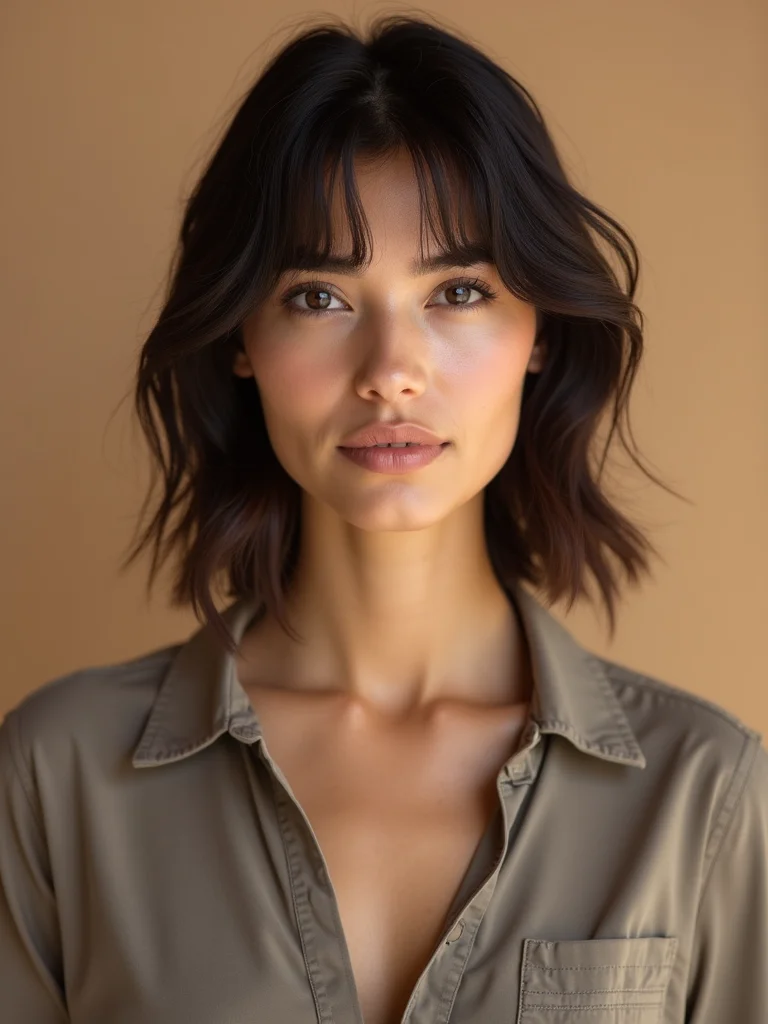
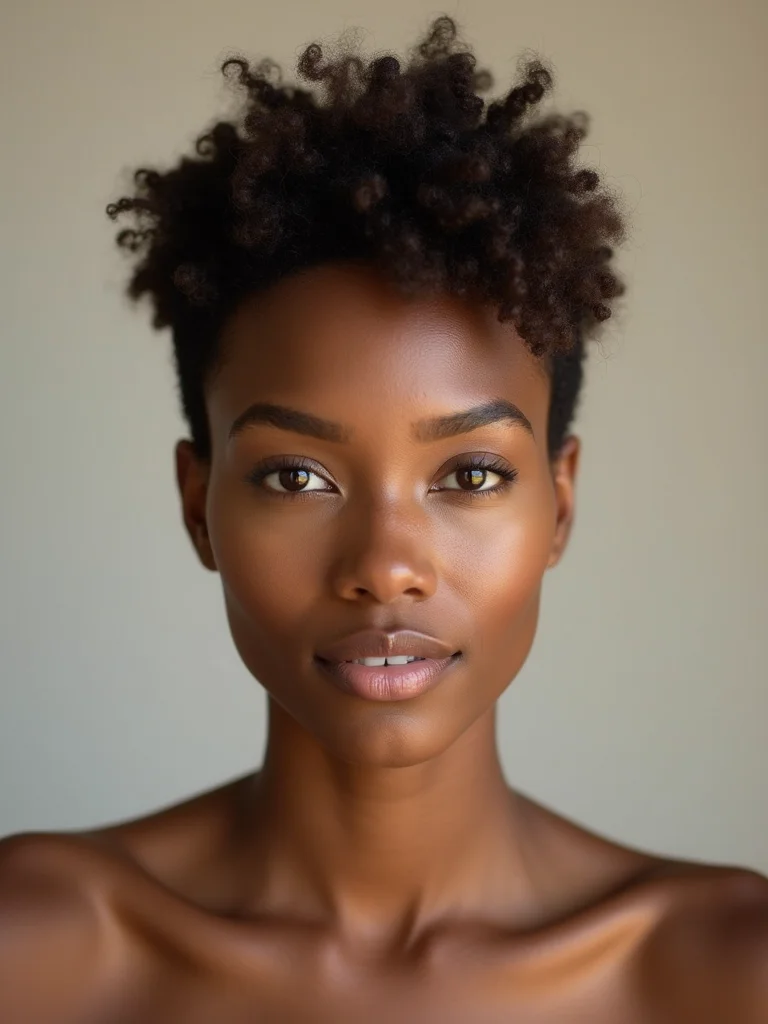
What do you actually call the length that sits past a full pixie crop but stops short of a proper bob? A longer pixie haircut, and not really either one on its own. That in-between length has quietly become a destination all its own, one plenty of stylists and clients reach for on purpose rather than something to just get through on the way somewhere else.
The sixteen looks below treat that length as the finished style it already is: soft fringes, sleek partings, wavy texture, curl, asymmetry, even a full pixie-bob hybrid. Pick whichever one matches your texture and your morning first, ahead of whichever one simply looked best in a saved photo.
What a Longer Pixie Actually Is
A longer pixie sits between a cropped pixie and a chin-length bob, with enough length on top to sweep, curl, or fringe while the back and sides stay short and clean. It suits most face shapes well, precisely because that extra top length gives a stylist real room to direct the eye.
Texture is what carries the look at this length. Point-cut ends, soft internal layers, and the right small amount of product turn what could read as an awkward middle stage into a finished, deliberate cut, whatever your hair type.
A Textured Crop With a Soft Fringe

A textured crop with a soft fringe is usually the first stop once a pixie has grown past its tightest stage. Extra length on top lets the hair fall into a piecey shape, and a gentle fringe gives the front actual movement to work with.
Point-cut texture through the ends is what makes this version look fully intentional. On very straight hair, a small amount of matte paste worked through while dry keeps individual pieces separated and defined.
Side-Swept Bangs Over a Tapered Nape

Pairing side-swept bangs up front with a tapered nape at the back puts the length exactly where it’s useful. The fringe uses up the longer top, and the close-cut neck keeps the whole silhouette controlled and tidy.
Why the taper matters here
This combination suits oval and heart face shapes especially well, since the diagonal fringe line softens a wide forehead. It also buys real flexibility: as the top keeps growing, the bangs simply get longer and more romantic without needing a fresh plan.
The catch is the taper itself. It grows out faster than the top does, so a graduated nape needs slightly more frequent attention than the fringe up front.
📋Signs This Length Suits You Right Now
- ✓Your top has enough length to sweep, fringe, or hold a light wave.
- ✓You still want the ease of short hair at the back and sides.
- ✓You’re willing to book a shaping trim on a regular schedule.
Shaggy Crown Layers

Crown layers with a shaggy finish give a longer pixie height and motion right where extra length otherwise tends to sit flat against the head. Rough texture through the crown hides the in-between stage, and the whole shape looks deliberately undone.
- Best suited to fine-to-medium hair that goes flat on top without help.
- A texturizing spray at the roots, then a scrunch through the ends, does most of the work.
- Holds its shape between trims since the layering blends the lengths on its own.
A Sleek Long Pixie With a Deep Part

A deep side part and a smooth finish turn a longer pixie polished and grown-up. The longer top sweeps across for a refined, asymmetric frame, and there’s noticeably more length here to work with than a cropped pixie ever offers.
This is the version that works best for a dressier event, when the extra top length gets put to real styling use with clear intention behind it. A round brush paired with a blow-dryer builds the sweep; a flat iron finishes the smoothness.
Where this struggles is humidity and second-day hair, both of which show every kink in a sleek finish almost immediately. A light smoothing serum on the mid-lengths buys some extra hours.
Curly Texture in a Long Pixie

On curly and coily hair, growing a pixie into this longer stage works as a real advantage. The extra weight lets curls clump and build into a fuller, more defined shape, while the added length gives the coil pattern room to spring.
- Have it cut on completely dry hair so the stylist follows the real curl shape.
- A water-and-leave-in spray between washes refreshes curls without a full reset.
- Define with a light gel on soaking-wet hair, then air-dry undisturbed.
Wispy Layers for Fine Hair

Fine hair is where a longer pixie can go stringy fastest. Wispy, tapered layers are the direct fix, since they add the impression of body and keep the new length from hanging limp against the scalp. No extra weight gets added.
The styling stays quick on purpose. Air-drying with the fingers builds lift at the roots, and a small amount of dry texture spray breaks up the ends afterward.
A little mousse worked through before drying gives extra grip on hair that’s especially fine, without ever weighing the whole shape back down.
Choppy, Piecey Ends
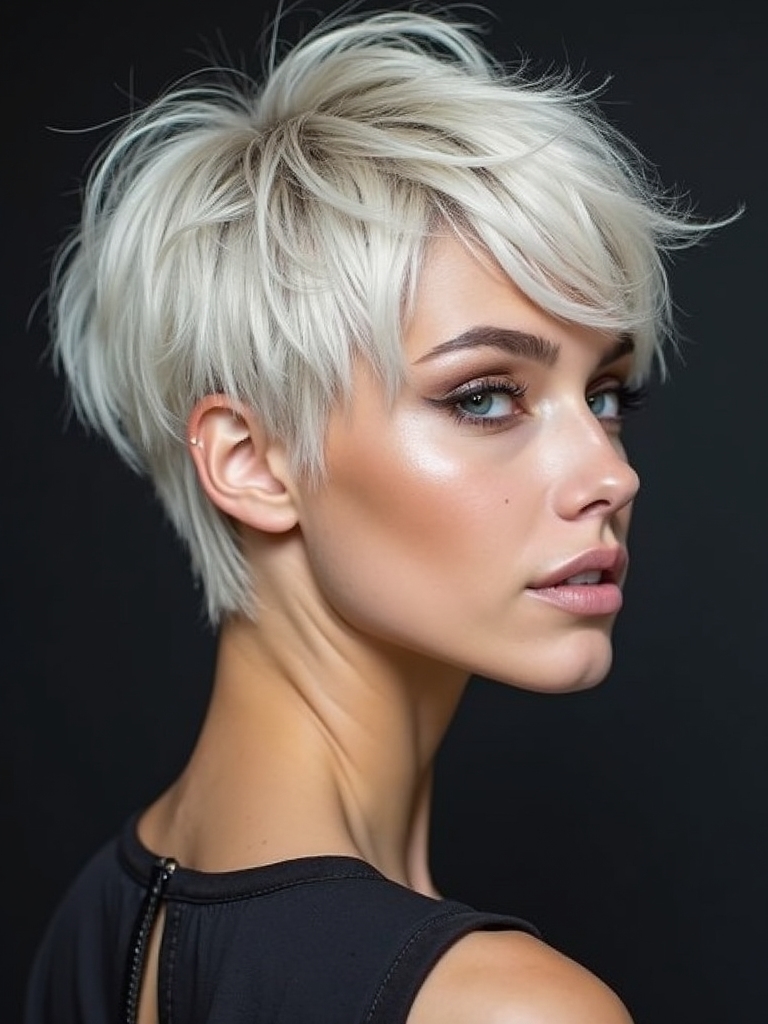
Choppy, point-cut ends give a longer pixie a deconstructed finish, where irregular tips make the new length look sharp and deliberate. It suits anyone who wants this stage to feel like a real style choice.
- Work a pea-size amount of matte clay through completely dry hair for grip.
- Pinch and twist small sections at the ends to keep the pieces separated.
- Skip brushing it smooth afterward; that motion erases the choppy effect entirely.
An Asymmetrical Long Pixie

An asymmetrical long pixie keeps one side noticeably longer than the other, leaning fully into the imbalance for a modern, fashion-forward line. The longer side gives the whole cut real direction as it grows.
Square and round faces benefit most from this one, since the diagonal line draws the eye downward and visibly lengthens the face. It suits anyone who already likes a bit of edge in a haircut.
The trade-off is upkeep. That crisp difference between the two sides softens as hair grows, so this is the version that rewards a strict trim schedule more than any other on this list.
| Level | What It Looks Like | Upkeep |
|---|---|---|
| Subtle | A slight length difference, barely noticeable at rest | Low; blends as it grows |
| Moderate | Clear diagonal, one side visibly past the jaw | Medium; regular trims keep the line crisp |
| Dramatic | One side cropped, the other reaching the collarbone | High; the contrast softens fastest |
Micro Bangs With Elongated Sides
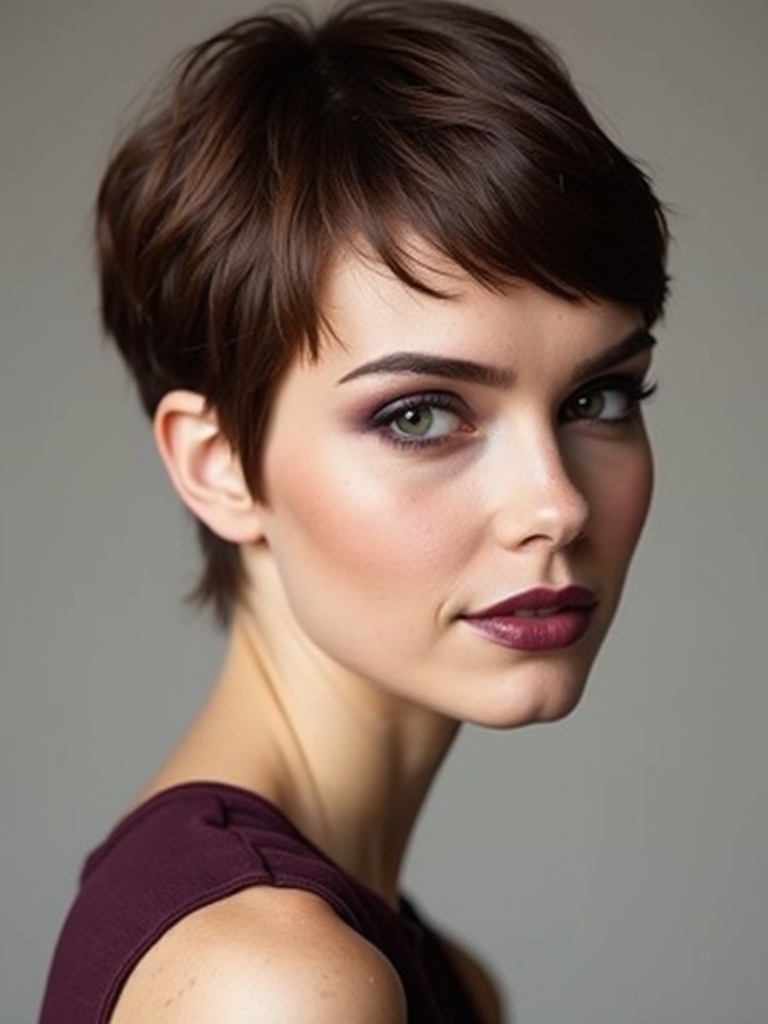
Contrasting blunt micro bangs with longer, elongated sides makes a bold, editorial version of the longer pixie. The short fringe keeps the nerve of a full crop, while the longer sides soften and frame the cheeks around it.
Who the micro fringe actually suits
Micro bangs flatter strong brows and a balanced forehead particularly well. They get trickier on very curly hair, since shrinkage pulls the fringe shorter than the actual cut length suggests.
This is a real commitment up front: a micro fringe sits high enough on the forehead that regrowth shows within days, not weeks.
A Voluminous Top Over an Undercut

Keeping a voluminous, longer top over a hidden undercut delivers maximum styling freedom while controlling bulk underneath. The grown-out length stays full and shapeable on top, while the disconnected sides keep dense hair from spreading into a triangle.
- A clever option for thick or coarse hair that widens as it grows past cropped length.
- Blow-dry the top up and back, lifting at the root with a vent brush.
- A flexible-hold spray keeps volume without locking the top stiff.
A Feathered Fringe at Neck-Grazing Length

Once the back reaches the neck and the fringe softens into feathered pieces, the cut sits at one of the prettiest points along the whole length. Soft, feathered sides and a light fringe frame the face while quietly signaling the eventual move toward a bob.
Styling asks for almost nothing here: a quick dry, fingers in place of a brush, and a light mist of flexible spray keep the feathered edges moving all day.
A Wavy Long Pixie With Airy Movement

A wavy long pixie leans on the hair’s own natural bend to give the extra length airy, textured movement. The waves break up the shape so it looks relaxed and deliberately styled.
Without much natural wave to start, a small-barrel iron can fake the effect in a few minutes, bending a handful of pieces in alternating directions and raking through with the fingers afterward.
- A sea-salt or texture spray on damp hair, scrunched and air-dried, is often enough on its own.
- Keep any iron at a moderate heat, since this length is short enough to catch fast.
- Works especially well on hair with even a slight natural bend already.
Matching a finish to how much natural texture you’re starting with:
🎯Little to no natural wave
A small-barrel iron on a handful of pieces gets the same airy movement in a few minutes.
🎯Already have some bend
A texture spray on damp hair and an air-dry is usually the entire routine.
The Pixie-Bob Hybrid
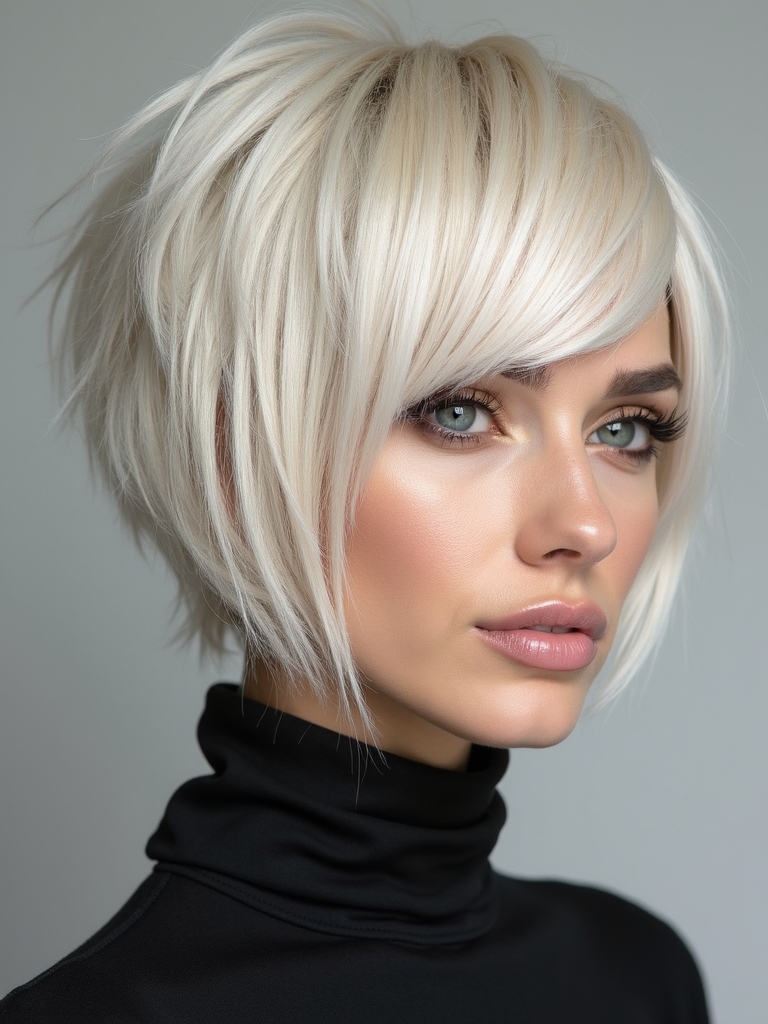
The pixie-bob sits at the natural far end of this length: longer than a pixie, shorter than a proper bob, and sculpted into one clean, finished shape. Plenty of people land here and simply decide to stay.
It delivers the ease of short hair with just enough extra length to tuck behind the ears or play with around the jaw, which is exactly what makes it feel like a finished cut in its own right.
- Ask for soft graduation through the back and slightly longer pieces around the face.
- A quick round-brush blow-dry through the ends is usually the entire routine.
- A strong option for anyone who wants short hair that can still be tucked away.
A Retro Long Pixie With a Flip

Flipping the ends of a longer pixie outward gives it a playful, vintage bounce that turns the length into a deliberate, lively look in its own right. It borrows from mid-century styling and puts the extra length purely to work for movement.
- Works best once the sides reach the cheekbones, so it suits a mid-to-late stage of this length.
- Flip the ends outward with a barrel brush and a blast of cool air.
- Set with a light hairspray so the bounce holds well past the morning.
Worn-In Layers on a Long Pixie

Soft, worn-in layers make a longer pixie close to no-effort, falling into shape with little more than a quick dry and a touch of product. The layers give the length constant movement, keeping it from ever going flat and heavy.
Why this one feels so easy
The hair stops reading as caught between two haircuts and starts looking like one relaxed, settled style, which is the whole appeal of this version for anyone who wants fast mornings while the cut fills out.
The one honest note: on very fine hair, this soft layering can thin things out if it’s cut too aggressively, so a lighter touch is worth requesting.
Two assumptions worth checking about worn-in layers:
❌ Myth: Soft layers always mean a longer morning routine.
✅ Reality: The opposite tends to be true. Broken-up layers fall into place with a quick dry and barely any product.
❌ Myth: This look only works once the awkward stage has fully passed.
✅ Reality: It actually works best while everything is still settling in, since the movement hides the in-between length while it works itself out.
A Polished Long Pixie With a Glossy Finish

A smooth, shiny finish takes a longer pixie somewhere more refined, making the extra length look fully intentional. A shine serum and a quick smoothing pass do most of the visible work.
Carrying it through the whole stretch
This is the dressed-up end of this length, the one to reach for when short-ish hair needs to look sleek for the occasion. A few drops of that serum or a lightweight oil worked through the lengths, kept off the roots, finish the look.
The bonus here is range: a glossy finish flatters this length at nearly every stage, so it carries a longer pixie right through to the pixie-bob without ever needing a new plan.
Styling Tips
The single most useful habit at this length is naming the specific look, soft fringe, sleek part, wavy texture, well beyond pointing at one photo and hoping a stylist reads your mind. Mentioning natural texture up front matters just as much, since the same styling idea plays out differently on fine, thick, curly, or straight hair.
Keep the shaping regular. A trim on a reasonable schedule is what keeps each stage of this length looking like a finished cut, and it typically runs $40 to $70, roughly half of what a full restyle further down the road would cost.
Longer Pixie Haircuts, Answered
?What’s the actual difference between a longer pixie and a pixie-bob?
Mostly where the back and sides land. A longer pixie keeps the nape and sides short while the top carries most of the length; a pixie-bob lets the whole perimeter grow out into one soft, sculpted shape closer to a short bob.
?Does this length work on naturally curly or coily hair?
It suits textured hair especially well, since the added weight lets curls clump into a fuller, more defined shape. Cutting on completely dry hair is what keeps the finished shape accurate to how the curls actually fall.
?Can I still get away with fewer salon visits at this length?
Somewhat, depending on the style. Soft, worn-in layers and grown-out shapes stretch further between trims than a sharp asymmetrical line or micro bangs, which both need closer, more frequent shaping to stay crisp.
?Will a fringe at this length actually need much upkeep?
It depends entirely on placement. A soft, side-swept fringe grows out gently and barely needs attention, while blunt micro bangs sit high enough on the forehead that regrowth shows within just a few days, so plan on more frequent trims for that version specifically.
?Is this length flattering on a round or square face?
Generally, yes, especially with an asymmetrical line or a deep side part, since both draw the eye on a diagonal and add the appearance of length. Crown volume also helps elongate a rounder face shape at this length.
A Length Worth Wearing on Purpose
A longer pixie isn’t a waiting room between two better haircuts; it’s sixteen different finished looks with their own textures, upkeep, and personality, and most people find at least two or three here that truly fit how they actually get ready in the morning.
Pick the one closest to where the hair sits right now and try it before deciding whether to grow it further. For the crop side of the spectrum, our short pixie cut looks guide covers where to go if the direction changes.
More Ideas Here