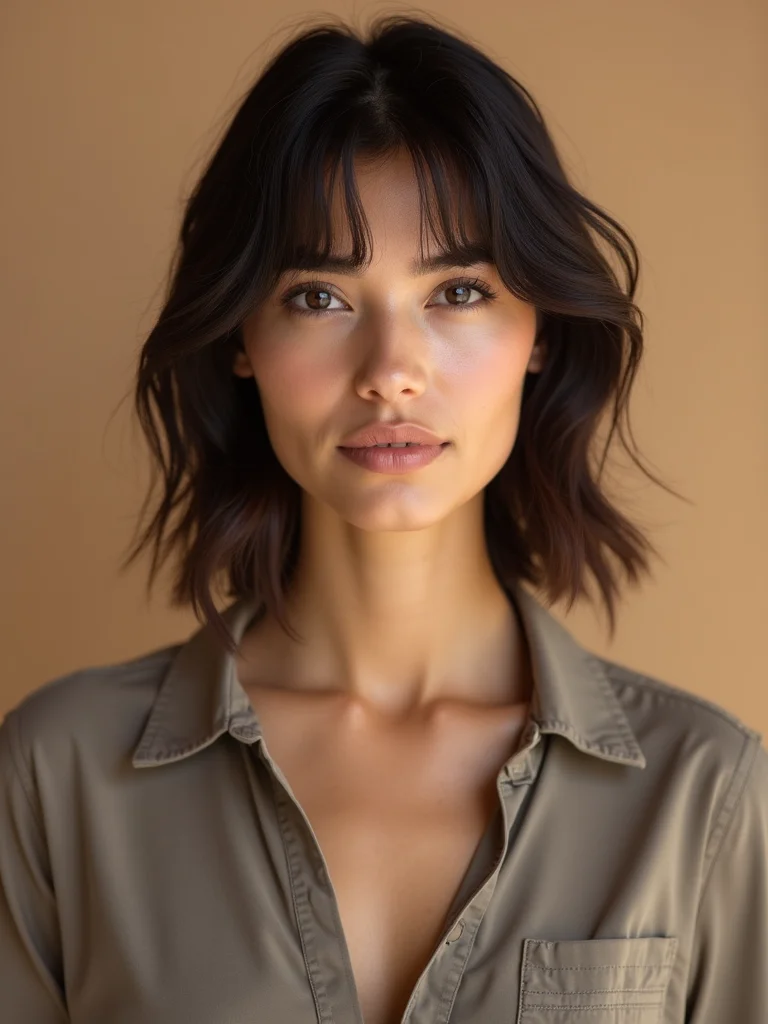
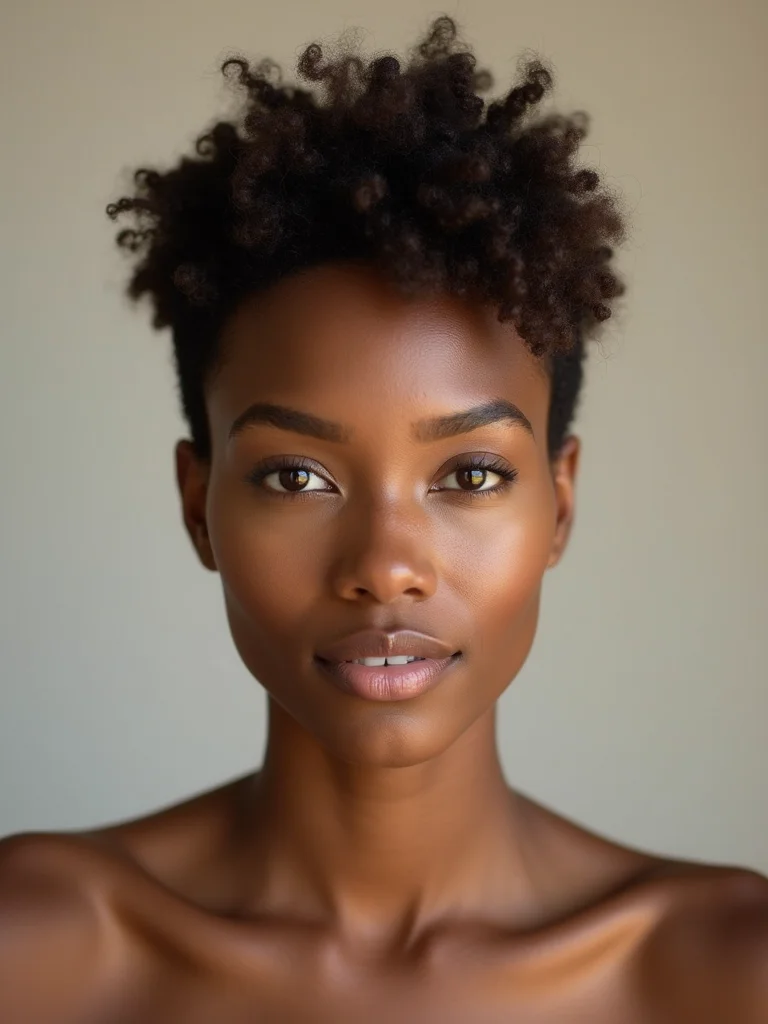
Curtain bangs flatter more face shapes than almost any other fringe style. The center-parted, swept construction works with nearly any bone structure, because the sweep is adjustable rather than fixed to one line. That single adjustable variable is what separates curtain bangs hairstyles from a fringe cut to just one shape.
The version that actually works depends on texture, length, and how much daily effort gets signed up for. Fifteen takes on the shape follow, from a barely-there brow-skimmer to a full ’70s swoop, sorted by exactly that.
Three Things That Decide Your Version
- Texture decides the cutting method: straight and wavy hair can be trimmed close to dry, while curly and coily hair needs a fully dry cut with extra length built in for shrinkage.
- Upkeep ranges from near-zero, for piecey and soft versions, to a standing blow-dry habit for glossy, precise ones. The honest answer about effort matters more than which shape looks best in a photo.
- The center part is adjustable, not fixed. Shifting it even half an inch changes which face shapes the fringe flatters most.
A Soft, Feathered Brow-Skimming Fringe

The brow-skimming curtain sits on the gentlest end of the spectrum, cut soft and feathered to graze right at the eyebrows. It frames the eyes without the commitment of a heavier fringe, and there’s enough length to tuck behind the ears on days you’d rather it disappear.
The Easiest First Fringe
Point-cut, feathered ends are what keep this version airy instead of solid. A blunt-cut brow-skimmer reads heavier and more severe; the same length, feathered, reads soft and considered instead.
Because it sits on the longer side of the curtain spectrum, growing it out barely registers. It drifts into the surrounding layers over a few months rather than announcing itself as an awkward stage.

Center-Parted Curtain Bangs With Long Layers

A clean center part with the fringe swept symmetrically to both sides, melting into long layers, is probably the shape most people picture the moment someone says curtain bangs. It earns that reputation honestly: balanced, flattering, endlessly wearable.
Long layers are what make this particular version work. They give the swept fringe somewhere to flow into, so the whole front reads as one continuous shape instead of a fringe stapled onto a separate haircut. The center part especially favors balanced, oval-leaning face shapes, since the symmetry plays up already-even features.
Styling is a quick round-brush pass: dry the fringe forward first, then split it down the center and sweep each side back, finishing with a light-hold spray so the part holds through the day.
| Version | Daily Effort | Best For |
|---|---|---|
| Piecey & Soft | Minimal | Low-maintenance mornings |
| Center-Parted Classic | Light round-brush | Balanced, oval faces |
| Glossy & Polished | Daily blow-dry | Anyone who already styles daily |
Textured Curtain Bangs on Wavy Hair

On wavy hair, a curtain fringe works with the existing bend rather than fighting it, which keeps the whole thing low-effort. The detail most people get wrong is drying method, not the cut itself.
Diffusing on a low, warm setting, never high heat aimed directly at the roots, builds lift without frizzing the wave pattern out. Air-drying flat, skipping the diffuser entirely, tends to leave the fringe looking limp rather than textured, even on hair with plenty of natural bend.
- Cut dry so the resting wave length is accurate before anything gets trimmed
- A light cream defines the wave without weighing the fringe down
- Scrunch upward into the diffuser bowl; never brush through while wet
Blunt Bob With Airy Curtain Bangs

A blunt bob can read severe on its own, all one hard horizontal line. Airy curtain bangs soften that by adding movement right at the front, so the cut feels considered rather than sharp. Straight and wavy bobs both take to this pairing well; curlier textures usually need a specialist familiar with cutting curls dry to get the proportions right.
- The fringe breaks up the bob’s strong horizontal line at the front
- Keep the bangs feathered, not blunt, for real contrast against the bob
- A round-brush blow-dry seals the airy shape for the day
Bold, Bouncy ’70s-Inspired Swoop

This is the curtain bang at full volume: a Farrah-era swoop with real bounce and body, flicked back into big, soft wings framing the whole face. Thick and heavily feathered, it’s the most dramatic version in this roundup.
The Style You Do, Not the One You Wake Up With
The drama has a cost. Flicking the wings back takes a round brush plus direct heat aimed at the roots; skip both and, air-dried, this shape falls flat and loses the entire effect. Budget real styling time for this one, not a quick finger-comb.
It suits thicker hair best, since the volume needs real density behind it to hold. On finer hair, a volumizing mousse at the roots before blow-drying gets closer to the same effect, though it won’t hold quite as long.
Defined Curtain Bangs on Coils

Coily hair wears curtain bangs beautifully once the cut respects the texture, showing off the curl pattern right at the front instead of hiding it. Two things matter most: leaving real extra length for shrinkage, and softening the corners so the fringe sweeps back into the hairline instead of stopping abruptly. Our curly curtain bangs guide goes deep on the cutting technique for every curl pattern.
- Always cut dry, in the natural coil pattern, never straightened first
- Ask for generous extra length; shrinkage is not optional to plan for
- A curl-defining custard or gel on soaking-wet hair sets the shape cleanly
📋Getting the ’70s Swoop to Hold
- ✓Blow-dry the fringe forward first, then flip it back in sections
- ✓Use a large round brush for maximum bend at the root
- ✓Finish with a strong-hold spray, aimed at the root, not the ends
Feathered Ends for Movement and Lift

Whatever length or texture gets chosen, feathered ends are the detail separating a current curtain fringe from a dated one. Point-cutting removes weight from the very tips, so the fringe moves and lifts instead of sitting as one solid block.
- Lighter ends translate directly into more visible movement day to day
- Feathering keeps even a thick fringe from looking heavy or helmet-like
- Ask specifically for point-cutting, not heavy thinning, which tends to cause frizz
Piecey, Soft Fringe for Low Maintenance

For anyone who wants curtain bangs that ask for close to nothing, the piecey, undone version is the answer. Cut soft and separated, meant to look a little tousled from the start, it forgives a rushed morning since the slightly messy finish is the actual point.
The Fringe That Forgives a Rushed Morning
This is generally the fringe recommended for people who like the idea of bangs but actively dislike styling routines. A little texture paste worked through the ends, or honestly just bedhead and a finger-comb, and the look is done.
It’s also the most forgiving as it grows out, since piecey ends rarely look distinctly too long or too short. Of every version here, this one asks the least of your morning.
Shoulder-Length Cut With a Blended Fringe

On a shoulder-length cut, curtain bangs can blend so smoothly into the surrounding layers that they barely register as a separate fringe at all, just a soft frame around the face. This length works especially well for the shape: hair can still gather into a ponytail while the fringe stays visible in front.
Because the bangs flow directly into the front layers with no hard break, the whole look reads polished and the grow-out is close to painless. It’s a reasonably safe choice for a first fringe, since there’s no dramatic line to commit to. For more length-specific detail, see our curtain bangs medium hair guide.
Side-Swept Curtain Bangs for Asymmetry

Shifting the part off-center turns a classic, symmetrical curtain into a side-swept version, and the asymmetry flatters more quietly than it sounds. The longer side sweeps across the forehead, softening a strong jawline or a wider face, while the off-center part adds lift right at the root.
It’s also the most forgiving version to style day to day, since there’s no precise center part to maintain as hair grows. On a rushed morning, the side-swept fringe tucks behind one ear and still looks deliberate rather than undone.
Two ways to wear a blended shoulder-length fringe:
🎯Tucked Back
Pin the front pieces behind one ear for a cleaner, more polished look.
🎯Worn Down
Let the blended fringe fall loose for a softer, more casual everyday look.
Feathered Micro Curtain Bangs

Micro curtain bangs sit short and high on the forehead, a bold, fashion-forward take for a fringe that’s meant to be noticed rather than blended in. Feathered rather than blunt, they keep an airy softness even at that daring length, which keeps them from looking too severe.
This is the highest-commitment version here, since there’s no spare length to hide behind if the cut runs short. It rewards a precise stylist and real confidence more than any other version on this page.
- Best suited to those comfortable with a strong, editorial look
- Growth changes the proportion noticeably fast at this length
- Feathered ends keep even this short a fringe from looking blunt or stark
Glossy, Polished Curtain Bangs

At the opposite end from the piecey version, glossy curtain bangs are entirely about precision and shine. A round-brush blowout, sealed with a shine spray, sets them into a sleek, pulled-together sweep.
The honesty here is that this look takes real, regular work. A glassy finish means a blow-dry most washes, heat protectant, and a smoothing product, so it suits people who already enjoy styling their hair rather than those hoping to skip the routine.
- Needs a round-brush blow-dry and shine product most washes
- Holds best on straighter textures that take a smooth finish easily
- The highest-maintenance version in this roundup by a clear margin
Before You Commit to Micro
There’s truly no length to spare at this height, so a single miscalculated inch changes the whole proportion. Book this only with a stylist who’s cut micro-length fringes before, not as a first attempt.
Shag Cut With a Layered Curtain Fringe

A shag and a curtain fringe are a natural pairing, both built on the same shaggy, undone texture and movement. All those choppy layers give the hair body and give the fringe somewhere to belong, so the front section and everything behind it move as one shape instead of two.
This combination suits anyone chasing texture and edge without overhauling the whole head. Since the shag is meant to look undone by design, styling stays mostly scrunch-and-go, with the fringe blending into the top layers rather than sitting apart from them.
It works across straight, wavy, and curly textures, with the layering simply tailored to whichever pattern is involved. For a fuller take on the base cut, see our layered curtain bangs guide.
Thick, Full Bangs With Tapered Sides

For hair with real density to spare, thick, full curtain bangs make the most of it. A heavier fringe with real coverage frames the face strongly, and tapered sides keep it from looking blunt where the bangs meet the rest of the hair.
Why the Taper Matters More Than the Length
The taper is the detail that matters most here. Without it, a thick fringe can sit almost like a curtain rod straight across the forehead; with it, the density softens gradually into the surrounding layers instead.
This version needs real density to work, so finer hair usually reads thin and gappy attempting the same shape. A backcombing technique at the roots can fake some of the coverage, though it won’t fully replicate the effect.
No-Heat Curtain Bangs Styling

Hot tools aren’t required to wear curtain bangs, and skipping heat keeps the hair healthier over time. To get a heatless sweep, set the shape while the hair is still drying: wrap the damp fringe around a finger or a velcro roller, angle it back away from the face, and let it dry in that position for a soft bend.
On wavy and curly textures, simply applying product to soaking-wet bangs and letting them air-dry into their natural pattern accomplishes almost the same thing. Either way, a no-heat routine turns out gentler on the hair and, once the technique clicks, often faster than reaching for a round brush every single morning.
Who It Suits Best
Curtain bangs suit nearly every face shape, since the sweep is adjustable rather than fixed to one line. What actually decides whether a specific version suits someone is texture and commitment level, not face shape: a glossy precision fringe on someone who never blow-dries their hair is a setup for daily frustration.
The one place curtain bangs don’t suit well is fully hands-off hair care. Even the lowest-maintenance piecey version still needs a fringe-only trim, plan on around $25, somewhere around the two-month mark, and any version with real length or volume needs at least occasional styling attention to look intentional rather than accidental.
The Shape Adapts; the Commitment Doesn’t
Fifteen versions, one shared shape: a center-parted fringe that sweeps rather than sits. What changes from one to the next is texture, length, and how much daily effort gets put toward maintaining it, not the underlying idea.
If a version here caught your attention, that’s worth trusting. Bring it to a stylist, describe your actual morning routine honestly, not the aspirational one, and let the cut get tailored from there.
Keep Reading