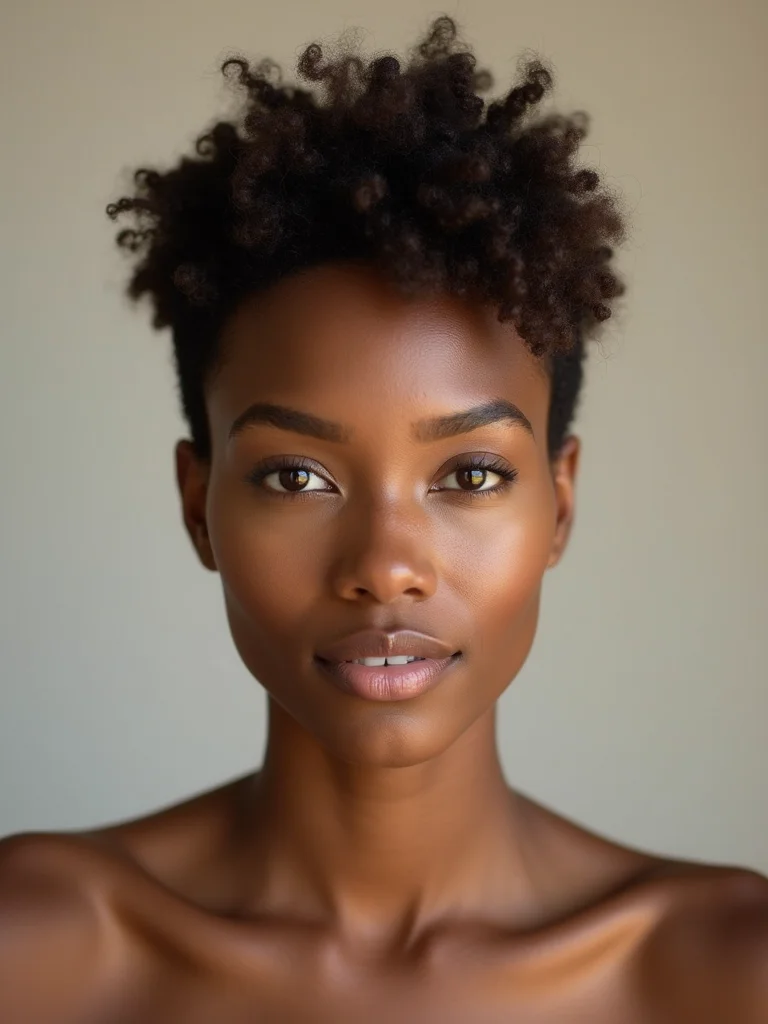
Wavy hair is the texture nobody writes the manual for. It is not straight enough to behave like a sleek blow-dry and not curly enough for the curl rules, so a lot of wavy people end up fighting their fringe every morning. That in-between quality is exactly why curtain bangs suit waves so well.
The shape sweeps and parts the way a wave already wants to fall, so the bend becomes the styling itself. The whole job is enhancing the wave, controlling the frizz that comes with it, and cutting so the wave length is right. Here is how to do all three, with fifteen wavy curtain bang looks and the technique behind each.
Wavy Curtain Bangs: Quick Answers
Should wavy curtain bangs be cut wet or dry? Dry, or at least checked dry. Waves spring shorter than they hang wet, so a wet-cut fringe often dries above the brow. A good stylist cuts the bulk wet and refines dry.
What is the biggest challenge with wavy fringe? Frizz and inconsistency. Some pieces wave, some fall straight, and humidity undoes everything. The fix is the right product on soaking-wet hair and a hands-off dry.
How much styling do they need? Less than you think. A diffuse or air-dry with one product is usually it, about ten minutes, since the point is to enhance the wave, not force a finish.
Face Shapes That Pair Best With Curtain Bangs
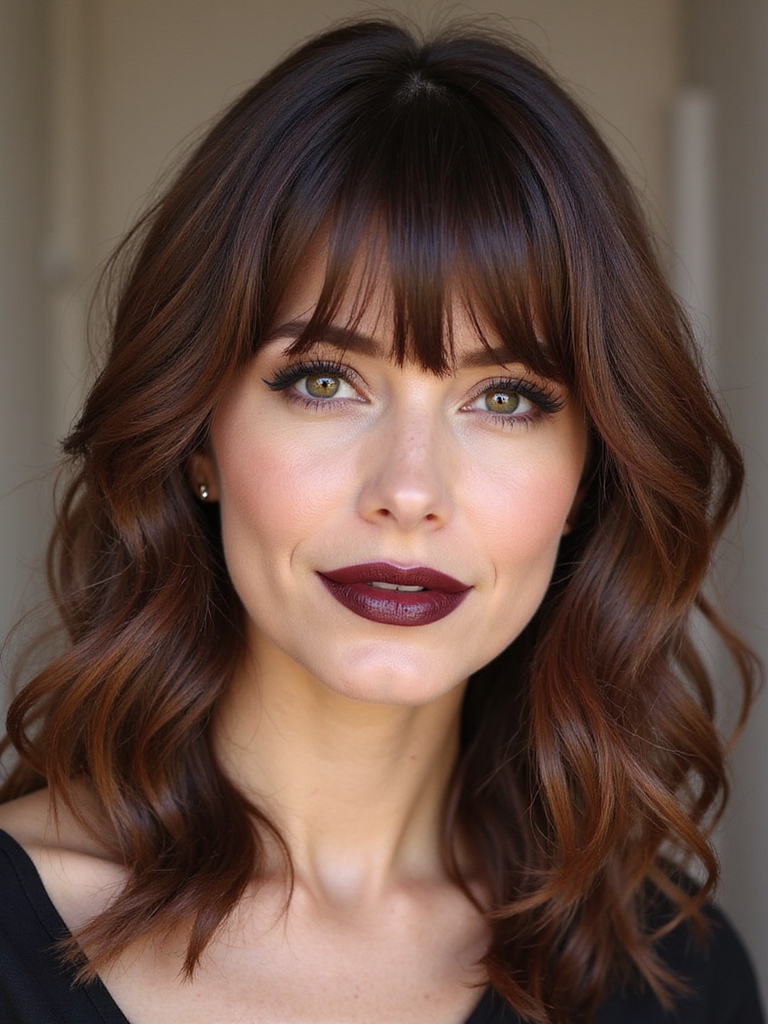
Part of why curtain bangs flatter nearly every face is that you can move where they hit to balance your features, and on wavy hair the bend adds a softness that makes them even kinder. Still, a few pointers help you ask for the right version.
- Round faces: a longer curtain past the cheekbones adds length.
- Square jaws: soft, curved corners take the edge off a strong jaw.
- Long faces: a wider, shorter sweep breaks up the length.
- Heart shapes: a fringe that widens toward the jaw balances the chin.
Finding Your Ideal Bang Length and Density
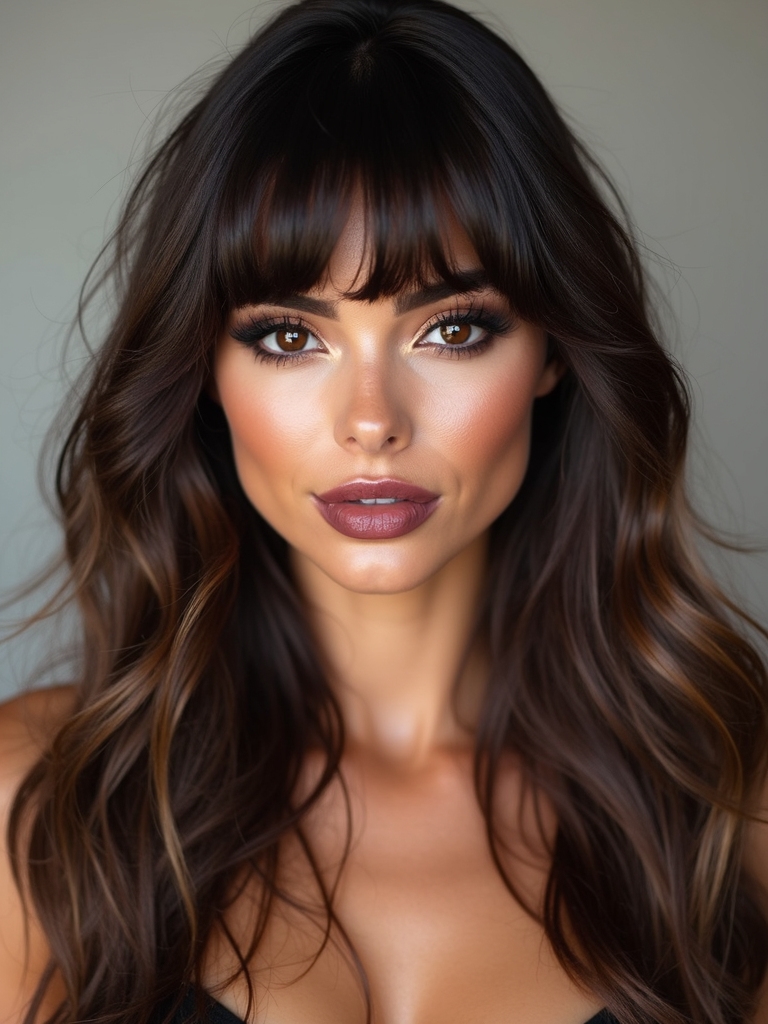
Length and density are where wavy fringe is won or lost, because your wave pattern decides both. A looser wave can carry a longer, lighter fringe, while a tighter, more defined wave needs a little more length built in for the spring and a touch more density so it does not look stringy.
Be honest about your wave in the consultation. In my chair, I run my hands through a new client’s hair while it is dry to see how the front pieces actually behave, because waves are rarely uniform and the fringe has to suit the most unpredictable section.
- Looser waves: longer, lighter, feathered fringe.
- Defined waves: a touch more length and density for clean shape.
- Mixed pieces: have the stylist cut to your wavest front section.
🅰️Longer, Lighter Fringe
Best for looser waves. Sweeps to the cheekbones, frames softly, and is the easiest to grow out. Lower styling effort.
🅱️Shorter, Denser Fringe
Best for defined waves that need shape and coverage. More striking, but wants more frequent trims and a careful dry cut.
Soft, Cheekbone-Skimming Fringe for Loose Waves
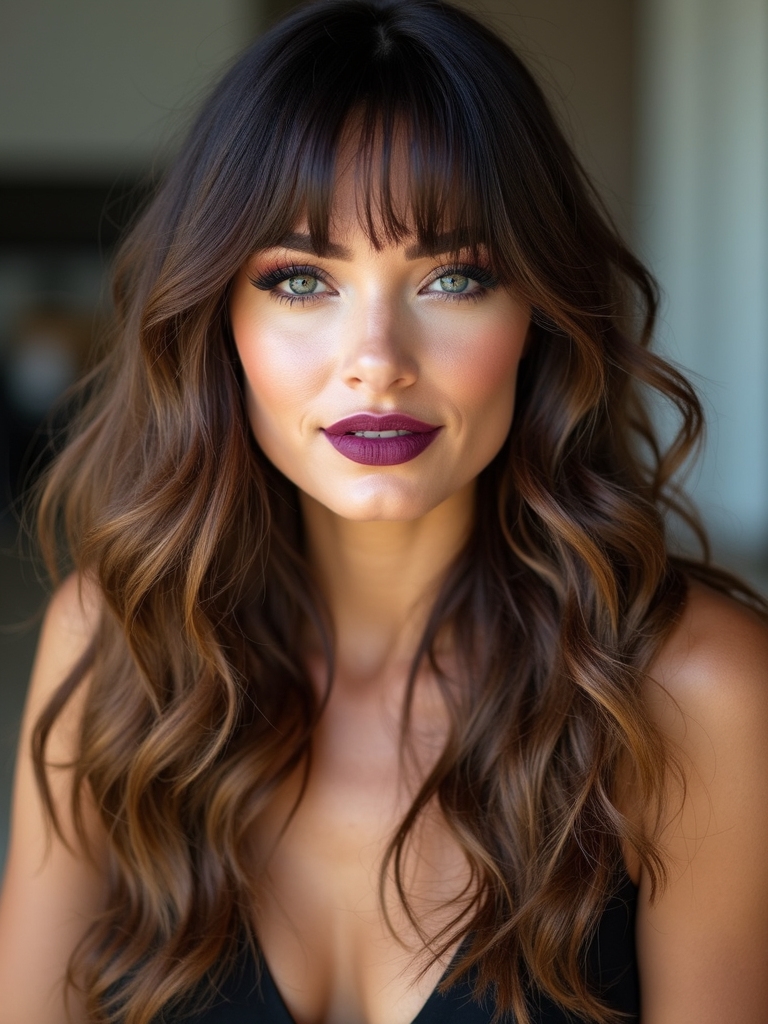
On loose waves, a cheekbone-skimming curtain is the most flattering everyday option, soft and long enough that the gentle bend does the framing for you. The fringe sweeps down to graze the cheekbones, drawing the eye across the face and adding that soft, undone quality waves do naturally.
The Easiest Wavy Fringe to Wear
Because the wave is gentle here, the styling is barely-there. Apply a light cream to damp hair, encourage the sweep with your fingers, then leave it alone to finish drying into a soft frame on its own. The looser the wave, the less you need to do.
This length is also the kindest to grow out. As it lengthens it just becomes more face-framing, so you can stretch trims out past two months and never look awkward in between.
Textured, Piecey Curtain Bangs for Defined Waves
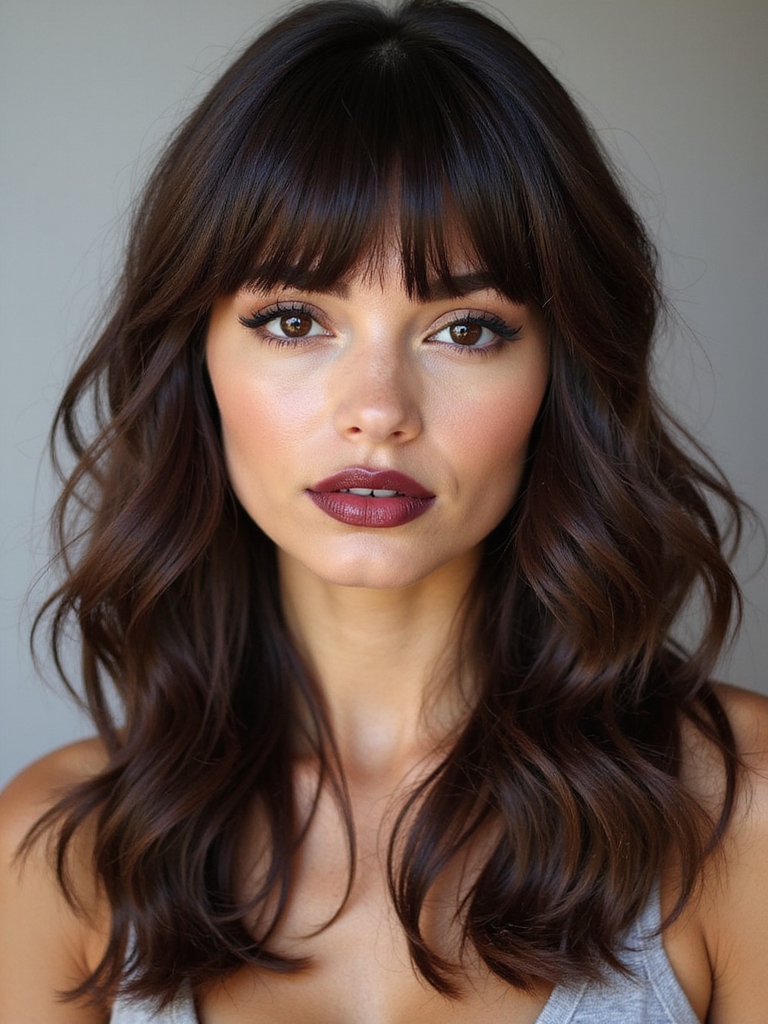
When your waves are more defined, piecey, textured curtain bangs lean all the way into them. The separated, undone pieces show off the wave pattern at the front and give the fringe a cool, undone edge. This is the version that makes the most of strong natural texture.
Defining Without the Crunch
The trick with defined waves is definition without crunch. A curl-friendly cream or a soft mousse on soaking-wet hair clumps the wave cleanly, and once it is dry you scrunch out any stiffness so the pieces stay soft and separated.
It does want a dry cut to get the length right, since defined waves spring up the most. Done well, this is the wavy fringe that looks the most expensive for the least daily effort.
The thing wavy clients never believe at first is that their fringe needs less, not more. Less product, less touching, less heat. The wave already knows what to do; your job is mostly to stay out of its way once the product is in.
Layered Shag With Feathered Bangs
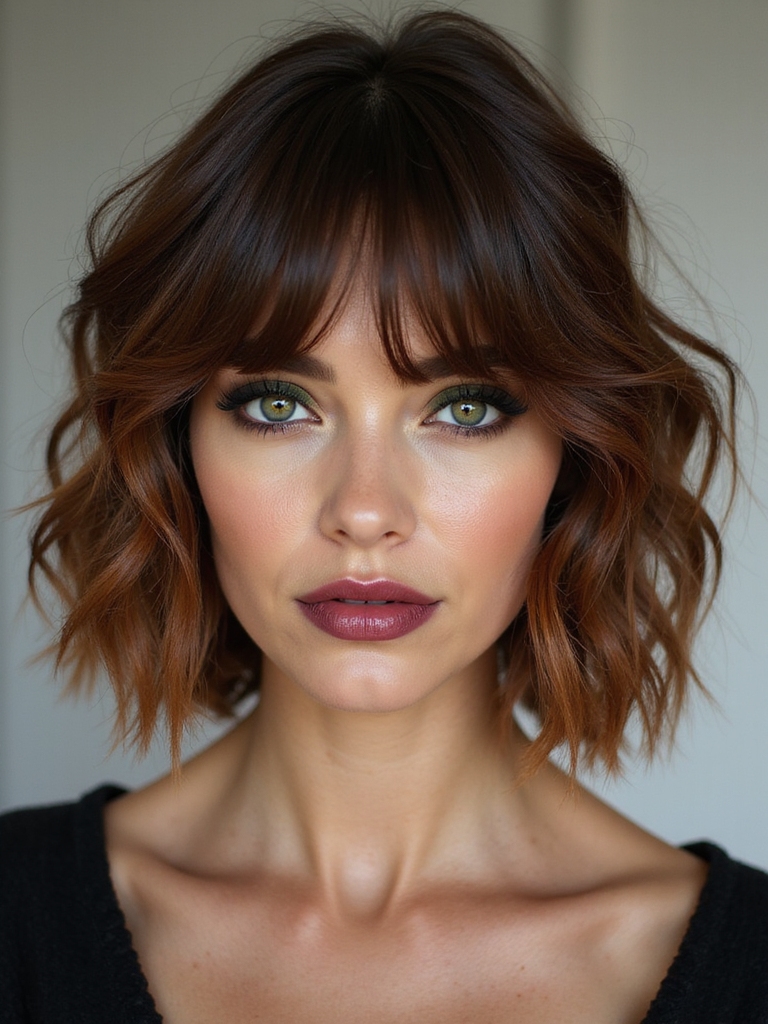
The shag and wavy hair are a perfect match, and feathered curtain bangs complete the look. All those choppy layers give the waves room to move and pile, while the feathered fringe frames the face at the front, so the whole cut reads as one piece of rock-and-roll texture.
This is a low-effort pairing because both the shag and the fringe are meant to look undone. Scrunch in some product, sweep the bangs to the side, and let the waves do the rest. For a fuller take on the cut, our shag haircut with bangs guide goes deeper.
Long Layers With a Subtle, Swoopy Fringe
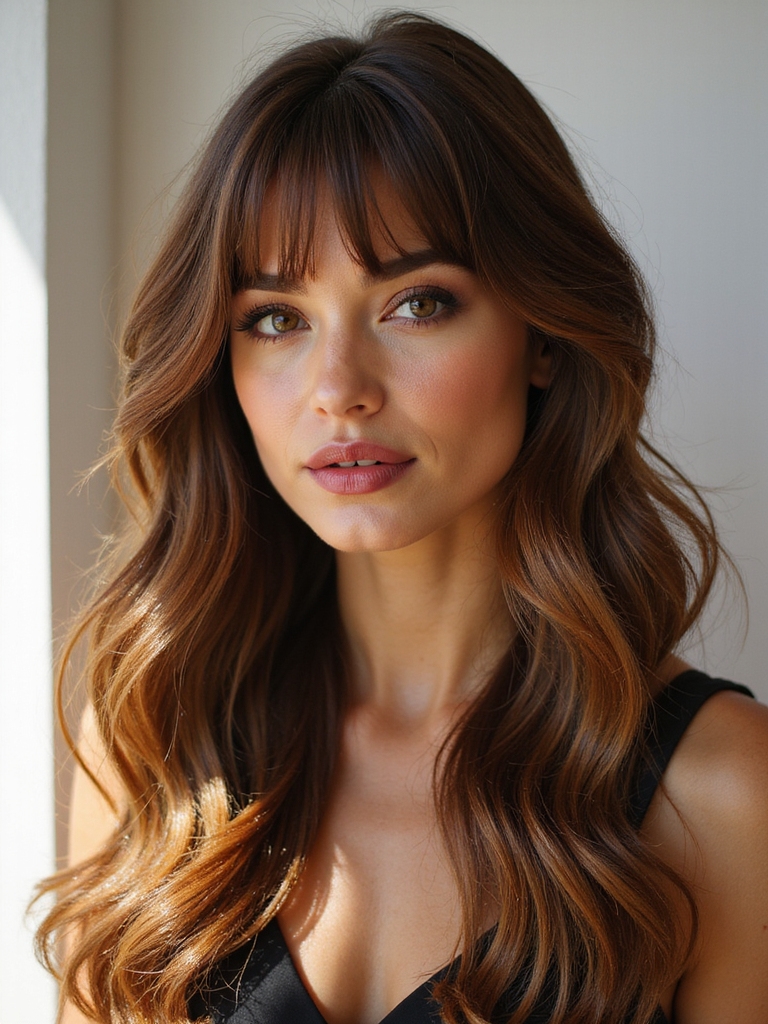
On long wavy hair, a subtle swoopy fringe adds shape at the front without giving up any length. The bangs sweep softly to the sides and blend into long layers, so you get the face-framing benefit while keeping all your length. It is the lowest-risk way for long-haired wavies to try a fringe.
Long layers give the wave somewhere to move and keep the length from dragging the waves flat. The swoopy fringe ties the front into the rest, and because it is on the longer side, it is almost invisible to grow out.
- Keep the fringe long and swoopy so it blends into your layers.
- Add long layers so the waves do not fall heavy and flat.
- A light mousse scrunched in keeps the swoop defined.
👍Why Waves Love Curtain Bangs
- +The wave does the framing, so styling is minimal.
- +The shape parts and sweeps the way waves already fall.
- +Grows out softly into face-framing layers.
👎What to Watch For
- –Frizz and humidity need managing with the right products.
- –Must be cut dry, or the wave springs up too short.
- –Waves are uneven, so the cut has to suit the wavest pieces.
Curly-Wavy Hybrids With Airy Curtain Bangs
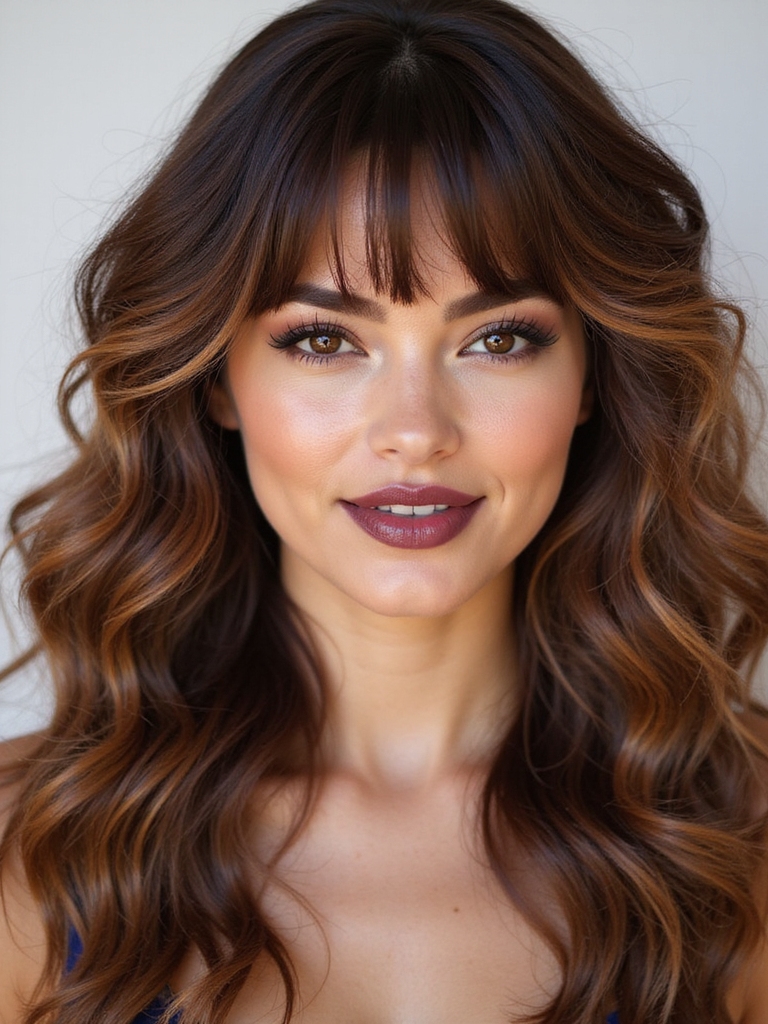
Plenty of people sit between wavy and curly, with a wave that loops in some spots and relaxes in others. For this hybrid texture, airy curtain bangs that follow the most curl-prone pieces look the most natural. The fringe follows whatever spring you have, with no forced uniform shape.
When Your Wave Leans Curly
For the cut and the product, treat this texture more like a curl than a wave. A dry cut matters here because the curlier pieces spring up, and a light gel or custard gives cleaner definition than a thin cream would.
The payoff is a fringe that looks alive and moves with your real texture. If your hair leans more curl than wave, our curtain bangs curly hair guide has the full method for the curlier end.
A Soft, Off-Center Curved Part
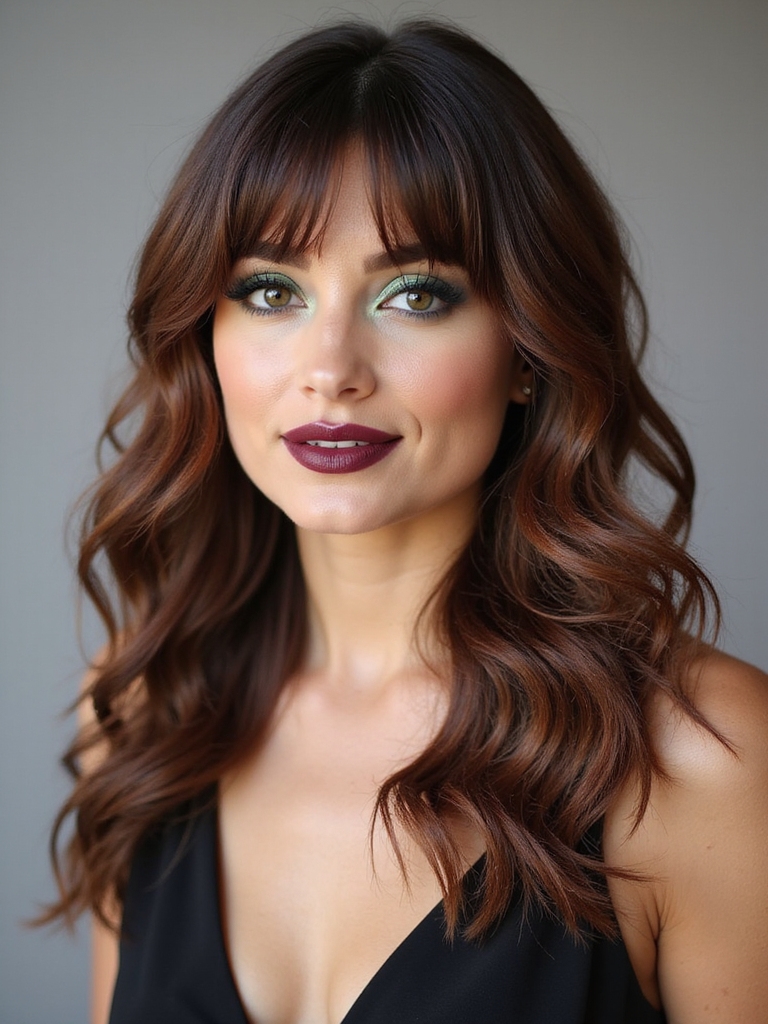
The part is a free styling tool, and for wavy fringe a soft, off-center curved part flatters more than a stark middle one. Shifting the part slightly off-center and curving it adds root lift and a natural asymmetry that suits the irregularity of waves, so the fringe falls with soft movement across the part.
A curved part also follows the way waves grow, which keeps the front pieces from clumping into a hard line down the middle. It is a small change that makes a wavy fringe look intentional.
Set the part while the hair is damp so it dries in place. My clients are always surprised how much a half-inch shift in the part changes the whole frame around their face.
“When a wavy client tells me their old bangs never sat right, the cause is almost always a wet cut. In my chair, I rough-dry the front first and refine the length in the natural wave, because that is the only way to know where the fringe will actually land once she walks out and it dries.”
Blow-Dry for Lifted, Airy Bangs
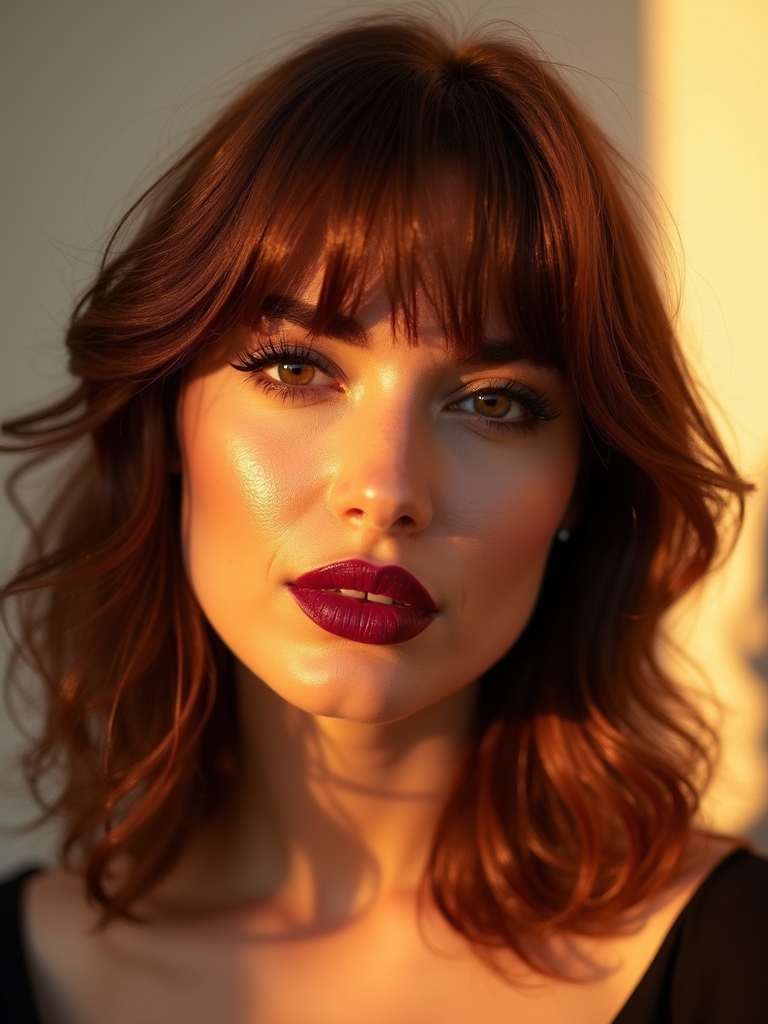
When you do want a more polished finish, a quick round-brush blow-dry gives wavy curtain bangs lift and a clean sweep. Dry the fringe forward first to build root volume, then split and sweep it back at the last second so it bends away from the face with body. The whole thing takes about two minutes.
Keep the heat moderate and always use a heat protectant, because the fringe takes more heat than any other section since you style it daily. A cool-shot blast at the end sets the bend so it holds, even on waves that tend to fall.
Heatless Air-Drying for Natural Bounce
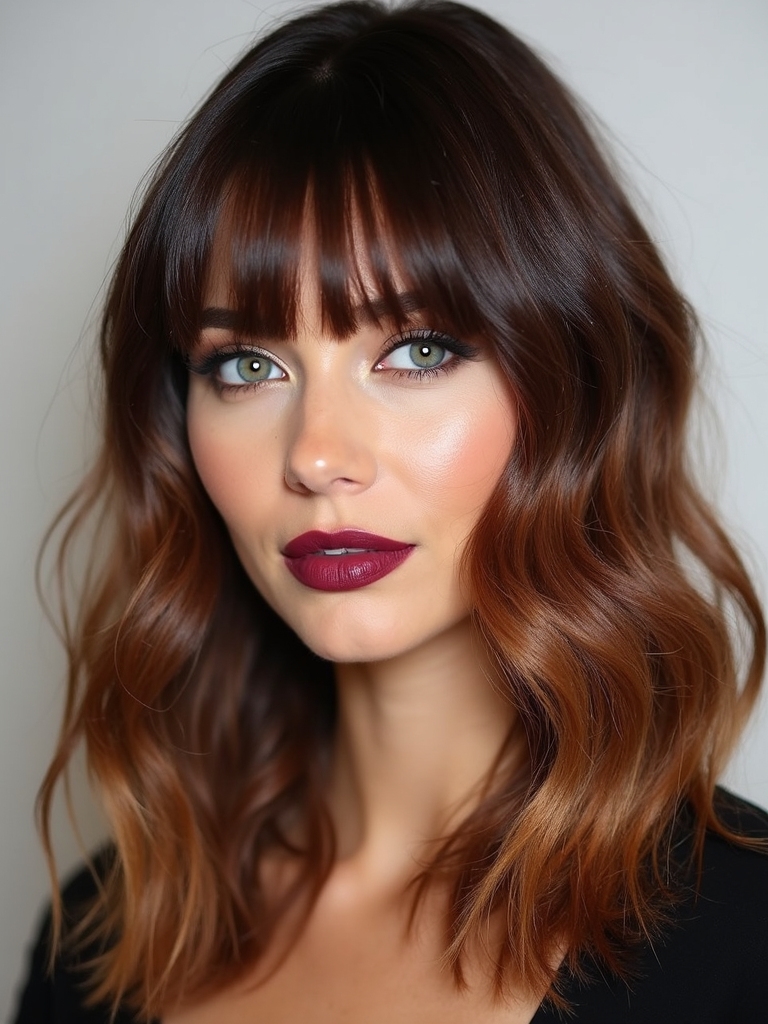
For most wavy people, the best finish is no heat at all, since air-drying preserves the natural bounce and keeps the hair healthier. The method is simple but strict: product on soaking-wet bangs, shape the part, and then do not touch them until they are completely dry. Every touch lifts the cuticle and brings frizz.
Plopping helps the front along: wrap the damp fringe up inside a soft cotton tee, leave it bundled there for about a quarter of an hour, then unwrap and let the rest of the drying happen on its own.
Once dry, scrunch out any product cast and finger-separate the pieces. That hands-off discipline is the single biggest thing standing between you and a frizzy fringe, and it costs nothing but patience.
Products for Airy Texture and Lightweight Hold
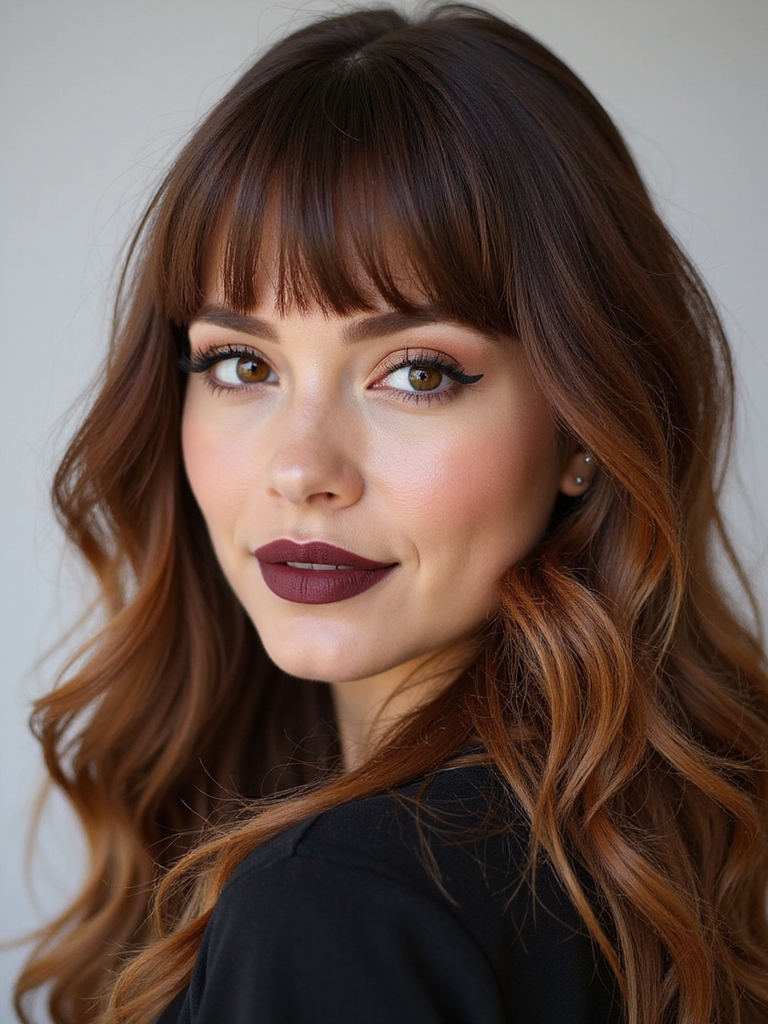
Product choice makes or breaks wavy fringe, and the rule is light. Heavy creams and butters weigh waves down and pull the fringe flat, so the front of your hair wants the lightest version of whatever you use, applied with a sparing hand. The goal is definition and a soft hold, not a coating.
A light mousse, a sea-salt spray, or a thin styling cream are the workhorses for waves. Whatever you reach for, put the smallest amount on the fringe, because it is the section most likely to look greasy and droop.
- Light mousse or salt spray for airy, defined waves.
- Keep heavy butters and oils off the fringe entirely.
- Use about half the product on the bangs that you use elsewhere.
Frizz Control and Humidity-Proof Waves
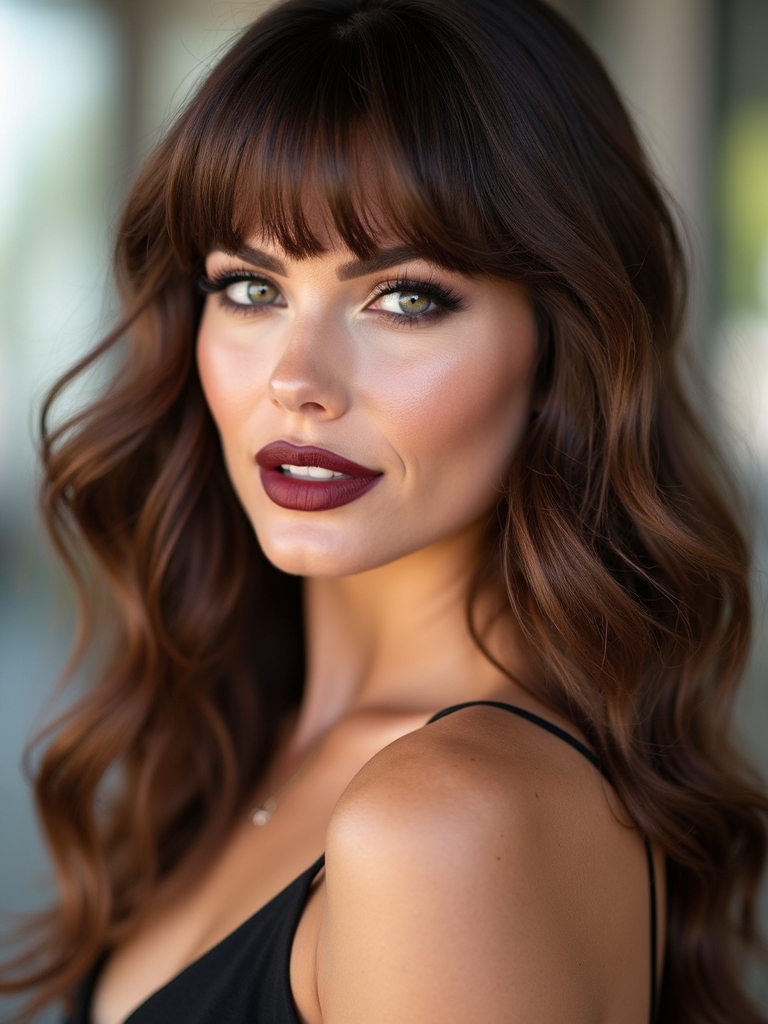
Humidity is the wavy fringe’s natural enemy, turning a clean sweep into a halo of frizz by midday. Beating it is less about one miracle product and more about a sequence that seals the cuticle. Follow this order on wash day.
- Start with a smoothing or anti-humidity leave-in on soaking-wet hair.
- Layer your styling product over it while the hair is still dripping.
- Dry fully without touching, then seal with a drop of light oil or serum.
- On humid days, finish with an anti-frizz mist made for the cuticle.
Strategic Trims for a Styled Grow-Out
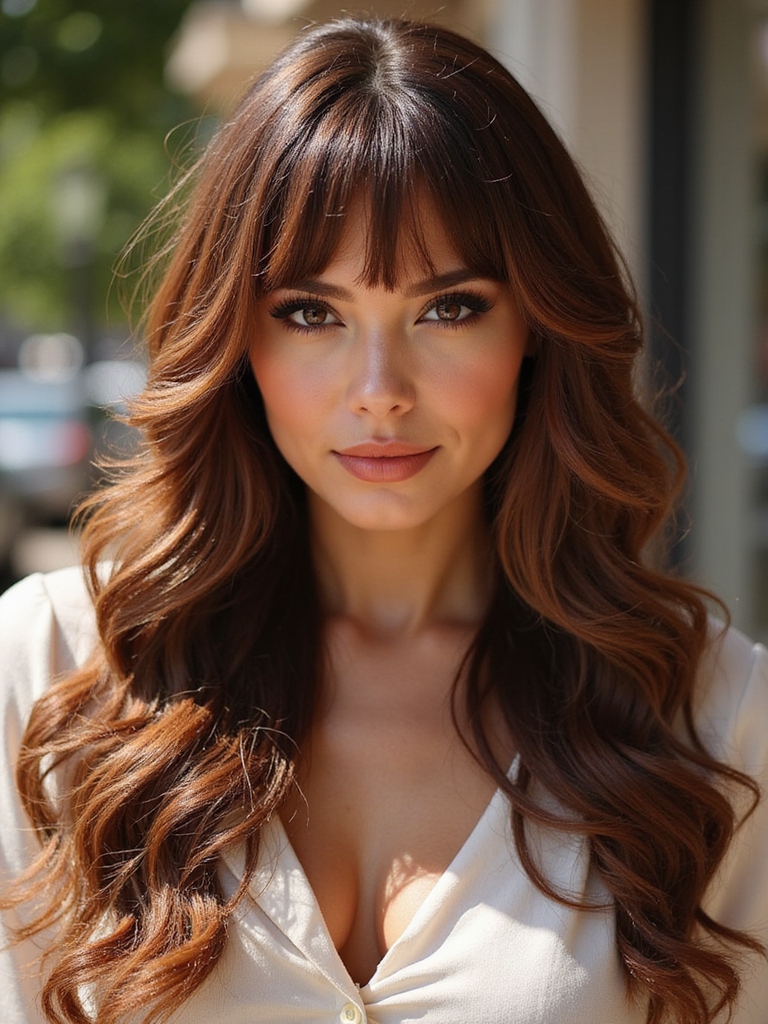
Curtain bangs are the easiest fringe to grow out, and a few strategic trims keep the process looking deliberate the whole way. A stylist trims and blends the bangs into your face-framing layers as they lengthen, so they never just hang into your eyes and each stage looks like a choice.
- Book a fringe-blending trim about once every six weeks during grow-out.
- Have the bangs angled into your layers so there is no hard step.
- Push through the eye-skimming stage with a side sweep or a clip.
Curtain Bangs Cut Into Layers
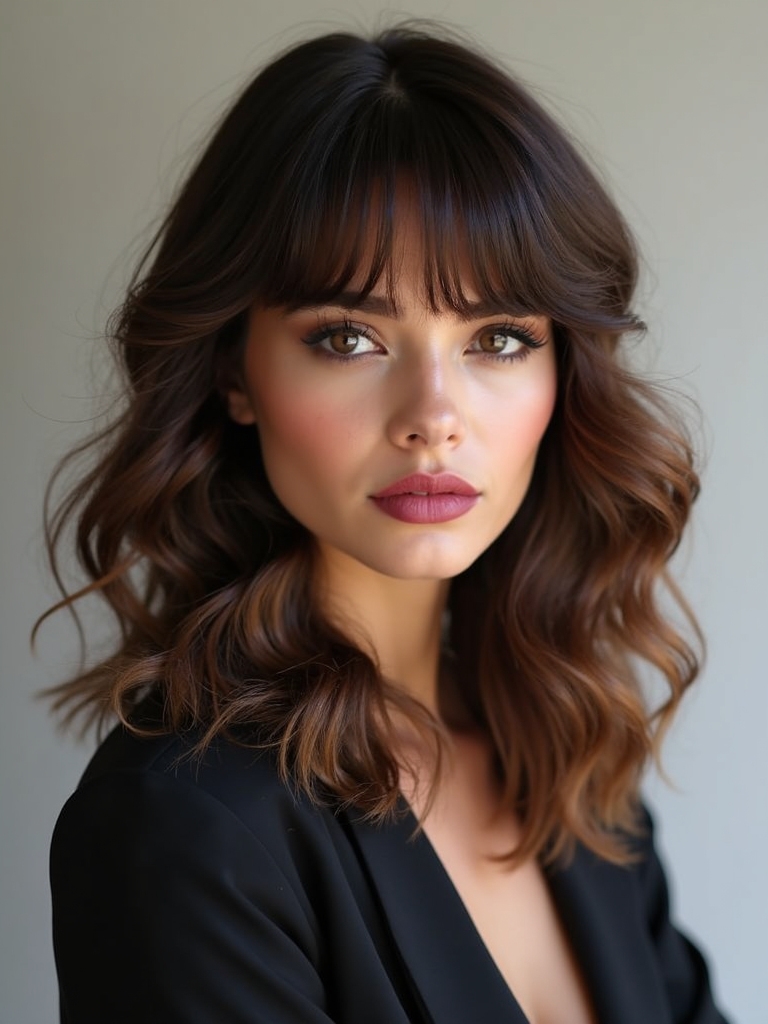
The layers behind a wavy fringe matter as much as the fringe itself. Cutting the curtain bangs to flow directly into face-framing layers means there is no visible start and stop, so the front of your hair reads as one continuous, moving frame, with no bangs stuck on the front.
On wavy hair, connected layers also distribute the wave so no single section looks heavier than the rest. The fringe becomes the shortest layer in a graduated frame, which is what gives that expensive, grown-in look.
This is worth raising specifically in the consultation. Ask for the bangs to be connected to your layers, because a fringe cut as a separate block is the thing that makes waves look choppy and disconnected.
Regular Micro-Trims Between Cuts
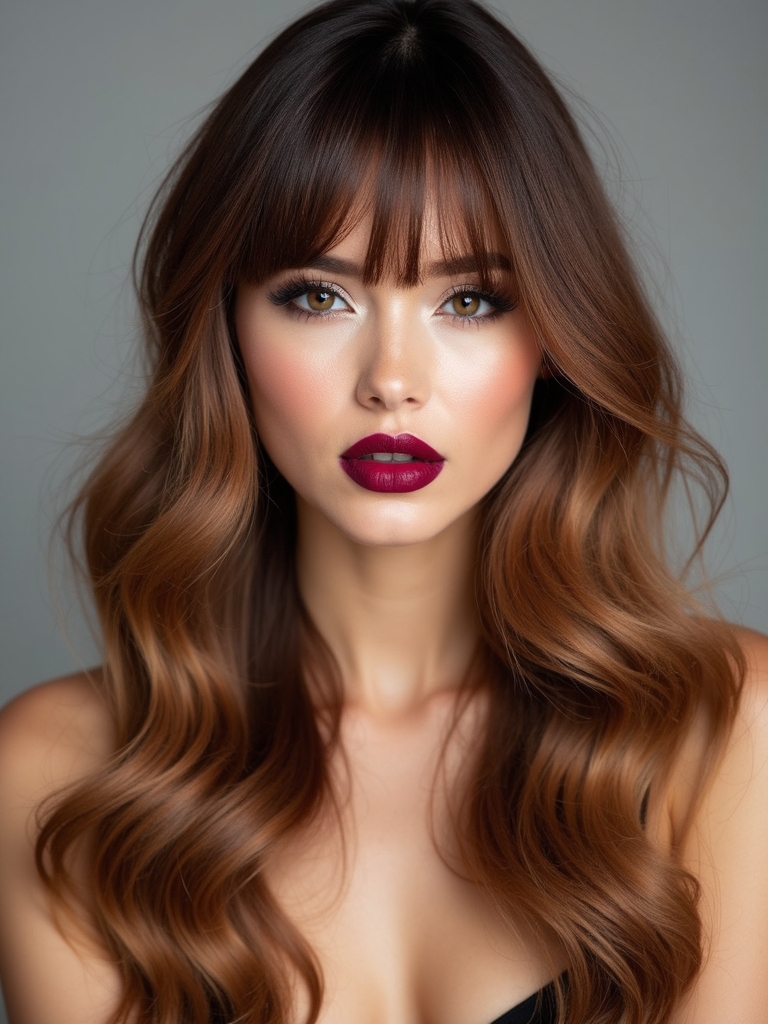
Between full cuts, small and regular beats big and occasional for keeping wavy curtain bangs fresh. A micro-trim on just the longest front pieces stops the sweep drooping into your eyes and keeps the shape crisp, and it is a quick, cheap visit rather than a whole appointment.
- A fringe-only trim runs about $15-40, far less than a full cut.
- Most wavy fringes want it every six to ten weeks.
- If you trim at home, do it dry and styled, taking almost nothing.
Common Mistakes to Avoid With Wavy Bangs
The mistake I see most is cutting wavy fringe wet and to the perfect length, only for it to spring up above the brow once it dries. Waves shrink, less than curls but enough to matter, so the fringe must be cut dry or checked dry before you leave the chair. If a stylist reaches for a flat iron to set the length, that is a red flag worth questioning.
The second mistake is over-conditioning the front. Heavy products and rich masks weigh wavy fringe down until it falls limp and greasy, so keep the rich stuff on your lengths and treat the bangs with a light hand. Get those two things right and wavy curtain bangs are one of the lowest-effort fringes there is. For more by length, our curtain bangs medium hair and wavy hair with bangs guides each cover a different feel.
Wavy Curtain Bangs Questions, Answered
?Should wavy curtain bangs be cut wet or dry?
Dry, or at minimum refined dry. Waves spring up shorter than they hang when wet, so a fringe cut to the perfect length wet will dry too short. The best stylists remove the bulk wet, then perfect the length in the natural wave.
?How do I stop my wavy bangs from frizzing?
Seal the cuticle in steps: an anti-humidity leave-in on soaking-wet hair, your styling product over it, a hands-off dry, then a drop of light oil to finish. Touching the fringe while it dries is the single biggest cause of frizz.
?Why do my wavy bangs fall flat or look stringy?
Usually too much heavy product, or product applied to hair that was too dry. Use a light mousse or salt spray on soaking-wet bangs, and only about half what you use on your lengths, since the fringe weighs down fastest.
?How often do wavy curtain bangs need trimming?
About once every six to ten weeks, and a fringe-only trim runs around $15-40. Mid-grow-out, a blending trim roughly once a month and a half keeps the bangs flowing into your layers so each stage looks styled.
Let the Wave Lead
Wavy hair spends a lot of its life being told to pick a side, straight or curly, when its in-between nature is its best feature. Curtain bangs are the fringe that finally rewards it, sweeping and parting the way a wave already moves, asking for one product and a hands-off dry rather than a daily fight.
Cut it dry, keep the products light, manage the frizz, and let the wave do the framing. Done that way, wavy curtain bangs are not the high-maintenance gamble people fear; they are the easiest good decision your hair has been waiting for.
More to Browse