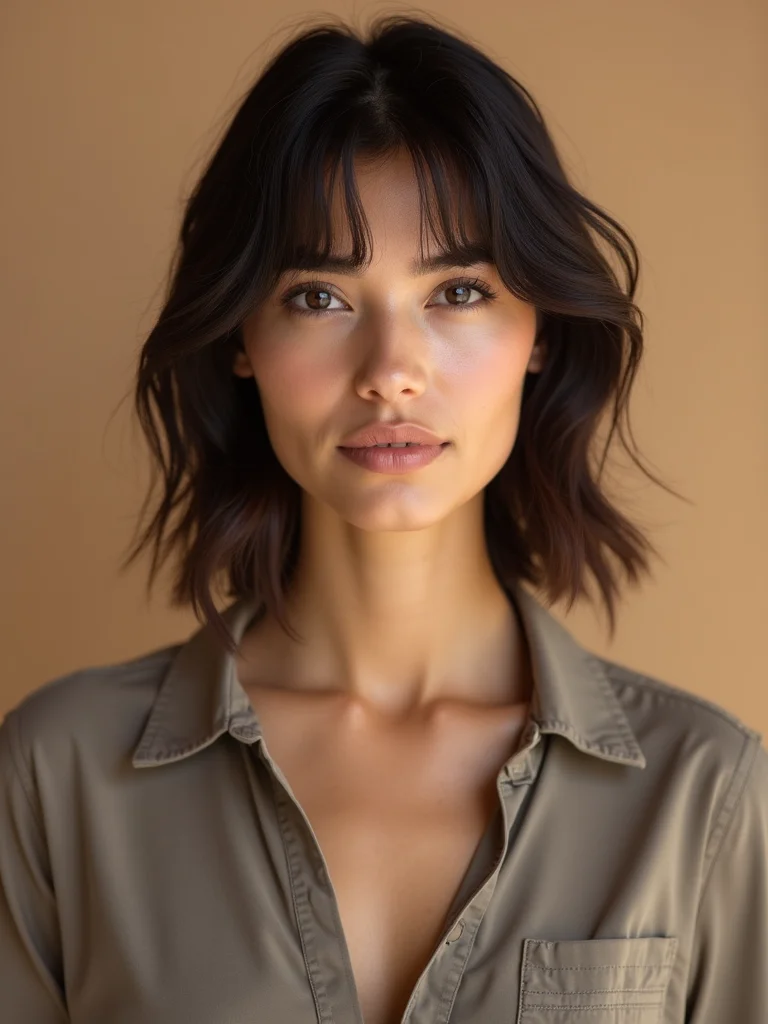
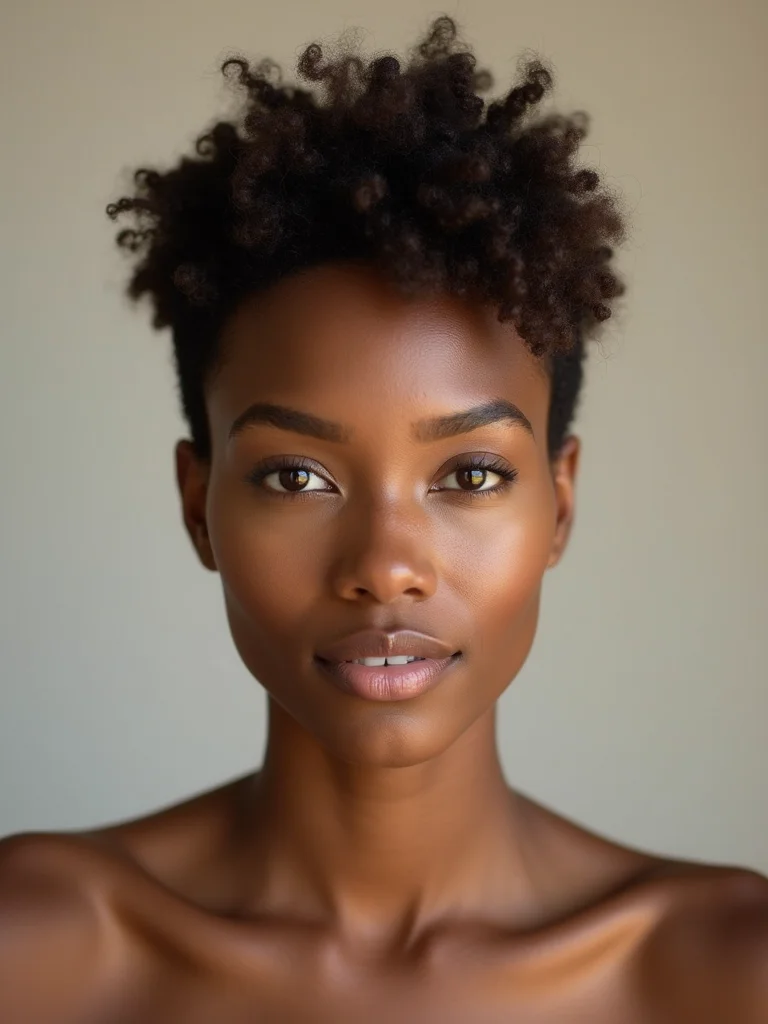
Yearbook photos from the mid-nineties keep resurfacing online, and the reaction has shifted. What once looked hopelessly dated, the flicked-out ends, the supermodel blowout volume, is exactly the layered 90s haircut texture people are chasing in the chair again.
Fifteen versions of that decade’s layered vocabulary follow below, from the iconic flick to the grungier wolf cut to flipped-out tips, with the styling technique and honest upkeep behind each one.
The Decade’s Layering, Mapped
- The nineties ran on movement more than length: flicks, blowouts, and shag layers all trace back to the same round-brush technique.
- The flick lives in the blow-dry, not just the cut. A round brush turning the ends outward is the signature move behind most looks here.
- Most versions are worn softer today than the originals, which is what keeps the whole look feeling current.
The Flicked-Out Layers That Defined the Decade

No single cut defines this era quite like the flicked style that swept salons in the mid-nineties, layers shaped to turn away from the face in soft, bouncy waves. The version showing up in salons now sits a little softer than the original, but the bones are identical.
- Graduated layers cut shorter toward the face are what create the flick.
- Each section blow-dries over a round brush, turning the ends outward.
- A cool-shot blast sets the flick so it holds through the day.
Bouncy Blowout Layers

This era invented the modern blowout, and bouncy layers built for volume capture that big, glossy, swinging body. Long layers blow-dried over a round brush create the kind of movement that filled shampoo commercials for a decade straight.
The volume starts at the root and carries all the way down the layers, so the whole shape moves together from crown to end.
The catch is time: a round brush and a cool-shot blast are what keep the bounce going, and skipping either step lets the volume drop by midday.
Recreating the flick at home, step by step:
1Section
Work in two-inch sections from the crown down, clipping the rest out of the way.
2Wrap and turn
Wrap each section around the brush barrel, rotating the ends outward as you dry.
3Cool and release
Hit each section with a blast of cool air before releasing it to lock the shape.
Face-Framing Flicks, Without the Full Commitment

Face-framing flicks take just the front layers and turn them outward, adding the era’s signature move only where it catches the cheekbones. It’s a quieter nod to the decade than a full flicked cut, and the gentlest way to test the trend.
A flat iron or round brush flicks just the framing pieces outward, a two-minute job at most. Everything behind those pieces stays untouched, which is what keeps this version low-commitment.
The Wispy Butterfly Cut

The butterfly cut is this era’s most direct modern descendant, blending shorter face-framing layers with longer lengths for full, winged volume. The shorter top layers build the bounce while the longer ones protect the length underneath.
A round brush curving the top layers back and the lengths under sets the winged effect. It’s the version most requested by anyone who wants nineties volume without cutting off length they’ve spent years growing.
“Most stylists point to one detail that separates a good flick from a flat one: the round brush has to turn all the way outward at the very end of the stroke, not just curve under. That last quarter-turn is where the flip actually happens.”
The Grungier Side: a Textured Wolf Cut

Not all nineties hair was glossy and blow-dried. The decade had a rougher, shaggier side too, and the wolf cut channels exactly that: heavily layered and textured, blending shag and mullet into rumpled, rebellious volume.
Where the flicked blowout was polished, this version is its undone cousin, built entirely around texture and attitude. A texture spray worked through with fingers builds the deliberately messy volume; no round brush required here.
Shaggy, Piecey Layers

Shaggy piecey layers bring the rumpled, separated side of the era’s texture, the ends broken into pieces rather than blended smooth. It’s cooler and more relaxed than the polished blowout looks, all easy movement.
The piecey ends carry the whole look, so the styling routine leans on fingers and a little texture spray to keep every piece separated.
- Best on hair with some natural movement or a coarser texture already.
- Forgiving between washes, since a rumpled look is the actual goal.
- A matte paste worked through dry hair defines the separation.
📋Before You Ask for Any of These Looks
- ✓Bring a specific reference photo, since ‘nineties layers’ alone covers a wide range of looks.
- ✓Say whether you lean toward the polished blowout side or the grungier, shaggier side.
- ✓Ask how the layering will affect your specific length and density before committing.
Long Layers That Keep the Volume

Long layers built for volume keep every inch of length while still building the big, bouncy body this decade loved. The layers run all the way through the length, so long hair swings with real body down to the ends.
- Ask specifically for layers cut through the length, not just at the ends.
- Blow-dry over a round brush, curving the ends under as you go.
- Finish upside down with a blast of cool air for the final lift.
A Collarbone-Length Layered Lob

A collarbone-length version brings this era’s movement to a far more manageable length, the layers adding bounce and the ends often flicked out for a period touch. It’s the practical, everyday take on the whole look.
Why This Length Wins on Busy Mornings
It flatters more face shapes than the longer versions and dries in a fraction of the time, which is most of why it works for daily life rather than special occasions.
A round brush flicking the ends out adds the retro detail in about two minutes. Keeping the layers crisp at this length usually costs about the same as a standard haircut, often under $70 at most salons, with a trim roughly every two to three months to stop them blurring together. The layered haircuts for medium length hair guide covers other lengths in this same middle range.
Feathered Ends for a Softer Take

Feathered ends revive the softer, airier layering that ran quietly through the decade alongside all the big blowout volume. Ends get thinned and feathered into light, separated pieces.
Where This Style Struggles
It’s the romantic read on the era, gentle movement without much weight, better suited to anyone who remembers the decade’s softer side more than its supermodel volume.
Feathering removes bulk permanently, so it isn’t the choice for anyone who wants to protect maximum density. A light texture spray separates the pieces once dry, and the feathered layered hairstyles guide covers the technique in more depth.
Curtain Bangs, Paired With Layers

Curtain bangs parted in the center and swept to each side are one of this decade’s defining pairings with layered hair, the fringe framing the face while the layers underneath add all the movement.
Why This Combination Never Really Left
The pairing works because curtain bangs flatter a wide range of face shapes and blend into the surrounding layers as they grow, with no hard line to manage along the way.
A round-brush bend gives the bangs the period sweep. It’s one of the easier entry points into this whole look for anyone starting from a blunt fringe or none at all.
Choppy Layers for Fine Hair

Fine hair gains the most from this decade’s choppy layering, which builds the appearance of texture and body that thin strands don’t have naturally. Piecey, chopped ends create the impression of fullness.
Where the Trick Actually Works
Keeping the chopping soft is what keeps the ends from going sparse; heavier or blunter chopping on fine hair tends to backfire, thinning things out instead of adding body.
A dusting of texture product worked through with fingers finishes it. The choppy layered haircuts guide covers the technique on hair of any density.
Defined, Bouncy Layered Curls
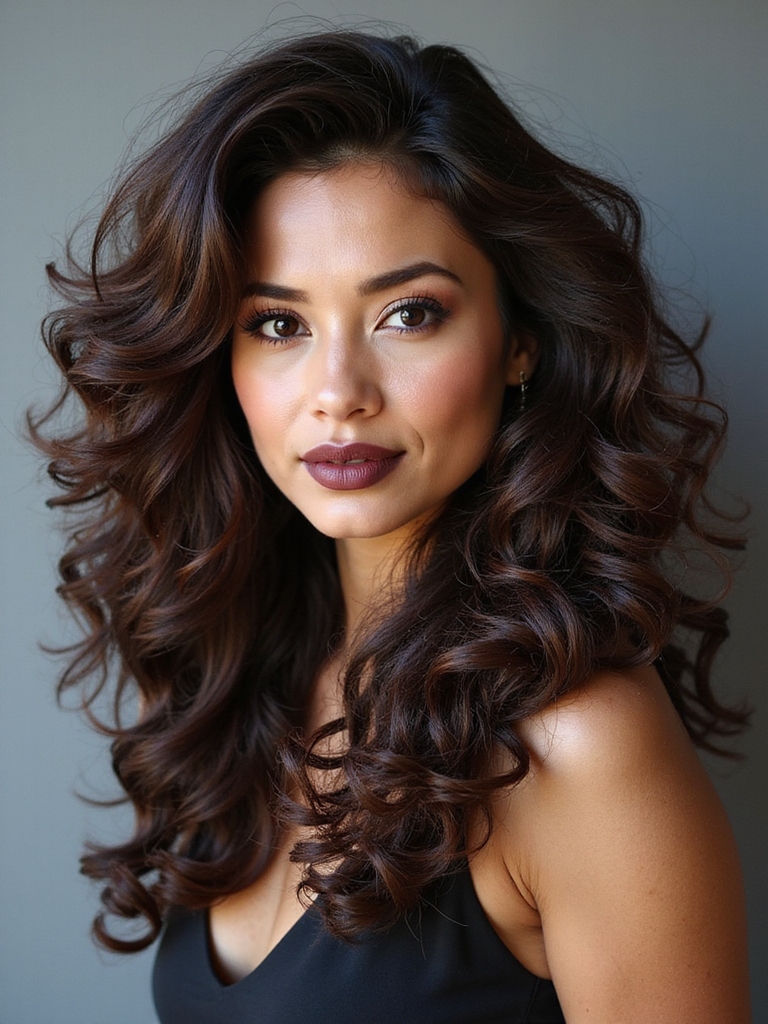
Curly hair had its own version of this decade’s volume, layers removing bulk so curls spring up into a full, rounded shape with real height. It’s a look built entirely around lift.
Most curl specialists cut this shape while it’s fully dry, working spiral by spiral, so the layers actually suit how each curl falls once finished.
- Cutting dry lets the layers fall true to the natural curl pattern.
- Diffusing on low heat builds round, bouncy volume without frizz.
- A curl cream defines the shape without adding crunch.
The layers do the lifting; the diffuser just gives them somewhere to go.
Volume Built Right Into the Crown

Volume at the crown was central to this era’s whole silhouette, and crown-specific layers build that lift directly into the cut rather than relying on backcombing or product. The layers lift the top so the entire shape carries body.
- Ask for crown layers cut specifically to lift the roots, not just thin the ends.
- Blow-dry the crown section with a round brush, lifting straight up at the root.
- Set the height with a cool-shot blast before releasing the section.
Flipped-Out Tips for a Playful Finish

Flipping just the very tips outward is the most lighthearted, unmistakably nineties detail on this list, the ends turned up and out for a quick retro flick. It works on a lob or longer layers alike and adds instant period character.
A flat iron or round brush turned outward at the very ends creates the flip, set with a flexible-hold spray. It’s a small, playful detail rather than a full commitment to the look.
The Layered Pixie, and Its Grow-Out Stage

This decade also loved a short, layered crop, along with the in-between grow-out stages that followed it. A layered pixie and its longer grow-out both carry the era’s piecey texture and attitude, just at different lengths.
- Keeping the layers piecey gives every grow-out stage its own shape instead of an awkward phase.
- A little texture product defines individual pieces as the length changes.
- The layered haircuts for long hair guide picks up once the grow-out reaches real length.
The Bounce Is Back
This decade understood something simple: hair looks alive when it actually moves. Layers, volume, and that signature outward flick gave it a whole bounce, and after years of sleek, flat styling, that movement is unmistakably back.
Wear any of these a little softer than the original, and remember the flick lives in the blow-dry as much as in the cut itself. So which side of the decade fits you better: the polished supermodel bounce, or the rougher shag?
More to Browse