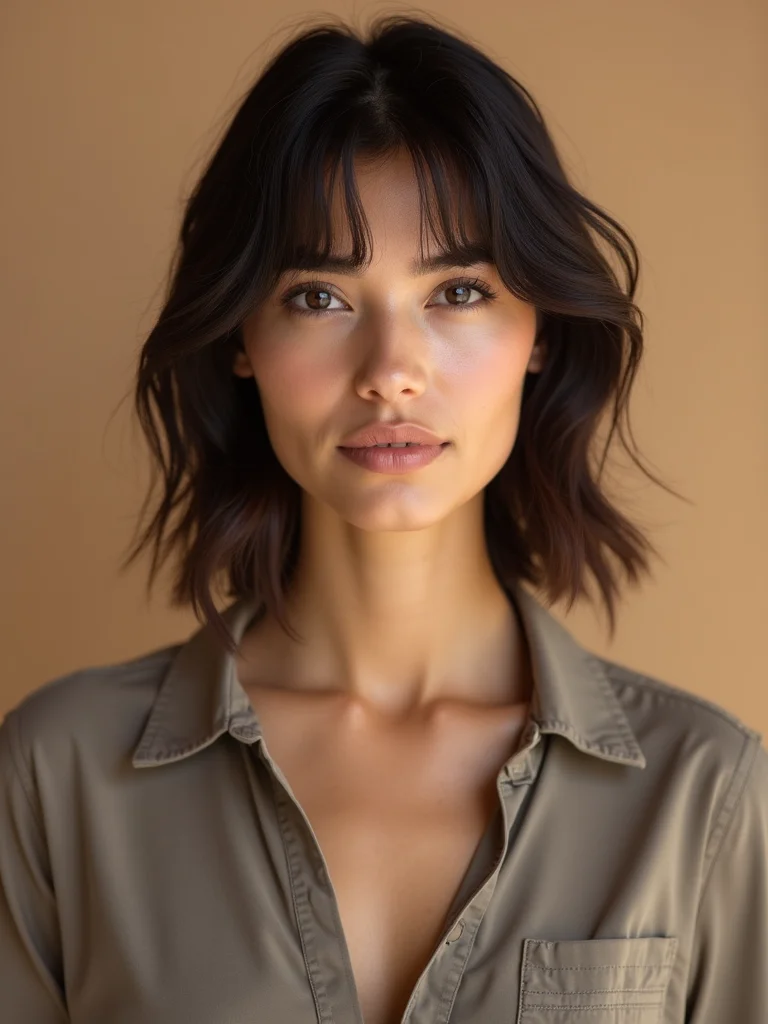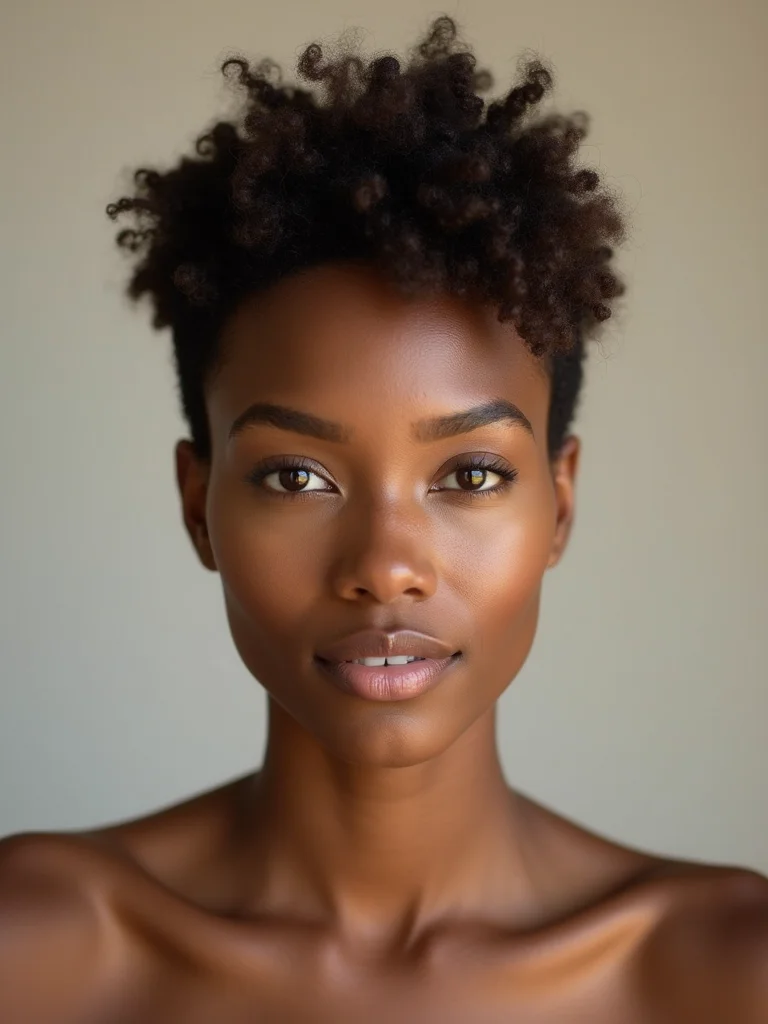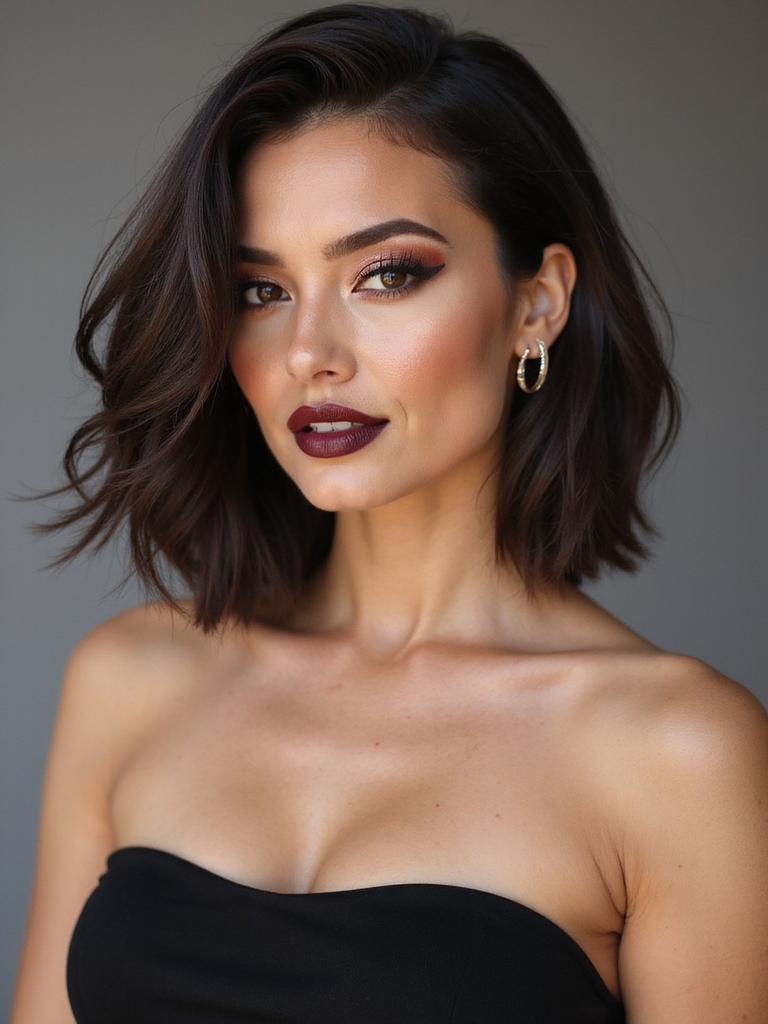
The weight shows up first at the ends: hair that used to swing just hangs there instead, heavier by the month with nothing visibly wrong. Shoulder-length layers solve that exact problem. Keep the length, remove the weight that’s been dragging on it for the last year or two.
What follows covers fifteen ways to make that trade, each one noting how much length it costs you and what you get back for it.
Going From Long to Shoulder-Length
Where should the layers start? Usually at or just above the shoulder line. That’s what keeps the ends from flipping out awkwardly the moment they hit your shoulders.
Does ‘shoulder-length’ mean the same spot for everyone? No. It typically spans collarbone to chin, and exactly where you land changes how much the layering can do.
What’s the real catch here? On hair grown out past a year or two, especially thick hair, the first cut removes more bulk than most people expect. Budget $50 to $110 for the cut depending on your market, and ask up front whether extra length or density carries a surcharge. Allow closer to an hour in the chair; debulking thick hair properly is slow work.
A Tousled Lob With Light Face-Framing
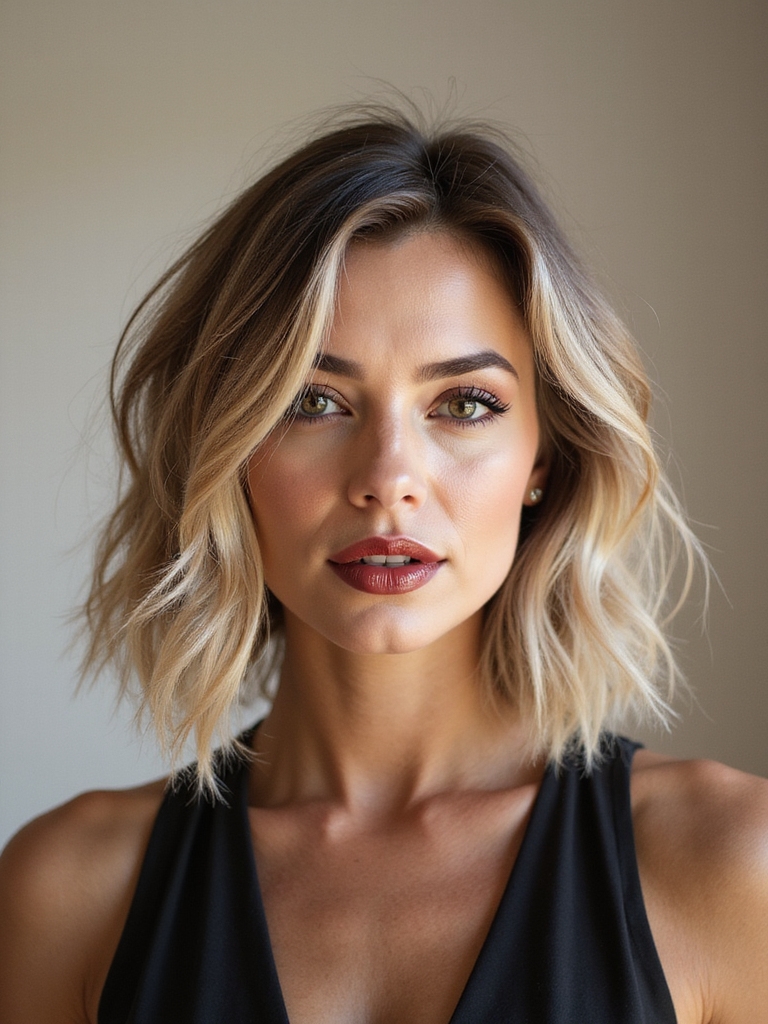
This is the entry point for anyone leaving long hair behind for the first time. It grazes the shoulders, keeps nearly all the length, and adds just enough face-framing to lift the whole shape. Nothing past those front pieces gets touched. I’ve had more than one client point to a photo like this and ask for ‘lighter,’ only to realize mid-consultation they actually wanted shorter.
Worth sorting out before the first snip. Scrunch a texture spray through damp hair and let it air-dry for the intended undone finish. Our layered shoulder-length hair guide rounds up several more low-commitment starting points like this one.
- The lowest-commitment way to test whether lighter hair suits you
- Grows out without a line, so skipping a trim costs you nothing
- Air-dries into shape most days, no brush required

An Airy, Feathered Shoulder-Length Cut
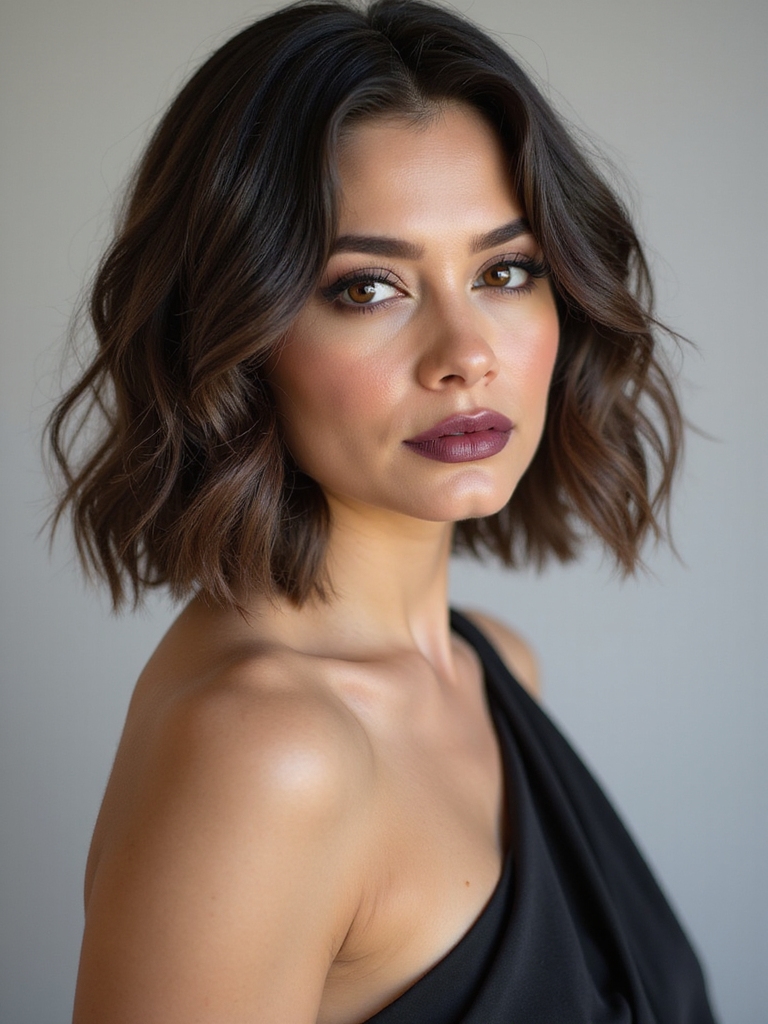
Feathered, airy layers turn shoulder-length hair light and full of motion, cut soft through the lengths so the hair actually swings with every turn of the head. It works especially well on square or angular face shapes, since the soft feathering softens a sharp jawline as it falls.
- Blow-drying with a brush brings out the feathering; air-drying instead gives a more relaxed, undone version
- The softest, most romantic option in this whole group
Before You Commit to Heavy Feathering
Feathering removes real weight from the ends. On hair that’s already fine, going too heavy here can leave the bottom looking wispy. Ask for it concentrated mid-shaft, with a lighter hand toward the very ends.
A Sleek, Layered Shoulder-Length Shag
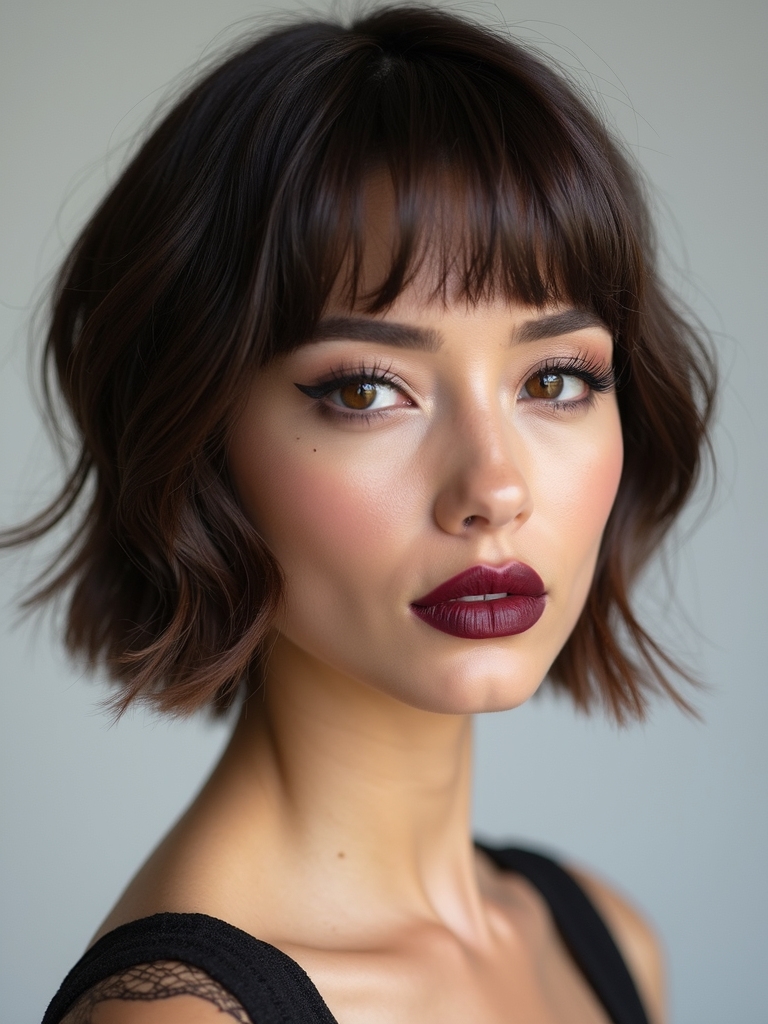
A shag brought down to shoulder length keeps its choppy, piece-y layering underneath, but the surface gets smoothed instead of left wild.
The Office-Friendly Shag
It suits medium to thick hair best, where there is enough weight for the choppy interior to register without the ends going wispy.
Smooth the surface with a round brush and let the layers move underneath on their own. That contrast is what makes the cut work in an office as easily as on a weekend.
Chin-to-Shoulder Graduated Layers
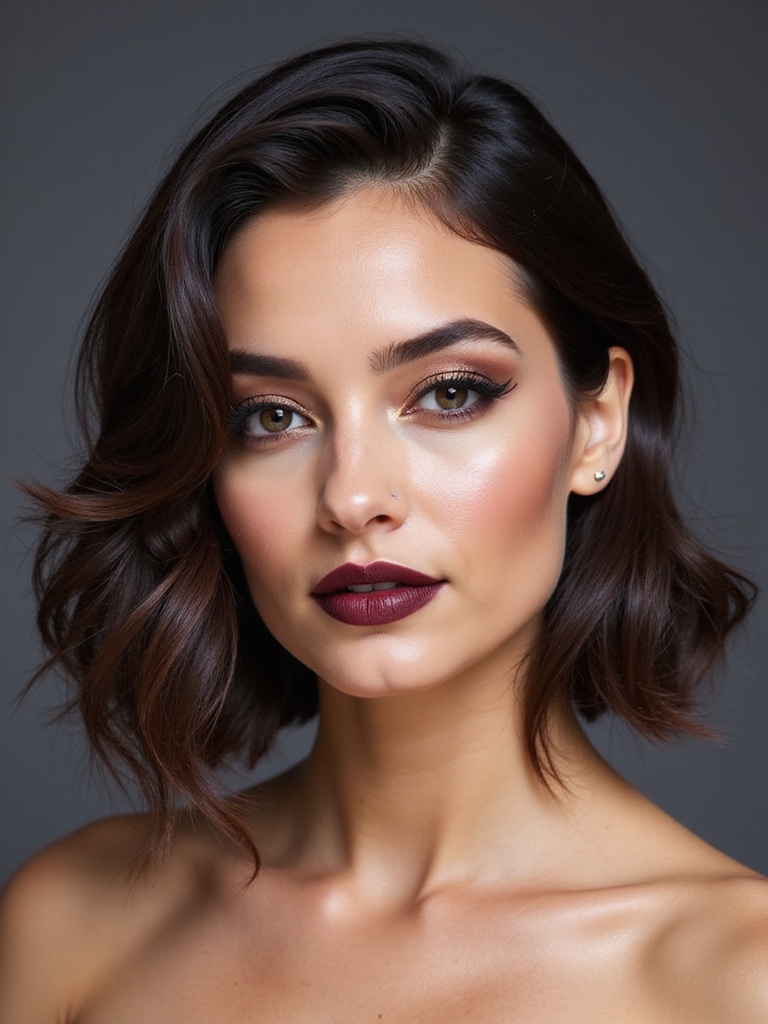
Graduated layers run from the chin down to the shoulders. They build soft, stacked movement. The shorter pieces near the chin lengthen gradually as they reach the shoulders, so the transition never reads as a hard line. Medium density is the sweet spot: too fine and the stacked ends lose substance, too thick and the graduation needs debulking underneath before it will sit flat.
- The graduation itself does the shaping, so it falls into place with minimal daily effort
- Holds its shape between trims longer than a fully blunt cut would
- Round-brush the chin-length pieces under so the graduation shows; skip that and it settles into one soft mass
📋Before You Go From Long to Shoulder-Length
- ✓Decide how much length you’re actually willing to lose
- ✓Bring at least two reference photos, not just one
- ✓Say the word ‘layers’ explicitly, not just ‘lighter’
- ✓Mention your natural texture and daily styling habits
- ✓Ask how often the shape needs a re-cut: plan on roughly every 8 to 12 weeks to keep it from growing shapeless
Textured Layers With Curtain Bangs
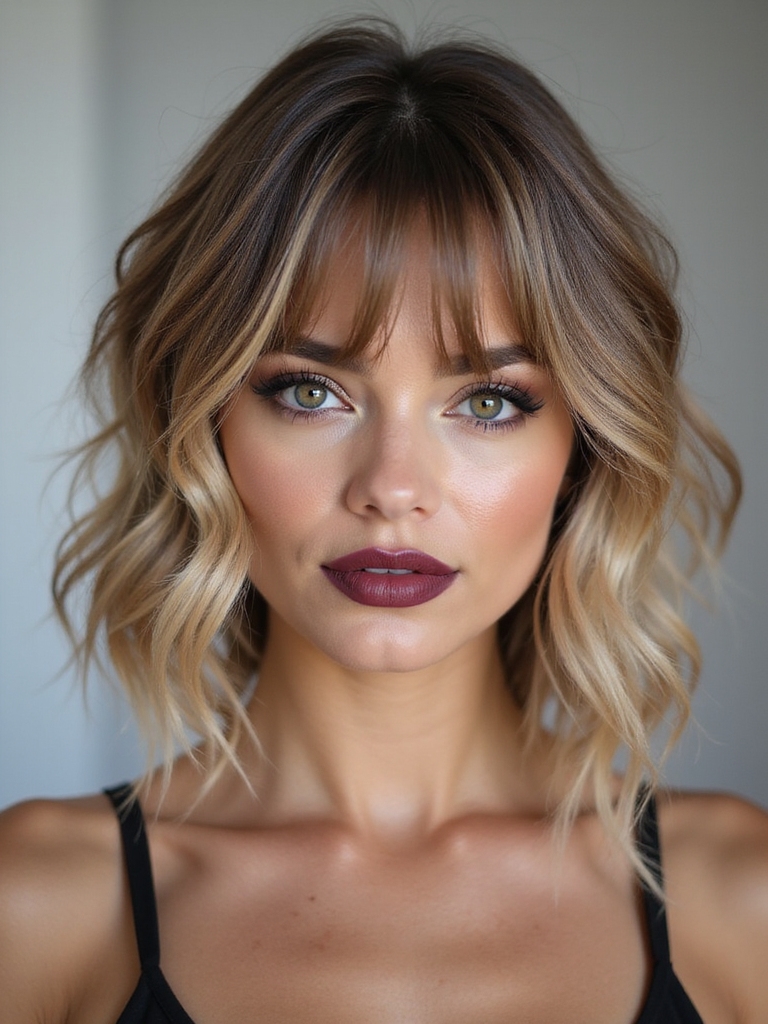
Curtain bangs added to textured shoulder-length layers frame the face immediately. The center-split fringe sweeps toward the cheeks while the layers add movement through everything below the chin.
What makes the pairing work is that both halves are cut to the same logic: the fringe is long enough to blend into the front layers rather than sitting on top of them as a separate feature. Ask for the shortest point to land at the outer brow, not the bridge of the nose, if you want it to stay wearable while it grows.
- Forgiving on most face shapes because you control where the fringe breaks
- Grows out gracefully into the surrounding layers, no hard stage
- Dry the bangs back and out with a round brush; scrunch texture through the rest
A Modern, Wolf-Inspired Shoulder Cut
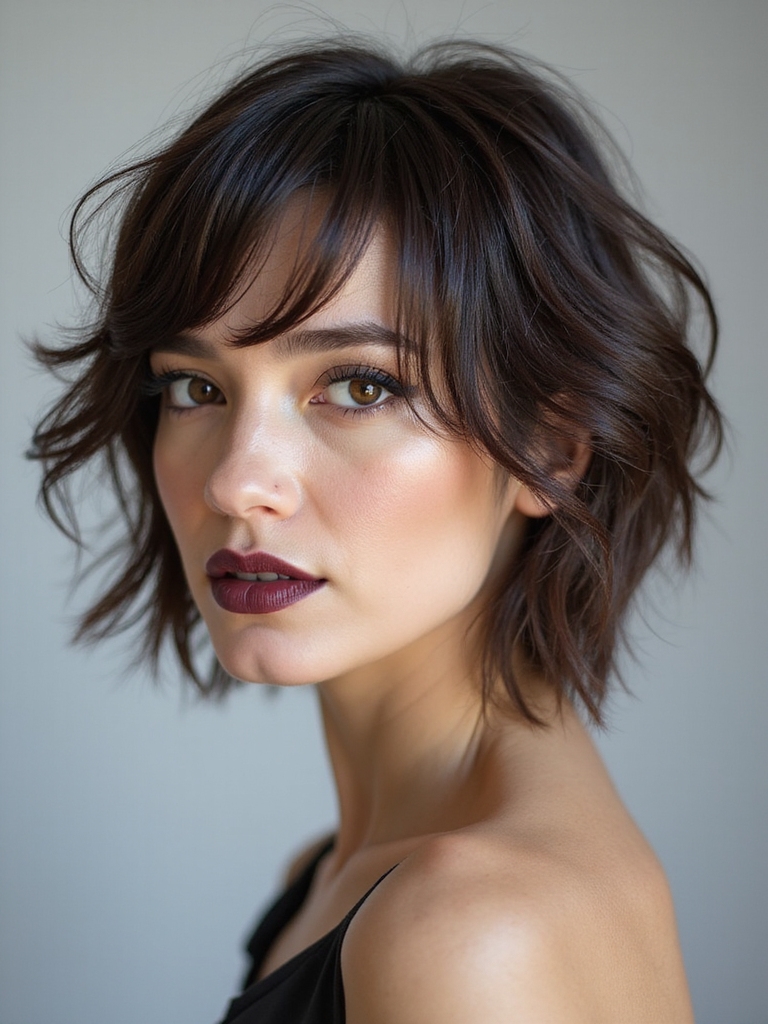
Bringing the wolf cut’s heavy crown layering down to shoulder length keeps more overall length than a true short wolf cut. The texture and attitude carry over regardless. It’s for someone who wants that energy without going truly short, or who isn’t quite ready to give up the length yet.
Style the crown with matte paste and let the lengths fall piece-y; it air-dries into shape with barely any effort involved. For more on this specific pairing, see our shoulder length wolf cut guide.
A Blunt Lob With Internal Layering
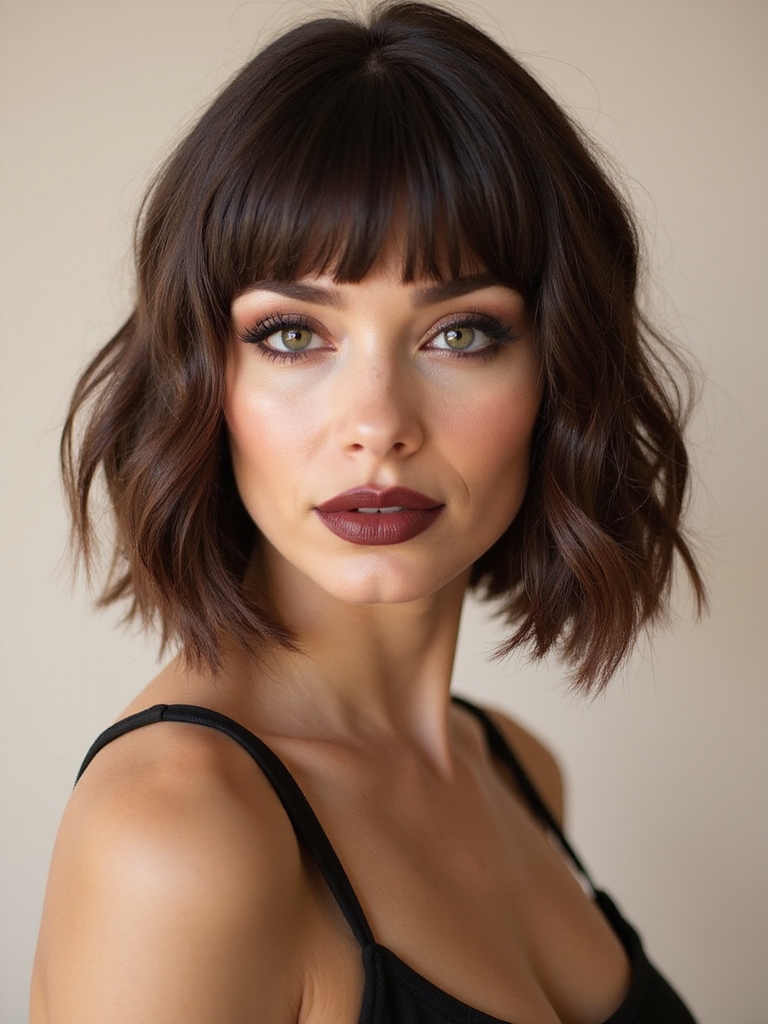
From the outside, this reads as one clean, shoulder-skimming line. Underneath is a different story. Internal layers do the work, keeping the perimeter crisp while the ends underneath still move.
It works best on medium-density hair looking for office-ready polish: enough structure to look deliberate, enough interior movement to avoid the stiff, one-length feel.
- Ask for it to be cut dry, so the stylist can see where the weight sits before removing any
- Pairs well with a low-maintenance blowout routine, since the internal layers do most of the shaping for you
Piecey Layers for Natural Waves
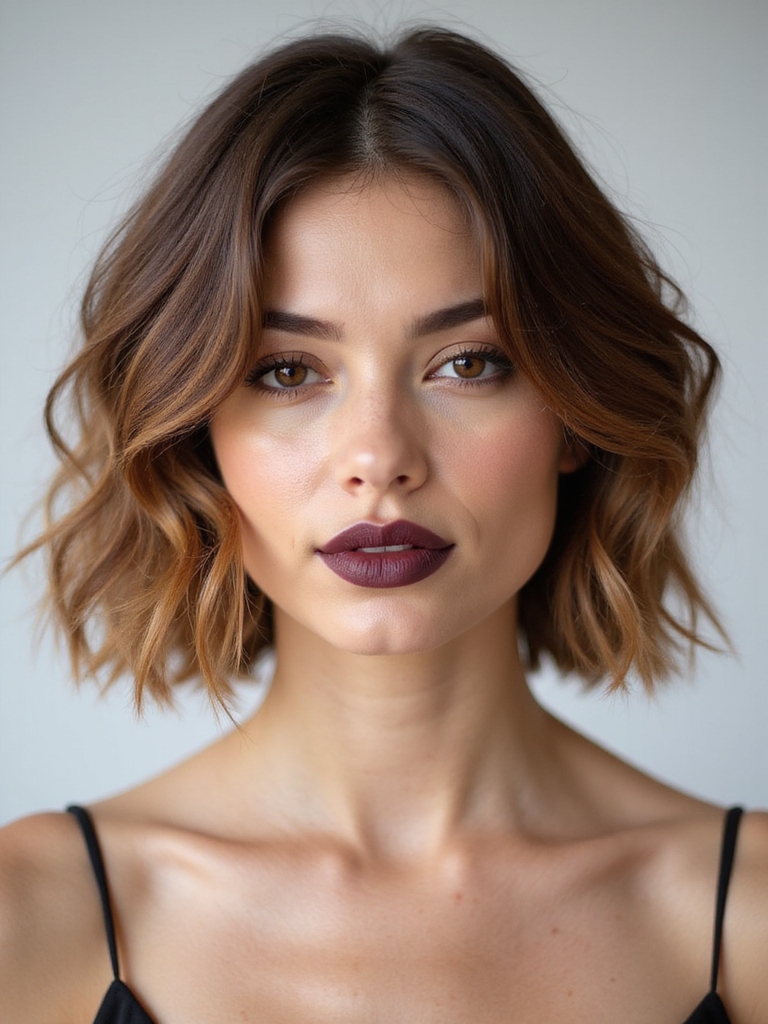
Natural waves and piece-y shoulder-length layers were made for each other. The layers break the waves into separated, defined pieces with real edges to catch.
The catch is over-thinning: waves that lose too much interior weight at once can look thin rather than textured for the first several weeks after the cut, before the ends settle into their new pattern. I’ve seen this exact regret show up around week three, when the pattern hasn’t fully caught up to the new shape yet. It always settles, but it helps to know that going in.
Scrunch a salt spray through damp hair and let it air-dry. The waves handle most of what’s left on their own.
A Soft U-Shape Shoulder Cut
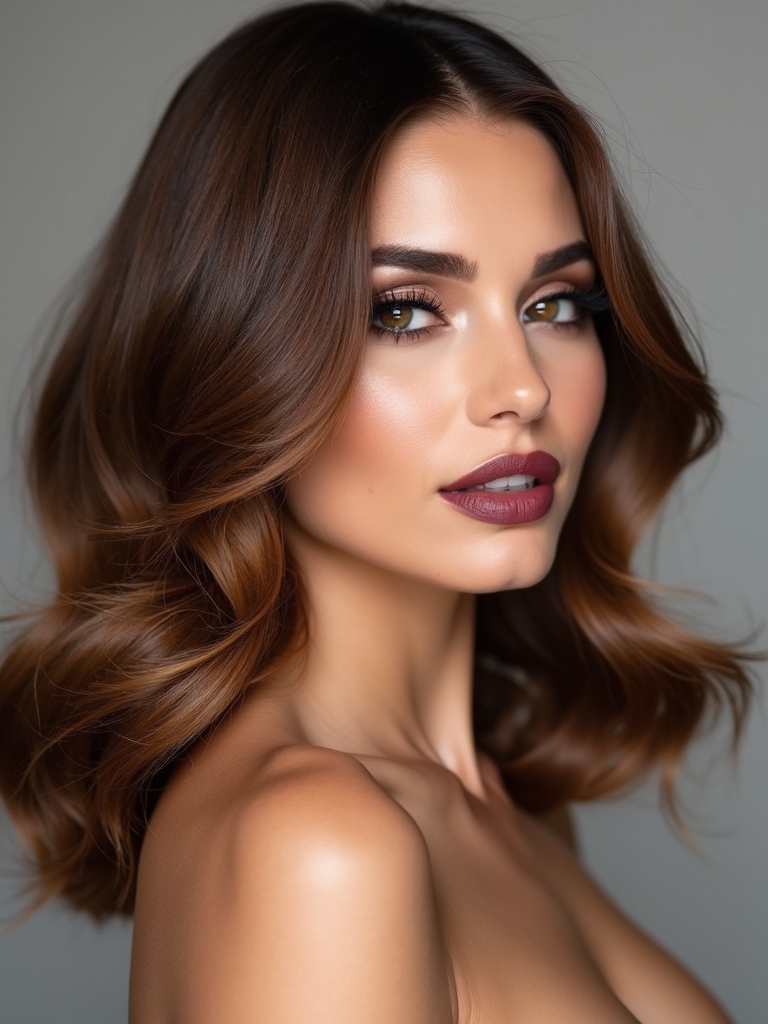
A soft U-shape leaves the back long in a gentle curve. Shorter front pieces swoop in around the face, rounding the bottom of the cut into a soft point. It keeps maximum length in back while still adding face-framing shape up front. It’s the closest thing on this list to a real length compromise.
Blow-dry the front sections toward your chin with a round brush for the most polished version of this shape. Left to air-dry, the same cut turns looser and a little less defined, but no less soft.
💡Getting the Swoop Right
Ask for the back corners to be rounded off rather than left square. That single detail is what separates a soft U from a blunt line or a hard V, and it decides whether the curve still reads as a curve three months later.
Face-Framing Layers With a Deep Side Part
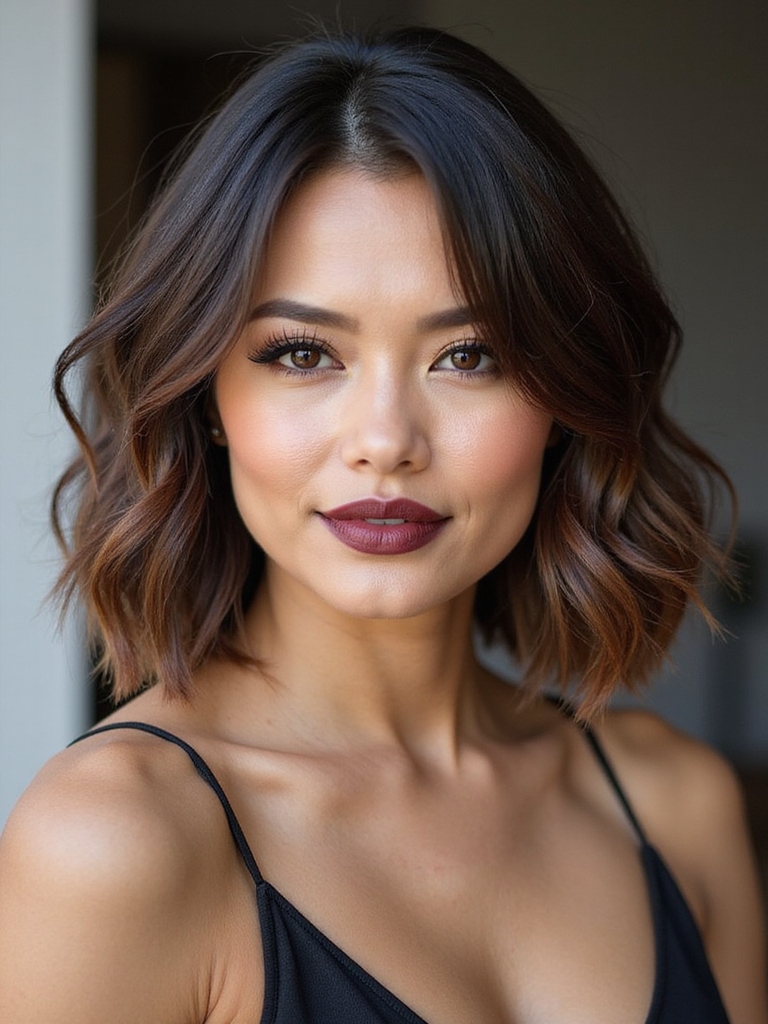
A deep side part paired with strong face-framing layers is a simple combination that does a disproportionate amount of flattering work. The part lifts the roots on the fuller side while the framing carves soft pieces around the cheeks. It’s an easy adjustment to an existing cut, which makes it a good option for anyone testing the waters before committing further.
- Especially strong on round faces, where the part and framing add length and angle
- Set the part with a comb, then dry the framing pieces back and slightly away from the face
A Collarbone Cut With Feathered Bangs
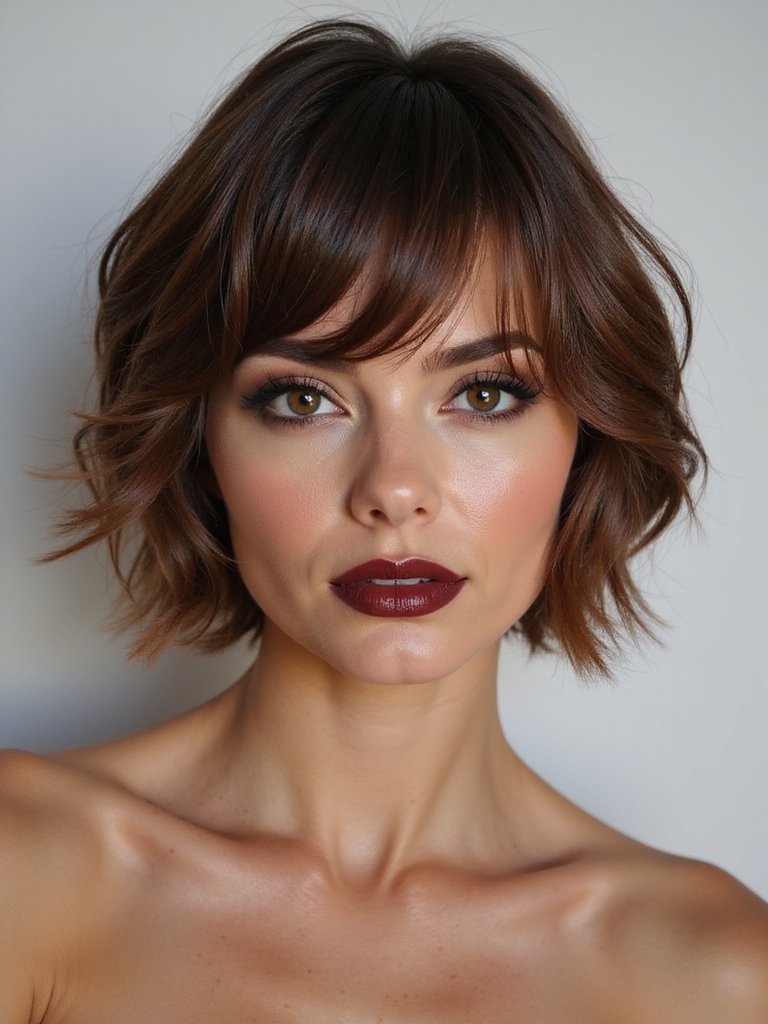
Landing right at the collarbone with feathered, face-framing bangs swept back gives this cut a soft, faintly retro feel. The swept-back angle is what keeps it from reading as a fringe, and it earns its place on longer face shapes by adding width at the cheekbones without shortening anything. It’s one of the more forgiving lengths to keep long-term, since a few weeks of growth barely changes the overall shape.
- The feathered bangs blend directly into the surrounding layers as one continuous piece
- Still long enough to tie back on days that call for it
Curly Shoulder-Length Layers
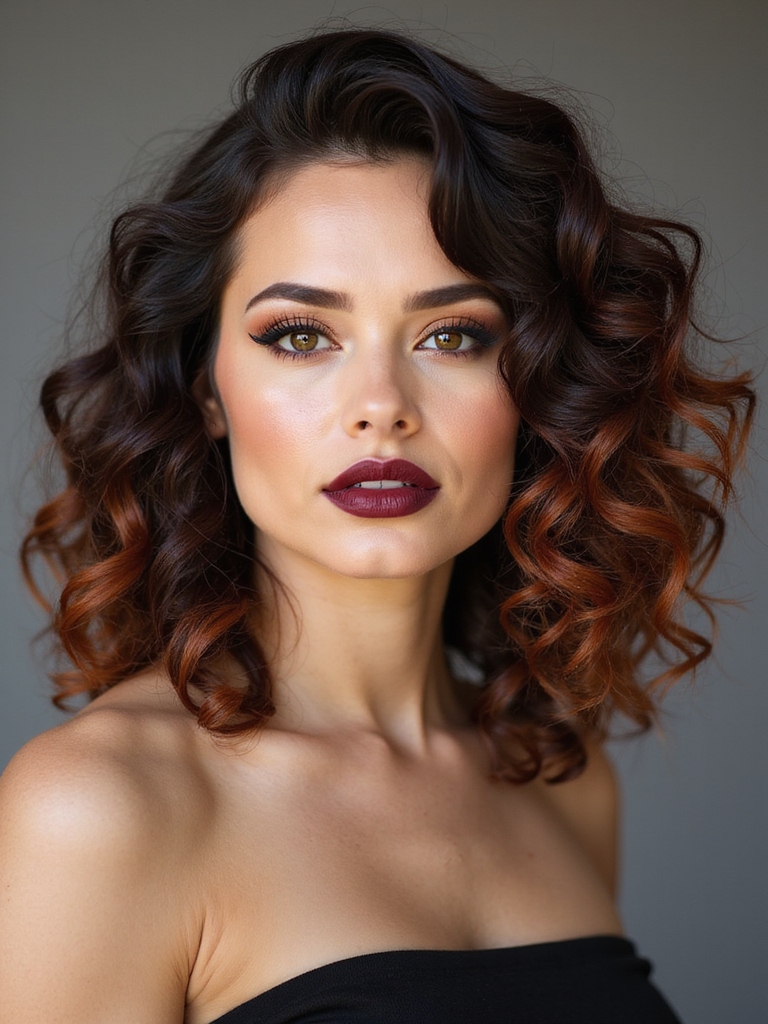
Curly and coily hair holds shoulder length well once it’s layered for the pattern. Without that layering, accumulated weight drags the curl down into a heavy, triangular shape that flattens the definition; taking that weight out from underneath lets the pattern spring back. If this one still feels like too much length, our short layered hair guide covers curl-cutting technique at shorter lengths.
- Cutting dry, once curls have fully sprung to their resting shape, keeps the placement accurate
- Long enough to pull back on humid days, light enough to still move
- Style with a curl cream on soaking-wet hair, then diffuse or air-dry
Two quick questions before you book.
1Are you keeping most of your length?
Look at the tousled lob or the graduated chin-to-shoulder cut.
2Do you want the biggest visible change?
The wolf-inspired cut or heavy curtain bangs shift the look the most.
Volume-Boosting Layers for Fine Hair
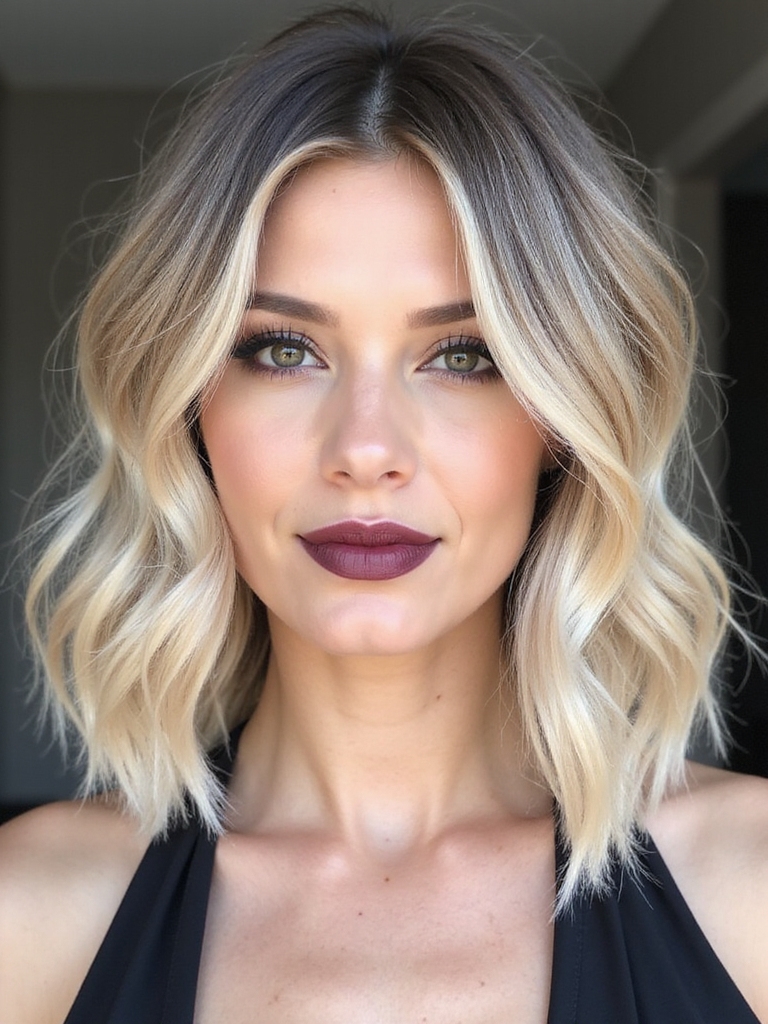
Fine hair often goes limp once it grows past a certain length, which is exactly why shoulder-length layering matters so much for this texture specifically. Compact, crown-focused layers lift the roots and break up the length, without cutting away the length itself.
It’s a shape shift, not a length one. It’s the cut I point fine-haired clients toward once long hair stops behaving the way it used to. A volumizing mousse at the root does more here than any heavy oil ever will. The fine-hair mechanics behind this get a deeper look in our short layered haircuts guide.
A Debulked Layered Lob for Thick Hair
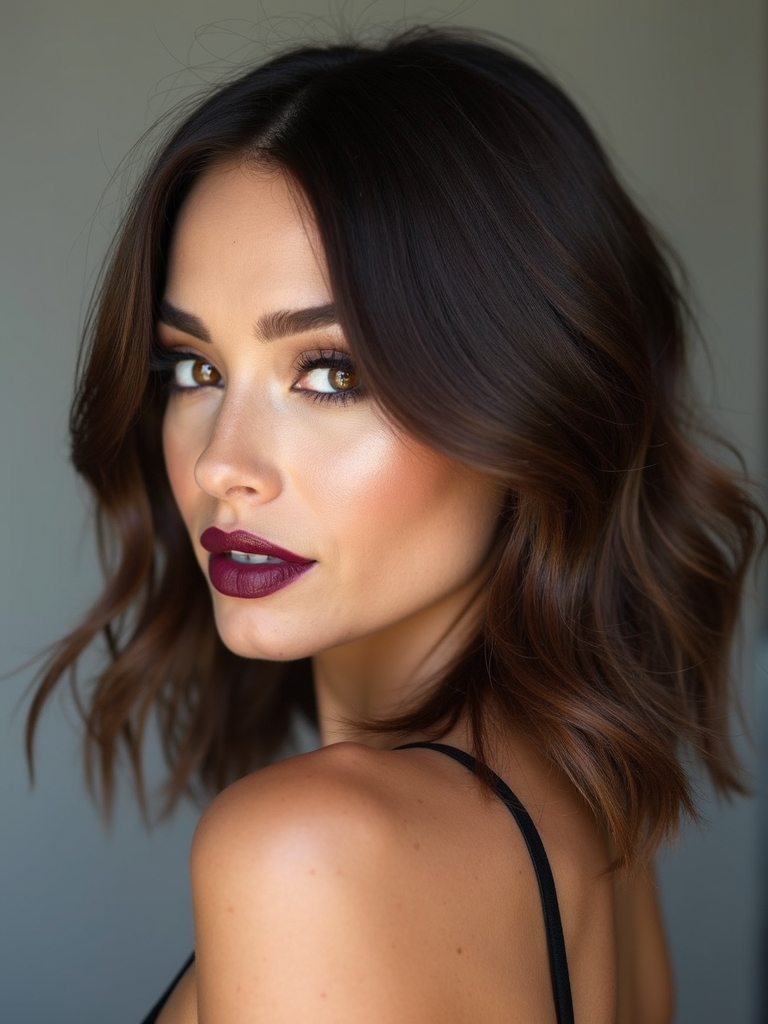
Thick hair gets heavy once it grows long. A debulked lob is the direct fix: internal layers pull real weight out from underneath, turning a dense mane into something that moves the way it used to.
The change is one thick-haired clients feel within minutes of the cut finishing, often losing real weight while losing almost no visible length. Hair that used to sit like a helmet by afternoon moves again.
- Ask specifically for interior debulking: the visible surface stays full, only the underneath gets thinned
- Expect to feel it before you see it, since the weight leaves well before the mirror shows much difference
Sleek, Straight Layers With a Tuck
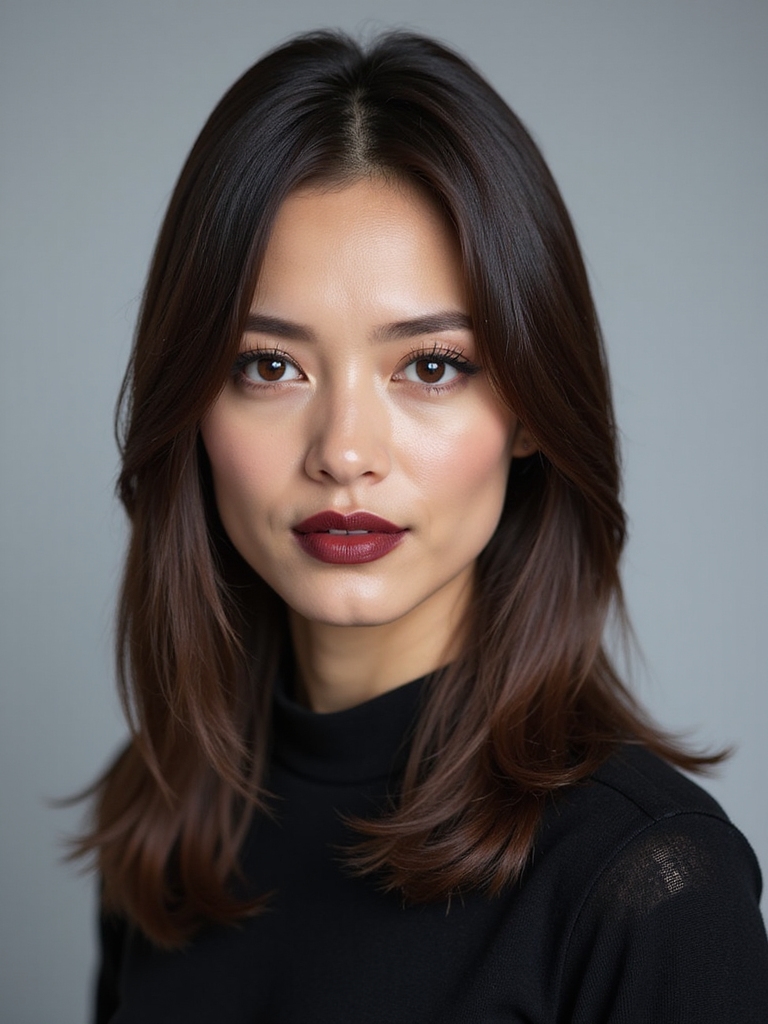
Tuck sleek shoulder-length layers behind the ears and the same cut dresses up for work or an event, quietly elegant with almost nothing asked of you. The layers add subtle movement while the tuck keeps everything neat.
Flat-iron smooth and finish with a small amount of serum for shine. The tuck itself does most of the work, so there’s little else left to manage once it’s set.
Shoulder-Length Layers, Answered
?How much length will I actually lose going from long to shoulder-length layers?
Often less than expected. Most of the visible change comes from removing interior weight, so an inch or two off the bottom can be enough once the layering is in.
?Will layering make shoulder-length hair look thinner?
Only if the layers go in too short near the bottom. Ends cut that way can look thin and wispy for the first few weeks, before they settle into the new shape. Ask for the length staggered gradually instead of removed all at once.
?Is shoulder length still long enough to tie back?
Usually yes, in a low ponytail or bun, though the layers around the face fall forward no matter how it’s gathered. Bringing that up at the consultation helps a stylist plan for it.
The Weight Comes Off Before the Length Does
Every cut here solves the same underlying problem in a different way: hair that’s grown heavy without growing bad, still loved but no longer easy to live with at full length.
The right pick depends less on the photo and more on how much length you’re willing to give up for that lighter feeling. Ask your stylist to walk through two or three of these with you before the shears come out. A five-minute conversation at the chair prevents most of the regret. Our shoulder length layered hair guide is worth a look too, if you want a day-to-night angle instead of this length-focused one.
More Inspiration