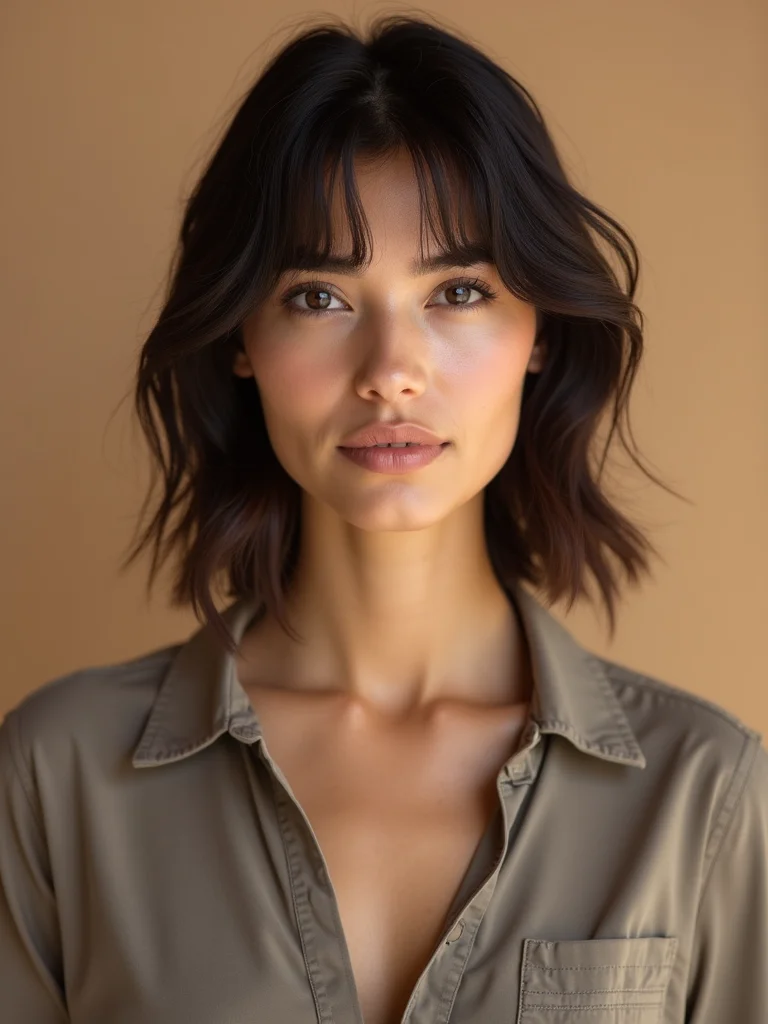
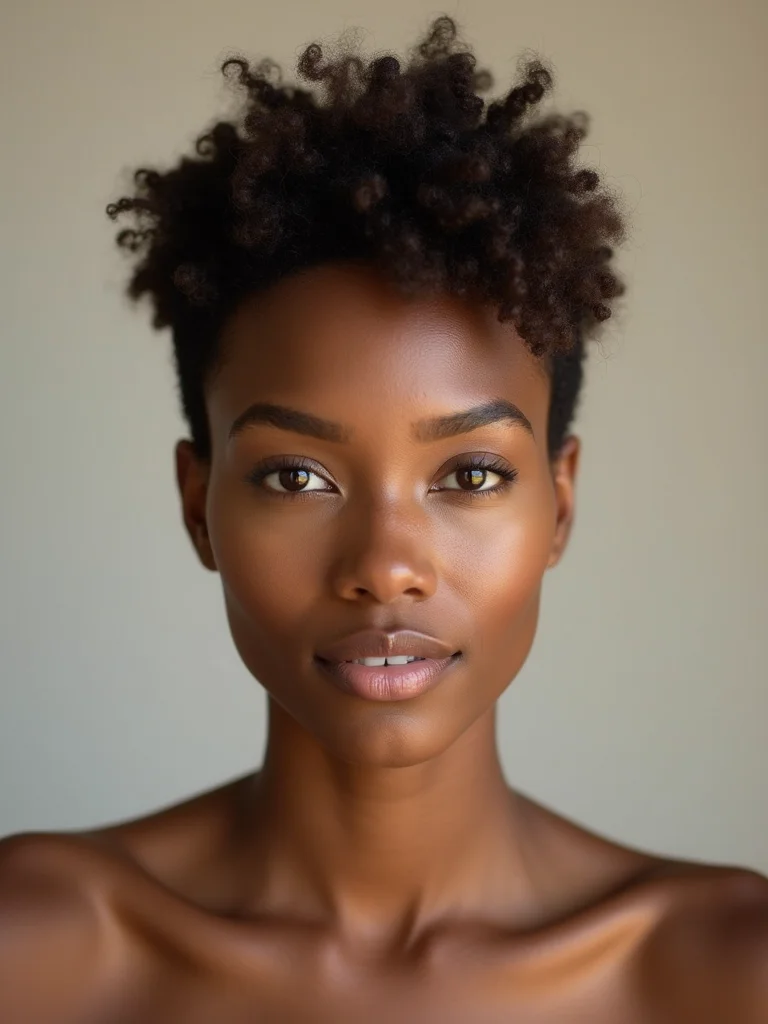
A long shag haircut with bangs only looks whole when the fringe and the layers share one idea. Soft goes with soft. Choppy goes with choppy. Match them and the front moves as a single piece of hair. Miss the pairing and you can spot the seam from across the room, a fringe sitting on top of the cut instead of growing out of it.
This roundup sorts fifteen fringe-and-shag pairings by hair type and face shape. Fine, thick, curly, straight: there’s a fringe built for each one, with honest notes on what it actually costs you in upkeep.
The Pairing Logic in Brief
Match the fringe’s finish to the shag’s: feathered pairs with feathered, choppy with choppy, blunt with sleek. Mixing textures is what makes a fringe look stapled on.
The fringe carries almost all the upkeep in this pairing. A soft curtain fringe barely changes your routine, while a blunt or micro fringe pulls you back to the chair far sooner than the shag itself ever needs.
Feathered Layers Paired With a Soft, Round Fringe

This is the pairing that started the whole trend: soft, feathered layers built through the crown and ends, matched with a fringe cut to that same round, feathered finish. The front never looks separate from the back. The fringe blends straight into the face-framing pieces and keeps moving from there. Where this struggles is on very fine hair, since a soft fringe needs real density underneath it to look full. Too little density and it turns wispy fast.
- Ask for a feathered fringe cut so it flows into the layers.
- A round brush turns the fringe and crown back in one pass.
- Best suited to medium-to-thick hair that can support the softness.

Center-Parted Curtain Bangs on a Long Shag

Curtain bangs part down the middle and fall open on either side of the face. On a long shag they act like an extension of the layering. The catch is real length. Cut too short, and the curtain lacks the weight to sweep back. It won’t join the layers cleanly.
Styling stays simple. Rough-dry the front forward, then finish with a round brush sweeping each side back and slightly down. Curtain bangs flatter nearly every face shape, and that flexibility is why this pairing shows up on more long shags than any other fringe here. For the shape on its own, see our curtain bangs guide.
Shorter Face-Framing Pieces Layered Into the Front

Shorter pieces cut around the cheeks and jaw are what give a textured shag its busiest, most layered front. They sit above the longer fringe and lift away from the face. The whole top half of the cut already looks like it’s in motion, before you touch a single tool.
Where the Lift Comes From
This is a heavier version of layering, built for medium-to-thick hair that can carry the extra internal weight removal without going thin at the ends. On finer hair, ask your stylist to keep the shortest pieces slightly longer than shown here.
A texture spray worked through damp hair, then scrunched through, brings the shorter pieces forward without flattening them. More lift at the face means more upkeep between visits. Budget five minutes a morning if you go this route.
Boho Waves With a Wispy, Barely-There Fringe

Loose boho waves and a thin, wispy fringe make the softest, most undone version of a long shag. The waves carry the layering into gentle bends. The fringe stays sparse and light, framing the face without adding real weight or structure. It’s the shag for anyone chasing relaxed, festival-ready movement.
- Scrunch a salt spray through damp lengths to build the wave.
- Keep the fringe thin; heavy bangs kill the airy effect.
- Suits fine-to-medium hair better than very thick hair.
👍Face-Framing Pieces
- +Adds visible motion and lift right where people look first
- +Softens a square or angular jawline without a full face-framing cut
- +Blends into an existing fringe without a full re-cut
👎Worth Weighing
- –Needs more frequent styling to keep the lift from falling flat
- –Can thin out fine hair if the stylist over-texturizes
- –Shows regrowth at the temples faster than the rest of the shape
A Big, Bouncy Blowout With a Feathered Fringe

Blow a long shag out big, with a feathered fringe flicked back at the sides, and you land on the most glamorous version of this cut. Full volume, real shine, a front built for a night out. Twenty minutes with a round brush turns the everyday cut into something dressed up.
- Round-brush the crown section by section for maximum lift.
- Feather the fringe back at the sides as you finish.
- Set with a light-hold spray so the volume survives the evening.
Long Curly Shag With Bangs Cut to Their Own Curl

Curly hair carries a shag-and-bangs pairing beautifully once the fringe is cut to match its own curl pattern. A curly fringe cut dry, strand by strand, springs up into a rounded frame that sits naturally above the shag’s bouncy layers. The curly wolf cut guide goes deeper into cutting curls dry if you want the full technique.
- Insist on a dry cut; wet-cutting curls guesses at the final length.
- Define curls with a light leave-in cream, then scrunch in a soft-hold gel.
- Trust a stylist who cuts curly texture regularly.
A five-minute version of the salon blowout, section by section:
1Rough-dry to 80 percent
Flip your head forward and rough-dry most of the moisture out before you pick up a brush.
2Section and lift the crown
Work in three sections, rolling a round brush under at the roots and holding for a five-count before releasing.
3Flick the fringe last
Finish the fringe last, rolling it back and slightly under so it feathers against the forehead.
Choppy, Razored Ends for Maximum Rock-and-Roll Edge

For real attitude, pair heavily razored, choppy ends with a fringe cut just as roughly. The whole shape leans hard into seventies rock energy. The razor shatters the ends into irregular, jagged pieces, and matching that same texture into the fringe keeps the front from looking accidentally tidy next to a deliberately messy back.
- A matte texture paste raked through builds the broken-up finish.
- Works best on hair with enough natural texture to hold the shatter.
- The exception: very fine hair can look sparse under heavy razoring.
Sleek, Straight Layers With a Blunt, Graphic Fringe

Straight hair wears this pairing well. The shag’s internal layering does the shaping work, and a dense, straight-across fringe against smooth lengths makes a strong, graphic line.
This is the most editorial version here, and it asks for the most upkeep. A blunt fringe needs real density to look intentional. It also grows into your eyeline faster than any softer style in this roundup.
A flat iron smooths both the fringe and the lengths while the internal layers keep the shape from going flat and sheet-like. Soft-cut movement underneath, a hard line up front: a deliberate contrast that reads as considered.
Wispy, Airy Bangs Built for Fine Hair

Fine hair can absolutely carry a shag with bangs, as long as both are cut light. Layering placed for volume, paired with a wispy, see-through fringe, lifts the roots and builds an impression of fullness without thinning out already-delicate ends.
The mistake I see most on fine hair is over-texturizing the fringe. Restraint matters more than technique here. A soft, barely-there bang and volume-focused crown layering give fine hair all the movement of this cut, no sparse patches.
“Blunt bangs are the one fringe here I won’t talk a client into on a whim. They take real commitment, and growing them out badly is its own kind of awkward stage.”
A Beachy, Tousled Shag With a Loose Fringe

A beachy shag with an airy fringe is the lowest-effort version here, built for texture that already does most of the work. The layers wear loose and undone with a salt-spray bend, and the fringe stays light enough to fall right into that same tousled texture.
This is a wash-and-go cut in the truest sense. It looks best on day two or three, once the texture has settled and the fringe has relaxed into the rest of the shape.
- Scrunch a texturizing spray through damp lengths and air-dry.
- Skip the round brush; smoothing kills the beachy effect.
- Suits wavy-to-curly texture better than pin-straight hair.
Razor-Cut Softness for the Most Feathery Texture

A razored fringe and razored shag ends give this pairing the softest, most feathery texture of the bunch. The blade slices through the hair on an angle, leaving weightless, wispy points that scissors alone can’t recreate, especially through a fringe that would otherwise sit heavy against long layers.
- Best on healthy, straight-to-wavy hair; razoring roughens fragile strands.
- A light texture spray plays up the feathered, wispy finish.
- Ask specifically for razor work on the fringe, not only the ends.
Side-Swept Bangs That Flatter Almost Any Face

Side-swept bangs sweep diagonally from a deep part and blend straight into a shag’s face-framing layers, softening the forehead without the commitment a full fringe asks for. The diagonal line works across most face shapes. That’s exactly what makes it the easiest fringe here to live with day to day. See our side-swept bangs guide for the full styling breakdown.
- A deep side part builds the volume that keeps the sweep lifted.
- Round-brush the sweep back and slightly under as you dry.
- Grows out gracefully into the rest of the shag’s layers.
Extra-Long Length With Deep, Swoopy Layers

Taken past a typical long shag into truly extra-long territory, this pairing relies on deep, swoopy layers to keep that much hair from hanging flat. The layers swoop through the mid-lengths so the ends stay full even as the overall length climbs, and the fringe carries that same swooping movement up to the face.
This is the shag for anyone who loves long hair and wants it to keep moving. It takes more length to grow into properly.
- Ask for deep layers cut through the mid-lengths, not only the ends.
- The fringe should echo the swoop, staying loose rather than flat.
- Best on hair with some natural body; pin-straight hair can look thin.
🅰️Side-Swept Bangs
One diagonal piece from a deep part, minimal daily styling, and an easy grow-out with no awkward stage.
🅱️Curtain Bangs
Two symmetrical pieces framing both sides of the face from a center part, a slightly more deliberate, styled look.
Hidden Internal Layers for Thick Hair

Thick hair makes for a full, no-nonsense shag with bangs once the bulk is managed from the inside. Internal layering removes weight through the mid-lengths so thick hair swings and moves, and a thinned, point-cut fringe sweeps softly rather than crowding the face.
- Ask for internal layers cut so they don’t show at the surface.
- A dense, unthinned fringe overwhelms the face on thick hair; thin it.
- Over-thin it and the ends turn wispy fast.
A Micro Fringe for the Boldest, Most Retro Statement

Pairing a long shag with a short micro fringe is the most dramatic combination here, the tiny blunt bangs sitting high above the brow against all that layered length below. It’s a real seventies-meets-now statement this season. The contrast between the cropped fringe and the long shag is exactly the point. Our micro bangs guide covers the shape in more depth.
- Flatters balanced, oval faces best, where the boldness reads as proportion.
- The highest-maintenance fringe here; it grows into your eyeline fastest.
- A textured finish on the shag keeps the look from feeling too severe.
Who It Suits Best
This pairing works best on medium-to-long hair with enough natural body or layering to keep the fringe from looking stapled onto a flat, static shape. Straight, wavy, curly, and coily textures can all wear a shag with bangs. The fringe just needs to be cut to match whatever your hair already wants to do.
It suits people who don’t mind a little upkeep up front, since the fringe grows out faster than the rest of the shag no matter which version you choose. Want all the movement with none of the fringe commitment? The plain long shag cut is worth a look.
Long Shag With Bangs, the Questions That Come Up in the Chair
?Does a fringe make a long shag harder to maintain overall?
Only the fringe adds real upkeep; the shag itself grows out gracefully over time. A soft curtain fringe barely changes your routine, while a blunt or micro fringe pulls you back sooner, often for a quick $15 to $20 fringe-only trim between full shag appointments.
?Can I switch fringe styles without cutting the whole shag over?
In most cases, yes. Curtain, side-swept, and wispy fringes can usually be adjusted or grown between shag trims, though a heavy blunt or micro fringe is harder to soften without a proper cut. Talk to your stylist before your next appointment about easing into a different pairing.
?My hair is naturally curly. Do I need to straighten it for these looks?
No. A curly fringe cut dry, in its natural pattern, pairs with a curly shag with no flat-ironing involved. Straightening changes how both the fringe and the layers fall, so decide upfront whether you plan to wear your natural texture or blow it out regularly.
?Will bangs on a long shag work with a round or square face?
Side-swept and curtain fringes suit the broadest mix of face shapes, since the diagonal or open-center line softens angles without adding width. A blunt, straight-across fringe is the one to approach carefully on a round face, since it can shorten the face rather than balance it.
The Fringe Decides How the Whole Cut Reads
The fringe decides everything. A shag with bangs only works when the two halves were planned together, sharing a texture and a character. Feathered or blunt, curly or sleek, wispy or micro, the fringe you choose changes how the whole cut moves and how much time it asks of you between salon visits.
Show your stylist a picture of the fringe you want and let them see your natural texture before any scissors come out; that conversation matters more than the picture itself. This season’s long shag still runs on the same trade-off: more fringe drama up front usually means more upkeep, and the softest options ask the least of you.
More Worth Saving