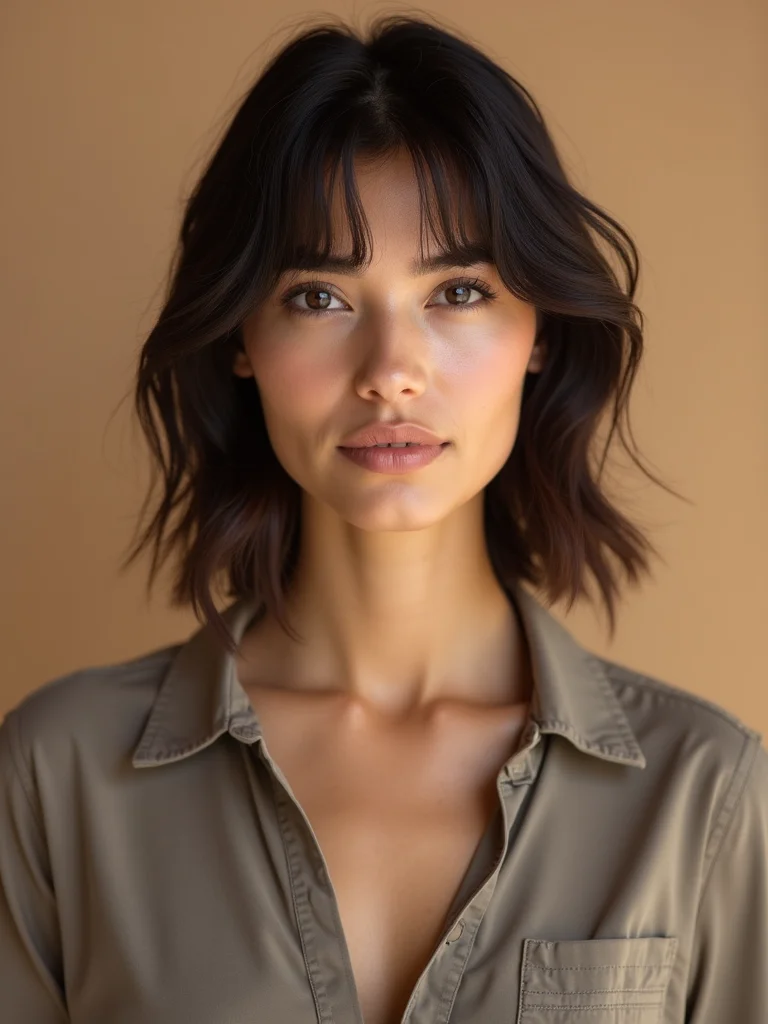
Why does the Asian bob hair trend look so clean on thick, straight hair? Because the two were made for each other. Dense, glossy hair with a naturally straight fall holds a blunt line the way few textures can, so the cut looks sharp, the shine lands like glass, and the whole thing turns polished with almost no styling. It is the texture bobs were practically designed around.
Picking the right version for your density and face shape matters more than usual here, since the same weight that gives a bob its crisp edge can turn a badly cut one heavy or wide. Here are 15 bobs built to work with that hair, from a mirror-sharp precision cut to a soft, curtain-bang lob.
Reading the Lineup
| If you want | Look at | Keep in mind |
|---|---|---|
| Sharp and polished | Precision, blunt, or micro bobs | Blunt lines need a trim every so often to stay crisp |
| Soft and easy | Layered, tousled, or wavy bobs | Straight coarse hair needs texture worked in to hold movement |
| Longer and versatile | The collarbone lob or curtain-bang bob | More length forgives grow-out and skips the frequent trims |
The Glassy Precision Bob

This is the bob in its purest form: one clean, blunt line, cut with precision and left to shine. It is the shape often called a Chinese bob, the sleek chin-length classic. On thick straight hair the perimeter stays dense right to the ends, giving the line a solid, deliberate weight most textures can’t match.
Why It Works So Well Here
The mirror shine is doing half the work. Naturally glossy hair reflects light along that blunt edge, and the effect is the quiet-luxury look everyone screenshots. No curl, no product, just a good cut and a smooth finish.
It is the highest-maintenance shape for exactly that reason. A blunt line only looks sharp when it is even, so a shaping trim every eight weeks or so, around $50, keeps it honest. Skip that and the ends soften, and a soft edge just isn’t the same haircut anymore.
A Chin-Grazing Minimal Crop

Cut to just graze the chin, this is minimalism at its most wearable. The short length keeps the hair light and the shape simple, framing the jaw without any fuss. What makes it work:
- The chin-length cut flatters the jawline and keeps things clean and modern.
- Short blunt hair on a dense head can widen at the sides, so ask for internal thinning to keep it close.
- It needs almost no styling, since the weight of the hair holds the shape on its own.
The Density Catch
On very thick hair, a super-short blunt crop can spring out and widen at the jaw instead of falling close. That’s not the cut failing, it’s simply the sheer weight of the hair pushing back. The fix is internal thinning, removing bulk underneath while keeping the outline blunt, and it will sit sleek.
The Sleek A-Line Bob

The A-line takes its name from its geometry: the back stays short and tight to the neck while the front pieces stretch down past the jaw, so the whole shape slopes forward. On straight hair that slope reads crisp and graphic, since there is no wave to soften the line as it travels from nape to chin.
Few bob variations flatter as reliably, because those front pieces draw the eye down and narrow the face. The angle does the slimming. Anyone who likes the idea can see the full range on a dedicated A-line bob before committing to the shape.
An Airy Layered Bob

Not everyone wants a solid blunt wall of hair. Light layers break up the density and let a bob move, which is a relief on hair that can otherwise feel heavy and flat against the head. The goal is air throughout, without thinning the ends down to wisps.
Placement is what makes or breaks this version. Layered wrong, thick straight hair puffs out into a triangle, so the layers need to stay long and internal, tucked deep inside the shape where the weight can breathe without bulking the outline. Done right, it looks soft and modern, closer to a textured bob than a stiff helmet.
Getting airy movement into dense, straight hair:
1Long internal layers
Long, internal layers let the weight lift gradually without the ends puffing into a triangle the way short, choppy layers would.
2Blow-dry with tension
Dry over a large round brush with a little tension to bend the ends under, which creates soft movement the layers can hold.
A Blunt Bob With a Soft Under-Curve

This one keeps the blunt perimeter but curves the ends gently inward, so the hair hugs the jaw instead of hanging straight down. It softens a sharp cut without losing its clean edge, which is a nice middle ground.
Best for Rounder Faces
Straight hair takes the curve easily over a round brush with a few seconds of heat, and because the hair is thick, that curve holds most of the day. A little smoothing serum keeps it glassy.
The result flatters a rounder face especially well, since the inward curl draws attention to the jaw and chin. It is polished but approachable, the kind of bob that works at the office and at dinner.
The Sharp Micro Bob

The micro bob is the boldest cut here: ultra-short, sharp, and cut close to contour the face. It is a statement, and on the right person it turns heads. What to know before you go this short:
- The very short length puts all the focus on your features and bone structure.
- Thick hair needs careful shaping so it lies close rather than jutting out.
- It is a commitment: a shape-up every few weeks keeps a micro bob crisp.
The Collarbone-Skimming Lob

For anyone hesitant about going as short as a true bob, the lob lands at the collarbone and keeps all your options open. A ponytail is still possible on a hot day, a growing-out phase hides easily in the length, and the cut still feels current and light. Length buys you time.
It’s a gentle entry point into shorter hair, a change without a drastic leap. The length carries the hair’s natural shine beautifully, and it asks for far fewer trims than a blunt chin bob. Browse a full long bob gallery if you like the in-between length.
A Soft Tousled Bob

A tousled bob trades the polished line for something looser and more undone. Instead of a smooth sheet, the hair gets a bit of bend and separation, for a relaxed finish that feels current and young.
Poker-straight hair does not tousle on its own, though. It needs a little help, either a light wave with an iron or a texturizing product worked through the mid-lengths, to hold any movement at all.
The payoff is a bob that looks casual and easy while still being a real cut underneath. It suits people who want low effort in the mornings but not a stiff, formal shape.
💡Making Straight Hair Hold Texture
Poker-straight coarse hair slides out of a wave fast. Prep with a light texturizing spray or mousse on damp hair before you style, and use a slightly hotter iron than you would on fine hair. The grip comes from product plus heat, not from over-curling.
A Deep Side-Part Bob

Move the part off-center and a plain bob gains movement instantly. A deep side sweep pushes a wave of hair up and over, lifting the roots and throwing a soft diagonal across the face. It is the fastest restyle there is, no scissors required. Why it earns its place:
- Setting the part high on one side gives heavy, flat-falling hair real root lift.
- The diagonal sweep breaks up a wide forehead and adds a hit of asymmetry.
- It leans naturally toward a slightly asymmetrical bob when you want more edge.
A Clean Center-Part Bob

The center part is the modern, minimalist choice, and it is everywhere for good reason. Symmetry is the whole idea. Splitting a blunt bob straight down the middle gives it clean lines and a calm, balanced frame around the face.
It works best on a precise, jawline-length cut where both sides match exactly, since a center part hides nothing. Any unevenness shows immediately, so this look leans on a sharp cut and a straight fall.
On thick, glossy hair the effect is quietly striking: two smooth curtains of hair, even and shining. It is understated but far from boring, the kind of look that lands as expensive without a hint of effort.
A Straight Bob With a Wispy Fringe

Adding a soft, wispy fringe changes a bob completely. Where a heavy blunt fringe can feel severe on thick hair, a wispy one is thinned and feathered so it falls in soft pieces across the forehead, framing the eyes with a light touch instead of covering them.
The key is keeping it light. On dense hair a fringe has to be texturized carefully, or it turns into a solid block, so this is one to trust to a stylist who knows the density well.
Worn right, it is soft and flattering and takes years off. It draws attention up to the eyes and pairs with almost any bob length below it.
A Polished Bob With Curtain Bangs

Curtain bangs part in the middle and sweep softly to either side, with no visible break where the fringe meets the surrounding length. On a polished bob they look soft and romantic, one continuous frame around the face.
The Low-Commitment Fringe
They suit straight hair well because the sweep falls cleanly without fighting a wave. A quick bend with a round brush in the morning sets the part, and the thickness gives them a full, substantial look with none of the thin, stringy fall a finer texture would show.
Best of all, they grow out gracefully, melting into face-framing layers with no awkward stub stage in between. See a full curtain bangs guide if you are weighing the fringe.
Bangs on your bob, or not?
1Want a soft, low-commitment change?
Curtain bangs blend into the length and grow out easily, no hard line.
2Prefer to keep your forehead clear?
Skip the fringe and let a deep side part do the framing instead.
The Inverted Bob With a Tapered Nape

An inverted bob is shorter and tapered at the back, longer toward the front, with a stacked, graduated nape that adds a little lift. It is the more architectural cousin of the A-line, and it gives flat hair some welcome shape at the back.
On thick straight hair the graduation stacks neatly, giving the back a full, rounded shape without any of the bulk a solid block cut would carry. It shares plenty of DNA with the angled bob family if you want to compare.
- The tapered nape adds volume and shape where straight hair falls flat.
- The longer front pieces frame and slim the face.
- The graduated back needs regular trims to keep its stacked shape.
A Wavy Bob With Relaxed Ends

Not all Asian hair is dead straight; plenty has a soft bend or a slight wave, and a wavy bob leans right into it. The ends are left relaxed and loosely waved, for easy, natural movement that needs no daily iron.
For naturally straight hair, a loose wave with a wide-barrel iron gets you there in minutes, and the density holds it well. It is a softer, more casual bob, close in spirit to a wavy bob on any texture.
A Shine-Boosted Glassy Bob

The last one is less a cut than a finish, and it is what pulls so many of these looks together. A glassy, shine-boosted bob takes an already sleek shape and turns the gloss all the way up, for the mirror-like sheen that reads as quiet luxury.
It plays to this hair’s biggest natural strength. Thick, healthy strands reflect light beautifully, so a little polish goes a long way. Shine seals the whole look. How to get the glass finish:
- Finish with a smoothing serum or a drop of hair oil, not a heavy wax.
- A cool blast from the dryer flattens the cuticle and boosts shine.
- Keep the ends healthy with regular dustings, since split ends kill gloss fast.
Let the Cut Do the Work
The thread running through all 15 is the same: thick, straight, shiny hair gives a bob a head start, so the smartest move is to pick the shape that plays to that strength. Sharp and blunt if you love a clean line, layered or wavy if you want movement, longer if you want easy.
So take the version that matches your density, your face, and how much time you actually want to spend styling, and let the cut carry it. On this hair, a good bob barely needs your help to look expensive.
More to Browse