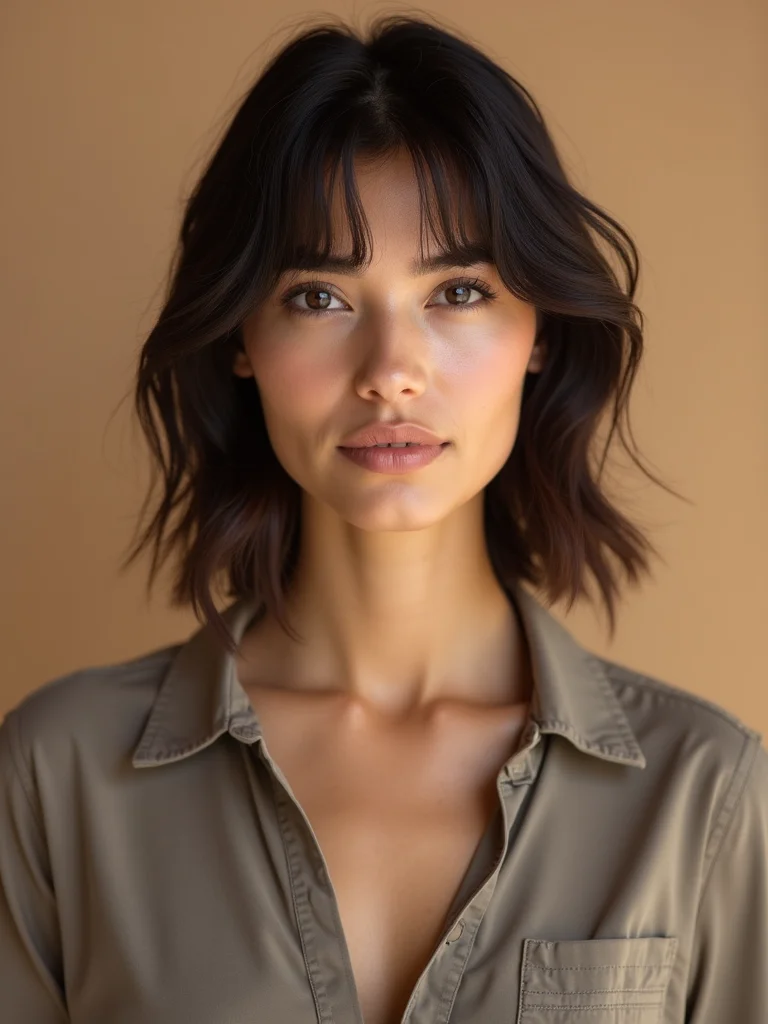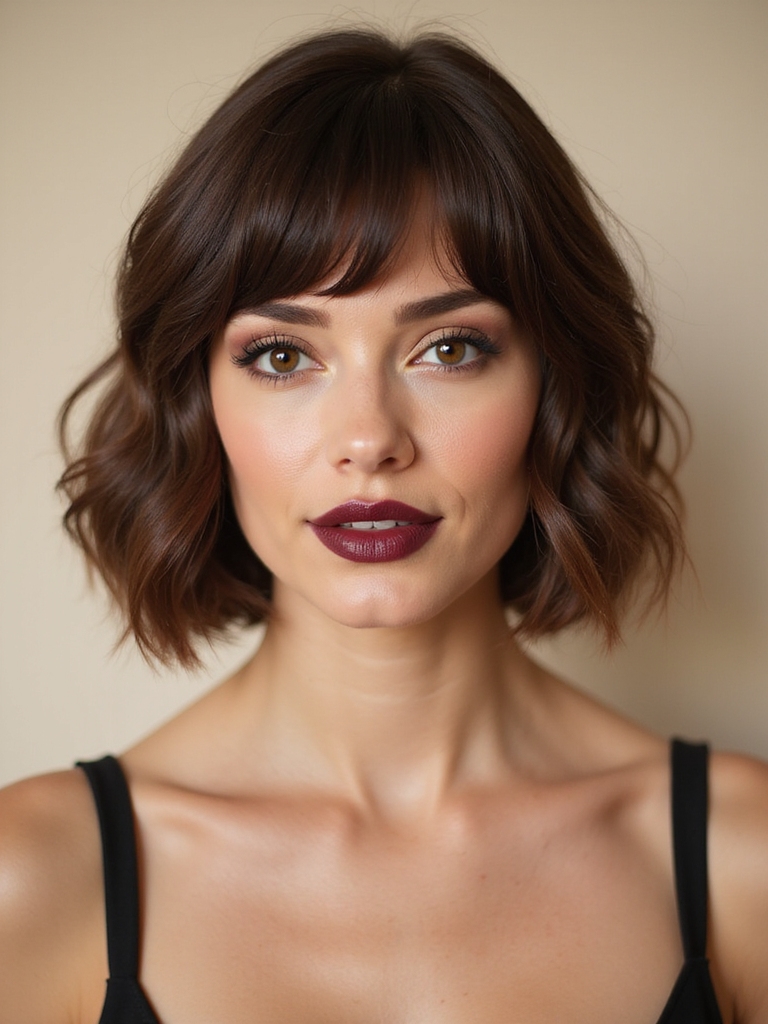
There’s a moment, standing in front of the mirror after a haircut, when a fringe either lengthens your face into something balanced or rounds it out further. Picking bangs for round face shapes comes down to that one distinction. A round face has soft, full cheeks and roughly equal width and length, all gentle curves, and the right bangs work with that by adding the vertical lines and angles that lengthen and slim.
Plenty of fringes do exactly that. Curtain, wispy, side-swept, and angled bangs all draw the eye up and down the face, so once you know the rule, choosing gets easy. Fifteen bang styles that flatter a round face follow, each one honest about which lengthen best and which few to soften or skip.
Bangs for a Round Face, In Short
What bangs suit a round face best? Anything that adds length and vertical lines: curtain bangs, wispy fringes, side-swept and angled bangs. They draw the eye up and down to slim and lengthen.
What should a round face avoid? Short, blunt, straight-across micro bangs that cut a hard horizontal line and can make the face look wider and shorter. If you love them, soften and lengthen them.
How do bangs slim a round face? By creating vertical movement and angles. A center part, a longer sweep, or a diagonal line all lead the eye lengthwise, which balances the roundness.
Curtain Bangs for a Round Face
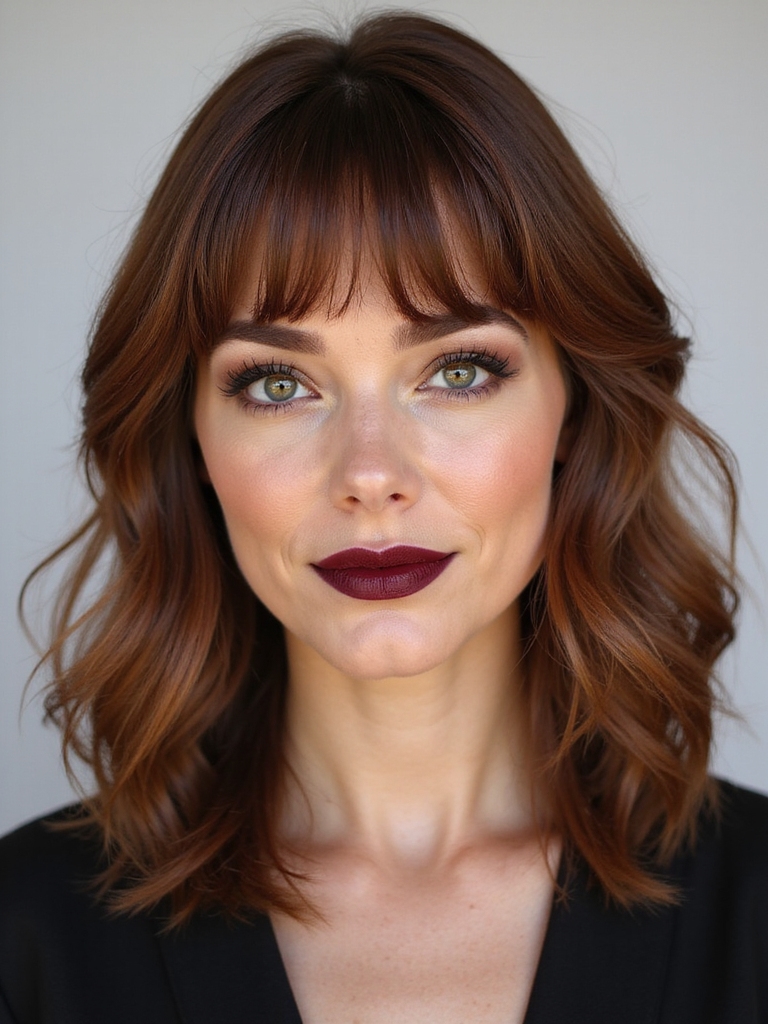
If a round face had a perfect fringe, it would be curtain bangs. Parting in the middle and sweeping down and away on either side, they create two soft vertical lines that frame the face and pull the eye lengthwise, which is exactly what balances roundness.
That open center is what does the real work, breaking up the width and drawing attention down toward the middle of the face. Kept long, grazing the cheekbones, they slim and lengthen beautifully without any harsh line.
They’re also low-commitment and grow out into face-framing layers, which is why they top almost every round-face list. See the full curtain bangs guide for how to wear and grow them.
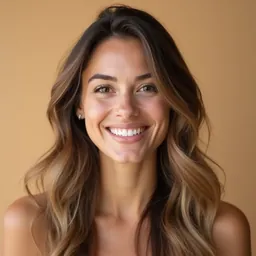
A Wispy Fringe
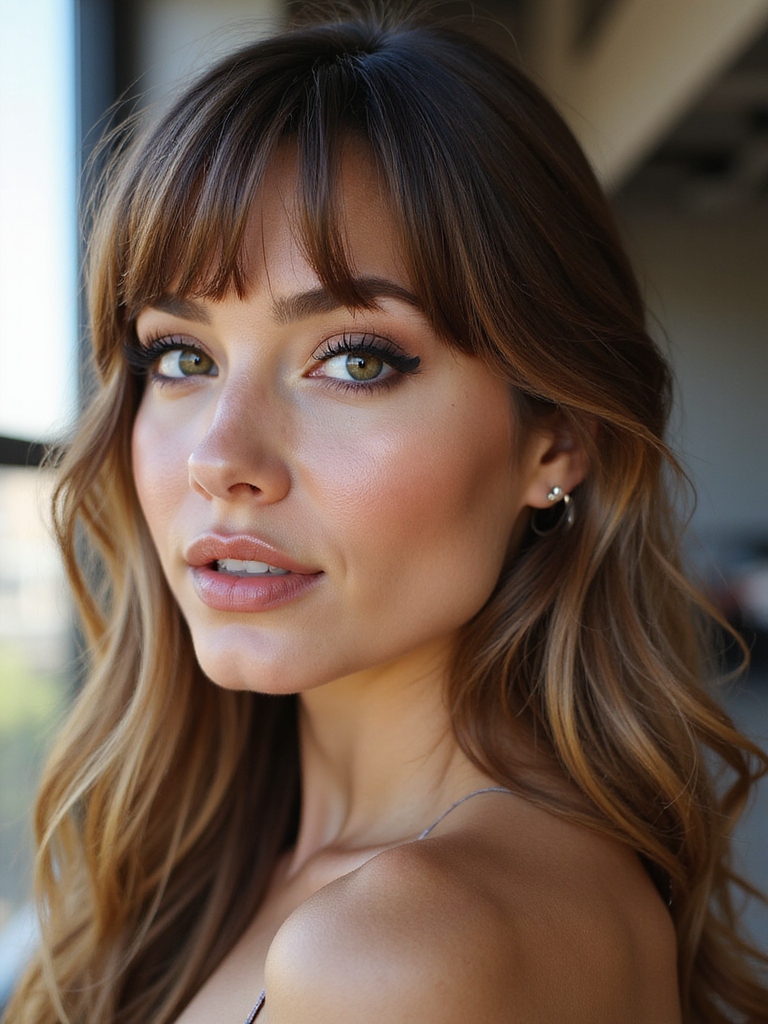
A wispy fringe is a round face’s safe bet, thinned and feathered so it never forms the solid horizontal line that adds width. Instead, the soft, broken pieces let a little forehead peek through, which keeps the face from looking rounder.
The Safe Bet
Because it’s airy and light, it adds softness and frames the eyes without any heaviness. The gaps between the pieces are what keep it from widening the face, so ask for it wispy and well separated.
It’s the most forgiving fringe for a round face and the easiest to grow out, making it a great first step if you’re nervous about bangs. Soft, light, and quietly slimming.
Angled Side Bangs
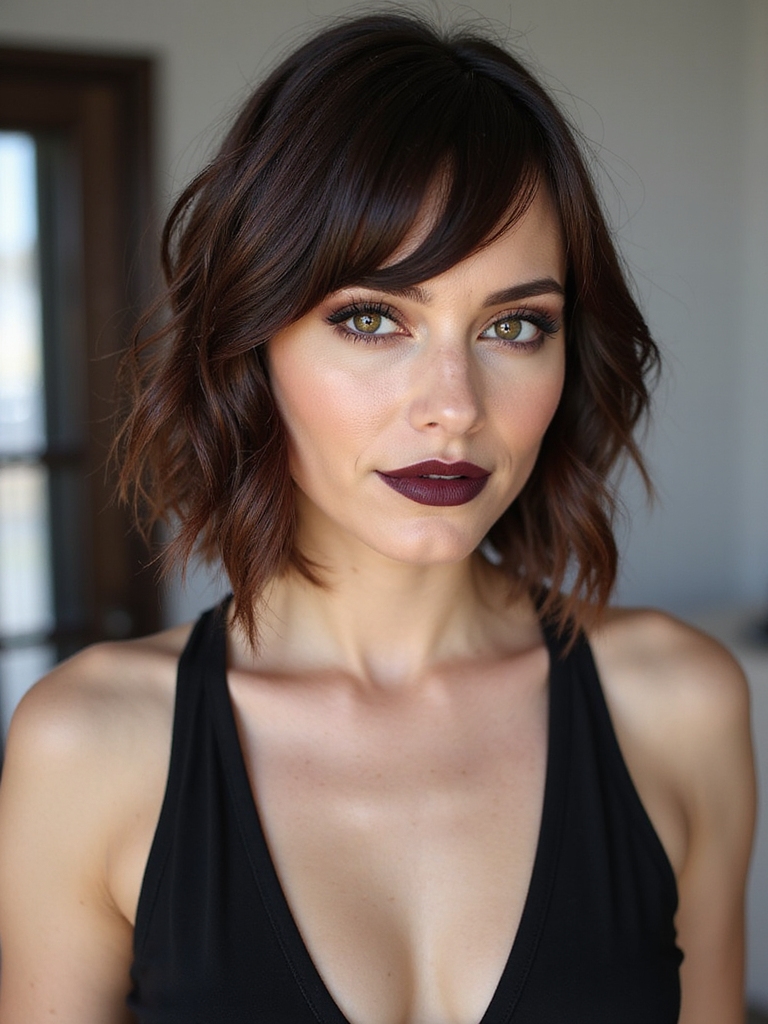
Angled side bangs might be the single most slimming fringe for a round face, since a strong diagonal line is the opposite of a widening horizontal one. Cut longer on one side and swept across, they carve an angle that lengthens and adds structure to soft, round features.
The diagonal does all the work, leading the eye down and across to visually slim the cheeks and sharpen the whole face. The steeper the angle, the more dramatic the slimming effect.
It’s a flattering, grown-up option that also grows out easily, blending into layers. For anyone whose round face wants a little definition, this is the fringe to ask for.
Cheekbone-Skimming Bangs
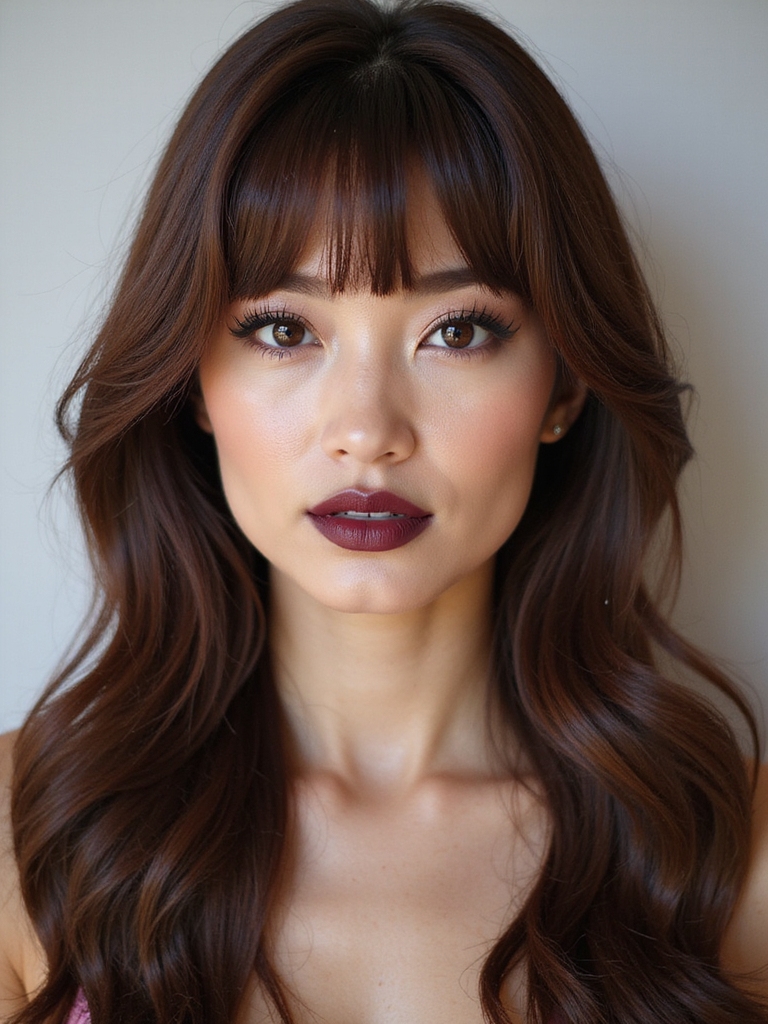
Longer is almost always better for a round face, and cheekbone-skimming bangs prove it, falling well past the brows to graze the cheekbones. That length adds vertical line and draws the eye down to elongate the face. Why they flatter:
- The extra length pulls the eye downward to lengthen the face.
- They frame and gently slim the cheeks along their length.
- Longer bangs are easier to live with and need fewer trims.
How much slimming do you want?
🎯Want soft and safe?
Curtain, wispy, or cheekbone-length bangs lengthen gently and grow out easily.
🎯Want maximum slimming?
Angled side bangs and a middle part carve the strongest lengthening lines.
Textured (Not Heavy) Blunt Bangs
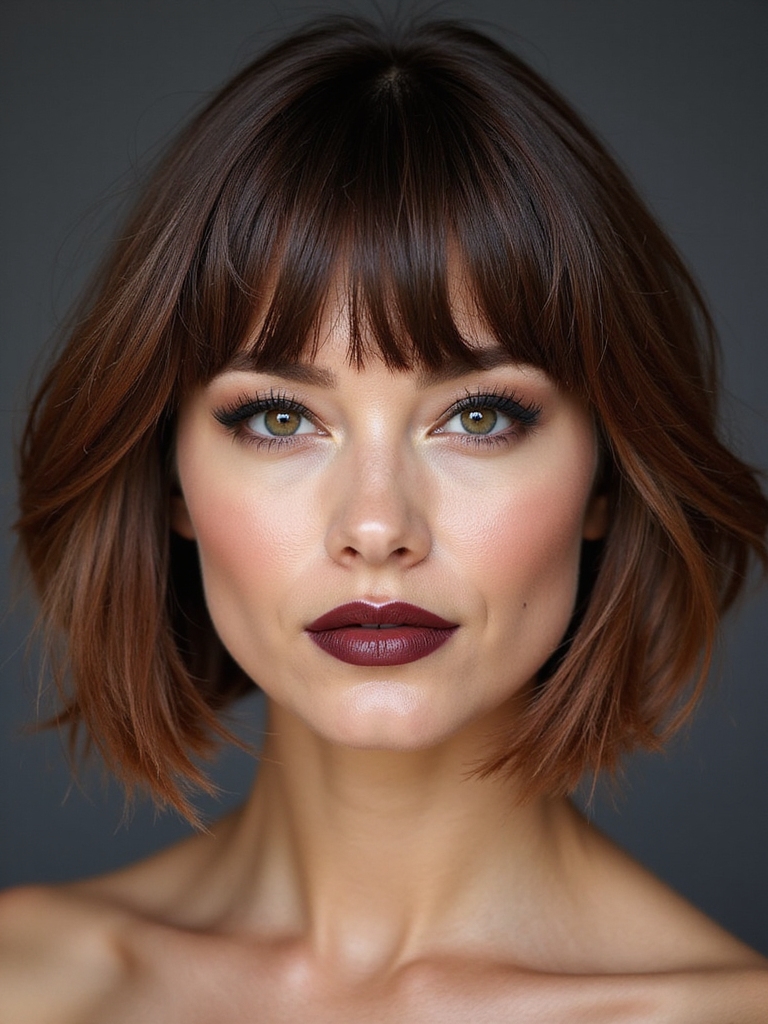
Blunt bangs are usually the ones round faces are warned away from, since a heavy, straight-across line can add width and shorten the face. But you don’t have to give them up entirely; you just have to soften them. A blunt fringe cut with plenty of texture and feathered ends loses the hard horizontal line while keeping the bold look.
Ask specifically for texture and length: a blunt base broken up with point-cutting so it comes across soft, kept long enough to graze the brows and stay low. Done that way, even a round face can wear a bolder fringe.
- Ask for a textured, point-cut base, not a solid blunt line.
- Keep them longer, grazing the brows, to avoid shortening the face.
- Feathered ends soften the width a hard blunt fringe would add.
Piecey, Separated Bangs
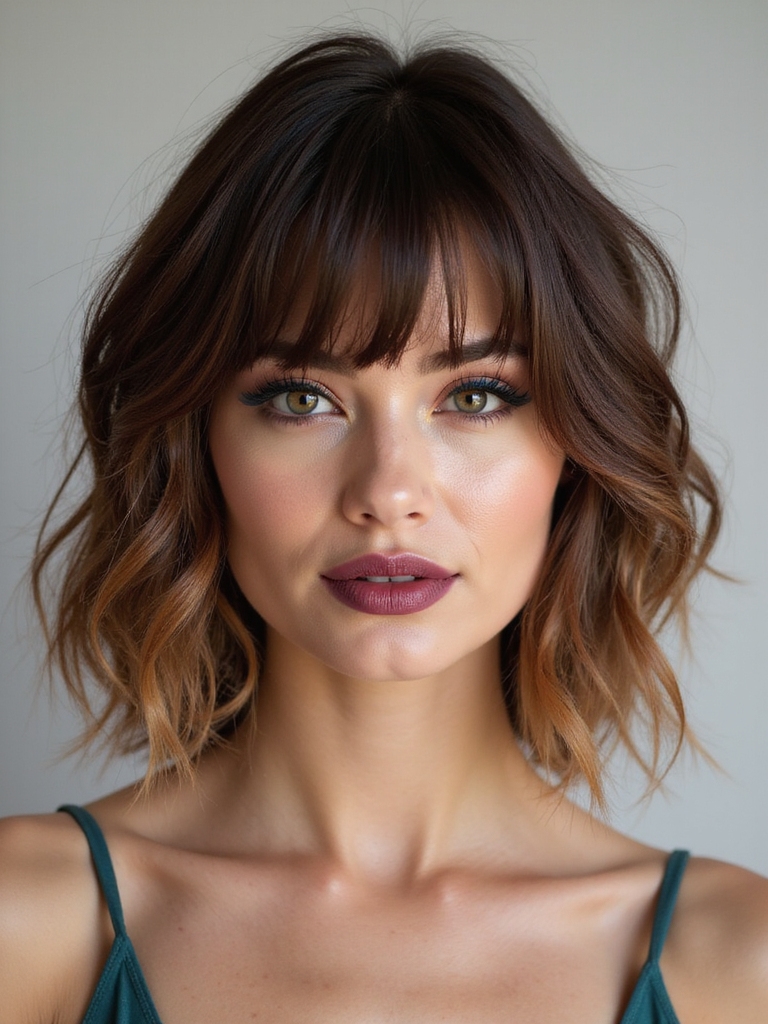
Piecey bangs are separated into distinct, textured pieces with gaps between them, and those gaps are a round face’s friend. By breaking up what would otherwise be a solid line, they stop the fringe from reading as added width.
Gaps Are Your Friend
The separated pieces also add a cool, undone texture that keeps soft round features from looking too sweet. It’s an easygoing, modern fringe that pairs perfectly with a shag or layered cut.
Style them with a little texture paste to define the pieces, and they frame the face with soft movement and separation. Undone-looking and quietly slimming at once.
Side-Swept Bangs and Layers
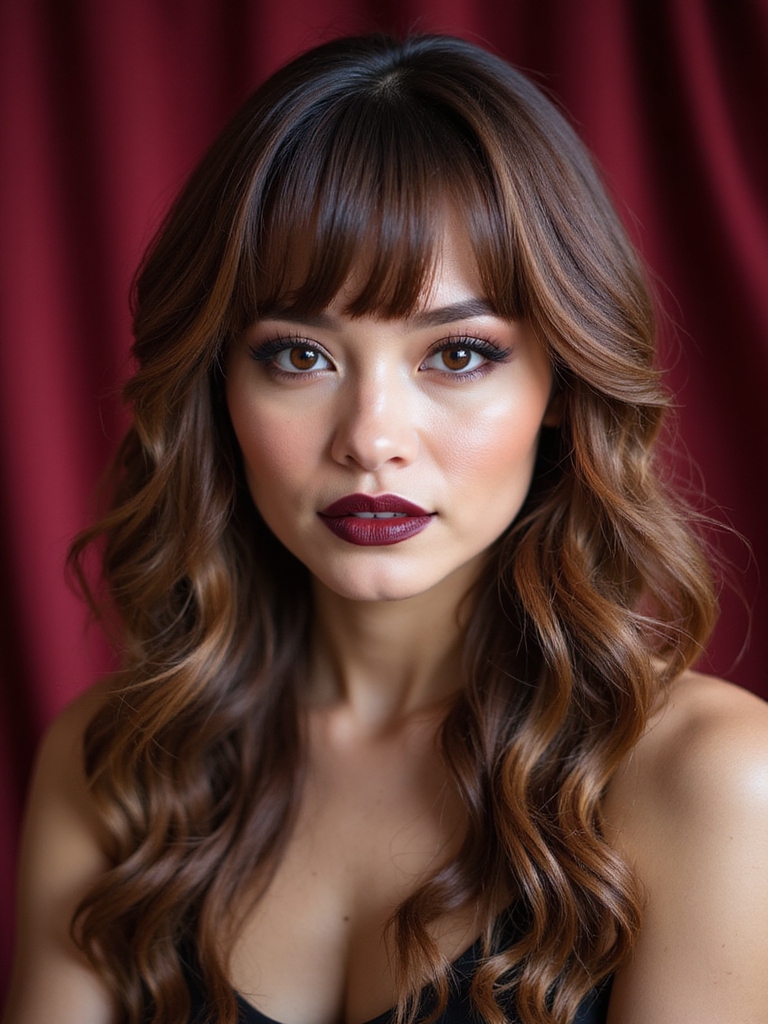
Side-swept bangs that blend into face-framing layers are a round face’s dream team. The diagonal sweep of the fringe leads into longer layers that continue down the sides of the face, creating one long, slimming vertical line from the fringe to the ends.
This combination frames and narrows the face beautifully, since the eye follows the sweep down through the layers in one continuous line. It’s soft, flattering, and endlessly wearable. Browse side-swept bangs for the full range.
- The sweep flows into layers for one long, slimming line.
- Face-framing layers narrow the cheeks and jaw.
- It’s soft, low-maintenance, and grows out gracefully.
Micro Bangs, Handled Carefully
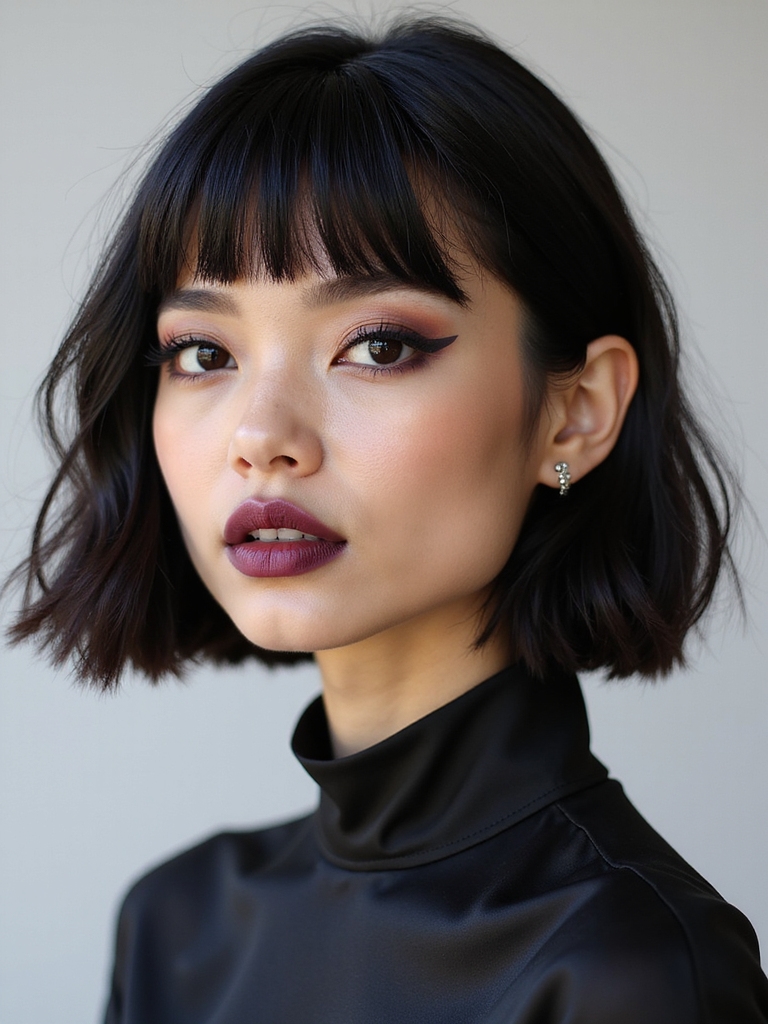
Micro bangs are the boldest fringe and the trickiest on a round face, since a short, high line can emphasize width and shorten the face further. They come with the biggest warning label here. But if you love the look, it’s not off-limits; it just needs handling.
The way to make micro bangs work on a round face is to keep them soft, textured, and a touch asymmetric, always broken up. A little diagonal and plenty of separation break up the width, and pairing them with lots of length and height elsewhere balances the proportions.
It’s a look for the confident, and it’s the one fringe here to go into with open eyes. Ask a skilled stylist to angle and texturize it for your face; see micro bangs for how far to push it.
🅰️Long and swept
Cheekbone-length, side-swept, or curtain bangs that add vertical length; the safest round-face choice.
🅱️Short and bold
Micro or blunt bangs; doable if softened, textured, and angled, but they need a careful cut.
Curly and Wavy Bangs
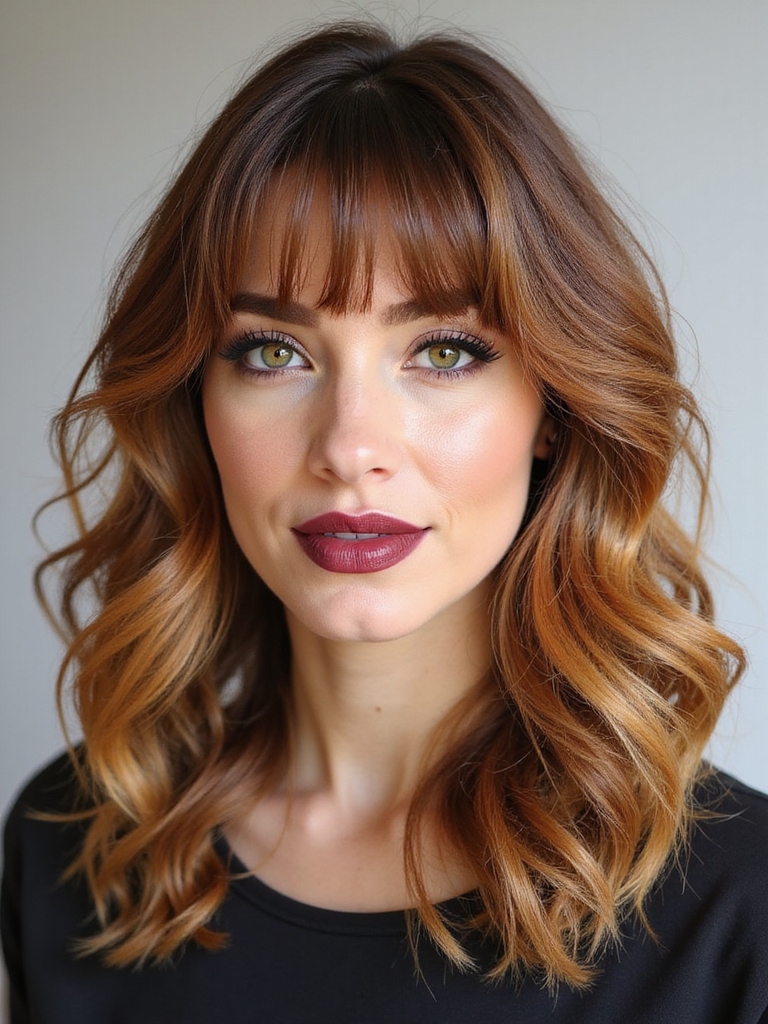
Curly and wavy bangs can flatter a round face beautifully, since curls add height at the crown and bring soft, irregular movement to the shape. As always with curls, everything hinges on the cut. What to keep in mind:
- Cut curly bangs dry, curl by curl, since they spring up much shorter when dry.
- Longer, cheekbone-length curly bangs lengthen better than short ones.
- The same rules apply as any curly bangs: work with your pattern, not against it.
Layered Thick Bangs
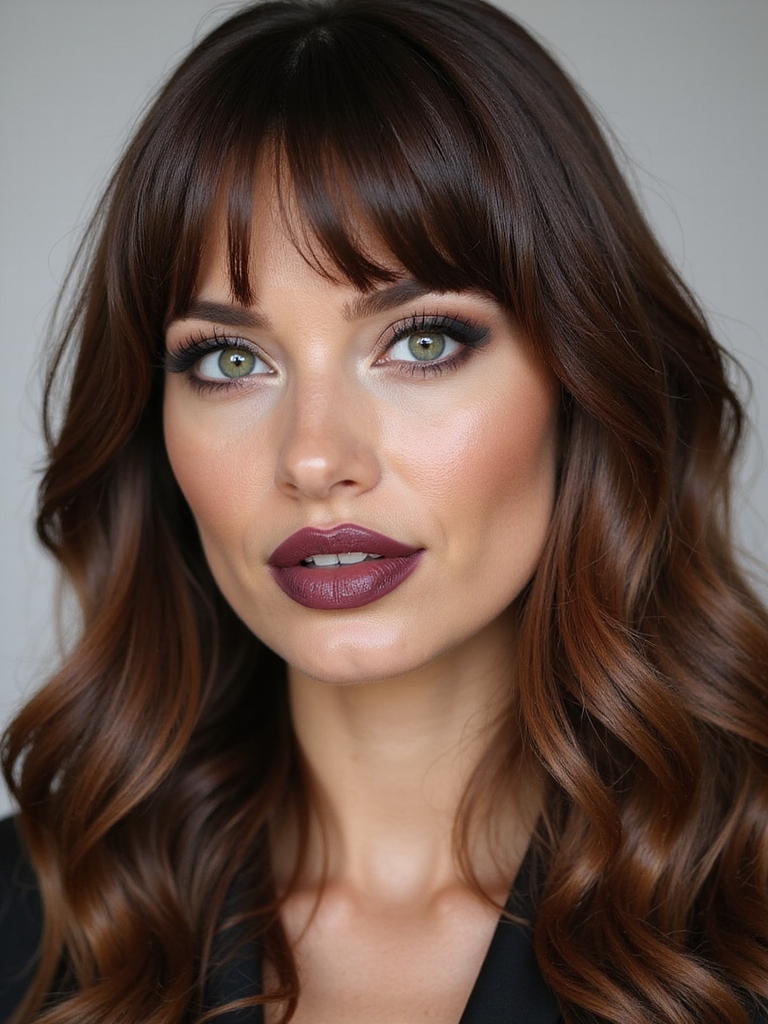
If your hair is thick, a fringe can quickly turn heavy and add width, so layering is what keeps thick bangs round-face-friendly. Cutting internal layers into the fringe removes bulk and breaks up the density, so it falls in soft, moving pieces with air through it.
Managing the Weight
The layering lets a thick fringe stay light enough to lengthen the face, and it makes it far easier to style. Ask for the weight taken out and the length kept long, and thick hair can absolutely wear bangs on a round face.
It’s proof that texture and length, not avoidance, are the answers for a round face. Almost any fringe can work once the weight and the horizontal line are managed.
ℹ️The Round-Face Rule
The one principle behind every round-face fringe is vertical over horizontal. A round face reads balanced when the eye is led up and down rather than across, so length, angles, center parts, and separated texture flatter, while short, solid, straight-across lines add width. Everything else is just style.
Bangs for Fine Hair
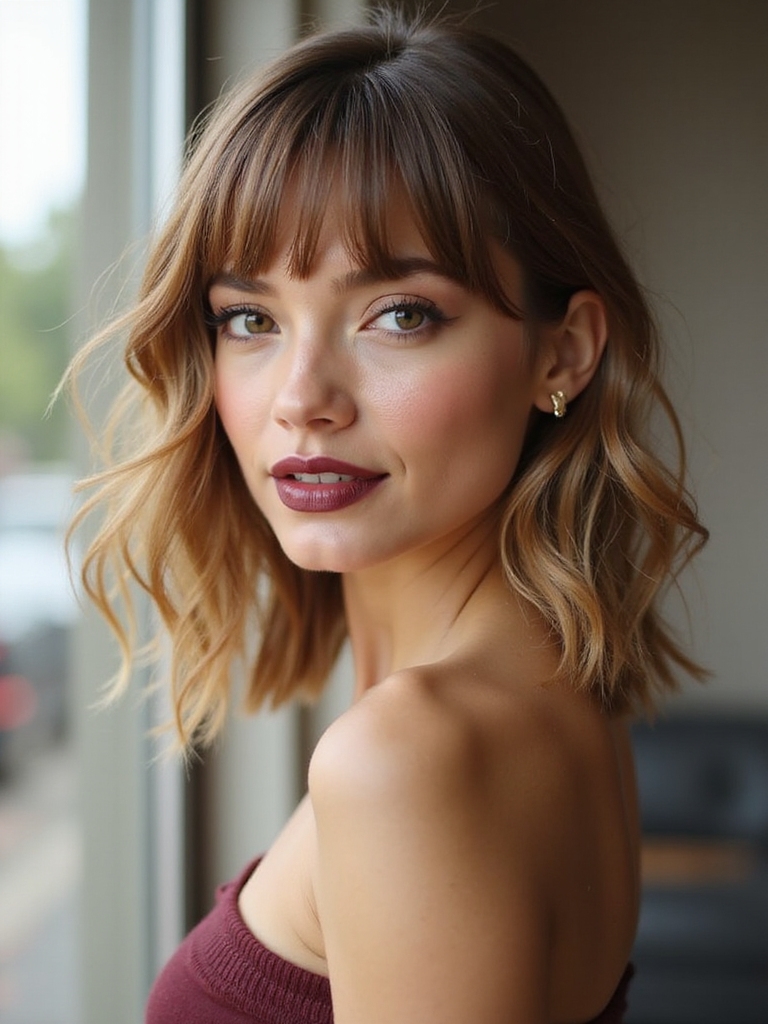
Fine hair and a round face are an easy match for bangs, since fine hair naturally makes the airy, wispy fringes that flatter roundness. Without much density, a fine fringe falls light and airy with plenty of separation. How to make the most of it:
- Lean into wispy, feathered styles, which fine hair does naturally.
- A little volume at the roots adds the height that lengthens the face.
- Keep a texture spray handy, since fine bangs can fall flat by afternoon.
A Middle-Part Fringe
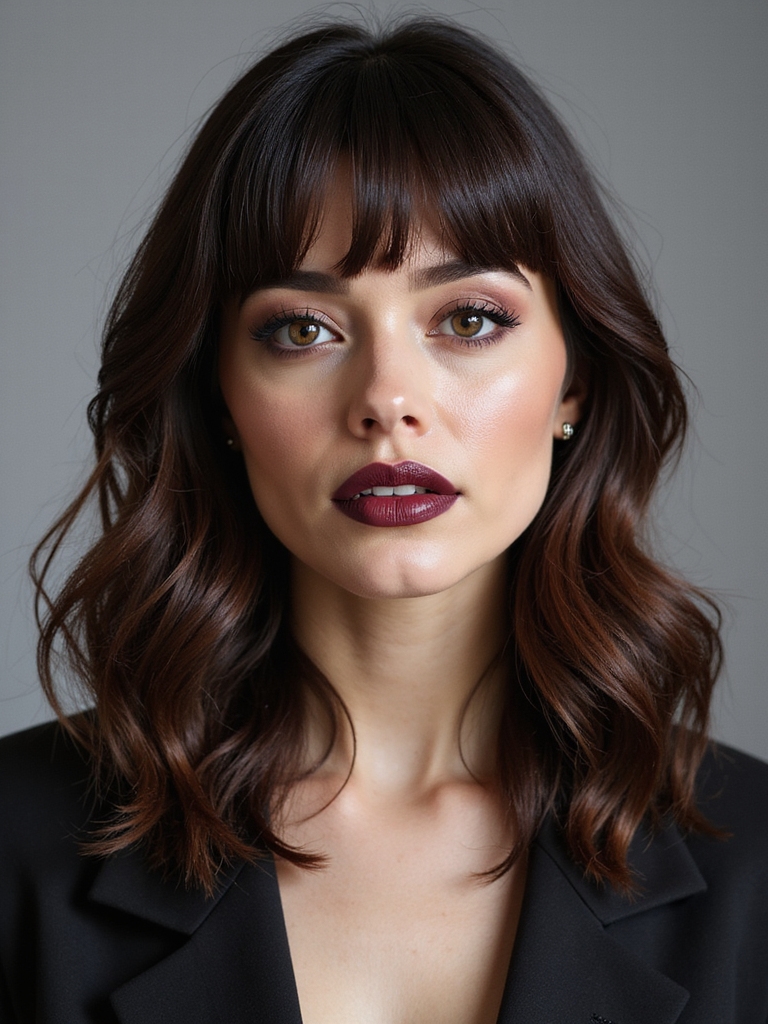
Few choices slim a round face as reliably as a middle part, and a fringe parted down the center doubles the effect. That central line runs straight down the center of the face, adding vertical length right where a round face benefits from it most. Why it works:
- The center part creates a strong vertical line that lengthens the face.
- It opens up the center of the forehead, breaking up the width.
- It works with curtain bangs or any soft, parted fringe.
Shag Bangs
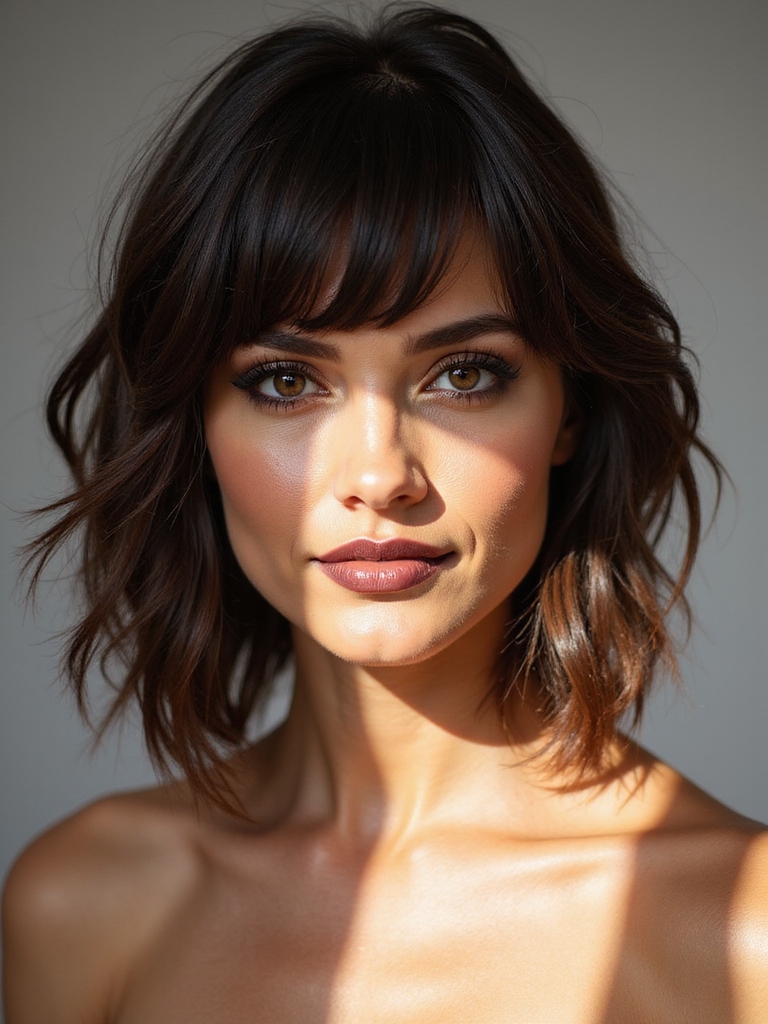
Shag bangs, the piecey, textured fringe that comes with a shag or wolf cut, are a great round-face choice because they’re all about vertical movement and broken-up texture. The layered, feathery pieces blend the fringe into the cut and add height rather than width.
Texture and Height
A shag’s whole architecture, volume up top, texture around the face, works in a round face’s favor, adding the length and structure that soft round features benefit from. The bangs are just the front of that flattering shape.
Worn tousled and undone, shag bangs are as low-effort as they are slimming. It’s a cool, textured cut and a round-face flattering shape rolled into one package.
👍Bangs that flatter
- +Curtain and middle-part fringes for lengthening vertical lines.
- +Angled and side-swept bangs for a slimming diagonal.
- +Wispy, piecey, and cheekbone-length styles that avoid width.
👎Bangs to soften
- –Short, blunt, straight-across micro bangs that add width.
- –Heavy, dense fringes that shorten the face; layer them out.
- –Anything cut high and solid, which emphasizes roundness.
Heatless Bang Styling
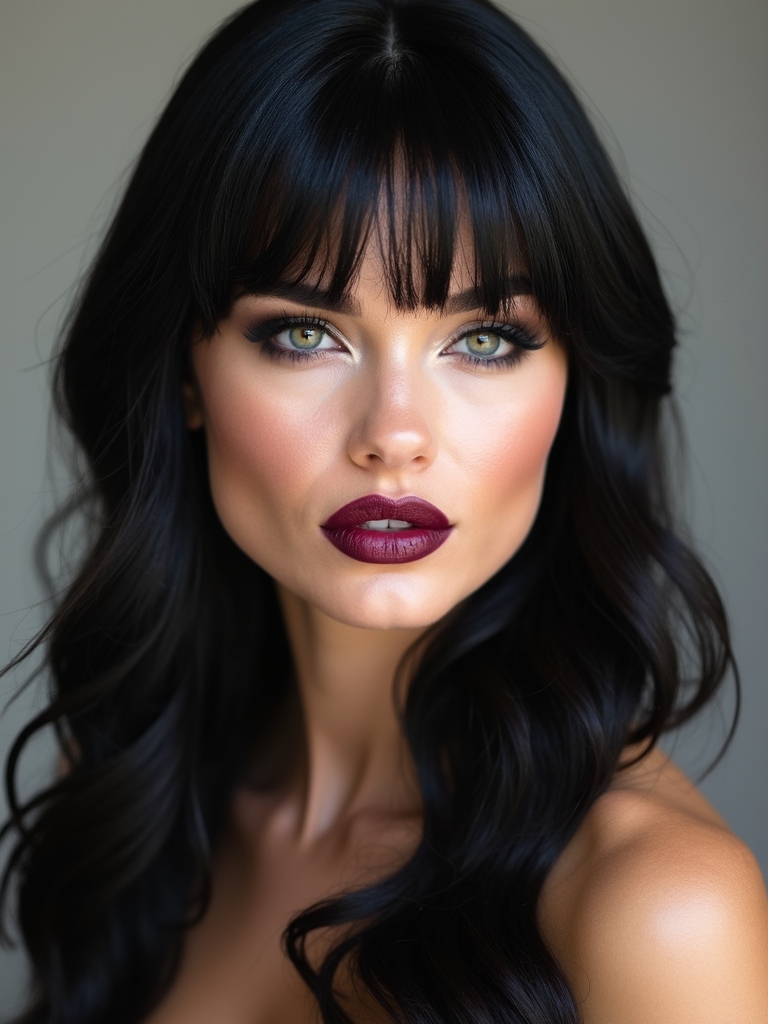
You don’t need hot tools to keep a round-face fringe looking good, and skipping the heat protects the fine, fragile hairs at your hairline. A little smoothing cream and a soft brush shape most bangs neatly, and setting damp bangs with a couple of pins as they dry keeps them sleek.
For a round face specifically, encourage a little height at the roots and a soft sweep to the sides as they dry, which builds in the length and movement that flatter you. Heatless, healthy, and still shaped to slim.
Maintenance and Care
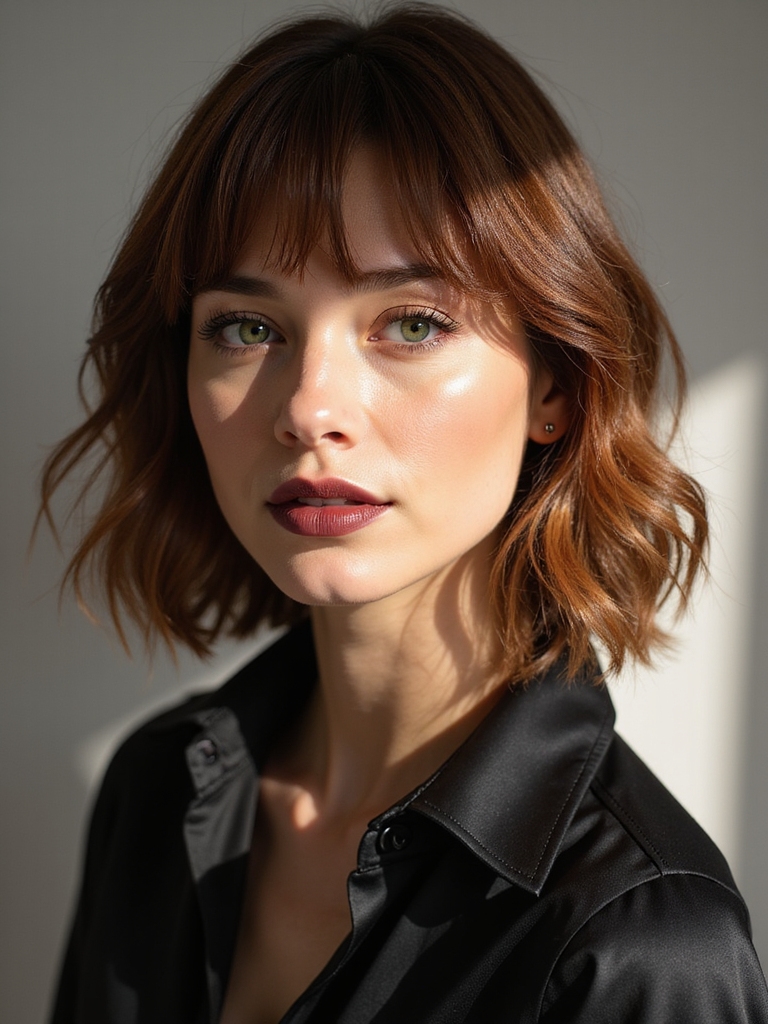
For a round face, keeping bangs trimmed isn’t just tidiness, it’s what preserves the slimming. As a fringe grows out it gets heavier and drops toward a flat, horizontal line, the very width-adding shape you cut it to avoid, so a trim roughly every two weeks keeps the length, texture, and angle doing their work. Many salons trim a fringe free between full cuts; a charged one is a quick, cheap $15.
The bangs also turn oily and lose their shape faster than everything behind them, since they rest against your skin. Refresh them between washes, keep the styling gentle and heat-light so the fine hairline hair stays strong, and dry them with a little sweep and root height to hold the lengthening line.
Stay on top of the trims and the texture and a round-face fringe keeps slimming. If your features lean more balanced than round, the bangs for an oval face guide covers the wider range.
Round-Face Bangs Questions
?What are the most flattering bangs for a round face?
Curtain bangs and long, angled side bangs top the list, because they create the vertical and diagonal lines that lengthen and slim a round face. Wispy fringes, cheekbone-skimming bangs, and side-swept styles are close behind. The common thread is length and angle over a short, solid, straight-across line, which is the one thing that adds width.
?Can a round face wear blunt or micro bangs?
Yes, with care. Blunt and micro bangs add the horizontal width a round face usually wants to avoid, but softening them fixes that. Ask for plenty of texture and point-cut ends instead of a solid line, keep them a touch longer or angled, and pair them with height and length elsewhere. Handled that way, even bold bangs can work.
?How do bangs make a round face look slimmer?
By trading width for length. Bangs that create vertical lines, a center part, a long sweep, or a diagonal angle, lead the eye up and down the face, which visually lengthens and narrows it. A hard horizontal line does the opposite, so the whole game is choosing shapes that draw the eye lengthwise.
?How often do bangs for a round face need trimming?
Roughly every two weeks, about the same as any fringe, since bangs grow into your eyes quickly. It matters a little more on a round face, because the length, texture, and angle doing the slimming work are lost when the fringe grows out heavy. Many salons will refresh the shape for free between full cuts, and a careful at-home trim is a learnable skill if you’d rather skip the extra visit.
Length Over Width
If you remember one thing about bangs for a round face, make it this: choose length and angles over width. Curtain, wispy, side-swept, angled, and cheekbone-skimming bangs all lead the eye up and down to lengthen and slim, while the short, solid, straight-across styles are the only ones to soften or approach with care. That single rule turns a confusing choice into an easy one.
So picture the vertical lines you want, curtain and center-part for gentle lengthening, angled and side-swept for real slimming, and pick the fringe that fits your hair and your style. Ask your stylist to cut for length and texture, keep it trimmed, and a round face wears bangs as beautifully as any other.
Favorites to Revisit