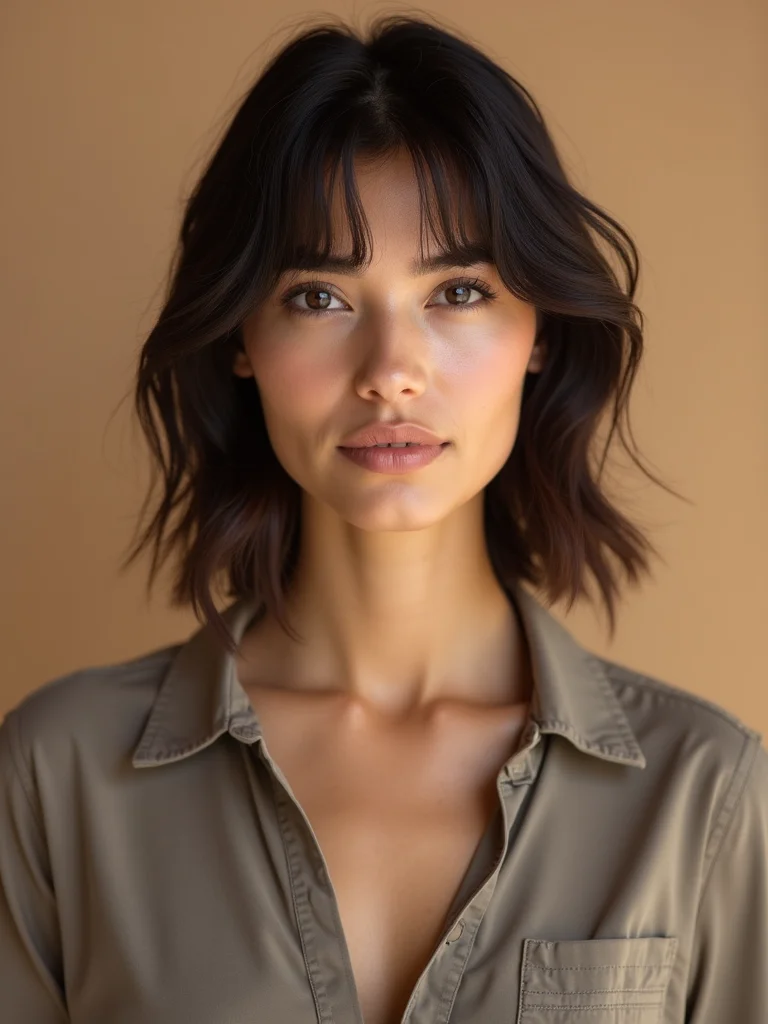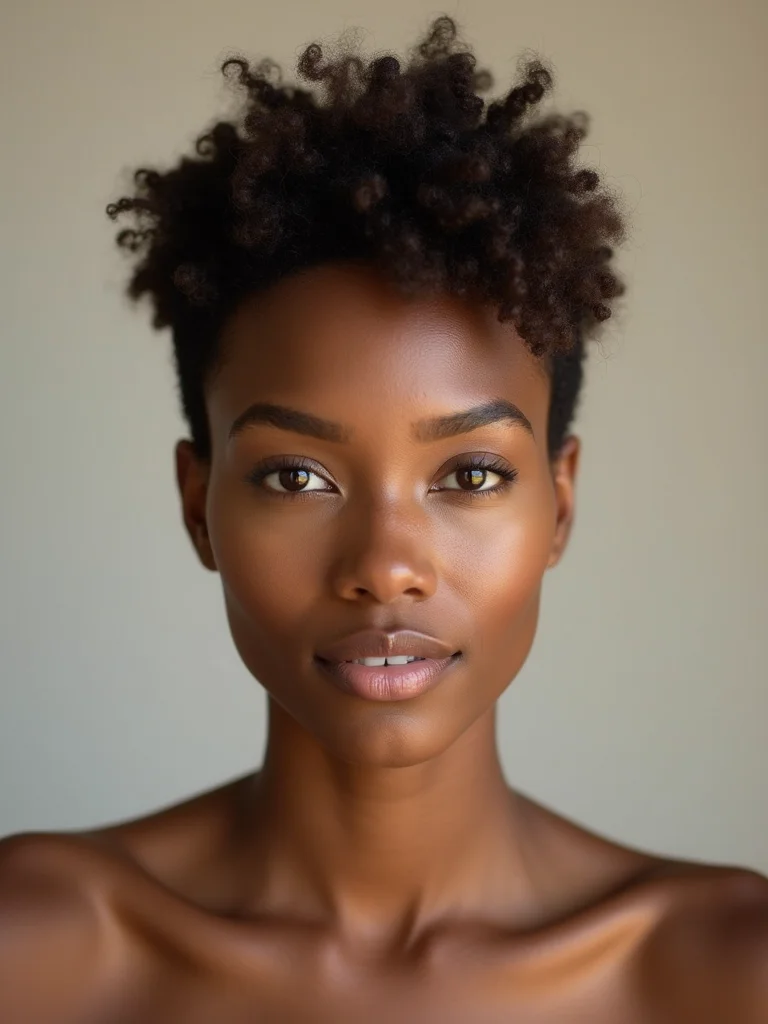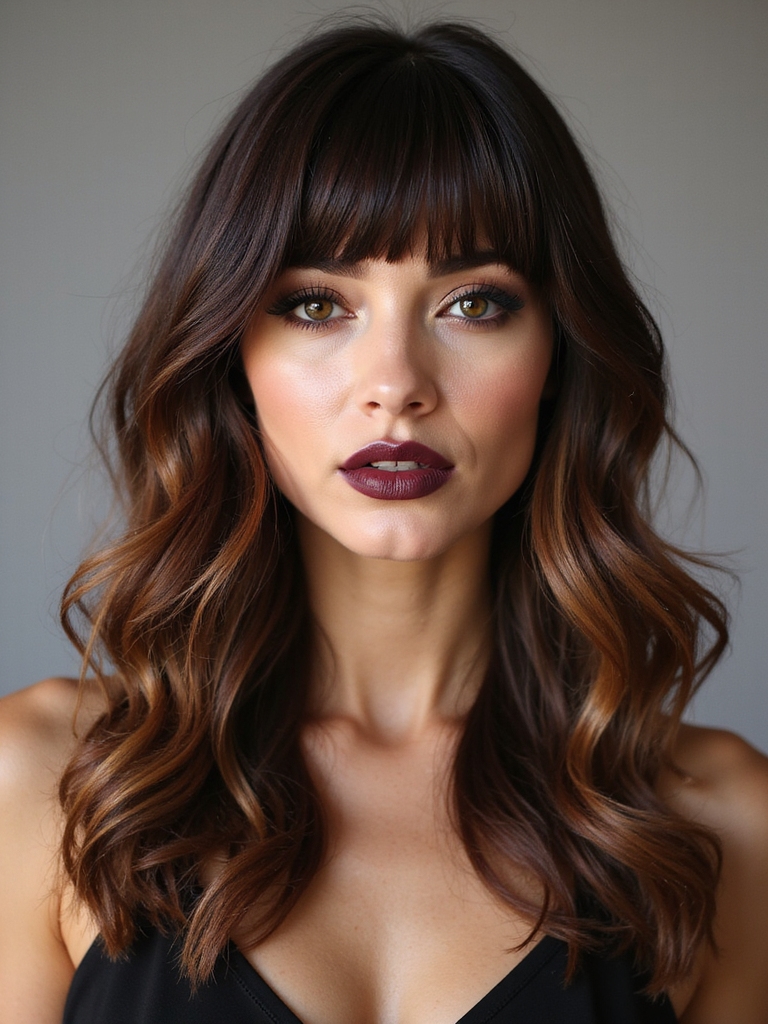
Long hair solves the length problem and creates a framing problem: past a certain length, nothing at the front is doing any work anymore, and the face just disappears into a wall of hair. Curtain bangs on long hair fix that specific issue without asking for a single inch of length back.
Fifteen versions follow, built around the one advantage unique to long hair: there’s so much length behind the fringe that it blends in almost immediately, no matter how the front section gets styled.
Why Length Changes the Whole Equation
The core mechanic here is length, not face shape. Because the shortest pieces sit around the cheekbone with feet of hair behind them to blend into, the grow-out stage that plagues shorter bangs barely registers on long hair.
That same length is what makes this fringe so versatile: the same basic shape reads completely differently blown out big, worn sleek, or left to air-dry into waves.
Soft Face-Framing Bangs That Keep Your Length

The most common fear before cutting any fringe into long hair is losing the length, and this soft, face-framing version answers that fear directly: nothing meaningful comes off the ends, since the shortest pieces sit up near the cheekbone.
Everything below that point stays exactly as long as it was. The fringe pieces simply melt into the layers around them, so the shift from short to long never announces itself as a hard edge.
It’s the version worth starting with for anyone who’s truly nervous, since a stylist can always cut the pieces shorter later, but can’t easily undo a fringe cut too short on the first try.

Wispy, Airy Fringe for Easy Movement
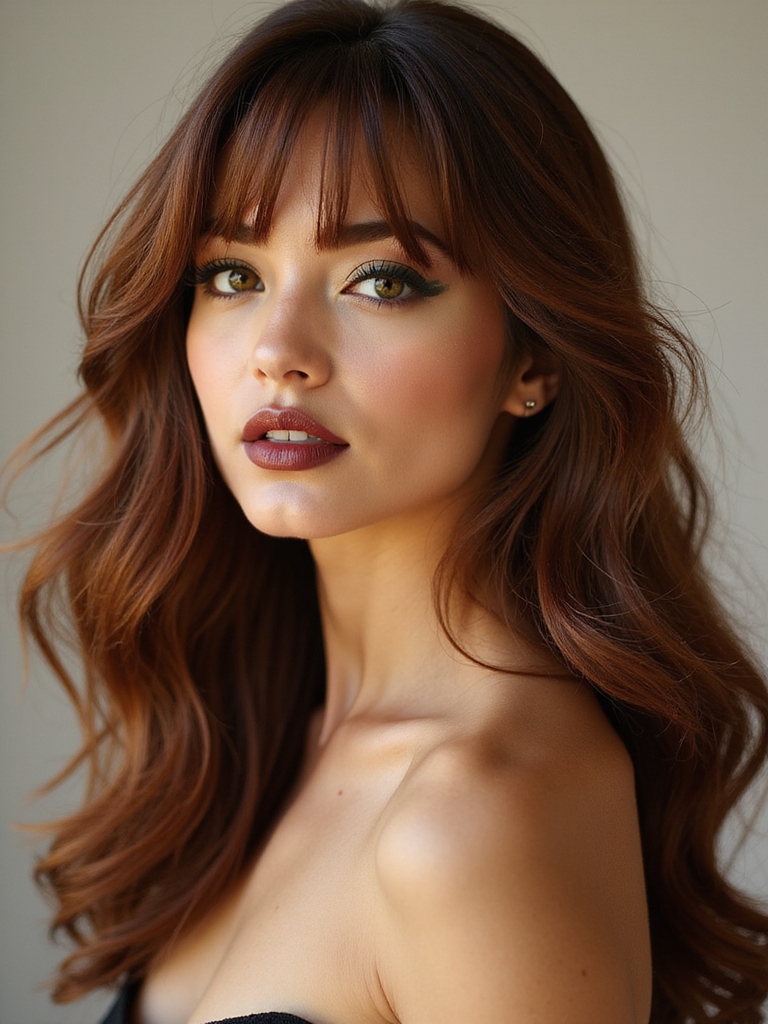
A wispy, airy curtain fringe is the lightest version to wear on long hair, sheer enough that a little forehead shows through rather than being fully covered.
That sheerness suits fine to medium hair especially well, since a denser fringe would need thinning to reach the same airy effect, while this version starts light by design. For an even softer take on the same idea, see our wispy curtain bangs guide.
- Sheer enough to let some forehead show, never a solid block
- Moves easily with long lengths instead of sitting stiff at the front
- A quick blow-dry forward, then to the sides, is the entire routine
Voluminous Blowout With a Feathered Fringe

Long hair blown out into a full, bouncy finish pairs naturally with a feathered fringe rolled back to match. Where a flat fringe would look out of place against that much volume, the feathering gives it enough lift to belong.
Built for a Night Out, Not a Weekday
A large round brush drives the whole look: the fringe and the lengths both get rolled back and under at the same time, so the front and the rest of the blowout move as one shape instead of two competing textures.
This is the version worth saving for an occasion rather than a Tuesday. Getting the volume and the roll right typically takes a real blow-dry session, not a five-minute routine.
A few fringe terms worth knowing before your appointment:
📖Point-Cutting
A vertical, angled snip into the hair ends, used to soften a line that would otherwise sit blunt and heavy.
📖Graduation
Layering a fringe from short to long across its width, used to lighten a heavy or thick section.
📖Feathering
Thinning just the very tips of the fringe so they taper instead of ending abruptly.
Textured Layers Paired With Swoopy Bangs

Long, textured layers and a swoopy curtain fringe share the same relaxed, current energy, which is why the pairing works so well rather than feeling like two separate decisions.
The layers add movement through the length while the fringe swoops back at the front, and because both elements are built around soft, undone texture, neither one ever looks like it’s competing with the other.
A little texturizing spray worked through the ends, plus a quick sweep-back on the fringe, covers the entire styling routine most mornings.
Sleek Long Hair With a Center-Split Fringe

For a more polished finish, a center-split fringe on sleek, blow-dried long hair reads modern rather than retro, the fringe parting cleanly down the middle and falling in two smooth panels against equally smooth lengths. It’s a close cousin to the styling logic in our curtain bangs on straight hair guide.
- Parts cleanly down the center into two symmetrical panels
- Needs properly smooth, glossy lengths to work; texture fights the effect
- A flat iron or smoothing blow-dry keeps both the fringe and length aligned
Beach Waves With a Soft, Undone Fringe
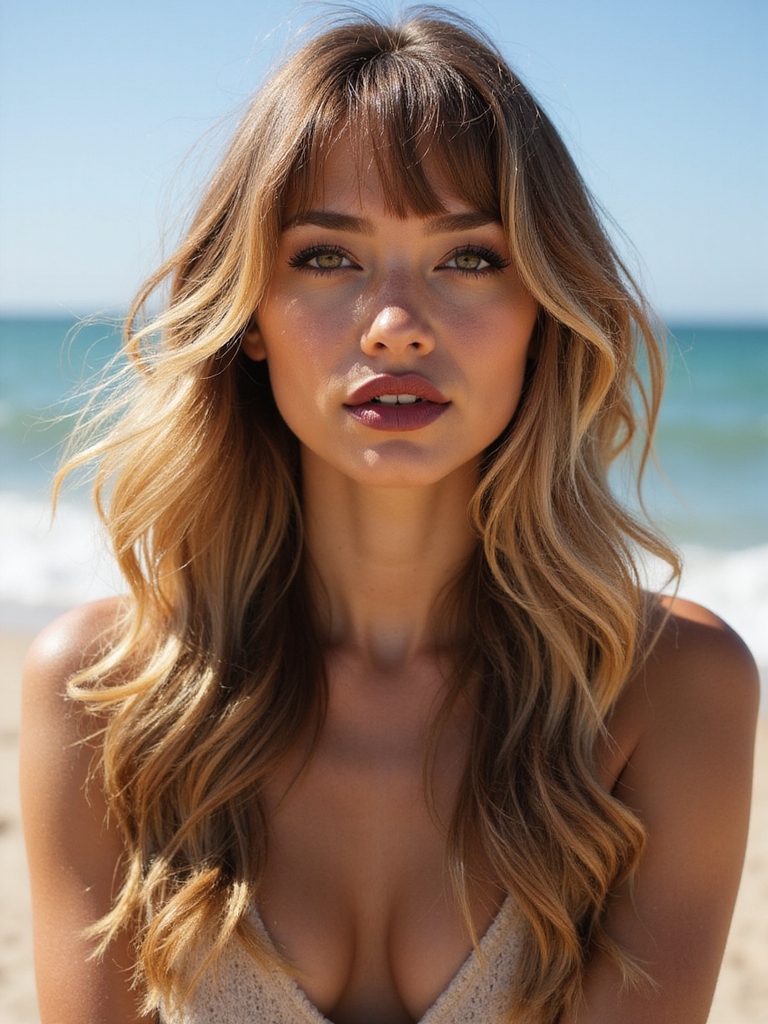
Beach waves paired with a soft, undone curtain fringe make up the most relaxed combination on this list, all loose texture from root to end.
The fringe stays unstyled and sweeps naturally to the sides above tousled, wave-textured lengths. A salt spray brings out the same wave pattern in both the fringe and the rest of the hair, so nothing about the front looks separately done from the back.
It’s also close to the lowest-upkeep version here. A little undone is the actual goal, so there’s nothing to fuss over if a piece falls out of place.
Retro Sixties Sweep on Extra-Long Lengths
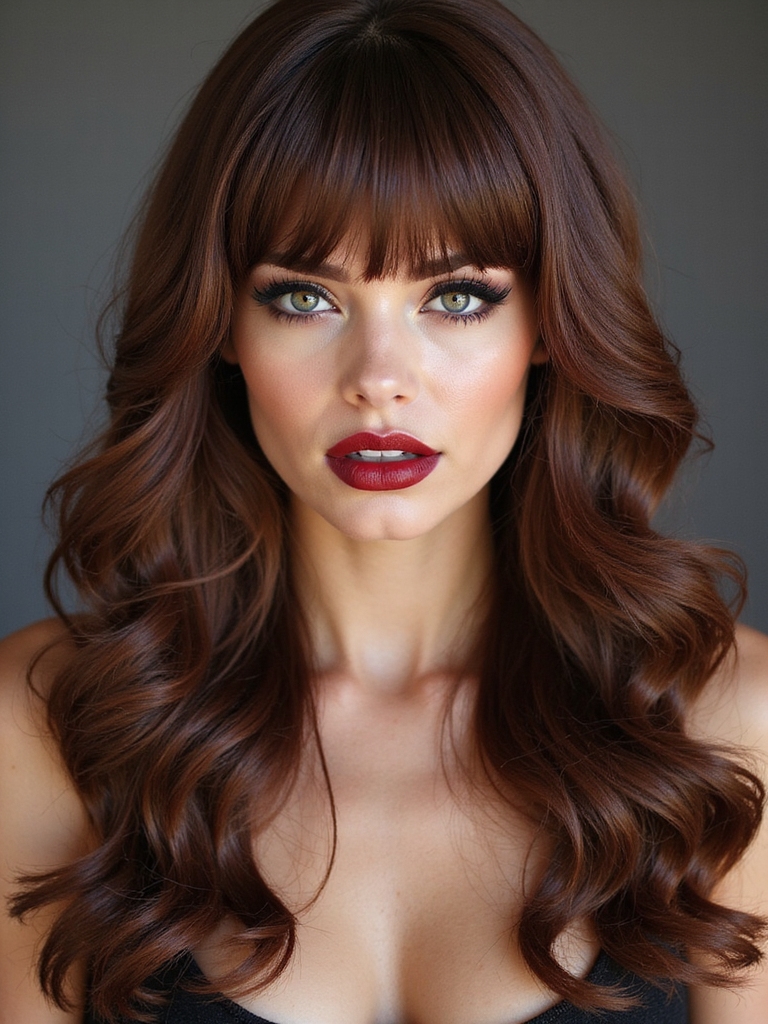
A fuller, more lifted curtain sweep brings genuine sixties energy to extra-long hair, the volume at the front playing against the sheer weight of everything hanging below it.
- A pronounced lift at the root nods to the era without full costume drama
- Contrasts deliberately against long, sheer lengths rather than blending into them
- A round brush plus a warm-air finish builds the lift; cool air falls flat fast
Shaggy Layers and a Piecey Fringe
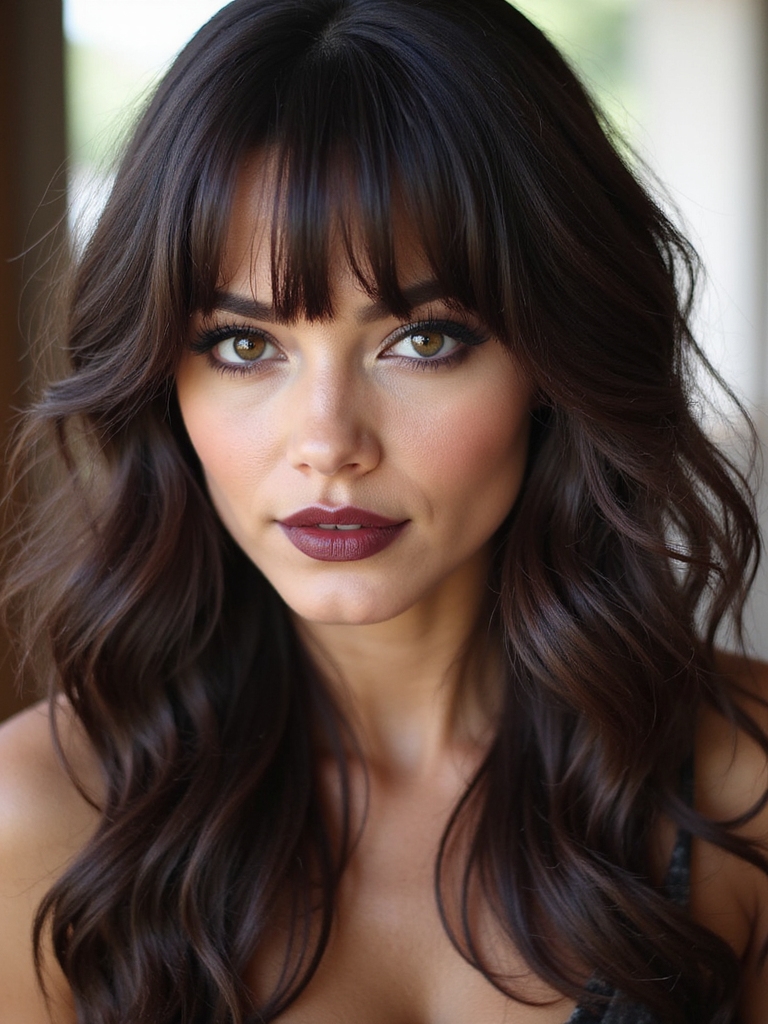
Long, shaggy layers and a piecey curtain fringe both lean into texture and a bit of visible edge, the fringe separating into individual pieces that echo the choppy layering running through the rest of the length. It’s built on the same layering logic as our long shag guide, just with a fringe added to the front.
- Piecey separation in the fringe echoes the choppy shag layers below
- Improves with growth rather than needing an early touch-up
- A matte paste defines the pieces without adding shine
“The lift here comes from the root, not the ends. Clip the fringe up while the rest of the blowout finishes, then release it last and set the shape with a quick blast of cool air.”
Curly and Coily Curtain Bangs

On long curly and coily hair, a curtain fringe frames the face with springy, natural texture rather than fighting it into submission. The fringe parts near the center and the curls fall to either side, staying defined instead of flattening under their own weight.
A stylist needs to cut it dry, in the hair’s natural, sprung state, to see exactly how much shrinkage to plan for. Our curly bangs guide covers the cutting technique across curl patterns in more depth.
- Always cut dry, never in a stretched or wet state
- A leave-in conditioner keeps the curtain pieces defined through the day
- Shrinkage pulls the fringe up noticeably shorter than it looks wet
Fine Hair Boosted by a Graduated Fringe

On fine long hair, a light, graduated fringe adds visible body at the front without touching the density of the length behind it.
Why Narrow Beats Wide on Fine Hair
The graduation blends the shortest fringe pieces into the surrounding layers gradually, adding dimension that fine hair often lacks on its own, rather than sitting as one flat, thin panel.
Keeping the fringe narrow and the ends soft matters more here than almost anywhere else on this list. A wide, thick panel on fine hair reads stringy fast, no matter how it’s styled.
| Curl Pattern | Typical Shrinkage | Extra Length to Request |
|---|---|---|
| Loose Waves (2A-2C) | Minimal | Little to none |
| Curls (3A-3C) | Moderate | About an inch |
| Coils (4A-4C) | Significant | Two inches or more |
Thick Hair With Soft, Face-Opening Bangs
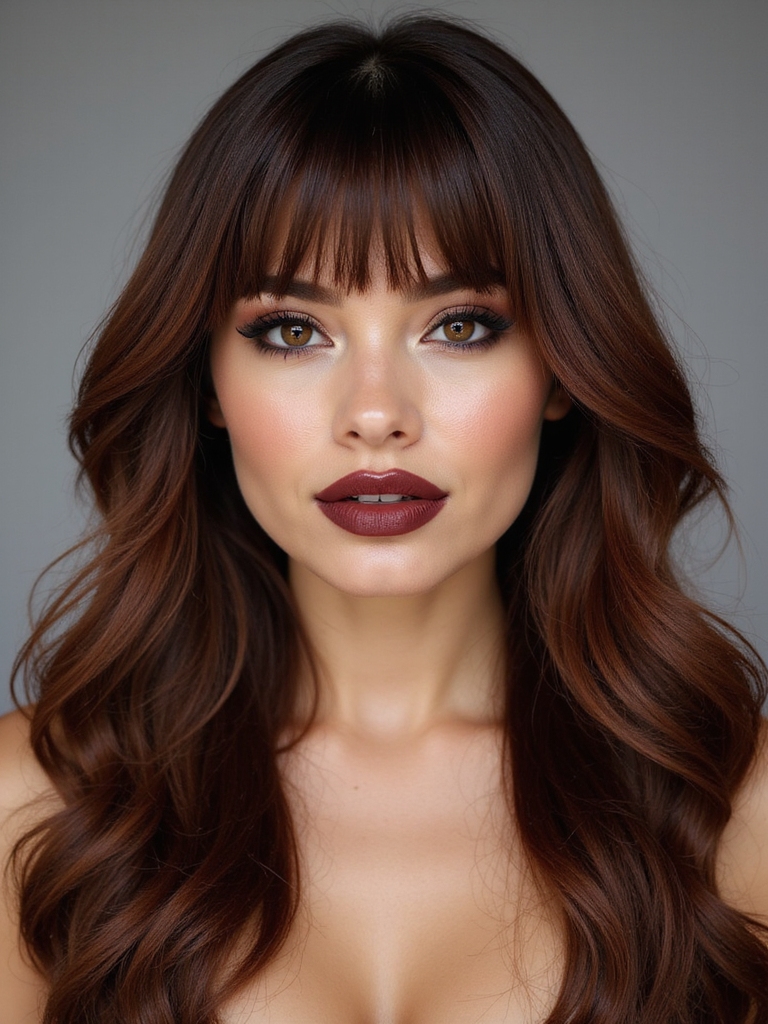
On thick long hair, a curtain fringe usually needs real thinning to sweep open properly instead of sitting like a heavy slab across the forehead.
Point-cutting breaks that density into soft, separated pieces, opening up the face while the rest of the length keeps every bit of its natural fullness intact.
- Point-cutting, not blunt cutting, breaks up density at the front
- Reduced bulk lets the fringe sweep instead of sitting flat
- The length behind the fringe stays completely untouched and full
Side-Swept Curtain Bangs for Dimension

Pushing the curtain fringe further to one side adds a soft diagonal line and a bit of quiet dimension to the whole front of long hair.
The off-center sweep tends to flatter round and heart-shaped faces especially, since it draws the eye across the face rather than straight down the middle. Compare it against a fully centered version in our curtain bangs side part guide.
Heatless Tricks for an Everyday Fringe
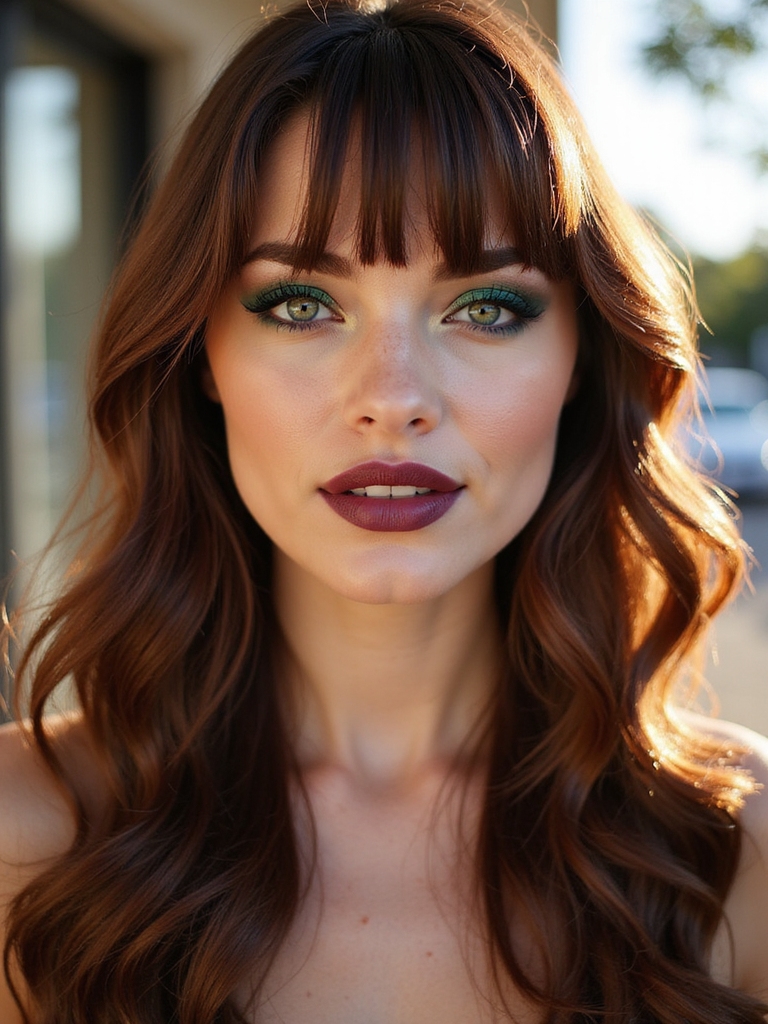
Curtain bangs on long hair don’t require daily heat, and a couple of heatless habits keep the sweep looking trained without a flat iron ever coming out.
Train the Sweep, Skip the Iron
Wrapping the damp fringe back and to the side as it air-dries builds the curtain shape on its own. Sleeping with the fringe pinned or wrapped back overnight reinforces the same direction by morning.
Skipping heat protects the fringe specifically, since it’s finer and takes more damage from repeated styling than the thicker lengths behind it ever would.
Maintenance That Keeps the Bangs Blended

The whole goal with curtain bangs on long hair is staying blended into the length as everything grows, and that takes very little ongoing work compared to a blunt fringe.
Because the pieces are already long and swept to the side, they grow directly into the surrounding layers rather than passing through an awkward, in-between stage. Plan on a fringe-only trim around the ten-week mark, usually a quick $15 to $25 add-on rather than a full appointment.
Two heatless routes, depending on the morning:
🎯Wrap and Clip
Damp-set the fringe wrapped around a finger, clipped in place until fully dry.
🎯Overnight Set
Pin the fringe back before bed and let it dry into the sweep while you sleep.
Fringe Lengths Tuned to Your Face Shape

The exact length and sweep of a curtain fringe can be personalized more on long hair than almost anywhere else, simply because there’s so much surrounding length to blend it into.
- Rounder faces: a longer, cheekbone-grazing sweep adds slimming angles
- Longer faces: a fuller, slightly shorter fringe adds width up top
- Square jawlines: a soft, wispy fringe takes the edge off strong angles
How to Get the Look
Curtain bangs suit a wide range of long-hair situations: hair that’s been grown out for years and finally needs a change up front, a face that’s started to feel flat or one-note, or a past bad experience with a different fringe style entirely.
The one group this doesn’t suit well is anyone set on a true, blunt, forehead-covering fringe. That’s a fundamentally different cut, built on a hard line rather than a soft blend, and asking for both in the same conversation usually leads to disappointment on one side or the other.
Long-Hair Curtain Bangs Questions Worth Asking
?Will curtain bangs actually shorten my length in any noticeable way?
No. The shortest pieces sit around the cheekbone, well above where most long-hair length actually lives, so the fringe borrows from the front section only. Everything past that point stays exactly as long as it was before the cut.
?How much shorter does the fringe end up once it’s styled versus how it was cut?
Curtain bangs are cut to length, not shrunk by styling, so what a stylist cuts is close to what shows day to day, aside from normal shrinkage on curly or coily texture. That predictability is part of why long-hair versions specifically feel low-risk compared to a blunt fringe.
?Can I switch between wearing it swept back and pinned away entirely?
Yes, and that flexibility is one of the real advantages of cutting it into long hair specifically. There’s enough surrounding length to pin the fringe back fully on a day it feels like too much, then let it fall forward again the next.
?What happens if I grow it out and change my mind later?
Grow-out is close to invisible with this cut. The fringe pieces simply lengthen into the surrounding layers over a few months, with no blunt line left behind to manage, so changing your mind later costs almost nothing.
The Length Stays; the Front Finally Works
A year from now, hair grown out this way looks almost the same as it does on day one: the fringe pieces will have simply lengthened along with everything else, still swept back, still framing the face, with no dramatic regrowth phase to manage in between.
The real question worth sitting with isn’t which of these fifteen looks best in a photo. It’s whether the actual fear was ever the bangs themselves, or just the thought of losing length to get them. If it’s the second one, this fringe was built to solve exactly that.
More to Browse