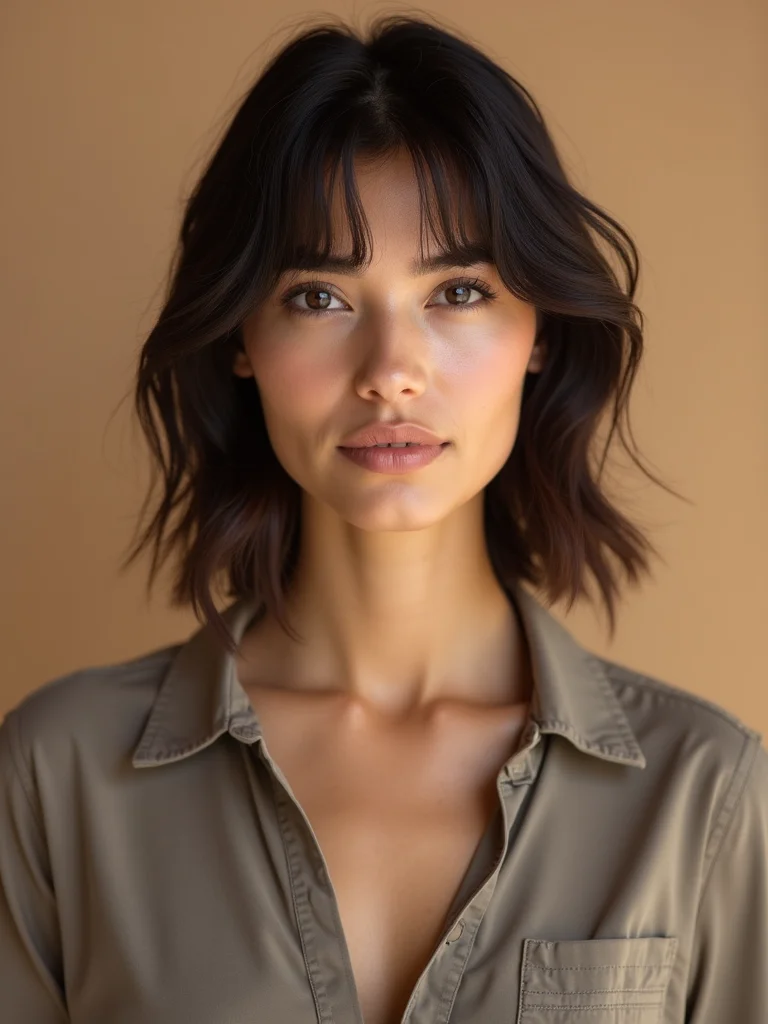
Two women walk past each other on a Tuesday, both with hair cropped to roughly the same length. One looks like she stepped out of a magazine this month. The other looks like a photograph from 1994, and neither of them chose that difference at the length stage.
A short pixie cut goes dated in specific, fixable ways: hair sitting as one solid cap, edges cut perfectly level all the way around, and a finish styled into submission. What follows is fifteen versions, each with the one detail keeping it on the right side of that line.
What Makes a Crop Look Current
- Broken edges beat perfect ones. A perimeter cut to one clean, even line is what produces the helmet. Softening those edges is the biggest single difference between a modern crop and a dated one.
- Volume belongs high and narrow. Width at the ears is the eighties silhouette. Height at the crown with close sides is the current one, and that gets decided by the scissors, not the dryer.
- Under-finishing wins. A crop styled all the way to completion looks set. One abandoned about eighty percent of the way through looks deliberate, which is why texture spray outperforms almost anything more expensive here.
A Softly Textured Pixie With Bangs
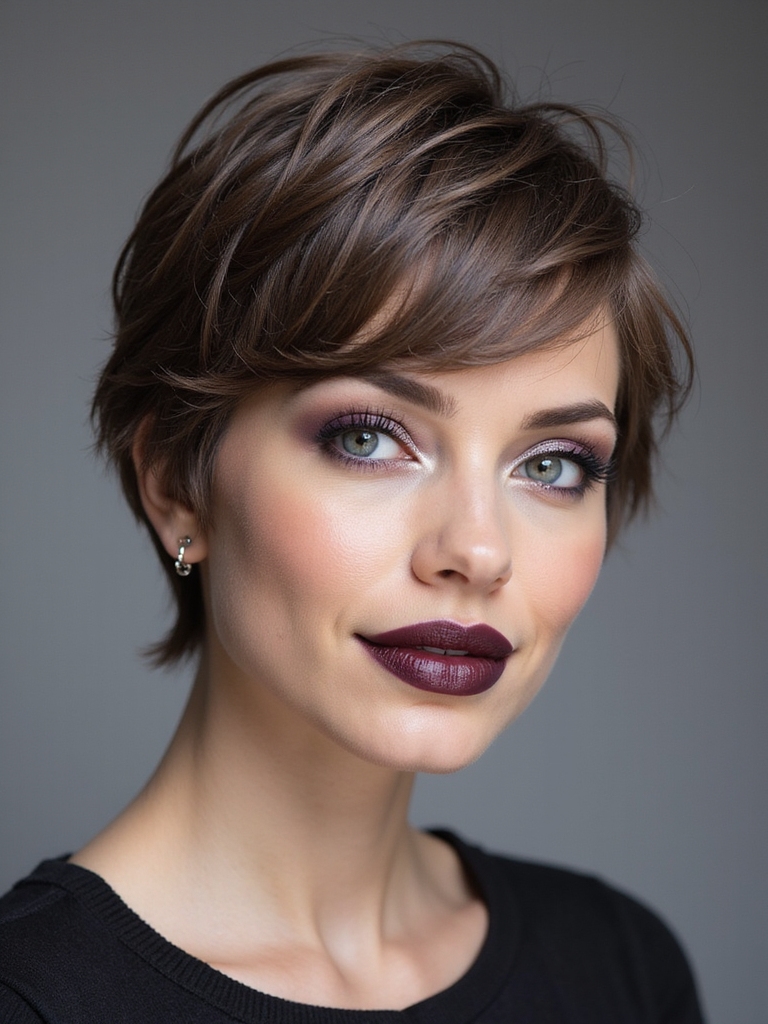
The detail keeping this one current is that nothing sits flat. Bangs on a crop dated badly through the nineties, dried smooth against the forehead as one sheet. Break the same length into separate pieces and it looks like a different decade. It is a five-second change in how the hair is dried and it decides which decade the cut belongs to.
- Ask for the front cut into pieces of slightly varying length across the whole width
- Dry the bangs with fingers only, stopping while they still look slightly rough
- Looking like a curtain across the forehead means they need breaking up at the next visit

A Sculpted, Lacquered Pixie
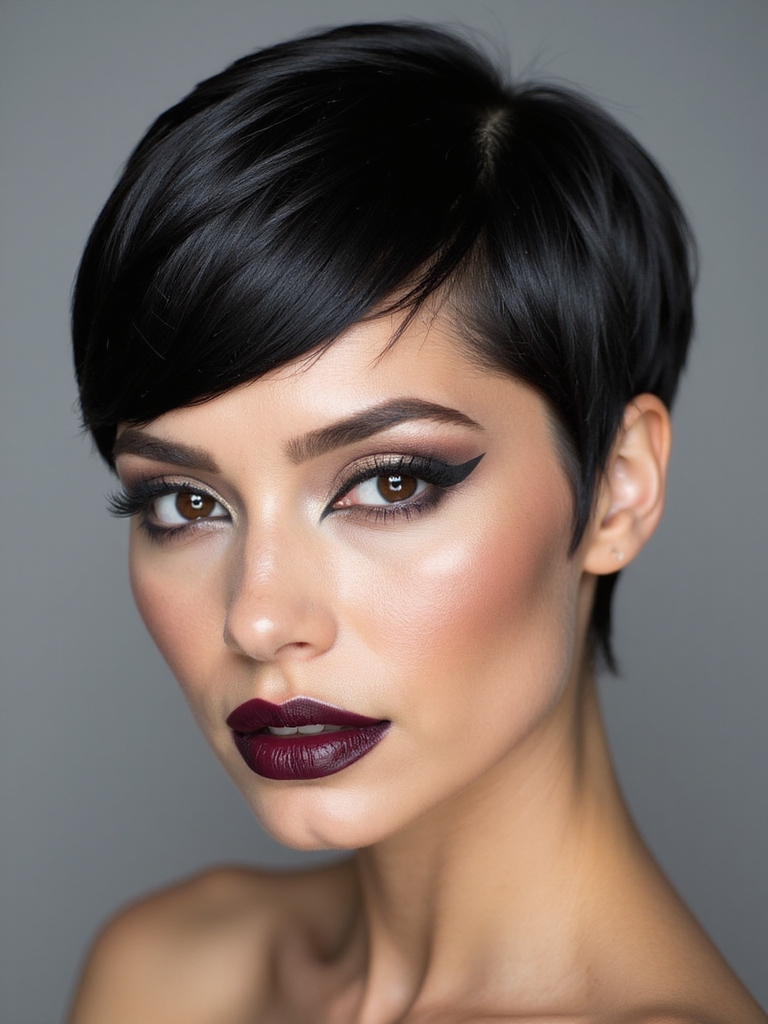
High shine is the one place where a modern crop and a dated one look most alike, and the difference is where the gloss sits. Lacquer over a shape with movement looks expensive. Over a flat one it looks like set hair.
Gloss Over Movement, Not Instead of It
The current version keeps sections visible under the shine. Product goes on as a thin film following the pieces already there. A thick coating glues them into one surface instead.
It suits strong bone structure and photographs beautifully, which is why it turns up at events far more often than on an ordinary Tuesday.
A Featherlight Layered Pixie
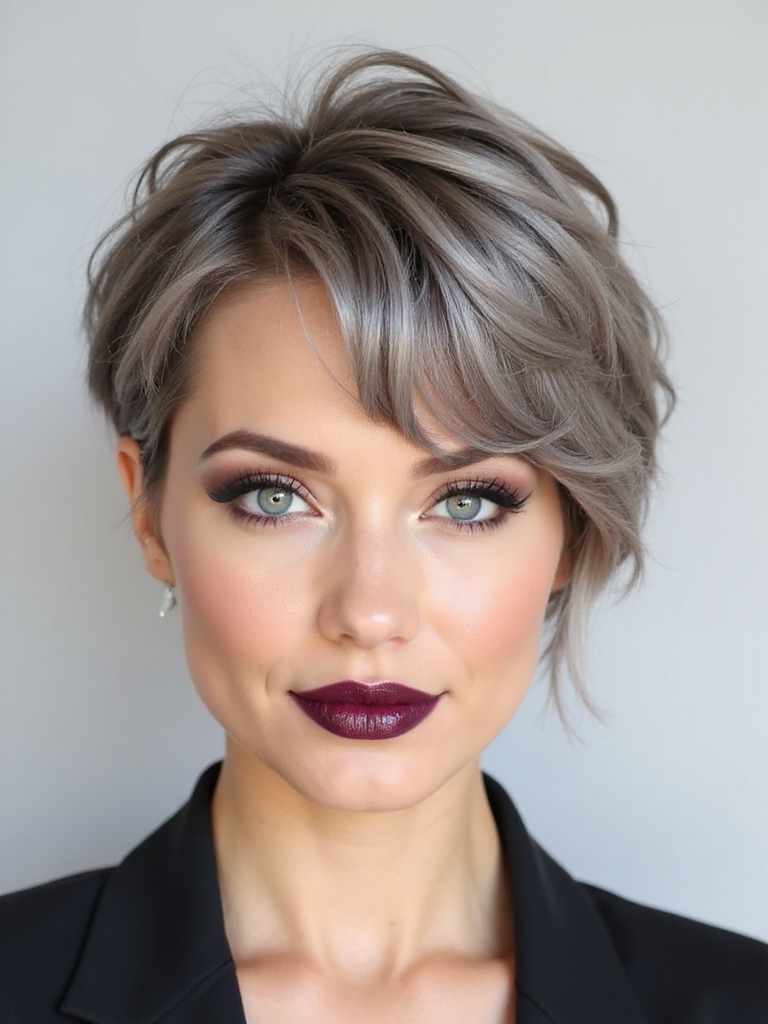
Weight is what makes a crop sit as a cap, so removing it from the interior while leaving the outline intact is the most reliable modernizing move there is. The hair separates as you move. Standing still, nothing about the change is visible at all.
- Ask for weight taken from underneath, with the outline and the top surface untouched
- Skip notched blades entirely; the regrowth stands up along the part a couple of months later
- It costs about ten extra minutes in the chair and changes how the cut behaves for the whole cycle
Tousled, Salt-Kissed Pixie Waves
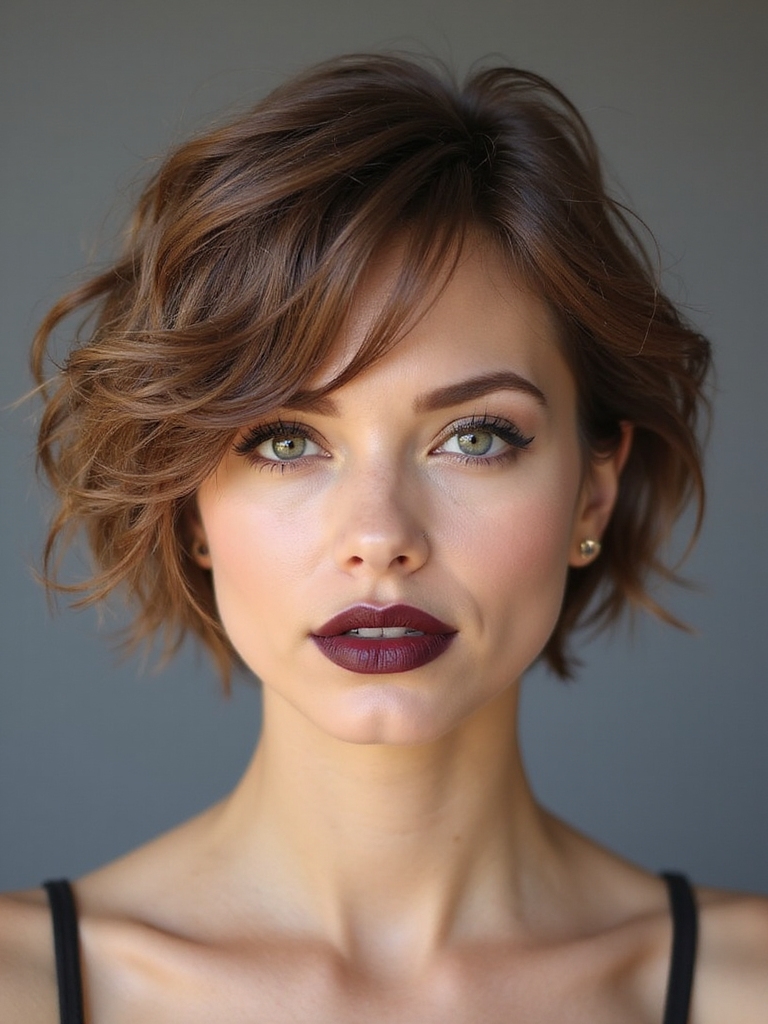
Natural wave at this length used to be a problem to iron out. Now it is the point, and the cut exists to give it somewhere to go.
Salt spray on damp hair, scrunched once, then left completely alone is the entire method. Over-handling it while it dries breaks the clumps apart and turns wave into frizz. That is the giveaway.
📋Four questions to settle before the appointment
- ✓How many minutes will you actually give this on a weekday morning?
- ✓Can you get back for a trim every four to six weeks, honestly?
- ✓Does your hair hold a bend when it dries, or fall straight?
- ✓Are you willing to own one product and use less of it than feels right?
A Razor-Sharp Micro Fringe
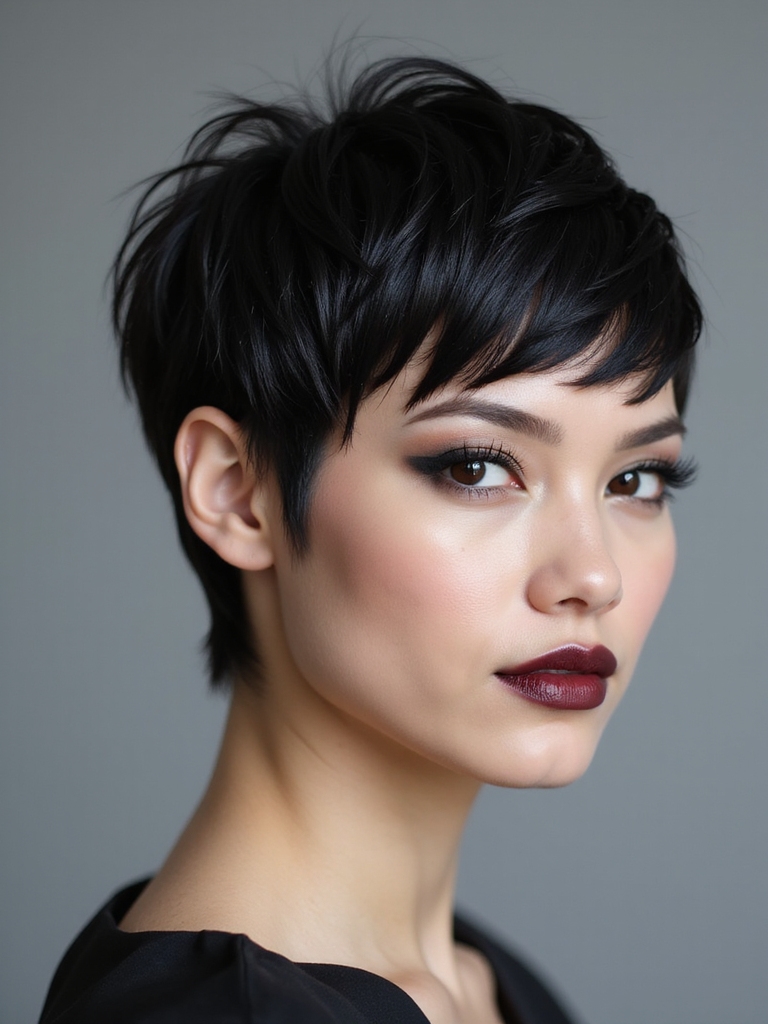
A fringe cut well above the brow is the most fashion-literate thing on this page, and it is also the fastest to date if it is cut level.
Points, Not a Line
The version that works is uneven along its bottom edge. A blade-cut micro fringe finishes in points. That is what stops it looking like a costume wig.
Expect it to sit in its sweet spot for about a month before it lengthens into something softer, and expect strong opinions from people who have never worn one.
An Airy, Sculpted Pixie on Springy Coils
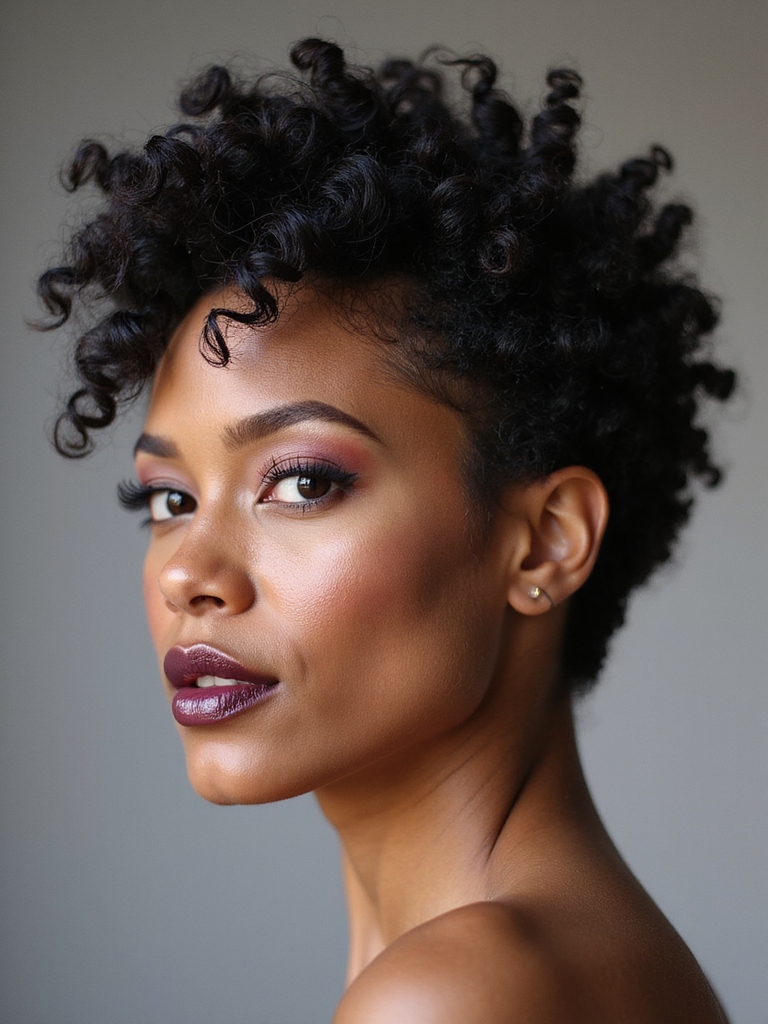
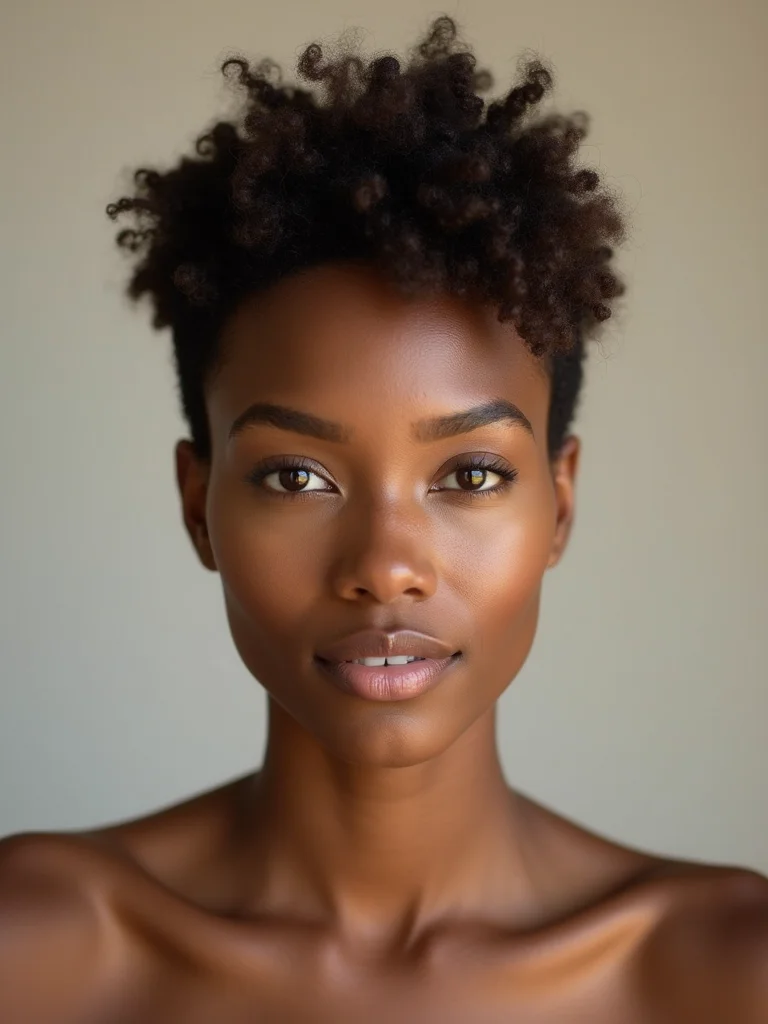
Coily hair cropped short has never needed modernizing in the way straight hair has, because the pattern already supplies everything a current crop is trying to fake: separation, height, and an outline that is not a hard line.
What dates this version is over-shaping. A perfect dome fights the way coils actually sit. Follow the head instead and the shape settles on its own.
Light gel into soaking hair, then nothing at all until it dries. Our curly pixie guide covers pattern-specific shaping in depth.
“The request that goes wrong most often on textured hair is asking for a shape. Ask for a silhouette instead and describe the head, not the hairstyle, because a coil pattern will decide where the volume actually lands whatever anyone draws in the air.”
A Side-Swept, Face-Framing Pixie
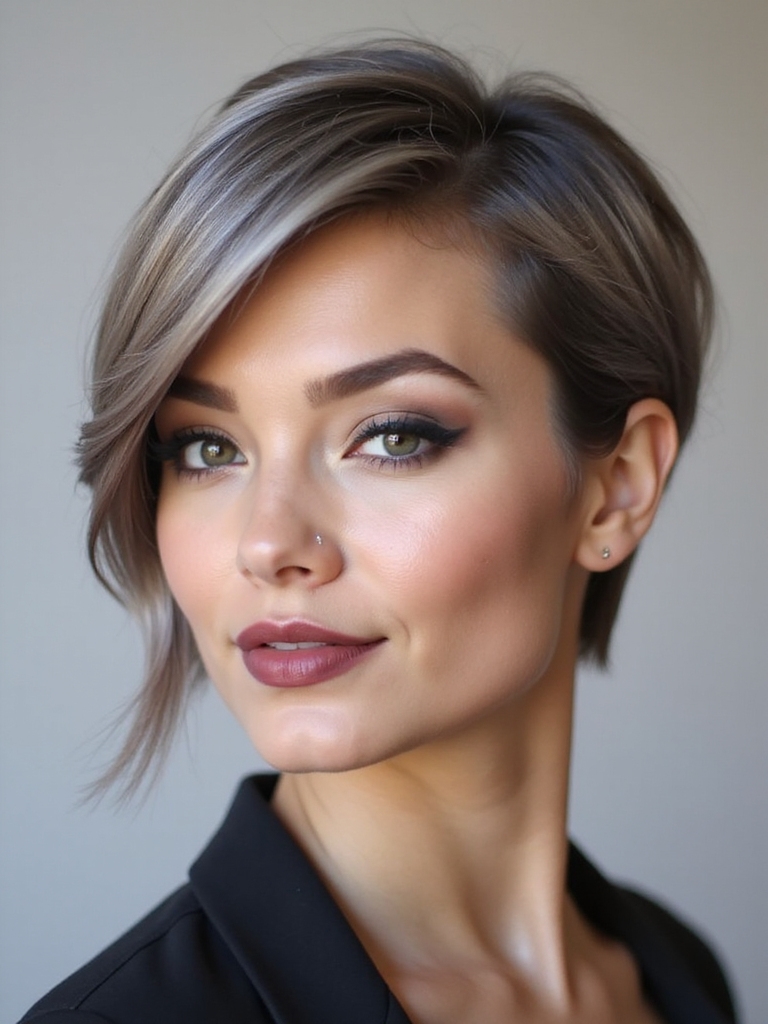
Moving the whole shape off-center is the cheapest modernizing trick available, and it costs nothing at all. A crop parted centrally looks symmetrical and therefore static. Sweep the same cut across and it gains a diagonal.
The detail that matters is where the sweep lands. Falling to the cheekbone, it frames. Falling to the jaw, it drags the whole face downward, which is what makes some side-swept crops age the wearer.
An Undone, Choppy Pixie
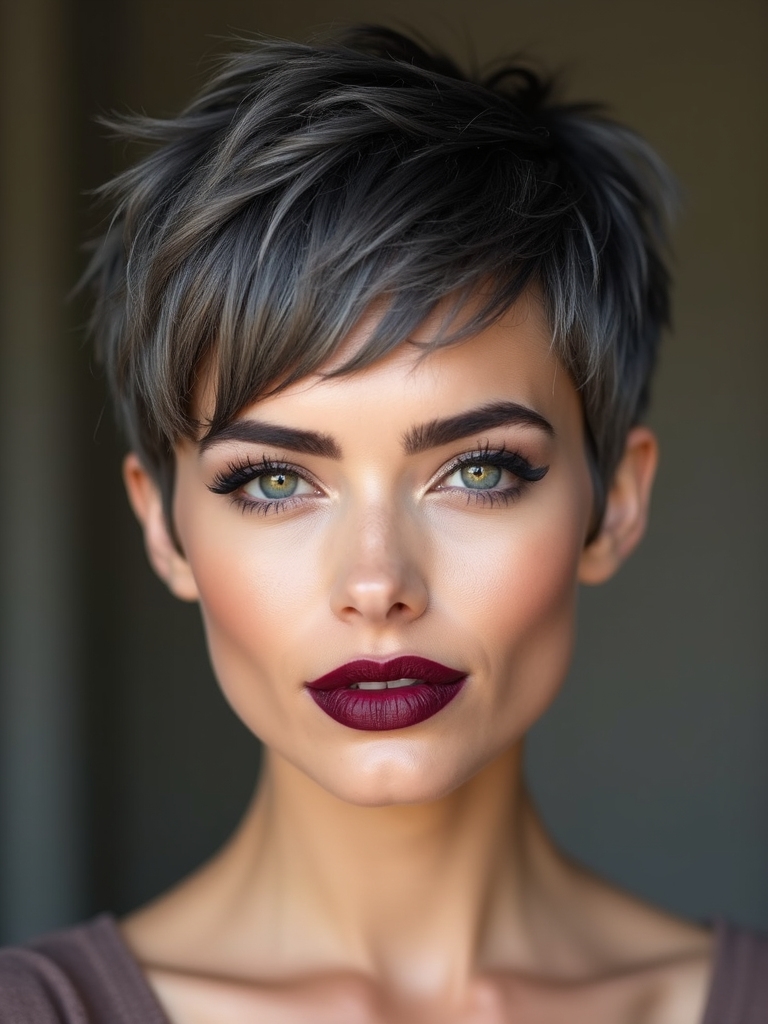
Choppy is the most reliably current version here, and the reason is that nothing about it can look set. Every piece finishes somewhere different, so the eye finds no line to read as tidy.
Choppy Is Not Thinned
It is also the most forgiving between appointments, since uneven growth on an already uneven cut changes very little.
The mistake is asking for choppy and receiving thinned. Chopping varies the length of the pieces. Thinning removes hair from inside them. Only one produces this.
A Tapered Nape With Sharp Edges
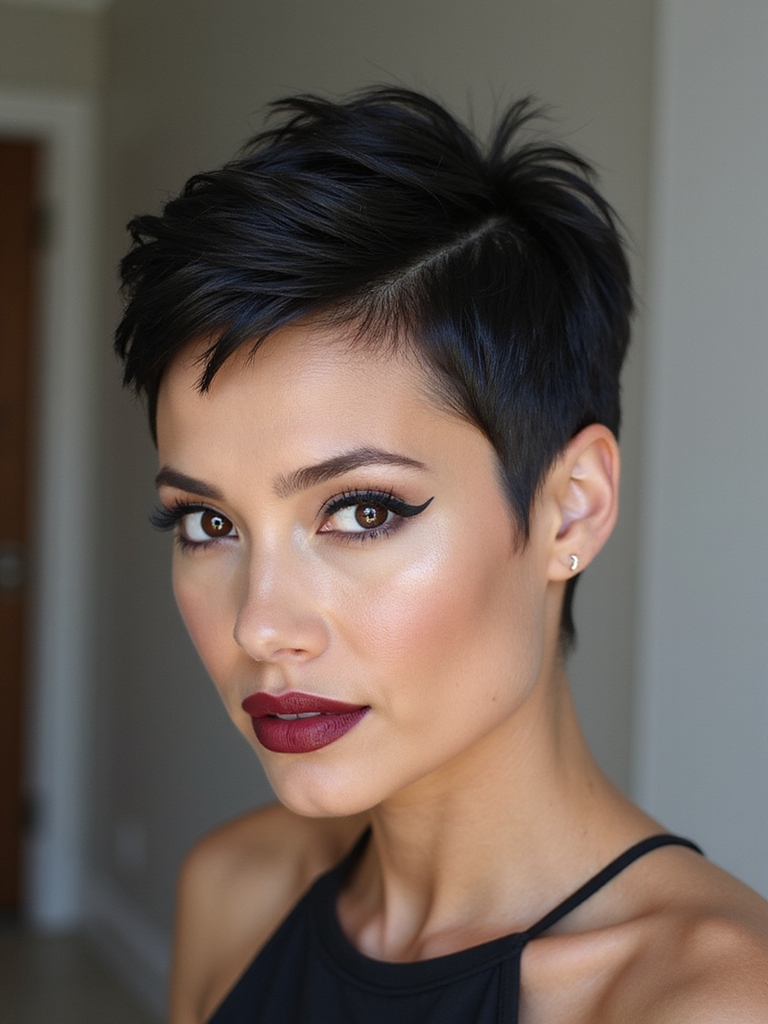
Everything on this page is judged from behind by everyone except the person wearing it, and the nape is where a crop either looks finished or looks grown out.
A crisp neckline under a blurred taper is the current combination. A clean edge with a blurred taper leading into it gives the back a defined stop. A hard block reads as old-fashioned before anything else does.
The trade is a schedule. A crisp neckline blurs within a couple of weeks, and past that the whole silhouette starts reading heavier than it is.
A Soft, Tapered Pixie-Bob in Grow-Out
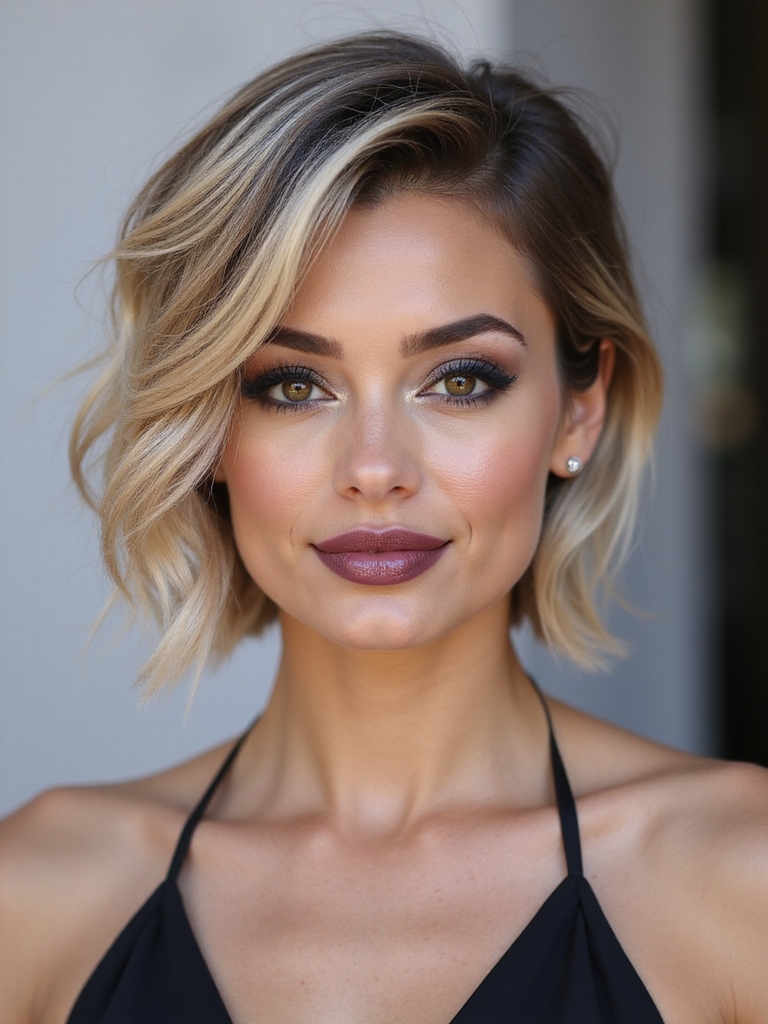
Grown out with a plan, a crop passes through a good haircut on its way to a bob. Shaped at the right moment, with the sides kept close and the nape still short, it is a cut people request on purpose, and plenty never carry on growing it. Our grown-out pixie guide maps the whole route.
- Book the shaping visit when it starts widening at the ears, before it starts bothering you
- Keep the back shorter than the sides through the transition, or it drifts toward a mullet
- Keep the perimeter broken, since a blunt line is what makes a grow-out look accidental
A Cool Platinum Pixie
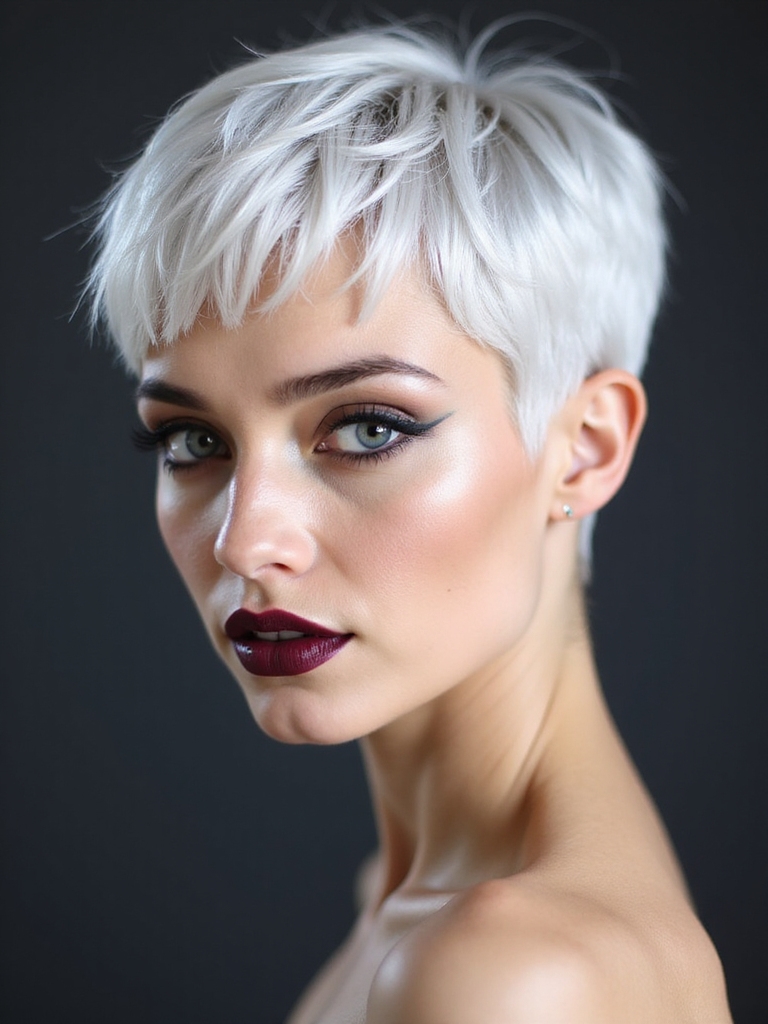
Platinum on short hair is the least punishing version of a punishing service, since there is a fraction of the hair to lift and every appointment removes some of what was processed last time.
Warmth is the tell. Yellow creeping back separates an icy crop from one that was bleached a while ago and forgotten. The toning routine is the whole game.
It also changes the texture in a useful direction. Processed hair grips a shape more willingly, which means less product for the same result.
👍What platinum gives a crop
- +A fraction of the lifting damage a long-haired client absorbs for the same shade
- +Processed hair holds a sculpted shape with noticeably less product
- +Each trim takes off some of the previously bleached hair, which slows how fast damage builds
👎What it asks back
- –Regrowth is visible within about three weeks at this length
- –A toning session between full appointments is part of owning it
- –Some textures lift unevenly and need two sessions to arrive anywhere cool
An Asymmetrical, Sculpted Pixie
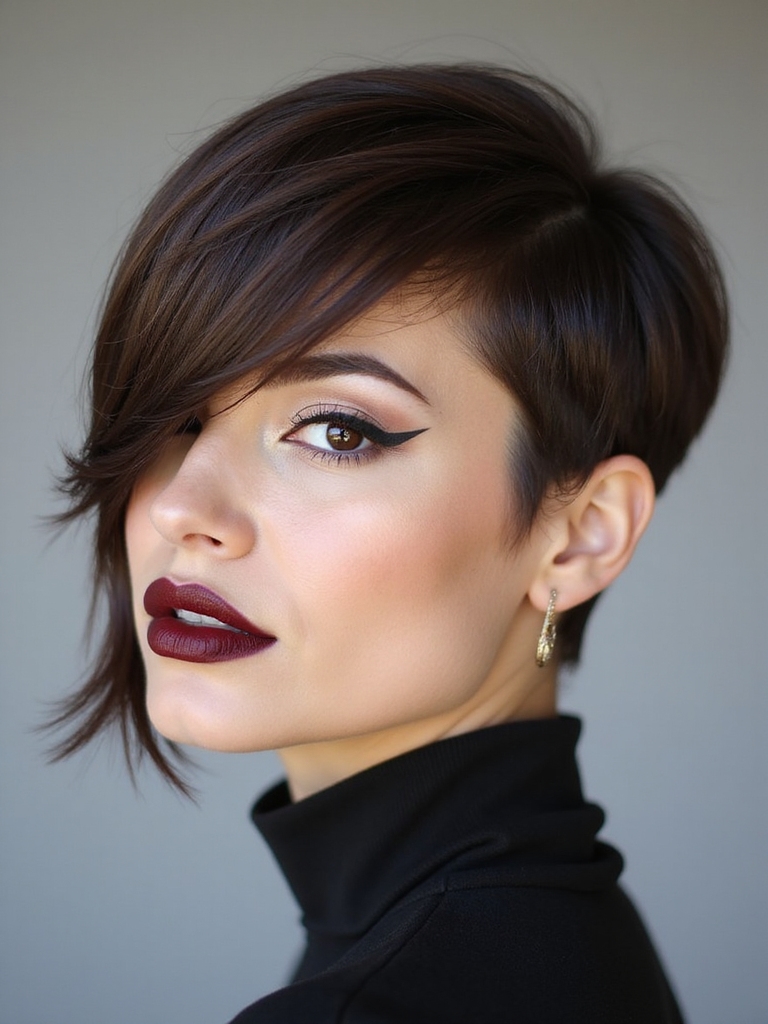
Deliberate imbalance is the most direct way to stop a crop looking symmetrical and therefore static, and it can be as small as half an inch of difference across the fringe.
The version that dates is the early two-thousands one: a single dramatic diagonal sitting on an otherwise smooth shape. Break it up with texture and the same idea looks current. Our asymmetrical pixie guide covers the angles.
- Commit to a visible difference, because subtle asymmetry just looks like an uneven cut
- Pair it with texture, since on a smooth finish the diagonal is all anyone sees
- It grows out well, since the shape was never balanced for growth to disturb
A Feathered, Razor-Cut Silhouette
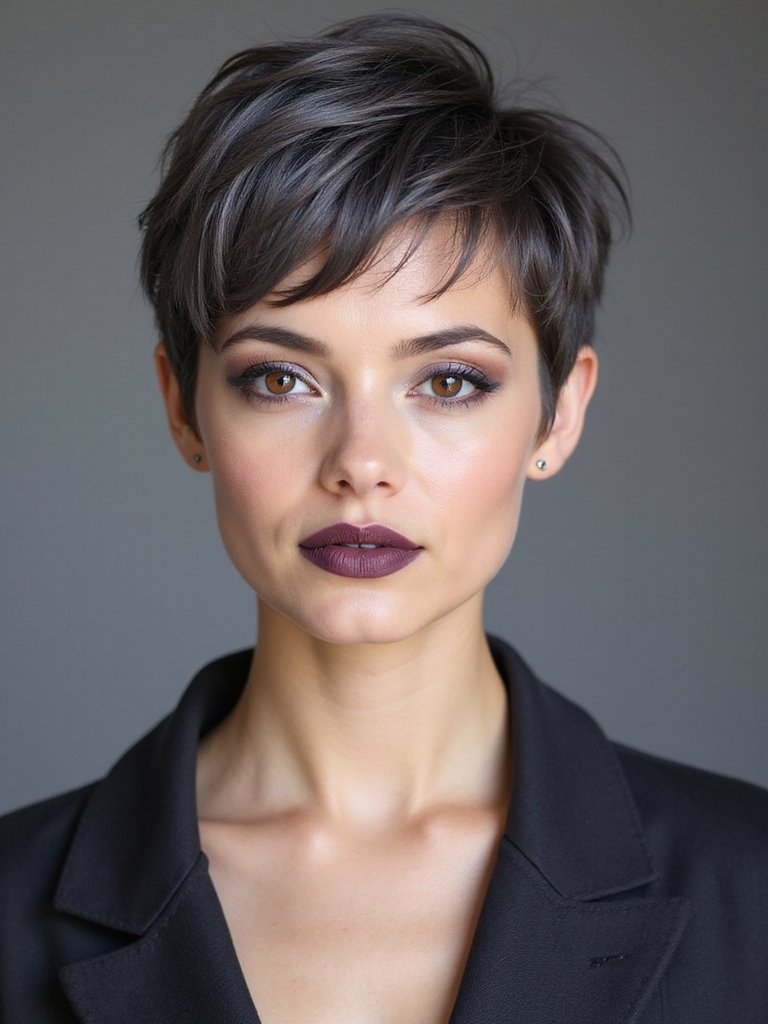
A blade produces an edge that scissors have to work hard to imitate, tapering each strand so the outline dissolves at its edge.
Why the Outline Should Dissolve
That dissolved outline is exactly what a modern crop wants, since a hard perimeter is the main thing that produces the cap effect.
The condition of your hair decides whether this is available to you. On healthy ends it is transformative; on bleached or brittle ones it frizzes inside two weeks and there is nowhere to hide it.
Is a razored finish actually available to you?
1Uncolored or lightly tinted, ends in good condition
Yes, and it will do more for the shape than any other single decision. Ask how often your stylist uses a blade before booking.
2Bleached, or ends that already look tired
Not yet. Ask for point-cut ends instead, which softens the outline without opening up a cuticle that is already compromised.
A Whisper-Light Micro-Layered Pixie for Fine Hair
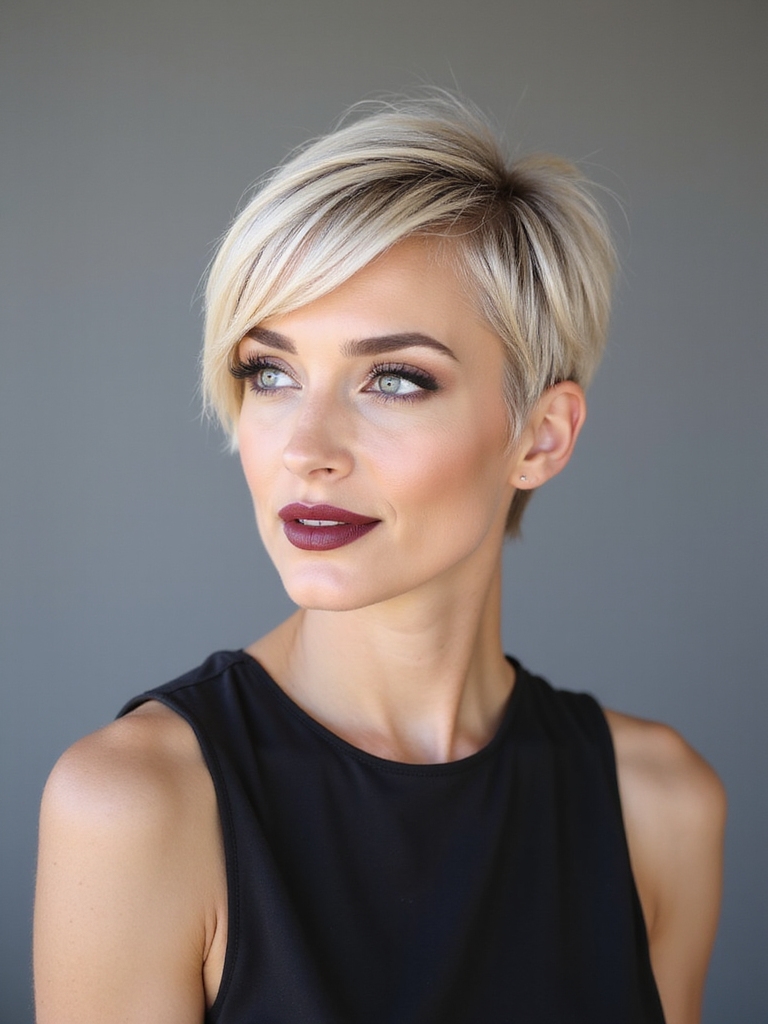
I cut more crops on fine hair than on any other type, and it is not a coincidence. Fine hair suits a crop better than it suits almost anything longer, and the reason is that a short shape does not have to fight its own mass.
The dating risk here is different from everywhere else on this page: over-texturizing. Fine hair thinned in pursuit of separation ends up sparse. That is the look people mistake for a bad haircut, when it was really too much of a good technique.
- Two or three light interior layers, with the outline completely untouched
- A volumizing powder at the roots does more here than any paste applied through the lengths
- Looking thin instead of textured means fewer layers next time, and no extra product
An Edgy Molten-Copper Undercut
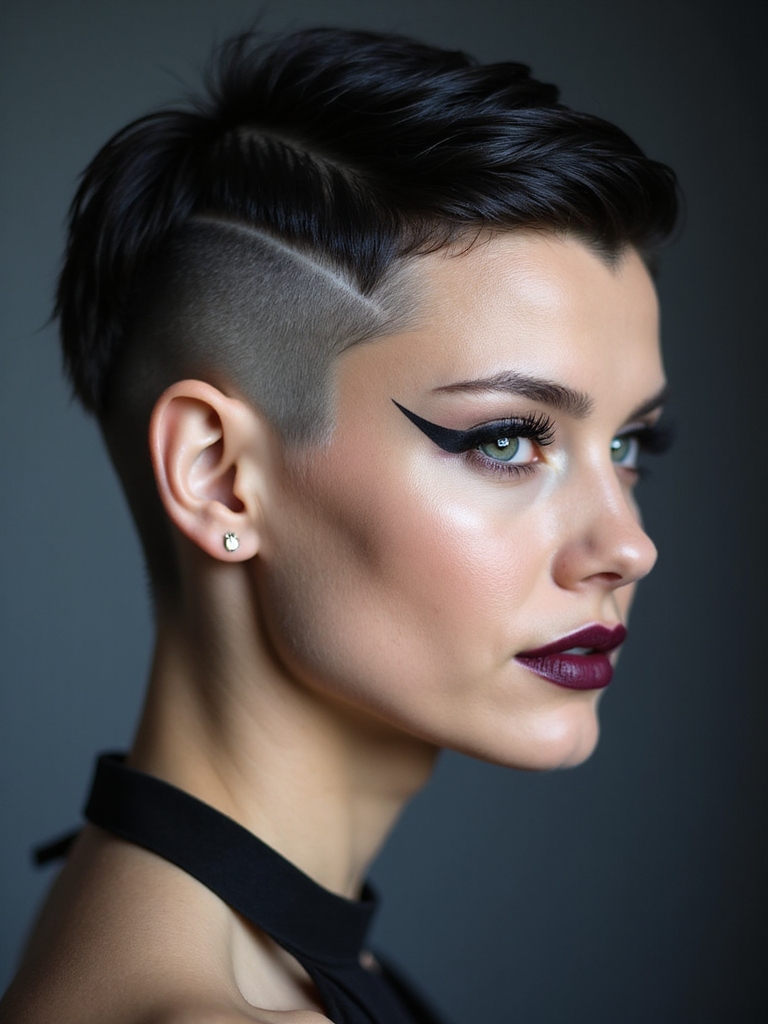
Color and clippers together make the loudest statement available at this length, and copper against a shaved panel gives the contrast somewhere to land.
The Clippers Are the Commitment
The undercut is the commitment here, and the color is not. A vivid tone can be walked back in one appointment. Buzzed hair needs months to blend into whatever sits above it.
Ask for the shaved section low enough that the top length covers it if you change your mind. Our edgy pixie guide covers the bolder configurations.
Maintenance & Care
The tub of paste on my station lasts longer than anything else I own. The routine on a crop is short and the temptation is to overdo it, which is where most of the dating happens. A pea of product is a full dose at this length, and anything creamy applied through the lengths flattens exactly the separation you paid a stylist to build. Warm it between the fingers first. Apply to the tips and the surface. Stop earlier than feels finished.
The salon side is where the real cost sits. A $14 texture spray will do more for a crop than a $200 smoothing service ever could, but the cut itself needs restoring roughly monthly, and the neckline goes before anything else does.
Booking that in advance rather than reacting to it is the difference between a crop that always looks intentional and one that spends half its life growing out. Our best pixie hairstyles roundup covers the range once you know what suits you.
Short Pixie Questions
?Why does my crop look like a helmet by the second day?
Almost always the perimeter. An outline cut to one clean line has nothing breaking it up, so as the hair settles it sits as a single cap. Ask for the edges to be point-cut or razored at your next appointment, which takes about five minutes and changes the whole silhouette without losing any length.
?How do I ask for texture without ending up thinned out?
Use the word choppy or point-cut, and say explicitly that you do not want thinning shears. Chopping varies the length of individual pieces so they separate; thinning removes hair from inside the section, which reduces density and grows back as short fuzz along your part a couple of months later.
?Is a crop harder to keep looking good than long hair?
Daily styling is far quicker and the salon schedule is far tighter, so it depends which cost you mind. A minute or two in the morning replaces twenty, and product lasts months. Against that, the neckline blurs inside two weeks and the shape needs restoring roughly monthly, where long hair can be left for a season.
Nothing on This Page Was About Length
Looking back across fifteen versions, none of the things separating current from dated had anything to do with how short the hair was. Broken edges instead of clean ones, height instead of width, and a finish stopped early instead of carried to completion. Those three decisions account for almost all of it.
Which is worth knowing if you have been circling this cut and worrying about the length. Save the versions that stopped you here, and when you sit down, talk about edges and where the volume sits before anyone mentions inches. That conversation is the one that decides how the cut reads.
More to Try