A client came back three weeks after a shag she loved on day one, saying it had gone flat. Nothing was wrong with the cut. Her hair had simply grown half an inch, and at her length that was enough extra weight to pull the crown layers down flush against her head.
Gravity is the thing nobody mentions about a soft shag haircut long enough to sit past the shoulder blades. Every ounce below the crown is pulling every layer above it downward, and the whole craft is about where that weight comes out. Fifteen versions follow, each one solving the same problem differently.
What Length Does to a Shag
| Where you are | What is pulling | Where the weight comes out |
|---|---|---|
| Past the shoulder blades | The bottom third is heavy enough to drag every crown layer flat within weeks | Interior, from the mid-lengths down, leaving the surface intact |
| Waist length or beyond | Crown layers stand no chance; even short ones lie down within days | The perimeter itself, cut into a curve so the ends stop hanging as one mass |
An Airy Curtain Fringe on a Long Shag

A fringe is the one part of a long shag that gravity cannot ruin, because the pieces are short enough to stand on their own regardless of what is happening behind them. That makes it the most reliable source of shape on a very long head of hair.
Cut airy and grazing the cheekbone, it also solves the specific problem long hair has around the face, which is that everything falls behind the shoulders and leaves the features unframed. Our shag with bangs guide covers the fringe options in depth.

A Feathery Long Shag

Feathering the ends is what stops a long shag ending in a heavy block, and at this length the effect matters more than it does anywhere else. Two feet of hair terminating in one flat line is a lot of visual weight sitting at the bottom of the frame.
- Ask for the tips softened along the last two inches, all the way around the perimeter
- Coarse and medium hair take this well; very fine hair wants it on the front sections only
- It has to be redone at every appointment, since the softened part is the first to be trimmed away
A Wavy Shag With Diffused Layers

Natural wave is the single best insurance against long-hair flatness, because a wave holds itself away from the head in a way straight hair cannot. The layering is there to stop the wave collapsing under its own accumulated weight.
Diffusing is what makes it hold. A diffuser lifts and dries the wave in position instead of blowing it into a different shape, and on long hair that takes real patience, usually twelve to fifteen minutes on low heat.
| Method | Time on long hair | What it delivers |
|---|---|---|
| Air-dry | Two to four hours | Maximum softness, minimum root lift. Best on wave; leaves straight hair flat |
| Diffuse on low | Twelve to fifteen minutes | Holds wave and curl in position while it dries, which is where the volume comes from |
| Rough-dry with fingers | Six to eight minutes | Lifts roots and separates layers, at the cost of some smoothness at the ends |
Light, Elongated Layers on Curls

Long curls carry more weight than any other texture at the same length, because each curl is a spring being asked to hold itself up while everything above it presses down.
Why Short Layers Vanish on Long Curls
The layering has to be elongated for that reason. Short layers on long curls disappear entirely, since the spring above pulls them into the mass, so the useful layers here are long and gradual.
Cutting happens dry, curl by curl. On long curly hair the difference between wet and dry length can be a full six inches, which is more than enough to turn a planned shape into a guess. Our curly shag haircut guide has the method.
Feathered, Tapered Ends for Weightless Movement

Tapering is the most direct way to remove weight from the exact place it does the most damage, which on long hair is the bottom six inches.
The effect is immediate and slightly startling. Hair that hung as one heavy curtain starts separating into pieces the moment it is tapered, and the layers above it lift because there is less pulling them down.
By week five you will feel it going. Tapered ends grow back into blunt ones faster than most people expect, and that lost movement is usually why a long shag stops working before the length itself has changed.
Hidden Volume Under a Sleek Surface

This is the version for anyone who wants long hair to look polished and still move. The top inch is set aside untouched, everything beneath it gets internally layered, and when the surface comes back down it covers all of the work.
On long hair the payoff is larger than it sounds. The bulk that was making your hair hang flat is gone, the shape swings, and from the outside nothing about the cut is visible at all.
At this length you are not cutting a shape into the hair. You are taking away enough weight that the hair can hold a shape on its own.
A Center-Part Long Shag

A center part splits the weight evenly, which on long hair means both sides fall in the same place every day and the cut has to be symmetrical to match.
It is the harder part to wear at this length. Nothing crosses the head to lift the roots, so the crown relies entirely on the layering underneath, and that layering has to be closer to the surface than it would be on a side part.
- Ask for the top layers to start higher, since nothing is being lifted by direction
- Face-framing pieces matter more here, because the part draws a vertical line down the middle
- It suits even features and thick hair; fine hair usually looks better with the part moved
A Side-Swept Long Shag

Sweeping the whole shape to one side puts more hair on one half of the head and lifts the roots along the parting, which is the cheapest volume available at this length and the reason so many long shags end up worn this way.
- Have the layers cut with the sweep already in place, since it moves several inches of hair
- The heavy side needs slightly longer framing pieces to balance against the light one
- Sleep with it swept the other way and flip it back for extra lift in the morning
Whispery, Weightless Razored Layers

A blade removes weight along the length of the strand instead of at a single point, which is exactly what long hair needs, and it produces a finish scissors struggle to match. The condition of your hair decides whether this is a gift or a mistake, and on long hair the ends are the oldest and most fragile part of your head.
- Only on healthy, uncolored or lightly colored ends; bleached long ends will frizz within weeks
- Ask directly how often your stylist uses a razor, since this is a practiced skill
- It adds twenty to thirty minutes at this length, done section by section
Cheekbone-Hugging Layers

The shortest framing layer on a long shag has one job, which is to put something next to your face when the rest of your hair is behind your shoulders.
At the cheekbone it does the most work. Higher and it becomes a fringe with fringe maintenance; lower and it disappears into the length within two months.
- Ask for the shortest piece at the cheekbone and connected into the length behind
- It is the first thing to trim when the cut starts feeling shapeless
- On very long hair this piece can be the only layering you need
A Beachy Long Shag With Piecey Ends

Texture products are doing something structural at this length, not just decorative. A salt spray roughens the surface of the strand so the pieces catch on each other instead of sliding into one sheet, which is how long hair holds separation at all.
The finish is undone by design. Product goes through damp mid-lengths, hair air-dries or diffuses, and nothing gets brushed afterward.
- Work the spray through the middle third, keeping it well away from the roots
- Scrunch upward once while damp, then leave the hair entirely alone
- Brush it out completely at night, since roughened long hair tangles as you sleep
Salt Spray Has a Cost
Texture sprays work by roughing up the cuticle, which is exactly why they hold separation and exactly why they dry long hair out. On ends that are already the oldest hair on your head, daily use shows up as brittleness within a couple of months. Keep it to the mid-lengths, use it two or three days a week rather than every day, and follow it with a weekly conditioning treatment.
A Glossy Straight Shag With Subtle Flicks

Straight hair at length is the hardest candidate here, since there is no natural texture holding anything away from the head and every layer is visible against a smooth surface.
Movement Without Visible Layers
The answer is fewer, longer layers and a flick at the ends. Bending the last few inches outward gives the eye movement without needing any layering high enough to show.
A wide iron on three or four sections does it in about five minutes. Straight long hair holds that bend for two days, which is considerably longer than wave or curl hold anything.
Micro Face Frames on Long Length

Two very short temple pieces, no longer than a couple of inches, are the smallest possible intervention on a long shag and one of the most flattering. They sit forward of everything else, they move constantly, and because they are so short, gravity has nothing to work with. Ask for this when the length is staying exactly where it is and you still want something to change.
- Ask for two short pieces at the temples only, tapered so nothing ends bluntly
- They grow into full curtain bangs over about four months, which is a good place to land
- Nothing else on your head needs to be cut for this to work
A Low-Maintenance Long Shag for Thick Hair
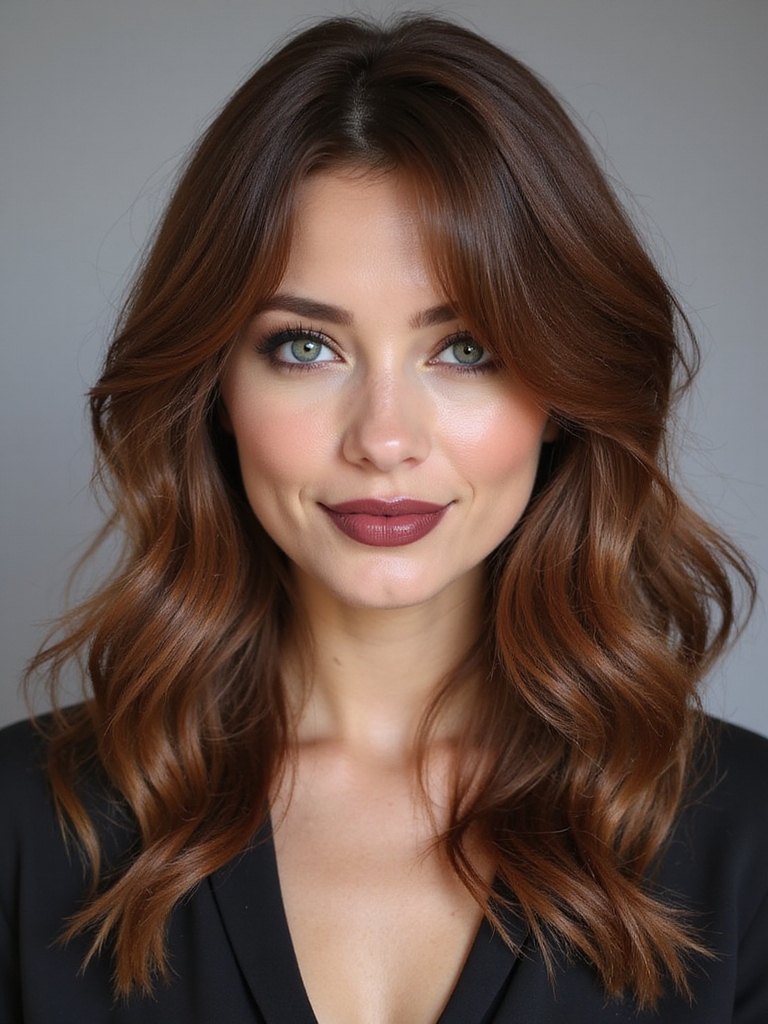
Thick long hair is the heaviest combination in hairdressing, and a shag on it is a debulking exercise before it is anything else.
Two Hours, Then Months of Nothing
The work is slow and it shows in the appointment. Expect the better part of two hours, and expect it to be priced accordingly at a salon that does this properly, often near $110 in a mid-sized city.
The payoff is that thick hair holds a shag better than any other type once the weight is out. There is enough density left to keep the shape after several months of growth, which is why this ends up being the lowest-maintenance version on the page. Our layered shag guide covers the cutting detail.
💡Ask Where the Weight Is Coming From
On thick long hair the important question is not how many layers but where the bulk is removed. Weight taken from underneath keeps your surface smooth and your outline intact. Weight taken from the surface, or with notched blades near the part, produces short regrowth standing straight up a couple of months later. Ask which one your stylist plans to do.
An Airy Layered Shag for Fine Hair

Fine hair worn long is fighting the hardest version of the weight problem, because there is not much density to begin with and all of it is pulling downward. The temptation is to layer heavily for volume, and that is the mistake, since every layer removed from a fine head is density you do not get back.
- Two or three long layers only, kept high, with the perimeter left completely blunt
- The blunt line at the bottom is what makes fine long hair look thick, so protect it
- Consider whether the length is serving you; fine hair often gains more from losing four inches
Who It Suits Best
This cut suits anyone whose long hair has stopped doing anything, which is most people three years into growing it out. Wave and curl gain the most, since that texture holds the layers away from the head without any help. It suits thick hair after debulking, and it suits anyone who wants a change that does not cost length.
It suits you less well if your hair is fine and past the shoulder blades, where the honest answer is often that some length has to go before any shape will hold. It suits you less well if your ends are damaged, since layering distributes that damage into more places.
And it asks for a trim about every ten weeks, because the tapered ends and framing pieces are the first things to grow back into a blunt line, which is when people decide the cut stopped working.
Long Shag Questions
?My long shag looked amazing in the salon and flat within a month. Why?
Half an inch of growth at long lengths adds meaningful weight below your layers, and that weight pulls the crown down. It is not the cut failing, it is the cut doing what it was always going to do. A trim that restores the taper on the ends usually brings the lift back without touching your length.
?Can I get this without losing any length at all?
Yes, and it is a common request. Layering can be done entirely in the interior with the perimeter untouched, so nothing comes off the bottom. You will lose a little visual thickness at the ends and gain movement everywhere else, which is the trade most people are happy with.
?How much length do I need before a shag makes sense?
Past the collarbone the layering starts having room to work. Between the shoulder and the collarbone a shag is possible but the crown layers sit awkwardly close to the perimeter, which is why so many mid-length shags need more styling than long ones do.
?Is a long shag high-maintenance day to day?
Less than you would think, and the reason is length. There is enough hair to hold its own shape, so most people air-dry or diffuse and touch nothing else. Where it does demand something is the appointment schedule, since the ends and framing pieces need restoring roughly every ten weeks.
Weight First, Shape Second
Every version on this page is answering the same question in a different place: where does the weight come out so the layers above it can lift. Fine hair takes it from very few places. Thick hair takes it from underneath, everywhere. Curls take it in long gradual passes, and straight hair mostly takes it from the last six inches.
So the useful sentence at the consultation is about weight rather than layers. Ask where it is coming from and what will hold once it does, and the number of layers stops mattering. Our soft shag haircut guide covers the same cut at shorter lengths, where gravity stops being the main opponent.
More Worth Saving