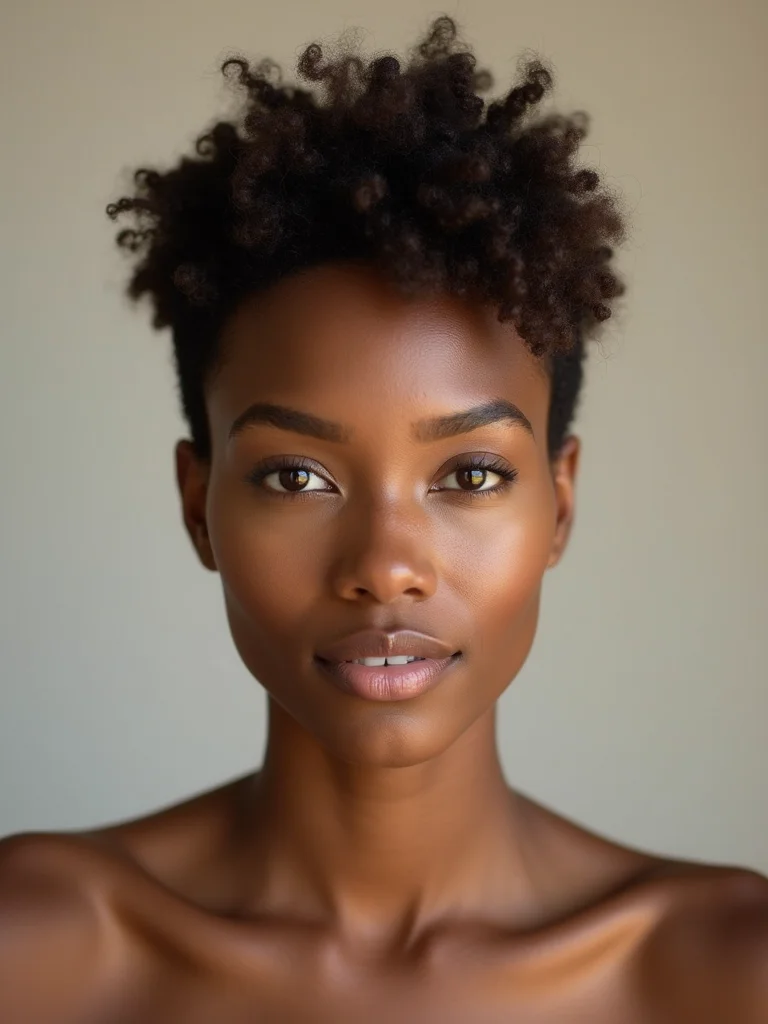
The first thing people notice is the draft. Air moves across a scalp that has not felt it in years, a collar touches bare skin at the back, and for about a week the head feels weightless in a way that is properly disorienting.
The second thing they notice is that there is nothing left to fix. At a super short pixie length, an inch or two all over, the cut is the entire style, because there is not enough hair to correct a decision your stylist made. What follows is sixteen of them, judged by how much skill each one asks of the person holding the shears.
At This Length, the Cut Is the Style
- Product cannot rescue a shape. On two inches of hair there is nothing to redirect, so a badly placed line stays badly placed until it grows.
- Growth arithmetic decides your schedule. Hair adds roughly half an inch a month, which here is a quarter of the whole cut, so a shape-up lands every four weeks or the silhouette drifts.
- Your stylist choice matters more than your product shelf. Anyone can style long hair badly and recover; nobody recovers a millimeter cut wrong at the nape.
A Choppy, Undone Micro Crop

Choppy is the forgiving option, and the reason is arithmetic. When every piece was cut to a slightly different length on purpose, half an inch of uneven growth looks like part of the plan. Our choppy pixie cut guide covers the cutting itself.
- Ask for varied lengths through the top with the perimeter kept deliberately imprecise
- The cut is doing the styling, so a rushed morning changes very little about how it looks
- Fingers only for styling; a brush here flattens exactly what you paid for

A Sleek, Polished Micro Pixie

Sleek is the finish I get asked for most and deliver least happily, because gravity is on nobody’s side. Nothing is heavy enough to stay put on its own, so the hair goes wherever the dryer last sent it and stays there until you wash it.
It also hides nothing. Any wandering in the cut line shows immediately on a smooth surface, and there is no texture anywhere to disguise it.
- Work in panels no wider than the nozzle, following the natural fall
- Nothing is set until it has cooled, so resist checking it early
- Serum last, warmed between the fingers, and less than you think
Tight Curls Cropped Close

Cropped close, coily and tightly curled hair turns into a sculptural object. The pattern supplies all the texture, so the shears are really deciding one thing: the outline of your skull. That is why I will not touch this cut on wet hair. Every coil has to be judged where it truly sits, fully sprung and dry.
- Bring a photograph of a head shape rather than a hairstyle; the silhouette is the decision
- Ask where the widest point of the crop will sit, since that single choice changes your whole profile
- Expect a longer consultation than a cut; the talking is where this one is won or lost
Shrinkage Changes the Number
On coily and tightly curled hair, an inch of length can sit at a quarter of an inch once it is dry and sprung. That ratio is worth measuring on your own hair before any consultation: pull one curl straight, note where it reaches, then let it go. Whatever number you say out loud in the chair should refer to the second measurement, not the first.
Feathered, Wispy Bangs

Feathered bangs are the softening element in a cut that is otherwise all hard edges, and they are what I add when someone loves the shape in a photograph but flinches at how severe it looks on them. Tapered tips break the line across the forehead so the whole head stops looking geometric.
It is also the piece that shows growth first. By week three they have crossed from wispy to shaggy, which is usually what prompts the appointment rather than anything happening at the back.
A Buzzed Pixie With a Fade

This is where clipper language becomes useful, because guard numbers are precise in a way that adjectives are not. A number two at the sides fading up to a number four is a sentence a barber can execute exactly. The word short is not.
This is the shortest option on the list and the least open to interpretation. Once it is done, tomorrow morning offers you no alternatives at all, which some people find liberating and others find alarming. Worth knowing which one you are beforehand.
A Piecey Top With a Tapered Nape

The most-worn arrangement here runs two treatments at once: length kept on top so the pieces can separate, and the back graded down toward the neck so nothing sits as a hard line. It is the arrangement that survives a missed appointment best, since the tapered part blurs gently while the top simply gets slightly longer.
- Ask for two inches on top and a gradual taper from the crown down to the hairline
- Decide between a squared-off neckline and a natural one; they suit different shoulders
- The nape can be tidied on its own between full cuts, which is a cheaper visit
An Asymmetrical Ultra-Short Front

Breaking the symmetry gives a very short cut somewhere for the eye to go, which matters when there is no length anywhere to create movement.
Half measures do not survive. Asymmetry that anyone has to look twice for reads as an error in the cutting, so this is a case for telling your stylist you want it more obvious than the photograph.
There is a bonus in the grow-out too, since nothing here was symmetrical for growth to disturb. Our asymmetrical pixie guide works through the angles.
How often can you realistically get to a salon?
1Every three or four weeks without fail
Anything sculpted is open to you: a sleek micro pixie, a hard side part, a fade, or a shaved design. These look their best in a narrow window and reward showing up.
2Whenever I remember, honestly
Go choppy, tousled, or piecey with a taper. All three look deliberate as they grow, and none of them has a line that goes wrong when you miss a month.
A Razor-Cut Textured Pixie Shag

Shag layering on a two-inch cut is a redistribution job: height taken out of the crown, a little kept at the nape and around the ears. What you gain is the illusion of hair moving where there is barely any hair to move.
The razor is what makes the pieces separate. A blade tapers the strand as it travels, leaving a tip fine enough to fall away from its neighbors. Blunt ends do the opposite and clump together.
Healthy ends only. Take a blade to bleached or brittle hair here and the frizz shows up within days, with nothing left to hide it behind.
A Crisply Sculpted Side Part

A hard side part on a very short cut is a graphic device rather than a styling choice. It draws a line across the head and turns two inches of hair into a designed object.
Cut In or Styled Daily
Some stylists cut the part in, taking a millimeter of hair out along the line so it stays open without product. Others leave it to be styled daily.
Ask which one you are getting, because clients are regularly surprised by the answer. A cut-in part is close to permanent for several months, which is excellent if you love it and a long wait if you do not.
A Wavy Micro Pixie With a Soft Bend
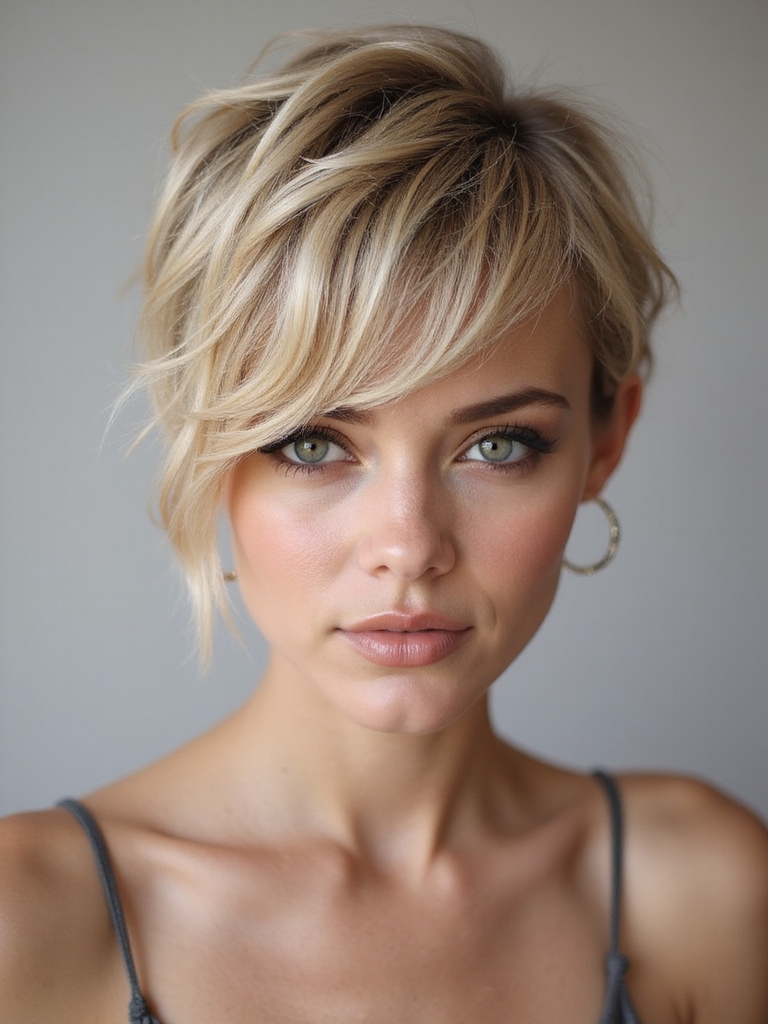
Natural wave at this length behaves unpredictably, because a wave needs a certain amount of length to complete its shape and a crop usually does not supply it.
A Bend, Not a Wave
What you get instead is a bend, which is often the better outcome. The hair kicks in one direction near the ends and holds there, giving the cut movement without any of the frizz that a half-formed wave produces.
Working with the bend is the whole approach. A light cream on damp hair, air-dried, and the bend appears on its own.
📋What to ask before anyone starts cutting
- ✓Do you cut this length regularly, and can I see your work on hair like mine
- ✓Are you cutting dry or wet, and if wet, how are you allowing for spring-back
- ✓How much weight are you taking out of the crown, and what happens if I have a cowlick there
- ✓If I hate it in a week, what can you actually change without waiting for growth
A Frosty, Luminous Platinum Pixie

More clients ask me about platinum on a crop than on any other length, and it is the one time I rarely talk anyone out of it. A crop is a ninety-minute service where twenty inches is a four-hour ordeal, and whatever damage happens gets trimmed away before the season ends. Our blonde pixie guide covers the tones.
- A single bleach session is usually enough at this length, where long hair needs two or three
- A toning session between full appointments keeps it from going yellow, and runs near $60
- Every cut removes bleached hair, so damage never accumulates the way it does on length
Crisp Micro Bangs Over a Tapered Crown
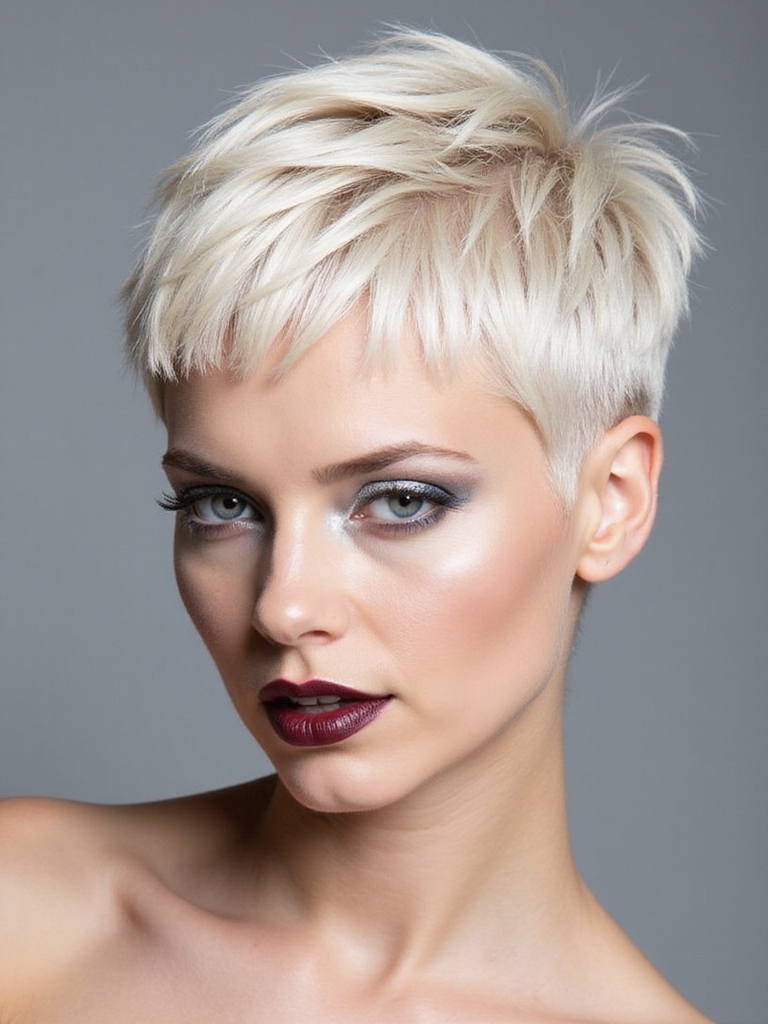
Micro bangs on a crop leave you nowhere to hide, since there is no other hair anywhere to soften the effect. The forehead and the eyes carry the whole look.
They are also the fastest-moving part of the cut. Micro bangs reach ordinary brow length in about three months at half an inch a month, which is about as short a commitment as hair offers and worth knowing if you are nervous.
A Tousled, Matte, Airy Pixie

A matte finish flatters very short hair more than shine does, because a glossy surface at this length can read greasy under overhead light where a matte one reads textured.
Why Matte Beats Shine Here
Airy is about how the pieces sit rather than how much hair there is. Worked through with fingertips and shaken out, product gives separation. Pressed in with a flat palm, the same product flattens everything.
By the third week this becomes a straightforward cut to live with, since a slightly grown-out tousle simply looks like a slightly larger tousle.
Two things people believe about very short hair
❌ Myth: You need thick hair to carry it
✅ Reality: Nobody needs thick hair for this. What the cut needs is density that is even, and the crown is where thin patches show first, which is worth checking in a hand mirror before you book.
❌ Myth: It is low maintenance
✅ Reality: The morning routine shrinks to about a minute, and that part is true. What people underestimate is the mirror work: a crop has a back, and you will need a second mirror to know what it is doing.
An Undercut With a Shaved Pattern

Shaved designs sit between hairdressing and barbering, and the people who do them well have usually trained on clippers rather than shears. On a crop the contrast between matte texture and a razored line is at its sharpest, which is why the work shows here more than anywhere else.
Two Weeks, Then It Softens
Simple designs last around two weeks before the lines go fuzzy. Intricate ones start looking soft within ten days, which is the honest maintenance picture.
Settle the touch-up pricing when you book. Designs need refreshing far more often than the cut around them does, and that adds up quietly. Our edgy pixie haircuts guide has more of this territory.
An Airy, Low-Maintenance Cut for Fine Hair

Fine hair is a better candidate here than almost anyone expects, and the mechanism is straightforward. Remove the length and you remove the load, so strands that lay flat for years finally stand away from the scalp.
The instruction that matters is restraint with texturizing. Fine hair this short has very little to give away, so interior texture should be light and the perimeter should stay intact.
- Light interior texture only, with the outline left clean and unthinned
- No blade work on fine hair; there is not enough substance in the strand to carry a taper
- About a minute a day, and most of that is finding the product
A Bold Two-Tone Contrast Pixie

Dark base under a light top, or bangs in one shade and everything else in another: this only really works at cropped lengths. Movement scrambles a two-tone effect on longer hair. Here it stays precisely where the colorist put it.
Placement should follow the cut. A color line matching the taper or the part looks designed. One that ignores the shape looks like it happened to someone else.
It is also cheap to change your mind about. A crop can be toned back to a single shade in one appointment. Our super short pixie cuts guide covers more of this length.
What to Expect
Expect the first two weeks to be strange in ways nobody warns about. Water runs down your neck in the shower, hats sit differently, and you will reach up to tuck hair that is no longer there for about a month. None of that is regret, though it can feel like it on day three.
Expect the appointment schedule to be the real cost. A shape-up every four weeks is not a suggestion at this length, because half an inch of growth is a quarter of the entire cut, and a super short pixie that has gone five or six weeks stops looking like a decision. Budget the visits before you budget anything else.
Expect the shape to fail in one specific direction, and it will not be the one you are watching. People check the top; the problem arrives at the sides, where hair reaching the ears starts pushing outward and the whole head widens. If you know that in advance you can book ahead of it instead of reacting to it.
The Shears Decide, So Choose the Hands
Across all sixteen, the pattern is the same: at this length the decisions that matter were made before you left the chair. Product choice, morning routine, and technique all matter far less than they do at any other length, because there is simply not enough hair for them to act on.
Which reframes what to spend your effort on. Look at a stylist’s work on hair your texture and length, ask what week five looks like, and get the nape line specified before anything starts. Everything after that is a minute a day and a standing appointment.
Next Up