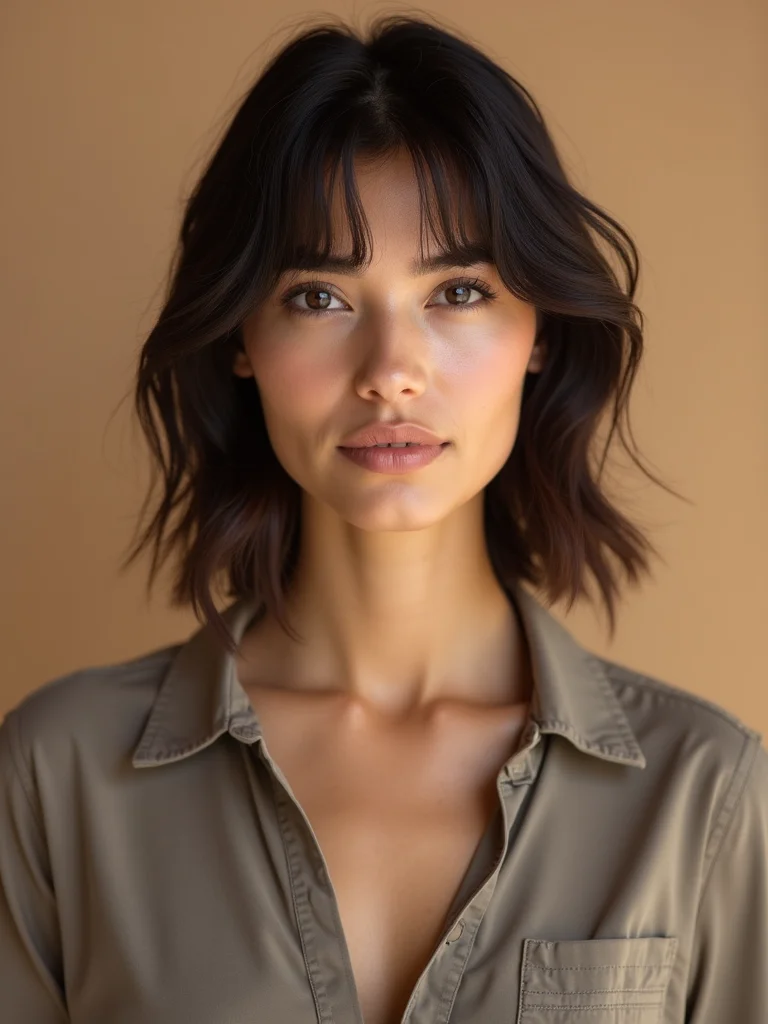
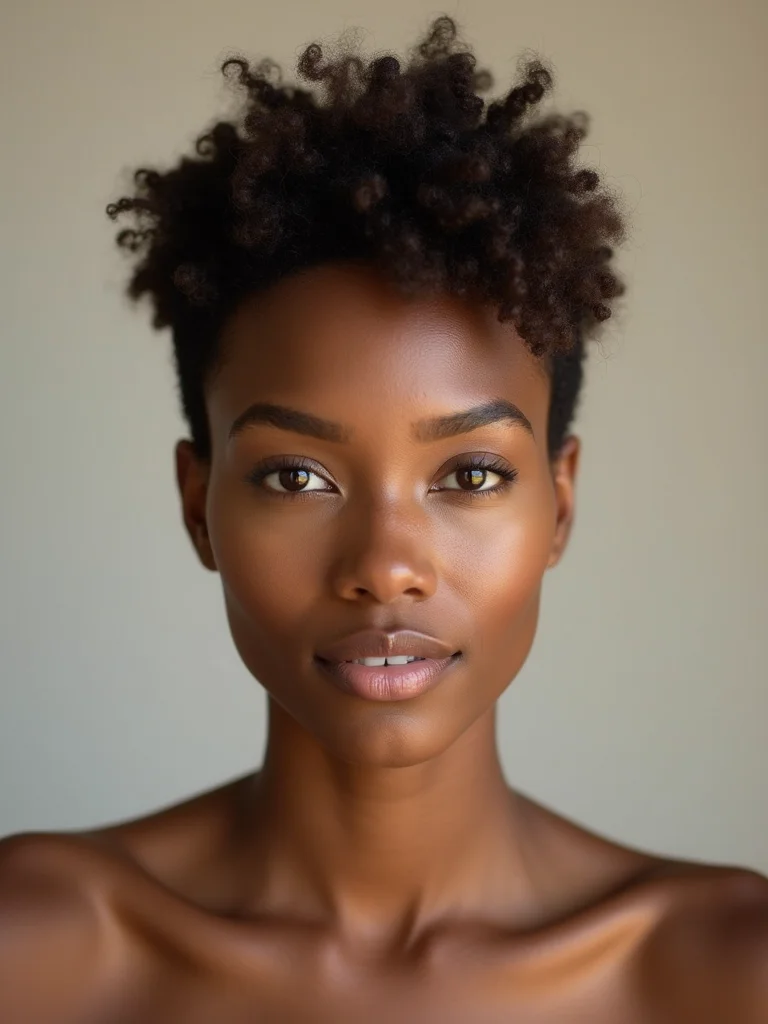
A medium shag photographs well in almost every version, which makes it easy to miss that two shags built the same length apart can behave completely differently on real hair. The layering technique, not just where the shortest pieces land, decides whether the cut moves the way the photo promised.
Fifteen versions follow below, sorted by texture and technique rather than a single formula, from curtain bangs to a wolf-leaning crop, each with the honest trade-off that comes with it.
The Shape in Brief
- The length sits at the shoulder-to-collarbone range, long enough to move but short enough to still pull back.
- Texture and hair density change the layering technique far more than face shape does.
- Most versions style in minutes once the cut is right, but a poorly placed layer no amount of product can fix.
The Shoulder-Length Shag With Curtain Bangs
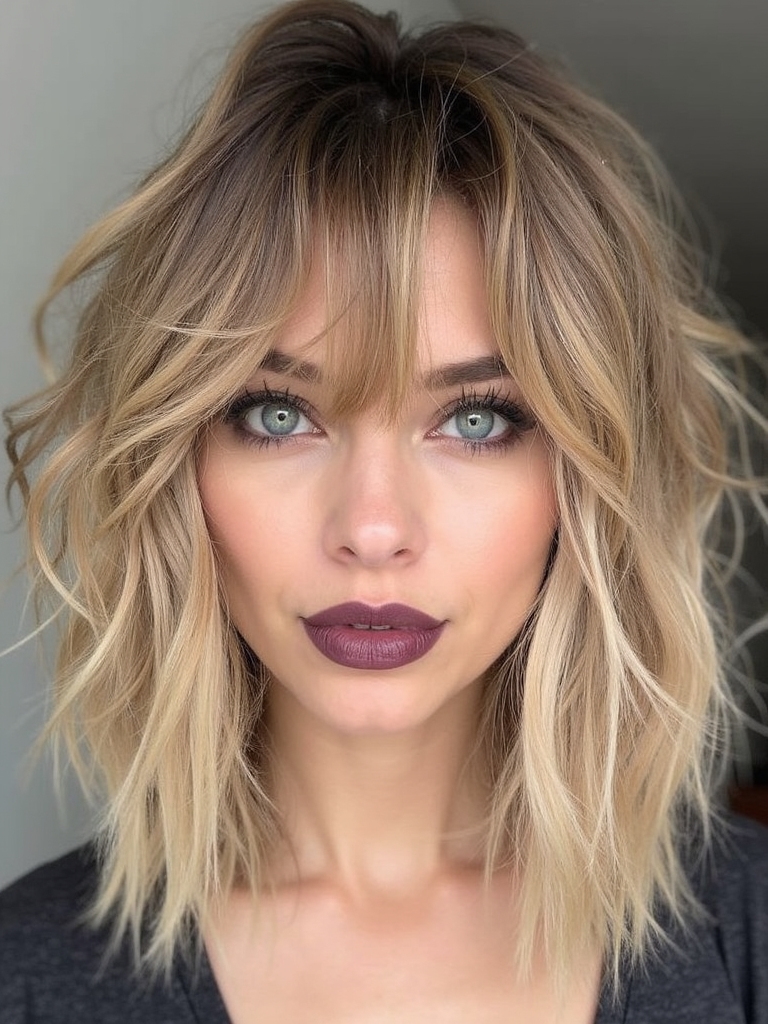
This is the version most people picture first, the curtain bangs parting in the middle and sweeping to each side straight into the longer layers below. The fringe and the surrounding layers move as one continuous piece, with no visible break between them.
The catch is upkeep on the fringe specifically: curtain bangs grow into the eyes faster than the rest of the shag lengthens, so this version asks for more frequent shaping right at the front even while everything else holds its line.
- The fringe blends straight into the surrounding layers with no visible seam.
- Works on nearly any texture, straight or wavy alike.
- More on the fringe alone lives at curtain bangs.
The Textured Medium Shag for Fine Hair
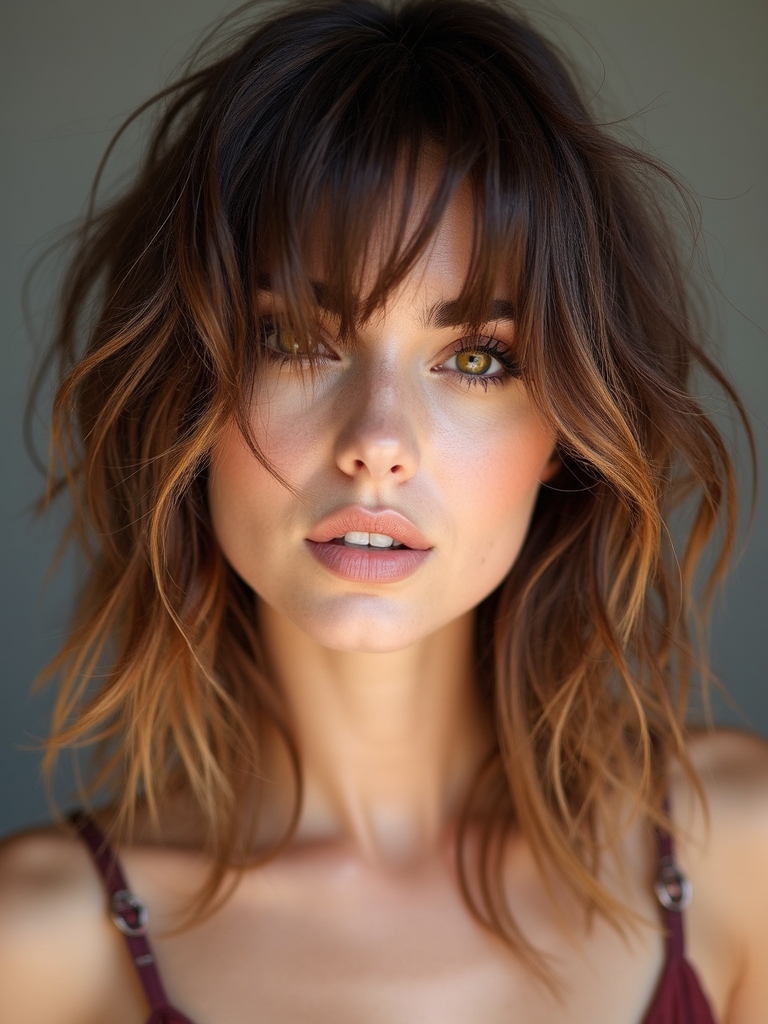
Fine hair and heavy layering rarely mix well, so this version keeps the layers short and light specifically at the crown, building lift where fine strands usually fall flattest.
Where this struggles is at the very ends: too much thinning on already-fine hair leaves the perimeter stringy rather than textured, so the cut works best with layers kept high and the bottom line left mostly intact.
- Layering concentrates at the crown, not the ends.
- A root-lift spray does more for this version than any finishing product.
- For a shorter take on the same density trick, shaggy bob for fine hair goes further.
💡Fine-Hair Specific
Ask specifically for layering concentrated at the crown rather than evenly distributed through the whole length; even weight distribution is what makes fine hair look thinner, not fuller, in a shag.
Cheekbone-Length Framing Layers
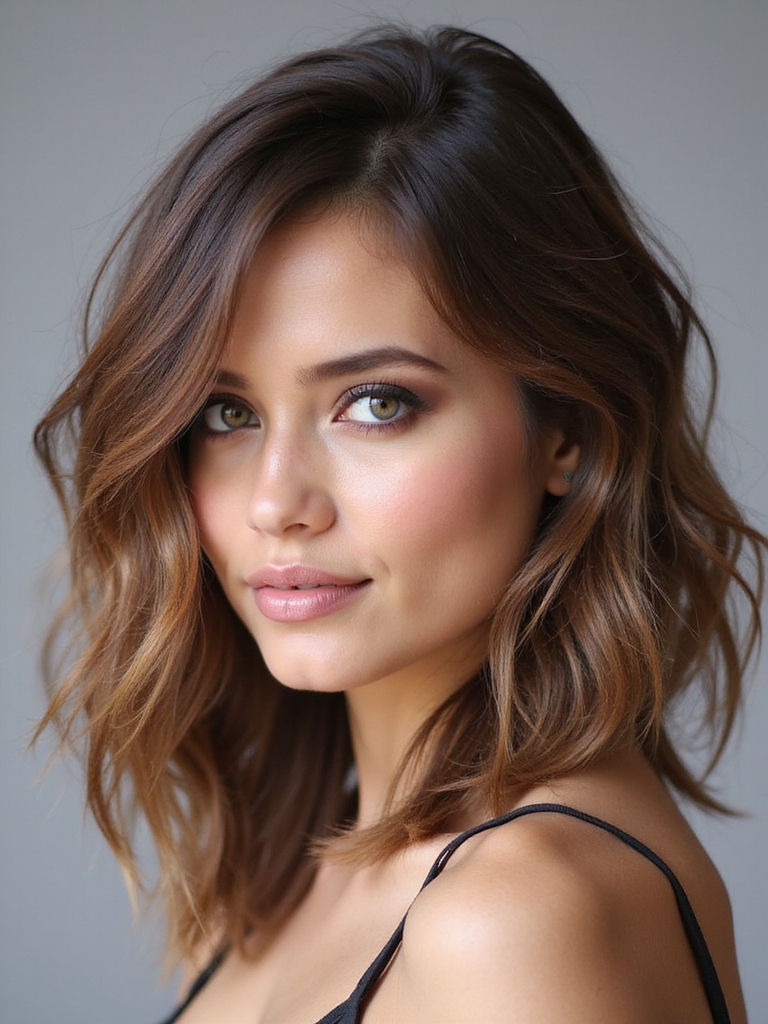
Starting the shortest layer right at the cheekbone is one of the more forgiving placements in this whole lineup, since it draws the eye up toward the widest, most photogenic point on most faces.
A Forgiving Starting Point
The pieces fall loosely around the cheekbones and jaw rather than sitting pin-straight, giving the cut a relaxed, slightly undone quality instead of a stiff, salon-fresh line.
Where this placement struggles is on a very round face, where cheekbone-length pieces can add width in a spot that already has plenty. A jaw-length start usually reads better there.
The Wispy-Fringe Medium Shag
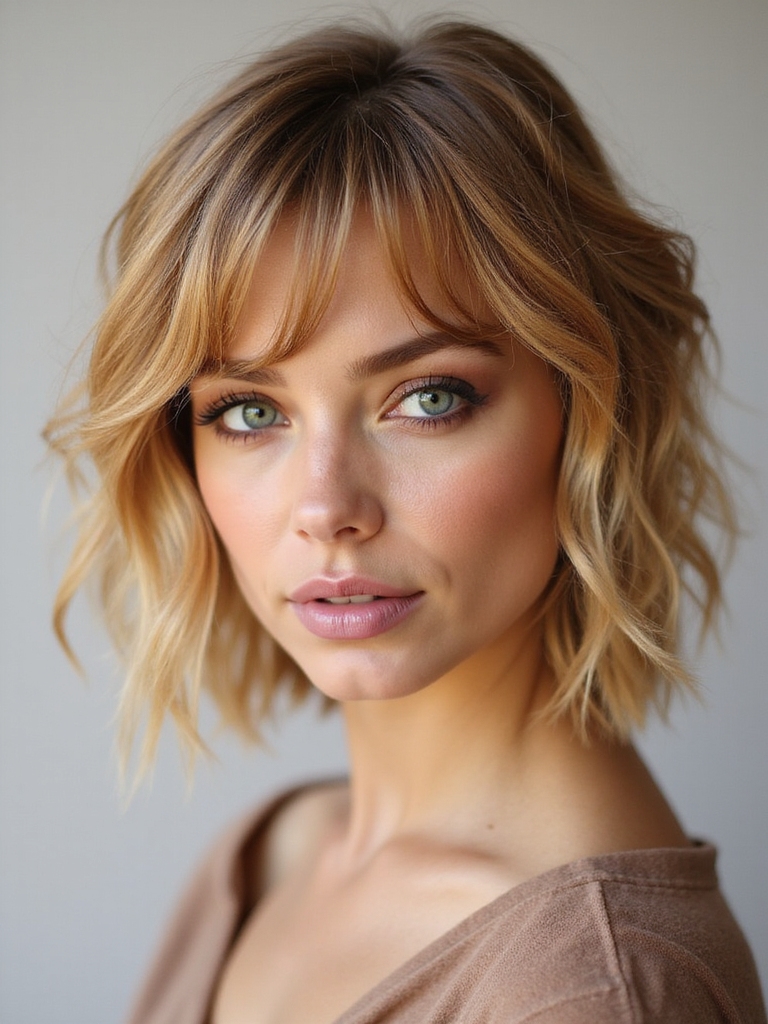
Where curtain bangs sweep to the sides, a wispy fringe sits lighter and airier straight across the forehead, for anyone after softness up front without a heavy, blunt line.
The see-through, feathered quality keeps the whole front delicate, and because so little hair is actually involved, it grows out into the surrounding layers with almost no awkward stage.
- Sits light and airy rather than blunt across the forehead.
- Softens a strong or prominent forehead especially well.
- Grows out painlessly into the longer pieces around it.
Face-Framing Highlights
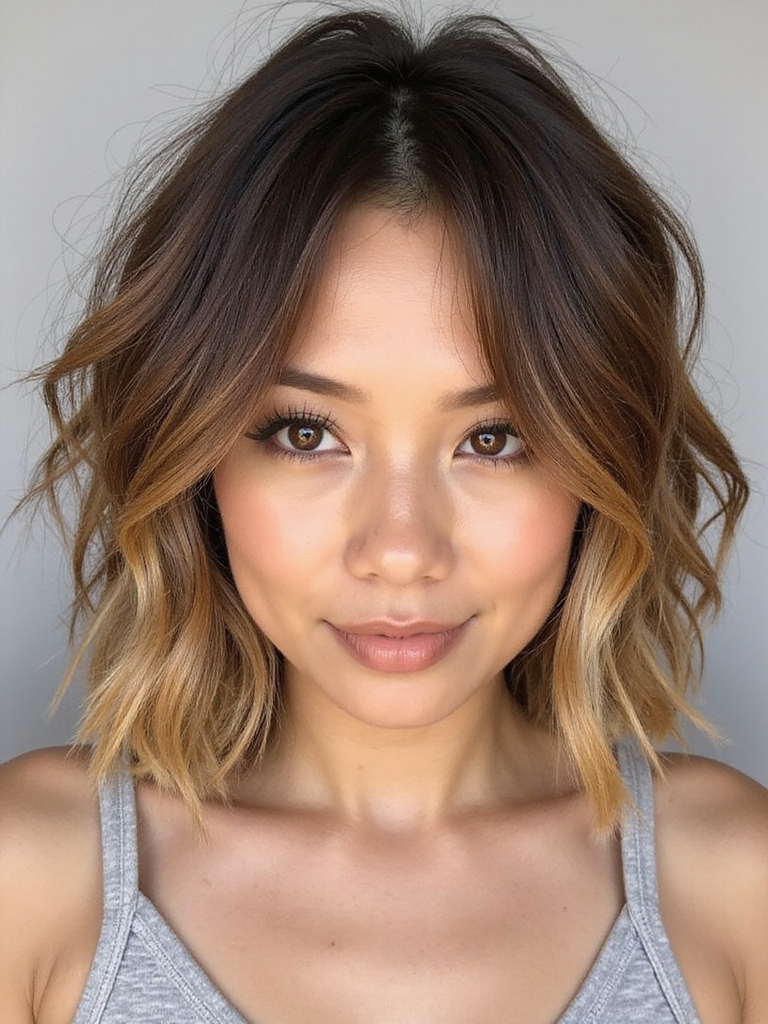
Color is the quiet partner in a lot of these cuts: brightening the exact pieces the layering already shaped doubles their visual effect without changing the haircut itself.
Brightening What the Cut Already Built
A money piece, two brighter panels right at the front, reads bold and immediate, while soft babylights woven through the same pieces read more like the hair simply caught the sun.
Where this gets expensive is upkeep: bright pieces this close to the face show regrowth fastest, so budgeting for a refresh sooner than a full-head color service is worth planning for.
The Wavy Air-Dry Medium Shag
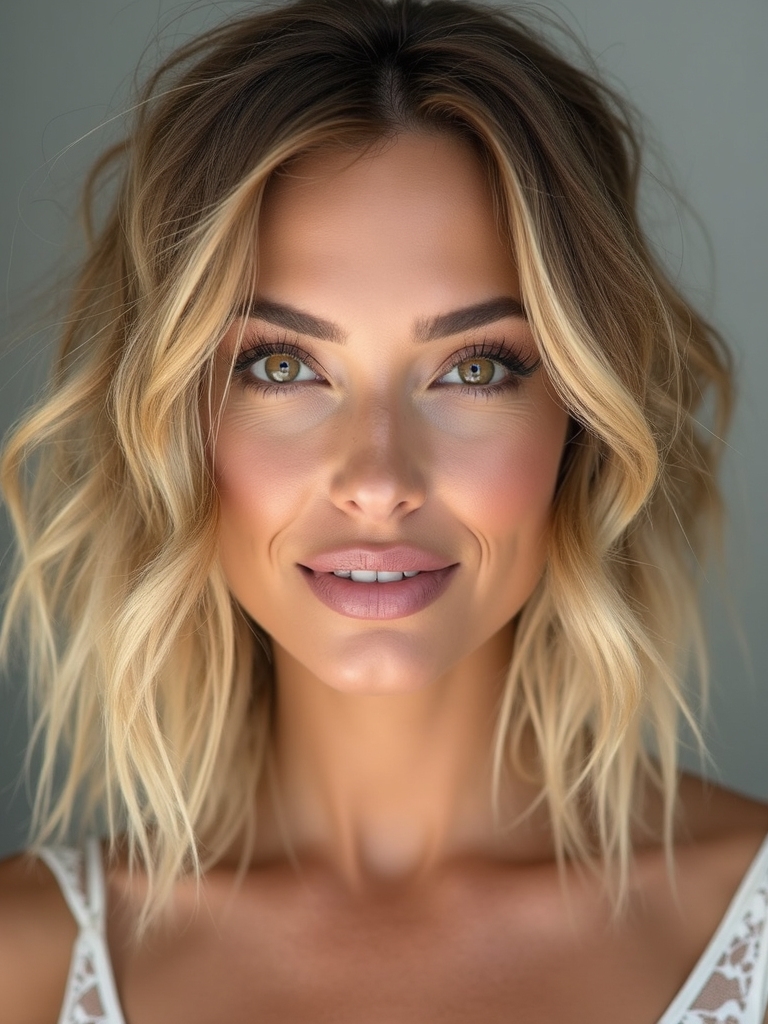
On naturally wavy hair, this cut asks for almost nothing: the layers give the waves somewhere to spring, and a little texture spray on damp hair does the rest with zero heat involved.
This ranks among the lowest-effort versions here day to day, and it plays directly to the shag’s actual strength, which has always been movement over polish.
- Scrunch a texture or salt spray into damp hair and let it dry.
- Best suited to hair with natural wave already present.
- The full shag range lives at curly shag for tighter texture.
The Choppy Medium Shag for Thick Hair
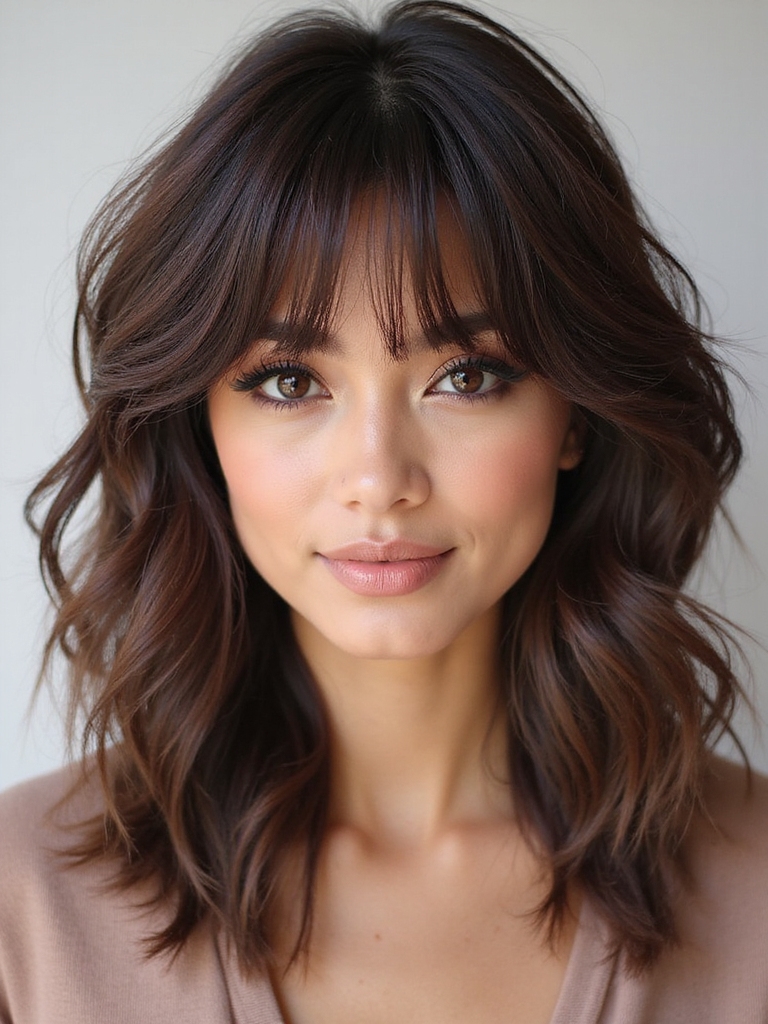
Thick hair runs into a different problem entirely: without enough internal layering, a shag on this density just sits like a solid, heavy block instead of moving at all.
Carving weight out from underneath is what fixes it, letting the surface stay full while the hair underneath finally has room to swing. Drying time tends to drop noticeably once that bulk comes out, which is usually the first change people actually notice.
Which version actually fits the hair in front of you?
🎯My hair is fine and falls flat
The crown-focused textured version or the wavy air-dry take, both of which build lift without stripping density.
🎯My hair is thick and heavy
The choppy, debulked version, which carves weight out from underneath so the surface can finally move.
The Defined Curly Medium Shag
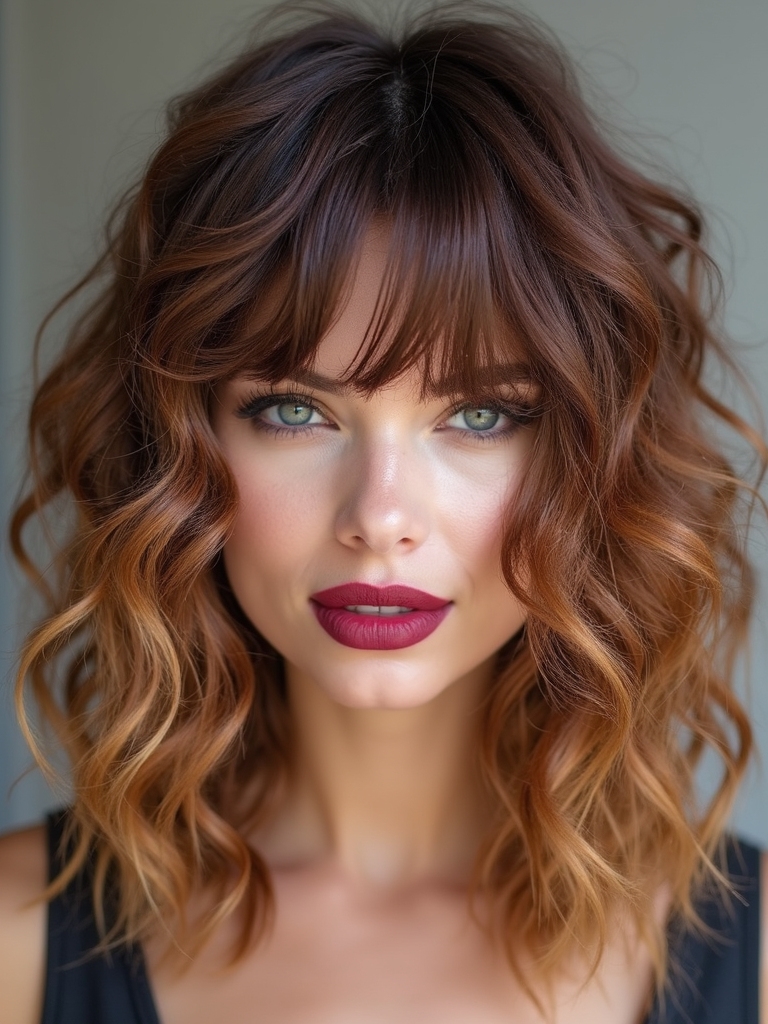
Curly hair and a shag suit each other well, since the layering gives individual curls room to spring instead of clumping into one dense shape.
Cut for the Coil, Not the Length
The cut has to happen on dry hair, section by section, following exactly where each curl naturally settles once it has fully sprung. Cutting to a wet measurement guesses at a length that simply won’t exist once the hair dries and pulls up.
Where this cut struggles is on very tight coils cut without accounting for shrinkage: the length ends up shorter and squarer than planned, so length left for shrinkage matters more here than almost anywhere else on this list.
The Wolf-Inspired Medium Shag
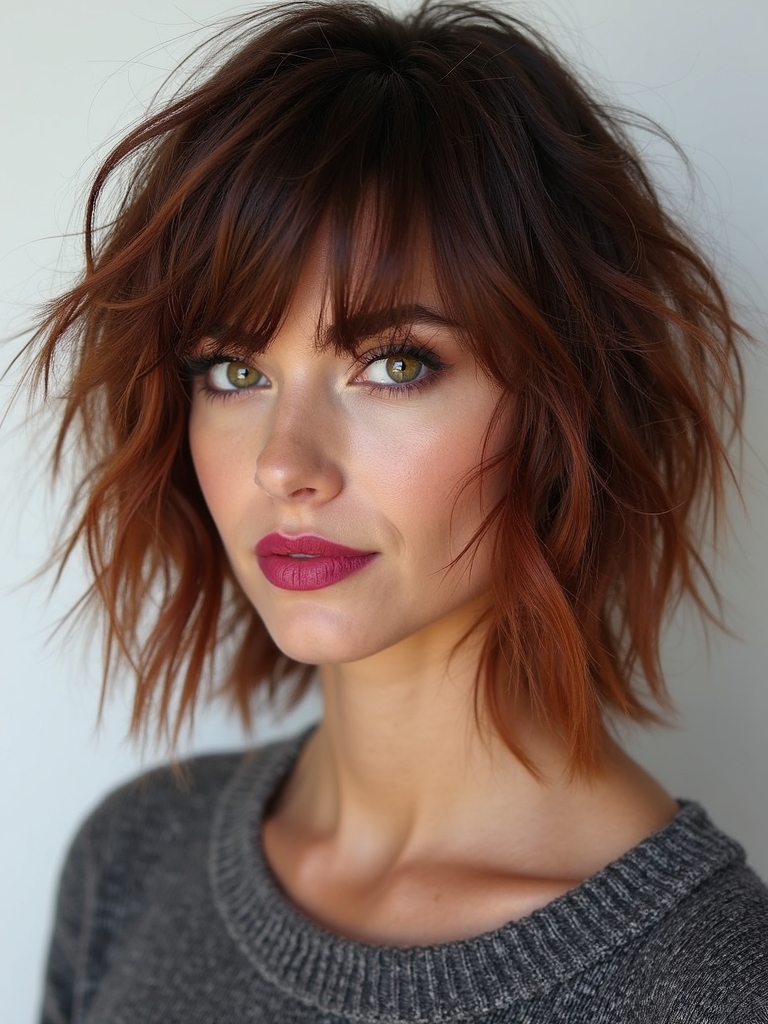
For a bolder take, pushing the shag’s layering further toward a wolf cut adds heavier graduation and choppier, more dramatic pieces throughout.
- The contrast between a short crown and longer lengths grows more pronounced than a standard shag.
- Suits someone after a real statement rather than a subtle update.
- The full range of versions lives at wolf cut hair.
The Razor-Cut Medium Shag
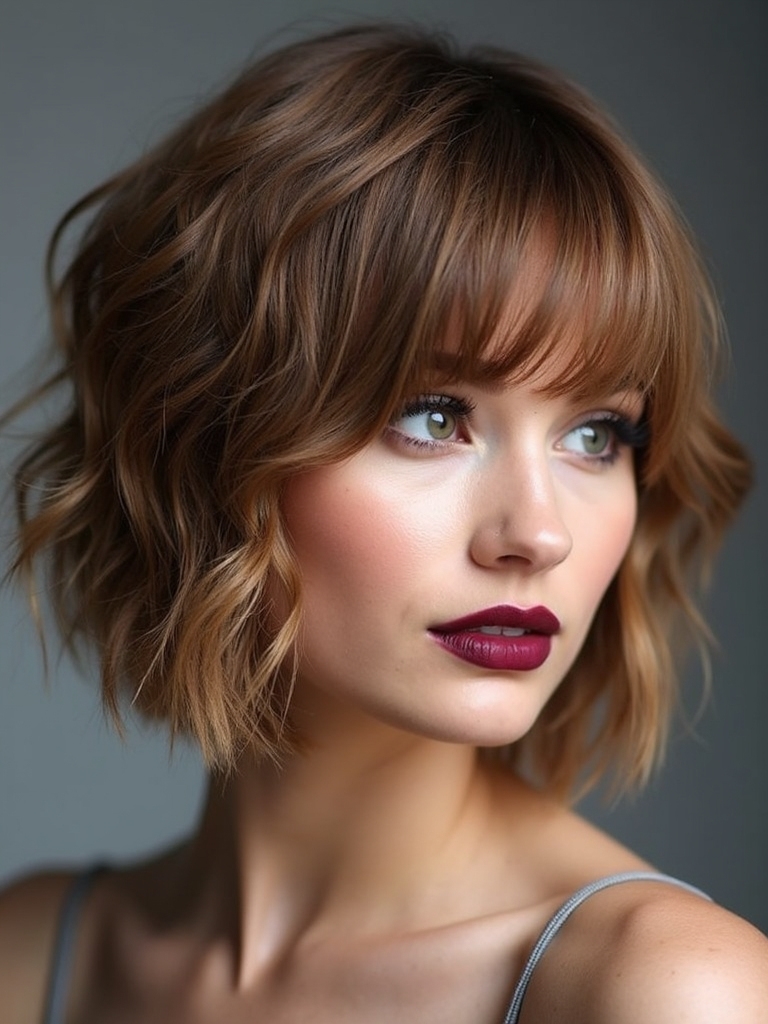
A razor in a skilled hand gives this cut its softest, airiest edge, feathering the ends down to a fine point instead of a blunt line.
- Looks especially good on thick or wavy hair that can handle the extra thinning.
- The catch is fine or already-fragile hair, which a razor can fray rather than feather.
- A good stylist switches to point-cutting when the hair calls for it.
The Shoulder-Grazing Shag for Round Faces
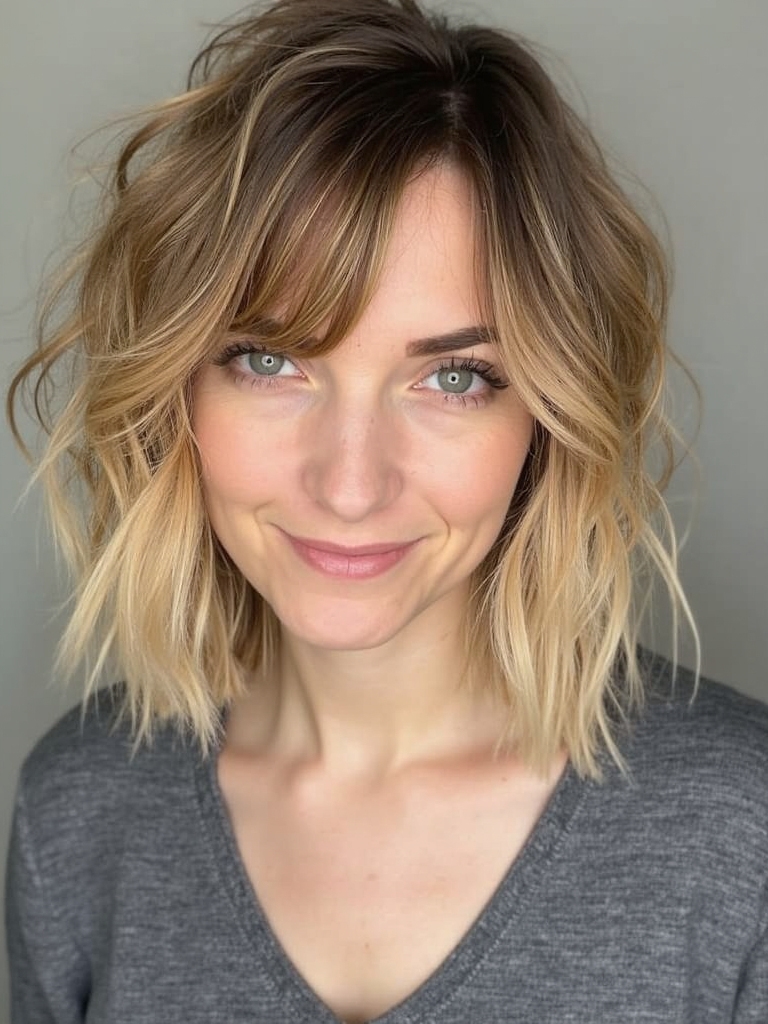
A round face generally reads better with some added length and a vertical line, which is exactly what this lower, jaw-starting version of the cut delivers.
- Starting the shortest layer at the jaw, not the cheekbone, adds a lengthening line instead of width.
- The length itself stays at the shoulder for maximum slimming effect.
- Skip high, heavy layering at the cheekbone here specifically; it works against this face shape.
| Texture | Best-Suited Version | What to Watch |
|---|---|---|
| Fine, flat | Textured shag, crown-focused layering | Keep perimeter mostly intact |
| Thick, heavy | Choppy, debulked version | Avoid over-thinning at the ends |
| Curly, coily | Defined curly shag, cut dry | Leave length for shrinkage |
| Wavy, natural texture | Air-dry wavy version | Needs almost no heat styling |
The Softened Angled Medium Shag
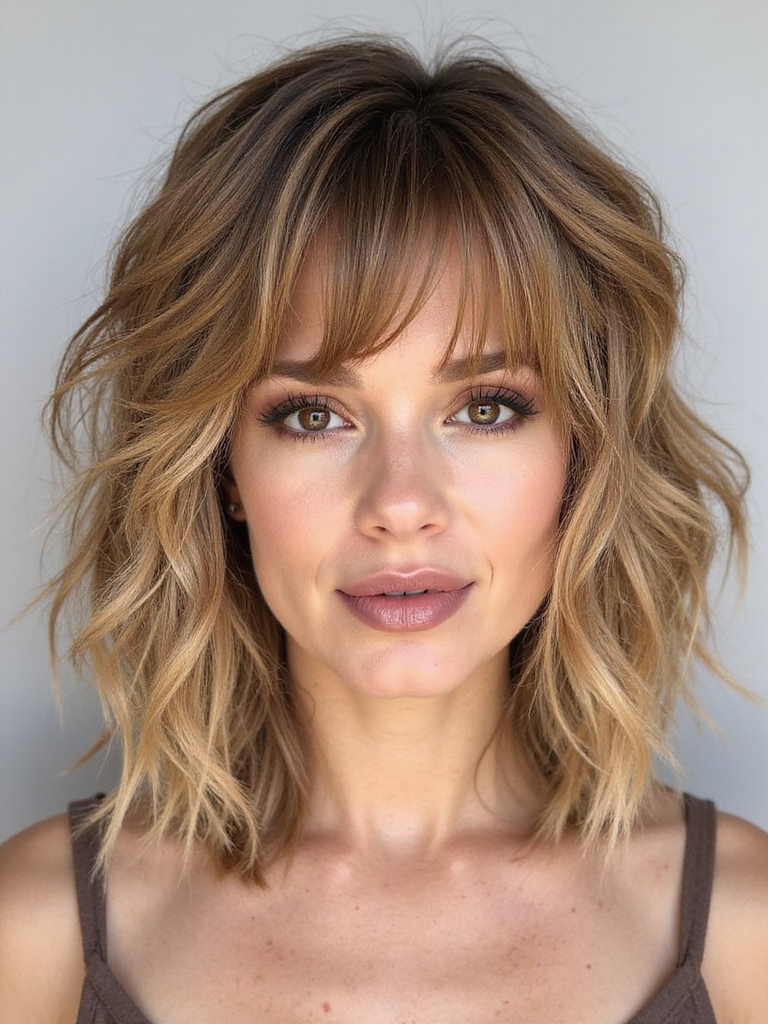
Adding a soft forward angle, slightly longer at the front than the back, gives the shag a gentle slant that most face shapes take well.
Unlike a sharp angled bob, the shag’s layering keeps that angle soft and moving rather than stiff, so the shape still has the texture the cut is known for underneath the added structure.
The Medium Shag With Bangs
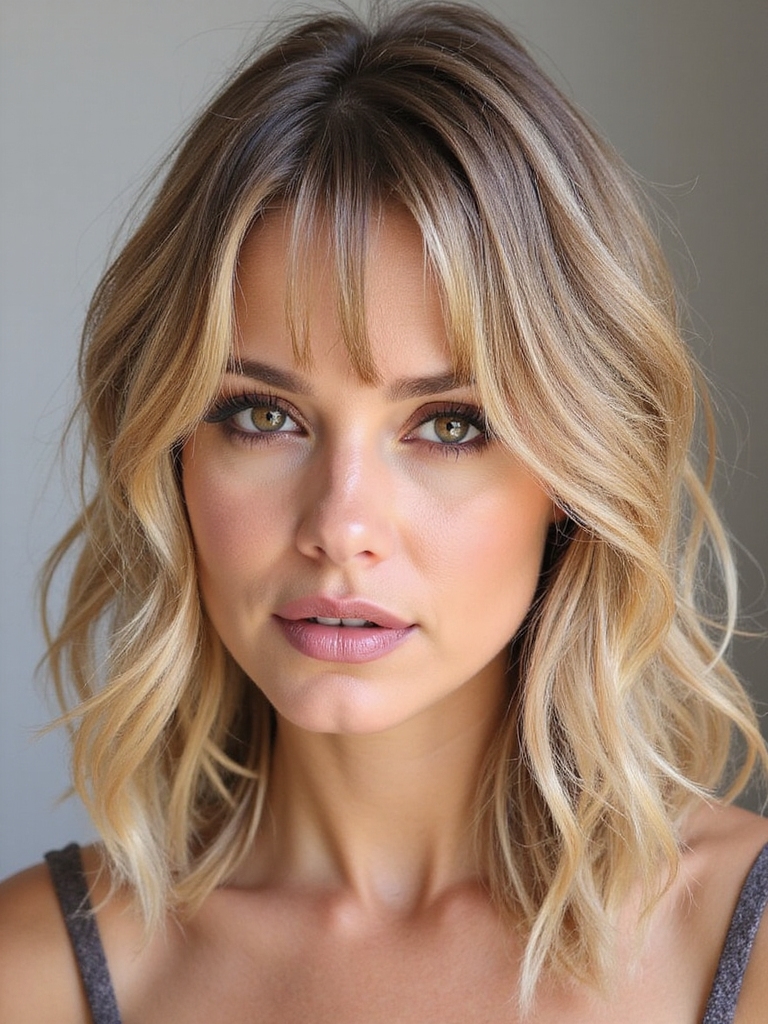
Beyond curtain and wispy fringes, a fuller, more solid bang closes the front off completely for a bolder, more graphic look.
It suits a confident style more than a soft one, since the eyes end up the clear focal point rather than something softened away by a swept fringe.
- Keep the bang textured rather than perfectly blunt so it still blends into the shag’s layers.
- Reads as more of a statement than the swept versions here.
- Needs the most frequent fringe-only trims of anything on this list.
The Blowout-Ready Medium Shag
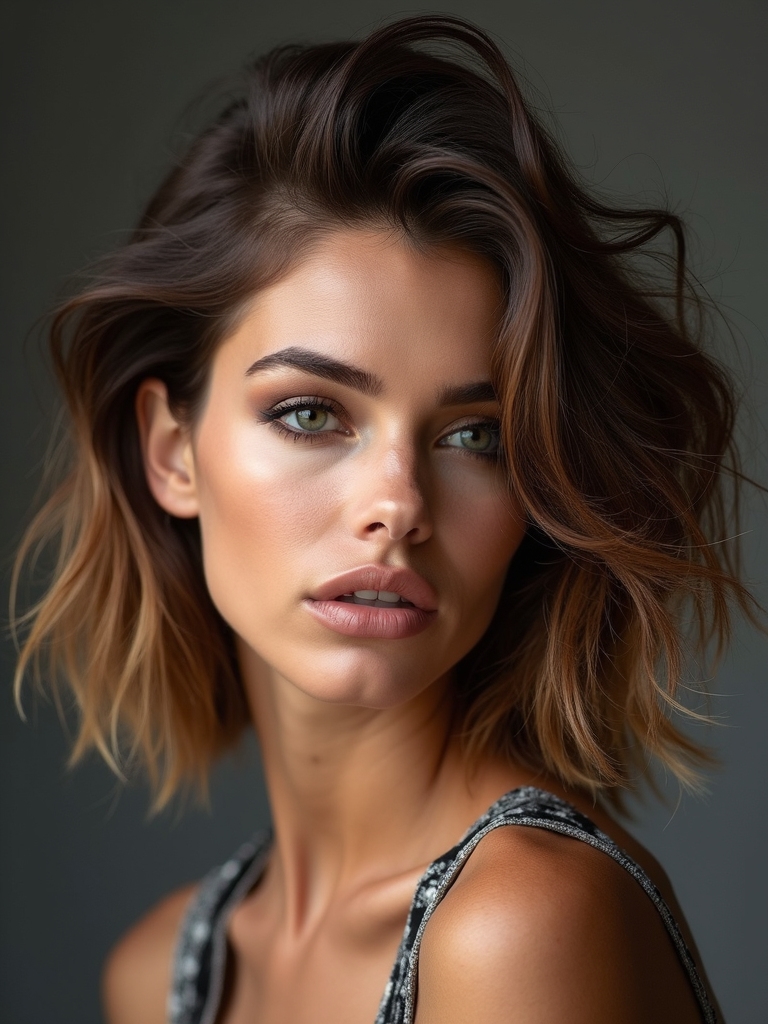
The same layering that falls loose and undone when air-dried turns full and polished once it’s blown out, which says a lot about how much range one haircut can actually hold.
- A round brush rolled forward and under builds soft bounce through the layers.
- Lifting the crown at the root before the rest adds real height.
- A light shine spray at the end keeps the finish polished rather than stiff.
The layering is what makes a shag move; the length is just where you decide to stop.
The Soft Shag With Tendrils
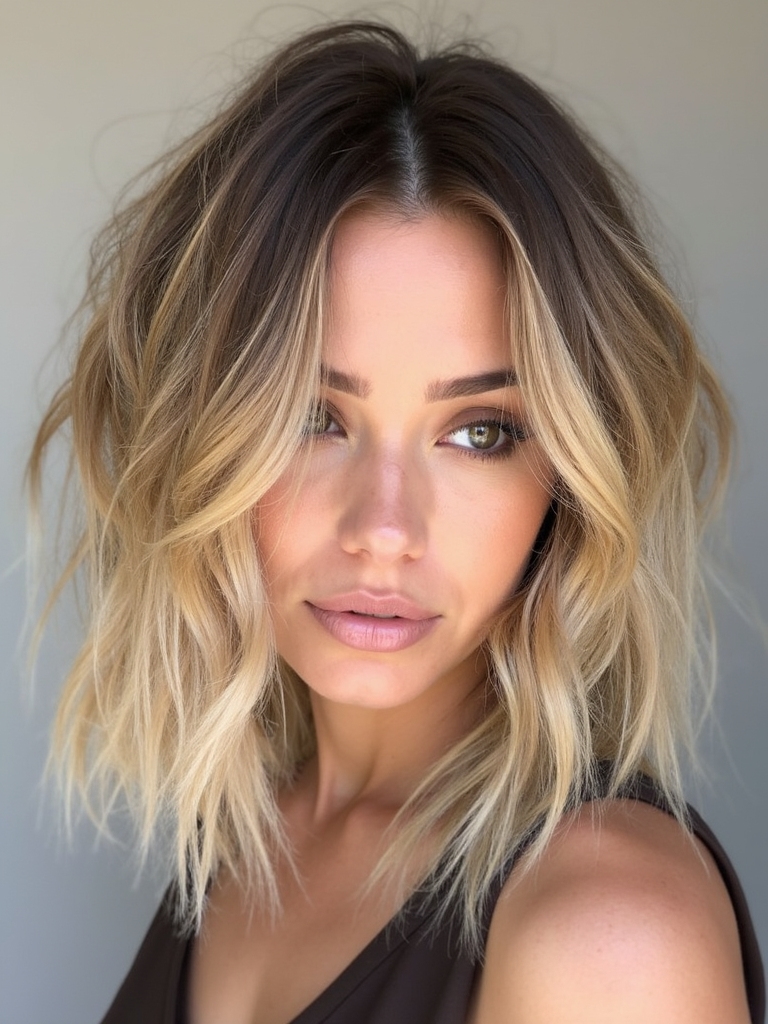
The most delicate version here leaves just a few fine pieces loose right at the front, small strands left down for a soft, undone finish.
- Works especially well pulled back into an updo or a half-up style.
- The loose pieces are doing all the softening work on their own.
- Curling them gently away from the face keeps them from looking accidental.
How to Get the Look
Bringing a clear photo matters more here than for a lot of haircuts, since two shags at the same length can be built with completely different layering underneath a similar surface. Naming a texture and a face shape alongside the photo narrows the gap between the picture and the actual result.
A reshape on this cut typically runs around $55, about half what a full color service costs at the same salon, and it needs to happen on a shorter cycle than a one-length cut would, since the shortest layers soften first and change the whole silhouette before the length behind them even shows any growth.
Medium Shaggy Haircuts, Answered
?What actually separates a medium shag from a regular layered cut?
The depth and placement of the layering. A shag pushes shorter, choppier layers higher into the crown and front than a standard layered cut typically does, which is what creates the piecey, undone texture rather than smooth, blended movement.
?Does a medium shag work on hair that’s never been layered before?
Yes, though the first cut usually removes more length than expected, since building the shortest layers requires taking real length off the top sections even if the overall length barely changes.
?Can this cut switch between low-maintenance and more polished without a fresh visit?
Largely yes. Air-dried, it leans undone; blown out with a round brush, the same layering reads considerably more finished. That range is part of why the cut stays popular.
?Will the wolf-leaning version overwhelm finer hair?
It can, if the graduation goes in too heavy. Thick or medium-density hair carries the boldest version comfortably, while fine hair usually needs a toned-down take on the same idea to avoid looking sparse at the ends.
?Is a medium shag a safe choice for hair that’s already color-treated?
Generally, yes, since the layering itself doesn’t add stress to the hair. The bigger factor is condition: brittle or over-processed ends may need a light trim first so the choppy layering has healthy hair to work with.
The Layering Decides More Than the Length
The single thing worth remembering from all fifteen versions here is that texture and technique matter more than the exact inch of length chosen. A shag built for straight, fine hair and one built for thick, curly hair can share a length and still behave nothing alike.
Bring a photo, but bring an honest description of the hair underneath it too, and let a stylist match the layering to what’s actually there rather than to the picture alone.
Don’t Miss These