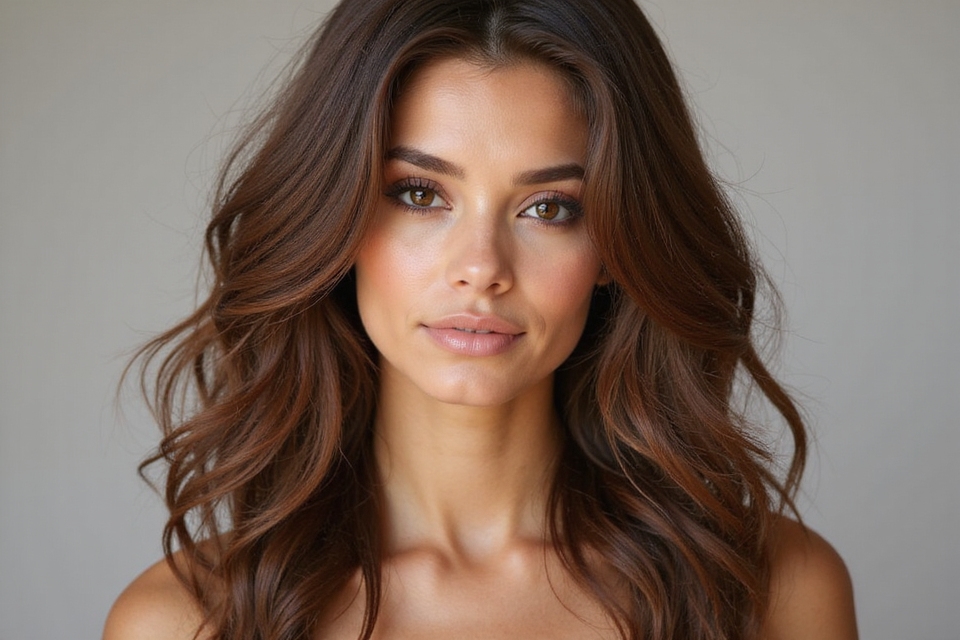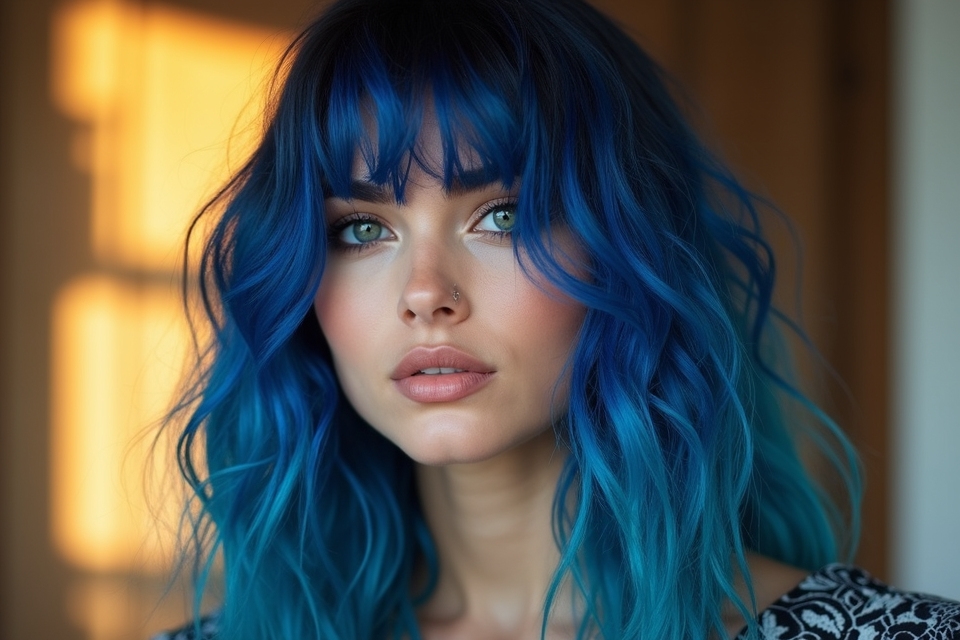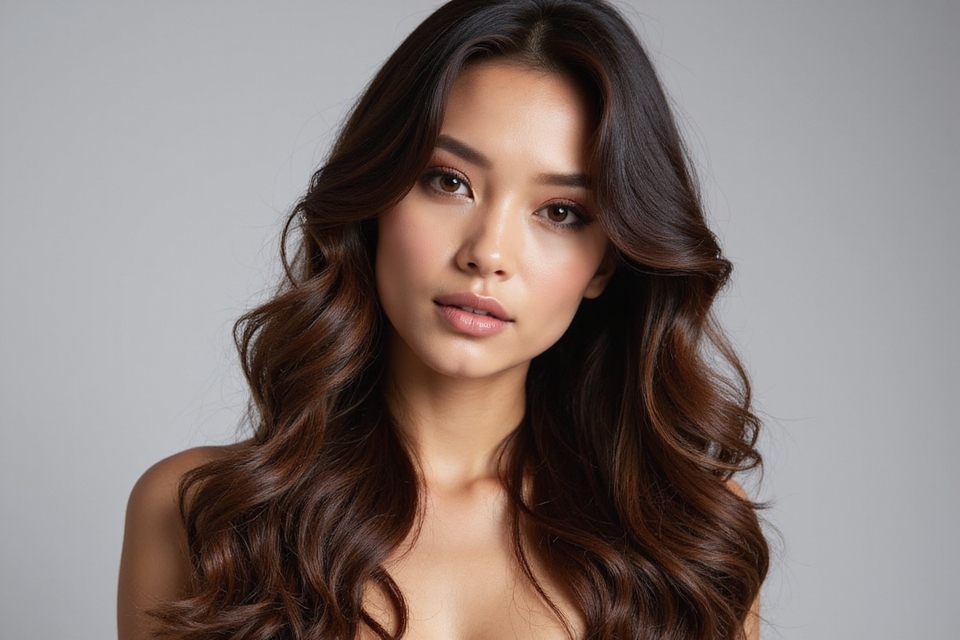
People still apologize for choosing brown, as if it were the shade you settle for when you are too sensible for anything else. I have heard it a hundred times from the chair, and it is the one brown myth worth retiring for good. The best brown hair inspo proves the opposite: flat, one-note brown is a coloring choice, not a fact of the shade itself.
What follows is brown hair inspo with substance: a mood board of seventeen modern browns, from milk tea and mushroom to deep espresso, with the warm and cool tones worth knowing, the shadow root and sombre techniques that add depth, and a quick way to match a brown to your own undertone.
The Short Version
Modern brown is built on dimension and a soft, blended grow-out. The flat, single-block version is what dates it. Trending tones right now run cool and creamy on one side (milk tea, mushroom, ash) and warm and glowing on the other (mocha, caramel, amber).
The real trick is undertone matching: warm skin glows in honey and toffee browns, cool skin stays sleek in ash and mushroom, and neutral skin can wear almost anything. A standing gloss appointment on a roughly two-month cadence is usually all the upkeep a good brown asks for.
Rich Chocolate Infusion

Chocolate is where most brown refreshes begin, and for good reason: it gives you real depth while staying soft and approachable. A true chocolate brown looks warm and glossy under light, the kind of color that photographs richer than it appears in the mirror, and it stays soft and wearable the whole time. It also forgives regrowth. You are not chained to the salon every few weeks.
The modern version is never one flat block. A colorist weaves a touch of lowlight and highlight through the mids and ends so the color shifts as you move. If you want the full breakdown, the chocolate brown hair guide walks through tone-by-tone options.
- Flatters most skin tones, which makes it the safest first step into brunette color.
- Stays low upkeep: a gloss every eight weeks keeps it shiny without a full color.
- Best on healthy hair, since shine is what sells the richness.
Caramel Balayage

Caramel balayage refuses to date, and that staying power comes down to how the color is placed. Warmth is hand-painted through a brown base so it mimics the way sun lightens hair. There are no hard stripes to grow out. The root stays soft and deep, which is what keeps the grow-out so easy.
Why the soft root matters
Because the lightest pieces sit around the face and through the ends, you get brightness exactly where it flatters most. A full balayage typically runs $150 to $300 depending on length and your colorist, and it holds beautifully for three to four months.
If you already wear brown and want a low-commitment lift, this is the one I steer nervous first-timers toward, because there is no harsh regrowth line to manage. The brown balayage guide covers placement in more detail.
Colorists toss these placement terms around constantly. Here is what they actually mean, so you can ask for the right one.
📖Balayage
Freehand painted color, soft and blended with no foils, for a sun-warmed look that grows out without a line.
📖Ombre
A more defined fade from dark root to lighter ends, with a visible transition zone.
📖Sombre
A softer ombre with so little contrast the change is barely visible, ideal for natural dimension.
📖Foilyage
Balayage painted but wrapped in foil for extra lift, used when you want brighter pieces in dark hair.
Ash Brown Elegance

If you have ever hated how warm your color turns a few weeks after the salon, ash brown is the answer. This cool, smoky brunette built the whole anti-brassy movement. The muted tone strips out gold and red, and what is left is a sleek, almost editorial finish that looks expensive in person.
The trade-off is honest: cool tones fade faster, so ash asks for a little maintenance. A toning gloss keeps that smoky finish from drifting warm. See the ash brown options for cool-to-neutral variations.
- Suits cool and neutral undertones best; warm skin can look a touch flat.
- Plan on toning on a monthly-ish rhythm to hold the cool finish.
- Pairs well with a sleek blowout, which shows off the smoothness of the tone.
Cool Mocha Tones

Mocha sits right between coffee and chocolate, a velvety brown that balances warm and cool so neatly it flatters almost everyone. It is coffee and chocolate in one cup. The cooler version leans modern and refined, with just enough warmth to keep it from feeling cold or gray. That balance is the whole appeal.
What I tell clients torn between ash and chocolate is that mocha is the compromise that does not feel like one. It carries the richness of chocolate with the restraint of ash. The mocha brown guide shows how the warm and cool versions differ.
“If you love cool mocha but it keeps drifting warm, ask your colorist for a cool-toned glossing service between full colors. It is cheaper than a full appointment, takes about twenty minutes, and resets the tone before brassiness sets in.”
Auburn Lowlights

Auburn lowlights add depth from the darker side instead of the lighter one, which is exactly why they read so rich. Threads of warm red-brown are woven through a brown base so the color catches an autumnal glint and stops just short of a true red. No bleach required. It is the move for brown that has started to look one-dimensional but does not want to go lighter.
- Adds dimension without lightening, so there is no bleach and far less damage risk.
- Reads warmest on warm and neutral skin, where the red echoes natural warmth.
- Low upkeep since lowlights grow out softly with no bright regrowth line.
Honey Almond Glow

Honey almond marries warm honey with a soft, nutty brown for a sunlit warmth that photographs beautifully. Worn through waves, it catches light at every bend, which is where that golden glow looks richest. The effect is pure sunlight. This is one of the warmest, most flattering browns going right now.
It rewards warm and neutral skin especially, lifting brown with a soft gold that never turns brassy when it is toned correctly. Compare it with the honey brown options if you want to see the range.
- Best on warm and golden undertones, where the honey glow shows up brightest.
- Style it with loose waves to show off the dimensional gold.
- A glossing service runs $40 to $80 and keeps the warmth from dulling.
🅰️Warm browns
Caramel, honey, toffee, and amber. Choose these if your skin has golden or olive warmth and your veins look greenish; warm tones make warm skin glow.
🅱️Cool browns
Ash, mushroom, and cool mocha. Choose these if your skin has pink or blue undertones and your veins look bluish; cool tones keep cool skin from looking washed out.
Frosted Chestnut Highlights

Frosted chestnut takes a warm chestnut base and lifts it with cooler, lighter pieces for a soft contrast that brightens without going blonde. The frosting catches light around the face while the warm base keeps the color grounded. That push-pull is what keeps it looking current.
- Start with a warm chestnut base so the frosted pieces have something to contrast against.
- Keep the lightest pieces face-framing, where brightness flatters most.
- Tone the frosting cool so it stays crisp rather than yellow.
Mushroom Brown Softness

Mushroom brown is the cool, greige tone everyone has been asking about, a muted blend of brown and soft gray that feels quiet and sophisticated. Think of it as the cool cousin of caramel: same softness, opposite temperature.
Cool and neutral complexions get the most from it, since the understated, almost foggy finish suits anyone who finds warm browns too brassy on them. The greige cast is what sets it apart.
Upkeep is the real cost of this shade, worth weighing before you commit. Those cool gray tones fade first, so mushroom asks for a toning visit close to monthly to stay true. Let it slip and it warms up fast.
Not sure where to start? Two quick questions narrow the whole list down fast.
1Do you want low upkeep above all?
Lean toward sombre, walnut, or a shadow root, where the grow-out is soft and salon visits stretch for months.
2Do you want noticeable brightness?
Look at chestnut bronde, caramel balayage, or milk tea, which look brighter while keeping a brown base.
Warm Amber Dimensions

Warm amber threads a golden-orange warmth through brown for a glowing depth that looks like liquid gold under sunlight. It is the warmest, most dimensional way to wear a rich brown without crossing into red or copper.
Amber loves warm and golden skin, echoing the warmth already in the complexion so the whole look feels cohesive. On cool skin it can feel a touch loud, so a softer, more muted amber works better there.
Because the warmth is built in soft layers, the color shifts as the light changes through the day. It never settles into one flat tone.
Toffee Ombre Effect

A toffee ombre fades a deep brown root into warm, golden-brown ends for a gradient that sits sweetly between caramel and chestnut. The deeper root keeps the upkeep low while the warm ends do the glowing. That is the practical reason ombre has stuck around for so long.
- Keep the root your natural depth so regrowth stays invisible for months.
- Blend the transition high and soft so there is no harsh band of color.
- Glaze the ends warm on a steady cycle to keep the toffee from going dull.
Espresso Depth

Espresso is the near-black brown for anyone who craves serious depth and a little drama. It looks glossy, deep, and quietly chic. There is just enough brown warmth to keep it from going harsh against the skin. On healthy, shiny hair the depth looks expensive.
The catch with any deep brown is that shine is non-negotiable. Espresso shows every bit of dryness, so a weekly gloss or shine treatment is what keeps it looking rich and deep. Pair it with the depth ideas in the dark chocolate brown guide.
- Cool and neutral undertones carry the depth without it looking severe.
- Demands healthy hair; dryness flattens the whole effect.
- Low color upkeep, but high shine upkeep, so factor in conditioning.
Sandy Brown Hues

Picture hair gently lightened by a whole summer of sun and salt. That is sandy brown: a soft, cool-warm light brown that reads beachy and undone, the opposite of a heavy, opaque brunette.
Best for low-maintenance wearers
Its in-between temperature is what makes it so wearable: not cool enough to feel ashy, not warm enough to feel golden, just a soft middle that flatters a wide range of skin tones.
It suits the easy, undone mood of modern brown, the kind of color that looks good air-dried and barely styled. That low-effort character is exactly the point.
Subtle Sombre

A sombre is the softer, more blended cousin of the ombre, fading brown so gradually there is no visible line anywhere. The subtle gradient adds quiet movement while staying close to natural, which is why it has become the default request when the goal is dimension without a real commitment. The whole point is barely-there. Few brown techniques ask less of a person’s patience while still looking deliberate.
- Choose a sombre over an ombre when you want the change to read as barely-there.
- It grows out with almost no maintenance, since the transition is so soft.
- Works on every length, but shows off best on hair past the shoulders.
Milk Tea Variations

Milk tea brown is the soft, creamy, beige-brown named for the drink, and it ranks among the most fashion-forward browns trending now. It carries a milky warmth that feels cozy and modern at once, balanced enough to flatter a surprising range of skin tones. The creaminess is what sets it apart from a standard light brown.
- Lands between blonde and brown, so it brightens without a big commitment to lightening.
- Best kept soft and creamy; too much ash turns it muddy.
- Pairs naturally with the brighter pieces in the brown with blonde highlights guide.
Chestnut Bronde Blend

Chestnut bronde lifts brown toward the brown-blonde border, all warm dimension and brightness, while keeping plenty of depth underneath. It is the brightest brown on this list before you cross fully into blonde territory.
The brightest brown before blonde
Because so much depth stays in the root and through the back, the regrowth stays soft and the upkeep low even though the face-framing pieces read bright. You get the lift without the bleached-out maintenance.
What I love about it for indecisive clients is that it splits the difference: bright enough to feel like a change, brown enough that you can still call it your natural family. The best of both, honestly.
Walnut Brown Richness

Walnut is the brown you would call your own on a good hair day: soft, muted, and understated, with richness but no real brightness. It’s the easygoing choice when the goal is color that looks like the best version of what you already have. Nobody will ask if you colored it.
Its neutral warmth flatters a wide range of skin tones and grows out so softly you can stretch appointments for months. This is the brown for low-maintenance people who still want depth, and it pairs well with the everyday tones in the medium brown options.
Dark Cocoa Shadowing

Dark cocoa shadowing works from the crown down: a deepened root builds depth right at the part, and everything below it stays a shade or two lighter for contrast. The shadow does double duty, grounding the color while stretching out the grow-out window.
After years of mixing brown formulas, the shadow root is the one technique I lean on most for clients who hate salon visits, because it makes regrowth a feature instead of a flaw. It is the smartest low-upkeep move in deep brunette color, and it pairs with almost any tone in this guide.
Brown Hair Questions, Answered
?Can I go ash or mushroom brown if my hair is warm or was highlighted before?
Usually, but it takes an extra step. Warm or previously lightened hair often has underlying gold or orange that fights a cool tone, so your colorist may need to neutralize it first with a toner or color filler. Go in with realistic expectations: the first appointment knocks the warmth back, and it may take a second visit to land a true ash.
?How dark is too dark for my skin tone?
Very dark browns like espresso can wash out fair, cool complexions and read severe up close. If you love depth but worry it will overpower you, ask for a deep brown through the back with softer, face-framing pieces a level or two lighter. That keeps brightness near your face, where it flatters most.
?Will dimensional brown grow out badly if I skip appointments?
That is the beauty of balayage, sombre, and shadow-root techniques: they are designed to grow out soft. Because there is no hard regrowth line, you can stretch full color to three or four months and only book a gloss in between. Solid, all-over brown is the version that shows a sharp line, which is exactly why these blended methods have taken over.
?How much upkeep does dimensional brown need?
Less than most people expect. Balayage and sombre techniques grow out softly, so you can stretch full color for three to four months. The main ongoing cost is a gloss or toner on a roughly two-month rotation to keep the tone true and the shine up.
Brown, Worth a Second Look
Brown has never had more range. Whether you gravitate toward the cool quiet of mushroom and ash or the warm glow of caramel and amber, the through-line is the same. A little dimension and a soft root are what separate a modern brown from a flat one.
Match the tone to your undertone, keep it glossy, and let a shadow root or a sombre do the work of looking intentional. Save the two or three shades that caught your eye, and bring photos to your colorist; a clear reference gets you far closer than any shade name ever will.
Hand-Picked for You