Ever notice how two women with roughly the same amount of gray can look a decade apart in age? The gap rarely comes down to the color itself. It comes down to the cut, the shine, and whether the gray was toned or left to drift yellow.
The looks below are sorted by cut and texture, so finding the one that actually fits a specific hair density and patience level is straightforward. Each one comes with what it honestly asks in upkeep, since treating silver as no-maintenance is exactly how good gray goes dull.
Gray Hair, Sorted by Upkeep
| Look | Upkeep Level | Best For |
|---|---|---|
| Pixie or textured crop | Low | Easiest grow-out, no two-tone line |
| Lob or angled bob | Moderate | A middle ground with real movement |
| Balayage or rooted ombre | Higher | Transitioning gradually from dyed hair |
The Silver Pixie
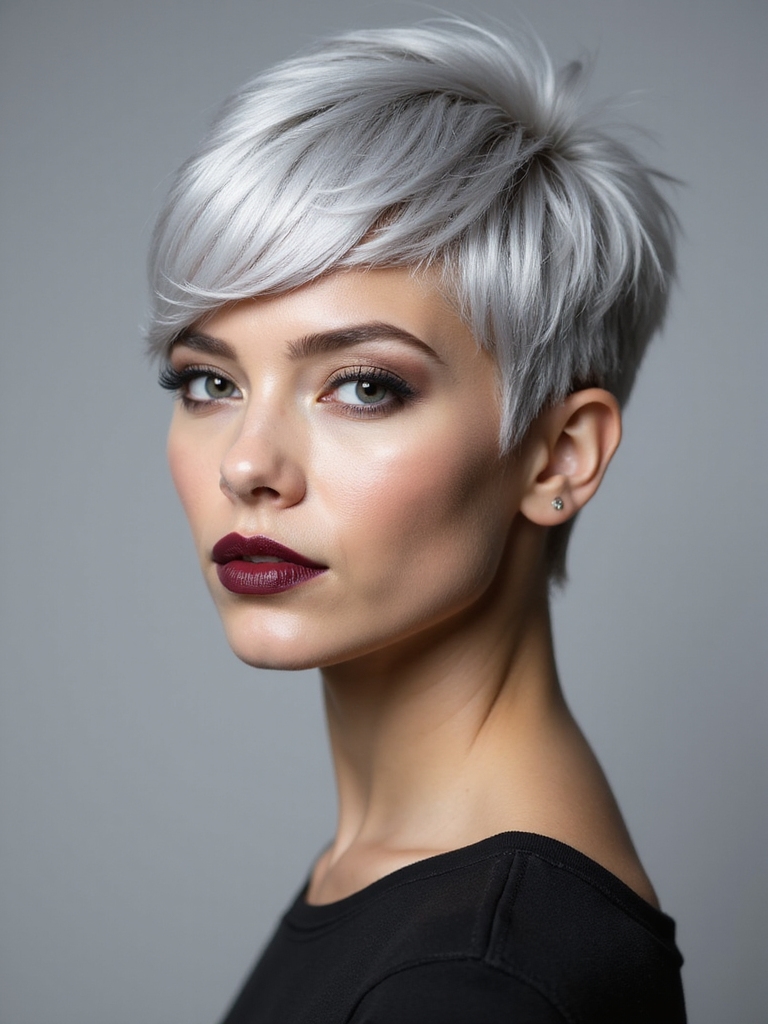
A pixie ranks as one of the more practical cuts for anyone going fully silver, and the reasoning is practical rather than purely aesthetic. Short hair grows out evenly, which skips the two-tone line that turns a grow-out into a visible chore. The gray hair pixie cuts guide covers more variations on this length specifically.
The Shape That Actually Works
It also puts the cool silver tone right up near the face, where it tends to brighten skin rather than wash it out. The shape that works best stays soft rather than severe.
Point-cut layers through the crown add lift, while a slightly longer piece at the front frames the face. On fine hair specifically, a pixie tends to look fuller than a bob would at the same density.
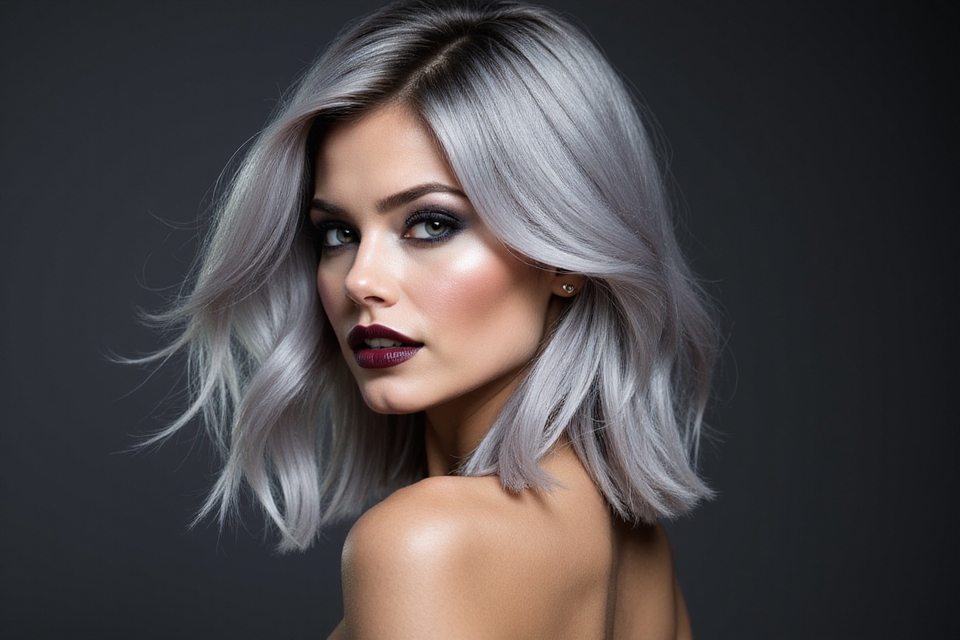
A Collarbone Gray Lob
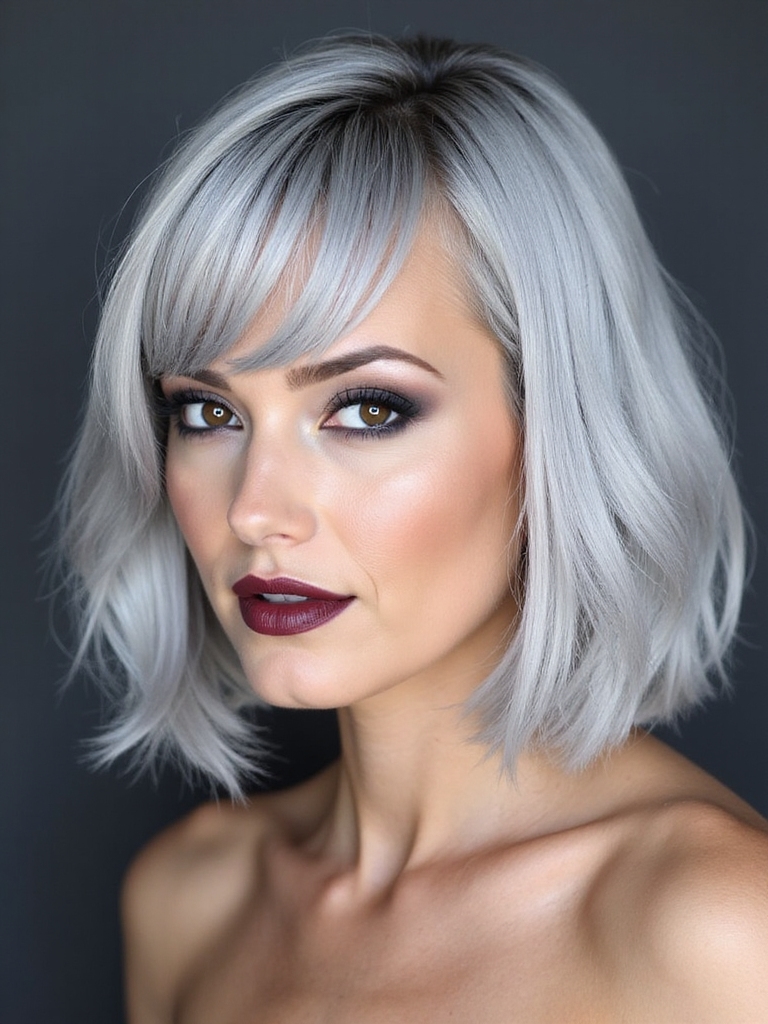
For anyone who finds a pixie too big a leap, a lob offers the safer middle ground. Cut to graze the collarbone with a few nearly invisible layers, it gives silver hair enough movement to look intentional without the upkeep longer lengths demand.
Keeping the ends fairly blunt matters here, since gray hair can read wiry, and over-thinning the ends tends to exaggerate that texture. A weekly purple or blue toning treatment keeps the whole length reading cool rather than warm.
A Deep Side Part for a Gray Lob
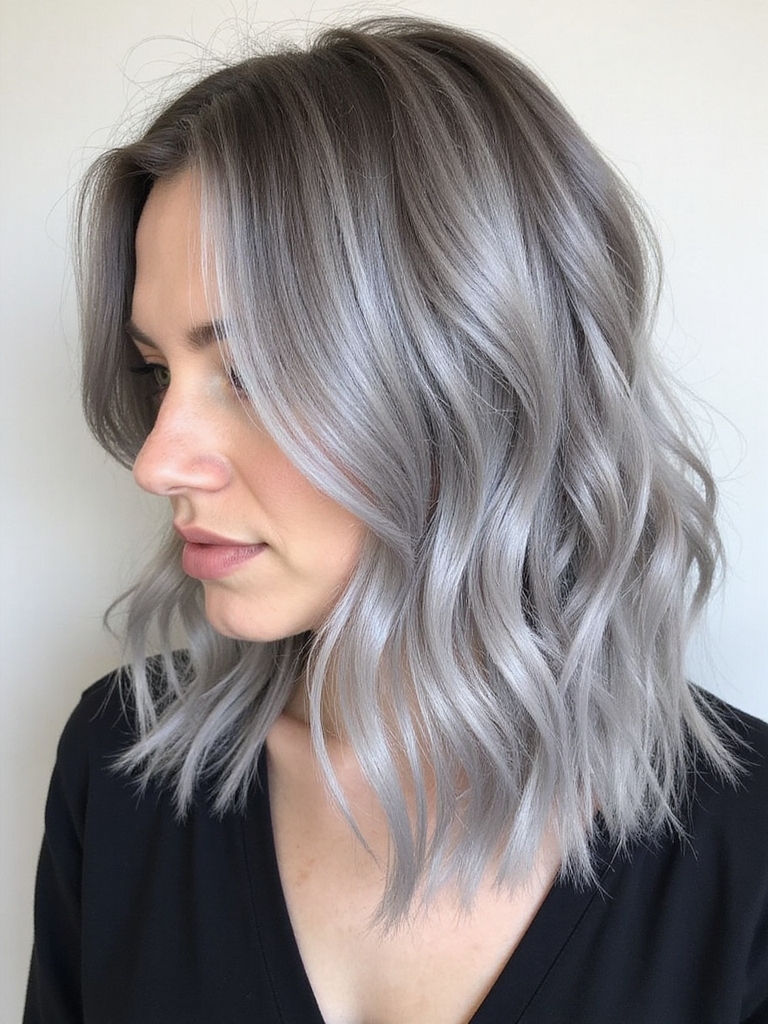
One of the simplest upgrades available costs nothing at all: moving the part. A deep side part on a gray lob adds instant volume right at the root, which matters specifically because silver hair often loses some of the density it carried when pigmented.
The asymmetry also feels more current than a centered part. Training a new part does take patience, since a part worn for years tends to fight back initially.
- Part opposite the natural cowlick so the root actually lifts.
- A small amount of mousse at the root before drying locks the new volume in.
- Expect the new part to want to drift back for the first week or two.
The Honest Trade-Off
A pixie this short needs a reshape on a noticeably tighter schedule than longer cuts, since even a small amount of growth changes the whole silhouette. Expect trims more often than any longer style on this list.
A Hidden Undercut for Heavy Silver Hair
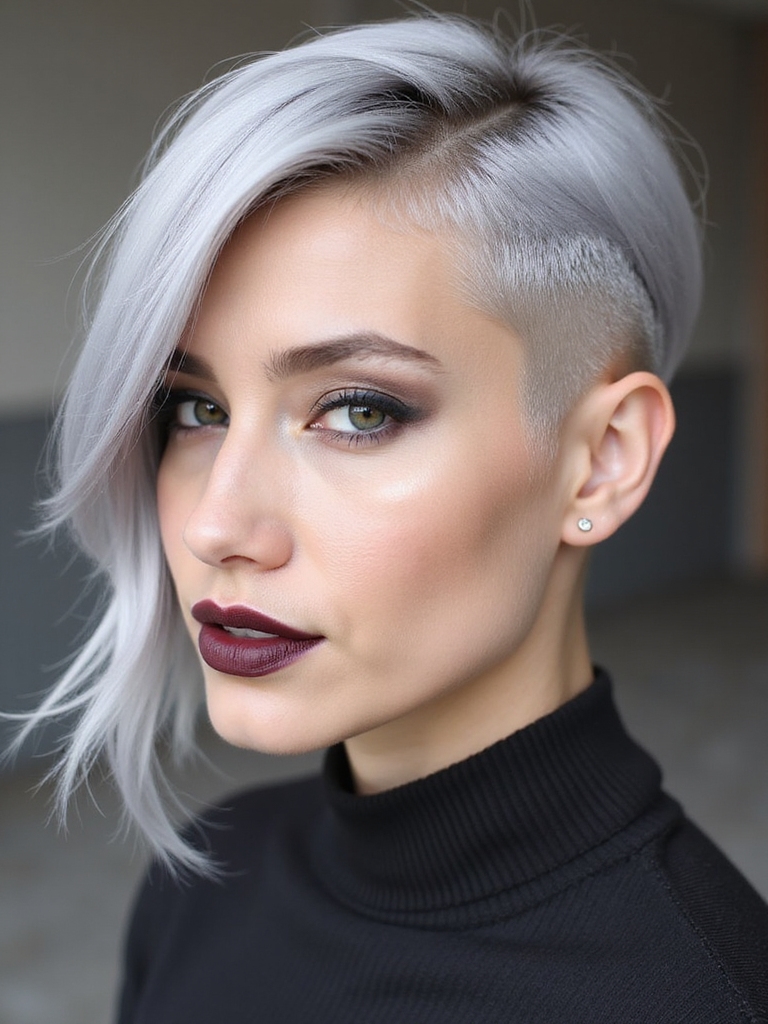
Plenty of gray hair runs thick and coarse rather than thin, and that’s exactly the density an undercut was built for. Buzzing a hidden panel underneath, usually at the nape or behind the ears, removes weight that doesn’t show and lets the top sit noticeably flatter.
Why Thick Gray Hair Responds Well to It
It also functions as a quietly bold choice: with the top down, nobody sees it, but a clean edge stays available on demand, and overall styling time drops meaningfully.
This route works especially well for anyone frustrated with heavy, hard-to-manage silver who isn’t ready to cut everything off just yet.
Loose Gray Waves That Catch the Light
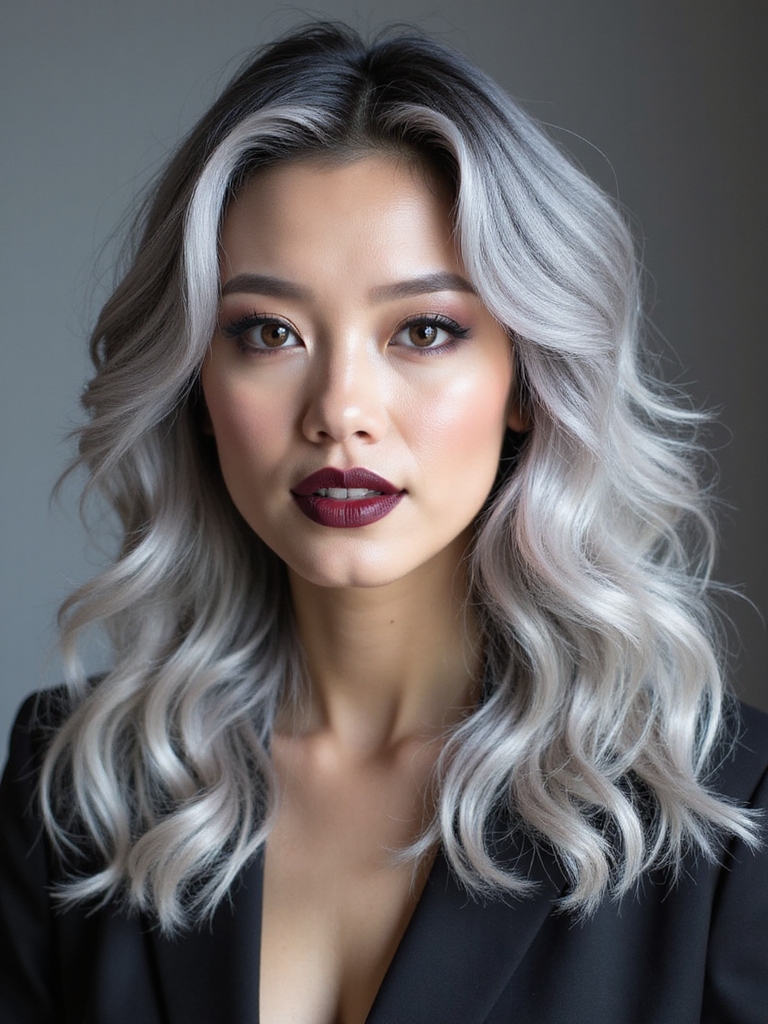
Silver and a soft wave pair naturally well. The bend in the hair breaks up the flat, uniform look that can make some gray read as severe, scattering light so the color appears dimensional rather than one flat tone.
A loose S-bend from a large-barrel iron, or an overnight braid, is usually enough; tight ringlets aren’t necessary. Over-curling tends to tip gray toward looking set rather than relaxed, so a looser hand generally looks better.
Blended Balayage for a Gentler Grow-Out
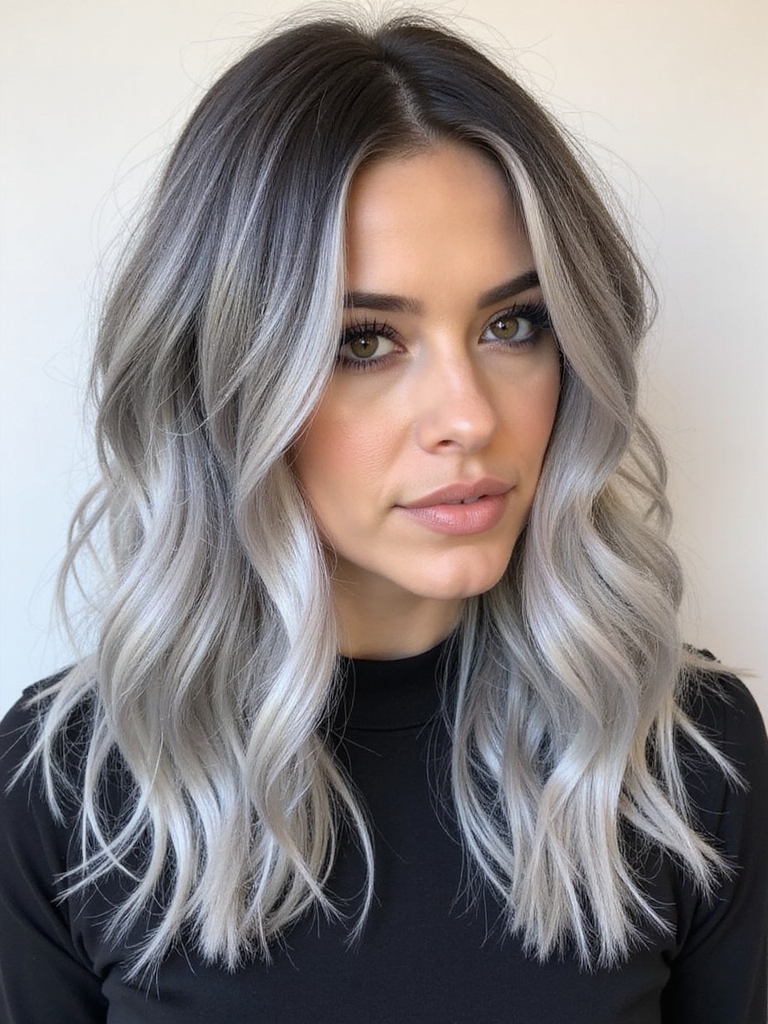
Going gray all at once isn’t the right fit for everyone, and balayage functions as the bridge between dyed and fully silver. Painting soft silver and ash pieces through existing color blurs the line where new growth meets old.
The transition then comes across as a highlight pattern rather than a hard stripe down the part. This route does run pricier than most others here, typically $150 to $300 depending on length, and brass tends to creep back every eight weeks or so, calling for a toning gloss to reset it.
- Bring photos of real silver hair to the consultation, since platinum lands noticeably colder than natural gray.
- Expect the process to take longer at the chair than a single-process color would.
- A toning gloss refresh keeps brass from building back up between full appointments.
Glass-Straight Silver With Real Shine
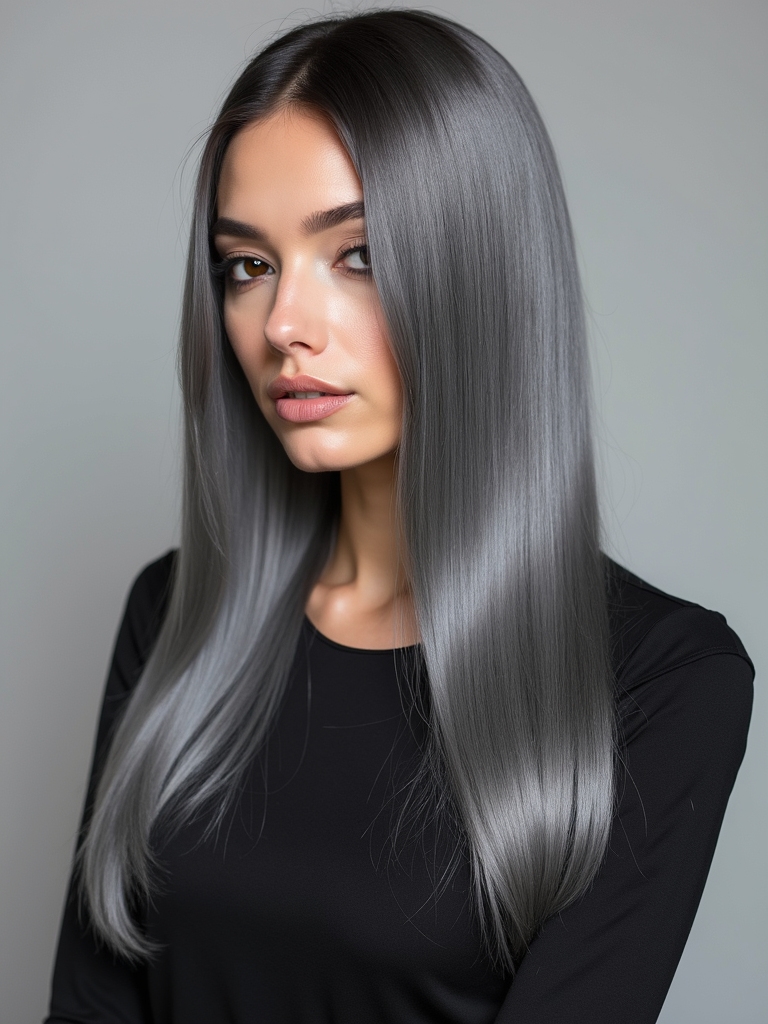
Gray hair straightened smooth and toned cool looks expensive in a way few other colors quite manage. Light runs uninterrupted down the strand for a near-mirror finish that surprises people who expect gray to look flat.
Where the Real Shine Comes From
Getting there depends mostly on moisture and a clean tone rather than the straightening itself. Gray strands tend to run drier and slightly more porous, so a smoothing leave-in plus a heat protectant matters before any flat iron touches the hair.
Toning first, then straightening second, tends to double the visible shine compared to skipping the toning step.
A Shaggy Gray Cut With Built-In Texture
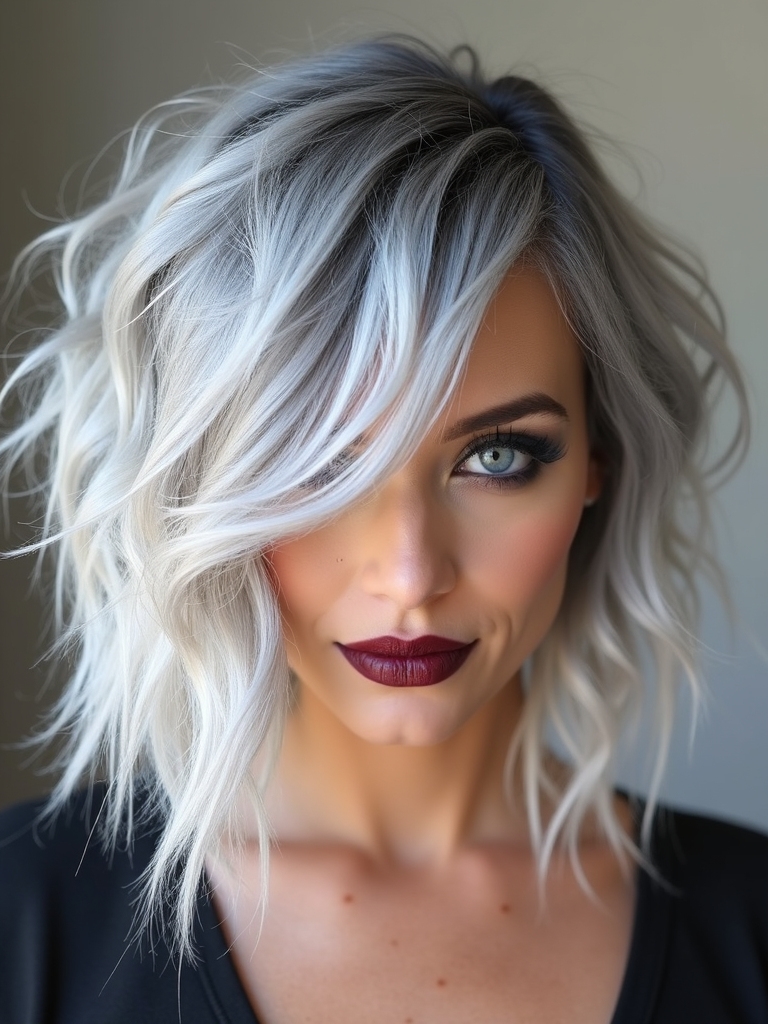
A shag ranks as the low-fuss gray cut for anyone who doesn’t want a daily styling routine. Choppy layers paired with a curtain-ish fringe give silver a relaxed, undone shape that still looks styled on a day it barely gets touched. The shag haircut guide covers the base technique in more depth. Worth knowing:
- Point-cut, razor-free layers keep coarse gray from frizzing at the ends.
- A texture spray scrunched into dry hair is usually the only product this cut needs.
- Works best starting at chin length or longer, so the layers have room to actually stack.
Old-Hollywood Waves on Silver
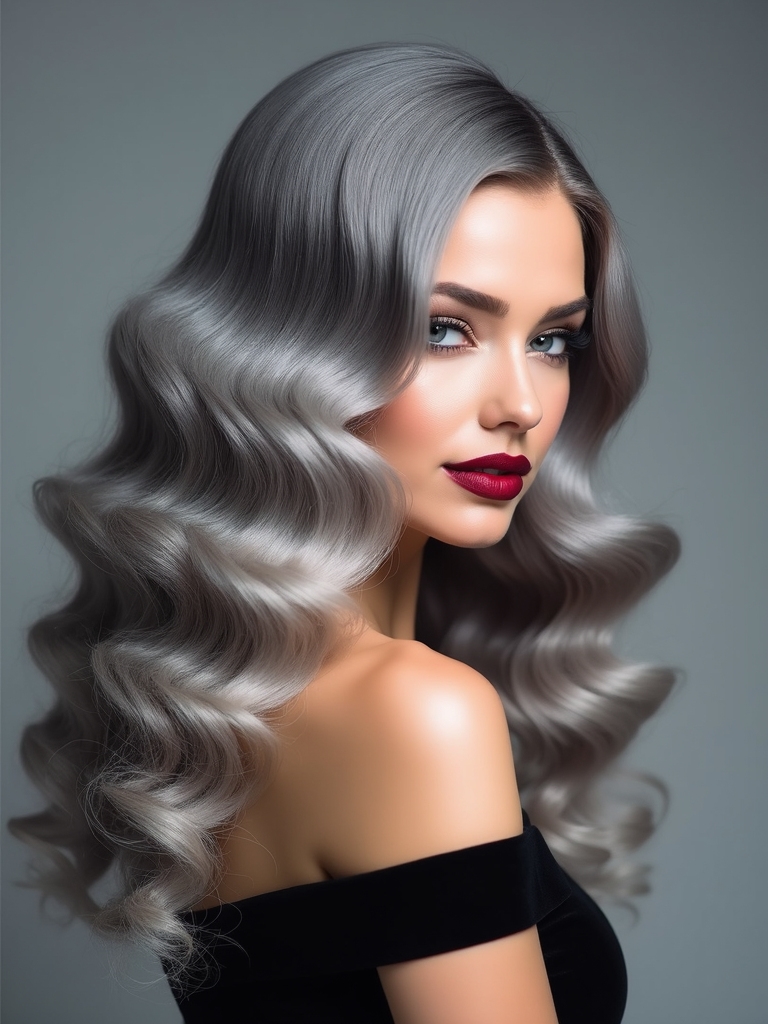
Few finishes make silver look as luxe as a uniform, polished finger wave. The cool tone comes across almost metallic under light on gray specifically, and a structured wave plays that quality up rather than fighting it. Building it for an evening that needs to last:
- Start on dry, already-toned hair with a flexible-hold setting spray, section by section.
- Curl every section the same direction, away from the face, on a one-inch iron.
- Pin each curl to cool for a full ten minutes before brushing out; skipping this step is the most common mistake.
The Angled Gray Bob
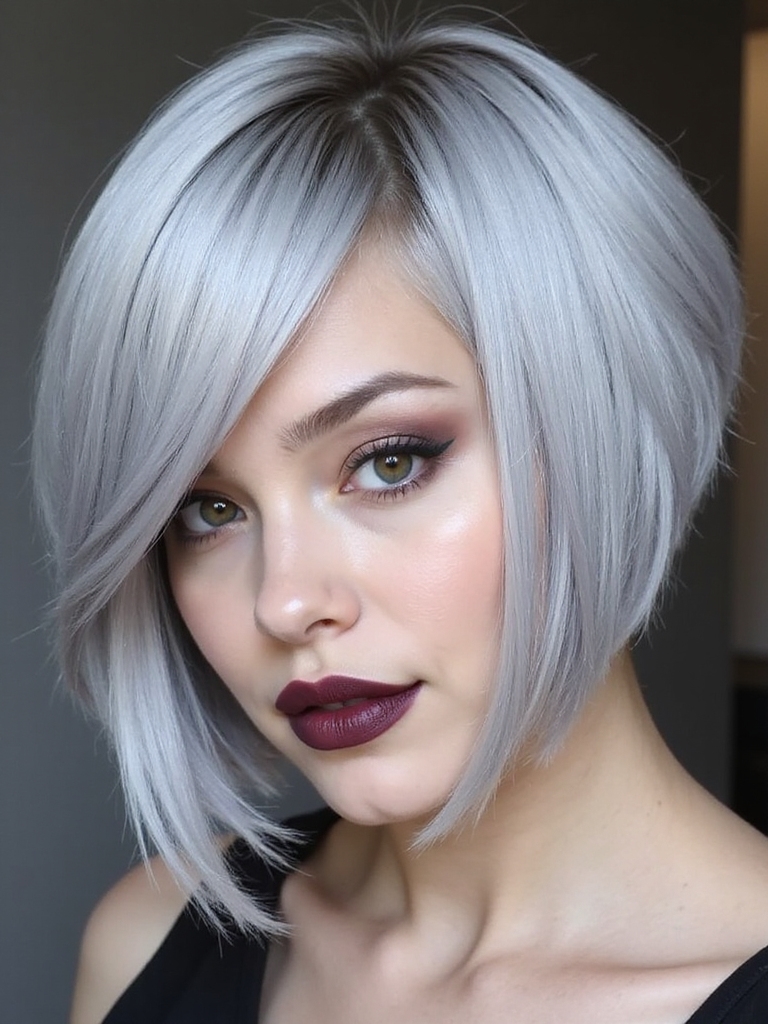
An angled bob, shorter at the back and longer toward the face, gives gray hair a deliberately modern line that pushes back against any frumpy association the color sometimes carries. A few notes:
- Forward-falling lengths frame the jaw while the stacked back adds lift.
- Tends to flatter round and square faces especially well, since the angle elongates.
- Keep front pieces long enough to tuck behind an ear for everyday versatility.
A Cropped Gray Cut You Can Finger-Style
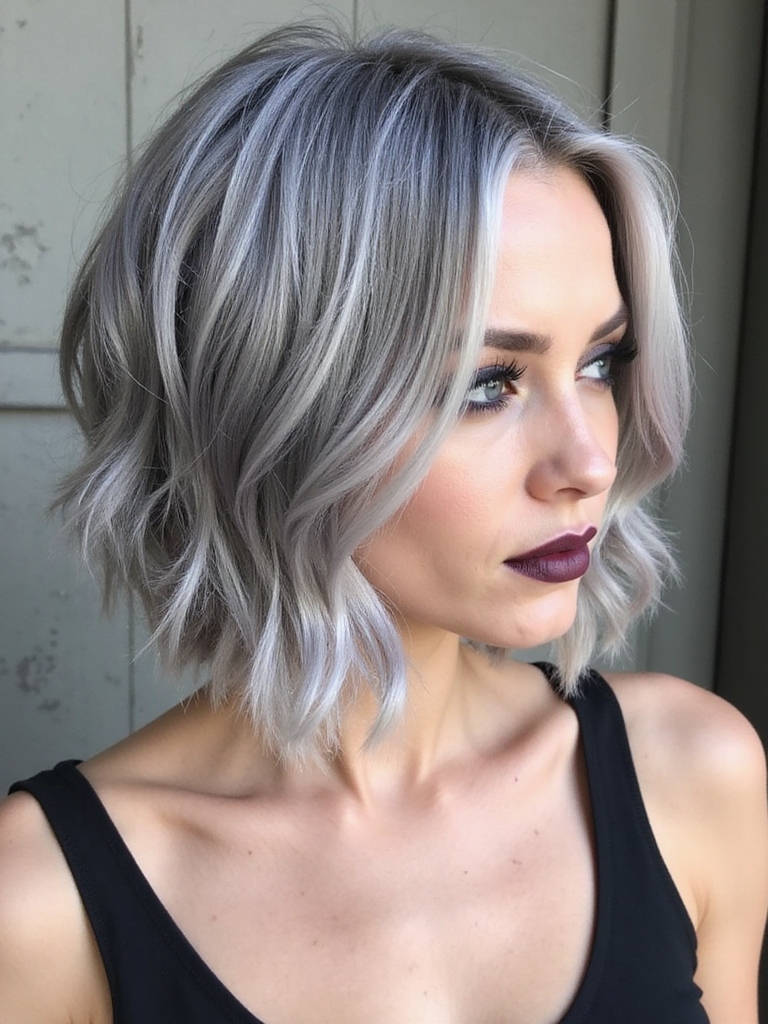
A textured crop functions as the pixie’s edgier cousin, currently having a real moment among women wearing silver. It runs shorter and piecier through the top, cut specifically to be worn tousled rather than smoothed.
The Cut Does Most of the Work
Styling amounts to a quick finger-rake, since the cut itself does the heavy lifting rather than a styling routine. Disconnected layers through the top, paired with tighter graduation at the sides, let individual silver pieces stand apart and catch light.
On salt-and-pepper hair specifically, that separation shows off both tones at once rather than blending them into one flat shade.
A Curly Gray Bob That Works With Your Texture
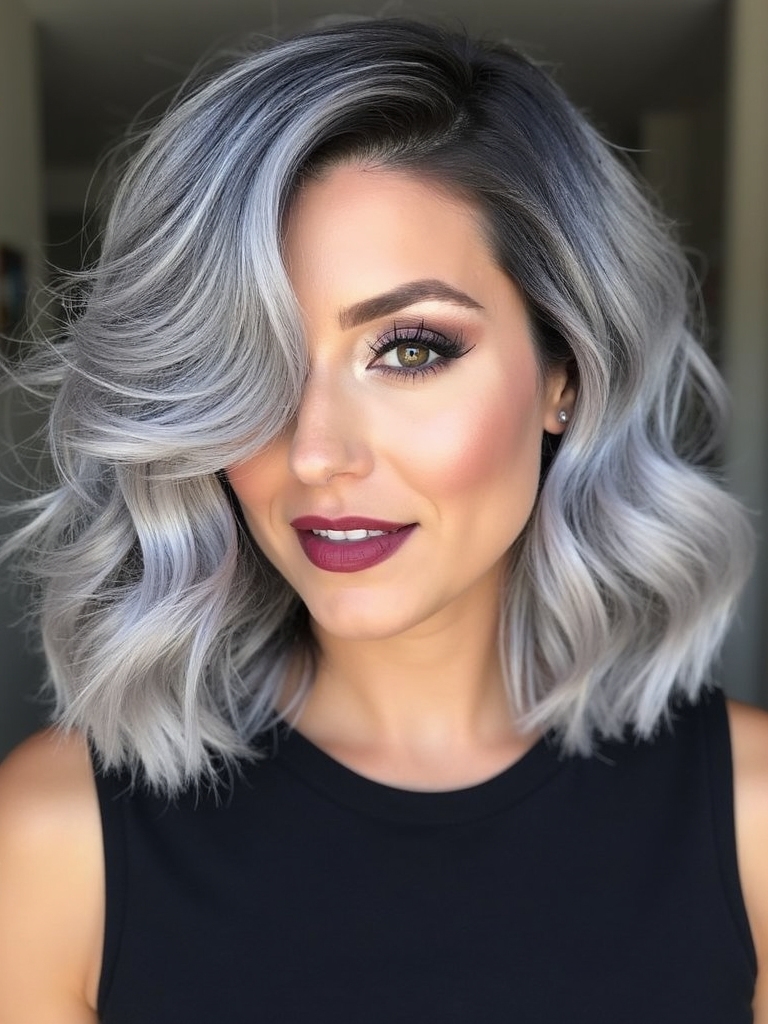
Naturally curly hair that’s gone gray amounts to a genuine gift: curl provides instant body, and gray gives that curl a soft, smoky depth it wouldn’t otherwise carry. The catch is that gray curls tend to run drier, so both the cut and the routine need to protect moisture first.
Why Dry-Cutting Matters Here
Cutting curl by curl in its dry, natural state lets a stylist see exactly how each spiral actually falls before committing to a length.
A bob-length cut keeps weight balanced so gray curls don’t collapse by midday, and a rich leave-in applied to soaking-wet hair is close to non-negotiable for keeping shape intact.
Rooted Ombre for an Easy Transition
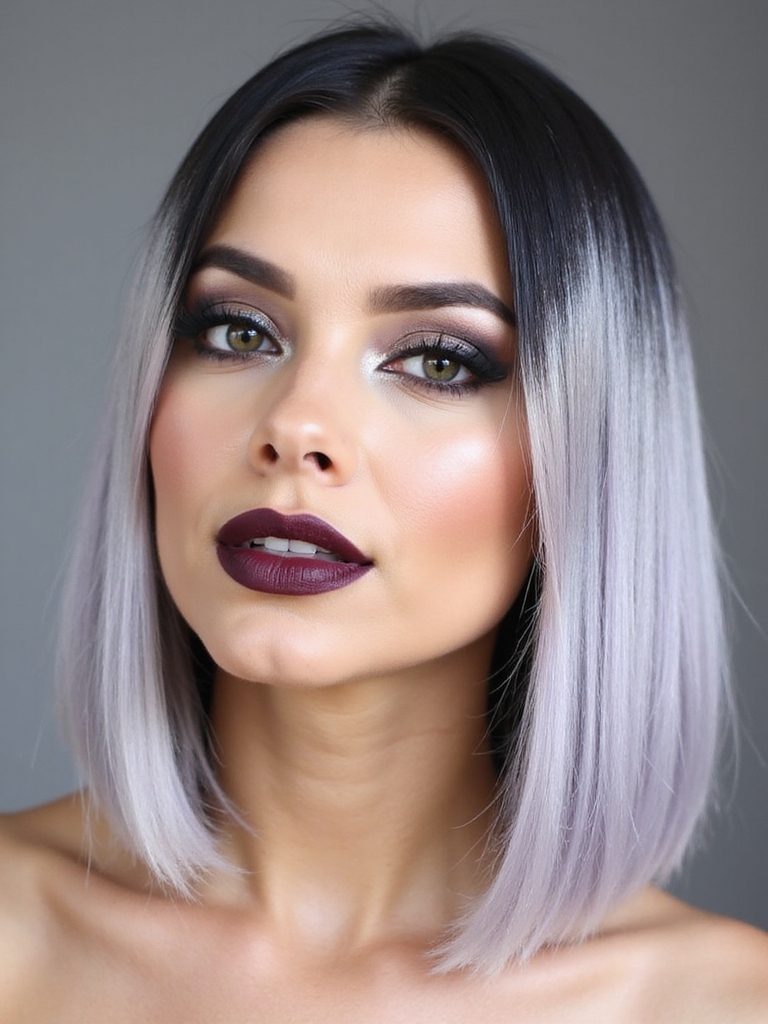
Ombre functions as balayage’s lower-maintenance sibling, a smart pick for anyone who dislikes frequent salon trips. Keeping the root darker and fading into silver through the mid-lengths buys months of grace before any regrowth looks obviously off. Roughly how the process runs:
- A colorist lightens only from around mid-shaft down, leaving the natural root untouched.
- A silver-toning gloss goes through the lightened section to neutralize any gold or brass.
- A gloss refresh, spaced out considerably compared to root touch-ups, keeps the tone cool.
| Texture | Key Habit | Why It Matters |
|---|---|---|
| Loose curls | Leave-in on soaking-wet hair | Locks moisture in before it can escape |
| Tight coils | Plopping in a microfiber towel | Preserves definition without frizz |
A Fringe That Softens Gray
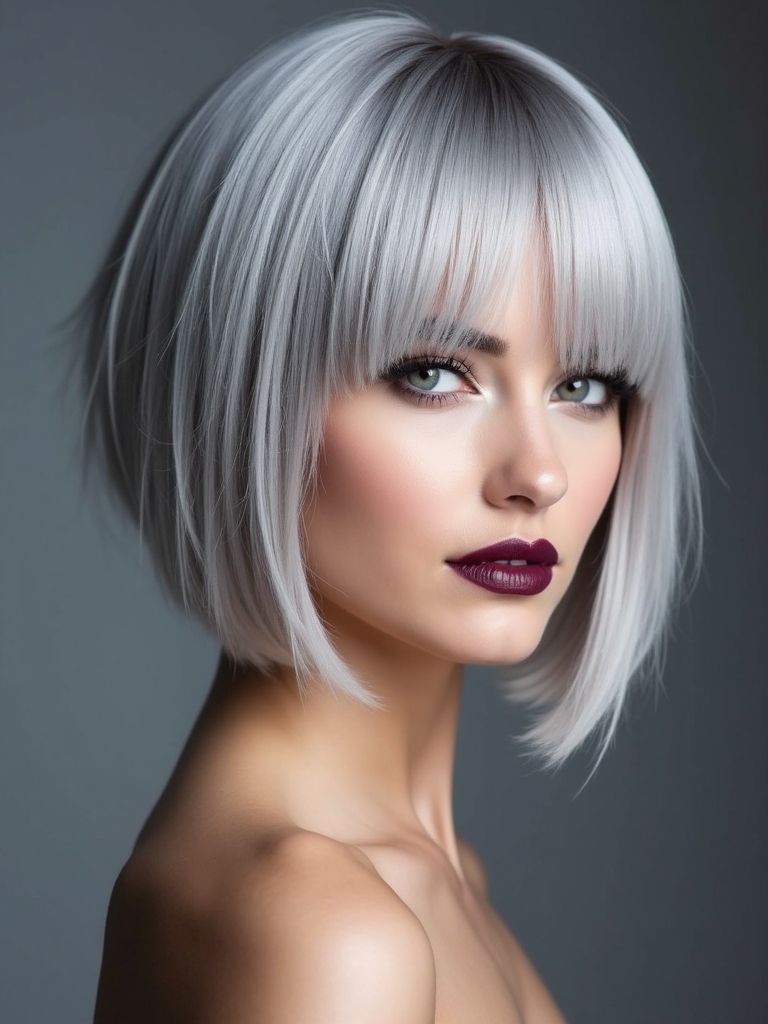
A fringe works as a quiet trick for taking years off gray hair, costing nothing beyond a few extra minutes of daily styling. A soft, slightly textured fringe draws the eye up and gives silver a youthful frame a one-length cut can’t replicate on its own. The face-framing bangs guide has more on choosing a flattering fringe shape. Worth knowing:
- A curtain fringe reads as the most forgiving option, growing out gracefully and suiting most face shapes.
- A blunt, heavy fringe tends to stick out more noticeably on coarser gray.
- Expect a reshape on a fairly quick cycle, since fringe growth shows up in the eyes first.
Slicked-Back Silver for the Evening
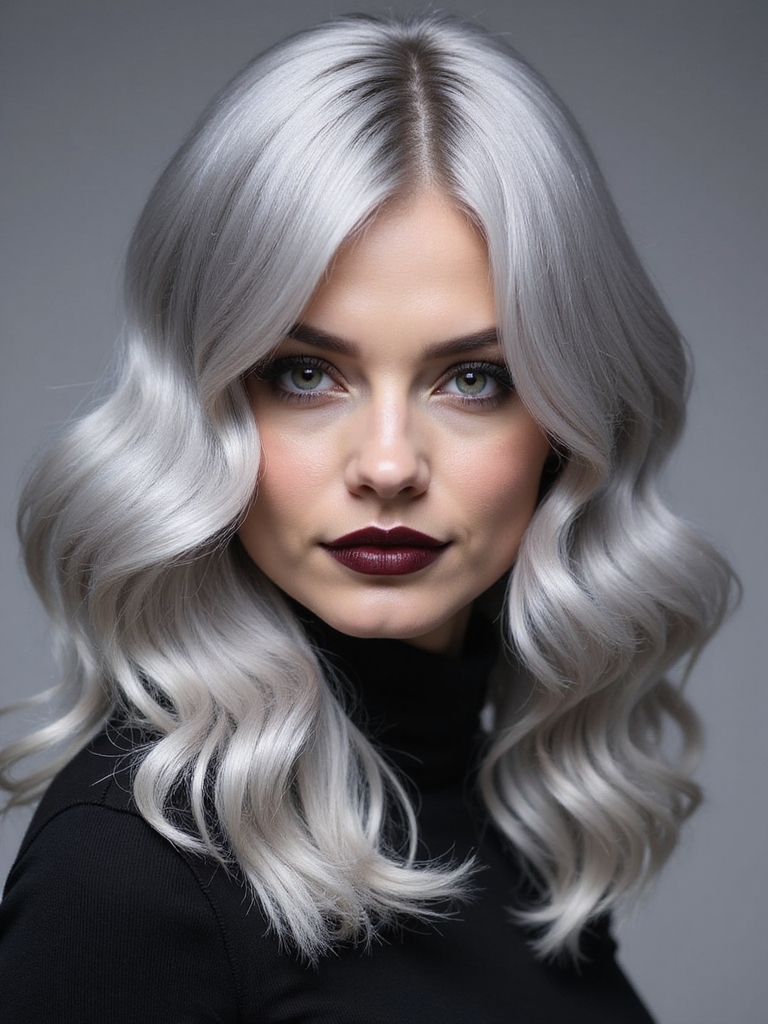
For silver that needs to look sharp and modern fast, slicking it back delivers immediately. Pulling gray hair off the face into a wet-look finish looks polished and a little fashion-forward, working across lengths from a lob down to a grown-out pixie.
This route works especially well for anyone short on time before an event, since it needs no heat and very little product beyond a strong-hold gel or cream.
Big, Voluminous Gray Curls
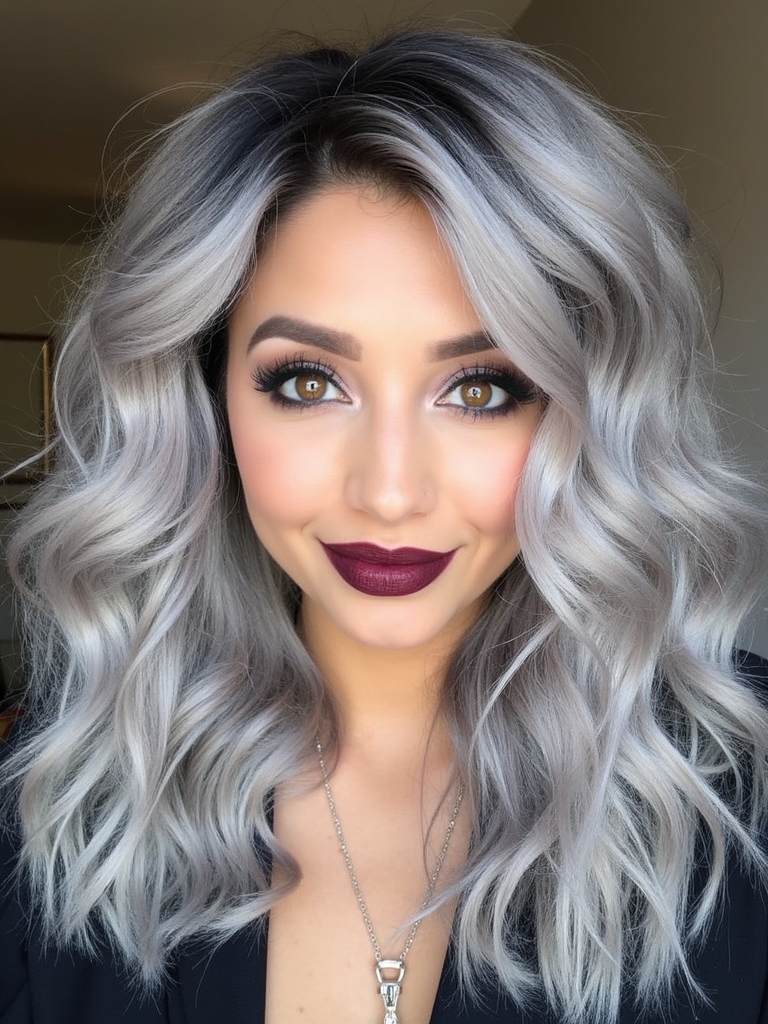
Sometimes making gray feel glamorous just means adding more of it. Big, bouncy curls signal health and confidence on silver hair, and the rounded shape softens the whole face at once. Building them:
- Large hot rollers or a 1.5-inch iron produce curls that hold shape without looking tight.
- A root-lifting spray before drying keeps volume from falling flat by midday.
- A light tease at the crown, smoothed over on top, keeps the silver still visibly shining.
💡Protect a Delicate Hairline
If the hairline runs delicate, keep tension gentle when slicking back. The finest pieces at the temples stress easily under a tight pull, more than most people expect.
Feathered Layers That Keep Moving
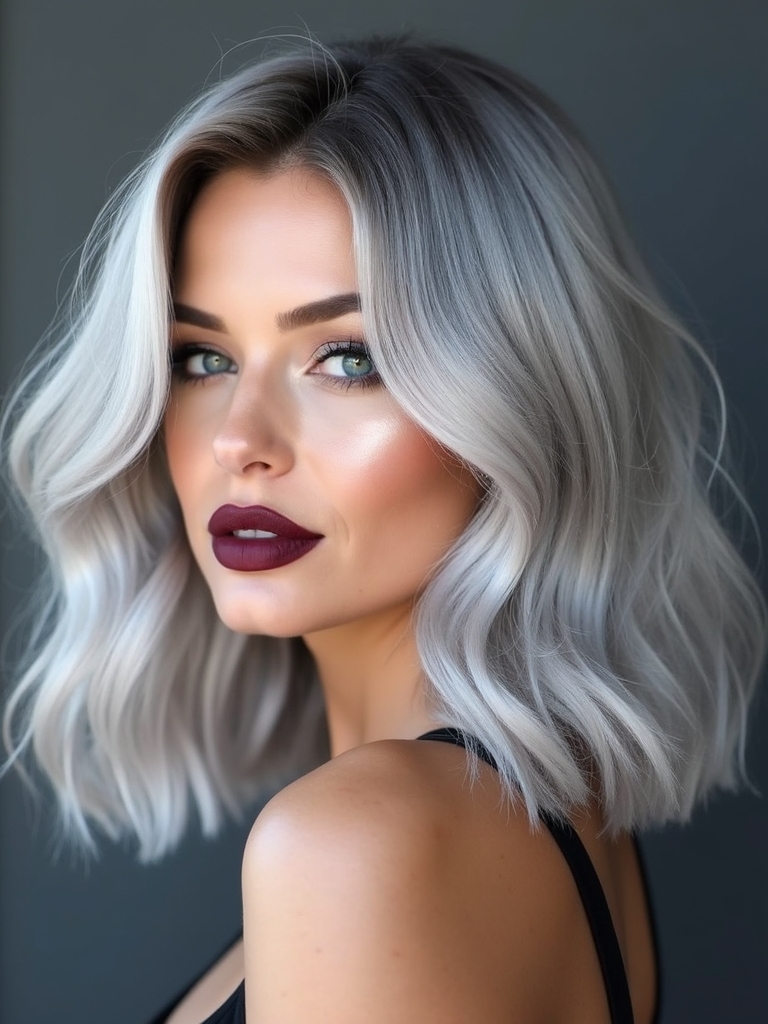
Feathered layers borrow directly from the 70s, and they’ve come back around for good reason. On gray hair specifically, soft, flicked-out layers add airy movement that keeps silver from reading heavy or dated.
They suit medium lengths especially well and work kindly on fine hair, since the feathering creates the illusion of more density than actually exists.
- Face-framing layers starting at the cheekbone open up the whole face.
- Flicking ends out with a round brush during drying finishes the look in minutes.
- A particularly kind option for fine hair needing movement without daily effort.
A Soft Mohawk Shape on Gray
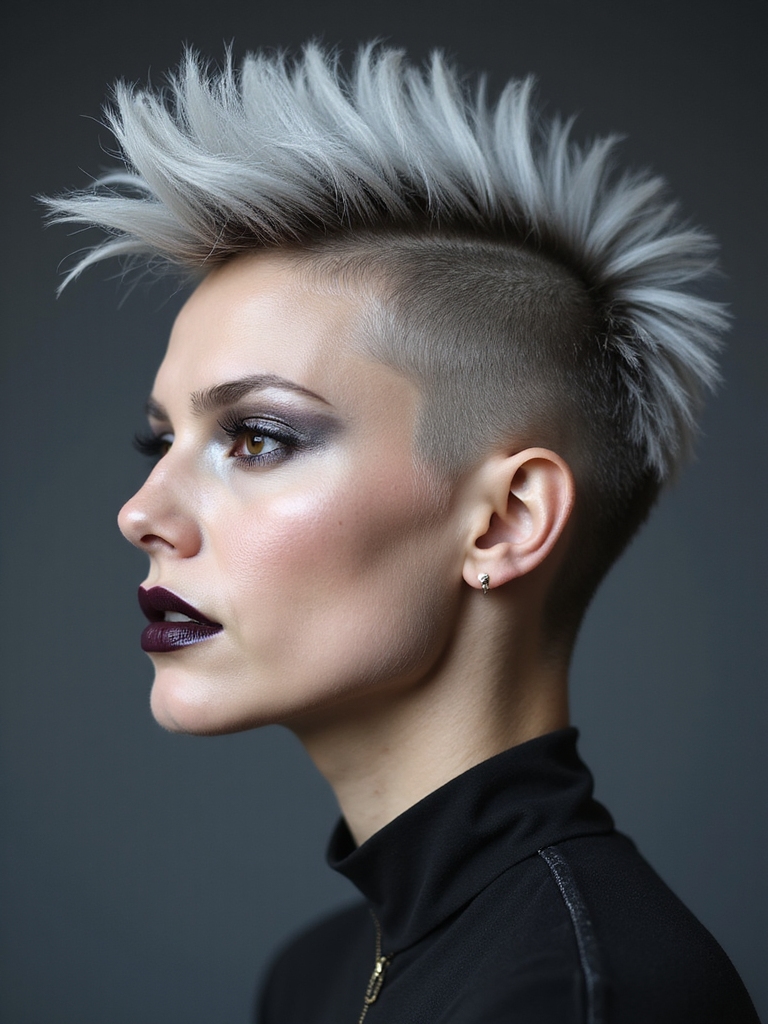
For anyone wanting silver to make a real statement, a soft mohawk shape feels like pure confidence rather than rebellion. This doesn’t have to mean shaved sides in a punk sense unless that’s specifically the goal.
How Bold to Take It Is Entirely Optional
More often, it’s a disconnected cut, short and tight at the sides with length up the center that can be spiked, swept, or worn soft depending on the day.
Silver suits this shape particularly well, since the contrast between cropped sides and a longer top lands as graphic and deliberate rather than accidental.
Gray doesn’t need to be tamed into something else. It needs a cut and a tone that actually work with it, and from there it does most of the work on its own.
Braids That Show Off Silver Strands
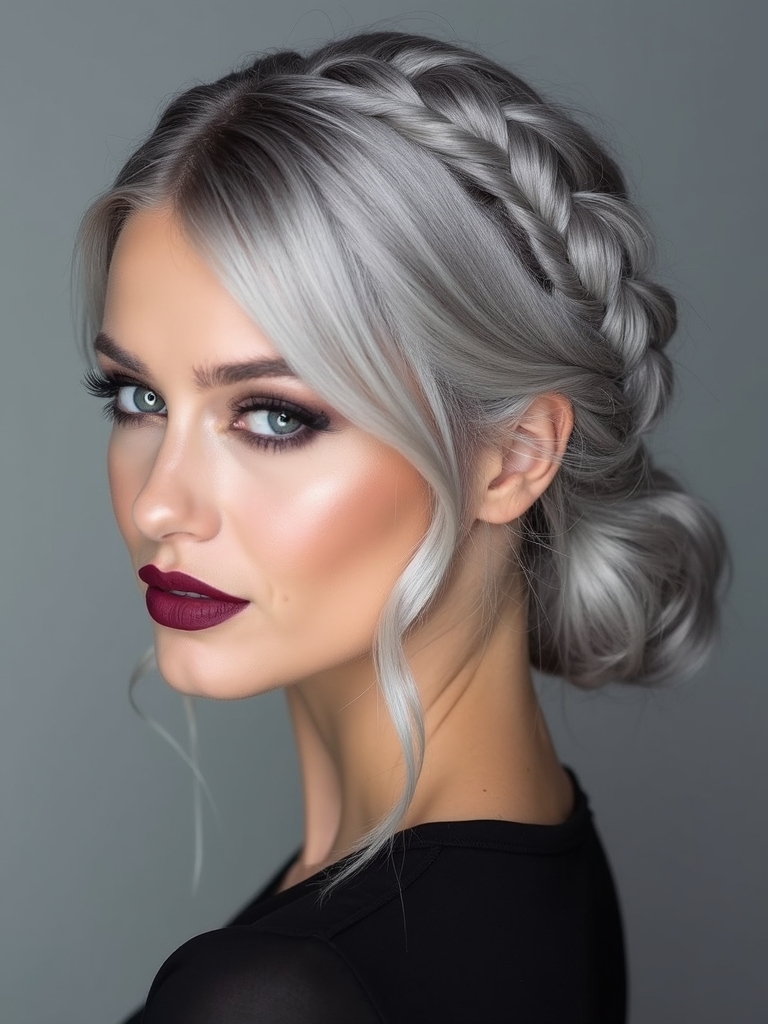
Braids do something specific on gray hair, weaving lighter and darker silver strands together so the whole plait reads dimensional rather than flat. They also work as a protective option for longer gray on a busy week. A few notes:
- Second-day hair grips noticeably better for braiding than freshly washed silver.
- Pulling the braid apart gently afterward gives a fuller, softer finish.
- A light shine spray over the finished braid keeps gray from looking dry where it’s twisted.
What to Expect
Whatever the choice, tone decides more than the cut alone whether gray looks chic or tired. Silver hair yellows over time from hard water, heat, sun, and product buildup, and that brassy cast is usually the actual source of a dull look, not the gray itself.
A purple or blue toning treatment corrects that drift, used consistently but not excessively, since overdoing it can leave an unwanted tint on very white-gray hair. Beyond tone, gray hair simply runs drier overall, so a weekly mask and a heat protectant are worth building into a routine permanently.
Gray Hair Questions, Answered
?How do you stop gray hair from turning yellow?
A purple or blue toning treatment used once or twice a week corrects it, though daily use risks leaving an unwanted tint on very light gray. Hard water and heat styling are common culprits too, so a shower filter and a heat protectant help more than most people expect.
?What’s the lowest-maintenance gray cut available?
A silver pixie or textured crop tends to top the list. Both put color right at the face, grow out evenly with no visible two-tone line, and style in under a minute most mornings, though the trade-off is trims on a tighter schedule than longer cuts need.
?Is it possible to transition to gray without cutting it all off?
Yes. Gray balayage or a rooted ombre both blend new growth into existing color gradually, avoiding a hard line at the root while the transition plays out over several months rather than all at once.
Pick the Cut First, Then Let the Color Follow
Gray looks modern when the cut and the tone are both doing real work together; the color alone was never the deciding factor on its own. Choosing a shape that fits actual texture and upkeep tolerance, then keeping the tone cool, is what turns gray from something that happens into something actually worn.
Save whichever two or three looks here fit a specific length and density, and bring them to a stylist as a genuine starting point rather than a finished order to copy exactly.
More to Explore