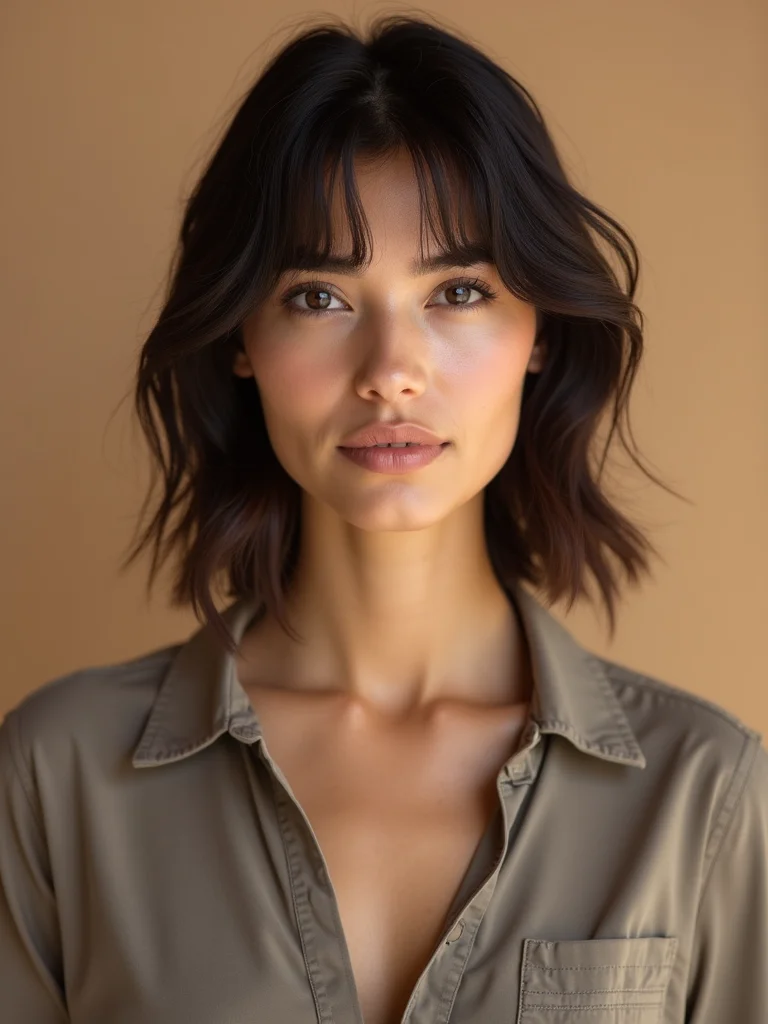
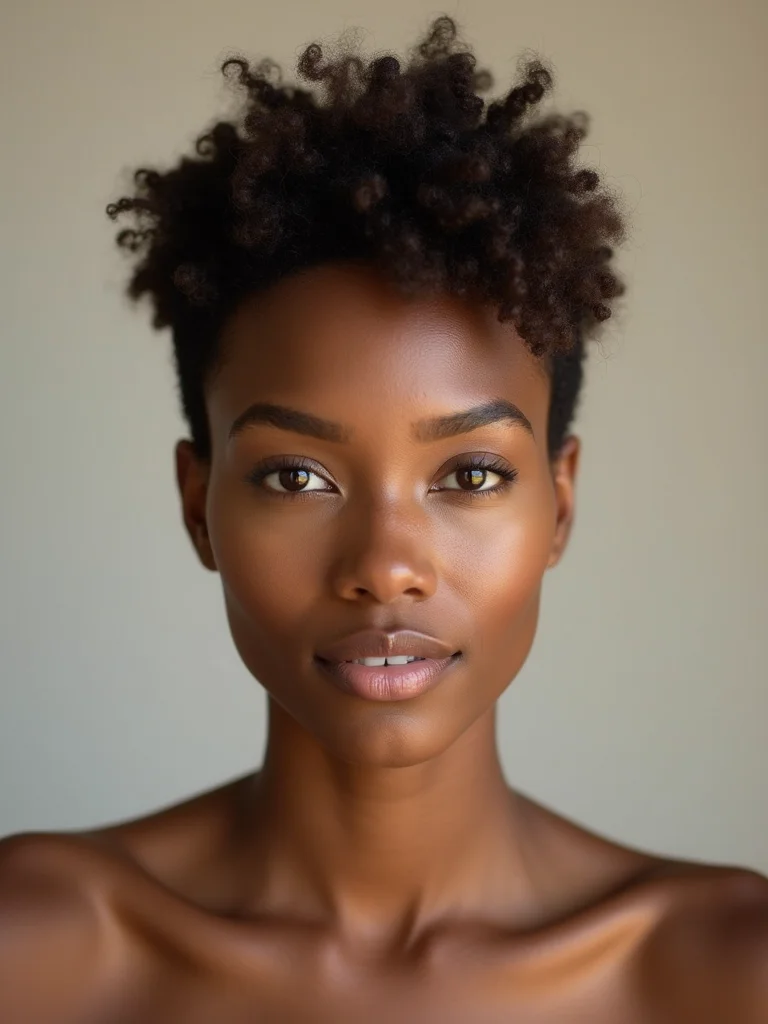
Two sisters, one haircut, two completely different results: one walks out feeling ten pounds lighter, the other swears off the cut entirely. The difference was never the lob itself. It was a chin-grazing, blunt line landing on a round face when a collarbone length with a deep side part would have done the flattering work instead.
Below, expect a version of the long bob mapped to your own face, along with the length, part, and layer choices that turn a good cut into the right one.
The Three Dials That Change Everything
Why does the lob suit almost everyone? Because length, part, and layers can all be adjusted independently to balance one specific face. The dials matter more than the shape.
What’s the single most common mistake? Choosing a look straight from a photo instead of adjusting it for the proportions of your own face and hair.
What keeps it flattering day to day? Part direction and a little volume do most of the daily work, keeping the same cut looking consistently deliberate.
Why Face Shape Changes Everything

A long bob works less like a single fixed haircut and more like a set of adjustable dials, and the three that matter most are length, part, and layer placement. Set those three correctly for a specific face, and the cut does quiet, flattering work: lengthening a round face, softening a square jaw, or adding width to a long one.
Set them without thinking, and the exact same cut can work against the same face.
That’s the whole lesson worth carrying into a consultation: the shape isn’t the variable that fails, the tailoring is.

Reading Your Own Face Shape First
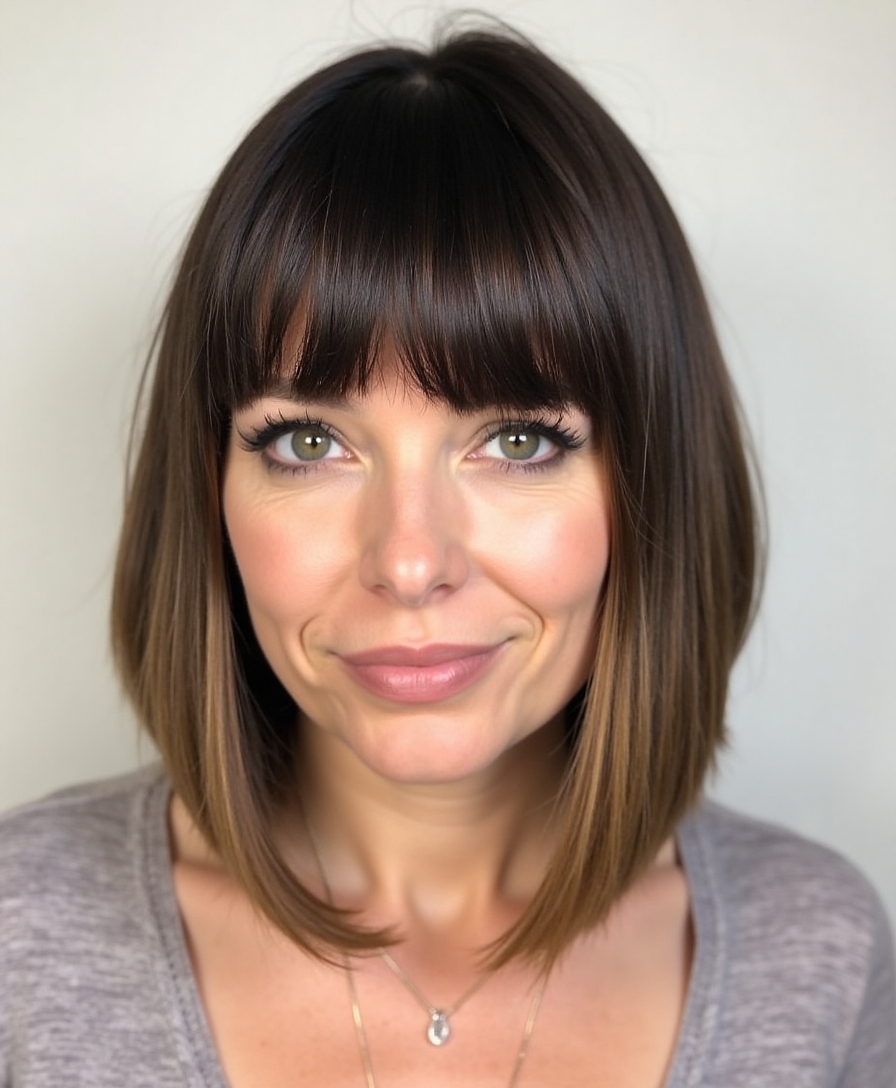
No stylist consultation is required to figure this part out, just a mirror and a minute. Pull hair back, look straight on, and notice where the face reads widest and how the jawline curves or angles.
- Round: cheeks are the widest point, jaw soft and curved.
- Square: forehead, cheeks, and jaw run a similar width, jaw angular.
- Oval: gently longer than wide, balanced top to bottom.
- Heart: wide forehead and cheekbones narrowing to a pointed chin.
💡The Mirror Test
Pulling hair fully back before checking face shape matters more than it seems. Loose hair around the jaw hides the real width and curve underneath, leading to a misread shape and a mismatched cut.
The Classic A-Line Lob
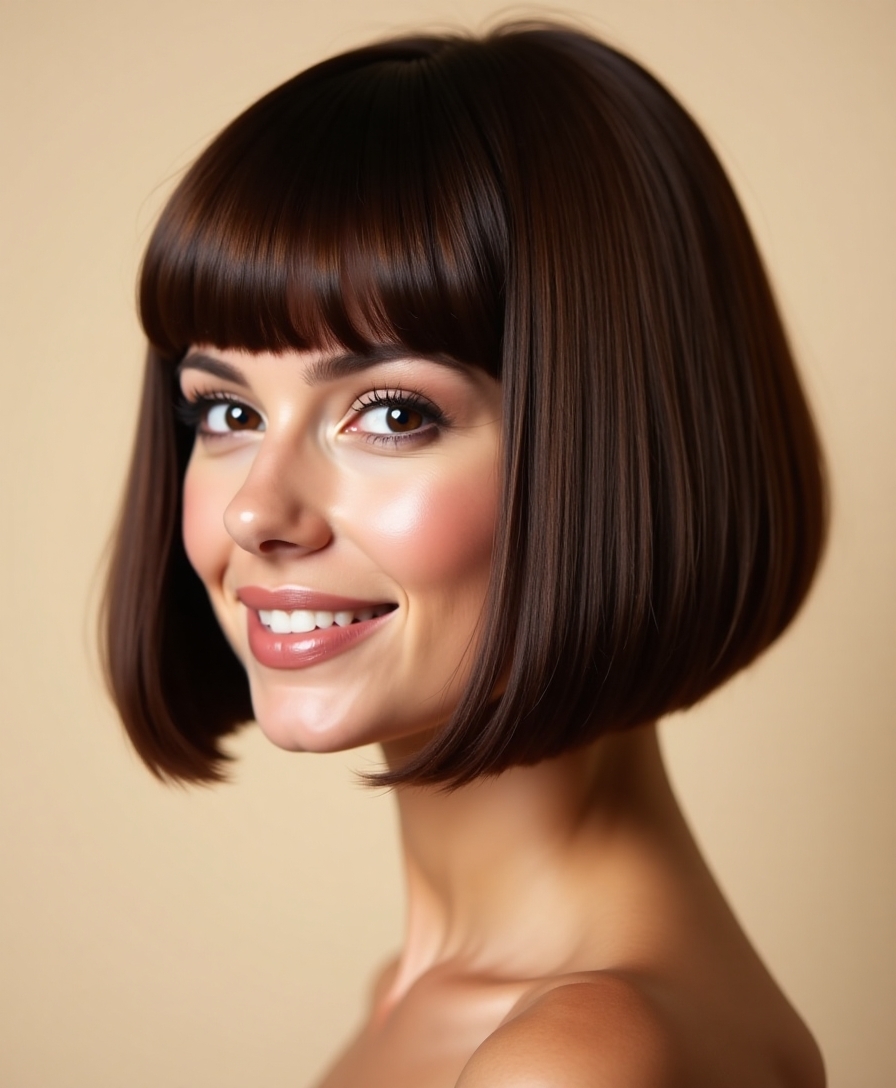
Built with the nape kept short and the front sections left to graze the jaw or below, the A-line lob ranks among the most broadly flattering versions of the cut, which makes it a safe starting point for almost anyone unsure of their own face shape. It rarely misses.
Those longer front pieces frame and slim the face along a gentle diagonal, drawing the eye down along a soft, sloping line.
- Works especially well for anyone nervous about committing to the cut.
- The forward angle adds a sense of shape and movement a straight line lacks.
- A dependable choice when the face shape itself is still uncertain.
Textured, With Soft Side-Swept Bangs
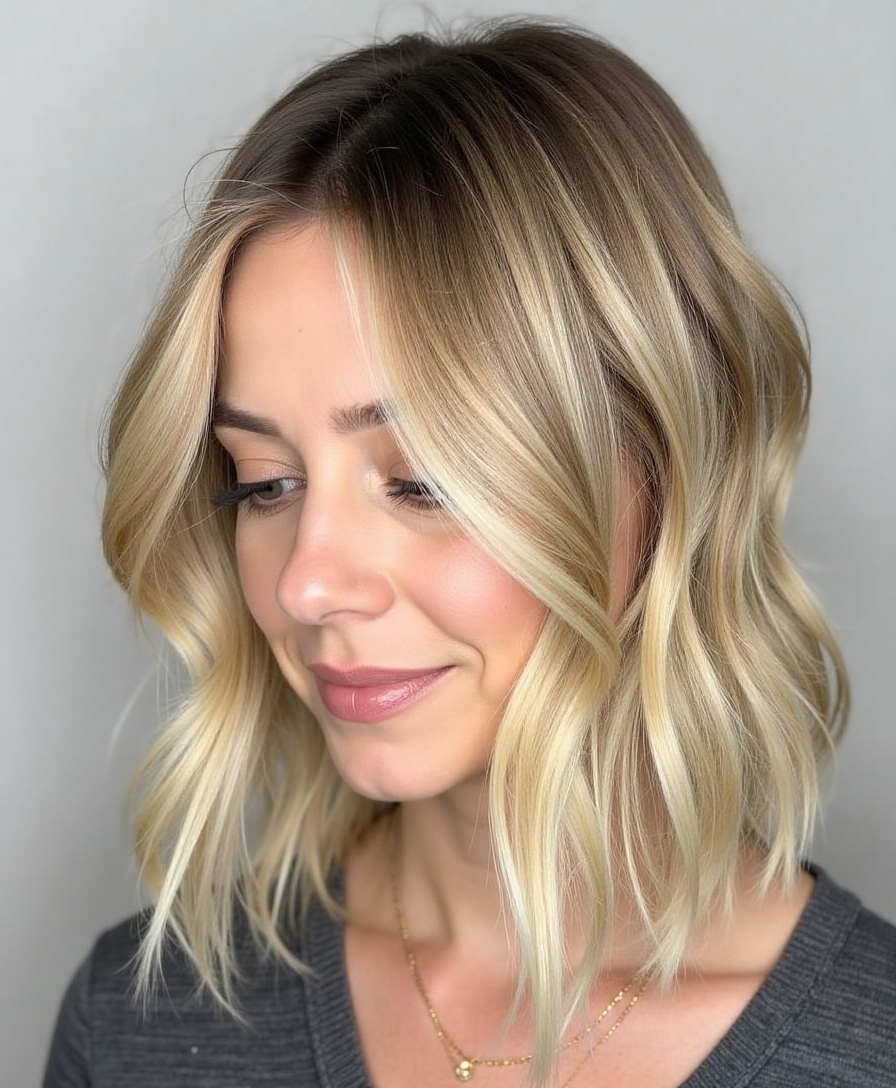
Adding texture through the lob and pairing it with soft side-swept bangs flatters an unusually wide range of faces, since both elements work by softening hard lines by design.
Texture keeps the cut from reading heavy, while the swept fringe softens the forehead and frames the eyes. That same diagonal sweep lengthens a round face and eases the angles of a square one, all without committing to a full, blunt fringe.
Because the bangs sweep on a diagonal, they grow out gracefully into the surrounding length with no awkward stage to speak of.
Layered, for Round Faces
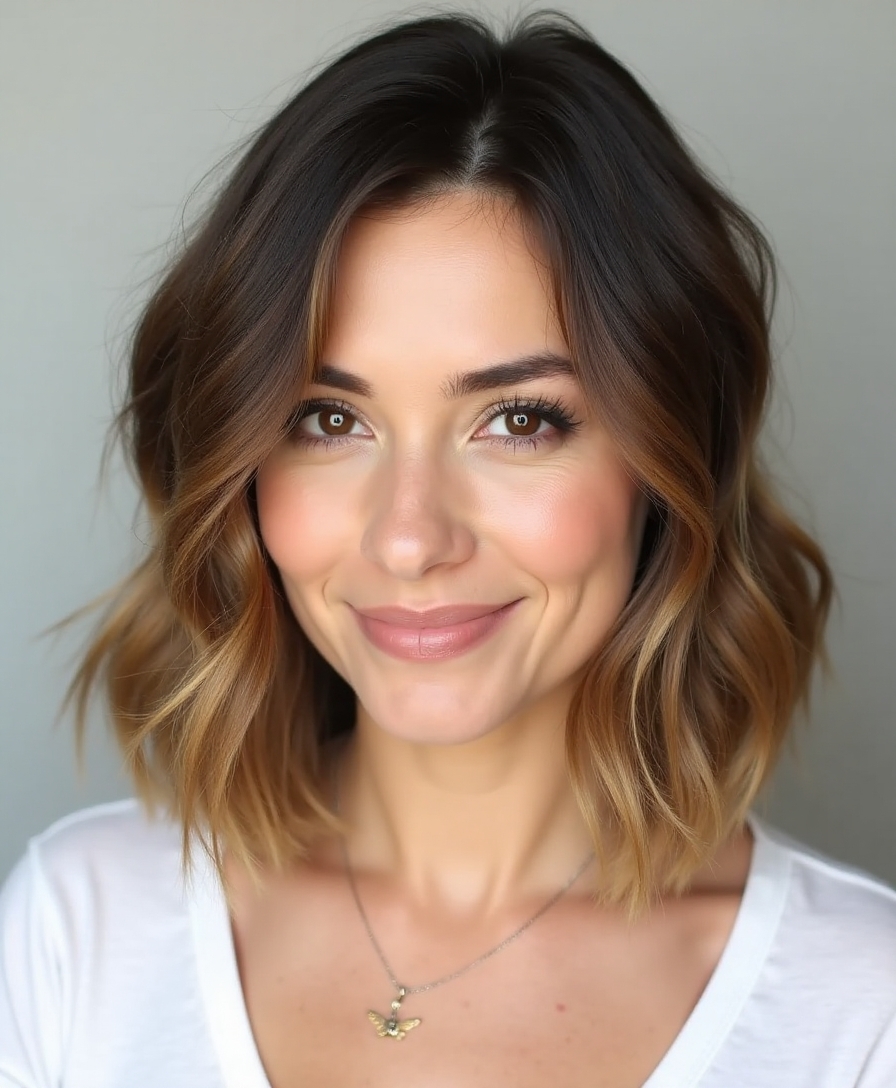
A round face benefits from length and vertical lines, exactly what a layered lob delivers when cut correctly. Keeping the length at or just past the collarbone, with layers starting below the chin, builds a lengthening line that slims the whole face.
- The length should clear the collarbone fully.
- Layers starting below the chin draw the eye downward.
- A short, blunt, chin-grazing line is the version to avoid here, since it sits at the widest point of a round face and emphasizes the curve.
Asymmetrical, for Square Jaws
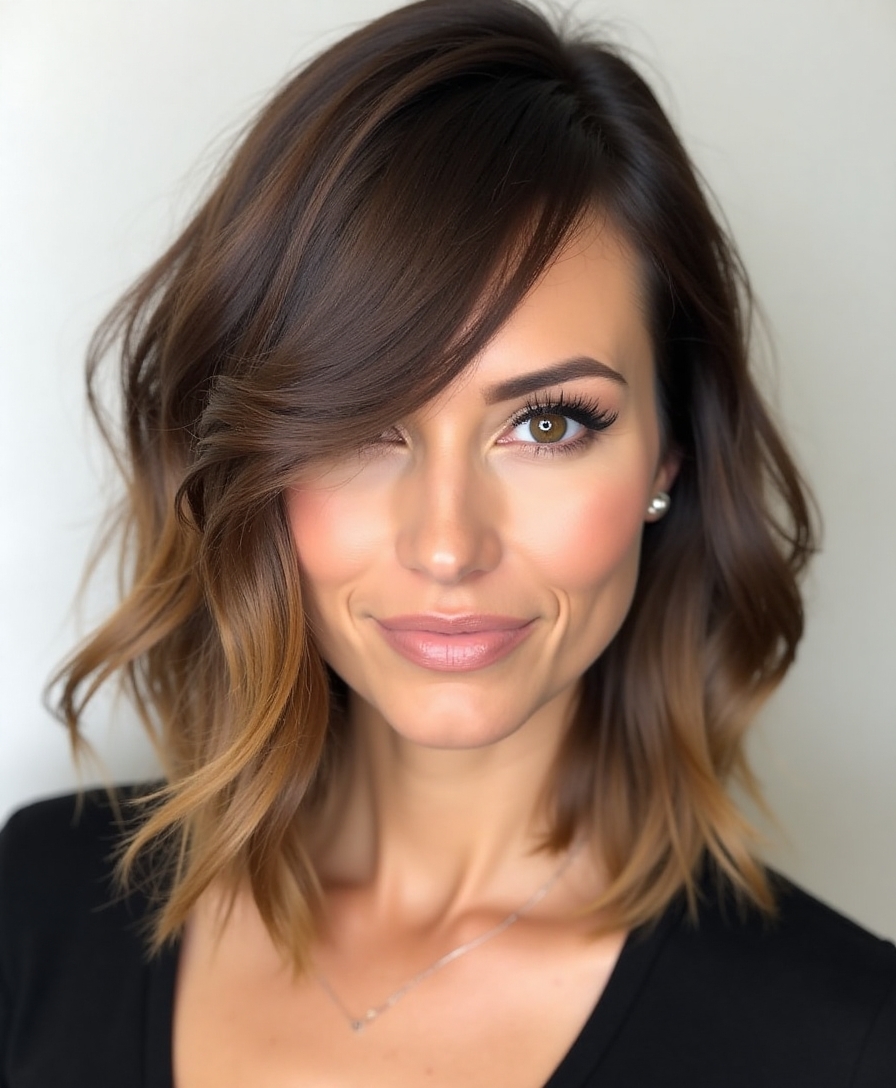
A strong, square jaw looks striking on its own terms, but for anyone who wants to soften those angles, an asymmetrical lob with soft texture is the move worth requesting. Curves do the softening. The uneven, longer side introduces diagonals that ease the straight lines a square face already has.
- A longer, angled side brings in softening curves and diagonals.
- Textured, broken-up ends soften the jaw’s own angles.
- A blunt, perfectly symmetrical line does the opposite, sharpening the jaw further.
Blunt, for Oval Faces
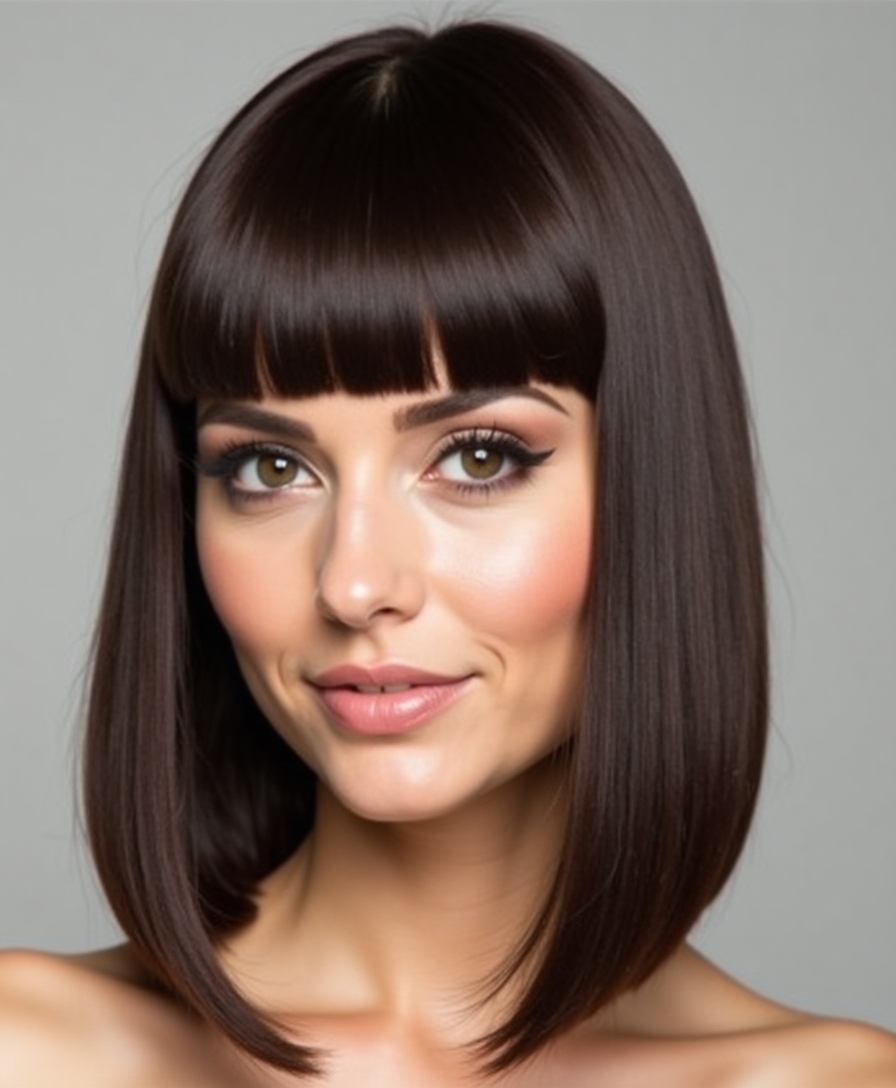
An oval face is the balanced shape that carries almost any version of the lob, which means the decision here comes down to taste alone. A blunt, one-length lob, the version that can overwhelm other face shapes, looks clean and striking on an oval face precisely because there’s no proportion left to balance out.
Where Oval Faces Get to Break the Rules
That freedom is the real advantage of an oval face shape. The blunt line, a center part, a chin-grazing length, all the choices other shapes have to approach carefully become simple preference here.
Anyone with an oval face telling a stylist their face shape usually gets a short, simple answer back: pick whatever you actually like.
Side-Parted, for Heart Shapes
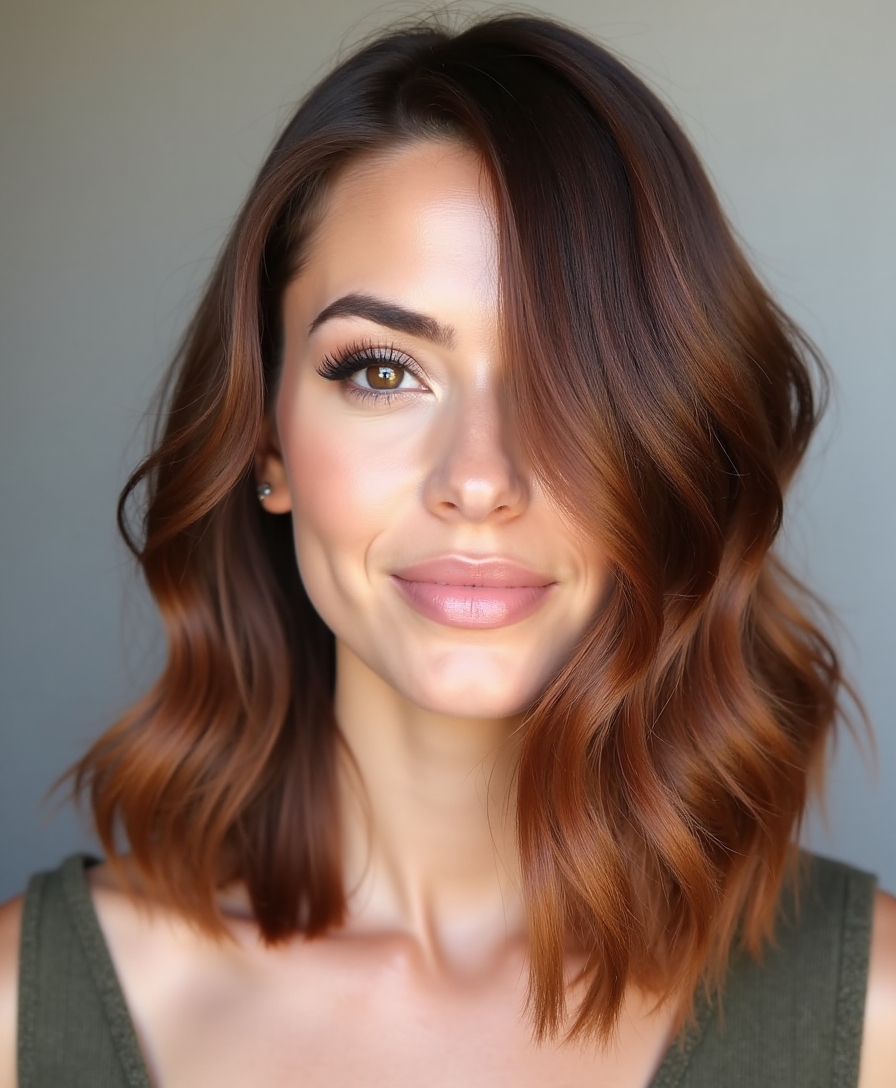
A heart-shaped face, wider at the forehead and narrowing to a pointed chin, balances best with a little added width and softness lower down, near the jaw. A lob landing at or just below the chin, worn with a side part, does exactly that.
The side part carries real weight in this equation too, offsetting a wider forehead and introducing a flattering asymmetry that a center part simply can’t.
- Layers or soft waves around the jawline add width where a heart shape needs it.
- A side part offsets the forehead and adds useful asymmetry.
- A center part and sleek, narrow styling only sharpen the heart shape further.
Building Volume for Fine Hair
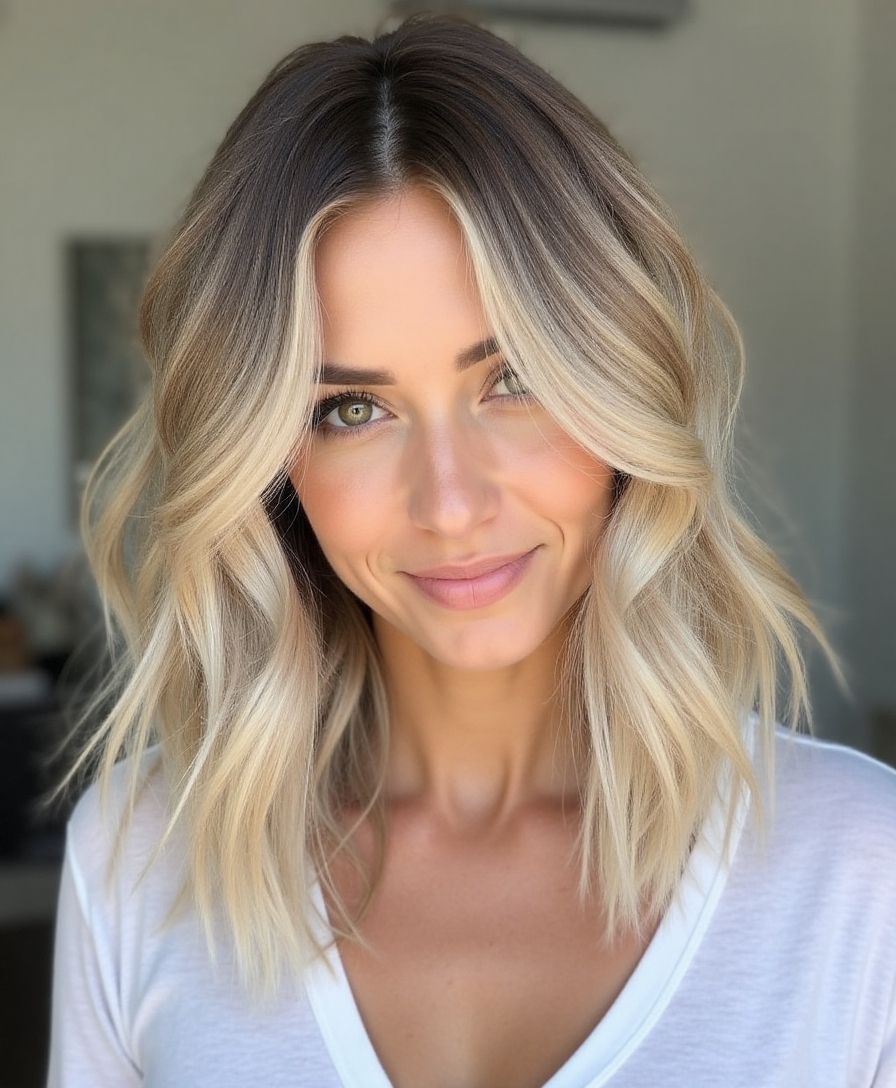
The lob ranks among the kindest cuts for fine hair, since removing the extra weight of length lets hair lift and move with real body. Less weight means more lift.
- A blunt or lightly layered line keeps enough weight in place to fake density.
- A deep side part adds instant root lift where fine hair tends to fall flat.
- A round-brush blowout finished with cool air is what locks the volume in place.
Trying to picture the right lob for your hair? Start here:
1By early afternoon my hair has usually gone limp.
A blunt or lightly layered lob with a deep side part is built for exactly this.
2My hair carries a lot of natural bulk.
Softer layers through the length remove that weight without sacrificing the shape.
The Tools Actually Worth Owning
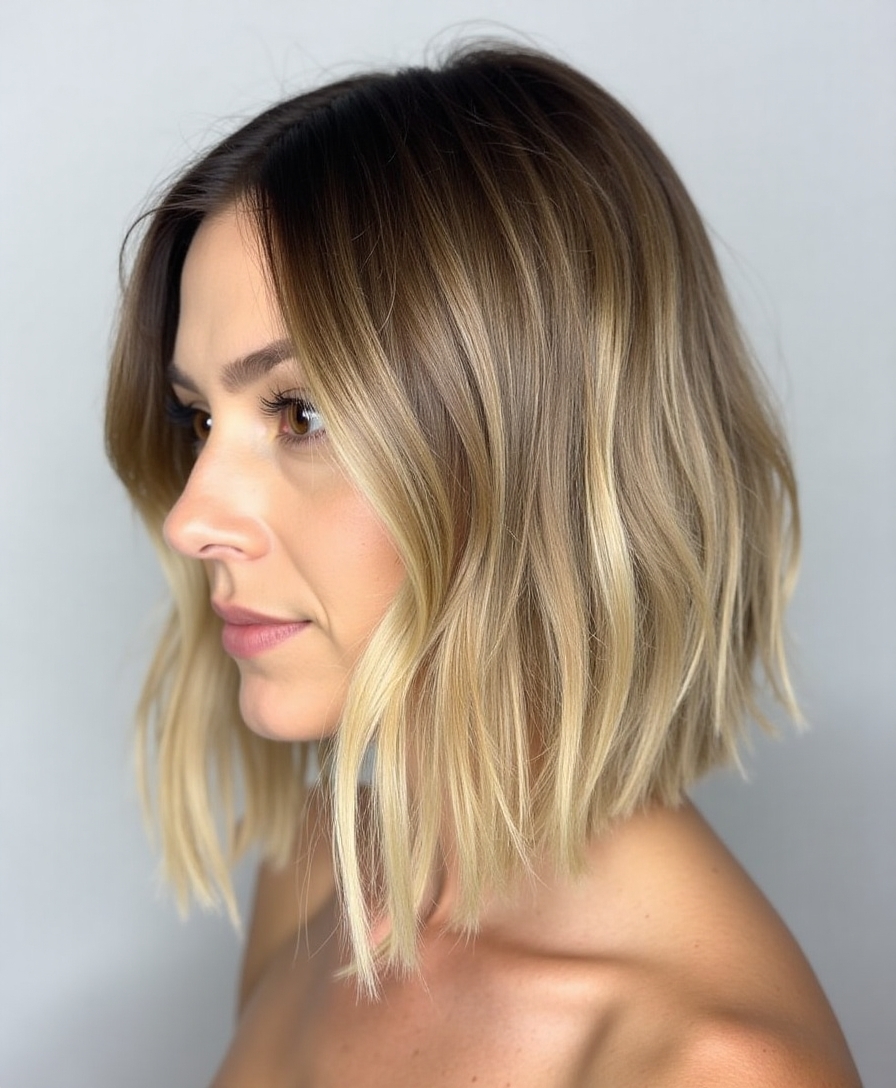
A lob doesn’t demand a drawer full of gear, just a small set of tools matched to how it gets worn. The cut itself does most of the work, so the products in rotation are there to support whichever finish gets chosen, sleek and glassy or undone and textured.
Keep the rotation small enough that everything in it actually gets used regularly.
- A quality round brush for the shape and lift that make a lob look intentional.
- A flat iron or one-inch curling iron handles both sleek and wavy days.
- A texture or salt spray covers the undone, beachy end of the range.
Keeping the Shape Sharp Between Visits
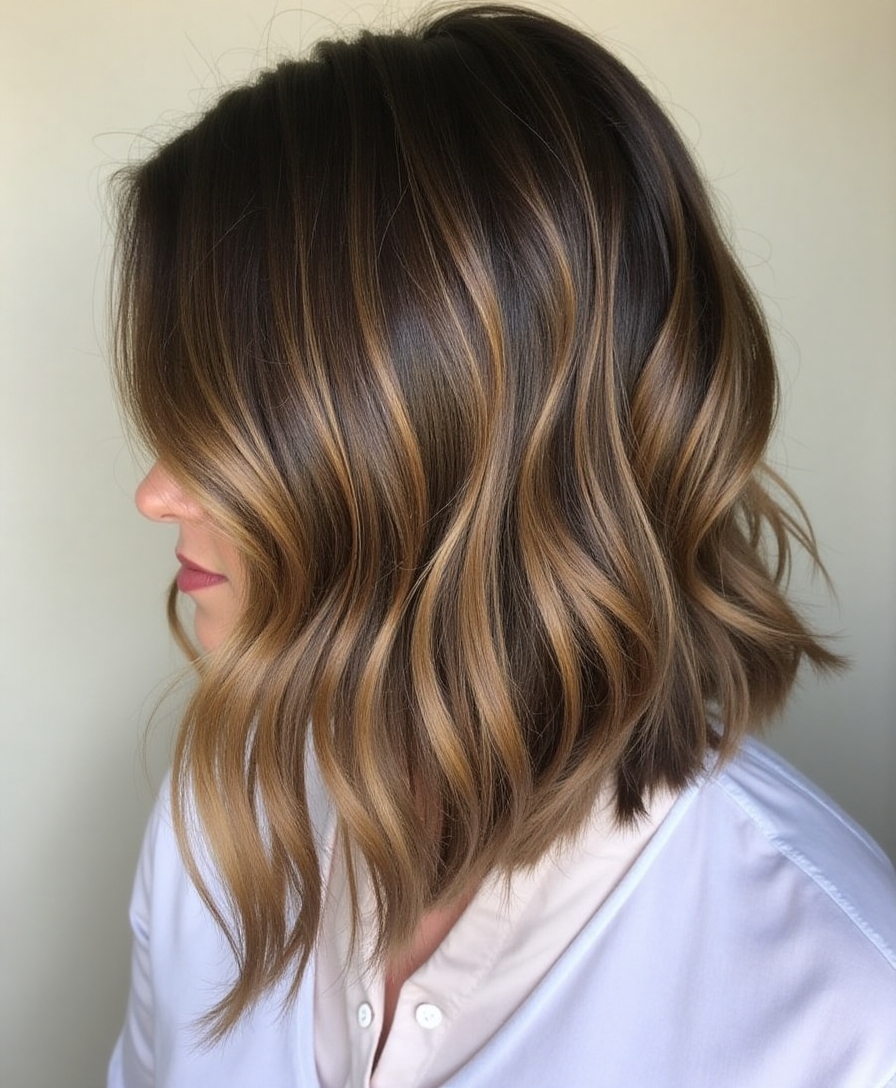
A lob lives and dies by its shape, and being shorter than long hair means it shows regrowth and wear sooner. Shape is everything here. The upside: a little consistent upkeep keeps it looking freshly cut for weeks at a stretch, most of it costing nothing beyond a few minutes of styling time.
- Book a shaping visit on roughly a six-week rhythm, since the clean line grows out fast.
- Style the ends under or flicked out so a slightly grown lob still reads deliberate.
- A quick dusting between full cuts handles any fraying at the ends.
Color That Plays Up the Shape
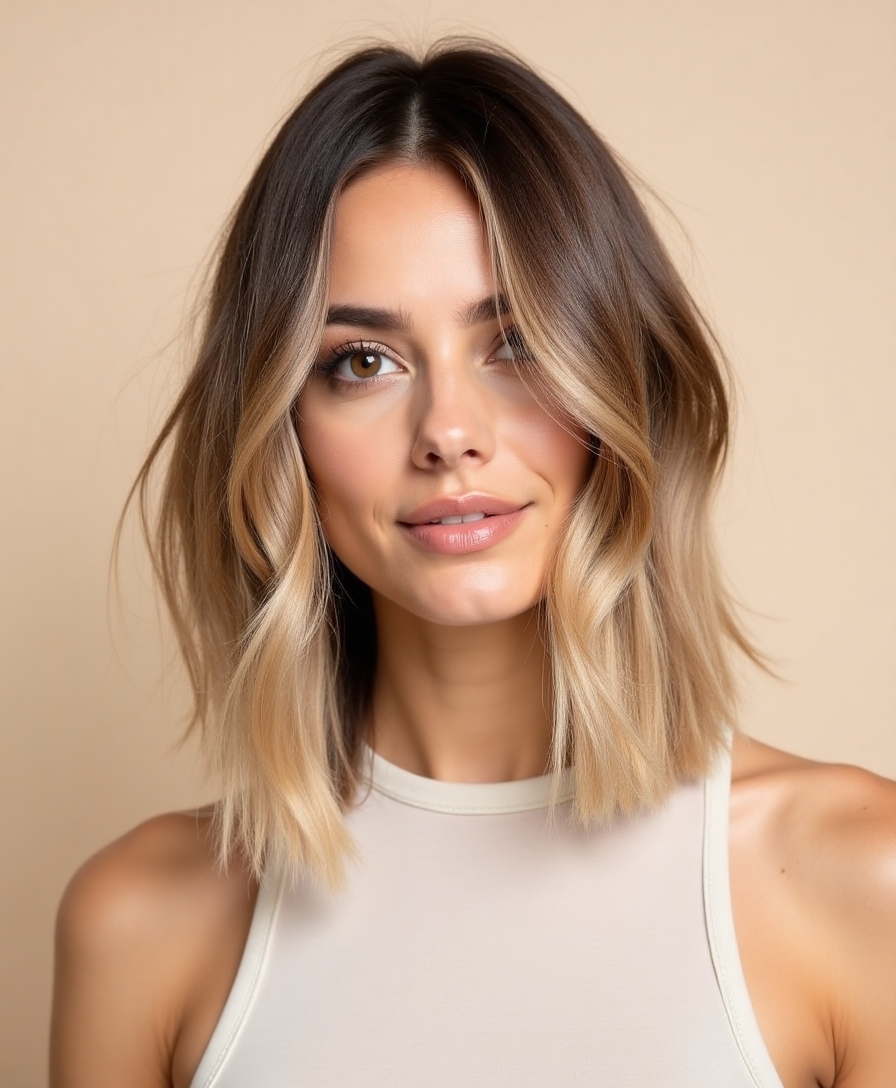
Color acts as the quiet partner of a well-cut lob, since the right placement makes the shape read as more dimensional and intentional. Placement decides everything. Face-framing highlights brighten the pieces closest to the face and direct the eye exactly where the cut is already doing its flattering work.
Balayage remains the most requested option for good reason: hand-painted, graduated color adds real depth and grows out softly with no harsh demarcation line, matching the lob’s generally low-fuss spirit. For the technique in full detail, balayage for dark brown hair goes deeper.
A full session typically fills a two-hour appointment, priced around $180, with a refresh needed only every few months rather than every few weeks.
Gathering Inspiration Honestly
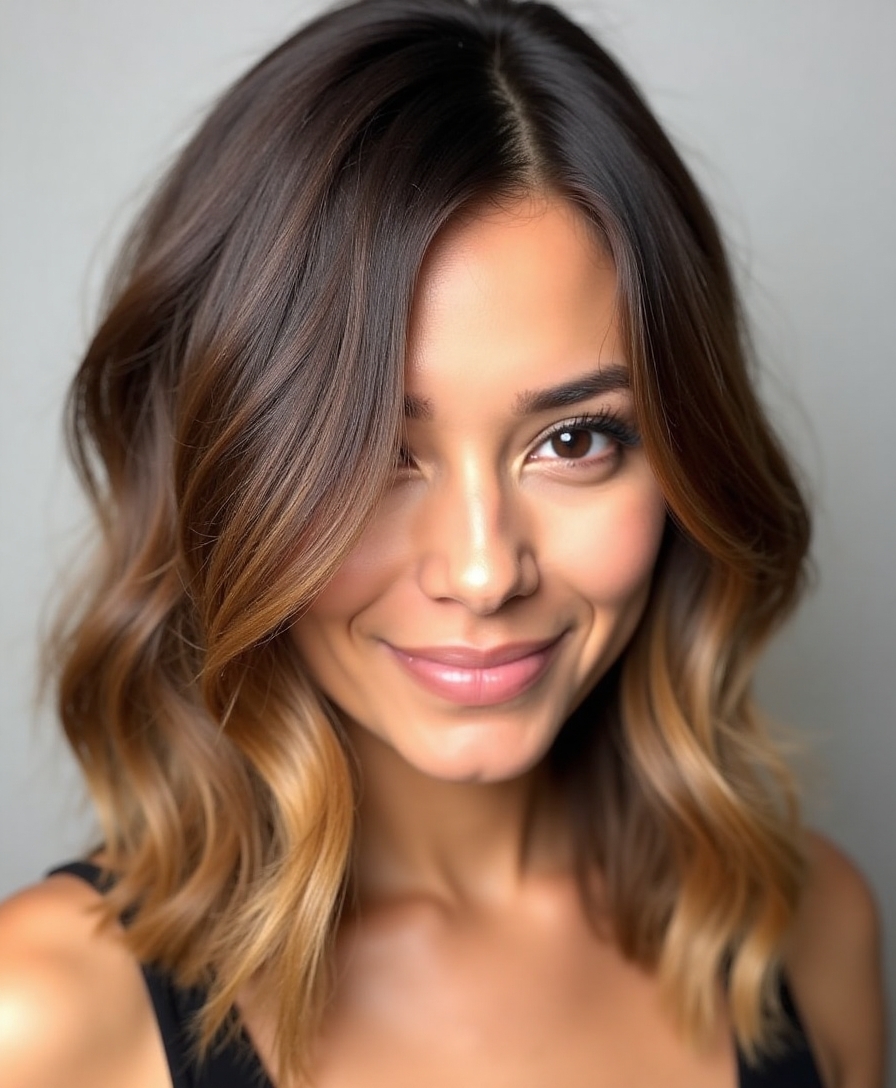
Gathering reference photos ahead of an appointment is smart, provided it’s done honestly. The single most useful thing to save is images of people whose face shape and hair texture actually resemble the client’s own.
- Save photos matched specifically to a similar face shape and texture.
- Bring two or three references so the consultation stays sharply focused.
- Talk through what needs adjusting for the specific face in the chair.
A few terms worth knowing before a consultation:
📖A-line
Shorter at the back, longer toward the front, on a forward diagonal.
📖Face-framing layers
Shorter pieces cut around the face to soften or slim its shape.
Seasonal Styling Switches for the Lob
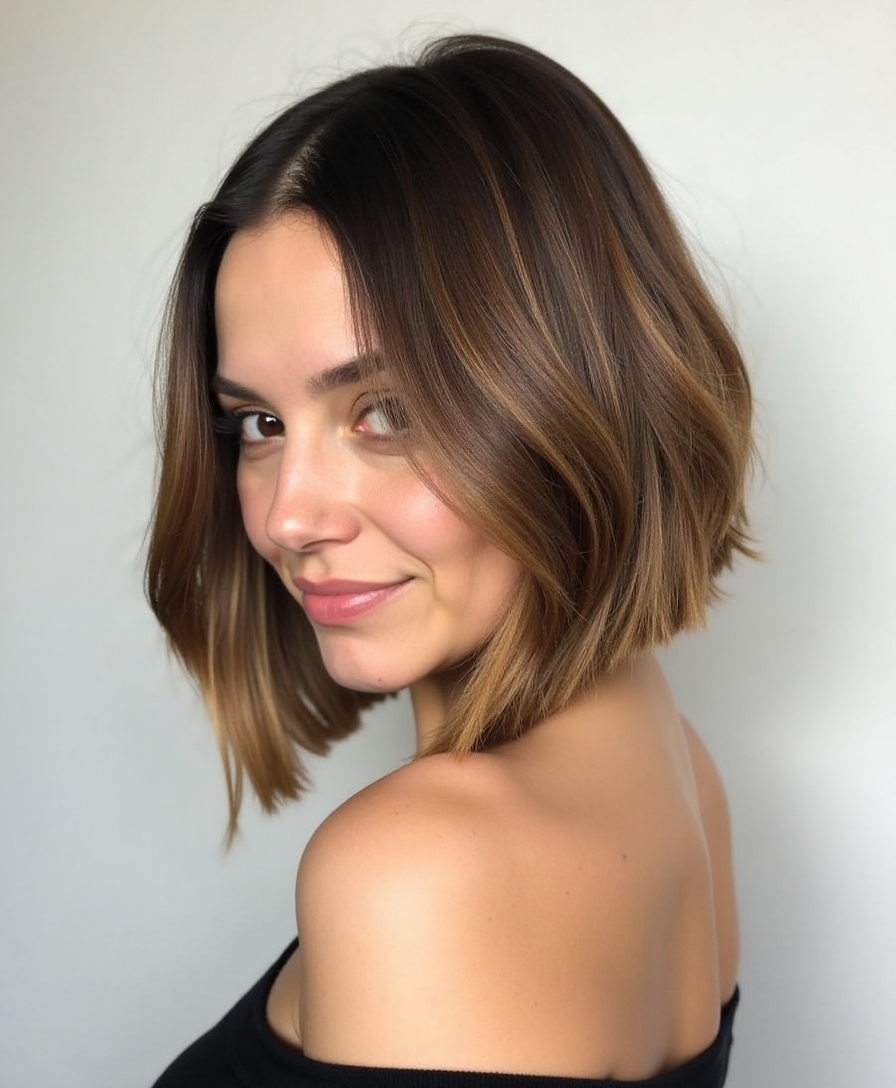
One quiet advantage of the lob is how easily the same cut shifts with the seasons, needing nothing more than a change in styling. In summer, leaning into its beachy side with a salt spray and air-dried, undone waves suits both the heat and the humidity.
Once the weather turns cool, smoothing it into a sleek, glassy finish pairs naturally with collars and scarves, or soft bends add a cozier texture instead.
The same shape takes a polished blow-dry just as happily as a tousled one, which is a real part of why the cut keeps its fans season after season.
Adapting the Lob to Every Texture
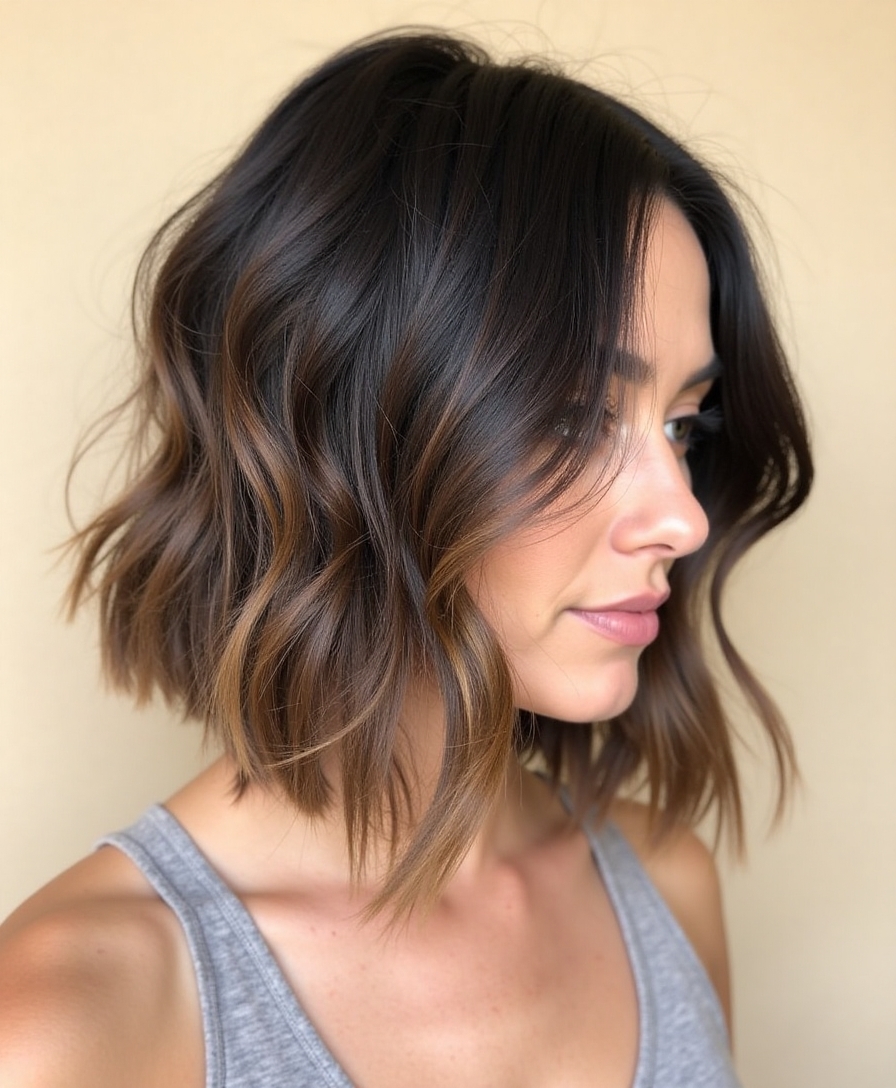
The lob isn’t reserved for straight hair; it adapts well across nearly every texture, provided it’s cut specifically for the hair it’s landing on. For curly and coily textures especially, that means finding a stylist who works with texture regularly and shapes the hair dry, in its natural state, so length settles where curls actually land.
- Straight hair shows the cleanest line, so precision in the cut matters most.
- Wavy hair takes a slightly longer length to let the bend show fully.
- Curly and coily hair need a dry cut with extra length built in for shrinkage.
| Texture | Cutting Approach | What to Ask For |
|---|---|---|
| Straight | Precise, clean line | A crisp perimeter with minimal layering |
| Wavy | Slightly longer length | Room for the natural bend to show |
| Curly or coily | Shaped dry, section by section | A little extra length banked for lift |
Three Ways to Restyle the Same Cut
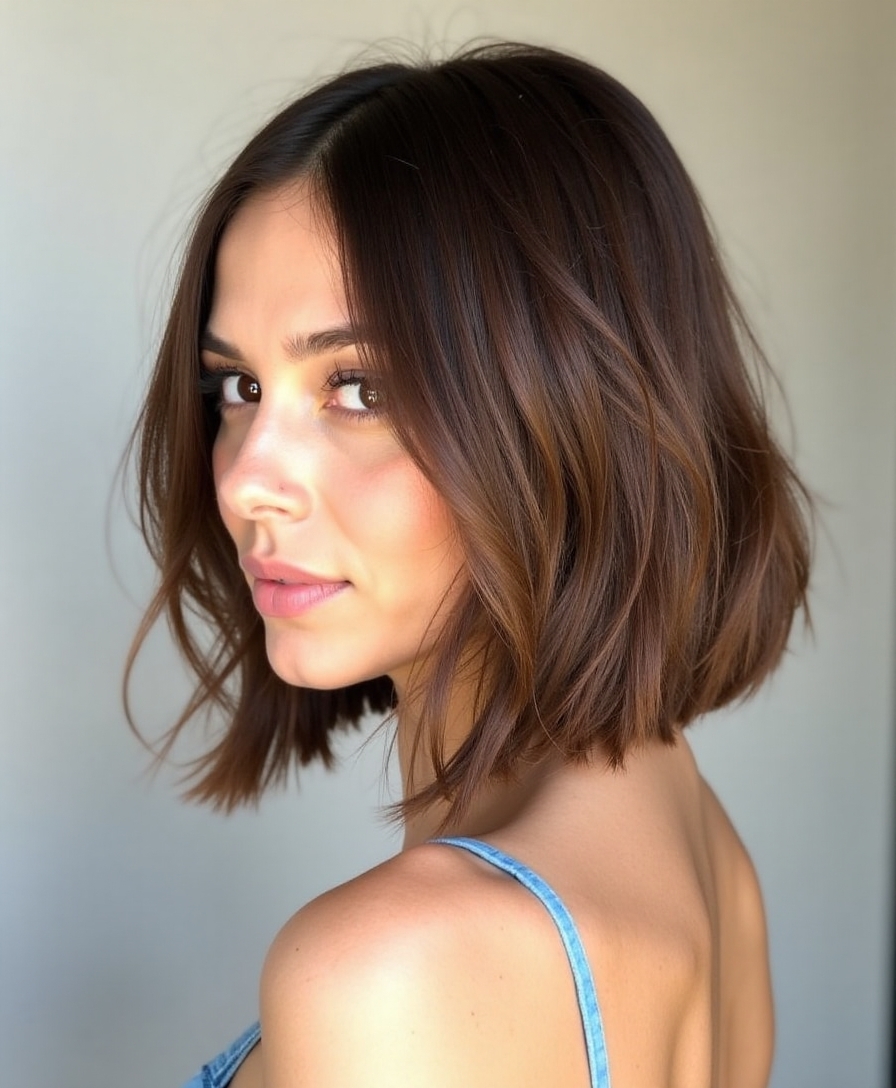
Once a lob is cut correctly for a specific face, that same shape carries through an entire week with nothing but a change of finish.
- For work: a sleek blow-dry with a side part reads polished and professional.
- For a casual day: a low, tucked half-up or a small nape-level ponytail.
- For a night out: tousled waves paired with a deep side part for volume and drama.
Common Cutting Mistakes to Avoid
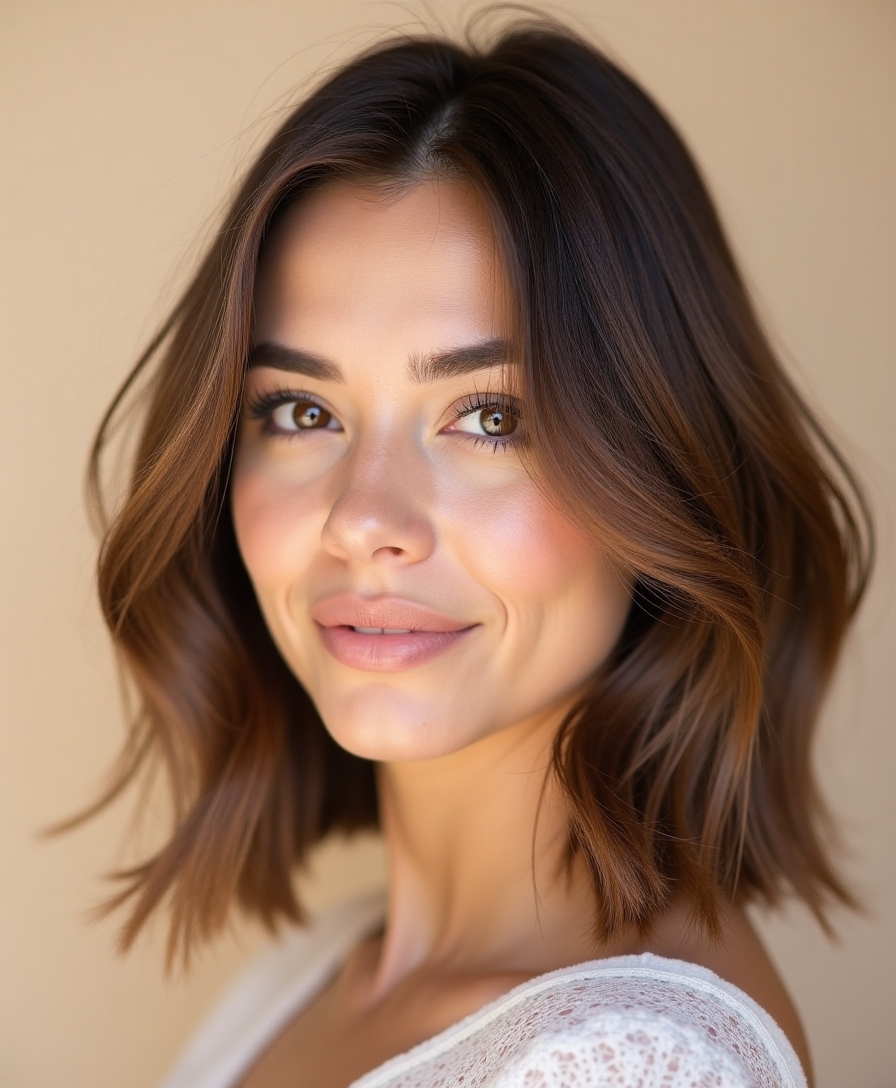
Most lob regret traces back to a handful of avoidable missteps, nearly all of them rooted in prioritizing a photo over an actual face and hair type. Knowing these ahead of a consultation is the simplest insurance against walking out disappointed.
- Copying a photo exactly without adjusting length and part for a different face shape.
- Going too short and blunt on a round face, which adds width exactly where it isn’t needed.
- Over-layering fine hair until the ends look stringy and thin.
Long Bob by Face Shape
?What’s the actual difference between a long bob and a regular bob?
Mostly length. A classic bob sits around the chin or jaw, while a long bob, or lob, drops to somewhere between the chin and the collarbone. That extra length is what makes the lob adaptable across more face shapes, since there’s more room to tuck, layer, and part it.
?Can literally any face shape wear a long bob?
Yes, because length, part, and layers are all adjustable independently. Oval faces can wear almost any version; round faces do best at collarbone length with layers; square jaws soften with asymmetry; heart shapes balance with a side-parted, chin-length cut.
?How do I describe my face shape accurately to a stylist?
Pull hair back, look straight into a mirror, and note where the face reads widest and how the jaw curves or angles. Naming that specific observation gives a stylist far more to work with than most people expect.
?Does a long bob work well on textured or curly hair?
Yes, provided it’s cut by someone experienced with that texture. Curly and coily hair does best shaped while completely dry, with a little extra length banked to account for how much it lifts once finished.
Your Version Is in There Somewhere
The lob remains one of the most requested cuts for a reason, but its real strength lies somewhere specific: a version exists built for a given face, once length, part, and layers get matched to that face’s actual proportions.
Save the face shape that matches above, bring it to the next consultation as the real reference point, and ask for the lob tailored to that shape specifically. That one shift, from copying a look to adjusting it, is the entire difference between tolerating a haircut and loving it.
Hand-Picked for You