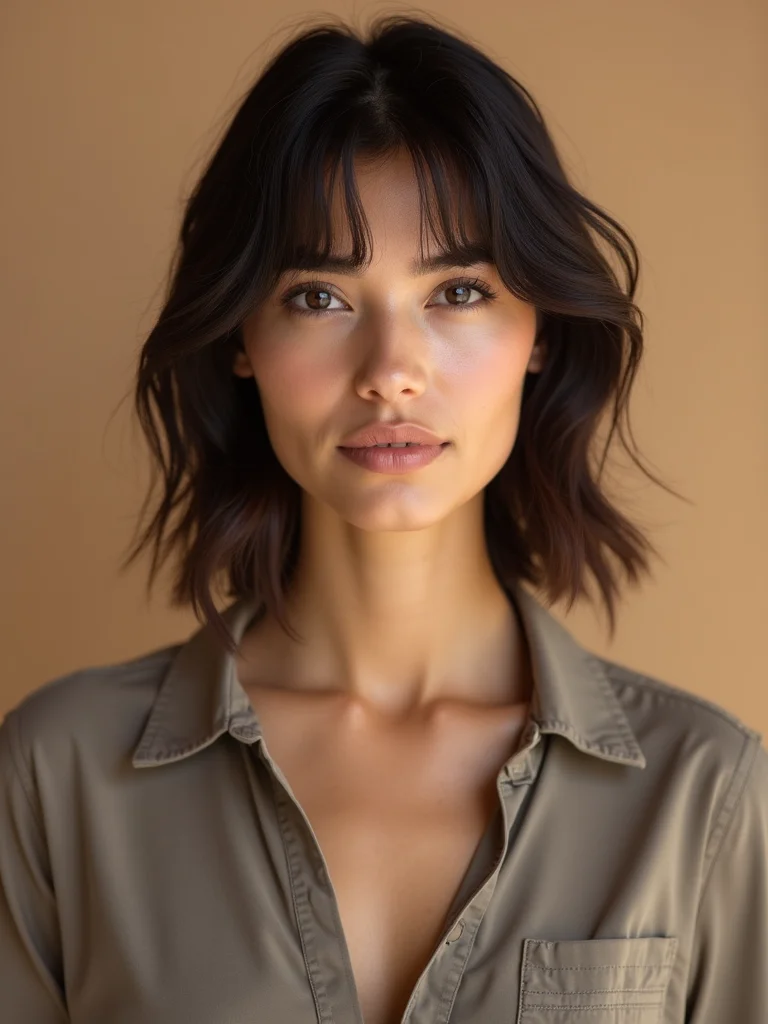
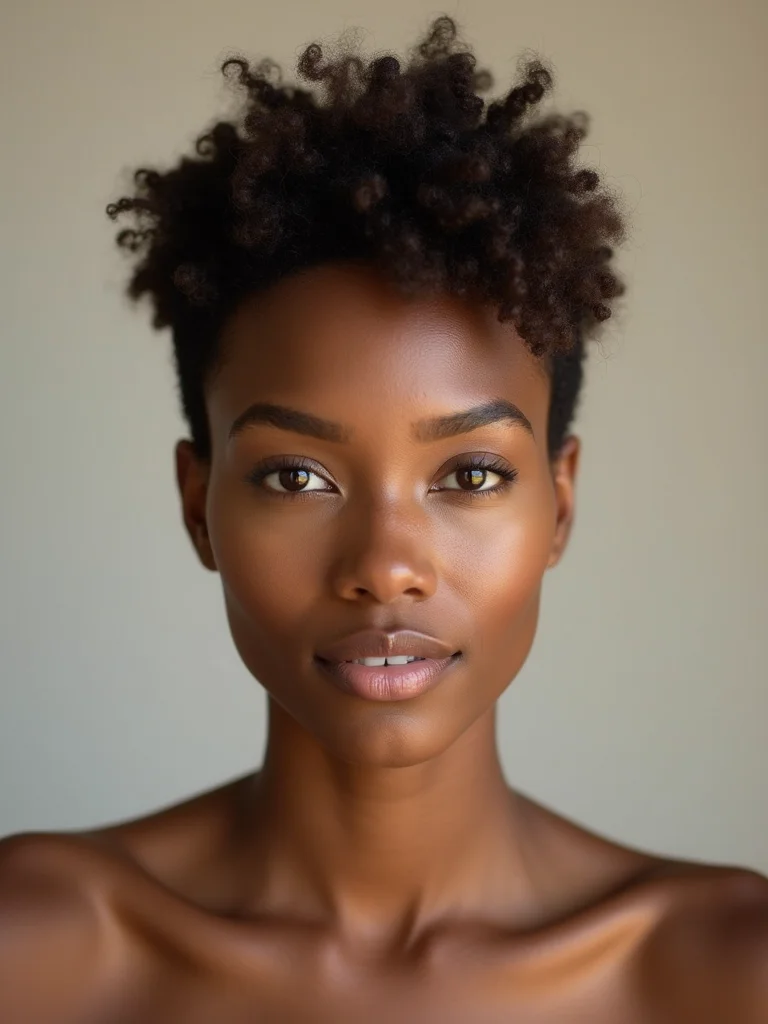
The fringe is what turns a good wolf cut into a great one. It is also where most people freeze up, because there are more kinds of bangs than anyone expects, and the wrong one can throw off an otherwise perfect cut. The right fringe does the opposite: it frames your face and ties the whole shape together.
So here is every fringe worth considering on a wolf cut, from a barely-there wisp to a blunt micro statement, with who each one flatters and how to wear it. Pick your fringe first, and the rest of the cut tends to follow.
Fringe at a Glance
| Fringe type | Best for | The vibe |
|---|---|---|
| Curtain | Most faces | Soft and universal |
| Wispy or baby | Bold, youthful looks | Light and edgy |
| Blunt micro | Strong features | Graphic statement |
| Side-swept | Round or long faces | Easy and flattering |
Soft Curtain Fringe Wolf Cut
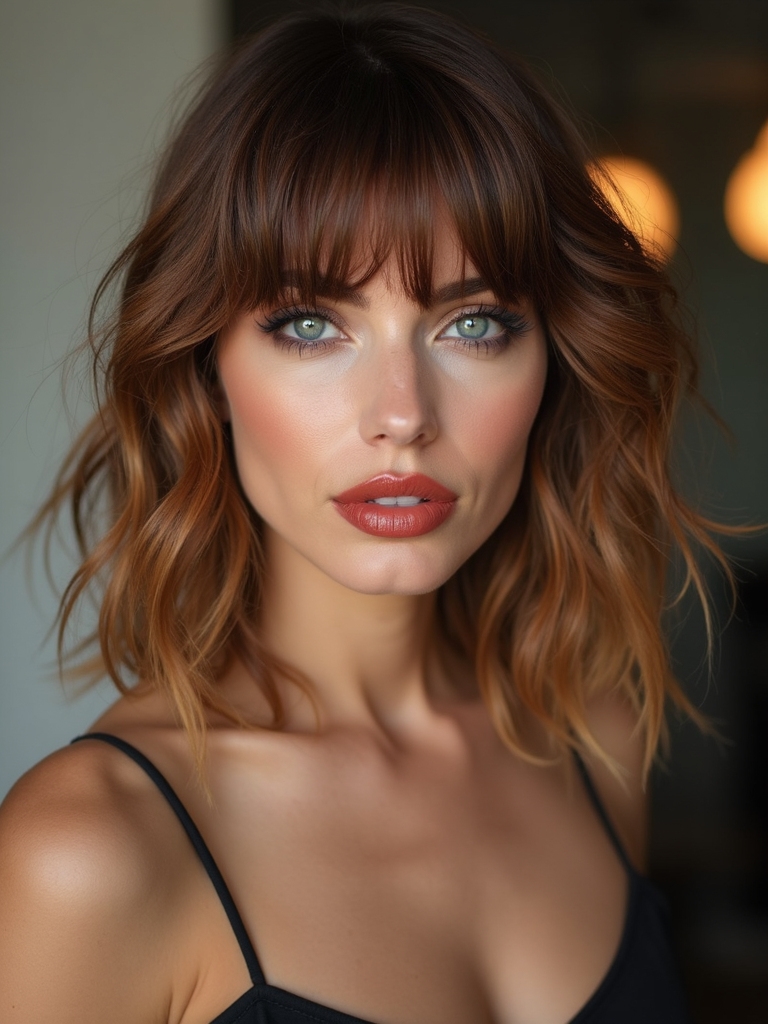
The curtain fringe is the safe bet, and for good reason. It parts down the middle and sweeps toward each cheekbone, framing the face with a soft, blended edge, which is why it flatters nearly everyone. It is the fringe I cut more than any other. It is also the one I recommend to anyone nervous about bangs.
- Flatters almost every face shape
- Cut to graze the cheekbone for the softest frame
- A curtain bang grows out with no awkward stage
Wispy Baby Bangs Wolf Cut
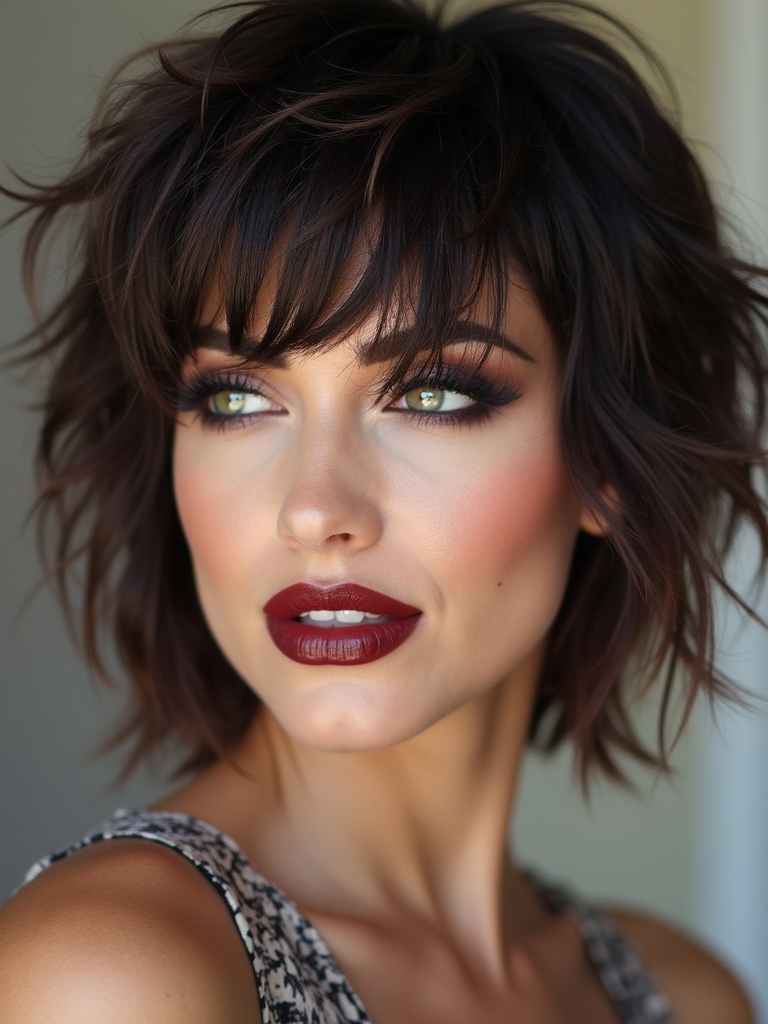
Wispy baby bangs sit high on the forehead and stay sheer enough to see through, which gives a wolf cut a youthful, slightly French edge. They are bolder than a curtain fringe but softer than a blunt one, so they read playful rather than severe. Best on those who want a statement that still feels light.
- Sit high on the forehead and stay sheer and airy
- Bolder than curtain bangs, softer than a blunt micro
- Style with a dab of cream and a finger-comb, never heavy product
How to revive a fringe between washes in under a minute.
1Mist lightly
Spritz the fringe with water or a light refresher, just damp, never soaked.
2Reshape
Finger-comb or round-brush the fringe into its direction while it is damp.
3Set
A quick cool shot from the dryer, or air, locks the shape; add a drop of serum if it frizzes.
Blunt Micro-Fringe Wolf Cut
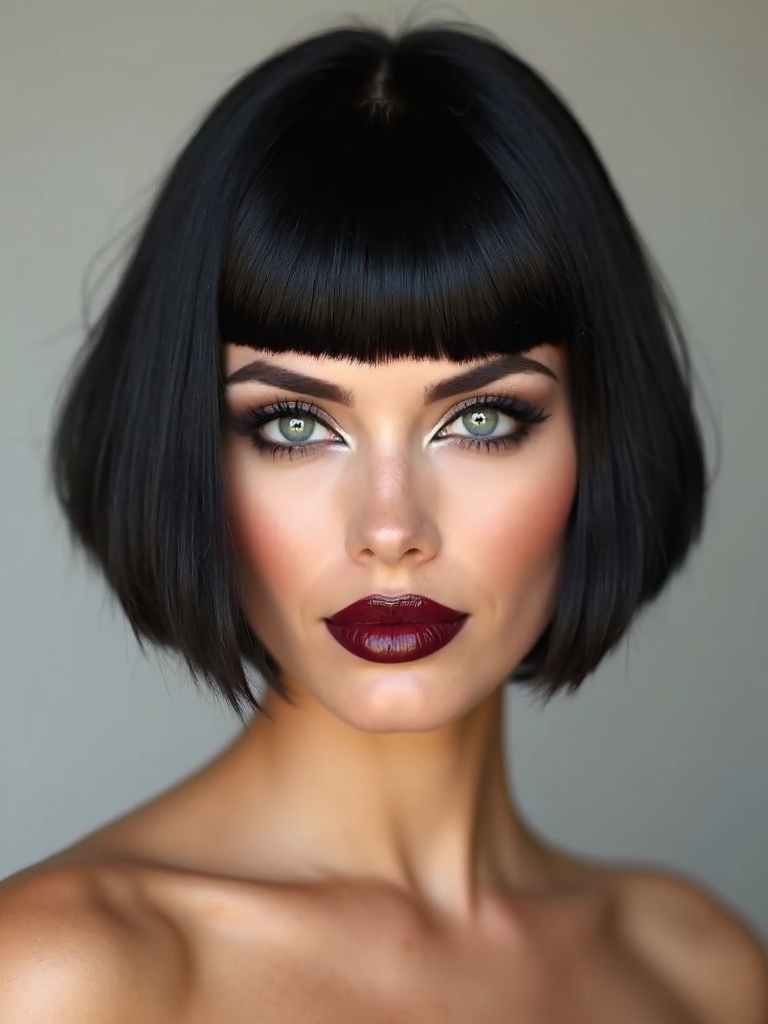
The blunt micro-fringe is the boldest fringe you can put on a wolf cut. Short, straight across, and high on the forehead, it plays hard against the textured layers for a graphic, fashion-forward statement. It gets stopped on the street. It is not subtle.
It rewards strong brows and high cheekbones, and it does ask for nerve. Keep the rest of the cut shaggy so the fringe stays the focal point.
- Best on strong features and a confident wearer
- Style it flat with a flat iron on low
- Plan a trim every two to three weeks, since it grows fast
Long Layered Wolf Cut With Fringe
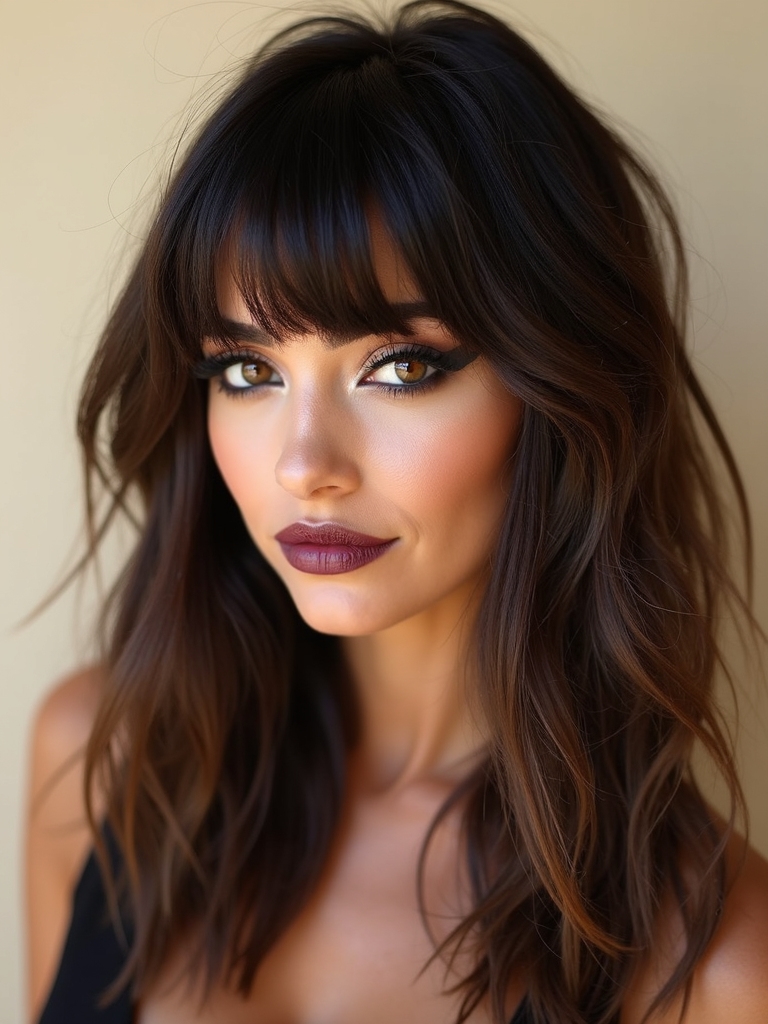
You do not have to cut your length to wear a fringe. A long layered wolf with a soft fringe keeps your inches while the bangs frame the face and the internal layers add movement, so nothing about your length has to change. It is the gentlest way to test a fringe without a big commitment.
- Keep your length and add a soft, blendable fringe
- A long wolf cut carries a curtain or side fringe well
- Internal layers keep long hair from dragging the fringe flat
👍Why add a fringe
- +Frames the face and softens strong features
- +Updates a wolf cut instantly with no length lost
- +There is a fringe for every face and texture
👎What to weigh
- –Needs a quick trim every few weeks
- –Fights workouts and a hands-in-hair habit
- –The wrong density can overwhelm fine or thick hair
Short Shaggy Wolf Cut With Fringe
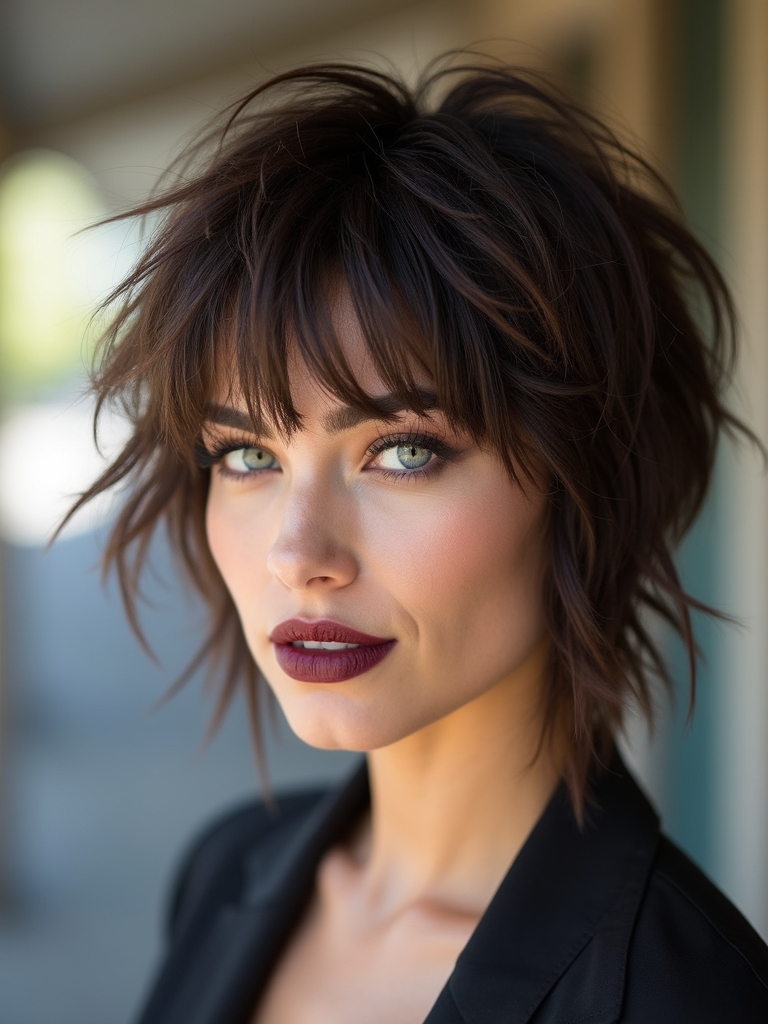
On a short shaggy wolf, the fringe carries more of the look, since there is less length to balance it. A choppy, textured fringe blends into the cropped layers for an edgy, low-fuss finish that suits a fast morning.
The short length sets quickly, so a scrunch of paste and a finger-sweep of the fringe is the whole routine.
- The fringe does more framing on a short shape
- Keep it choppy so it blends into the cropped layers
- Style with a little paste and a quick finger-sweep
Curly Wolf Cut With Face-Framing Fringe
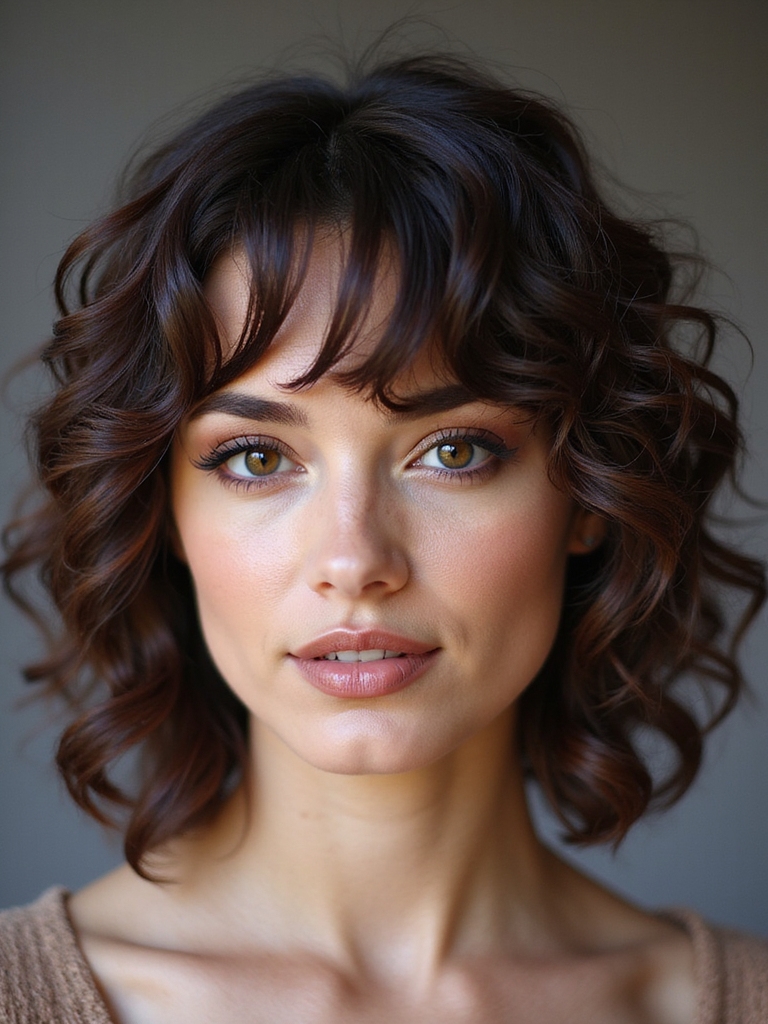
A curly fringe is its own small art. Your stylist shapes it dry, one curl clump at a time, because a curl that looks one length wet can spring up an inch and a half once it dries. Cut a little long, those front curls relax into a soft frame instead of a too-short shelf.
Why a curly fringe is cut long
Coily 4a to 4c hair wants extra care right at the hairline, where the curls are finest and most prone to strain, so a careful stylist works the edges loosely and never cuts them under tension. A pea of light gel scrunched through the fringe defines it without crisping it.
A curly fringe springs up as it dries, so always cut it a little long. Diffuse on low and leave it alone to set.
| Texture | Easiest fringe | Watch out for |
|---|---|---|
| Straight | Curtain or blunt | Separation; bevel it under |
| Wavy | Feathered, piecey | Cut it long for spring |
| Curly or coily | Soft halo, cut dry | Shrinkage; define with light gel |
Wavy Wolf Cut With Feathered Fringe
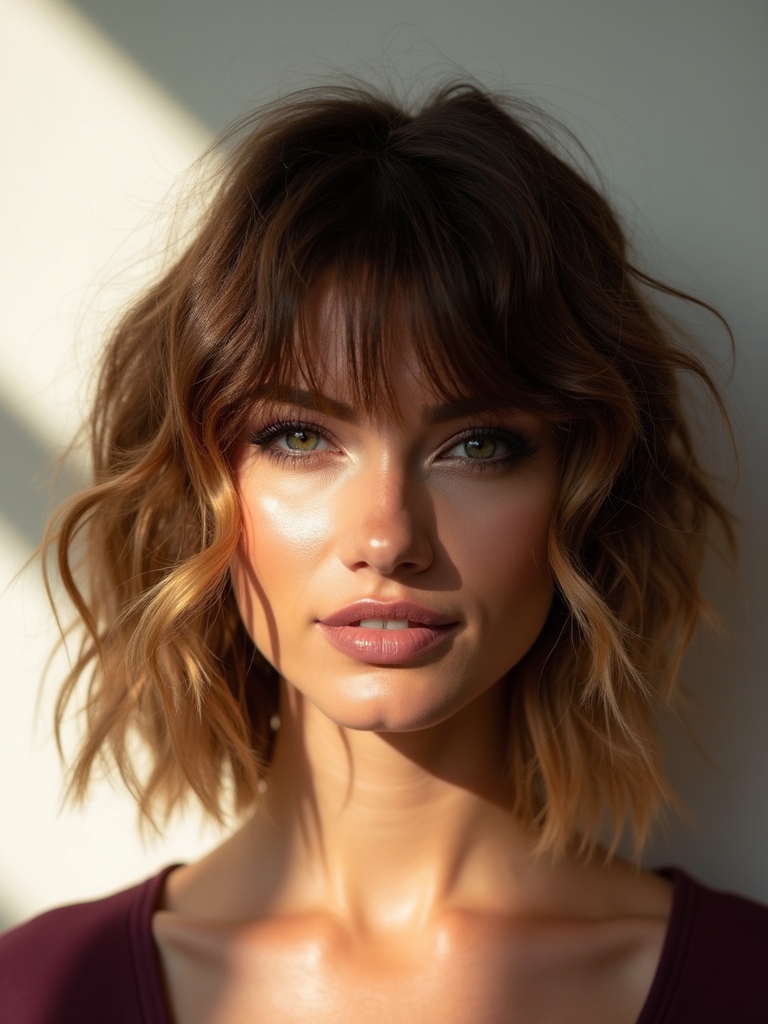
Wavy hair and a feathered fringe are a low-effort match. The wave gives the fringe natural movement, so a feathered, piecey bang air-dries into a soft swoop with no heat at all. It is the easiest fringe to live with on textured hair.
Twist the fringe pieces away from the face while damp, and they set into shape as they dry. A quick water spritz revives them on day two.
Thick Hair Wolf Cut With Textured Fringe
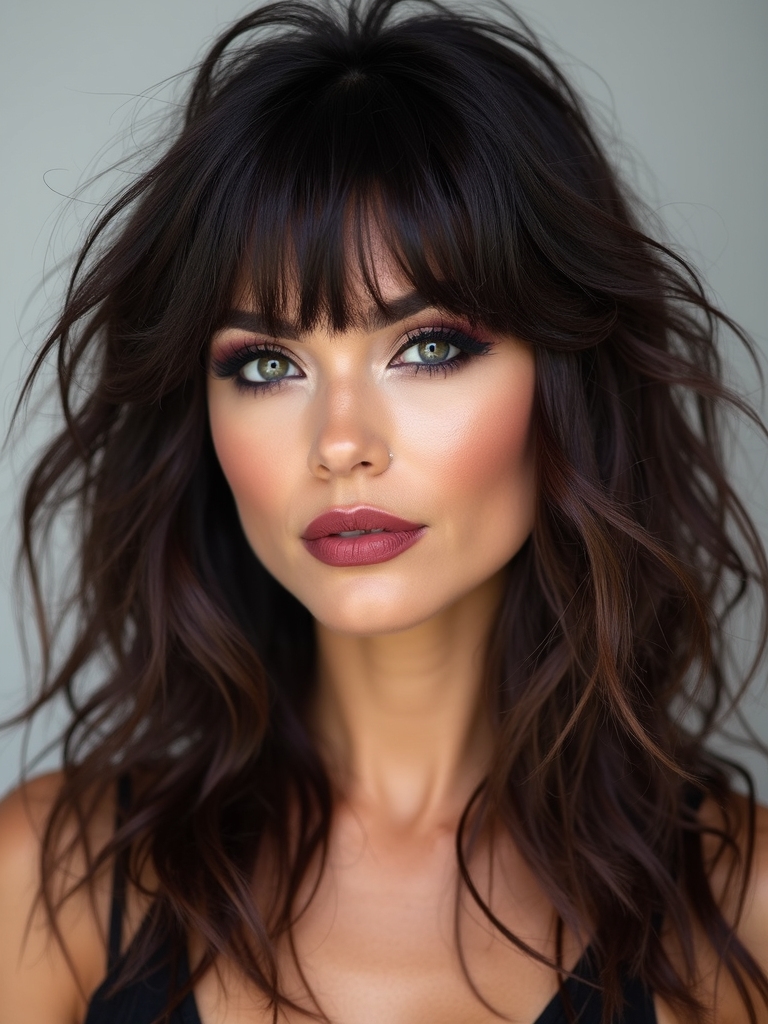
Thick hair can overwhelm a fringe, so the bangs need texture to keep them from sitting like a heavy slab. I point-cut and thin the fringe carefully, removing weight from inside so it falls soft and moves. On thick hair, a textured fringe is the difference between modern and matronly.
- Ask for an internally thinned, point-cut fringe to remove weight
- Avoid a heavy blunt fringe, which goes slab-like on thick hair
- A round brush smooths a thick fringe without flattening it
Still deciding? It comes down to two camps.
🎯Soft and safe
Curtain or side-swept; flatters most, grows out easily, low upkeep.
🎯Bold and graphic
Blunt micro or baby bangs; a real statement, higher upkeep, needs nerve.
Fine Hair Wolf Cut With Airy Fringe
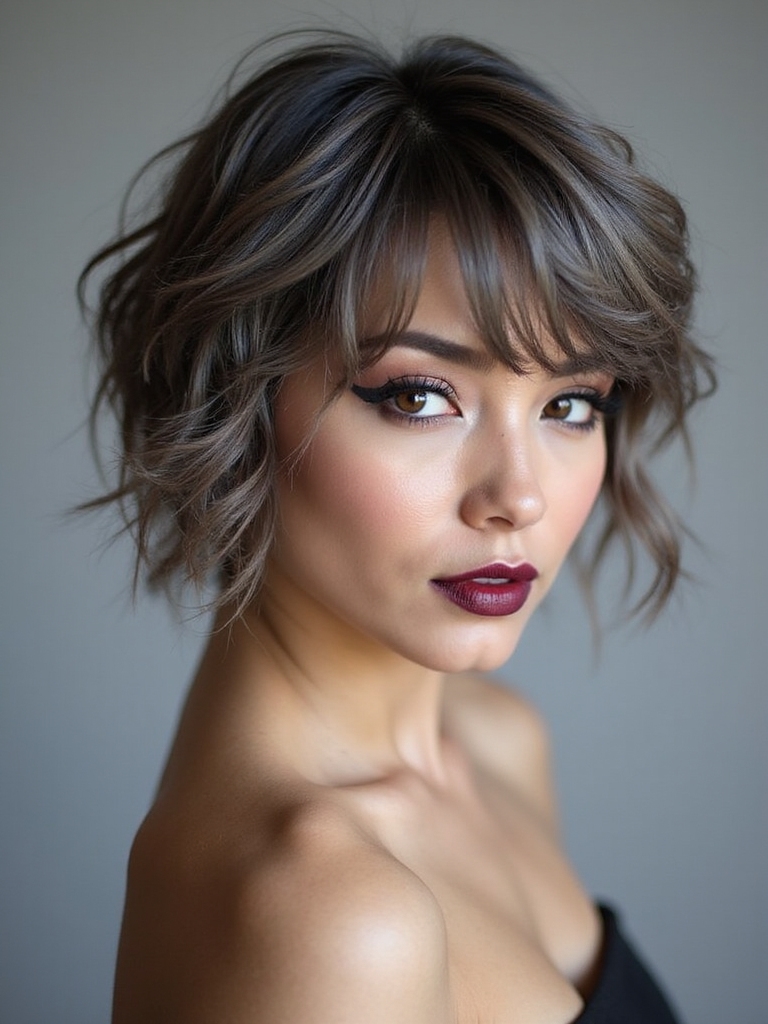
This is the fringe engineered around a fine-hair problem: every strand you commit to bangs is one you cannot use for crown volume. So the fringe is kept sparse and shallow, taking only a thin front section, which leaves the bulk of your hair free to stack and lift behind it. It is less about the look of the fringe and more about protecting the volume fine hair needs.
- Choose a wispy, see-through fringe so it does not steal volume
- Keep the crown layers full for lift behind the fringe
- Skip heavy product on a fine fringe, which makes it stringy
Choppy Wolf Cut With a Piecey Fringe
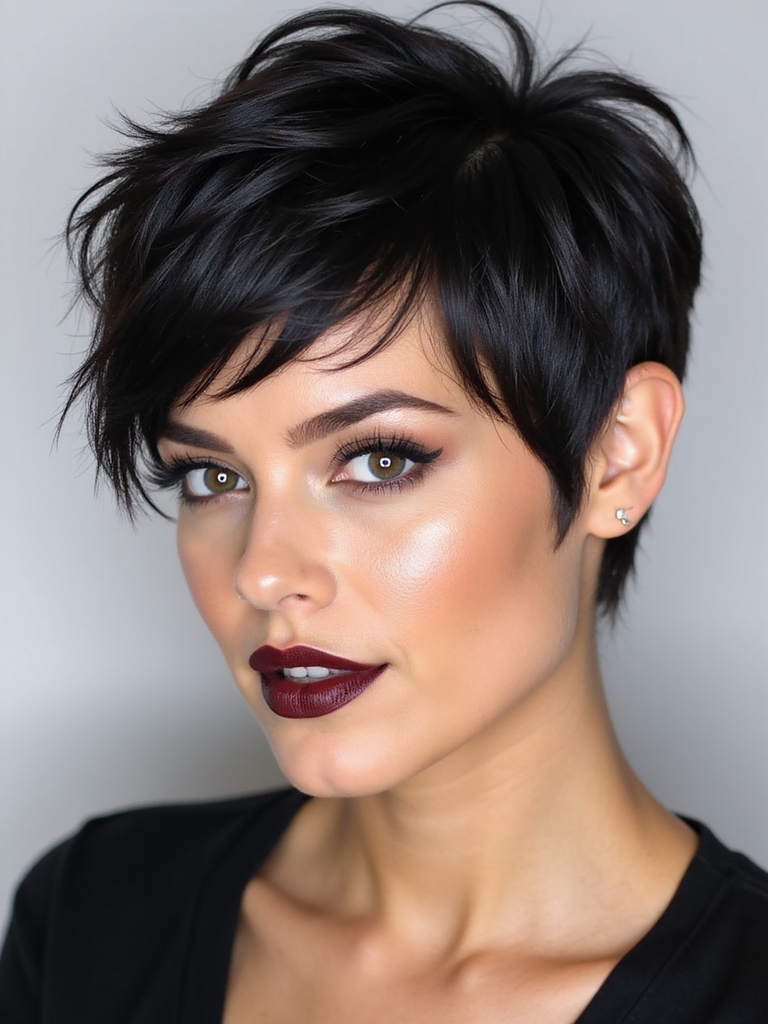
A choppy, piecey fringe is the rocker option, all shattered ends and separated pieces. It gives a wolf cut serious grit and a deliberately undone edge. The pieces catch the light and move on their own.
Against a heavily layered crown, a piecey fringe ties the whole shaggy shape together. It is the fringe that gets your hair noticed first.
Pinch a matte paste through the pieces for grip, and ask for a point-cut, separated edge so it never reads as a solid line.
Polished Wolf Cut With Fringe
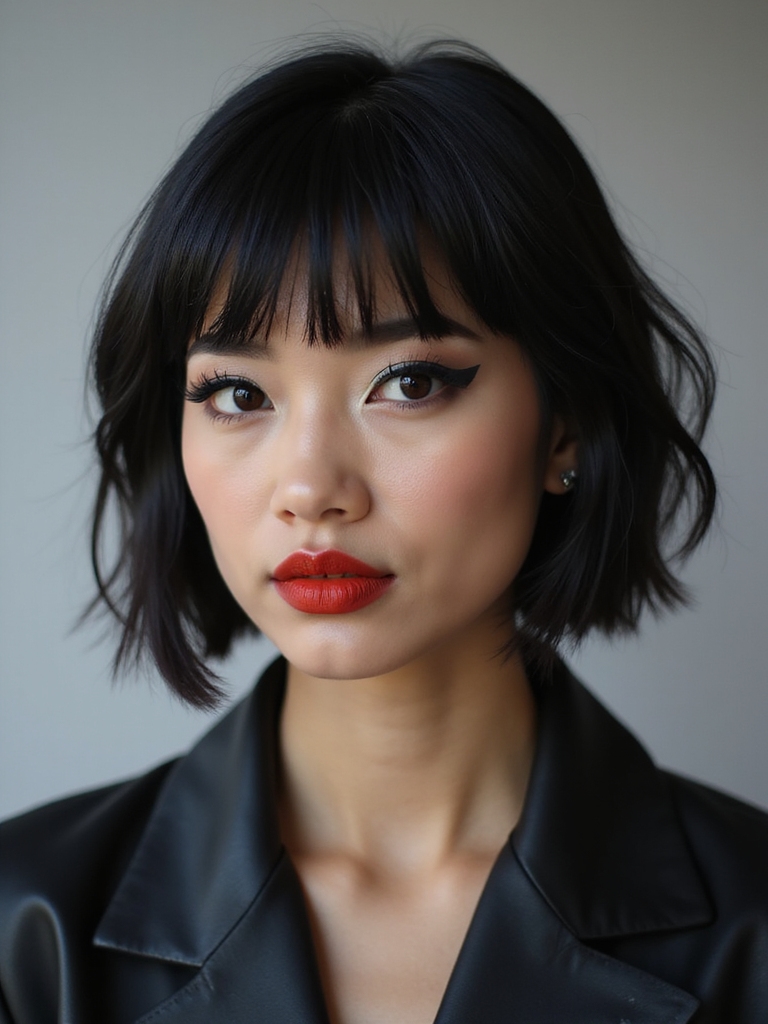
Not every fringe has to look undone. A polished wolf cut keeps the layers smooth and the fringe blow-dried sleek, which makes it office-ready while the bangs keep it from feeling plain. It is the grown-up way to wear the trend, and it suits a workplace that frowns on anything too edgy.
- Blow the fringe and layers smooth with a round brush
- A gloss serum keeps the polished finish shiny
- It is the most workplace-friendly version of the cut
Color-Blocked Fringe, High Contrast
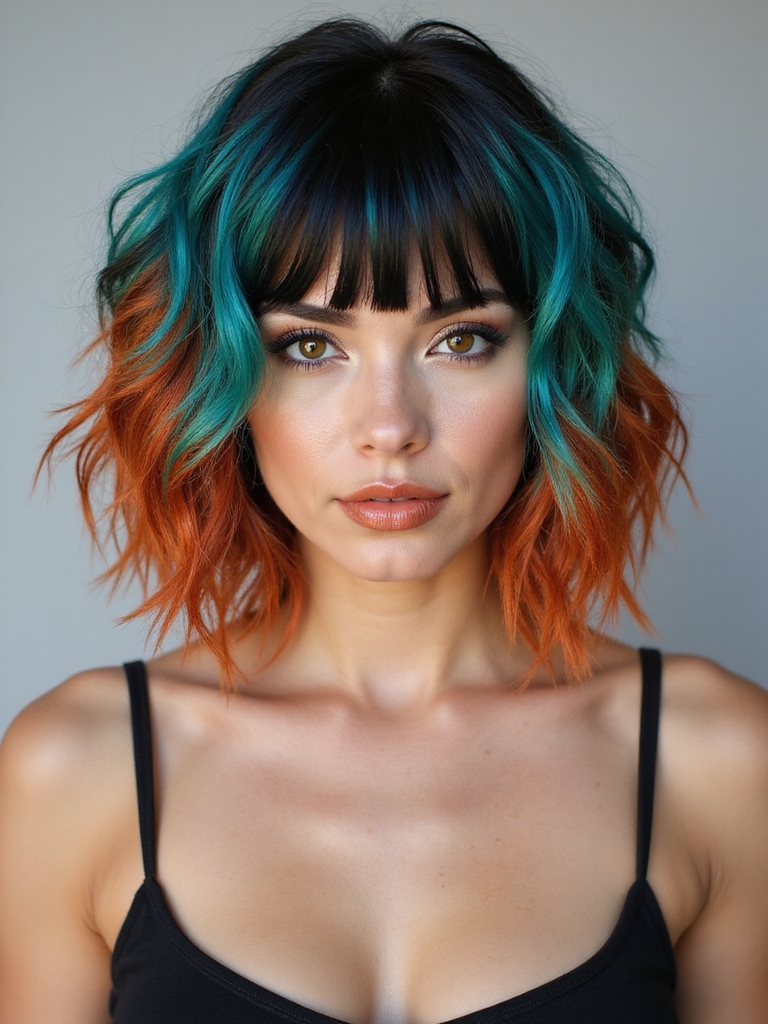
When you want a fringe that really stands out, color it. A contrasting panel or a bright money-piece right at the fringe turns the bangs into the boldest part of the cut, and the texture of the layers keeps the color from looking flat. It is the most personal version, since the placement is yours to design.
- Color the fringe itself for maximum impact
- A money-piece at the front frames the face in brightness
- Budget roughly $130 to $240 for face-framing color
Side-Swept Feathered Wolf Cut
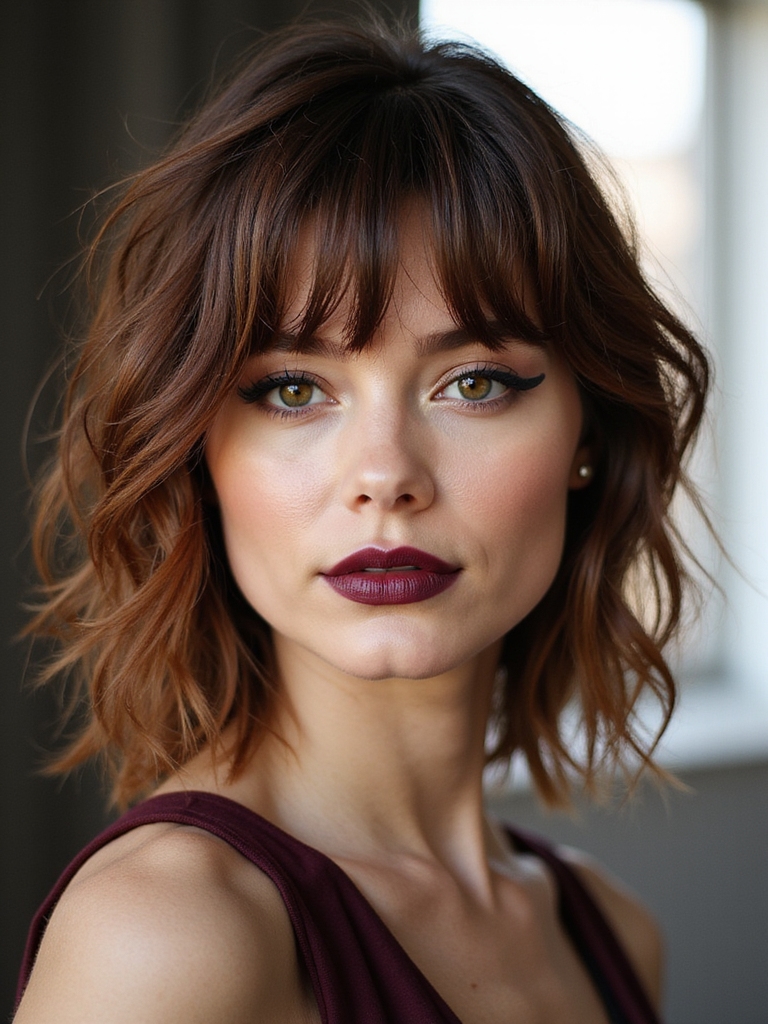
A side-swept fringe is the most forgiving of all, since it skims across the forehead and blends into the face-framing layers with almost no upkeep. It flatters round and long faces alike by adding a diagonal line, and the grow-out is the gentlest of any fringe.
Blow it across with a round brush, or simply sweep it to your stronger side with your fingers. It is the fringe for people who like the idea of bangs but not the maintenance.
Feathered, Micro-Layered Wispy Fringe
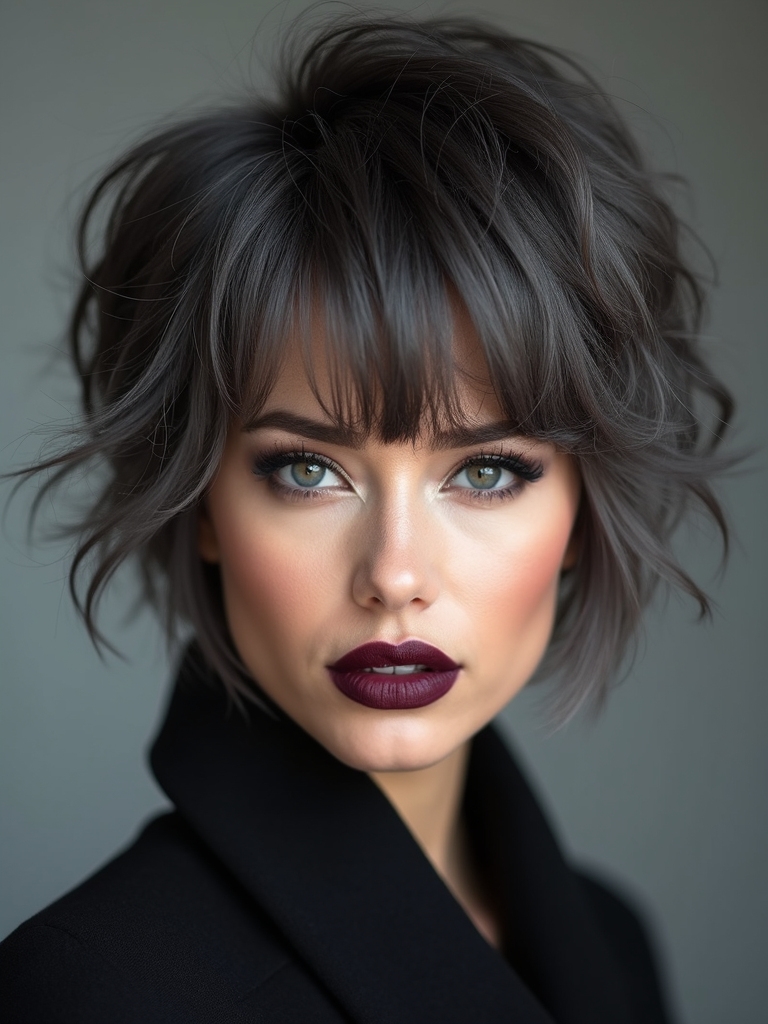
What sets this one apart is the technique. Instead of one length, the fringe is built from several micro-layers stacked at slightly different points, so it falls in soft, broken tiers rather than a single edge. That layering gives it an almost soft-focus quality up close.
It is the most editorial of the soft fringes, the kind you see on runways with bare skin and a bold lip. The micro-layering is fiddly to cut, so it wants a stylist comfortable with detailed fringe work.
Style it with the lightest touch of cream on your fingertips, pressed through the pieces so they separate without going greasy.
Voluminous Crown With Fringe
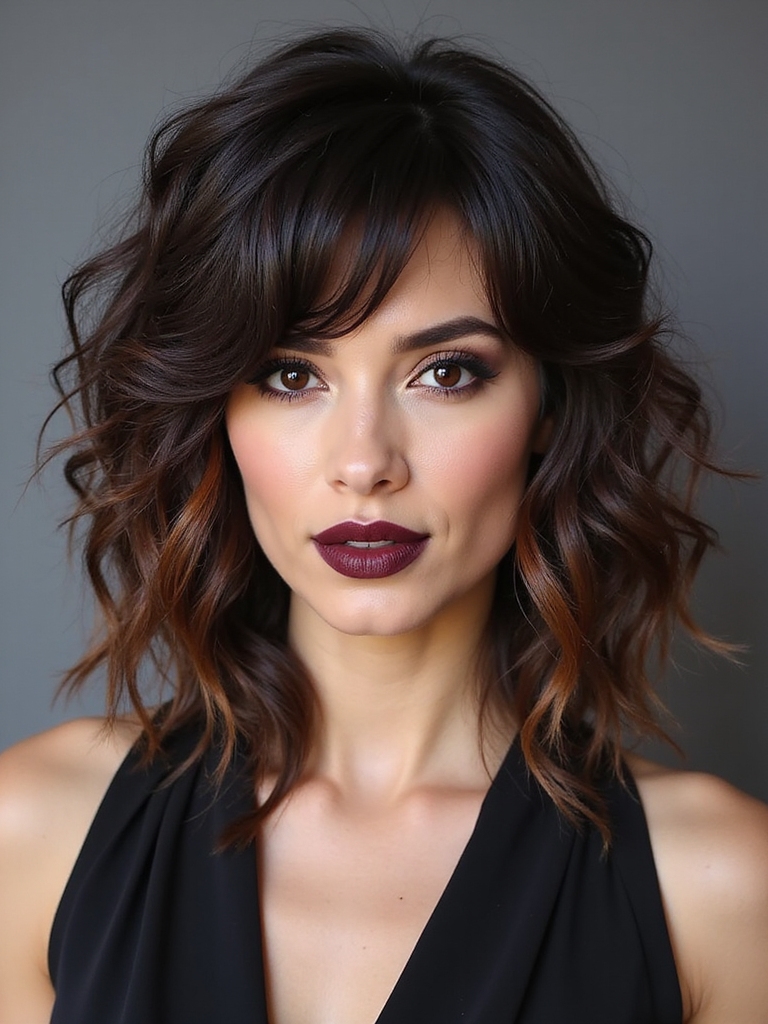
Pairing a fringe with a high, voluminous crown gives the whole cut balance, so the eye travels from lifted roots down to the framing bangs. The crown height keeps a fringe from making the face look short, which is the risk when bangs go in without any lift behind them.
Build the crown with a root-lifter and a rough-dry before you style the fringe, so the volume is set first.
- Crown height balances a fringe and keeps the face from looking short
- Set the volume with a root-lifter before styling the bangs
- Best paired with a curtain or side-swept fringe for balance
Who It Suits Best
The honest truth is that there is a wolf-cut fringe for every face and every comfort level, which is the whole point of having so many. Round faces lengthen with a longer curtain or side-swept fringe; long faces shorten with a fuller, blunter one; square jaws soften under wispy, feathered pieces; and oval faces can wear almost any of them. Strong features carry a blunt micro, while anyone nervous about bangs should start with a soft curtain or side sweep.
Who should pause? If you sweat through workouts daily or push your hair off your face constantly, a fringe will fight you and need frequent resetting. And if you will not commit to a quick trim every few weeks, even the lowest-upkeep fringe grows into your eyeline. Match the fringe to your habits, not just your face.
Wolf Cut Fringe Questions
?Will a fringe make my forehead look bigger or smaller?
A fringe shortens the look of a long forehead, which is why fuller bangs flatter long faces. If your forehead is small, keep the fringe lighter and higher so it does not crowd the space; a wispy or side-swept style works best.
?Can I get a fringe on curly hair?
Yes, and it looks great when cut dry and a little long to account for shrinkage. The front curls relax into a soft frame and take only a light gel to define, so they spring up cleanly without crisping.
?Can I pin my fringe back while I grow it out?
Yes, and a wolf cut makes it easy, since the fringe blends into the face-framing layers. Once it passes the cheekbone you can tuck it behind your ear, twist it back, or clip it, and it reads intentional rather than awkward the whole way out.
Pick the Fringe, Make It Yours
A fringe is the fastest way to make a wolf cut feel like yours, and the range here means there is no reason to settle for the wrong one. Soft curtain bangs flatter almost everyone, a side sweep asks the least of you, and a blunt micro makes the boldest statement in the room. The shape of the cut stays the same; the fringe sets the whole personality.
If you have been on the fence, start with your face shape and your honest morning routine, then take a photo of the exact fringe you mean to your stylist. Ask them to start it a touch long, and you will land on a fringe that frames your face instead of fighting it.
Where to Next