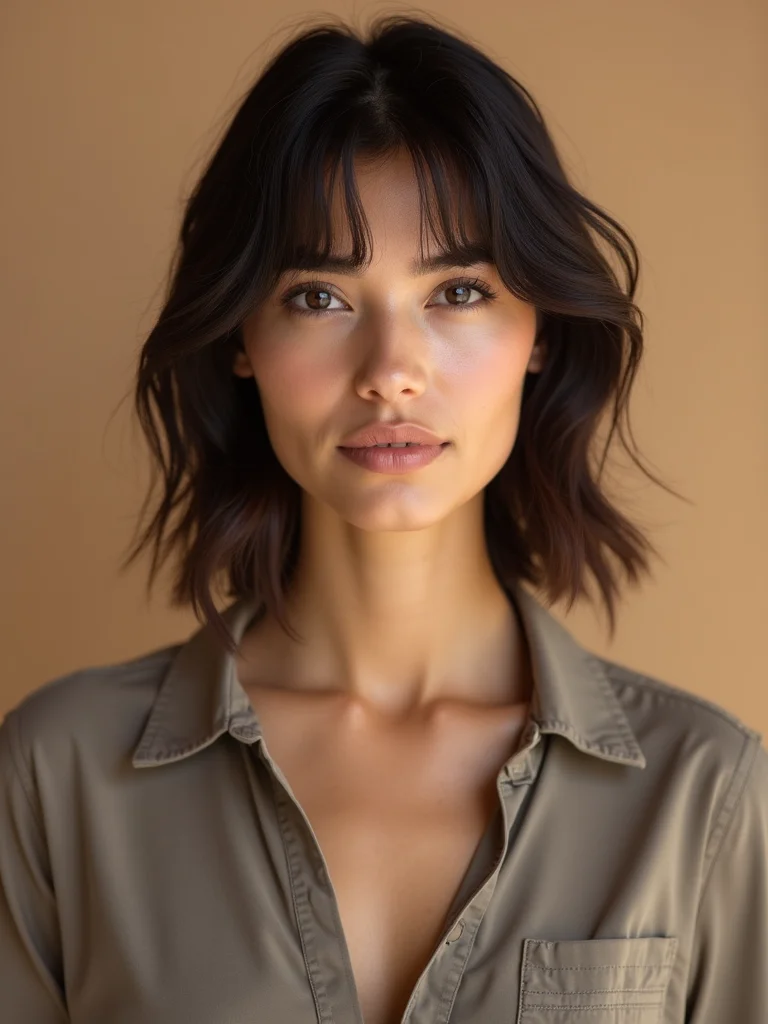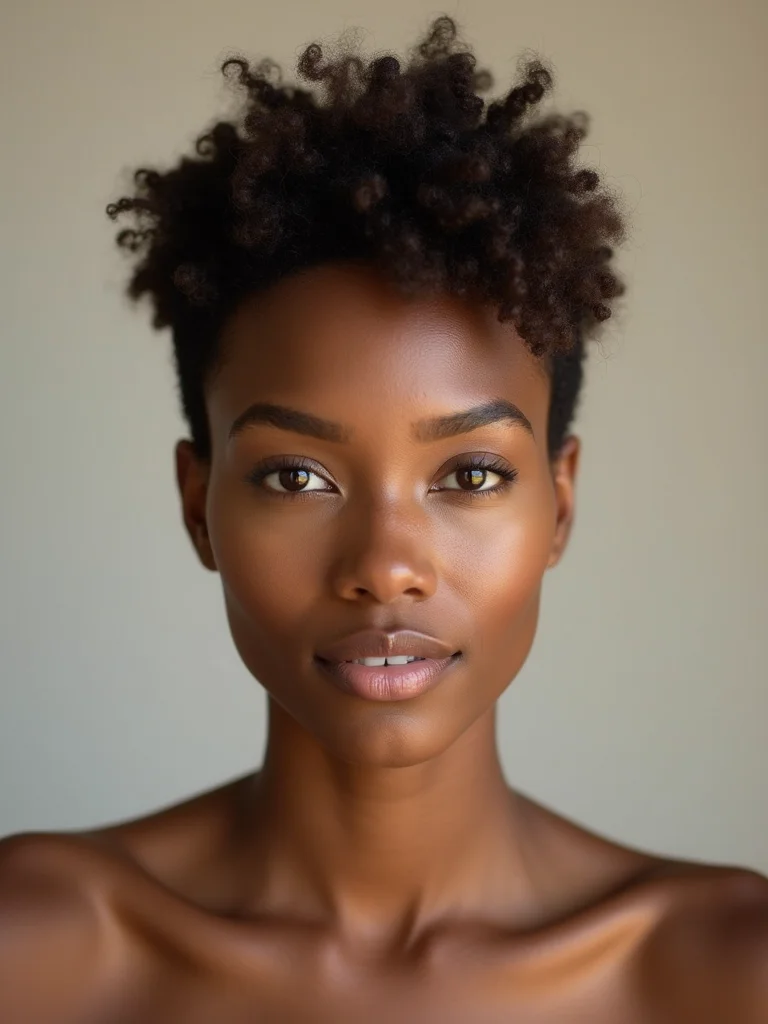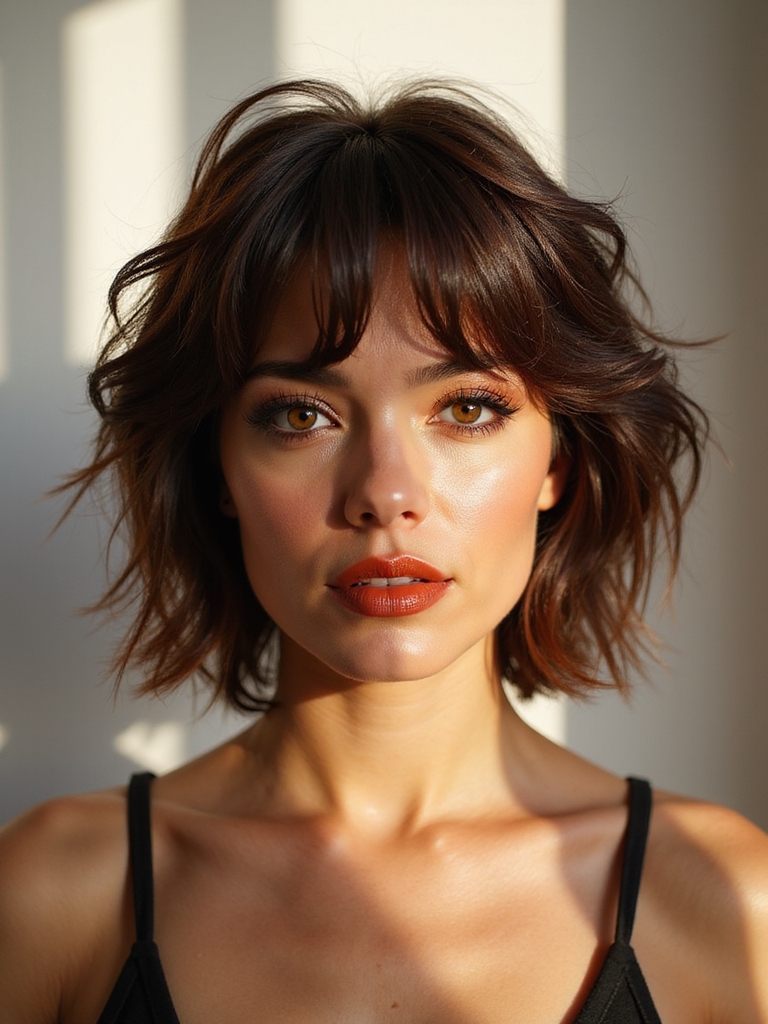
A shag adds movement. A mullet plays with length. A wolf cut takes both and pushes the difference to an extreme: a short, voluminous crown that drops into long, wispy ends.
Fifteen cuts from this family follow here, from the most wearable entry point to the boldest, most committed takes, plus what the shape actually costs in upkeep and grow-out before you book it.
Before You Book a Wolf Cut
- A wolf cut combines a shag’s movement with a mullet’s length contrast: short, heavily layered crown, long, wispy ends.
- It’s bold and hard to reverse quickly; the heavy crown layering means a real grow-out phase if you change your mind.
- Texture, wave, or coarseness gives the cut built-in body, which is why those hair types tend to be happiest with it.
Tousled and Razored, With Face-Framing Layers

This is the wolf cut most people picture: razored, tousled layers up top falling into face-framing pieces around the cheeks and jaw.
The Most Wearable Starting Point
The razor work creates wispy, separated ends that give the cut its undone grit, while the face-framing pieces keep the texture looking deliberately shaped. Nearly any texture can wear it, though it favors hair with some natural movement already.
Style it with a matte paste raked through dry hair and a quick rough-dry at the roots for lift. This is the entry point recommended most to first-timers, since the face-framing softens the wildness.
A Feathered, Airy Take on the Shape

For a softer spin, feathered layers trade spiky edges for a light, breezy finish throughout the cut. It keeps the crown volume and long ends but stays delicate and understated.
The feathering also fakes fullness well, which flatters finer hair that wants more visual body than it naturally has.
- Ask your stylist for softly blended layers with rounded, not razor-choppy, ends
- A light mousse before air-drying keeps volume without crunch
- Best suited to fine-to-medium hair chasing more apparent thickness
Voluminous, Tapered Curls Filling Out the Crown

Curls suit this shape particularly well. The layered, tapered structure gives coils room to spring and stack into real crown volume, while the longer ends keep movement lower down.
The catch, as with any curly cut, is that it has to be cut dry, curl by curl, so the stylist can see exactly where each coil lands once it springs up. Done right, it’s a genuine wash-and-go: define on wet hair, scrunch, and let it air-dry. Our wolf cut for curly hair guide has more on the technique.
- Bring reference photos so the stylist can see your natural curl pattern beforehand
- Define with a curl cream on wet hair, then scrunch and air-dry
- Refresh with water and cream for a quick daily touch-up
💡Dry-Cut Only
If a stylist offers to cut your curly wolf cut wet, ask them to reconsider. The coils shrink up once they dry, and a wet cut almost always ends up shorter and less balanced than planned.
The Mid-Length Cut, Wavy and Easy

The mid-length wolf sits at a real sweet spot: versatile enough for most routines while still keeping the dramatic crown contrast. On wavy hair it works especially well, since the layers let waves bend and break up naturally.
On the styling side, this is close to a wash-and-go: scrunch a little sea-salt spray into damp hair, let the waves do most of the shaping themselves, and touch up any flat spots at the crown with a diffuser.
Cropped Into Pixie Territory

For the most extreme take, the wolf cut goes short into pixie length, with a choppy, textured crop up top and just enough length left at the nape to keep the signature contrast. It’s edgy and low-fuss, built for maximum statement with minimum styling time.
- Draws real attention to the eyes and bone structure
- Short layers grow out fast; plan a shape-up close to every five weeks
- This is the cut to bring a firm, specific photo to; precision at this length leaves little room for guesswork
Two myths about the shortest wolf cuts:
❌ Myth: A cropped wolf cut only works on thick hair.
✅ Reality: Fine hair can wear it too, since the shortness itself creates the illusion of density; it’s one of the more forgiving lengths for thinner hair.
❌ Myth: A cropped wolf cut takes serious daily styling effort.
✅ Reality: It’s actually one of the lower-maintenance lengths once it’s grown in; the shortness does most of the shaping itself, so a finger-comb and a little paste usually gets it there.
Long, Airy, and Paired With Curtain Bangs

For anyone attached to length, the long take keeps real length while still layering the crown and adding soft curtain bangs that melt into the face-framing pieces. You get the volume and movement without giving up the hair you’ve already grown. Our curtain bangs guide covers the fringe pairing in more depth.
- Lengths stay long, so the change feels dramatic but low-risk
- Curtain bangs soften the wolf shape around the face
- Curtain bangs alone can be undone at your very next trim if the rest of the shape stays
Wispy Bangs That Soften the Whole Shape

Here the fringe takes the lead, with soft, see-through bangs that break into delicate pieces and tie into the cut’s layered crown.
A Gentler Way Into Bangs
The wispiness keeps the bangs from feeling heavy, so they frame the eyes while staying barely-there. This is a gentle entry point for anyone nervous about full bangs, since the texture is forgiving and grows out softly.
Keep them in shape with a quick round-brush pass to one side and a touch of light cream to separate the pieces without weighing them down.
Upkeep Reality
Wispy bangs still need attention even though they’re forgiving. Expect a bang-only trim close to every three weeks to keep the see-through effect from growing into a heavier curtain.
A Fringe That Looks Slept-On, on Purpose

Where the other versions are about the overall shape, this one is all about the bang. A piecey fringe with a slept-on quality hangs into the eyes just enough to be flirty, styled loosely from the start.
- Air-dry the fringe and break it up with your fingers
- A dab of texture paste keeps pieces separated and undone
- One of the most forgiving fringes to stretch between trims
A Textured, Blunt-Chopped Bob-Length Cut

The wolf cut shrinks to bob length here, keeping a heavily textured, chopped crown but landing the ends around the jaw or neck for a shorter, punchier shape. I see a lot of clients land on this one when they like the texture but aren’t ready to give up length altogether; it’s the bridge between a shaggy bob and a full wolf cut.
- Shorter overall, sharper and more contained
- The crown still carries the heavy layering for signature lift
- A solid option for anyone who wanted the texture without long ends
Paired With High, Blunt Micro Bangs
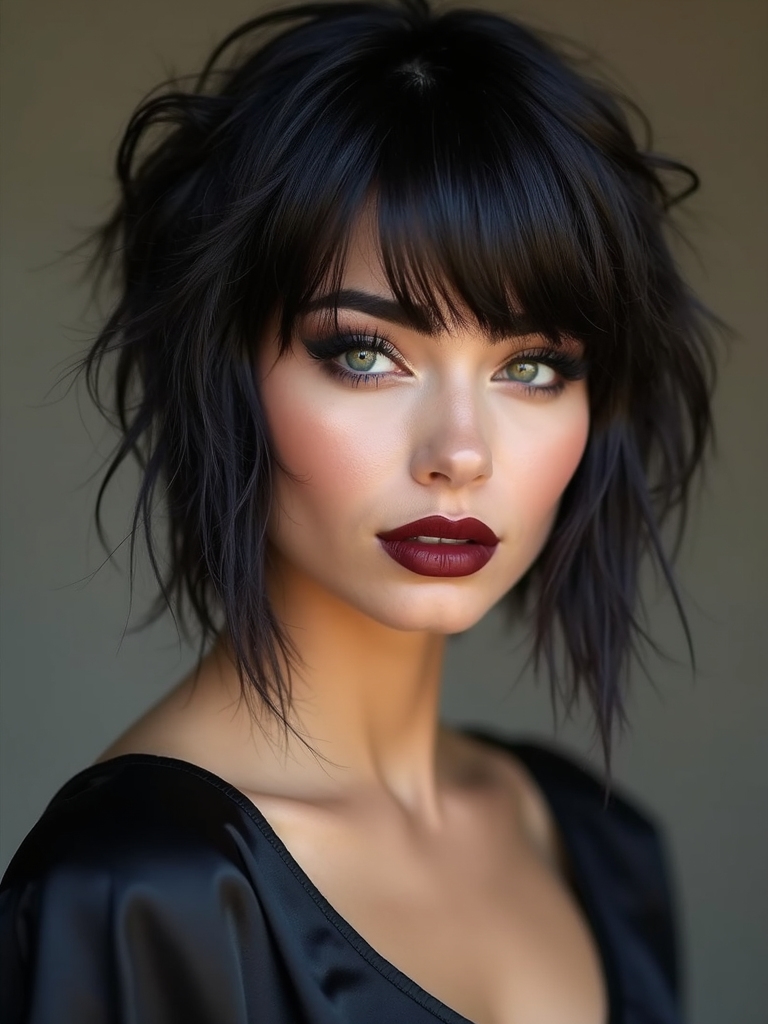
For real fashion impact, pair the wolf cut with high, blunt micro bangs. The contrast between the tiny graphic fringe and the shaggy, layered lengths makes a real statement, turning an already-bold cut into something louder. Our micro bangs guide covers the fringe on its own.
- Micro bangs grow into the eyeline fastest of any fringe length here, so plan on a bang-only trim close to every two weeks
- Suits strong, balanced features and a shorter forehead best
- Keep the bangs blunt so they read intentional against the soft layers
Debulked for Hair That Runs Thick

Thick hair can absolutely wear a wolf cut, but it needs internal debulking or the shape balloons into a heavy pyramid. A razor or careful texturizing removes weight from underneath so the crown actually lifts.
More often than not, I find the real problem is simple: thick hair that got cut like fine hair, so it looks heavy again by afternoon. Done right, a thick-haired wolf cut holds its shape for weeks with just a scrunch of product.
- Ask specifically for weight taken out from underneath, not the surface
- A razor finish suits coarse, resilient hair better than fine strands
- Holds shape longer than most cuts once the bulk is properly out
Leaning Hard Into the Mullet Side
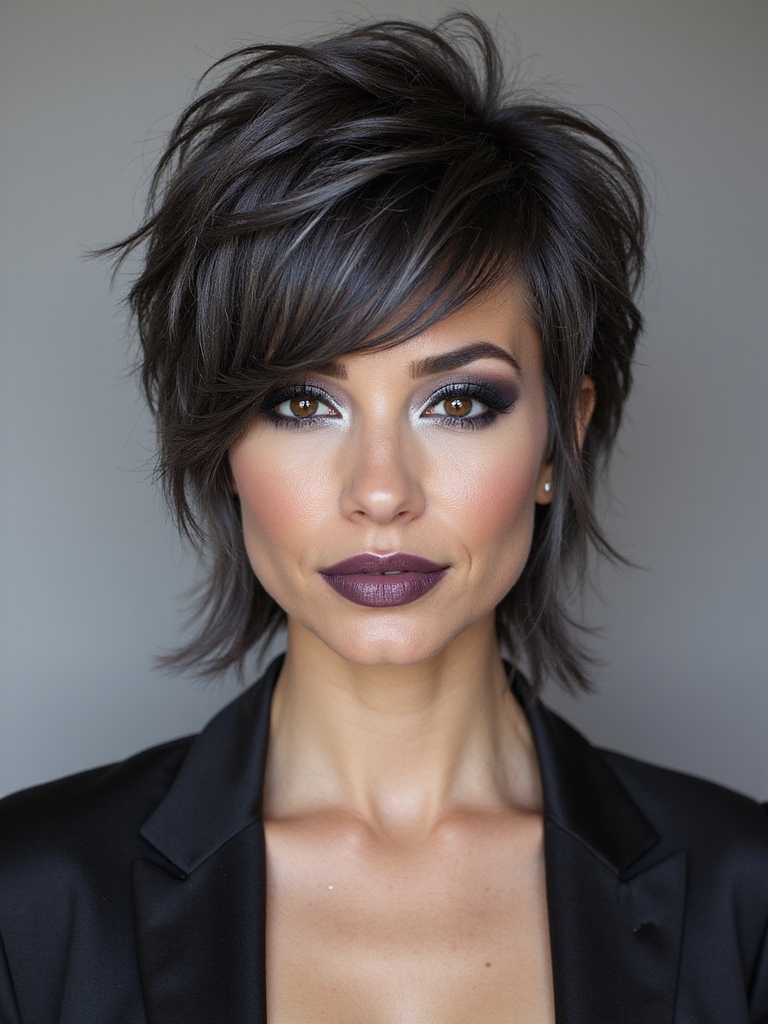
Lean the wolf cut toward its mullet roots and the result is bolder and more retro, with extra length and weight kept at the nape for real party-in-the-back energy. A textured shag fringe up front balances the longer back, keeping the whole thing feeling deliberate. Our wolf cut mullet guide goes further into this specific version.
- Extra length and weight stay concentrated at the nape
- The longer back needs its own shaping to stay sharp and defined
- The most extreme, most committed cut in the whole lineup
Bold, Contrasting Highlights Add to the Drama

Color pushes the wolf cut’s drama further, since all those layers and the crown-to-length contrast give color somewhere to actually play. Bold highlights, a money-piece around the face, or hidden color worked into the layers all read striking on this shape.
Placement matters most: concentrating brightness through the layered crown and face-framing pieces makes the texture pop, while the wispy ends catch the light on their own. Our blonde wolf cut guide has a full lightening take if you want to go further.
At Its Shaggiest, Layered Throughout

This is the wolf cut at its shaggiest, leaning hard into heavily layered, disconnected texture for the most rockstar volume. It’s all movement, with layers stacked throughout for a full mane that swings when you move.
It rewards hair with some natural body or coarseness already, since the shape relies on built-in volume more than product. Our shaggy wolf cut guide overlaps closely if you want to compare the two.
- Best on medium-to-coarse hair that holds texture on its own
- Scrunch texture spray through damp hair for the fastest styling
- The closest thing here to a classic shag, just with more height at the crown
| Hair Type | Best Fit | What to Ask For |
|---|---|---|
| Fine, straight | Feathered or bob-length cut | Soft, blended layers rather than heavy chunks |
| Thick, coarse | Debulked, razor-finished cut | Interior thinning, concentrated underneath |
| Curly, coily | Voluminous, tapered cut | Confirm shrinkage expectations up front |
A Glossy, Polished Take With Lift

For a polished, less punk mood, this glossy, bent shape is the answer. The layers are styled smooth and shiny with a soft bend at the ends and real lift at the crown.
Trading Grit for Polish
This finish leans on a full blow-dry, so it takes more morning effort, but the payoff is a sleek, editorial finish that suits dressier occasions.
Round-brush the crown up for lift, bend the ends under or out with a flat iron, and finish with a light shine serum to keep the polish without weighing anything down.
What to Actually Expect Before You Book
The catch with a wolf cut is commitment. I always walk clients through the shape-up schedule before the first cut, since that’s the part people underestimate: cost runs roughly $50-100 depending on length and your area, plus a trim every five to eight weeks for shorter cuts to keep the crown from blurring into the lengths.
Growing it out takes patience, since the short crown needs months to blend into the rest. This is a cut to choose with a clear picture of the whole in-between phase in mind.
Wolf Cut Questions People Ask
?Is a wolf cut hard to grow out?
The crown needs a light shaping trim every six to eight weeks so it doesn’t get stringy while the rest of the cut catches up in length. A middle part, bobby pins, or a soft headband are the easiest ways to style through the in-between stretch.
?Does a wolf cut suit round or square face shapes?
The crown height and face-framing layers adjust for face shape more than most cuts do. A rounder face usually looks best when the layers start a little lower and skim rather than flare at the cheek, while a square jaw can carry more volume right at the crown.
?Is there a lower-commitment way to test a wolf cut?
Ask for softer, less aggressive layering through the crown on your next regular trim instead of the full chop. It reads more like a heavily layered shag than a true wolf cut, but it gives you a sense of the movement before you commit to the shorter crown.
?Does a wolf cut work with straight hair?
Yes, though straight hair shows every layer line clearly, so the cutting has to be precise rather than heavy-handed. Expect to lean on a flat iron for bend or a diffuser on a low setting for texture, since straight strands won’t hold the crown’s lift on their own the way wavy or curly hair does.
The Same Idea, Tuned However You Want
What makes the wolf cut more than a passing trend is how much it flexes. The same core idea, a voluminous crown dropping into wispy length, reads full punk on a cropped pixie or soft and editorial on a long, glossy finish.
Bring a photo that matches where you actually land on texture, length, and finish, and talk through the grow-out plan with your stylist before the first cut, not after.
Don’t Miss These