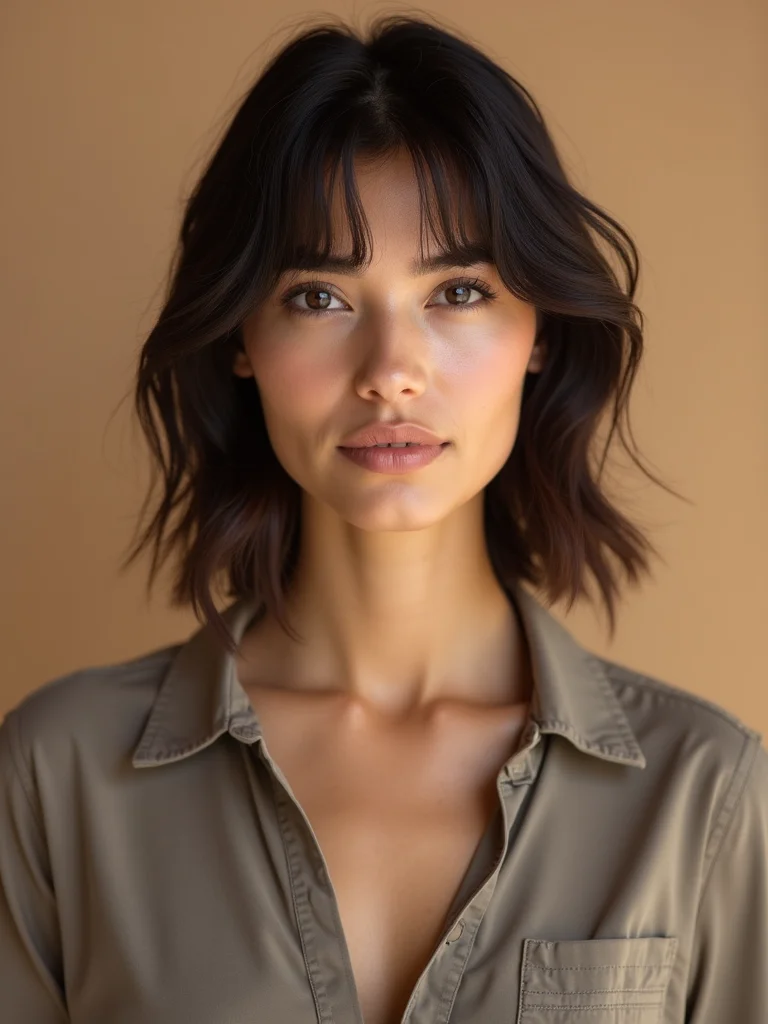
Most women who ask for bangs are trying to hide something: a forehead, a feature they’d rather not draw attention to. Face-framing bangs work the opposite way. Done well, they pull the eye exactly where you want it, softening a jaw or lifting a cheekbone instead of covering anything up.
The catch is that face-framing bangs aren’t one style. Curtain, wispy, micro, side-swept, and bottleneck all frame the face differently, and each one suits a different shape and texture, with the softer versions being what’s actually getting requested right now. Fifteen versions follow, with the honest trade-off behind each one.
The Decision Tree for Choosing
- Start with your face shape and what you actually want the bangs to do: soften, lengthen, or add fullness.
- Match the bang type to that goal, not to a photo alone.
- Factor your hair texture in before the cut, especially if it’s curly or very fine.
- Budget real daily styling time. The two-minute routine after the cut matters more than the cut itself.
Matching the Frame to Your Face Shape
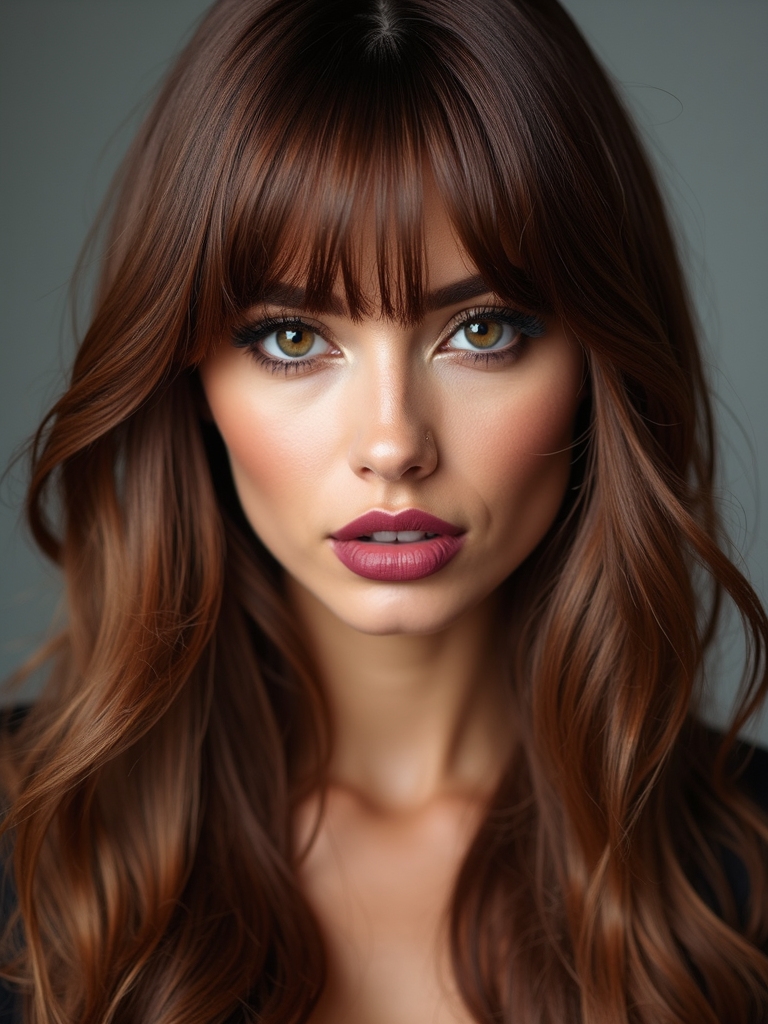
Face-framing bangs draw the eye to your best features on purpose. The goal is flattery, not concealment, so the face shape and hair texture you’re working with should decide the type more than a trend does.
In a square jaw, softness does the work; in a round face, length and an angle do it instead. The map below is the one I actually use in the chair. For a deeper dive on one shape, see bangs for round face or bangs for oval face.
- Round face: longer, side-swept or curtain bangs add length and a vertical line.
- Long face: a fuller, blunter fringe shortens and balances things out.
- Square face: soft, wispy, or curtain bangs round off a strong jawline.
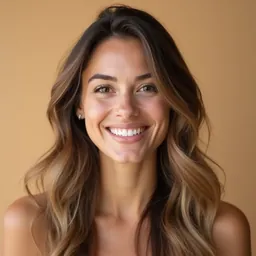
Curtain Bangs for Balanced Framing
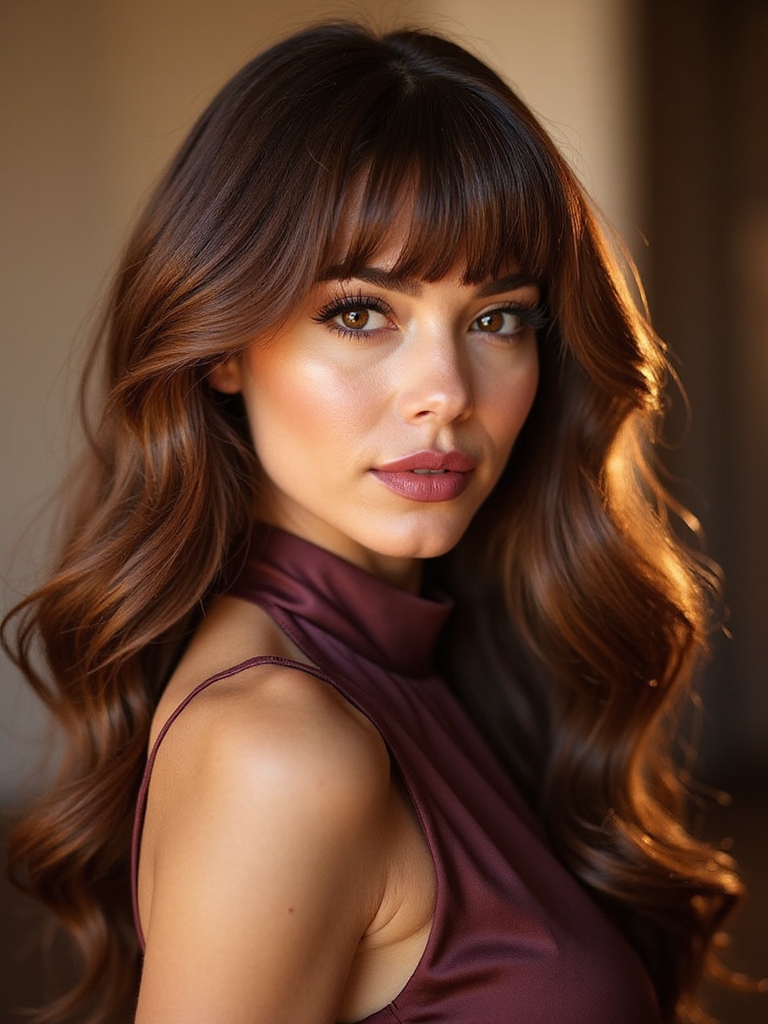
Curtain bangs are the most universally flattering face-framing style, which is exactly why they’ve stuck around this long. They part in the middle and sweep open to each side, skimming the cheekbones and framing the face symmetrically.
Why Curtain Bangs Suit Nearly Everyone
Almost every face shape can wear them, which is rare for a fringe of any kind.
They’re also the most forgiving to grow out, since they blend straight into surrounding layers as they lengthen instead of leaving an obvious line. That low-stress grow-out is half the appeal.
🅰️Curtain Bangs
Open wide from a center part, skimming both cheekbones. The most universally flattering, least defined shape.
🅱️Bottleneck Bangs
Rounds inward at the center before flaring at the sides. More defined and a touch more structured to style.
Bottleneck Bangs, Soft and Modern
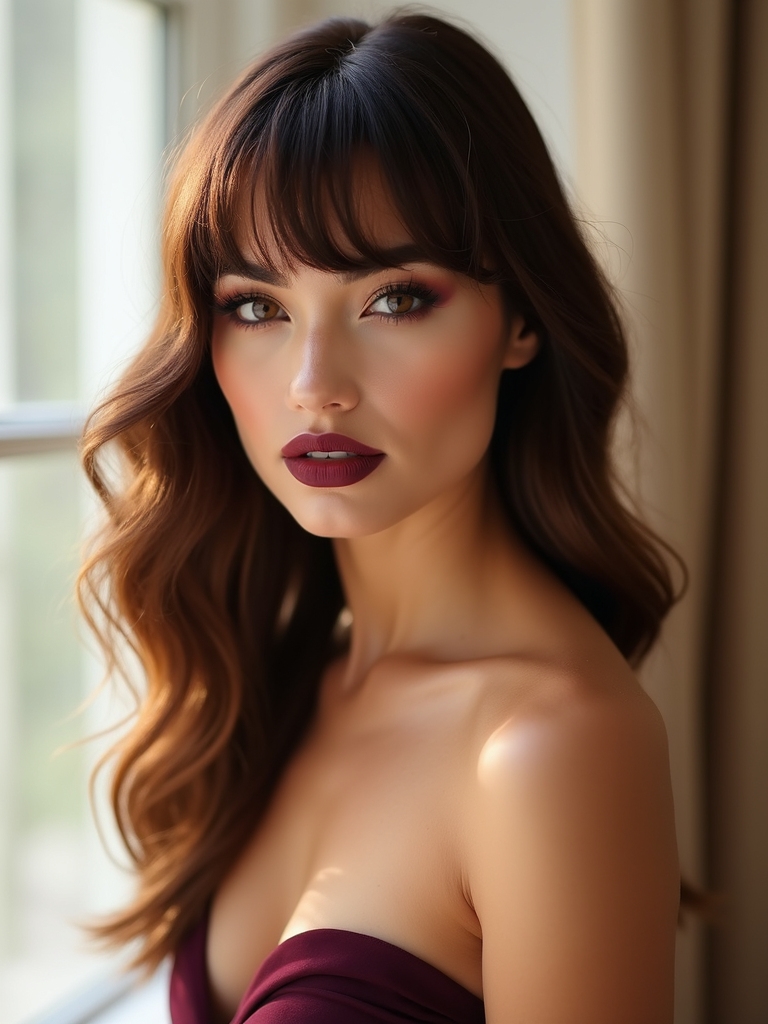
Bottleneck bangs are the modern cousin of the curtain, named for their shape: shorter and rounded through the center, tapering longer at the sides like the neck of a bottle.
They frame a little more closely than a curtain does, still soft but more defined, drawing gently inward toward the eyes rather than opening wide across the face.
They suit someone who wants more shape than a curtain gives without committing to a full blunt fringe, and they take a touch more daily styling to keep that inward curve looking deliberate.
A Side-Swept Contour Across the Forehead
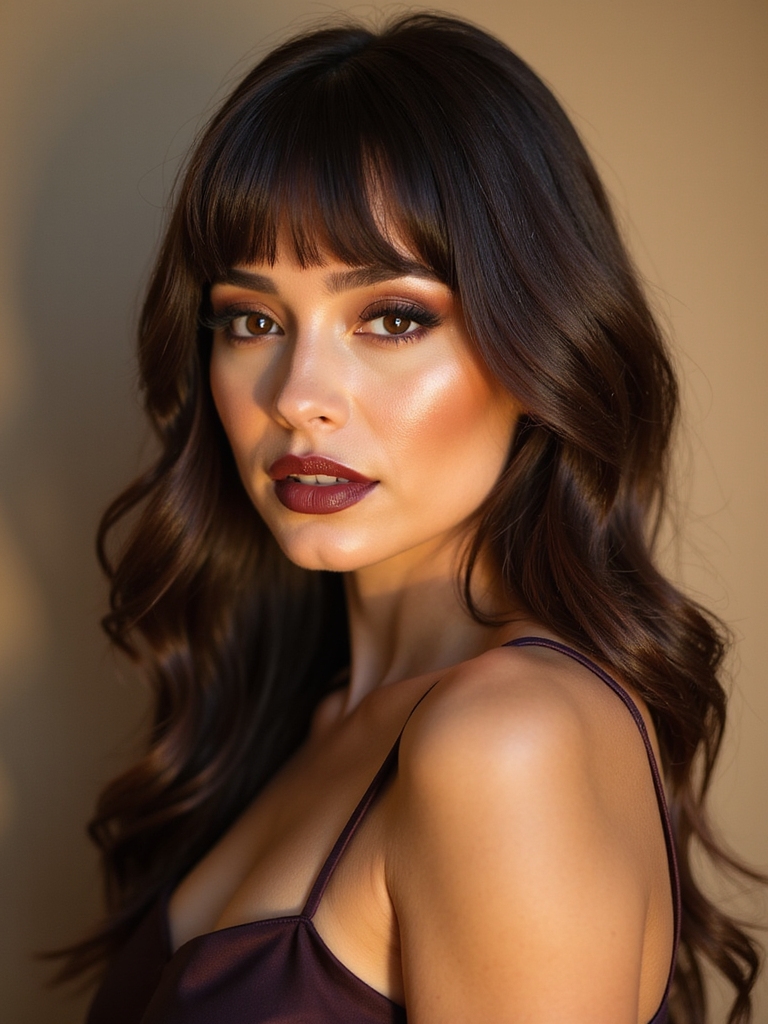
Side-swept bangs sweep across the forehead on a diagonal, and they’re the gentlest, lowest-commitment way to frame the face. The angled line softens a round or square shape without a blunt edge to maintain.
This is the pick for anyone bang-curious but not fully ready to commit. There’s no hard line to grow out, so a false start costs you almost nothing.
A Wispy Fringe With Airy Movement
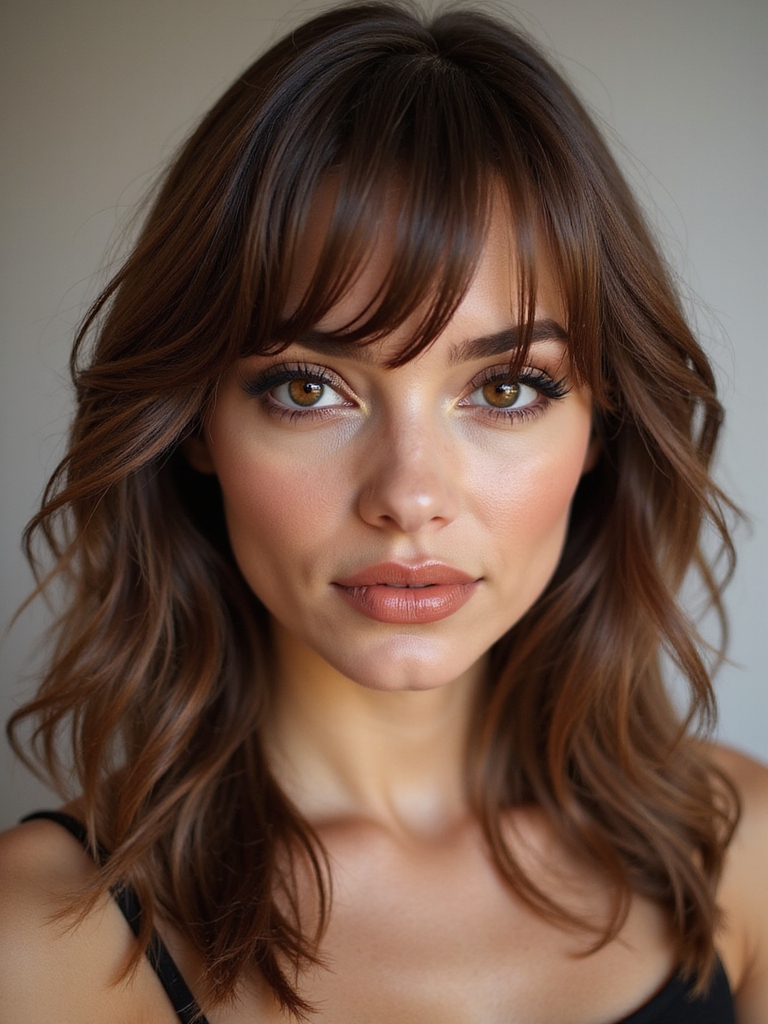
A wispy fringe is sheer and feathered, with deliberate gaps that let the forehead peek through. It’s the lightest fringe to live with day to day, and it suits delicate features or anyone nervous about a heavy bang.
- Ask for a sheer, point-cut fringe with built-in gaps, not one solid line.
- Style with a small amount of light cream. Heavy product kills the airy effect.
- A slightly longer version works best on a rounder face.
Blunt Micro Bangs for Bold Focus
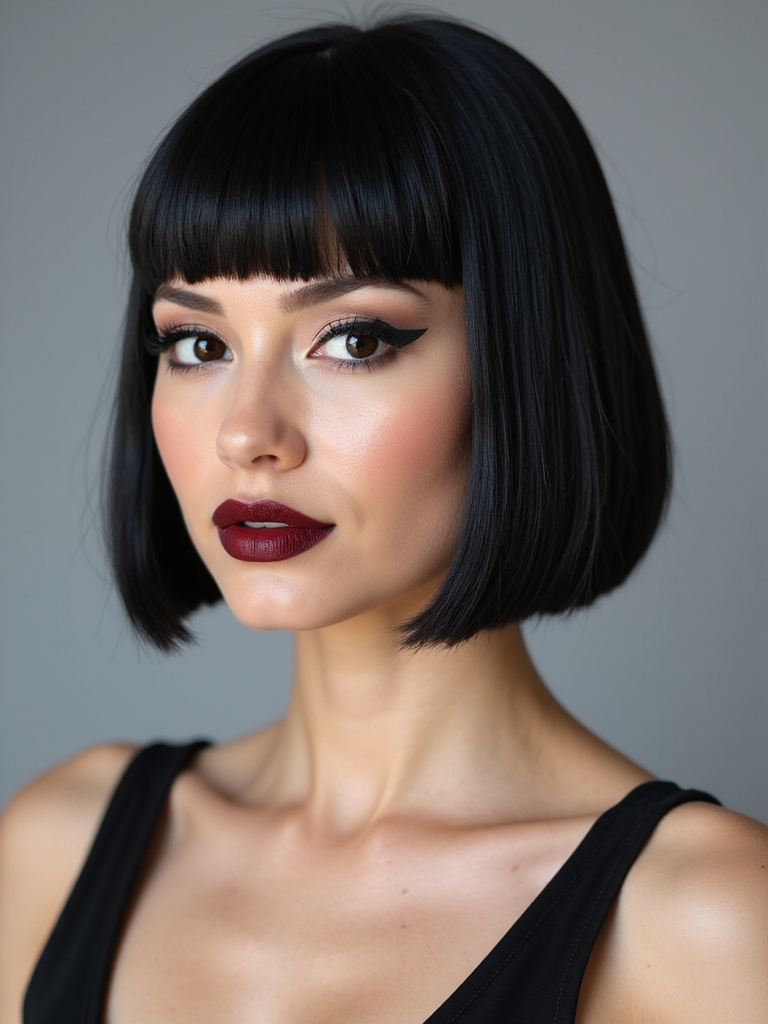
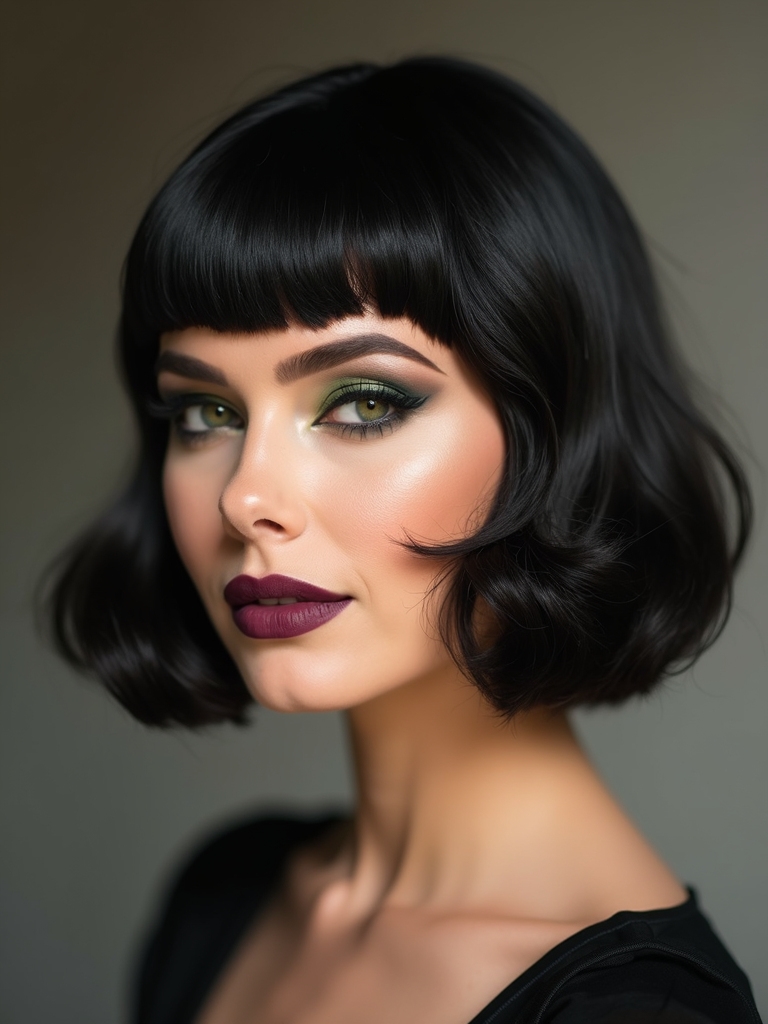
At the boldest end, blunt micro bangs sit high on the forehead in a sharp, straight line, drawing every eye straight to the brows. This one is a fashion statement more than a subtle frame.
- Suits a balanced forehead and strong features that can carry the drama.
- Demands the shortest trim cycle of any version on this list, since the line blurs fast as it grows into the eyeline.
- Holds its crispness best on straight to lightly wavy hair.
ℹ️A Bang by Any Other Name
A true fringe crosses the forehead and frames it closely; a face-framing layer, by contrast, is cut to fall around the face without ever crossing it. Both get called bangs in casual conversation, but they’re cut completely differently.
Long Layers as a Fringe-Free Frame
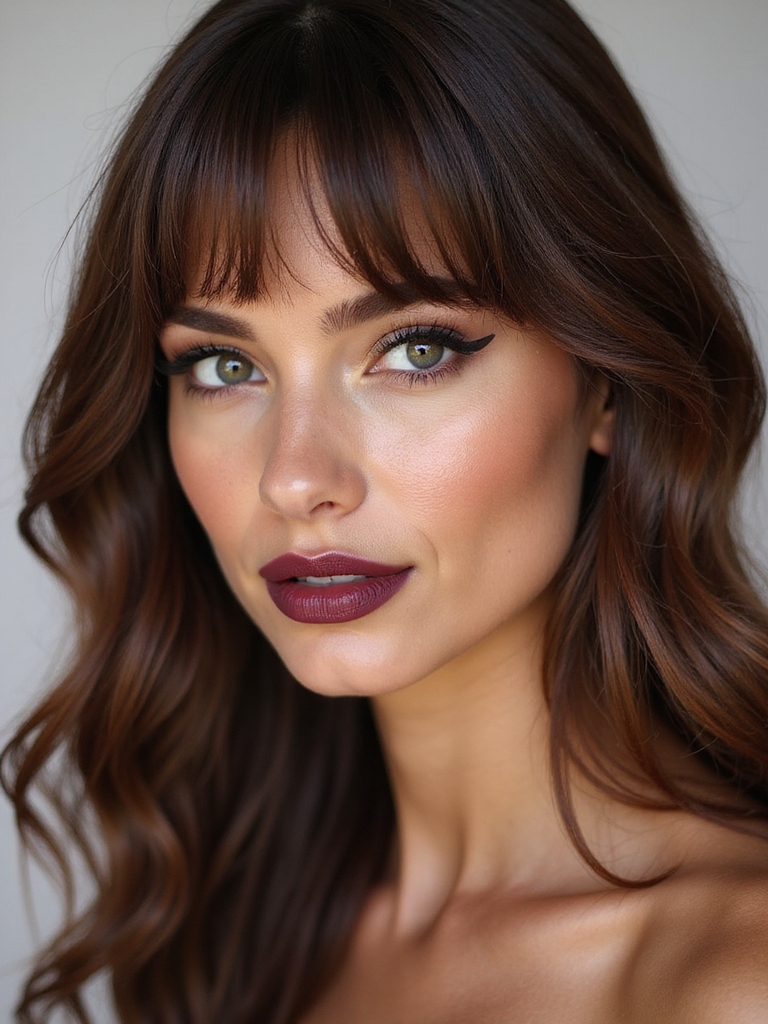
Not everyone wants an actual fringe, and long face-framing layers are the answer for that. These are pieces cut shorter around the face, starting at the cheekbone or jaw, that frame your features without ever crossing the forehead. For more on this exact approach, see long layered haircuts with face framing.
You get most of the flattery a fringe offers and skip nearly all the upkeep. It’s the easiest yes on this whole list.
They grow out with zero awkward phase and tuck behind the ears the moment you want them gone, which makes this the lowest-risk option here for anyone who loves their forehead as it is.
Textured Framing for Wavy and Curly Hair
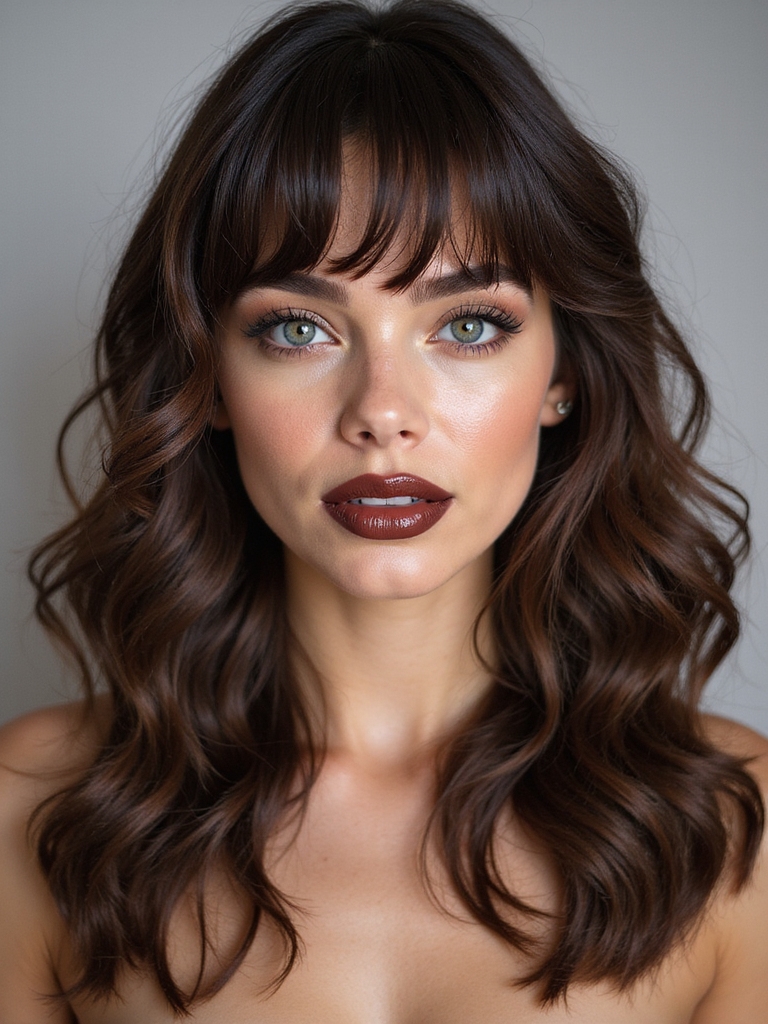
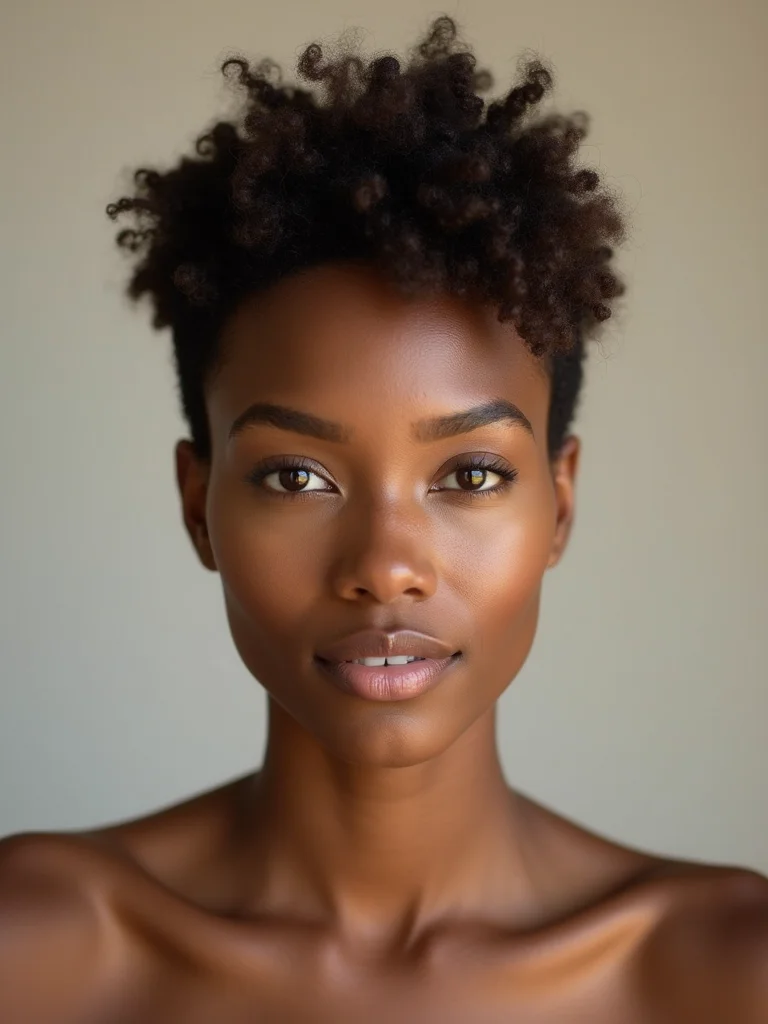
Curly and wavy hair can absolutely wear face-framing bangs, but cutting them is a different skill than cutting a straight fringe. Our guide on wavy hair paired with a curtain fringe goes deeper into the technique.
By week three after a wet-cut curly fringe, the shrinkage usually shows: bangs cut wet spring up shorter than planned once dry. A stylist who cuts curl dry, on the pattern as it actually sits, avoids that guesswork entirely.
Not sure which frame fits your curl pattern? Start here:
🎯Loose waves
A curtain or wispy shape lets the wave fall naturally into the part.
🎯Tighter curls or coils
A rounder, slightly longer shape leaves room for shrinkage once it’s dry.
Building Volume Into Fine Hair
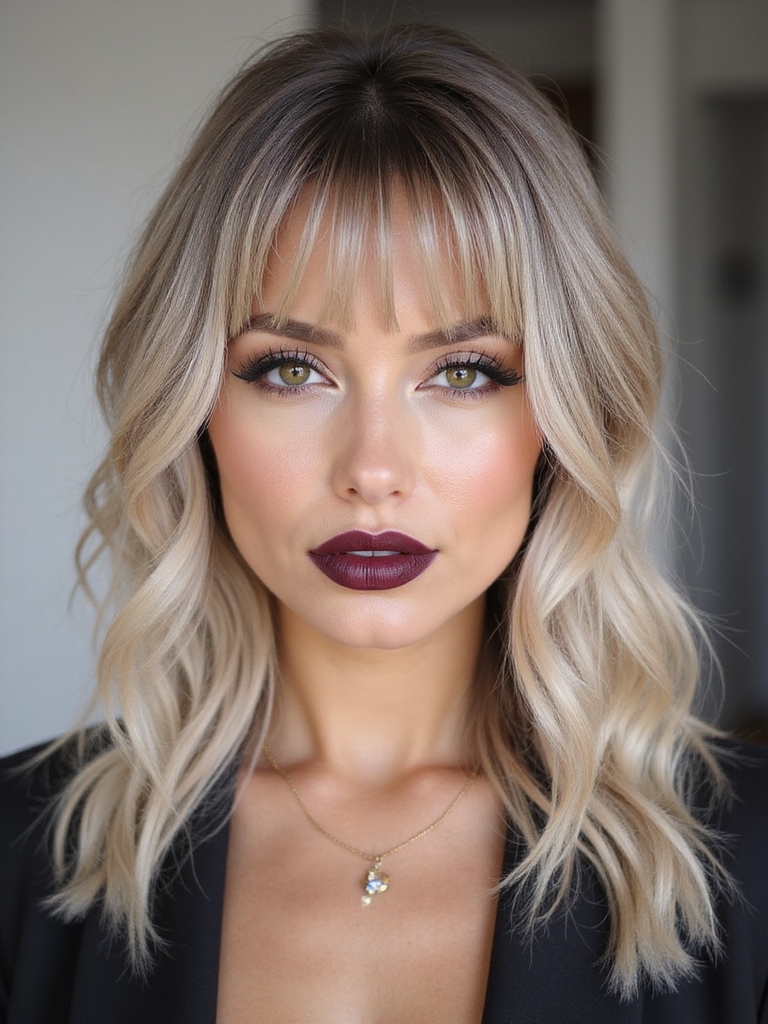
Fine hair and face-framing bangs turn out to be a quiet success story. A soft, slightly piecey fringe makes fine hair look denser around the face, since the concentrated pieces read as fullness rather than a scattering of single strands.
Building Body Without Thinning It Out
The frame pulls the eye toward your features while doing that work almost invisibly.
Restraint in the cut matters most here. Over-thinning a fine fringe leaves it stringy fast, so soft layering for movement, not aggressive thinning, is what actually builds the look of body.
Reducing Bulk in Thick Hair
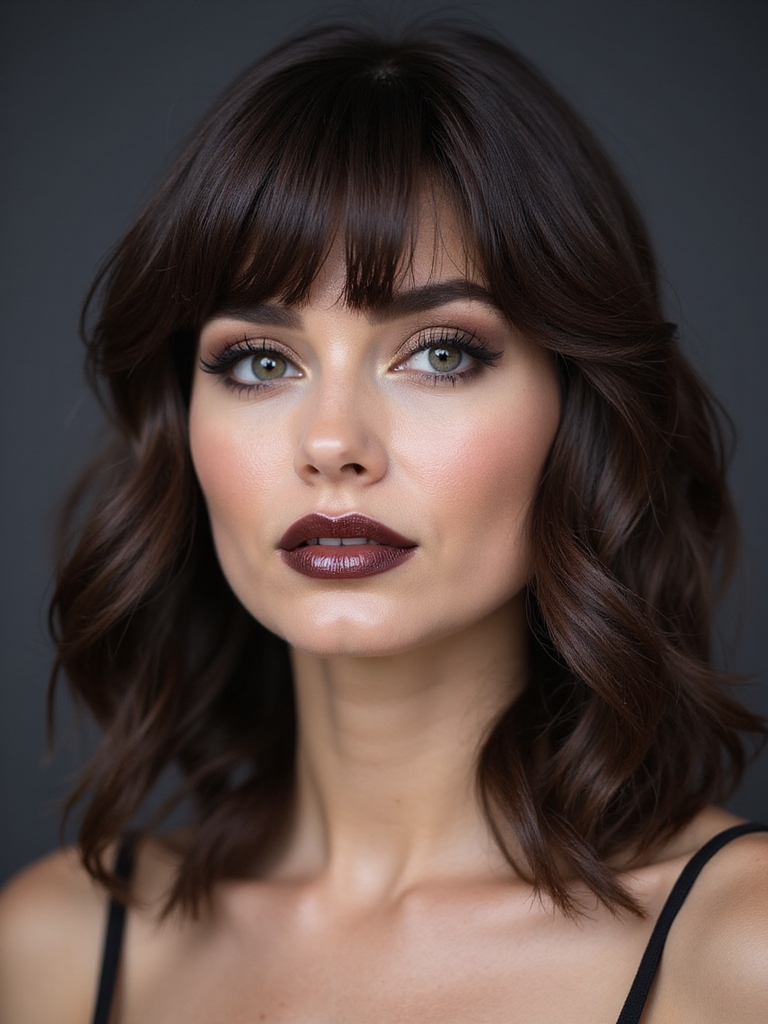
Thick hair makes a lush, full fringe possible, but it needs careful interior debulking so the bangs move instead of sitting like a heavy curtain across the forehead.
A skilled stylist removes interior weight while keeping the surface line intact, so the finished fringe falls soft even on the densest hair.
- Ask specifically for interior debulking or point-cutting, not just a straight blunt line.
- A longer curtain or side-swept shape carries thickness better than a micro fringe would.
- Plan on extra blow-dry time, since thick bangs hold their own shape stubbornly.
Getting a thick fringe to move instead of sit heavy:
1Debulk first
Interior weight comes out before the surface line is ever touched.
2Point-cut the ends
Breaks up the blunt edge so it doesn’t read as one solid block.
3Style with light product only
Anything heavy collapses the movement the debulking just created.
Everyday Tools for Styling Your Bangs
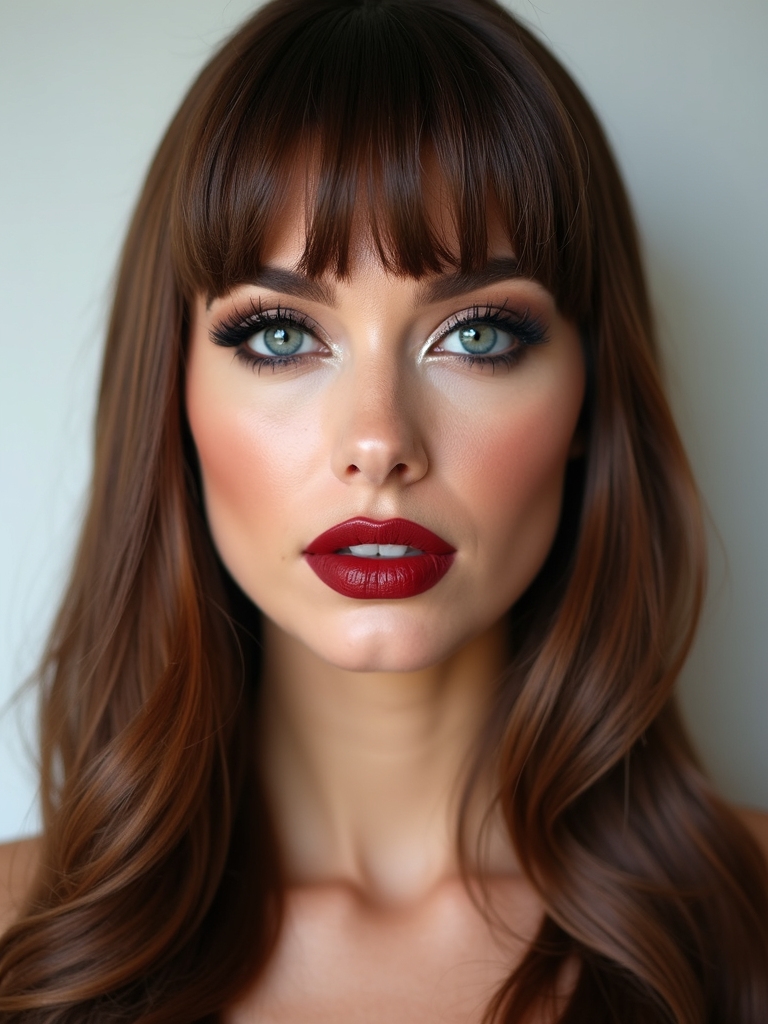
Most bang complaints trace back to styling, not the cut itself. A two-minute routine keeps any fringe sitting where you actually want it, and it rarely needs more than a small round brush and a little heat.
- Dry the fringe first, while it’s still the wettest section, to set the shape before it dries on its own.
- Direct it side to side while drying so it doesn’t set into one flat block.
- Finish with a touch of light cream, or a cool shot from the dryer to lock it in place.
Low-Maintenance Trims and Grow-Out
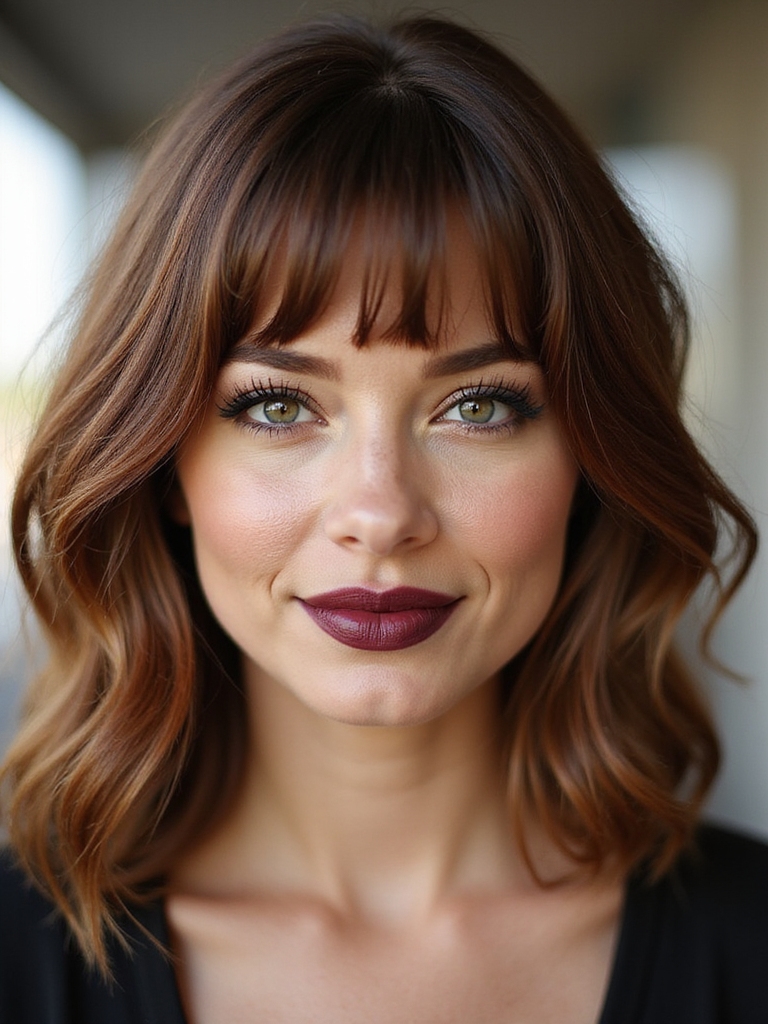
The cut itself is the cheap part of bangs; the ongoing upkeep is the real commitment. A quick fringe-only trim between full appointments usually runs $10 to $20 if it’s not already included free, and it’s worth asking your salon which way theirs works.
When you’re ready to grow a fringe out, choose a soft type first. Curtain or side-swept blend into layers as they lengthen, which is a lot less painful than growing out something blunt.
- Pin or tuck the in-between length back rather than cutting again out of frustration.
- A grown-out fringe in the eyes is the single most common reason people regret bangs.
- Ask your stylist for a soft, angled trim during the grow-out, not a straight-across one.
Color Placement That Lifts the Frame
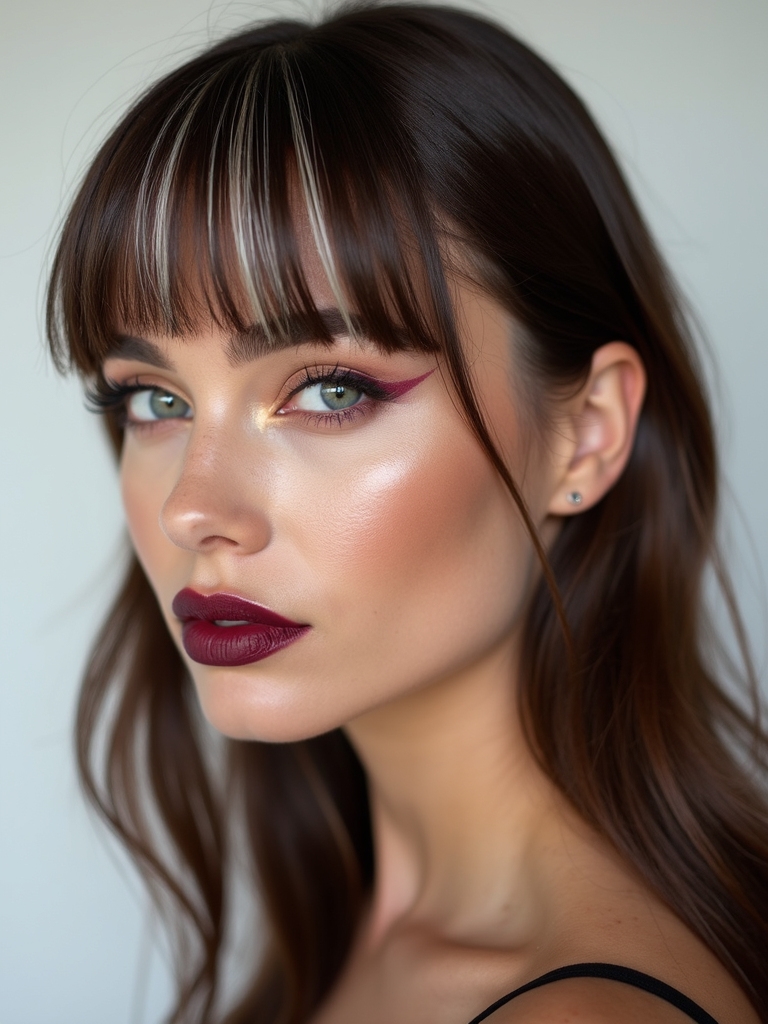
A few brighter pieces placed strategically around the face act like contour, drawing light exactly where a fringe already draws attention.
- Place the brightest pieces at the front of the fringe and immediately around the face.
- Keep the lift subtle for a sun-touched glow, or go bolder for a more graphic frame.
- Match warm tones to warm skin and cool tones to cool skin for the most flattering result.
Bangs That Work With Glasses
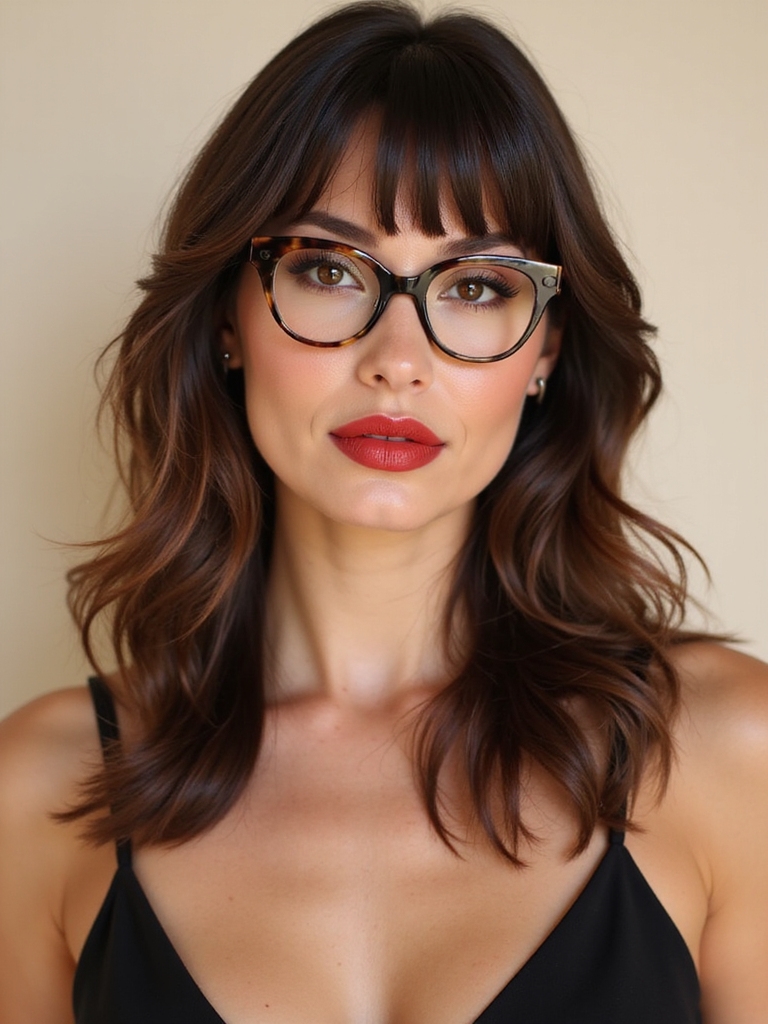
Wearing glasses means the fringe has to share space with the frames, and the wrong length means bangs constantly catching on them.
The fix is a length cut to sit just above or just below the top of the frames, never right at the rim where it bunches and smudges the lenses. Soft, longer styles like curtain or side-swept bangs part around glasses more cleanly than a blunt micro fringe ever could.
A Glossy, Frizz-Free Finish
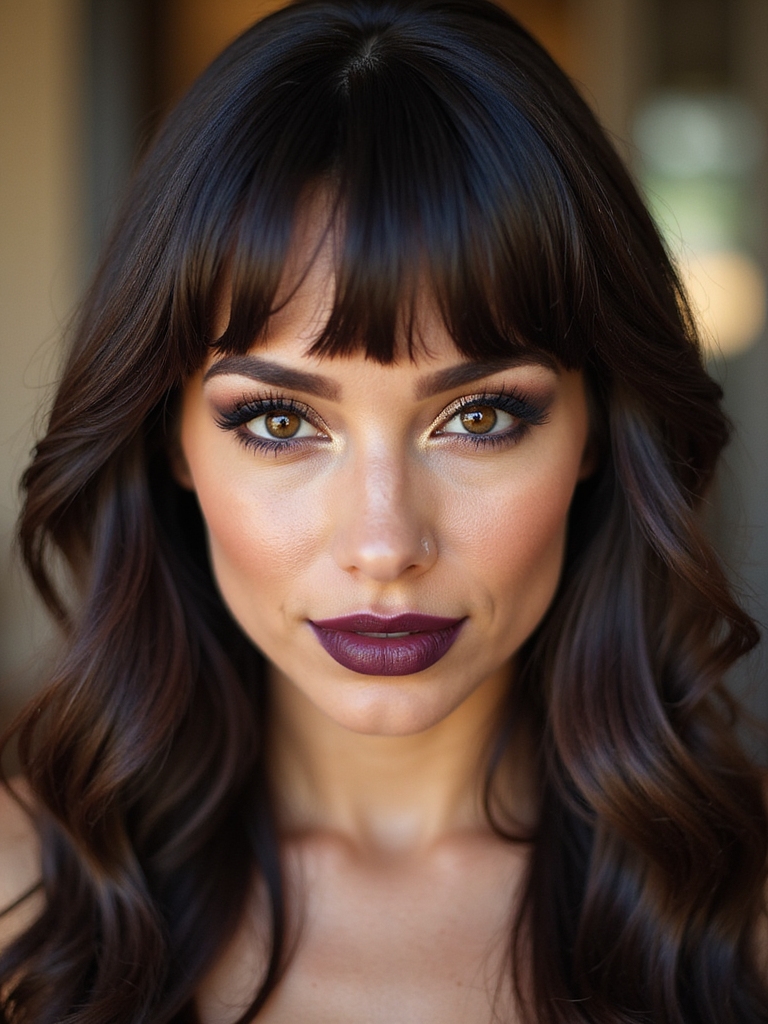
A fringe sitting flat against the forehead picks up oil and frizz faster than the rest of the hair, simply from constant contact with skin.
A small amount of serum smoothed over the surface, or a quick cool shot from the dryer, keeps it smooth through a humid day. Keeping dry shampoo on hand specifically for the fringe can buy an extra day between full washes.
Styling Tips
Walking into an appointment able to describe what you want is the difference between loving your bangs and regretting them within a week. Bring two or three reference photos, name the type if you know it (curtain, wispy, side-swept, micro), and be upfront about how much daily styling time you’re realistically willing to spend.
Tell your stylist what you want the bangs to do (soften a jaw, add fullness, brighten the eyes), since that goal shapes the cut more than any photo does. If you wear glasses, bring them to the appointment. For more on pairing bangs with layers specifically, see face-framing layers with bangs.
Face-Framing Bang Questions Worth Asking
?What’s the actual difference between a true fringe and face-framing layers?
A true fringe crosses the forehead; face-framing layers are cut shorter around the face but stop at the cheekbone or jaw without ever crossing it. Both get called bangs casually, but the cut and the upkeep are completely different.
?Can face-framing bangs work with curly or coily hair?
Yes, but they need to be cut dry, on the natural pattern, by a stylist comfortable with textured hair. Cut wet, curls shrink up shorter than planned once they dry, and the frame ends up sitting higher than intended.
?How do I know if I’ll actually keep up with the styling?
Be honest about your current routine first. If you already blow-dry daily, any of these work. If you’re mostly wash-and-go, start with curtain or side-swept bangs, since both air-dry into a reasonable shape without much intervention.
Frame the Face You Actually Have
The best face-framing bangs were never the ones trending this month. They’re the ones cut to match your face shape, suit your texture, and fit the time you’re realistically willing to spend styling them.
Curtain for almost everyone, wispy for the nervous, micro for the bold, long layers for anyone commitment-shy: there’s a version here for every face. Decide what you actually want the bangs to do first, then match the type to your texture. For a side-parted take on the classic, see curtain bangs with a side part.
More Ideas Here