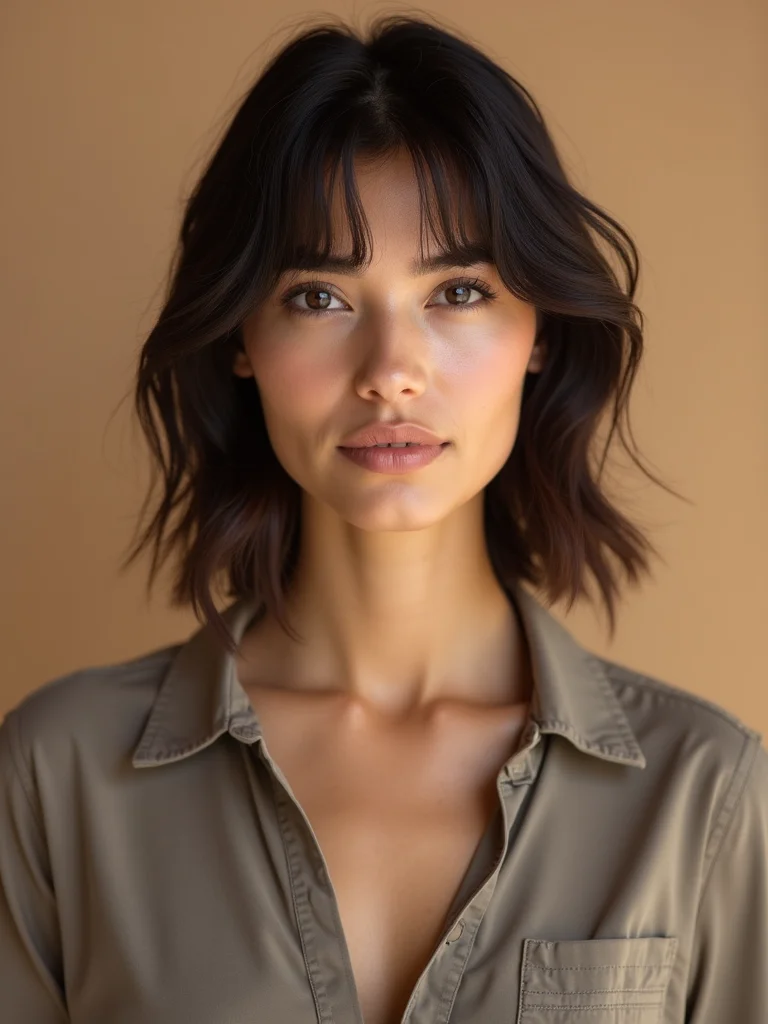
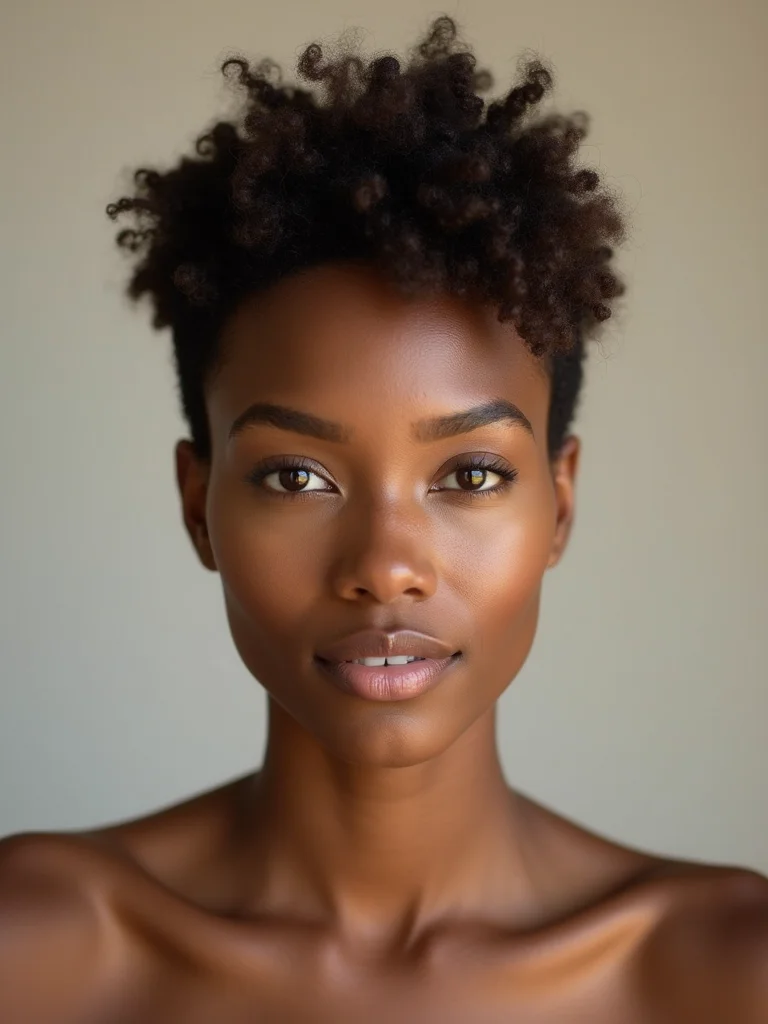
You sit back, the last inch of fringe falls to the floor, and the mirror spins around: the same bob, but the whole face looks different now. A bob cut with bangs changes more about a haircut than almost any other single decision, because the fringe sits right at eye level.
Not every bangs style transforms a bob the same way, though. A blunt fringe on a blunt bob doubles down on sharp lines; a wispy one on a soft bob barely registers as a change at all. Fifteen pairings below, sorted by what actually changes once the cut is done.
What Changes When You Add Bangs
- Sharp bobs (blunt, glass, micro) take bold fringes best; soft bobs (French, layered, wavy) take airy, wispy ones.
- Curtain and side-swept bangs grow out with the least drama; a full blunt fringe or baby bangs ask for the most upkeep.
- Curly bangs, like the rest of a curly bob, have to be shaped dry to land at the length actually asked for.
Blunt Bob With Full Fringe
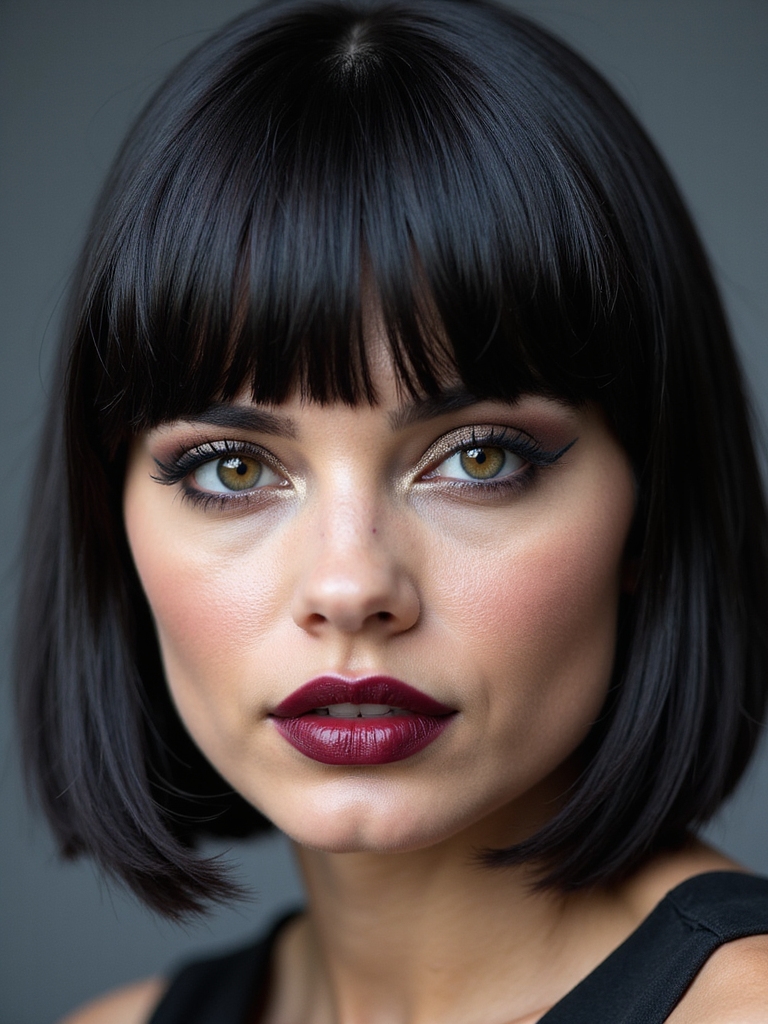
Expect the boldest transformation on this list. A blunt bob’s clean edge and a full fringe’s straight-across weight are the same graphic idea repeated twice, so the pairing comes across as one deliberate, high-impact statement.
It works best on straighter, medium-to-thick hair and longer face shapes; fine or wavy texture can make the fringe separate down the middle. It’s also the highest-upkeep fringe here, needing its own trim inside a month to stay sharp.
French Bob With Wispy Bangs
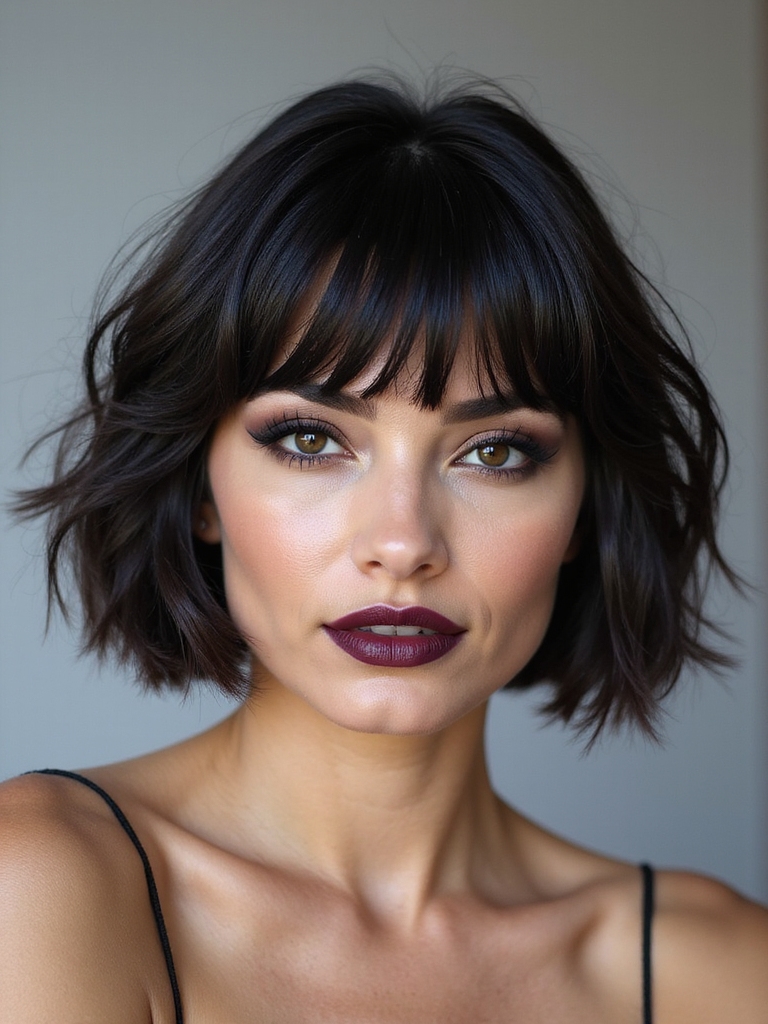
If the pairing above is sharp, this one is its quiet opposite. A French bob already leans undone, so a heavy fringe would fight it; wispy, see-through bangs that brush the brow keep the same soft, unfinished energy going.
Almost no added effort shows up here. A rough dry with fingers styles both the bob and the fringe at once, and the wispy pieces grow out into face-framing lengths without needing an obvious trim first.
- Flatters nearly every face shape, softness with no added weight
- Grows out gracefully with no obvious in-between stage
- Pairs with minimal daily styling
Textured Bob With Curtain Bangs
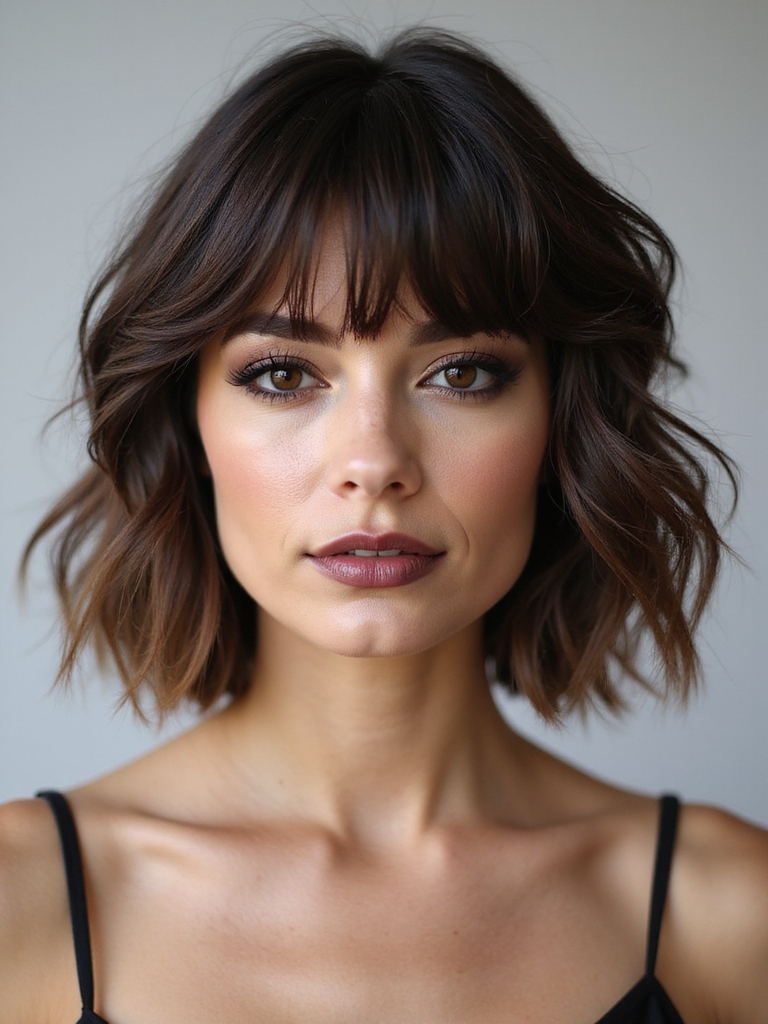
Curtain bangs part in the middle and sweep open on both sides, and on a textured bob they melt straight into the existing layers.
This is the fringe that flatters the widest range of face shapes and grows out with almost no awkward phase, since there’s no hard line marking where the bangs end and the length begins. Pin it back on days the forehead needs air; it holds the shape either way.
- Widest face-shape range of any fringe on this list
- Grows softly into face-framing pieces over time
- Pins back easily for a bangs-free day
Quick check before booking curtain bangs:
1Do you part your hair down the middle most days already?
That’s the easiest starting point for curtain bangs.
2Would pinning bangs back sometimes be fine instead of trimming right away?
If yes, curtain bangs are the most forgiving fringe to grow with.
Angled Bob With Side-Swept Bangs
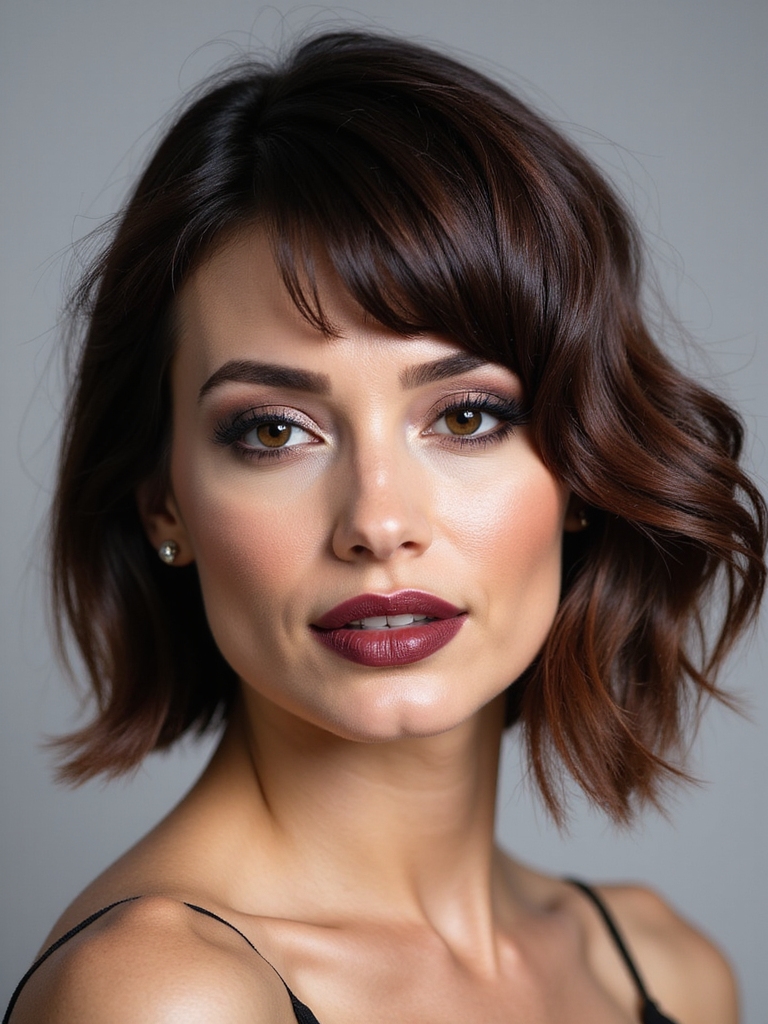
An angled bob already runs longer toward the front, and side-swept bangs follow that same diagonal, so the two lines reinforce each other into one sweeping shape. The effect shows up most on round or square faces, where the diagonal pulls the eye across the face.
- Sweep the bangs toward the deeper-parted side, not the shallow one
- A round-brush blow-dry keeps the sweep and the angle working together
- Softer on the forehead than a straight-across fringe
Soft Layered Bob With Airy Fringe
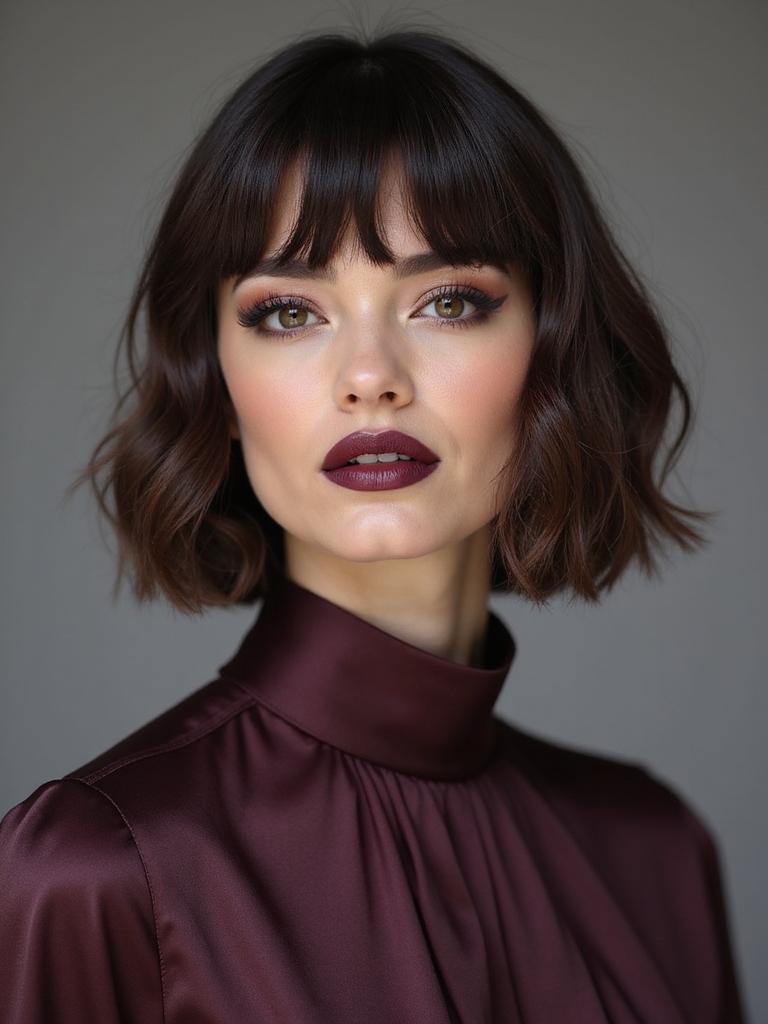
A layered bob is built around movement, so it calls for a fringe with the same lightness. An airy, feathered fringe with soft, separated ends blends straight into the surrounding layers.
The whole look feels younger and less styled than a blunt pairing would, and fine hair benefits most: the feathering fakes a sense of movement that a heavier fringe would just weigh down.
- Best on fine to medium hair
- Feathered ends should blend, not sit as a separate block
- Looks soft and undone throughout
Micro Bob With Baby Bangs
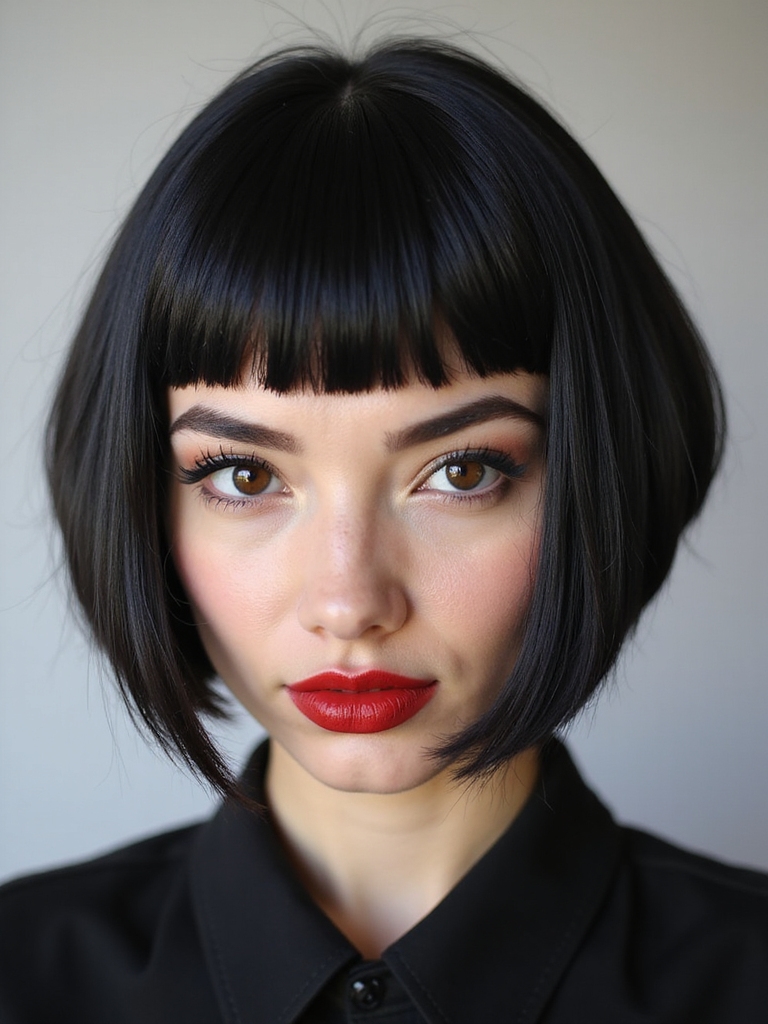
This is the most daring pairing on the list: a cropped micro bob with baby bangs cut high above the brow. It’s a full commitment to being seen.
Baby bangs grow out slowly and visibly, landing mid-forehead within weeks in a way that’s hard to disguise, so this pairing rewards someone fully committed. It suits strong features and an even hairline best.
- The highest-commitment pairing on this list
- Best on strong features and an even, symmetrical hairline
- Grow-out shows fast; there’s no quietly waiting it out
Wavy Bob With Tousled Bangs
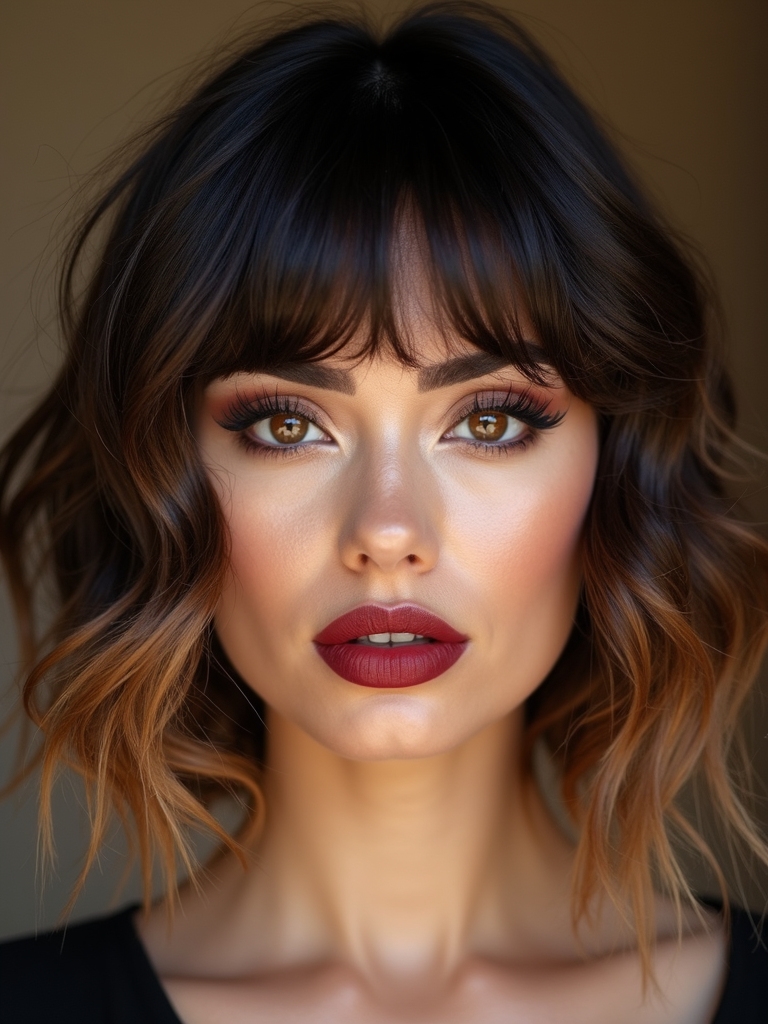
A wavy bob already carries relaxed, beachy texture, so a tousled, broken-in fringe matches that energy.
Letting the Wave Do the Work
The bangs pick up the same bend as the rest of the hair, worn a little undone. This is the most forgiving fringe here for anyone who dreads the grow-out stage, since the wave itself disguises extra length.
A texturizing spray worked through damp bangs, then left to air-dry alongside the rest of the wave, is usually the entire routine. No flat iron, no round brush, no separate step.
Chin-Length Bob With Piecey Fringe
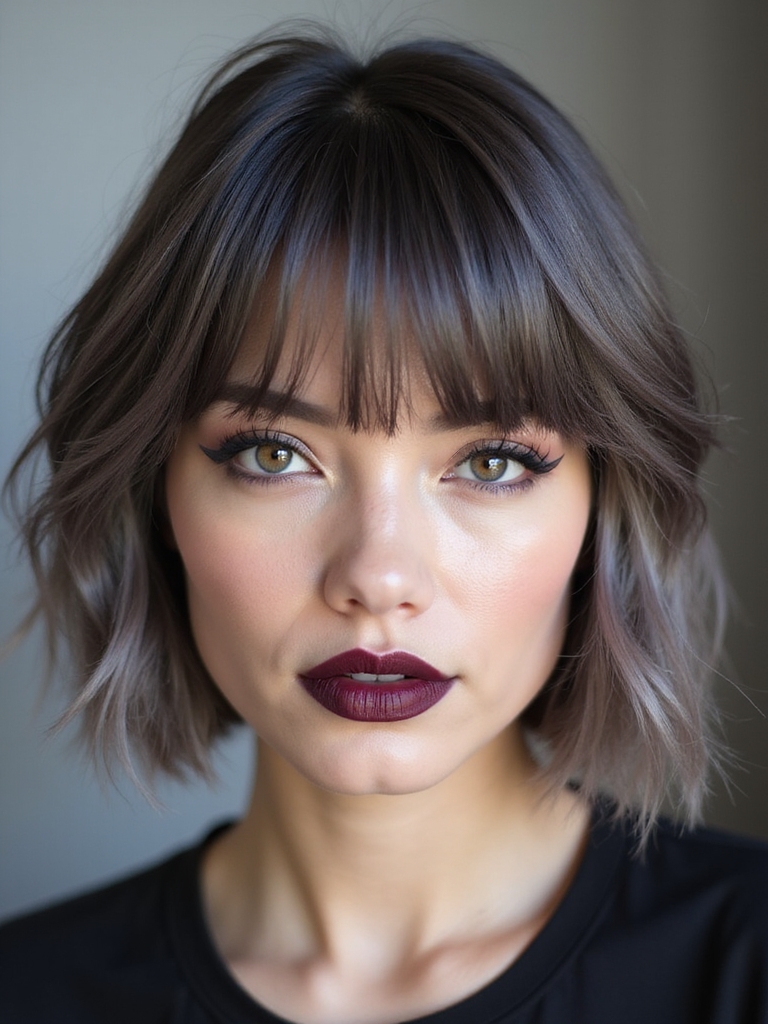
A chin-length bob has a crisp, defined shape, and a piecey fringe softens that edge with broken, separated texture. The contrast is the whole appeal here: clean bob, textured fringe. Even a single overgrown week barely shows, since the separated pieces already look loosely finished rather than freshly cut.
- Ask for the fringe to be point-cut into separated pieces
- Work a small amount of texture paste through dry bangs for separation
- Suits most face shapes since the broken pieces frame without full coverage
💡Piecey Fringe Upkeep
A piecey fringe hides a slightly overdue trim better than a blunt one does, since the separated ends already look intentionally undone rather than simply grown out.
Shoulder-Grazing Lob With Bottleneck Bangs
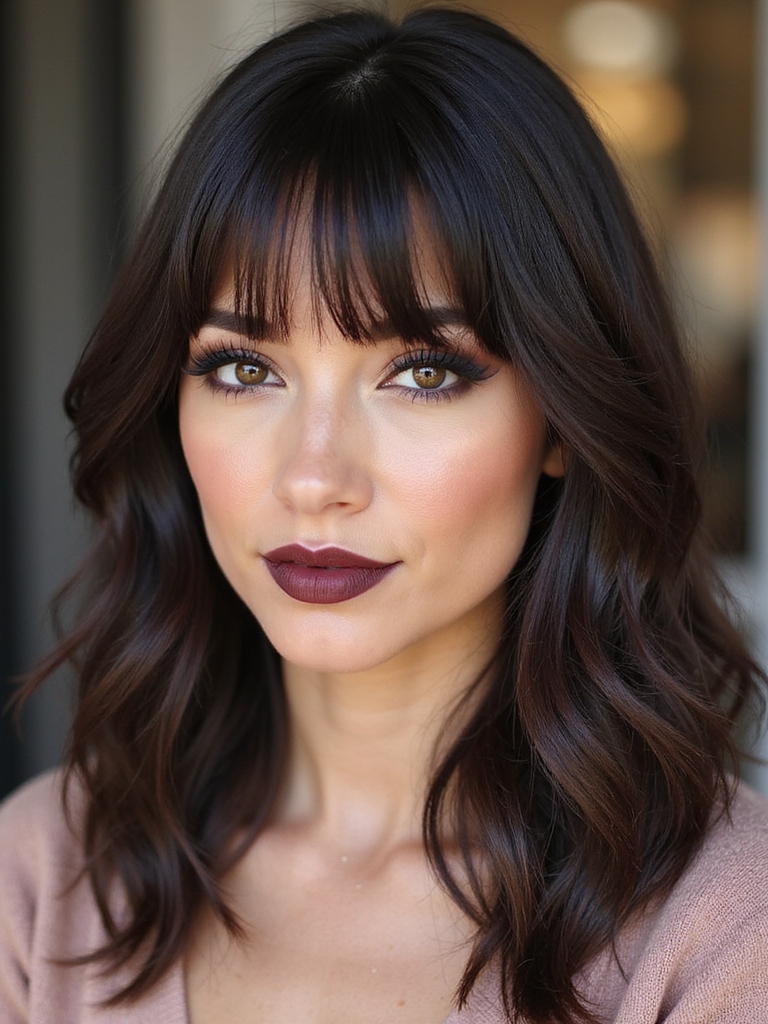
Bottleneck bangs sit shorter and rounder in the center, like a curtain fringe, then lengthen quickly into face-framing pieces at the sides. On a shoulder-grazing lob, that shape bridges the fringe and the length into one continuous frame.
This is easily the gentlest way to try bangs for the first time on longer hair, since most of what looks like fringe is really just face-framing length. There’s very little true forehead coverage to commit to.
Curl the center section back softly and let the sides fall along the cheeks, and the shape does most of the styling work on its own.
Curly Bob With Shaped Bangs
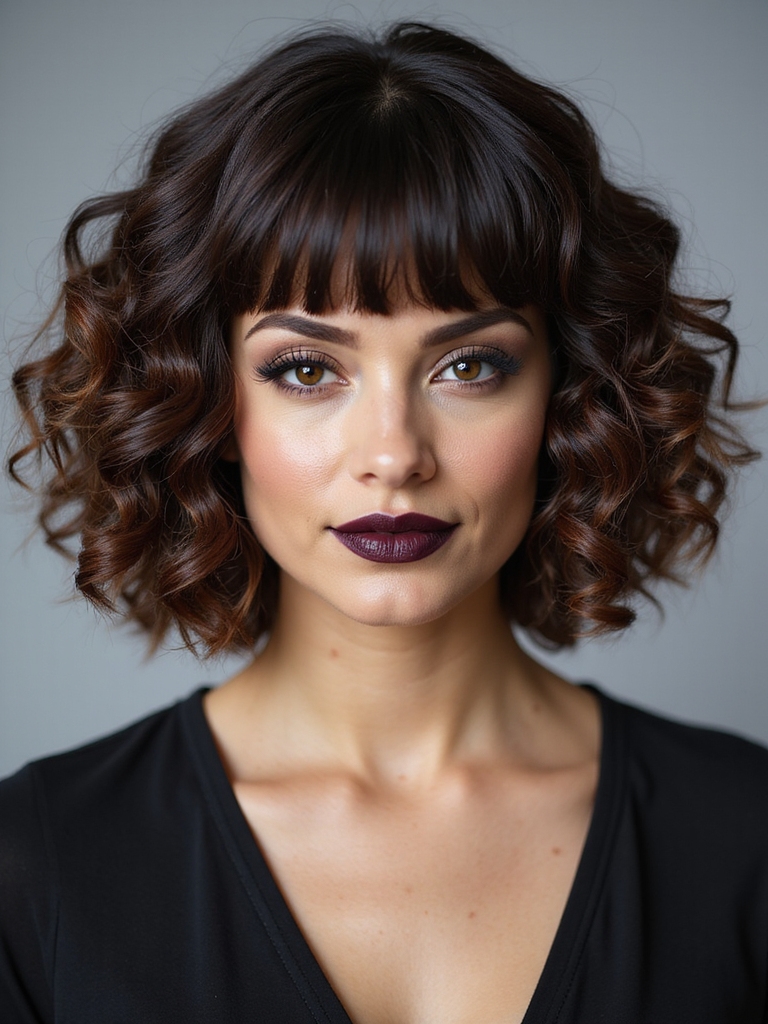
Curly bangs follow their own rule, separate from every other fringe here: both the bob and the bangs need to be shaped dry, one curl at a time. Cut wet, a curly fringe springs up noticeably shorter than planned once it fully dries.
- Always ask for a dry cut on curly bangs specifically
- Lower-upkeep than expected once cut correctly; curl pattern hides grow-out
- Refresh with a spritz of water plus curl cream, scrunching gently to reset the shape
| Cut Method | Length Once Dry | Result |
|---|---|---|
| Cut wet, stretched out | Springs up shorter than planned | Often too short, sits above the brow unintentionally |
| Shaped dry, one curl at a time | Matches what was asked for | Lands at the intended length and shape |
Asymmetrical Bob With Long Side Bangs
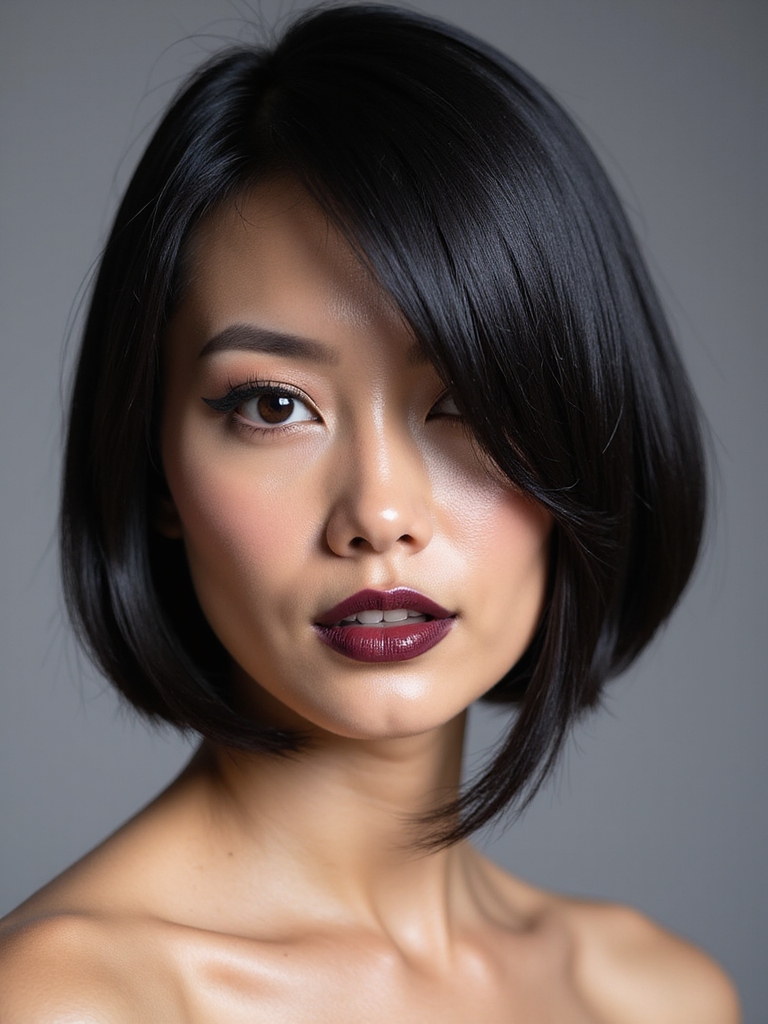
An asymmetrical bob already runs on a strong diagonal, and long side bangs push that same line further, sweeping across and into the longer side.
The combination lands as deliberate and edgy without needing the extra upkeep of a heavy, high-maintenance fringe. The long bangs blend straight into the cut and tuck behind an ear whenever the styling isn’t cooperating.
- Amplifies an existing diagonal instead of adding a second one
- Tucks behind an ear on low-effort days
- Lower upkeep than the drama of the look suggests
Sleek Glass Bob With Precision Bangs
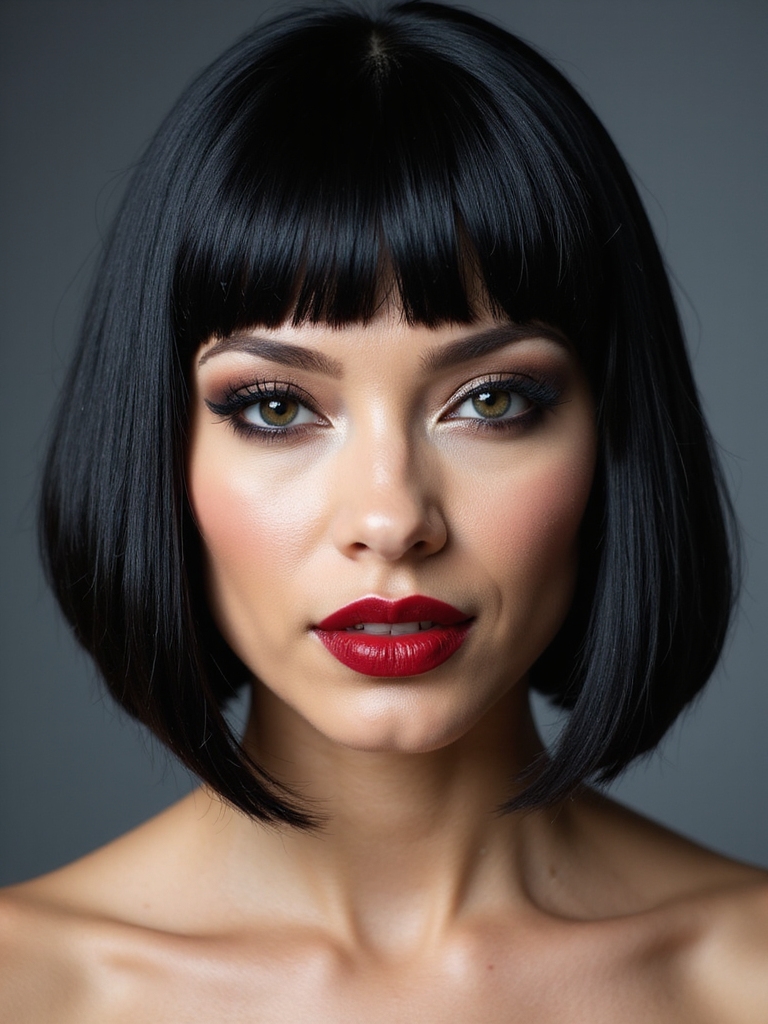
A glass bob is built entirely around a mirror-smooth, glossy finish, so it calls for a fringe cut with the same precision: every line sharp, nothing soft or broken up.
Who This Pairing Actually Suits
This is the highest-glamour pairing here, and also the highest-upkeep. It needs straight, healthy hair and real daily styling effort to hold that glassy shine; naturally wavy or fine hair will fight the finish no matter how good the cut is.
A flat iron paired with a lightweight smoothing serum is non-negotiable here, applied section by section rather than in one pass, to keep every line flat.
Shaggy Bob With Feathered Fringe
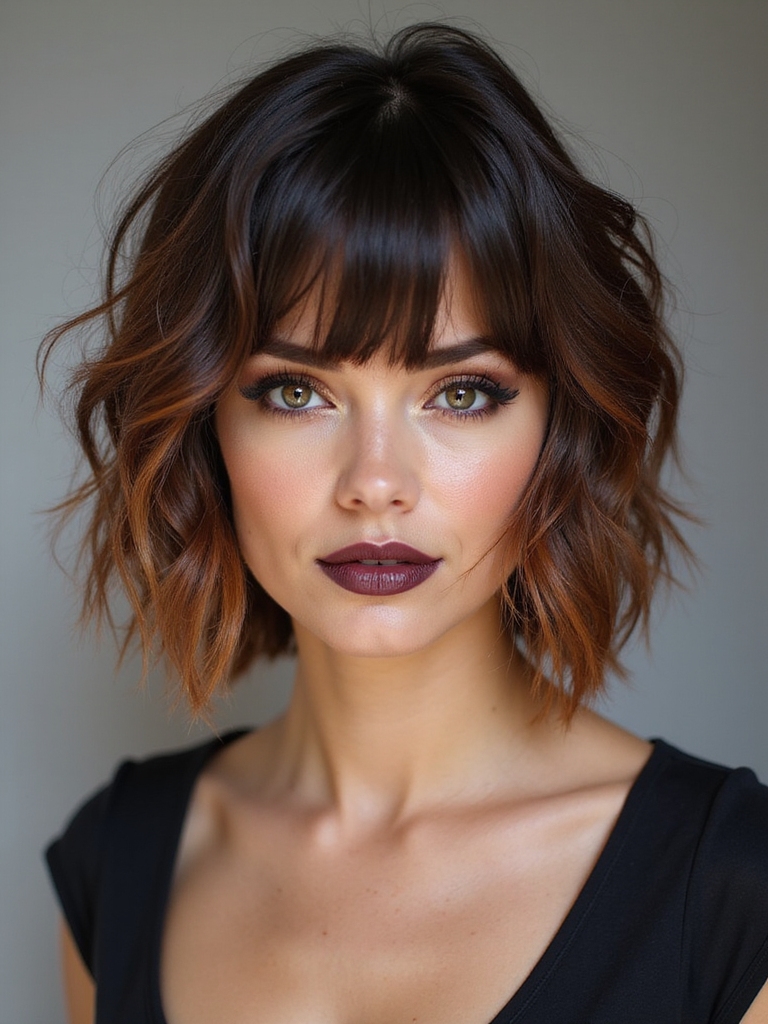
A shaggy bob runs on choppy, piecey layers, so a feathered fringe carrying the same broken texture keeps the whole cut speaking one language.
The messier the fringe is cut, the better this pairing actually works; a too-neat, blunt fringe on a shaggy bob undercuts the entire point of the cut. It’s the most rock-leaning combination on this list, casual once you stop fussing with it.
- The choppier the cut, the more intentional it reads
- Pairs naturally with texture cream, not smoothing serum
- A too-tidy fringe undercuts the shaggy shape it’s cut into
“What to say in the chair for a shaggy fringe: ask for the ends point-cut and razored, not blunt-cut and blow-dried smooth. A shaggy fringe styled too neatly stops looking like a shag at all.”
Stacked Bob With Choppy Bangs
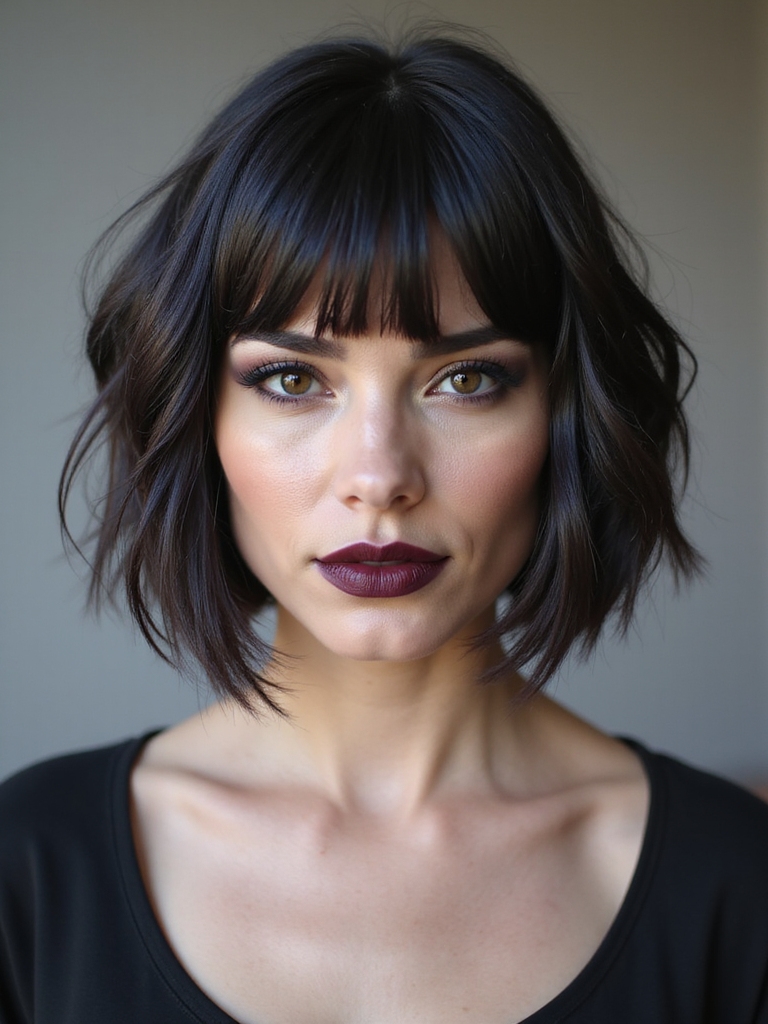
A stacked bob carries structured volume at the back, and choppy bangs balance that structure up front with broken, uneven-length pieces. The contrast keeps the whole look from tipping too polished or too undone, landing somewhere modern and current in between.
- Ask for the fringe point-cut into uneven lengths
- A little texture paste keeps the choppy pieces separated
- Balances a stacked bob’s volume without looking overly done
Inverted Bob With Textured Curtain Fringe
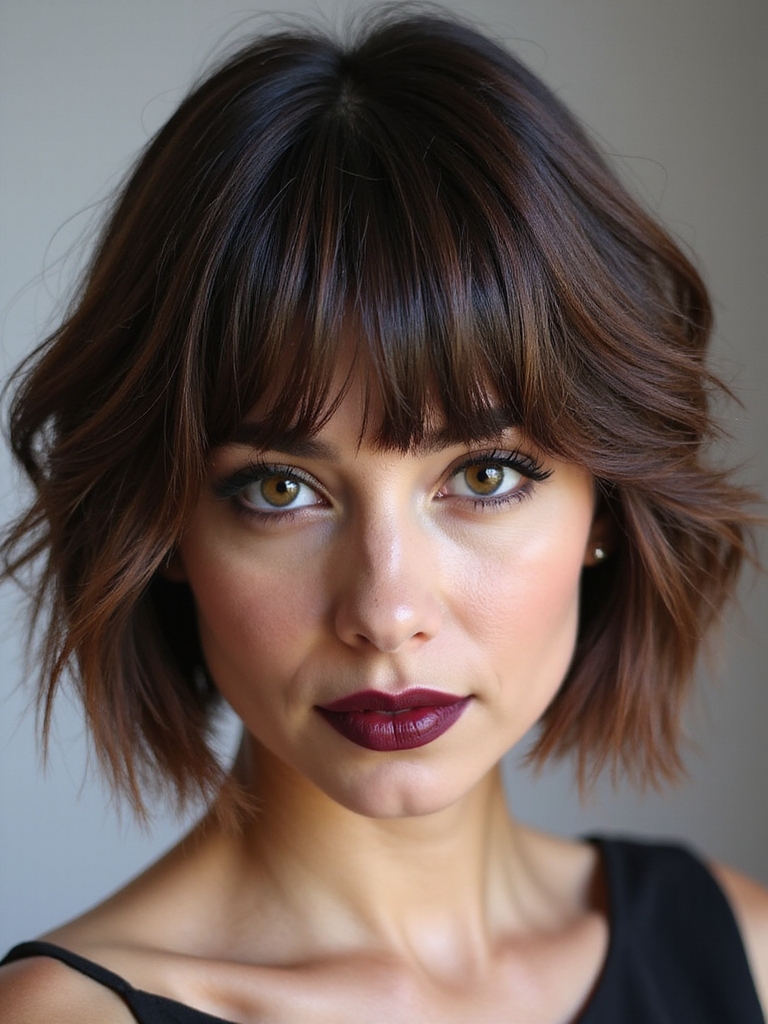
An inverted bob already builds volume at the crown with longer, face-framing pieces at the front, and a textured curtain fringe picks up exactly where those front pieces start.
Where the Two Shapes Meet
The two flow into each other: the curtain shape keeps the face soft while the inverted cut keeps the back structured. Neither one has to fight for attention.
Sweep the fringe open to blend with the longer front pieces, and a quick round-brush pass at the roots keeps the crown volume from flattening by midday.
Keeping Bangs and a Bob on the Same Schedule
Bangs almost always need attention faster than the bob around them. A fringe generally wants a shaping trim inside a month to stay out of the eyes, while the bob itself can usually stretch several weeks longer between full visits.
Many salons will do a quick fringe-only trim for a small fee, or free, between full appointments; it’s worth asking before booking a full cut every time the bangs creep past the brow.
- Fringe trim: budget for a quick visit inside a month, often priced well under a full cut
- Full bob reshape: several weeks longer, budget $40 to $70 depending on the salon
- A DIY fringe snip between visits is fine for curtain or side-swept shapes; leave blunt and baby fringes to a professional
Bob and Bangs Questions Worth Asking First
?Can bangs be added to a bob without cutting the rest of the hair?
Usually, yes. A fringe can be cut into an existing bob in a single short appointment, without touching the length or shape behind it, though it’s worth checking the length still balances once the front is shorter.
?What happens if a fringe choice turns out wrong?
Curtain, bottleneck, or side-swept bangs pin back flat with a couple of bobby pins and grow into face-framing pieces within weeks. A full or baby fringe is the bigger gamble: it grows straight down into the eyes and takes months to blend in, so the forgiving shapes are the safer first try.
?Do bangs work with curly or coily hair on a bob?
Yes, with one non-negotiable rule: they need to be shaped dry, one curl at a time. Skipping that step and cutting them wet is the single most common reason curly bangs come out shorter than expected.
The Right Fringe Finishes the Cut
Fifteen pairings, one underlying idea: a fringe and a bob work best when they share the same energy rather than fighting for attention. Sharp with sharp, soft with soft, a bold diagonal with a bold diagonal.
Anyone still undecided might just carry in a picture of the bob already worn, and ask a stylist which fringe actually matches its lines.
Favorites to Revisit