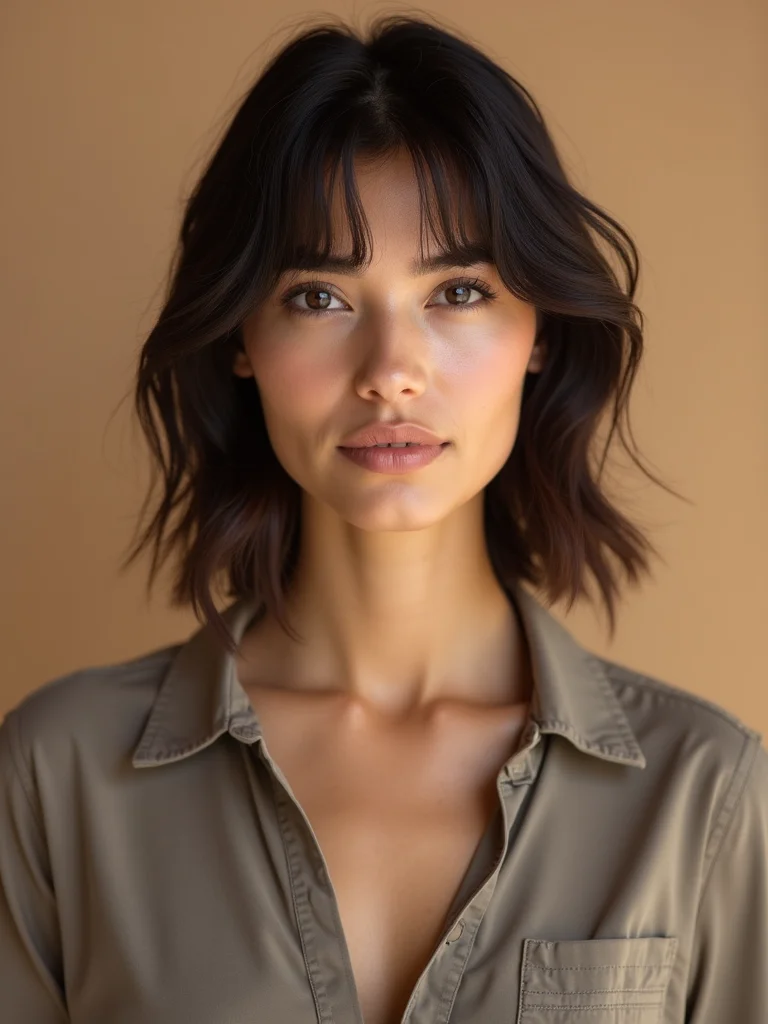
Someone once brought in two reference photos of long layered hair with bangs and asked which one was right. They looked nothing alike, because in each one the fringe and the layers had been chosen to work as a single unit rather than two separate decisions.
This combination only works when the fringe and the layers are picked together: soft with soft, bold with bold, so the whole front reads as one connected frame instead of a fringe stuck on top of an unrelated cut. Fifteen pairings follow, each chosen for how the two halves actually work together.
Matching Fringe to Layers
| Layer Style | Best Fringe Match |
|---|---|
| Soft, blended layers | Curtain, wispy, or side-swept; grows out together |
| Choppy, textured layers | Piecey or blunt; matches the broken-up energy |
| Thick, dense layers | Thinned, point-cut fringe to avoid a heavy front |
| Curly layers | A dry-cut fringe shaped in the same pattern |
Curtain Bangs With Cascading Layers

This pairing tops the request list at nearly every consultation. A center-parted curtain fringe sits at the top of long, cascading layers, and because both share the same soft, graduated shape, the fringe settles into the layering with no visible seam between them.
- Keep the bangs long enough to graze the cheekbones so they blend cleanly.
- A brush sweeping both sections back at once keeps them reading as one line.
- Grows out gracefully, with no separate maintenance schedule to track.
Wispy Bangs With Long Layers

For the lightest possible touch, wispy bangs paired with soft long layers make the gentlest combination on this list. The fringe is cut thin enough to show a little forehead, and the layers stay long and feathery, so nothing weighs the front down.
This suits fine-haired clients especially well, since a heavier fringe or denser layering tends to flatten thin hair down.
- Both sections grow out together, melting into the surrounding length.
- A whisper of texturizing spray covers the entire styling routine.
- Adds the impression of movement without adding real density.
Blunt Bangs With Feathered Lengths
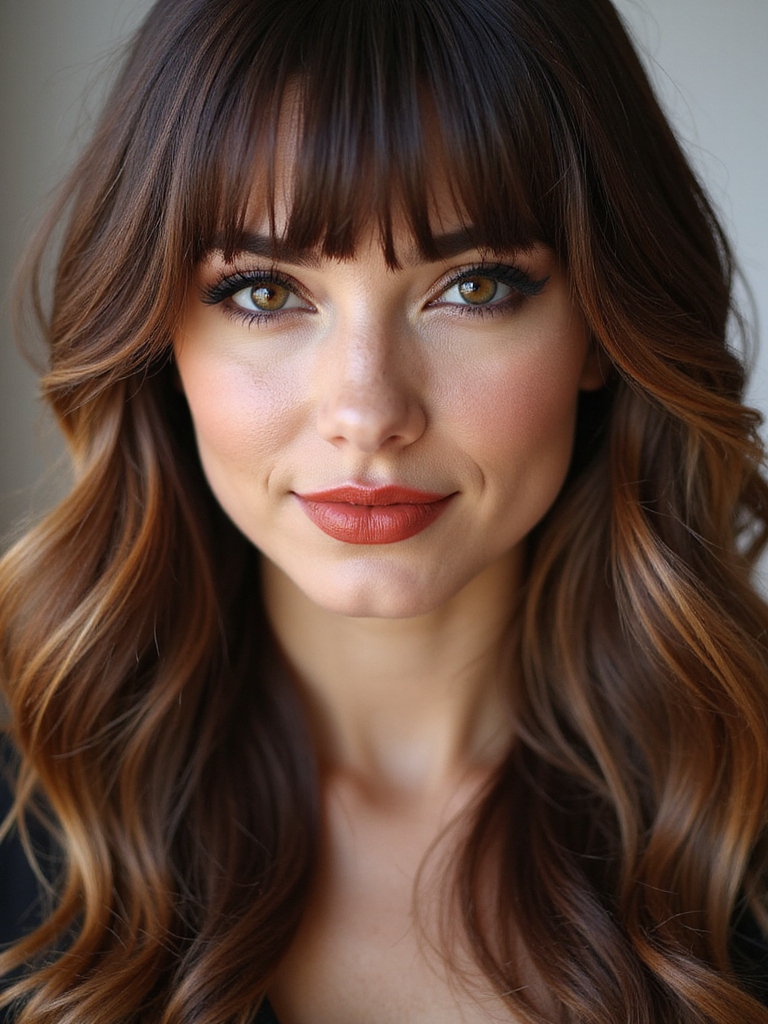
The appeal here is pure contrast: a strong, blunt fringe set against soft, feathered lengths. The dense, straight-across fringe makes a bold statement up top while the feathered layers below stay light, and the tension between sharp and soft is exactly what makes this pairing striking.
It asks for real commitment, since the blunt fringe needs shaping on a tight, regular schedule to hold its line. The payoff is a look that reads both edgy and pretty at once.
The fringe needs enough density to fill a strong, even line, while the feathered layers underneath stay light enough that they never compete with it for attention.
Long Shag With an Airy Fringe

A long shag and an airy fringe make a natural match, both built entirely on texture and broken-up movement. The shag stacks choppy layers down from the crown for volume, while a light fringe sits above the brows to complete a rock-leaning, undone feel.
Together they give long hair genuine body and attitude, the kind of shape that looks styled the moment it’s shaken out.
- Choppy shag layers build volume starting right at the crown.
- The airy fringe keeps the front light and easy to move.
- A texturizing product scrunched through dry hair brings the movement out.
A blunt fringe only works if you’re honest about the upkeep going in. It’s not a set-it-and-forget-it choice.
Side-Swept Bangs on Layered Lengths

Side-swept bangs are the most forgiving fringe to pair with layers, sweeping across from a deep part and settling directly into the layers alongside it. The diagonal softens the face while the layers carry movement down through the length, and because the sweep grows out into the existing hair, it’s one of the easiest pairings to live with.
- The swept fringe flows from a deep part straight into the layers.
- A gentle diagonal line flatters round and square face shapes.
- Grows out with no hard, awkward fringe line to manage.
Textured Layers With Piecey Bangs

When the layers carry real texture and separation, the fringe should echo that energy. A piecey, point-cut fringe matches the broken-up quality of the layers, so the front and the length share one cool, undone character throughout.
Anyone drawn to an edgier finish tends to gravitate here. Working a texturizing product through both the fringe and the length keeps everything separated, and skipping smoothing products entirely preserves the deliberately rough finish that makes the whole thing work.
One assumption keeps people from trying this pairing, and it doesn’t hold up.
❌ Myth: Side-swept bangs need constant reshaping like a blunt fringe.
✅ Reality: They actually need the least attention of any fringe style here, since the sweep simply grows longer and blends further into the layers over time.
U-Shaped Cut With a Curtain Fringe

Pairing a U-shaped cut with a curtain fringe suits anyone unwilling to sacrifice length. The U-shaped perimeter keeps almost all the existing length while adding soft, rounded movement, and the curtain fringe frames the face up top without shortening the hem underneath.
A Smart Match for Thick Hair
This combination works especially well on thick hair, since the U-cut adds shape without thinning the ends and the curtain fringe lightens the front without a heavy chop.
The whole shape stays full and long while finally getting a frame it didn’t have before.
V-Cut Layers With Wispy Bangs

A V-cut makes a dramatic statement through the length, so pairing it with light, wispy bangs keeps the front soft and stops the overall shape from feeling severe. The back tapers to a point with steep, moving layers, while the airy fringe balances that drama with a gentle frame at the face.
Balancing Drama With Softness
This combination suits thick to medium hair especially, since there’s enough density to carry the V’s dramatic taper without the fringe needing to compensate for thinness.
The V delivers the movement through the length; the wispy bangs make sure none of that drama weighs down the front.
ℹ️Why the U-Cut Preserves Length
A U-shaped perimeter rounds the ends rather than cutting straight across, which is why it removes far less visible length than most layered shapes while still adding real movement.
Long Layers and a Fringe for Thick Hair

Thick hair can carry both layers and a fringe beautifully, provided both get thinned with care. Internal layering debulks the dense length so it flows instead of puffing outward, while the fringe itself gets point-cut and thinned so it sweeps rather than sitting like a heavy curtain across the forehead.
Done well, thick hair becomes one of the best canvases for this pairing, holding the overall shape while finally moving the way it should.
- Internal layering removes weight so dense length actually flows.
- A thinned, point-cut fringe sweeps freely across the forehead.
- The fringe usually needs the most thinning of the two, or it can overwhelm the face.
Layered Waves With Brow-Grazing Bangs

Brow-grazing bangs sit right at the eyebrows, a touch bolder than a curtain fringe, and worn over layered waves they read soft and approachable. This pairing suits anyone who wants a fringe with a bit more presence than a curtain but nothing as demanding as an eye-grazing length.
The natural wave through the length keeps the whole look relaxed, while the fringe, sitting exactly at the brow, frames the eyes without the frequent trims an even shorter fringe would require.
Not sure how much thinning your hair actually needs? Start here.
1My hair puffs out and feels heavy by afternoon
Ask for internal debulking through both the layers and the fringe.
2My hair holds its shape fine, just feels a little flat
A lighter touch is enough; don’t over-thin what’s already working.
Invisible Layers With a Micro Fringe

This pairing runs entirely on contrast. A bold micro fringe sits high above the brows, pulling all the attention, while invisible layers underneath add body to the length without a single visible layer line, so the whole head looks polished and full at once.
The micro fringe carries the statement; the hidden layering does the quiet supporting work. That underlying body keeps long hair from hanging limp beneath such a strong fringe, which would otherwise read top-heavy against smooth, flat length.
The micro fringe needs frequent shaping to hold its line, while the invisible layers underneath grow out with barely a noticeable change.
Face-Framing Layers With S-Shaped Bangs

S-shaped bangs curve gently across the forehead in a soft wave, and paired with layers around the face, they wrap the whole front in matching curves. The bangs and the framing pieces echo each other’s movement, so the two read as one continuous, flowing shape.
- A round brush sets the curve in the fringe during drying.
- The pieces framing the face settle into the same curve largely on their own.
- A romantic, soft pairing that flatters most face shapes.
Layered Blowout With a Rounded Fringe

A full, rounded fringe paired with a bouncy layered blowout brings serious volume and a touch of glamour. The fringe curves softly into the face, while the length gets blown out for body and lift, producing a look that’s voluminous, polished, and a little retro all at once.
Built for a Big-Volume Day
This pairing suits anyone drawn to a fully finished, done-up style, and it rewards spending a few extra minutes with a large-barrel round brush to build volume through both sections.
The fringe and the length get blown out together as one continuous piece, not styled separately and combined afterward.
Beachy Layers With Grown-Out Curtain Bangs

Grown-out curtain bangs paired with beachy layers make up the lowest-effort combination on this entire list, the kind that looks its best precisely when little effort goes into it. As curtain bangs grow longer, they melt quietly into the layers on either side, and a natural beach wave through the length ties everything into one relaxed, undone shape.
This pairing proves that the grow-out stage of a fringe, usually dreaded with other cuts, can actually become the prettiest version once the surrounding hair is already layered to receive it.
A salt-based spray worked through damp hair, then left to air-dry, produces the whole finish with almost no additional effort.
Layered Ends With Choppy Tousled Bangs

When the ends are choppy and heavily layered, matching tousled bangs finish the look with the same texture throughout. The fringe gets cut piecey and worn deliberately undone, echoing the broken-up, point-cut ends of the layers, so the entire cut carries one cohesive, worn character from the front to the tips.
This ranks as the most low-maintenance pairing on this list, the one that actually looks better on second-day hair than fresh out of the shower.
- A small amount of texturizing product and fingers cover the whole routine.
- Works well on hair that already carries some natural texture.
- Second-day hair often looks even better than day one.
Maintenance & Care
Bangs and layers age at noticeably different speeds once they’re both in the same cut. A fringe grows into the eyeline fastest, so blunt or micro versions typically need shaping every couple of weeks, while a soft curtain or wispy fringe can stretch much further before it needs attention. The layers underneath need a full reshape far less often, usually somewhere around two to three months out.
Many salons include a quick fringe touch-up free between full appointments, worth asking about directly, or budget around $30 for a standalone fringe trim elsewhere. Styling stays simple once both halves are cut to match: whatever routine keeps the fringe looking right, whether that’s a light spray, a round-brush pass, or an air-dry, usually works for the layers too, since they were built to move the same way.
One Frame, Not Two Decisions
Long layered cuts with bangs look right for one simple reason: the fringe and the layers get chosen as a single frame, sharing both a shape and a character. When they match, the whole head moves together; when they don’t, it reads as a fringe stuck on top of an unrelated cut.
Save whichever pairing fits both a face and a morning routine, then bring that single image to a stylist instead of two conflicting ideas pulled from different photos.
Don’t Miss These