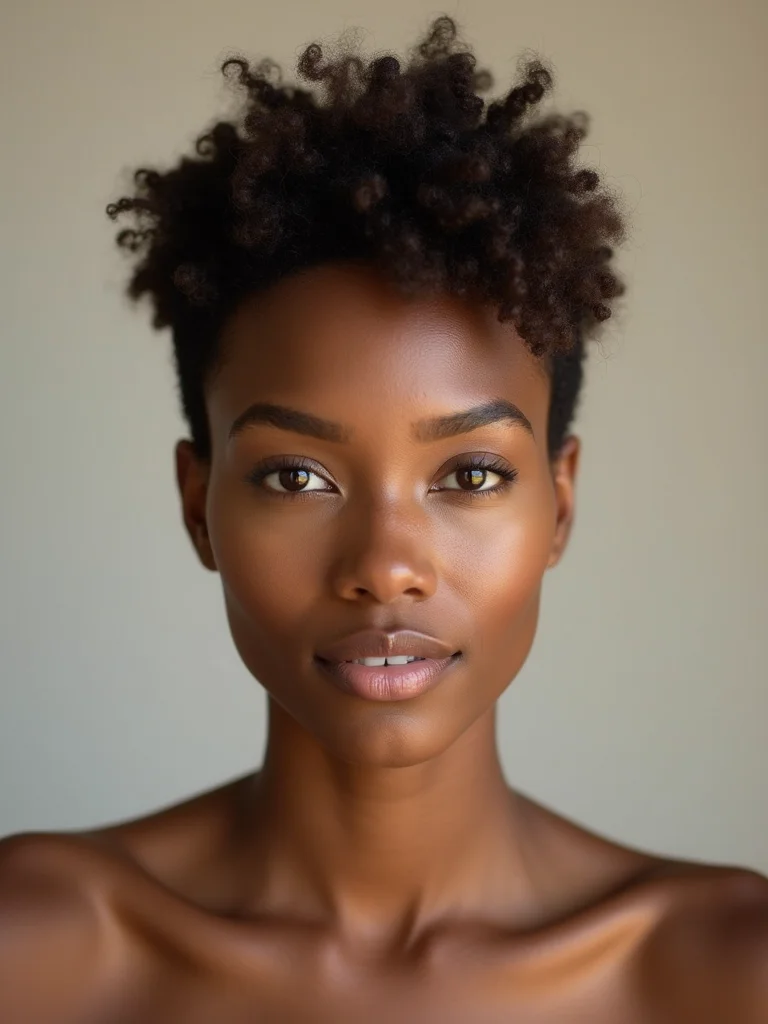
There’s a specific kind of bounce a wavy bob has against the jaw when you turn your head, loose enough to look like the weekend, precise enough that it clearly isn’t an accident. That’s the whole appeal of a wavy bob: it reads low-key while doing real work underneath.
Most versions here are built to air-dry, since the wave comes from a mix of the cut, natural texture, and a little product, with heat staying entirely optional. Fifteen versions follow, from barely-there bends to full beach texture, each with the specific technique that makes it hold.
What Actually Builds the Wave
A wavy bob gets its texture from three things stacked together: the cut (layers or texture that give the wave somewhere to move), natural hair pattern, and a light styling product. Take any one of the three away and the shape falls flat.
The catch is matching technique to the length and texture actually growing on your head. A routine built for thick, wavy hair usually overwhelms fine, straight strands, and the reverse leaves texture completely flat.
Beachy Wavy Bob
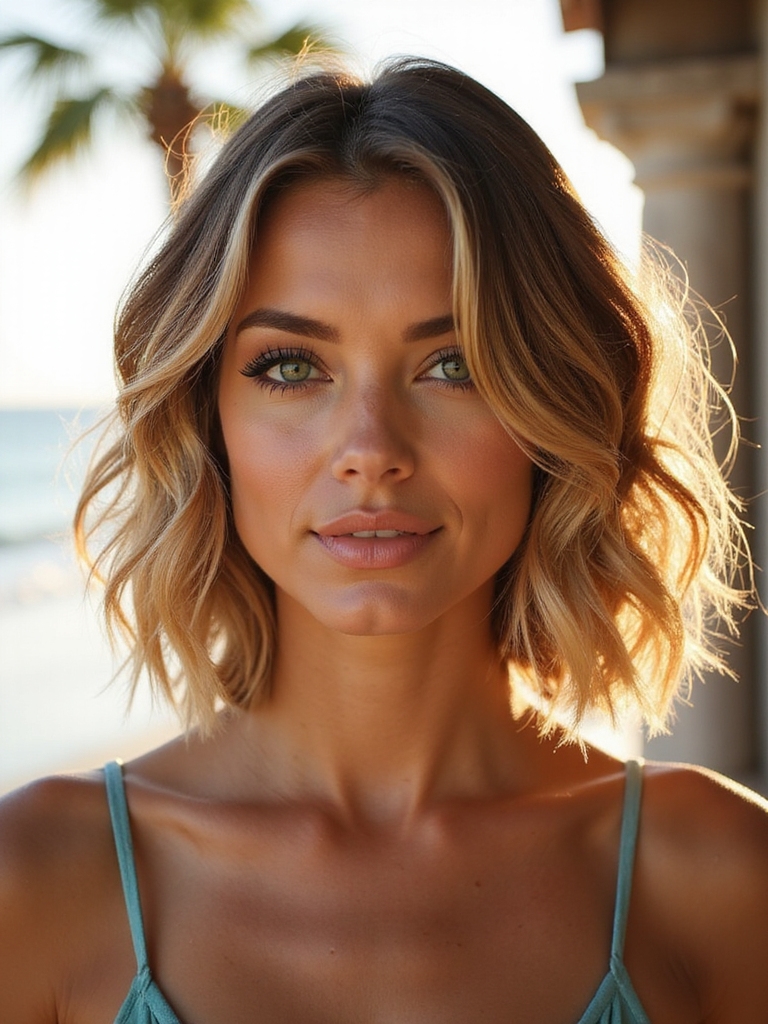
The beachy wavy bob is the version most people picture: soft, piecey waves with a slightly matte, sandy texture, like salt air did most of the work.
Where This One Can Go Wrong
A sea-salt spray worked into damp hair, then air-dried or roughed up with a diffuser, gives that gritty, piecey separation. Scrunching upward toward the scalp while it dries is what actually builds the bend.
The catch: sea-salt formulas pull moisture out fast, so anyone with already-dry ends should follow with a leave-in first, or the texture reads brittle.

Chin-Grazing Bob With Subtle Bends
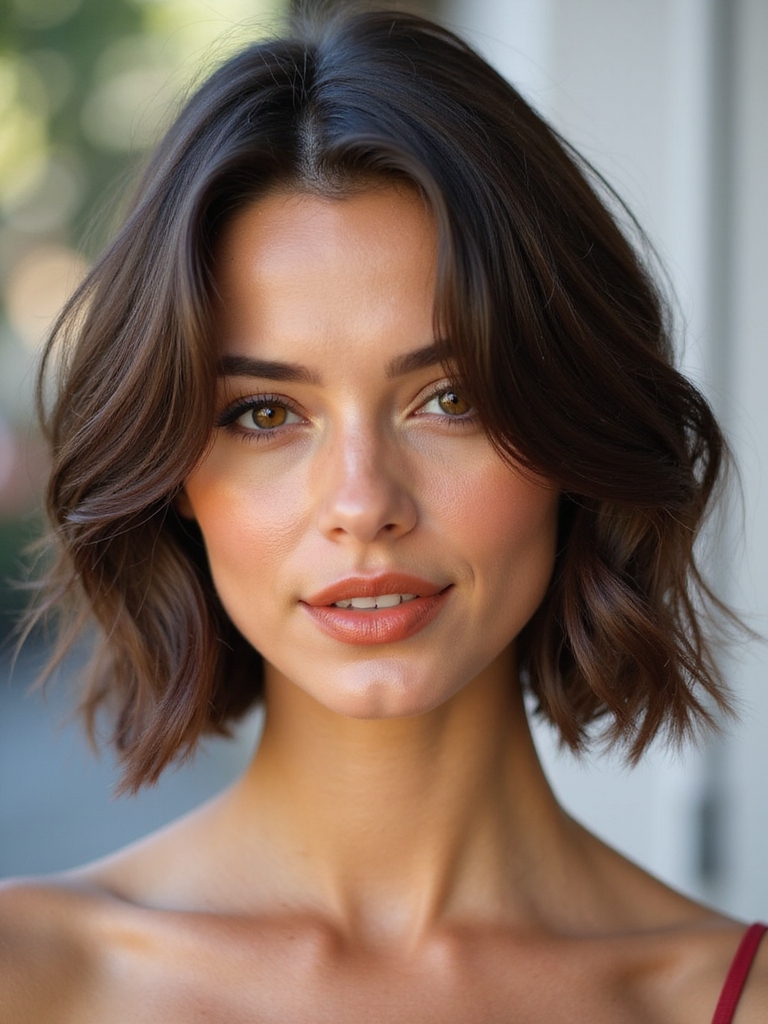
Some wavy bobs keep things whisper-quiet. A short, chin-grazing length with just a few subtle bends running through it sits between a fully blunt bob and something more relaxed, softening a sharp line without losing the crispness that makes a short bob work.
A precise cut underneath matters more here than the styling itself, since a rough cut has nothing clean to bend against. A few waves pressed in with a flat iron, or coaxed gently from natural texture, are usually all it takes.
Where this struggles is on very fine hair worn this short: too little natural texture and the bends can look pasted-on. A texture spray at the root helps the bend hold its ground.
Tousled Wavy Lob
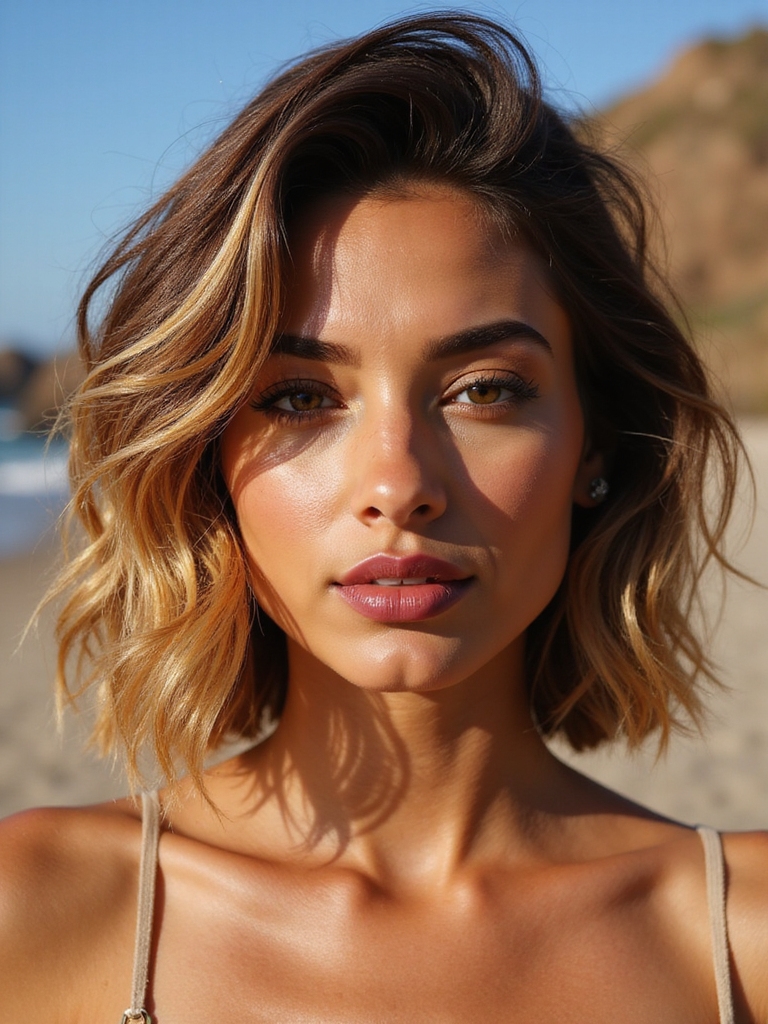
For anyone who wants wave without going fully short, a lob at the collarbone carries longer, more tousled waves with real movement, and the extra length makes those waves noticeably easier to create and hold onto.
Tousled means undone on purpose: waves broken up with fingers, finished with a rough texture spray so nothing looks too set.
- The most versatile length here for switching between sleek and messy
- Soft highlights through the ends make the movement read more clearly
- Holds a wave longer between washes than shorter versions on this list
Air-Dry Wavy Bob

For the lowest-effort wave available, an air-dry bob leans entirely on natural texture doing the work. Cut specifically to dry well on its own, it falls into soft waves with product and patience, nothing else.
The One Rule That Actually Matters
The actual technique is asking a stylist directly for a cut layered to encourage natural bend, then applying a curl cream or wave spray to soaking-wet hair before it starts drying at all.
The hardest part is restraint: touching it while it dries, brushing through, or redistributing product mid-dry is what causes frizz here, not the hair itself. Leaving it alone is most of the technique.
Blunt Bob With Undone Texture

There’s real tension in a strong, blunt bob loosened up with undone waves: a sharp, dense perimeter against soft, messy texture, clean line and casual movement at the same time.
The blunt edge has to stay dense for the contrast to read intentional. Loose bends pressed in with a flat iron, then broken up with fingers and a touch of matte paste, keep the shape crisp while the texture inside stays alive.
- Works best on hair with enough density to hold a true blunt line
- Fine hair loses the contrast here, since there’s no weight to stay blunt against
- A trim to maintain the sharp perimeter matters more here than for looser wavy bobs
Quick check before choosing blunt-and-undone over something softer:
1Is the perimeter still sharp after a wash or two?
Good sign; hair has enough density to hold this contrast.
2Does the blunt line soften within a day?
A softer, more layered wavy bob will likely suit better.
Side-Parted Wavy Bob
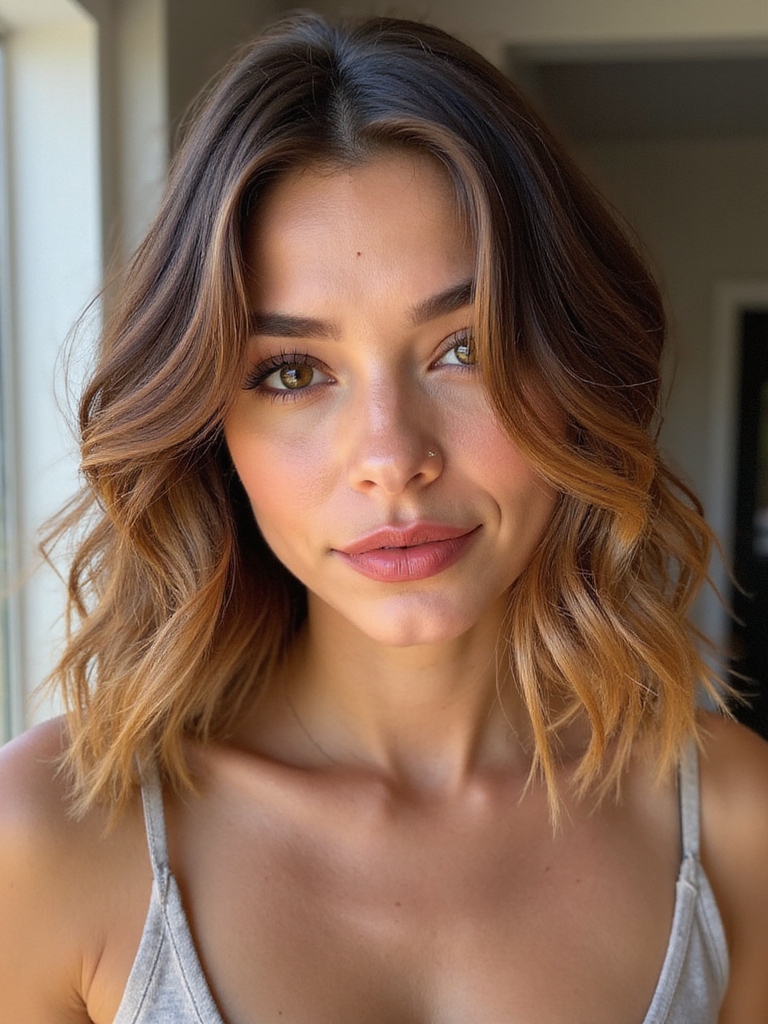
A deep side part adds instant volume and a flirty, asymmetrical sweep to a wavy bob. The part lifts hair at the root and sends a line of texture across the forehead, shifting the whole mood from neat to something a little more glamorous.
- Set the part while hair is still damp for maximum root lift
- Sweep the heavier side across and let waves fall over one eye
- Switch the part occasionally, or roots flatten permanently on one side
Wavy Bob With Curtain Bangs
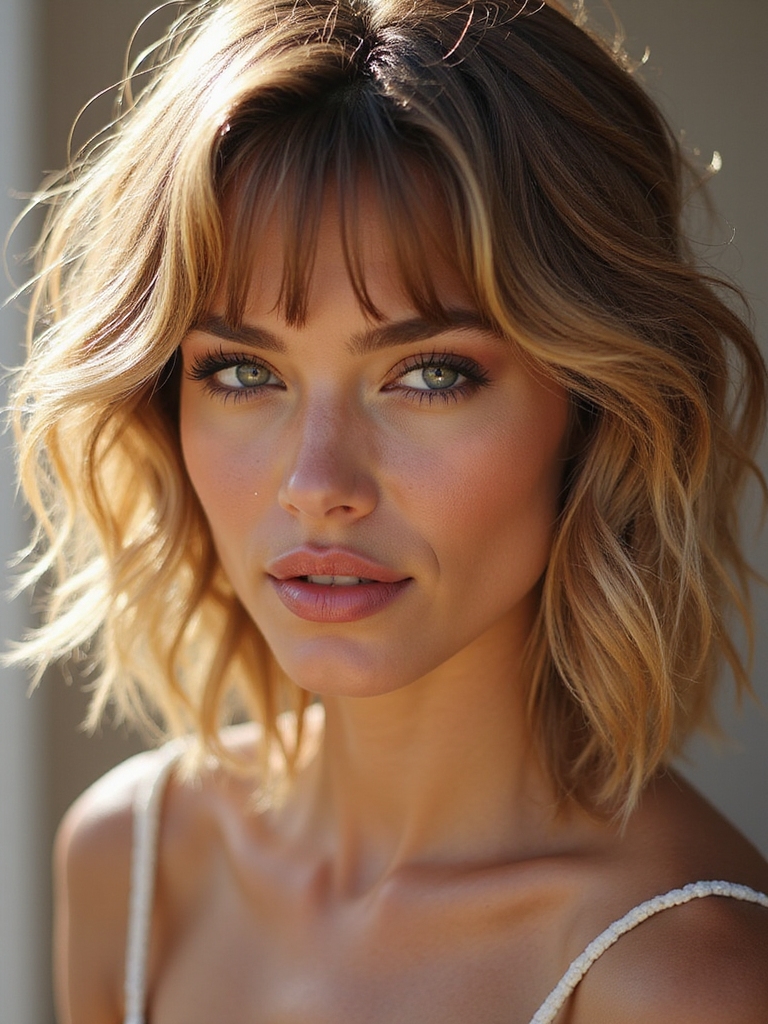
Curtain bangs and a wavy bob suit each other unusually well. A soft, center-parted fringe sweeps into the waves, blending in so the whole shape reads as one continuous movement.
Styling the bangs alongside the rest of the hair, letting the same wave pattern carry through the fringe, is what keeps the line from looking separate. A round brush sweeps the front pieces back and out while the rest air-dries.
- Grows out into face-framing layers, which keeps commitment fairly low
- Bangs still need their own quick styling pass, even on wash-and-go days
- Works on straight, wavy, or curly bases underneath the fringe itself
Shaggy Wavy Bob
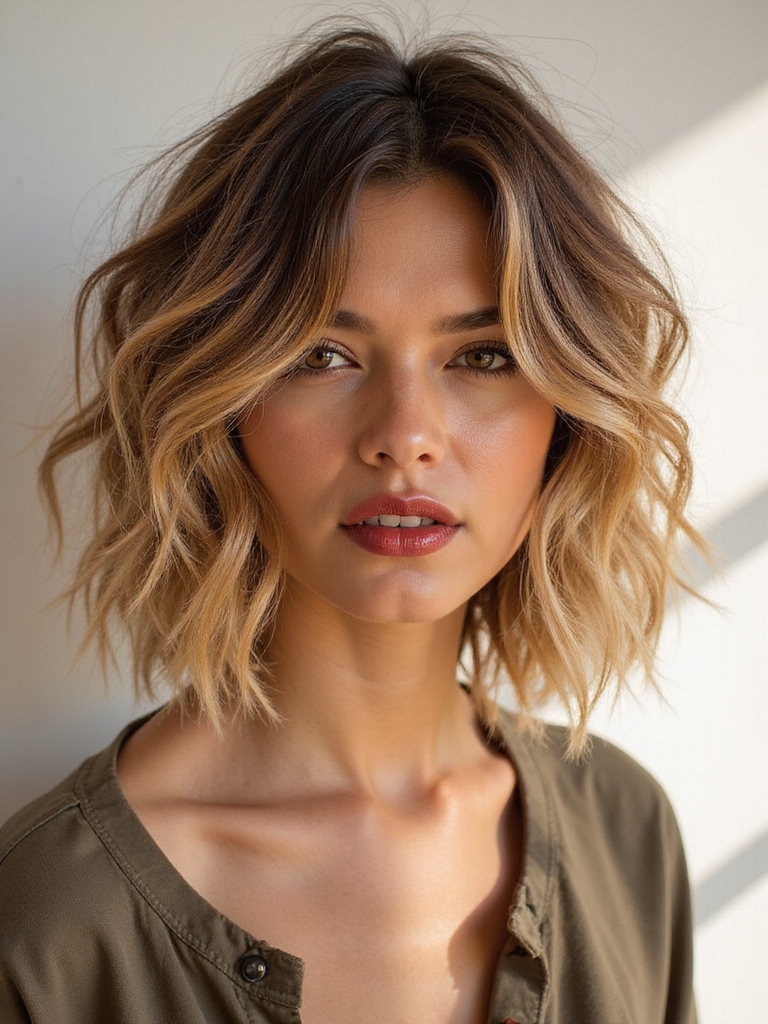
Shaggy layers on a wavy bob add volume, movement, and a cooler, more undone edge all at once. The layers give waves lift and separation, so the shape reads fuller and more textured, closer to a shag’s rock-leaning spirit than a clean bob.
The layering is what actually builds the body here, which makes this a cut worth discussing carefully with a stylist before the appointment, not just requesting off a single photo. A texture spray and a finger-tousle bring out the shaggy movement day to day; this is usually where a bob that’s gone flat and lifeless gets sent to be rebuilt.
📋Before Asking for Shaggy Layers
- ✓Bring a photo that shows the layering from the side, not just the front
- ✓Mention your natural wave pattern so layers get placed to work with it
- ✓Ask how many inches come off the length versus just internal weight
Curly-Wave Hybrid Bob
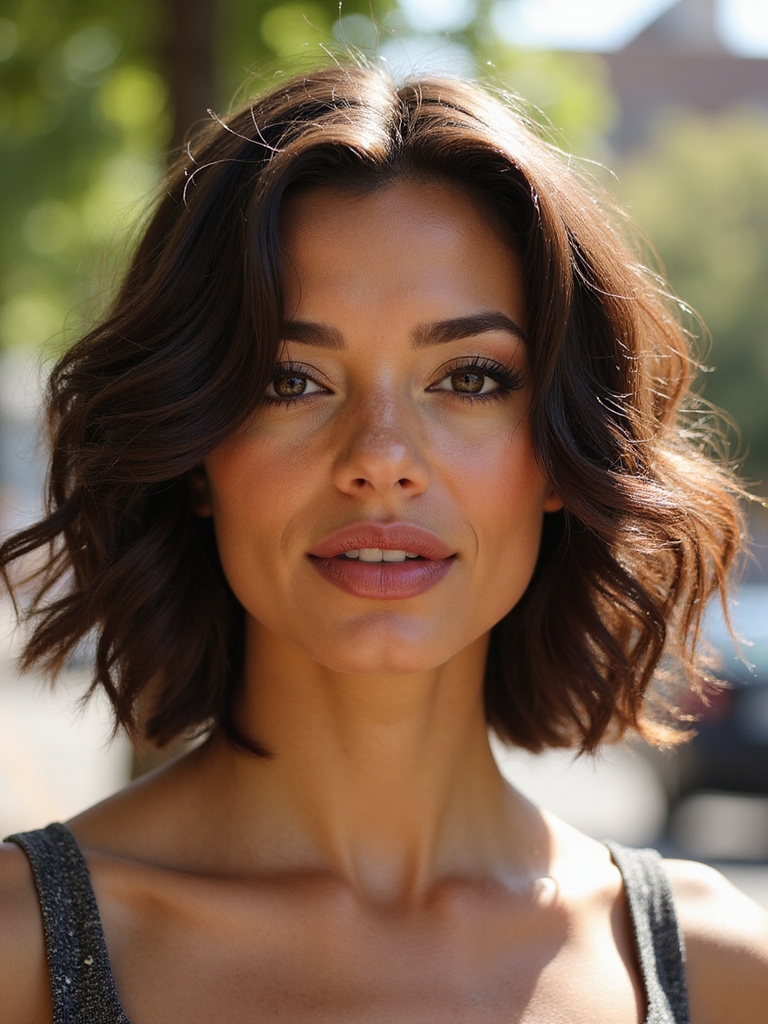
For naturally curly hair, a wavy bob can mean a looser, more relaxed version of an existing curl pattern, somewhere between a wave and a curl. The cut shapes natural texture into a bouncy, defined bob that celebrates curl at a softer tension.
Cutting it dry lets a stylist shape around exactly how the curls fall that day, section by section. A curl cream worked into soaking-wet hair afterward keeps the pattern defined without frizz.
Center-Part Wavy Bob
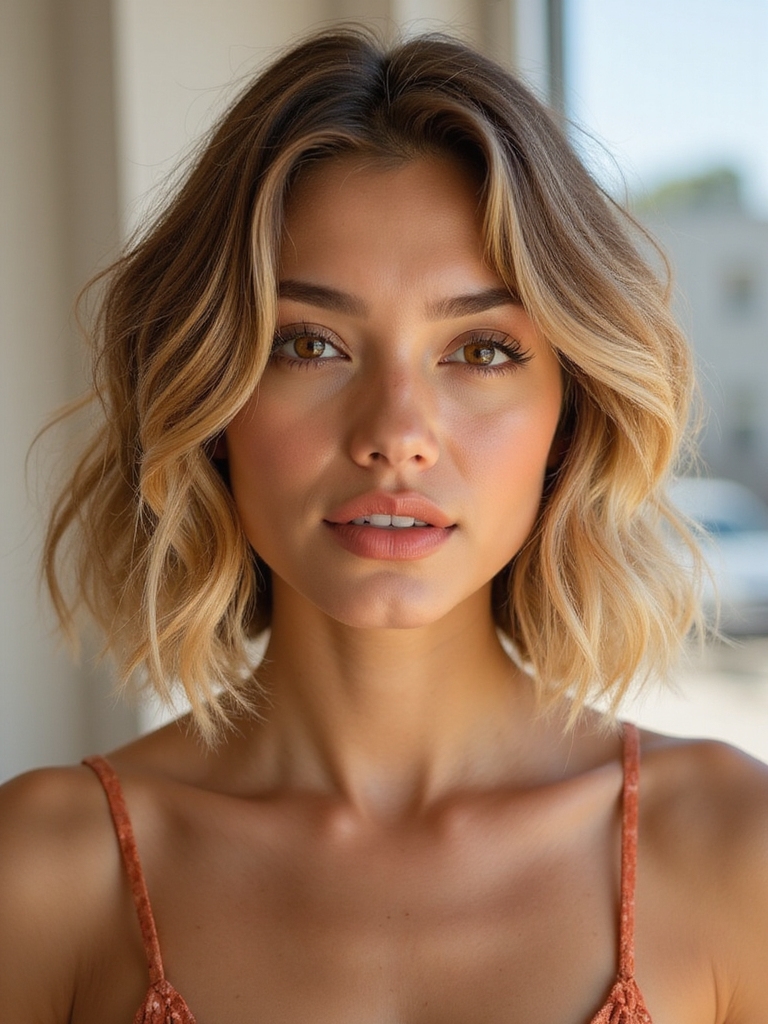
A center part gives a wavy bob clean, modern symmetry, framing both sides of the face evenly. It’s the cooler, more minimalist way to wear wave, letting the texture and the cut do the talking without a deep side sweep’s drama.
- Suits balanced, symmetrical features especially well
- Let waves fall evenly on both sides for the cleanest version
- Tuck one side behind an ear on days that want a little asymmetry back
Two ways to wear the same center-parted wave:
🎯Fully symmetrical
Waves fall evenly on both sides, nothing tucked or swept.
🎯Slightly broken up
One side tucked behind an ear for a softer, less rigid line.
Wet-Look Wavy Bob

A wet-look wavy bob trades soft texture for high-gloss drama, waves slicked and shining like a fresh exit from the pool. It’s bold and fashion-forward, best saved for a night out, and it takes only minutes to build.
- Comb a wet-look gel through damp, already-waved hair for the glossy finish
- Keep waves defined and close to the head for the sleekest version
- Too much product tips glossy into greasy fast; use less than feels like enough
Heatless Overnight Waves

The gentlest way to wave hair skips heat entirely, and a bob is a convenient length for overnight methods. Braiding or wrapping damp hair before bed delivers soft, bouncy waves by morning with zero heat exposure.
- Start with hair that’s damp, not soaking, so it dries fully overnight
- Two rope braids or a handful of twists give the most natural bob-length wave
- Unravel gently in the morning and break up the wave with fingers, not a brush
Face-Framing Wavy Bob

Face-framing layers are what push a wavy bob from good to noticeably flattering. Shorter pieces cut around the face catch the wave first and draw the eye in, doing shaping work an even, all-one-length cut can’t.
Asking for the shortest pieces to land near the cheekbone gives the most universally flattering placement, blending smoothly into the longer length.
Once waves form, those shorter front pieces curve in toward the face on their own, which is most of why this addition makes an otherwise generic bob feel built for one specific person.
👍What Face-Framing Adds
- +Softens the jawline without changing the base length
- +Blends into longer layers with no visible step
- +Works on straight, wavy, or curly textures underneath
👎What It Costs You
- –A little extra styling attention right at the hairline
- –The front pieces grow out faster and need earlier attention
- –Not easily undone without an extra trim
Textured-Ends Wavy Bob

Texturing the ends of a wavy bob keeps the whole shape light and full of movement. Point-cutting or light thinning removes weight so waves fall featherlight and piecey.
It’s a subtle cutting detail with an outsized effect on how the waves actually move, and it’s especially useful on fine hair, where the reduced weight creates the illusion of real fullness.
- A drop of oil on dry ends keeps texture soft and controlled
- Already-thin ends can look wispy if this gets overdone
- Best requested as a finishing detail, not the main event of the cut
Scrunch-and-Go Wavy Bob
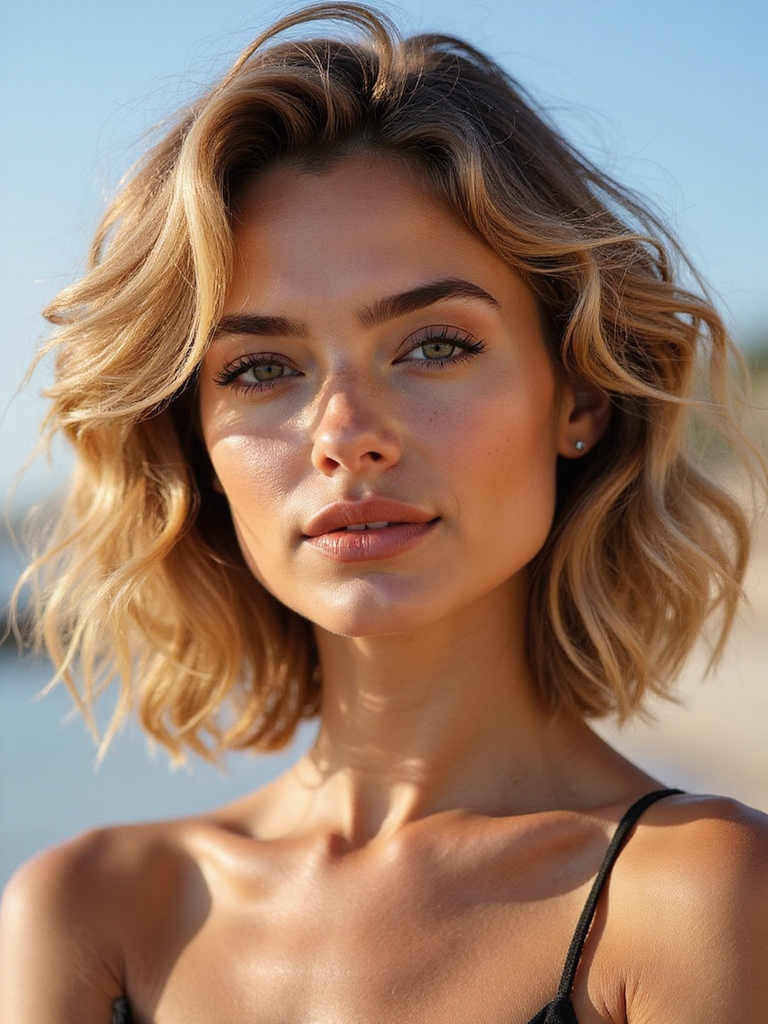
The scrunch-and-go is the fastest wavy bob routine on this list: product into damp hair, scrunched upward, left to dry. That’s the entire routine, and it suits anyone with a little natural wave already doing some of the work.
- Scrunch a wave spray or curl cream into damp hair, working upward
- Air-dry or diffuse, scrunching occasionally to encourage the bend
- Break the dried cast gently with fingers for soft, touchable movement
Styling Tips
The most common misstep is over-styling: tight, uniform curls from a small barrel read as fussy and dated on a bob built for looseness. Breaking waves up with fingers at the end, and reaching for a larger barrel or a looser braid, keeps the texture reading soft rather than set.
The other frequent mistake runs the opposite direction: skipping product entirely, or using far too much of the wrong kind. With nothing on it, waves on most textures fall out by early afternoon; heavy creams weigh fine hair flat. Matching product weight to hair density matters more than any single technique on this list.
Wavy Bob Questions Worth Asking First
?Can straight hair actually hold a wavy bob, or does it need natural texture to start?
Straight hair takes a soft wave well with the right product and either a wand, a flat iron, or a heatless overnight method. The cut matters too: asking for a few internal layers or textured ends gives the wave somewhere to move.
?Why do the waves fall out by early afternoon no matter what I try?
Usually a product or technique mismatch. Applying product to already-dry hair, skipping a lightweight hold spray, or starting from freshly washed, overly clean hair, which often holds texture worse, are the most common culprits.
?Is a wavy bob realistic for someone who doesn’t want to use heat tools regularly?
Yes, more than most cuts. Heatless methods like overnight braids or twists, combined with a cut layered to encourage natural bend, can deliver a result close to a wand, just on a slower morning timeline.
?How often does a wavy bob actually need a trim to hold its shape?
It depends on the version. A blunt-based wavy bob needs sharper, more frequent upkeep to protect the line, often a $40 trim close to the two-month mark, while shaggier or more textured versions can stretch noticeably longer between visits since a soft edge hides growth better.
The Version That Matches Your Actual Morning
What ties all fifteen of these together is a kind of built-in forgiveness. A wavy bob is meant to look a little undone, which means small imperfections read as part of the texture, and a light hand usually beats a heavy one.
Whichever version looks most appealing, from the softest chin-length bend to full sea-salt beach texture, it’s worth testing the styling approach against the time actually available most mornings before booking anything at the salon.
Keep the Inspiration Going