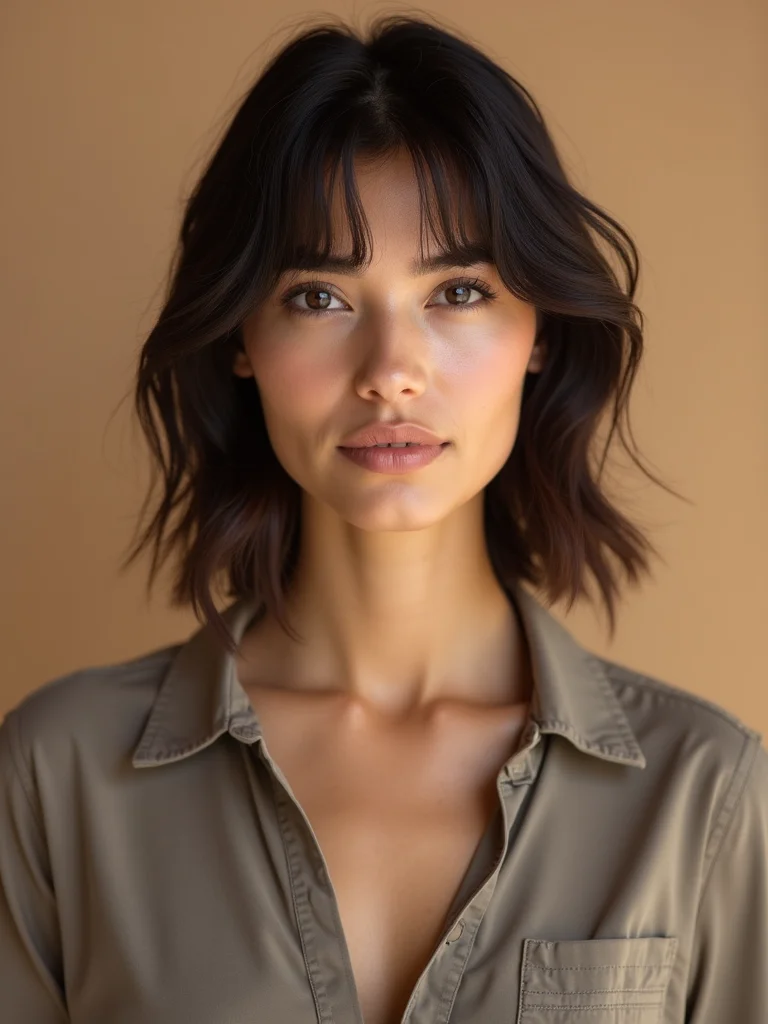
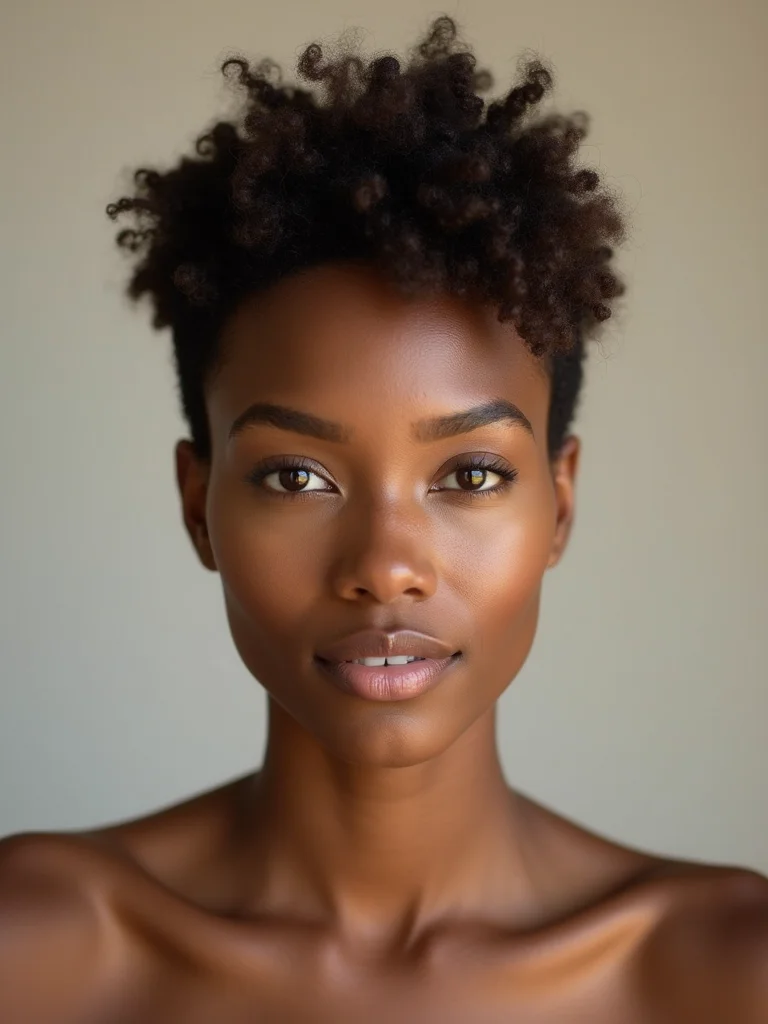
Few cuts reward curly hair as directly as a short bob does. Cutting away length removes the weight holding curls down, so the same strands that hung heavy and stretched at a longer length spring up fuller, higher, and more defined the moment that weight comes off.
The one non-negotiable: it has to be cut dry, curl by curl, in the hair’s natural pattern, or the shape lands wrong. Fifteen versions follow below, from a blunt chin-length cut to a shaggy, fringed crop, with honest notes on what each one actually asks of you.
Curly Bob Basics
Why does a bob work so well on curly hair? Length adds weight, and weight is what pulls curls flat. Shorten the length and that weight disappears, so the same curl pattern springs up noticeably fuller without any extra effort.
Does a curly bob really have to be cut dry? Yes. Curls shrink substantially as they dry, so cutting wet hair almost guarantees a length that lands shorter than intended once everything springs back.
Will this work on my specific curl pattern? Almost always, though the exact shape shifts to fit what’s actually on your head. See the density guide further down for the specifics on your pattern.
Chin-Length Curly Bob
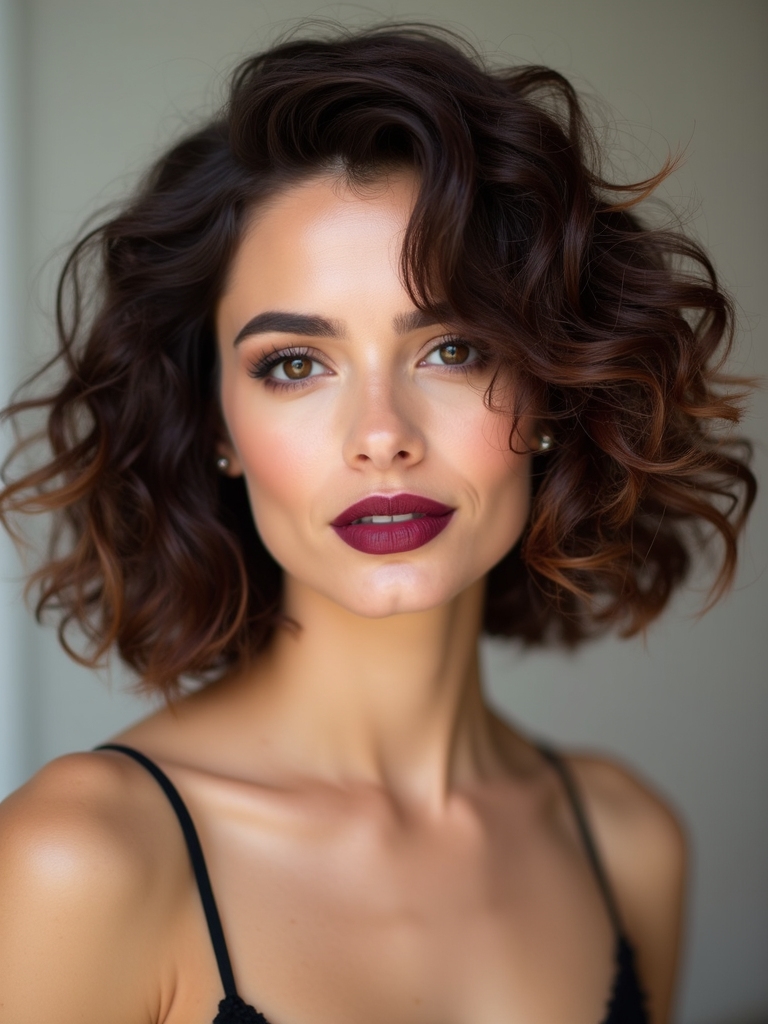
A chin-length curly bob sits at the length most curl specialists recommend as the easygoing default, short enough to bounce freely and long enough to keep the curl pattern clearly defined.
The length lands right where curls typically frame the jaw and cheekbones well, and removing the extra weight below that point is what frees the curls to lift around the face instead of just hanging.
Most versions of this length function as a genuine wash-and-go, which is exactly why it shows up so often as a go-to recommendation for everyday wear.
Layered Curly Bob
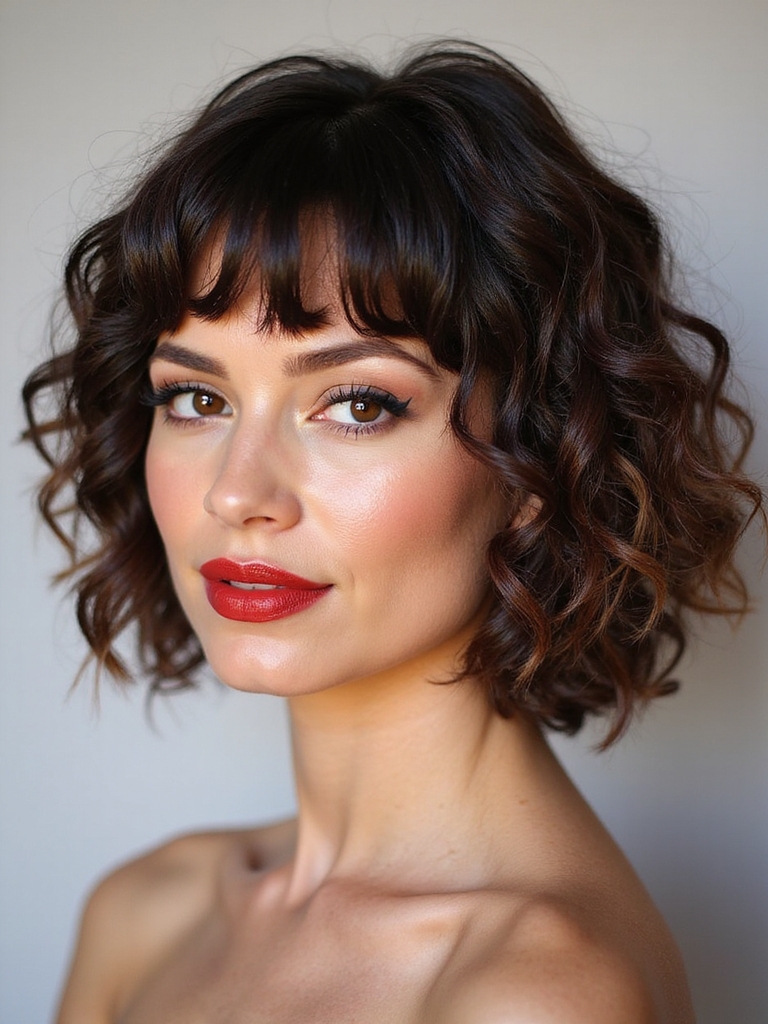
Layers work in a curly bob’s favor more than almost any other adjustment. Cut into the interior, they remove weight so each curl can spring and clump on its own, adding lift at the crown instead of letting the whole shape stack into a heavy triangle.
It’s the version I reach for most on medium to thick curl density specifically, since the layering is what interrupts the pyramid shape that dense curls default to without it.
- Interior weight removal lets curls spring and clump individually
- Best suited to medium or thick curl density
- A diffuser adds lift; air-drying with a scrunch keeps it softer
Asymmetrical Curly Bob
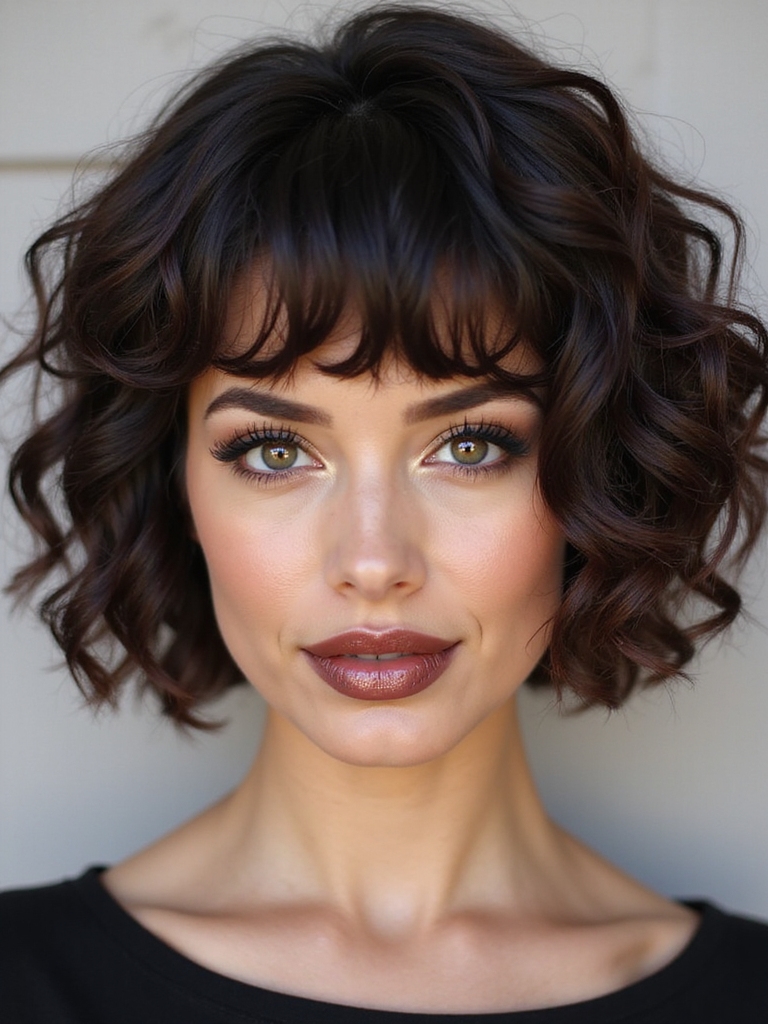
One side runs noticeably longer than the other in this version, and curl pattern carries that imbalance especially well, since the texture keeps an uneven line from reading stiff or unfinished. The shorter side tucks easily behind an ear while the longer side frames the face, and balancing the two sides against natural shrinkage takes a dry cut done carefully.
- The uneven length lands bold rather than unfinished on curls
- The shorter side tucks; the longer side frames the face
- Balancing both sides against shrinkage requires a careful dry cut
💡The Shrinkage Factor
Curl pattern can pull up anywhere from a quarter to half its stretched length once it fully dries. A stylist working dry accounts for that directly; one working wet is working blind.
The Curly Lob
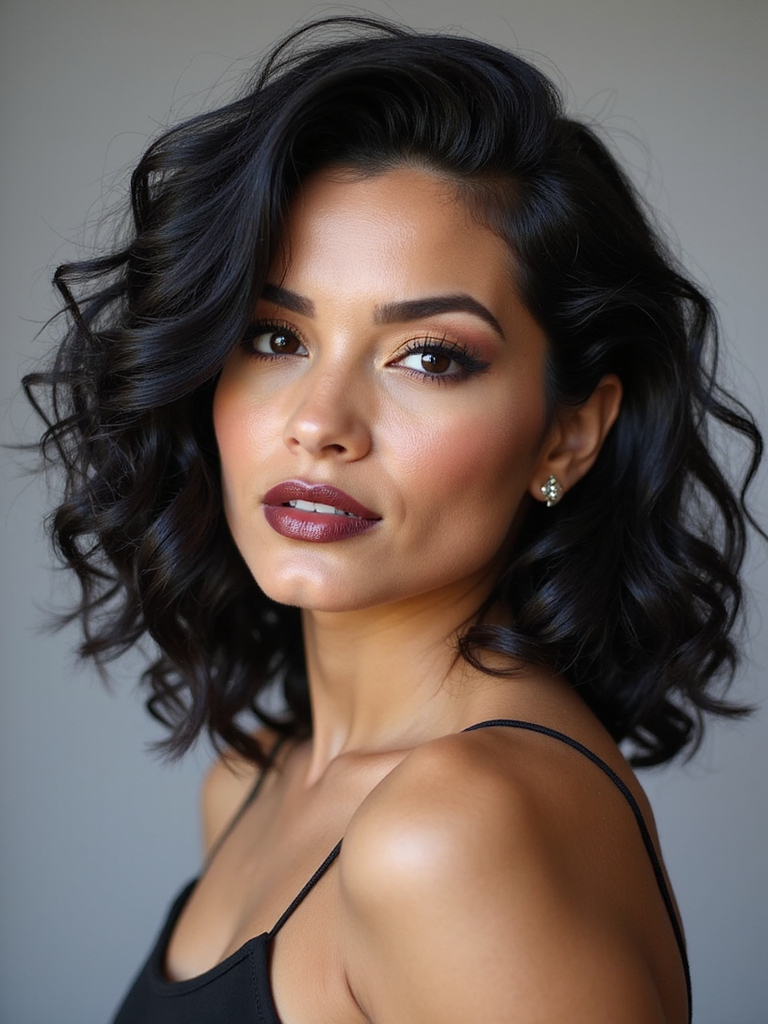
For anyone who finds a true bob too short, the curly lob keeps meaningfully more length while still removing enough weight to matter, landing around the collarbone with real bounce intact.
It functions as the gentler entry point into short curly hair, forgiving enough for someone nervous about commitment, and it still gathers into a loose ponytail on days that call for it.
- Keeps noticeably more length than a true bob
- A forgiving first step into shorter curly hair
- Still long enough to pull into a loose ponytail
Shaggy Curly Bob
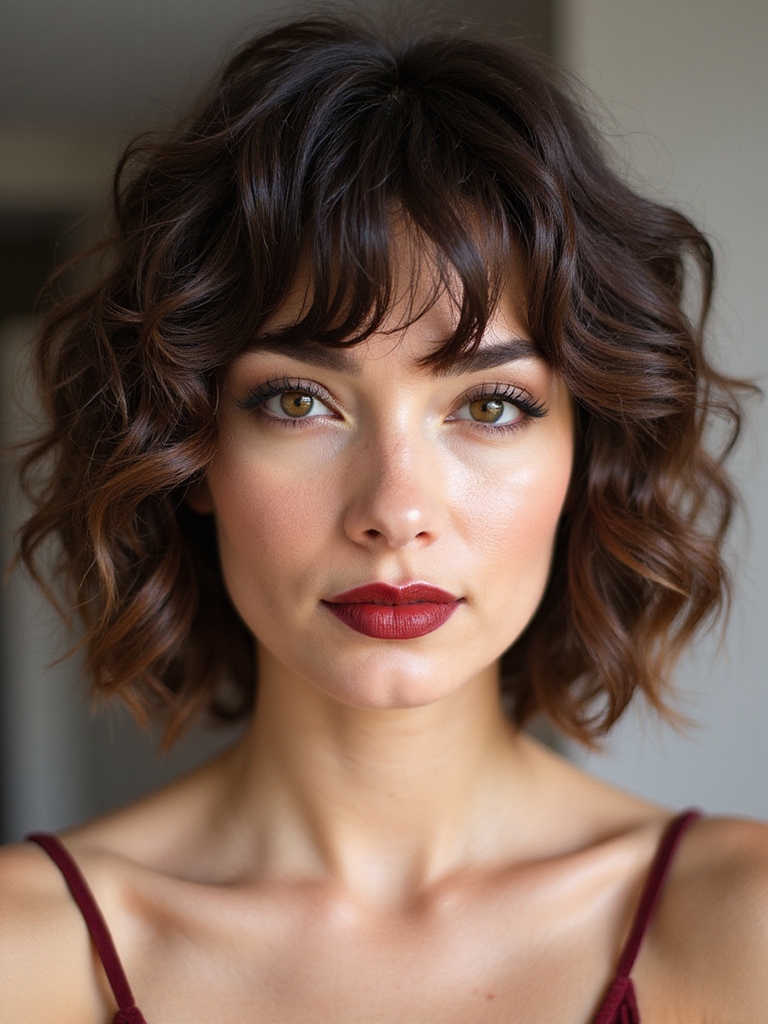
A shaggy curly bob brings choppy, undone layering into the mix, leaning fully into texture and movement rather than a clean, precise line.
Styling It Undone
The look reads relaxed rather than polished on purpose, and the shag layering is what lets individual curls spring and separate instead of clumping into one dense mass.
A soft fringe, shaped to spring to the correct length along with everything else, finishes this version off more often than not.
Face-Framing Curly Bob
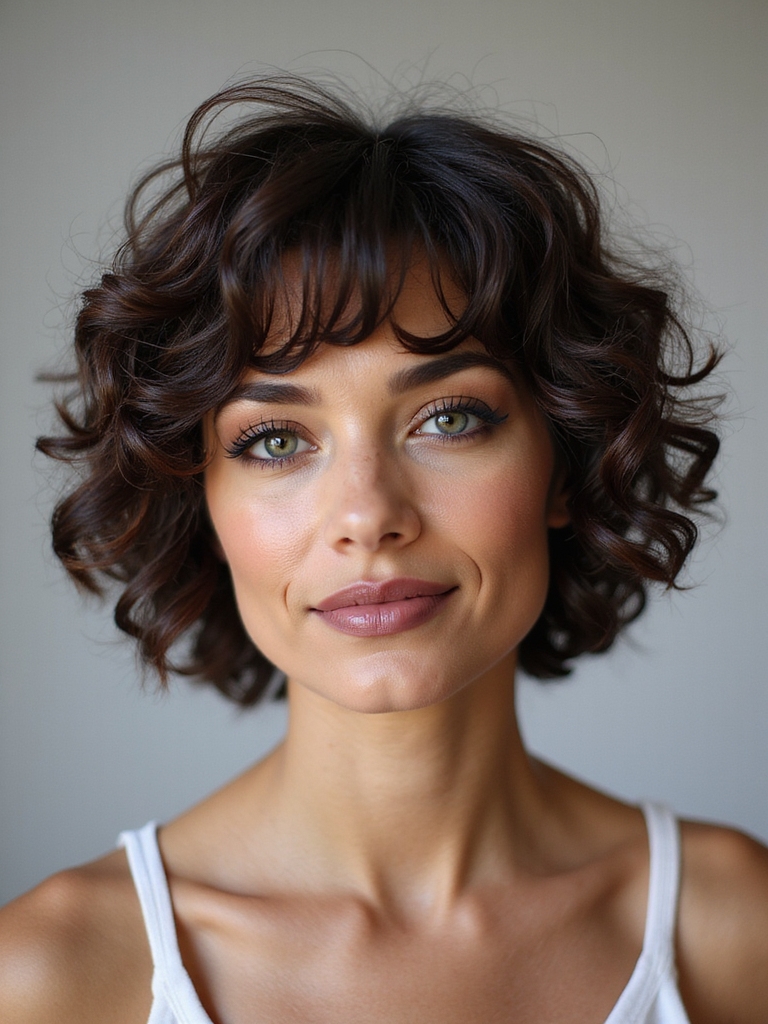
Face-framing pieces change a curly bob more than almost any other detail, with shorter curls cut specifically around the face to sculpt and soften individual features.
On curly hair, that framing springs up to land right around the cheekbones once it dries, drawing the eye exactly where it’s meant to go and balancing the shape overall. It has to be cut dry for the framing to actually land in the right spot, since wet curl gives no honest read on where it will end up.
Stacked Curly Bob
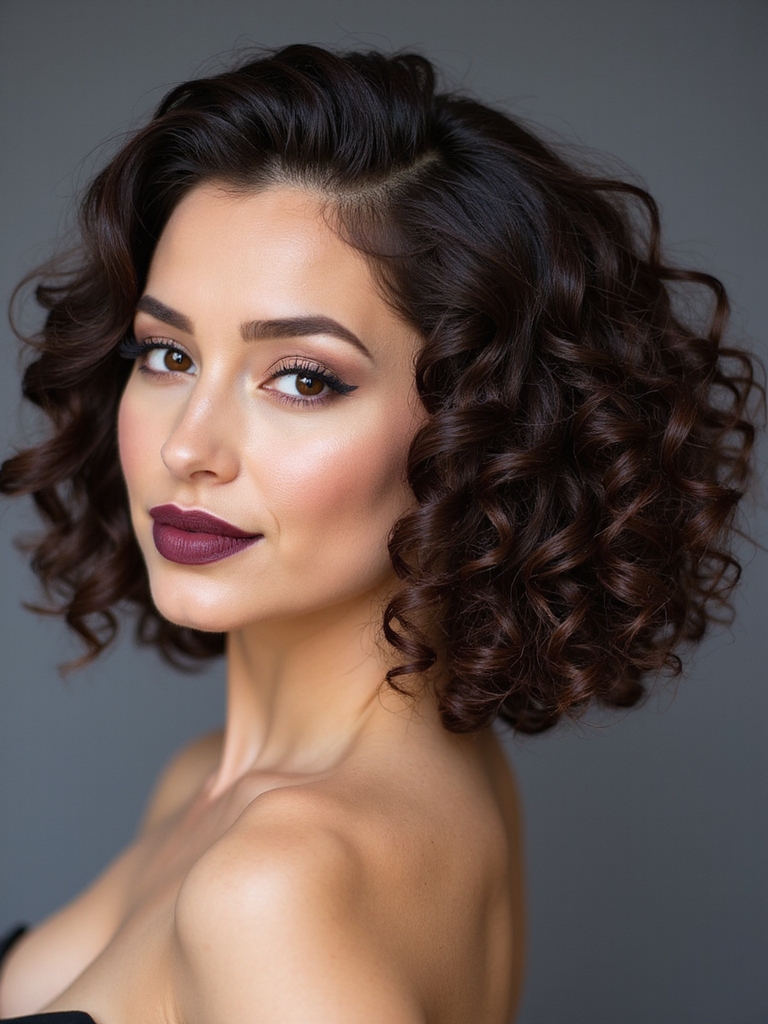
Deliberate, rounded volume builds at the back in this version, with layers cut short and stacked underneath to push the curls up and outward.
Building the Volume
The result comes across full and rounded with serious lift, functioning as the go-to answer for curl patterns that tend to fall flat right at the crown.
Diffusing the roots upside down typically produces the most height, finished with a curl cream to define what the diffusing built. This version also needs a fairly regular trim to keep that stacked shape from softening.
Getting face-framing pieces right on curly hair:
1Start at the front hairline
Face-framing reads from the front back, so establishing that line first keeps everything else in proportion.
2Section by density
Denser areas need slightly more length left to compensate for tighter shrinkage.
3Check both sides seated upright
Curls fall differently lying back in a chair than sitting naturally, which changes where the frame lands.
Curly Bob With Curtain Bangs
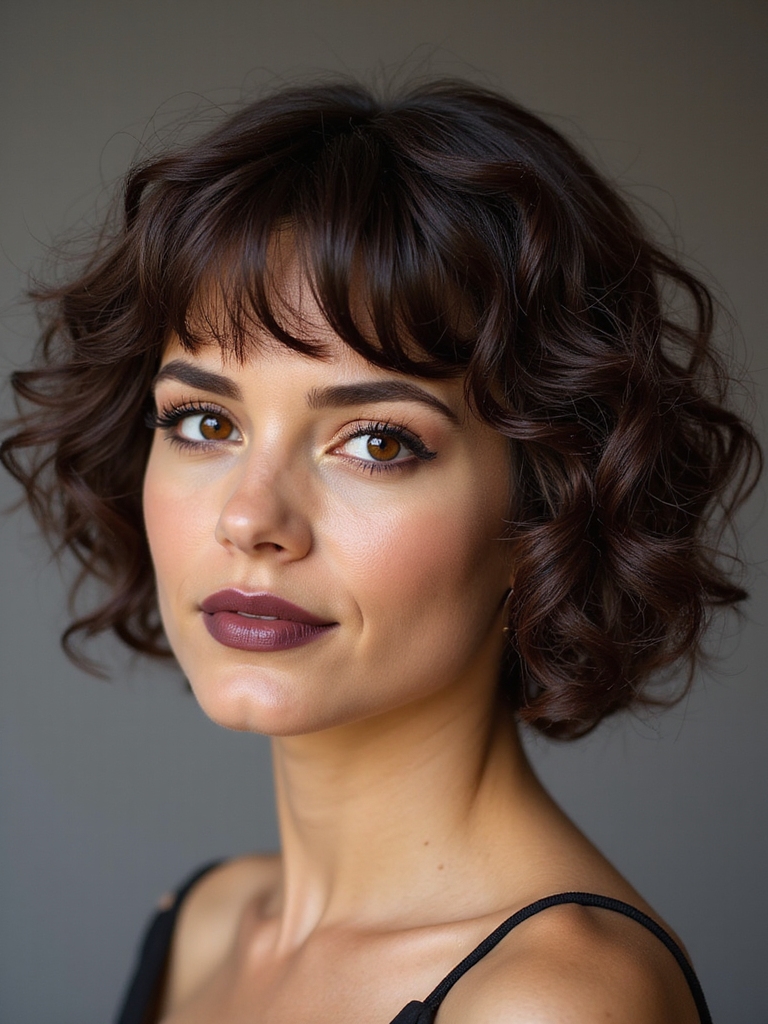
Curtain bangs and a curly bob tend to pair naturally, a soft, romantic combination that flatters an unusually wide range of faces.
A center-parted curly fringe sweeps toward the cheeks, framing the face while the bob underneath stays bouncy and defined on its own. On curls specifically, this fringe gets left a little longer than expected before cutting, so it springs into the correct shape rather than landing too short.
It’s also about the lowest-commitment way to add a fringe to curly hair I know of, since the pieces grow out into the surrounding layers with almost no distinct stage in between.
Blunt Curly Bob
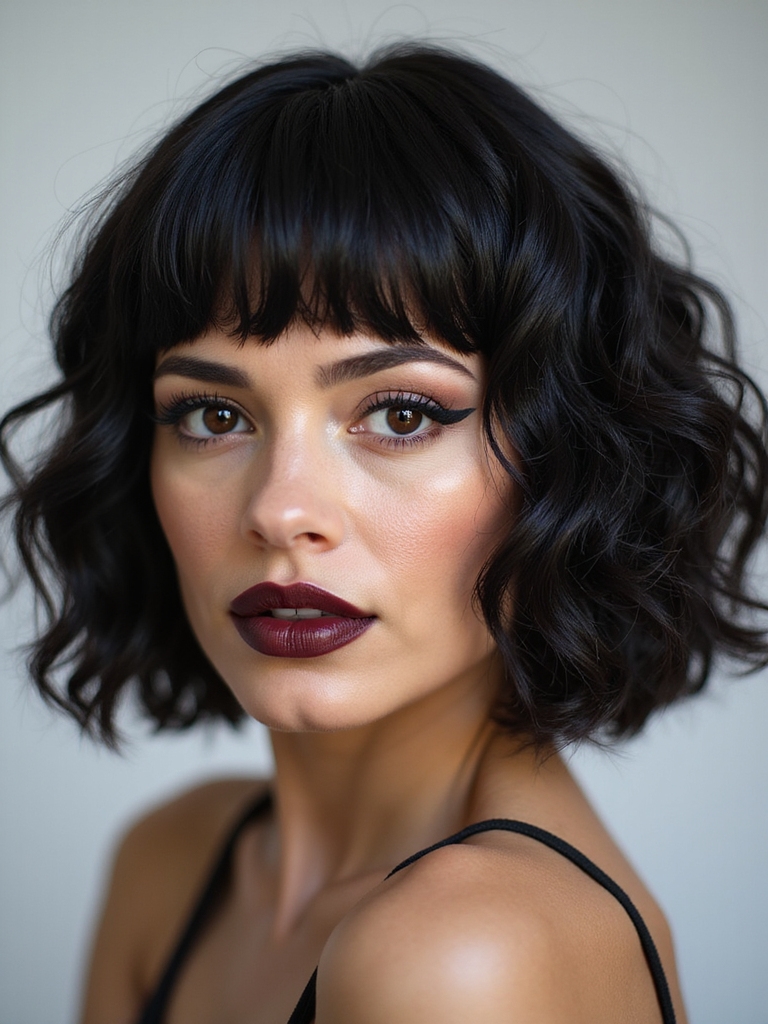
Cut to one clean, unbroken line, this version reads bold and graphic on the right curl pattern.
Who It Suits
It performs best on looser, denser curls that hold a defined shape well, where that blunt line looks sharp and deliberate rather than accidental. On tighter coils, the same line can look boxy instead; I steer those clients toward layering more often than not.
Whatever the pattern, the line only settles where it’s meant to once the curls finish springing up, which is exactly why this one gets cut dry like the rest.
Inverted Curly Bob
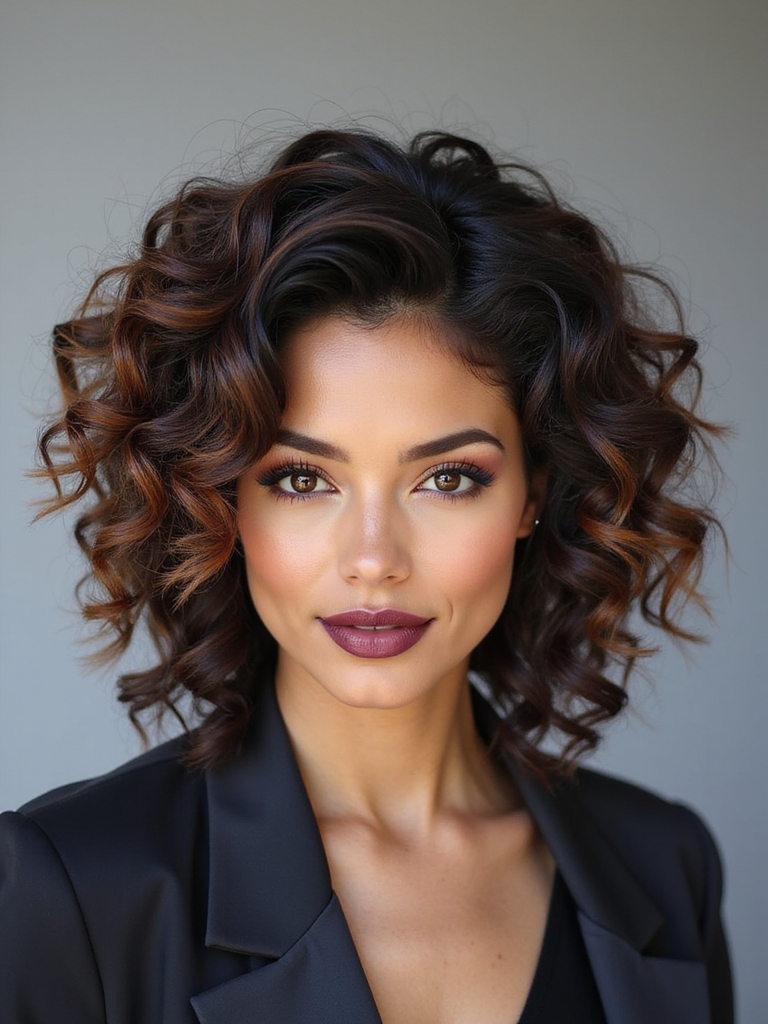
An inverted curly bob angles noticeably shorter through the back while staying longer toward the front, stacking real volume up high while the front pieces frame the face. On straight hair that angle can look severe, but curl pattern softens the whole line considerably, rounding out what would otherwise be a sharp, architectural edge. This version asks for a precise dry cut and a fairly consistent trim schedule to keep the angle from blurring.
What’s actually driving the decision, the look or the routine?
1I want zero morning effort
Chin-length or wash-and-go versions ask the least of you day to day
2I want the boldest possible statement
Micro bangs or a wet-look finish deliver drama on purpose
3I want something I can dress up occasionally
A side part or color adds range without changing the underlying cut
Curly Bob With Micro Bangs
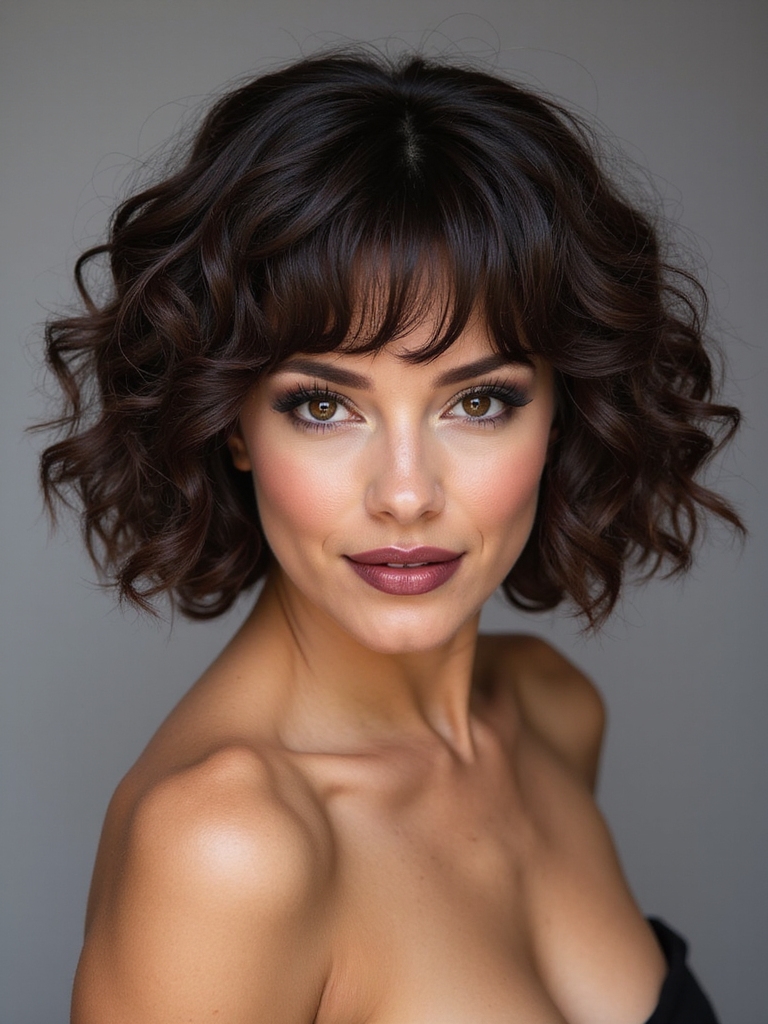
Micro bangs on a curly bob make an unmistakably bold statement: a short fringe of springy curls set high above the brows, playful and a little daring against the rest of the shape.
Committing to this one takes a fairly confident relationship with shrinkage specifically, since curly micro bangs pull up more than almost any other fringe style. Cutting them noticeably longer than the target length is standard practice, precisely because of how much they’re expected to shrink once they dry.
Side-Part Curly Bob
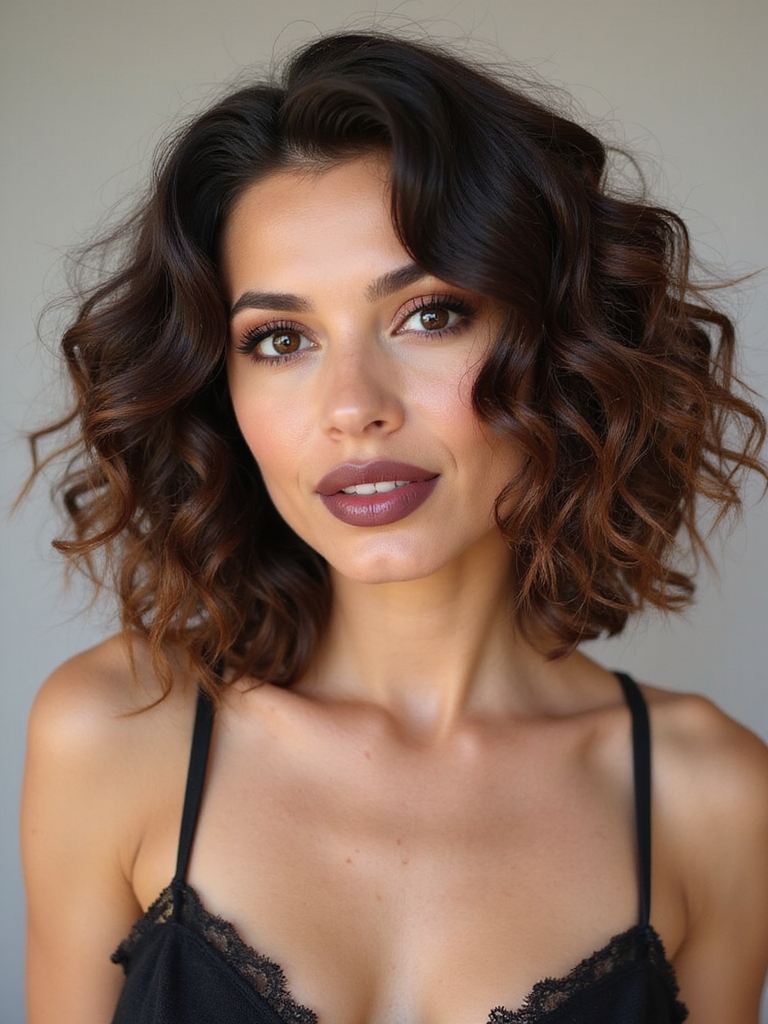
Sometimes styling does more work than the cut itself, and a deep side part is a clear example on a curly bob. Sweeping the curls hard to one side manufactures instant volume and asymmetry, lifting the roots on the heavier side for a fuller, more dramatic shape overall.
It ranks among the simplest ways to dress up an everyday curly bob, and it flatters rounder face shapes especially well by adding height and breaking up the natural symmetry of the face.
Wet-Look Curly Bob
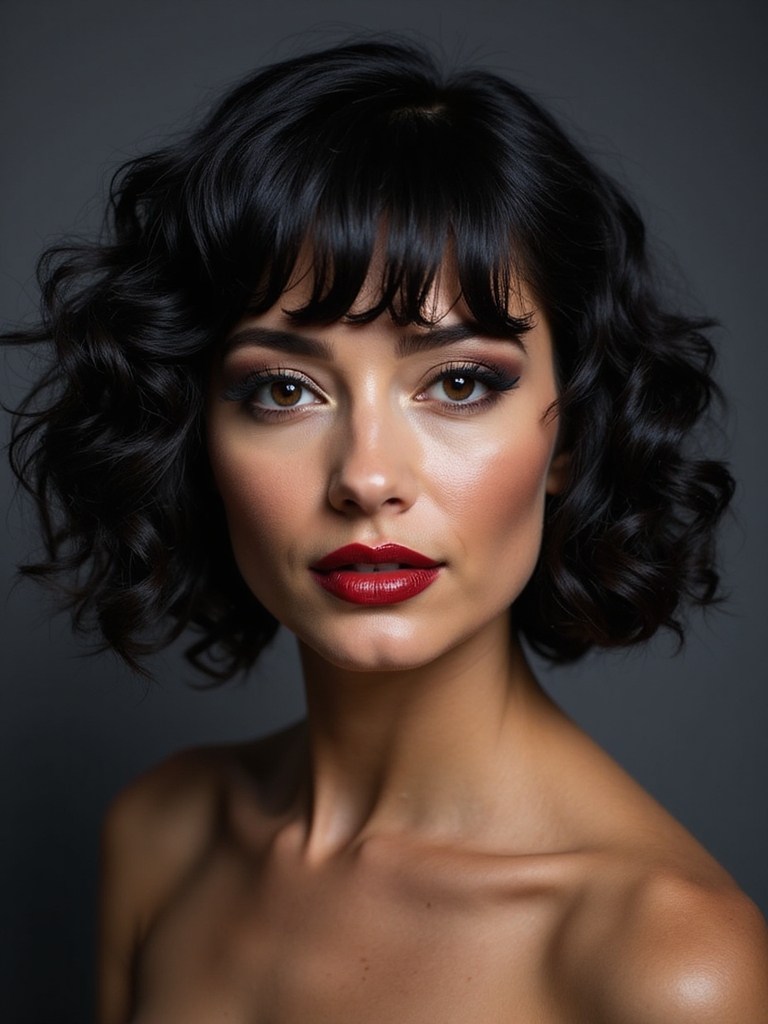
For maximum shine and definition, the wet-look version leans fully into gel for a sleek, glossy finish that reads as pure drama rather than an everyday choice.
A generous layer of gel smoothed over defined curls produces a polished, editorial finish that photographs well and holds through a full day or evening. It suits an occasion far more naturally than a Tuesday morning, since the gel cast eventually needs washing or scrunching back out.
| Density | Best approach | Watch for |
|---|---|---|
| Loose, fine curls | Blunt or chin-length shapes | Over-thinning can scatter the pattern |
| Medium curls | Layered or stacked bobs | Needs enough weight left to avoid frizz |
| Dense, tight coils | Inverted or heavily layered shapes | Needs more length left overall to compensate for shrinkage |
Wash-and-Go Curly Bob
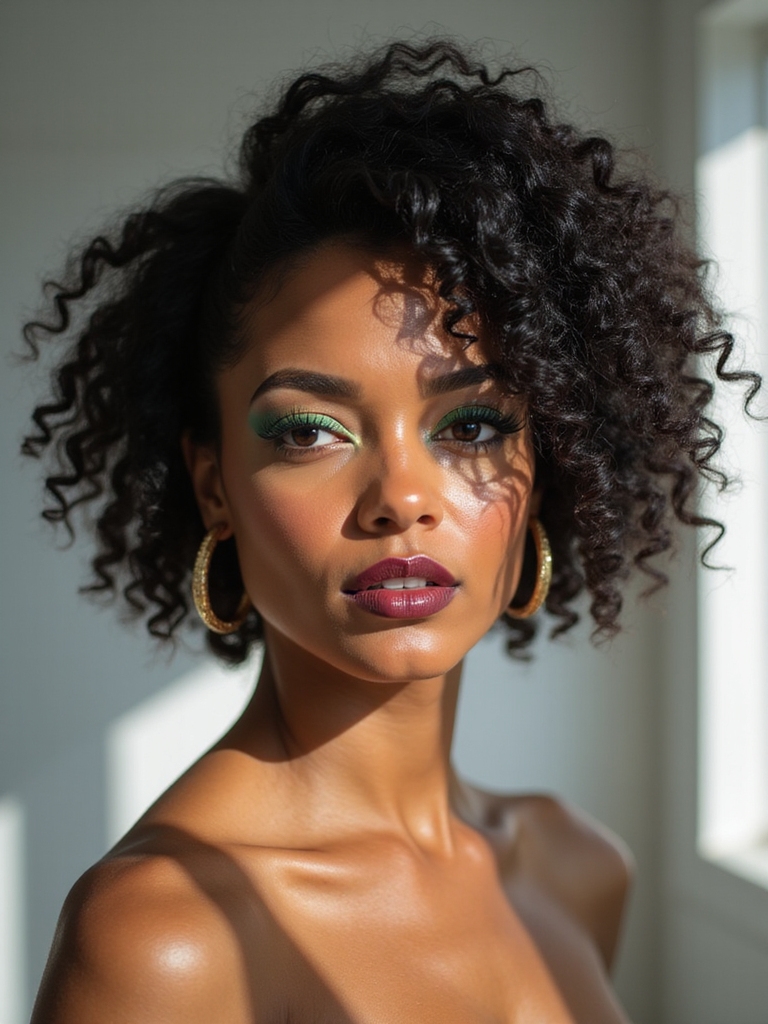
The wash-and-go represents a curly bob at its most practical, and it’s a major reason so many curl-pattern clients choose to go short in the first place. Product goes onto soaking-wet hair, the natural pattern does nearly all the remaining work, and the shorter the bob, the more reliably it behaves without intervention.
- About the lowest-effort way to wear curly hair short
- Product applied to soaking-wet hair, then left alone entirely
- A day-two refresh just needs water and a little leave-in
Color on a Curly Bob
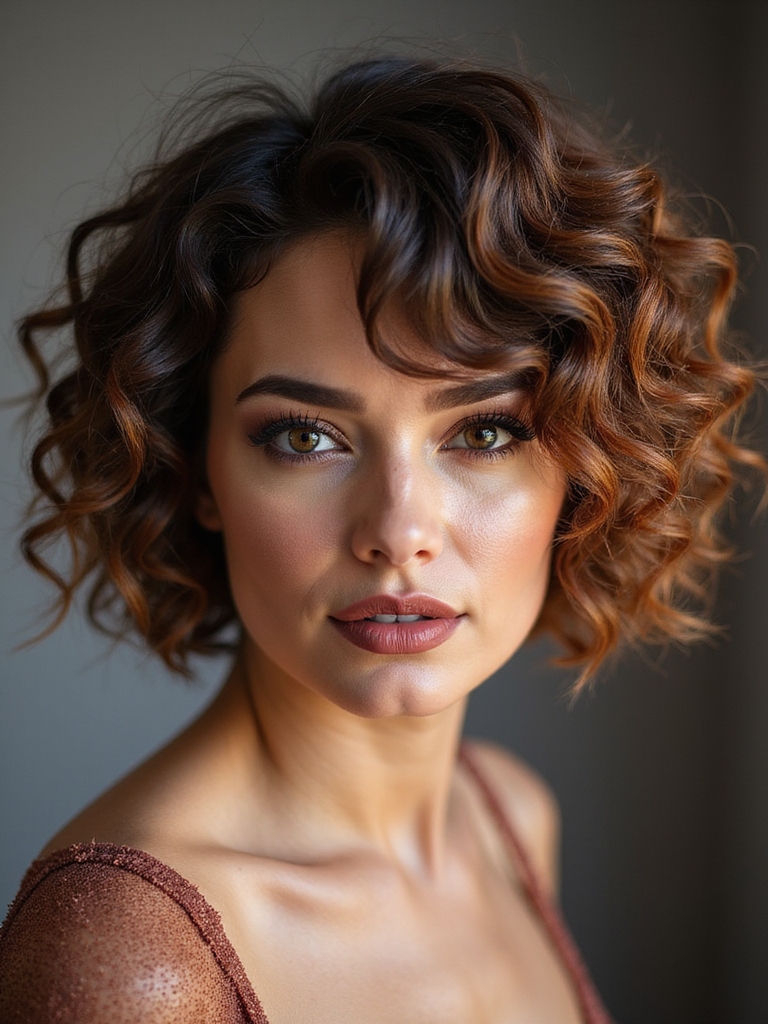
Color makes a curly bob’s texture more visible, and the pattern itself catches it in a way straight hair simply can’t replicate. Balayage or painted highlights threaded through the curls add depth that shifts as the curls move.
Curl patterns tend to be more fragile and porous than straight hair, though, which makes the colorist choice matter more than usual; bonding treatments and regular deep conditioning become part of the deal rather than an optional extra.
A soft, low-contrast balayage is the lowest-upkeep route I recommend, growing out gently through the texture. Plan on around $220 for dimensional color on curly hair specifically.
Maintenance & Care
Most curly-bob upkeep happens between salon visits rather than during them. A gentle cleanser, conditioner on every wash, and stylers applied to soaking-wet hair rather than towel-dried hair make up the bulk of a realistic routine.
A trim is usually needed only every couple of months, since shrinkage disguises growth that would be obvious on straight hair immediately. Sleeping on satin, or wrapping the curls before bed, protects the shape overnight instead of letting it get crushed flat by morning.
Short Curly Bob Questions, Answered
?How do I explain my curl pattern to a stylist who’s never seen it dry?
Bring in a photo taken on a normal day, not a special-occasion blowout, and let the hair dry naturally the morning of the appointment if you can. Seeing the real, unstretched pattern in person tells a stylist more in ten seconds than any description would.
?Does a short bob make curls more prone to frizz?
Not inherently. Frizz usually traces back to an incorrect cut or too much handling while the hair dries, rather than to the length itself. A precise dry cut paired with a leave-it-alone wash-and-go routine keeps most curly bobs looking defined.
?What happens if the curls shrink more than expected?
A stylist experienced with curl patterns plans for that shrinkage from the start, cutting to a longer wet length specifically so the finished, dried result lands where it’s supposed to.
?Is a curly bob higher-maintenance than a straight one?
The daily routine is usually lower-effort, since curl pattern does most of the styling work on its own. The salon side asks more of the stylist’s skill, though, which is typically reflected in a somewhat higher price for the cut itself.
The Next Cut Curly Hair Actually Wants
A short curly bob rewards exactly the kind of hair that’s been fighting length for years, in my experience more than any other single change. Removing the weight lets a natural curl pattern do what it does best without asking for extra effort along the way.
Save whichever version keeps pulling focus, and bring it to a stylist who specifically cuts curls dry. That single detail, more than any other choice on this list, decides whether the cut actually works.
Worth a Look