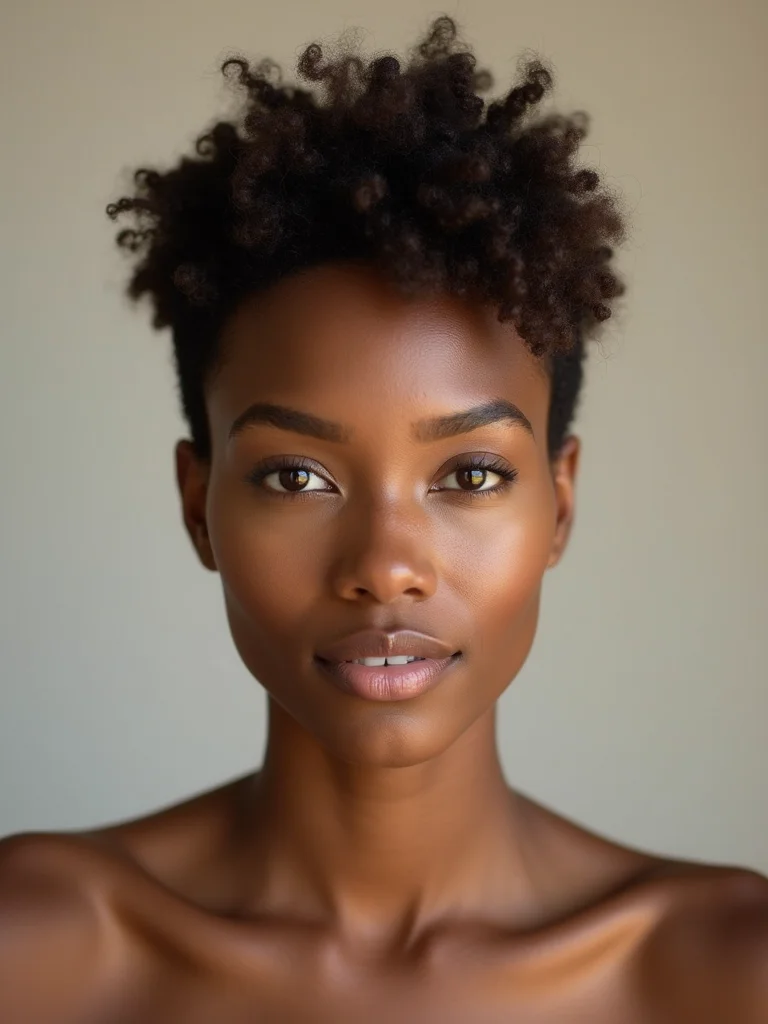
A lot of trendy cuts hide a real cost behind a good photo: twenty extra minutes at the mirror every morning. Medium shag haircuts mostly dodge that trap, since the texture comes from the cutting itself rather than from daily product and time, so something that looks current in a photo also holds up on an ordinary Tuesday.
Sixteen medium shag haircuts follow, each with an honest read on how much real effort it asks for once the trend photo stops being the whole story.
Honest Answers Before You Book
Is a medium shag actually low-maintenance, or just marketed that way? Soft, blended versions truly are; choppy, disconnected ones look bolder but ask for more frequent trims to stay sharp.
What’s the realistic cost to keep one up? A full reshape runs about $60 at most salons, and softer versions can stretch the gap between visits further than choppier ones.
Which version suits the busiest schedule? The classic, beachy, and minimal-styling versions ask the least; anything with a full fringe or heavy disconnection asks more.
The Classic Medium Shag
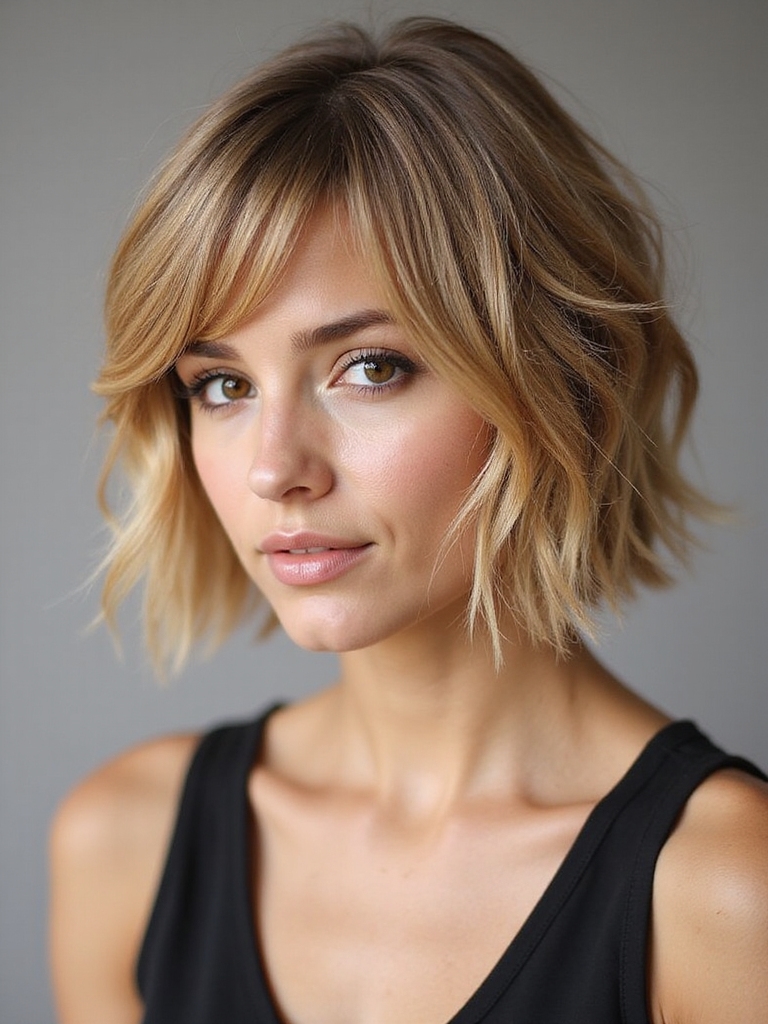
The classic mid-length shag with soft, wispy bangs is the version most people picture first, and it’s an easy place to start for anyone nervous about the word “shag.”
Where the Ease Actually Comes From
Feathered layers are cut to separate and move without help, so a finger-dry and a light mist of texture spray usually covers the whole morning routine.
The catch, if there is one, is that a shape this soft blurs faster than a choppier cut once it’s skipped past its window; a reshape close to every six weeks keeps it from settling into one length again. A more structured take on the idea lives at modern shag haircut.

A Shag for Fine Hair
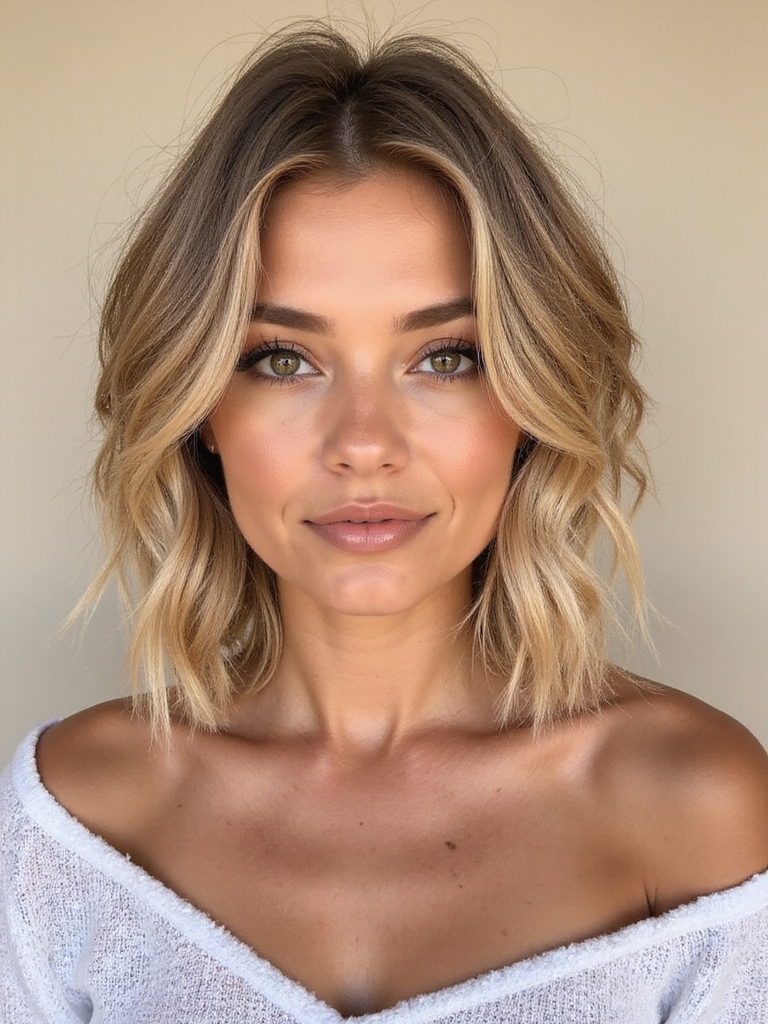
Fine hair tends to do well with a shag, since soft layering fakes the look of more strands and movement than are actually there.
Where this struggles is over-thinning; take out too much weight and fine hair just looks sparse. More fine-hair-specific ideas live at shaggy bob for fine hair.
- Ask for soft layers paired with a near-blunt perimeter so the ends still read dense.
- A lightweight mousse worked into damp roots builds lift without the heaviness of a cream.
- Heavier styling products flatten fine hair fast; lighter, spray-based formulas hold up better through the day.
A shag doesn’t add hair. It just convinces the eye there’s more of it than there is.
The Wavy Shag
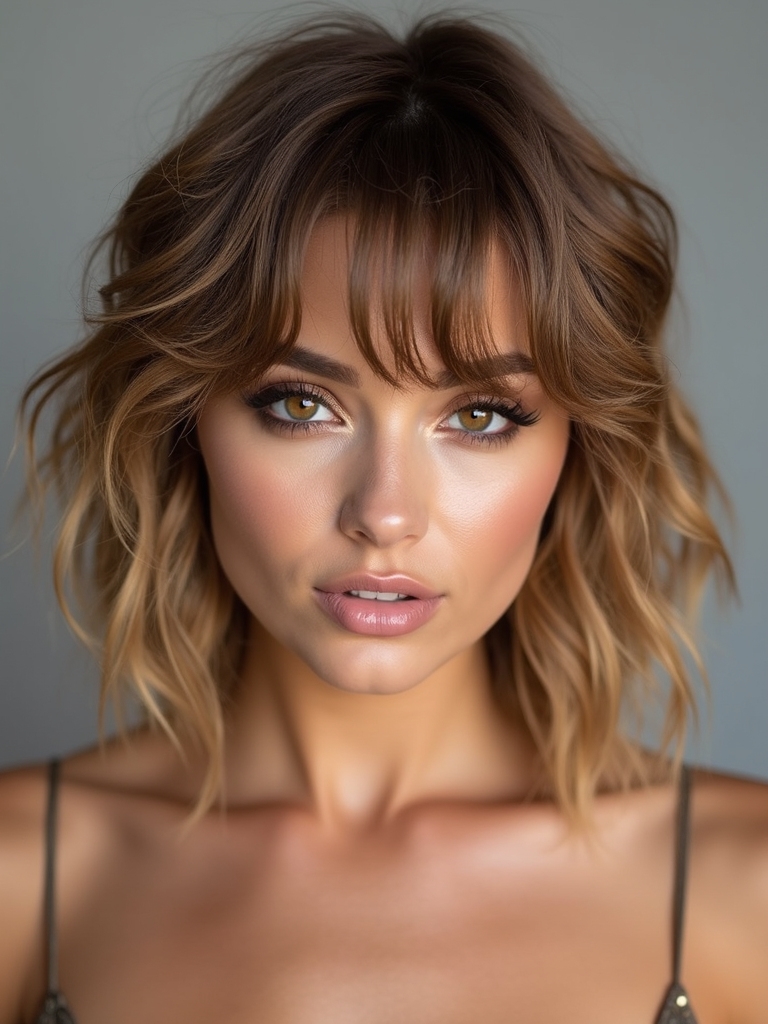
A wavy shag paired with a curtain fringe is close to the lowest-effort version on this whole list, since existing wave already gives the layers room to move.
- Scrunch a wave-defining cream through soaking-wet hair, then leave it alone to dry.
- A drop of oil on just the ends controls frizz without weighing the wave down or dulling its natural shine.
- The curtain fringe sweeps back with a single pass of a paddle brush on styled days.
The Curly Shag
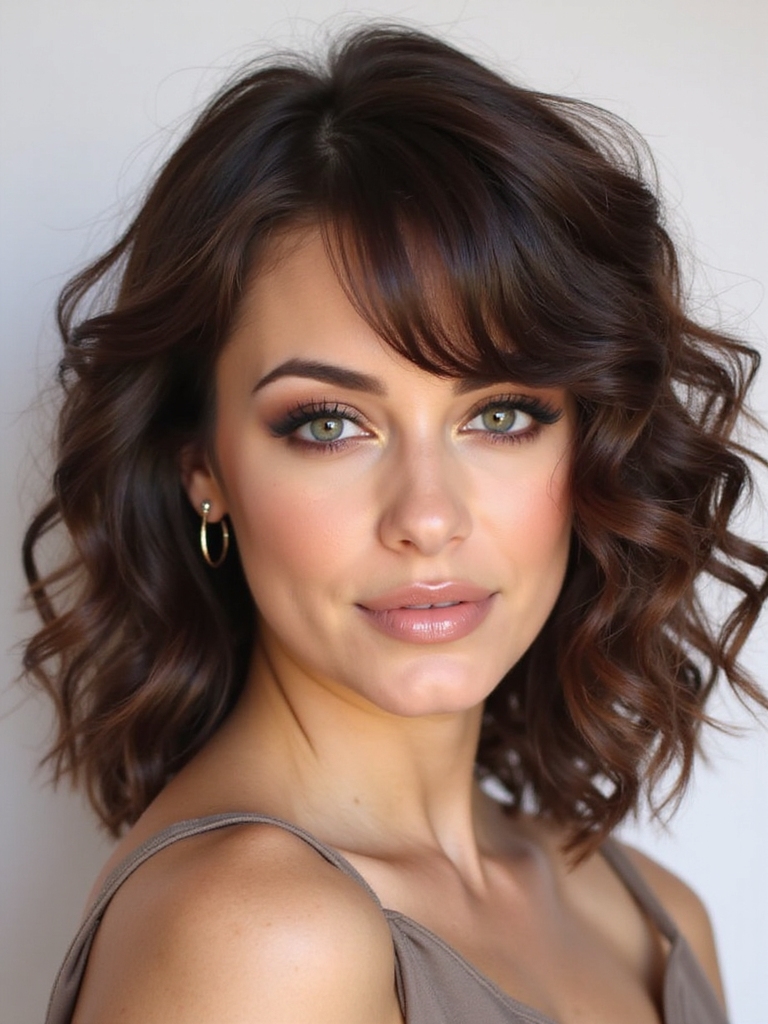
On curls and coils, a shag with clearly defined layers works with the pattern instead of piling into one dense triangle.
The cut only works shaped completely dry, one curl section at a time; a wet cut tends to shrink up shorter and squarer than planned once it dries.
Booked with someone experienced in textured cutting, the shape settles into a genuine wash-and-go within a few tries. More on the technique lives at curly shag haircut.
A couple of assumptions about curly shags worth checking:
❌ Myth: A shag can be cut on wet curls just as accurately as dry ones.
✅ Reality: Wet curls hide how much they’ll shrink once dry, so a stylist working on wet hair is mostly guessing at the finished shape.
❌ Myth: More layers always means healthier-looking curls.
✅ Reality: Too many layers cut too high can thin curls out; placement matters far more than the raw count.
The Shaggy Lob
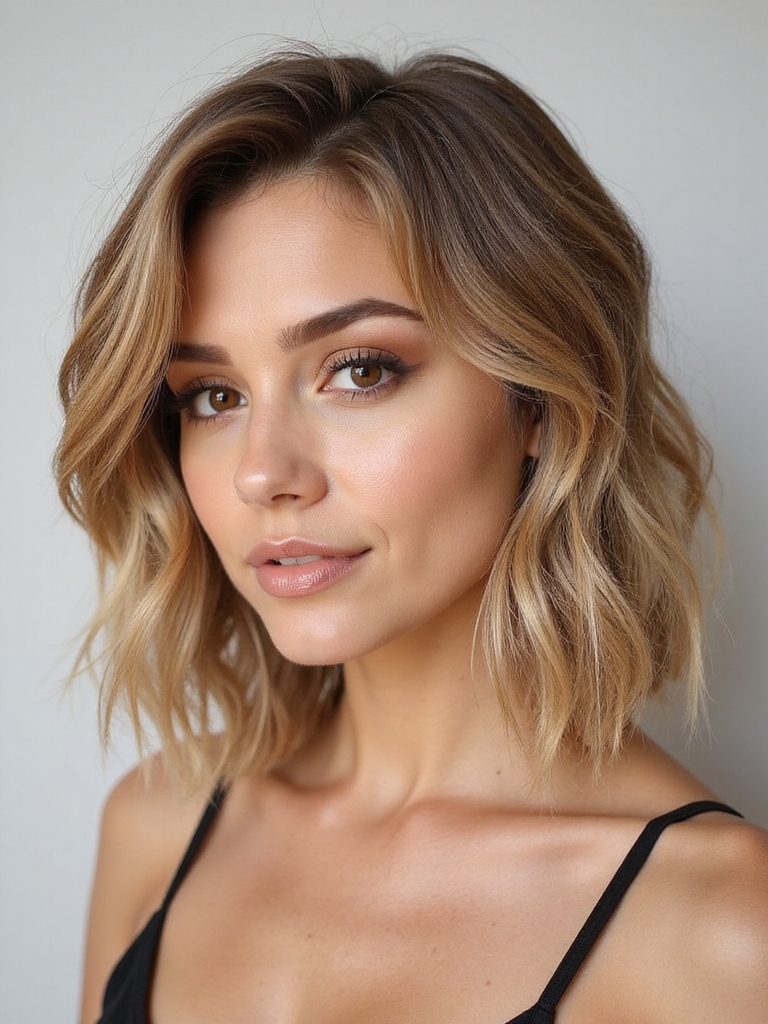
The shaggy lob takes the cut down to collarbone length, trading a little of the drama for a more polished, pulled-together line.
It works well for keeping shag movement while still having enough length to pull back into a low knot on days styling isn’t happening at all.
The blended layers grow out without an obvious shelf, so the gap between reshapes can stretch a little further than on a choppier version. More bob-length versions live at shaggy bob.
The Razor-Cut Shag
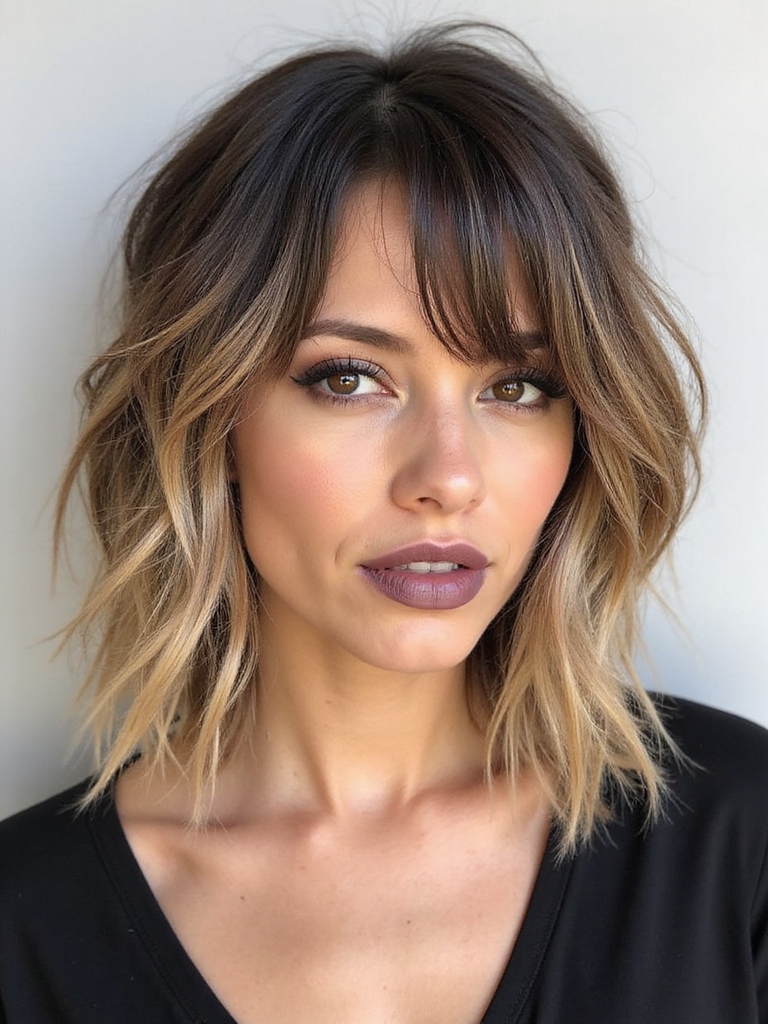
A razor finish gives this shag its lightest, airiest movement, slicing the ends so they fall in separated, weightless pieces.
- Works best on healthy, medium-density hair; already-fragile or overly fine strands can fray under the blade.
- Skip the flat iron entirely here, since added heat speeds up any fraying that’s already started.
- A light mist and a quick finger-tousle is close to the entire styling routine, with no brushing needed at any point.
The Feathered Shag
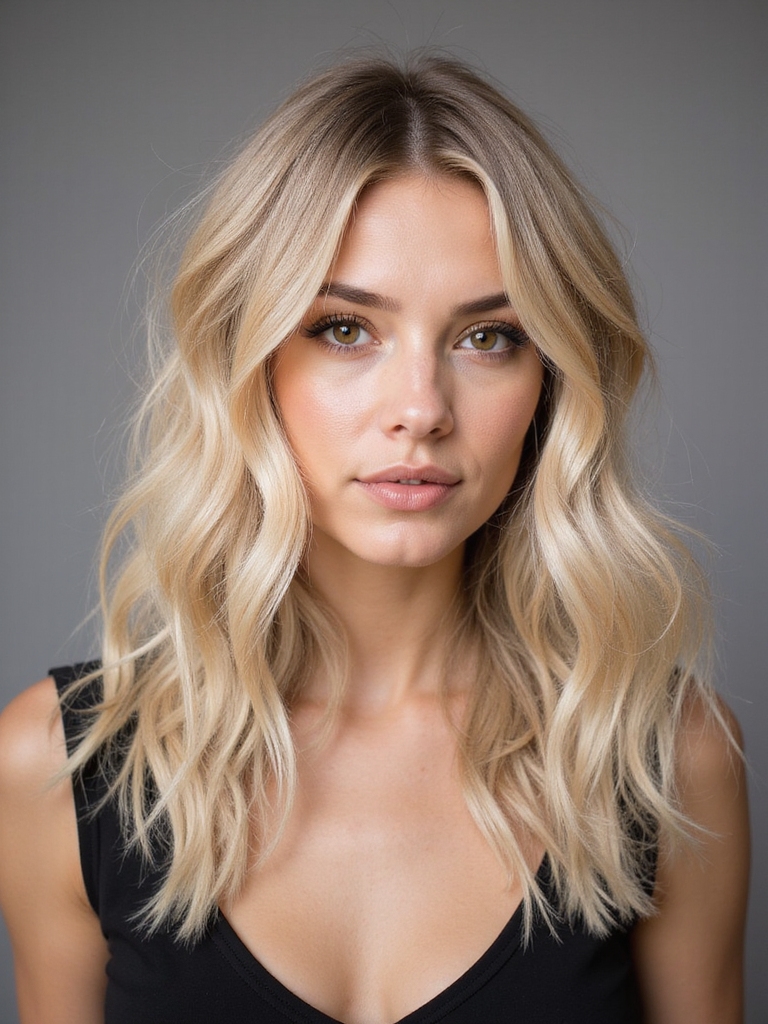
Feathered layers paired with soft face-framing pieces are the gentlest version of this cut, flattering a wide range of faces without asking for much daily attention.
The feathering is designed to look finished even half-dry, one reason it’s held its place through so many trend cycles.
- A reshape close to every eight weeks keeps the feathering from blending into flat length.
- Air-drying alone usually looks intentional; heat tools stay optional here.
- Suits most face shapes, since the framing pieces adjust to the face underneath.
Full Soft Bangs
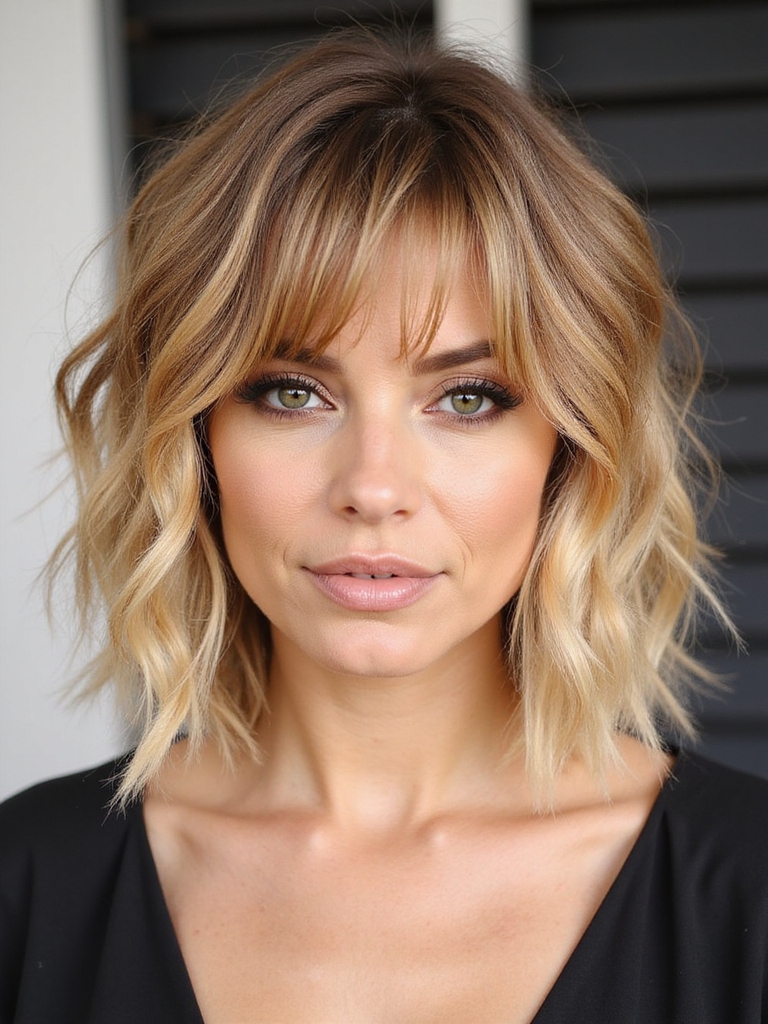
Full, soft bangs turn a plain shag into something bolder, sweeping across the brow in a fuller line than a curtain fringe ever does.
- A quick blow-dry with a round brush most mornings keeps the fringe soft and full.
- The bang itself needs a trim roughly twice as often as the reshape underneath it.
- Many salons fold that quick fringe trim into the full appointment at no extra charge, which helps offset the more frequent visits this version asks for.
The Messy Shag
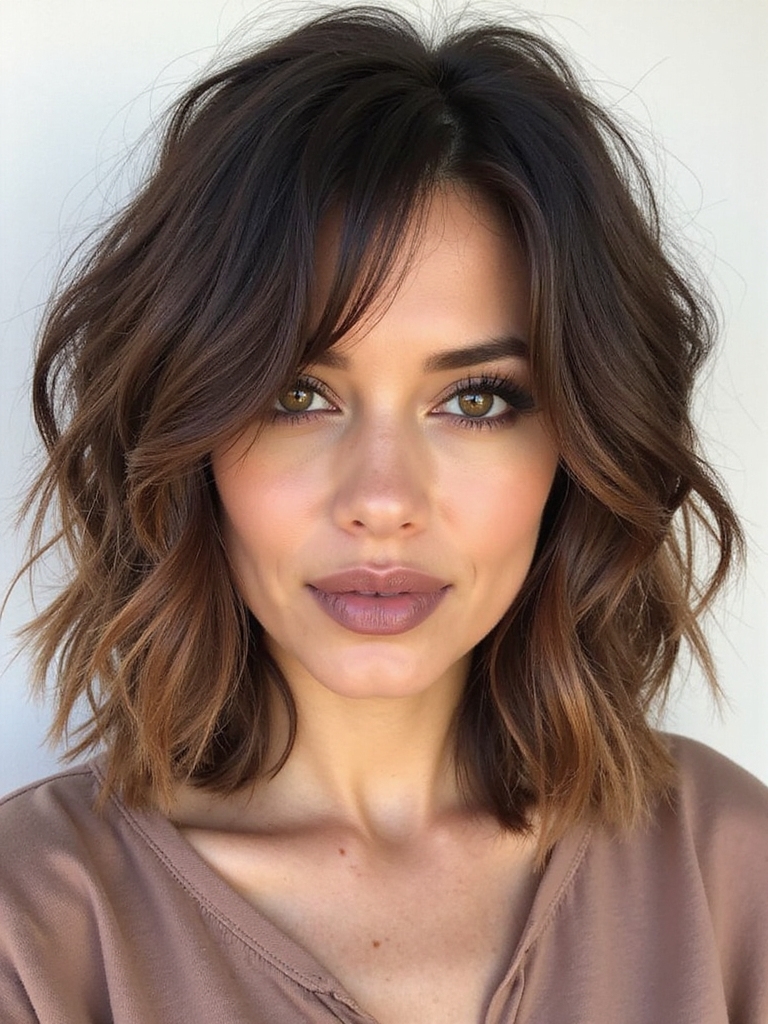
The messy shag leans fully into undone, tousled ends that look a little careless entirely on purpose.
- A texturizing cream scrunched through damp hair with no further styling is usually the whole routine.
- Second-day hair often looks better than first-day here, so a skipped wash actually works in its favor.
- A little matte paste pulled through the ends adds more edge on days that call for it, without ever needing a fresh wash first.
A Shag for Thick Hair
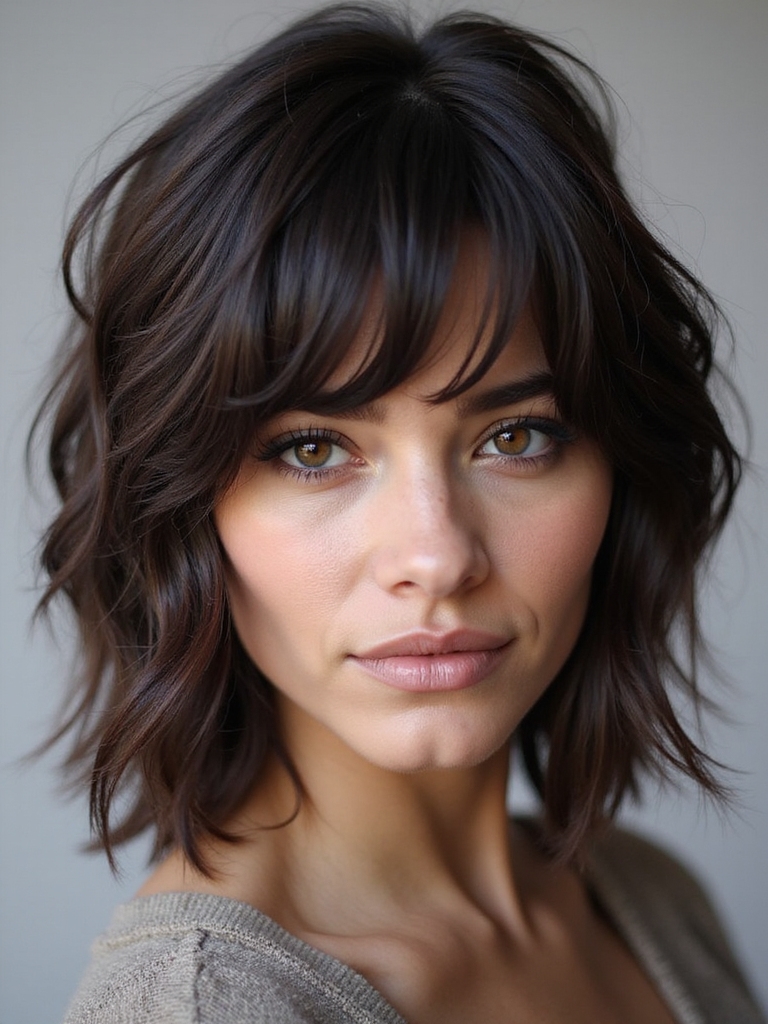
For thick, dense hair, layering is what finally lets it move on its own.
Internal thinning takes the bulk out from underneath, so the same hair starts swinging and breathing freely.
- Ask for the thinning to happen internally, keeping the surface looking full and dense.
- A reshape close to every seven weeks keeps the bulk from building back in.
- The cut holds its shape well between visits once the initial weight is removed, so the improvement compounds over the first couple of appointments.
The Side-Swept Shag

A soft, side-swept fringe adds a flattering diagonal across the forehead without touching the cut underneath at all, which makes it one of the easiest updates to try on an existing shag.
It grows straight out of the existing layers, so it blends right in, and moving the part to the opposite side gives an entirely different look within seconds. No scissors, no appointment, no risk involved, and no waiting for anything to grow back if it doesn’t work.
A couple of terms that come up when discussing this look with a stylist:
📖Side-swept fringe
A fringe styled to sweep diagonally across the forehead from a deep part.
📖Blended layers
Layers cut to transition smoothly into each other with no visible line or step.
The Wolf-Cut Shag
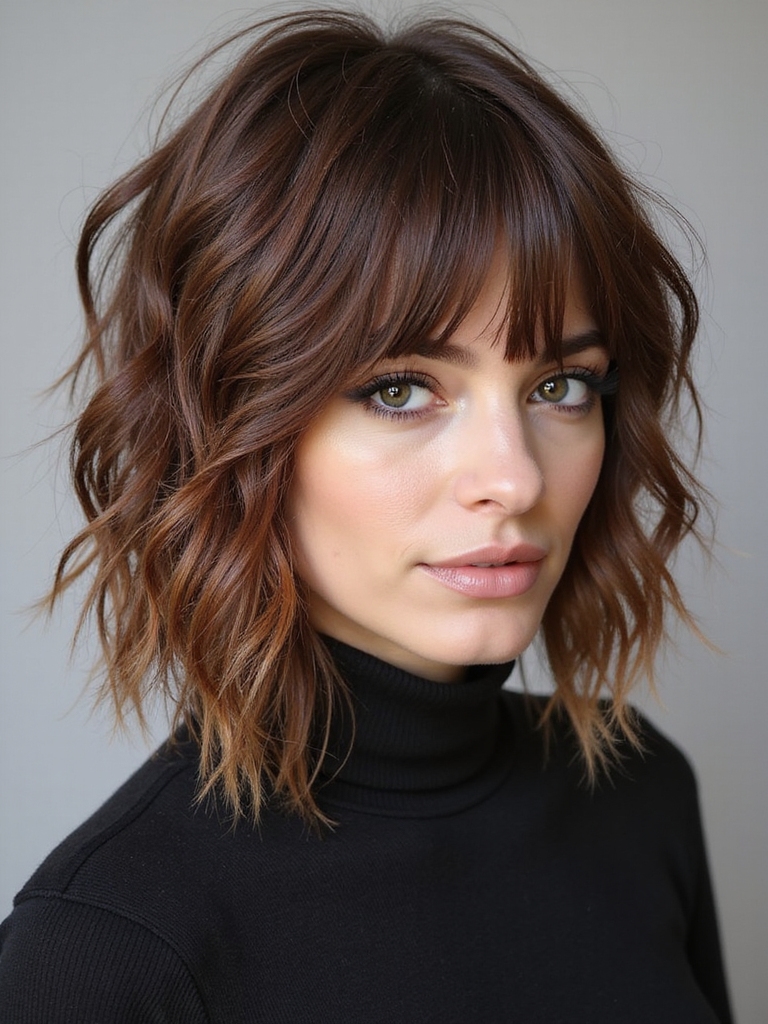
Mixing this shag with a wolf cut means letting the crown go choppy and disconnected while the rest keeps typical shag movement, landing as the boldest option in this whole lineup.
Where this struggles is regrowth speed. The sharper the disconnection, the faster it needs attention, since blurred edges are usually the first thing that ages this particular shape; count on visits close to every five weeks.
Fine to medium density carries the look best, since the layering does real volume-building work. Thick hair needs the crown thinned more aggressively, or it tends to puff out at the top. The full-length version lives at the wolf cut.
Shattered Ends

Point-cutting through the ends, paired with extra-short layers right at the crown, is what builds the height and separation in this version, and it photographs especially well under direct light.
Fine or flat hair benefits most, since the technique creates the illusion of density more than it adds real thickness. A rough, head-down blow-dry with a strong-hold mousse gets the lift started before any product touches the ends, and the shape holds through most of a day without a touch-up.
The Beachy Shag
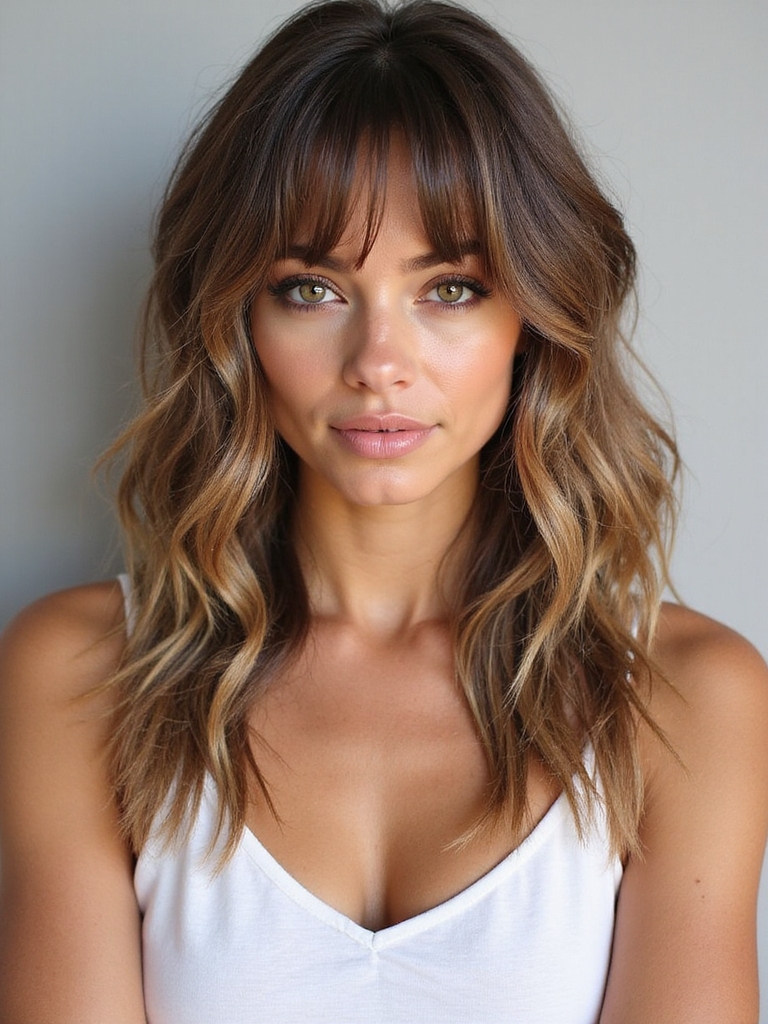
A beachy shag turns the existing layers into soft, sandy waves, working directly with whatever natural texture is already there.
The whole routine is close to one step: scrunch a sea-salt spray through damp hair from the ends up, then leave it alone to dry.
Raking the waves apart with fingers once dry keeps them loose; a brush at this stage undoes most of the texture the cut is built for, flattening exactly what took no effort to create.
📋Getting Real Beach Texture, Not Frizz
- ✓Apply salt spray to damp, not soaking-wet, hair for the most defined waves.
- ✓Scrunch upward toward the roots for the most lift.
- ✓Let it dry fully undisturbed before touching or re-scrunching.
Minimal-Styling Shag
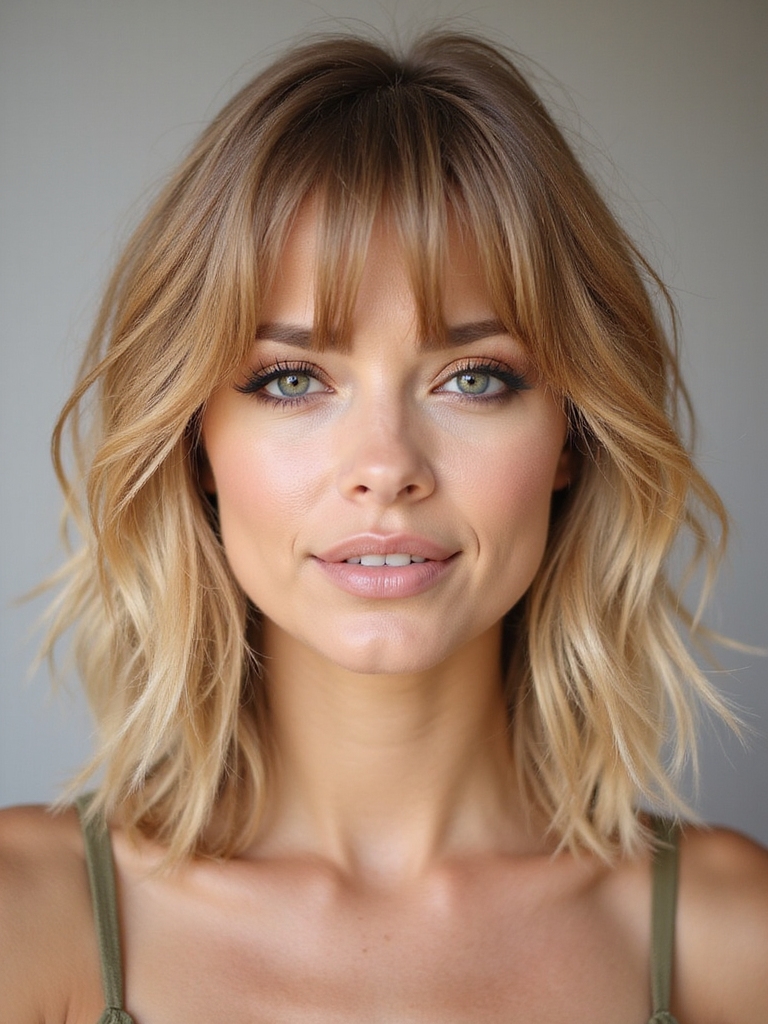
For anyone whose real test of a haircut is how little it asks on a chaotic morning, soft, blended layers built to air-dry are the answer, since almost nothing about this version depends on tools or timing.
- Scrunch a lightweight cream through damp hair and walk away entirely.
- Let it air-dry untouched so the layers settle into their own pattern.
- Revive second-day hair with a finger-tousle and a light dusting of dry texture spray, no wash required.
The Grow-Out-Friendly Shag
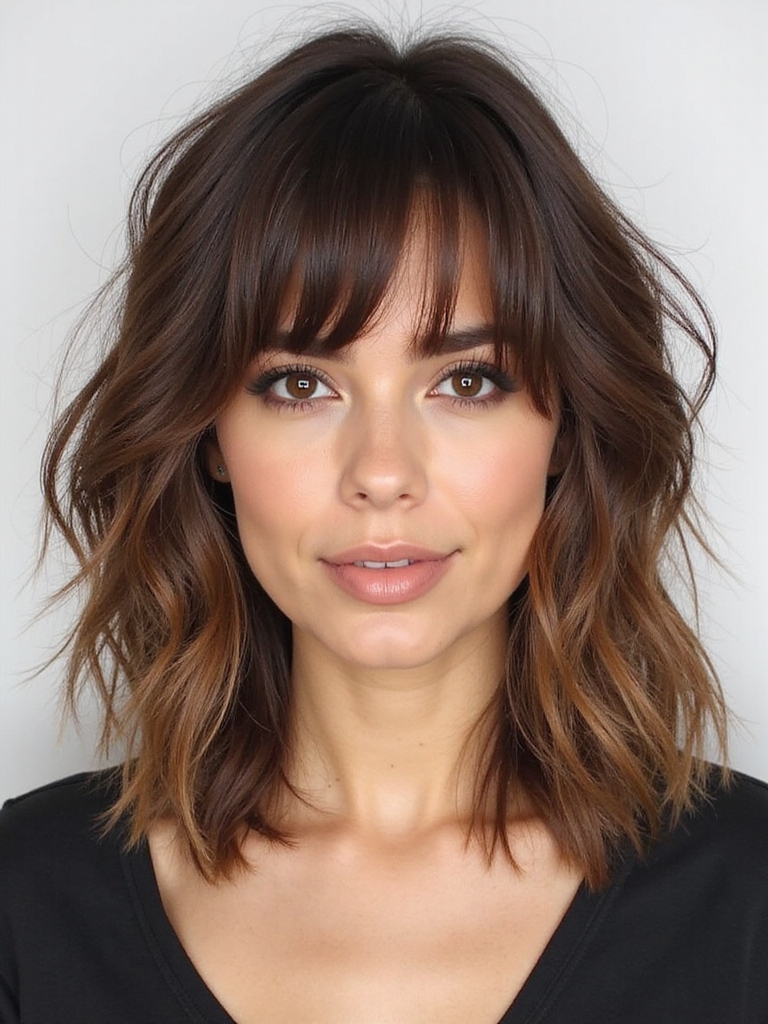
Blended rather than choppy layering is what makes this version kind to grow out, which matters most for anyone working toward a longer length eventually.
- Dusting trims on a slower schedule, roughly every couple of months, clean the ends without cutting back progress.
- Ask a stylist to soften the shortest layers gradually as everything else lengthens.
- Texture spray and loose waves blur the in-between stage more than any specific cut detail can. More on the longer version lives at long shag cut.
How to Get the Look
Across every version here, the same few habits keep a shag looking intentional: washing every couple of days to preserve some grip for the texture to hold onto, and reaching for one texture product total, not several heavy ones stacked together.
The one non-negotiable is the trim schedule, and a full reshape runs about $60 most places. Skip the schedule on a choppier version and the whole shape blurs fast; stick to it and even the boldest shag here stays easy to live with.
Medium Shag Questions
?Are medium shags really as low-maintenance as they look in photos?
Mostly, yes, for soft and blended versions. Choppier, more disconnected shapes look bolder in photos but ask for noticeably more frequent trims to hold that same look, so the photo and the upkeep don’t always match.
?Photos of a shag and a wolf cut often look interchangeable. Are they the same haircut?
Not quite. A wolf cut piles its most aggressive layering right at the crown for extra height and edge, while a shag spreads lighter layering more evenly across the whole head instead of concentrating it in one place.
?Can a shag be styled sleek for work one day and messy the next without a fresh cut?
Yes, and that flexibility is one of the better arguments for booking one. The same layers that scrunch into texture also smooth out with a paddle brush and a little heat, so a single cut actually does cover both looks without a second appointment.
?Does color or a lightening service change how often a shag needs a trim?
It can. Processed or lightened ends tend to look rougher faster, so a shag with color often wants its reshape a little sooner than the same cut left natural, especially on the choppier, more piecey versions.
?Is a shag a safe choice for hair that’s already a bit damaged?
Often, yes, since removing weight can make already-thin or slightly damaged hair look healthier by taking away the parts most likely to look stringy. Heavy chemical damage still deserves an honest conversation with a stylist first.
The Cut That Matches Its Own Photo
The medium shag has stuck around because the ease is real, not just implied by a good photo: the texture lives in the cutting, so very little daily effort is required to keep it looking current.
The right version depends on how honest the trim schedule can realistically be, more than which specific look wins on style alone.
More Ideas Here