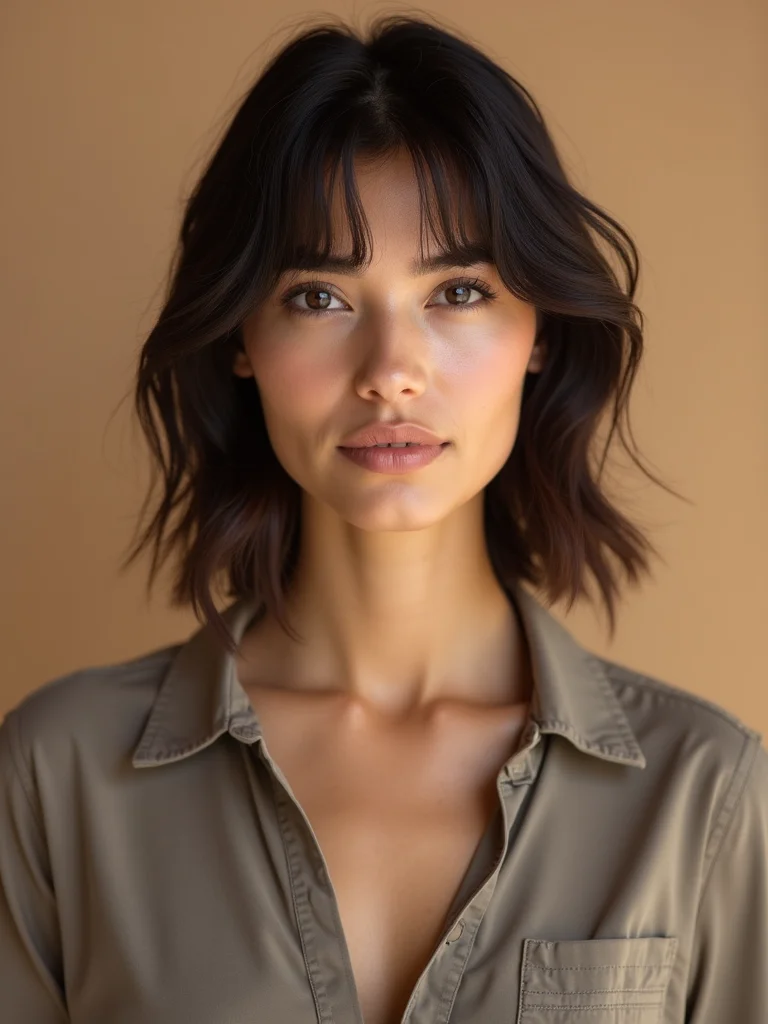
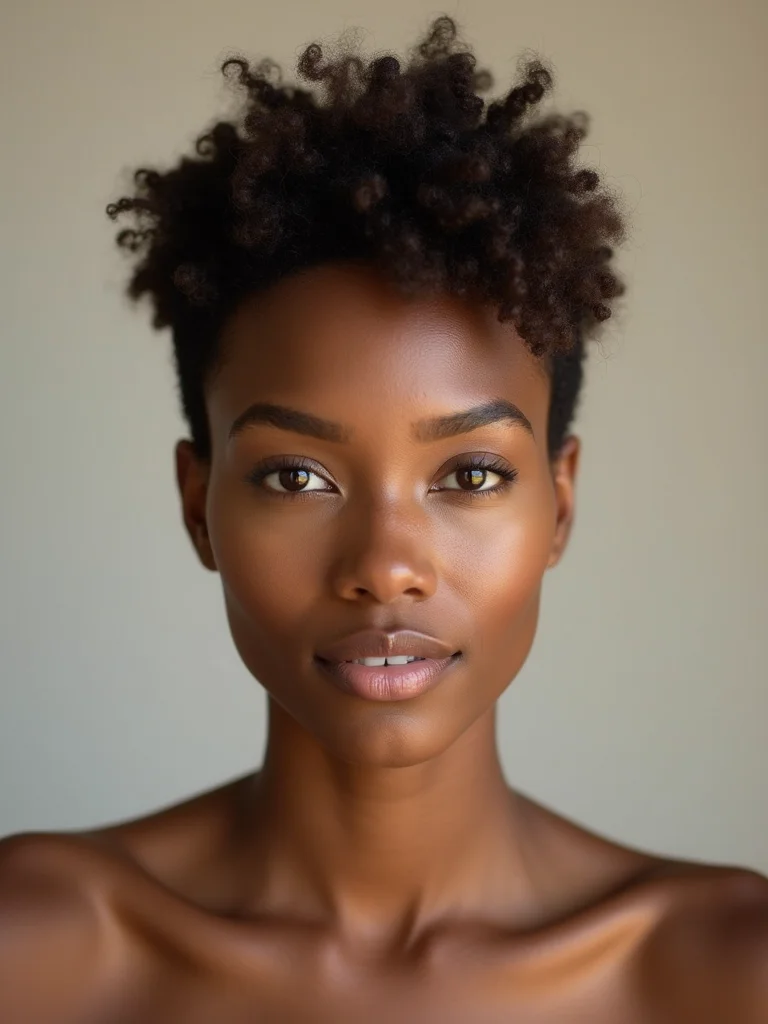
What actually separates a curly shag from an ordinary layered cut? The layers themselves, and where they land. A blunt cut leaves curls stacked into one dense triangle, heavy at the ends and flat at the crown. Shag layers break that shape apart, so every curl gets room to spring and settle somewhere different from the curl beside it.
Sixteen versions follow, sorted by length, curl pattern, and how much effort you’re willing to give the result each morning.
Shag Options at a Glance
| Style | Curl Pattern | Effort Level |
|---|---|---|
| Shoulder-length shag | Loose waves (2A-2C) | Low |
| Wolf cut | Any texture, thick hair | Medium |
| Micro shag | Tight coils | Low |
| Rounded coily shag | 3B-4C coils | Medium-high |
| Low-effort shag | Any pattern | Lowest |
Shoulder-Length Shag for Loose Waves

Loose 2A-2C waves get the most from a shoulder-length shag, since there’s enough weight left in the hair to keep the wave hanging with shape, but enough layering underneath to stop it from sitting flat against the head. It’s the length most first-time shag clients land on, mostly because it forgives an off day.
- Layers concentrated from the cheekbone down only
- Air-dries with a light curl cream and needs no diffuser
- Grows out into a longer layered look without an awkward stage
The Wolf Cut, Curl Edition

The wolf cut takes the shag and pushes it further, layering in a bit of mullet energy and cutting the top pieces short enough to stand apart from the length underneath.
By the second week, the disconnection between the crown and the ends is what makes the shape look deliberately undone, with a gap most grown-out cuts simply don’t have.
It suits thicker curl density best, since there’s enough hair underneath to keep the shorter top pieces from looking sparse against it.
A Choppy Fringe That Frames Ringlets

A choppy fringe cut into a shag lets a handful of ringlets fall forward at the front, softening the face without committing to a full curly bang.
This is where the cutting method matters more than almost anywhere else on this list.
Cut dry, the stylist can watch exactly where each ringlet wants to spring and shape around it; cut wet, the same pieces can finish noticeably shorter once the curl pulls up.
| Cut Method | What Happens | Best For |
|---|---|---|
| Wet cut | Curl relaxes under the water’s weight, so the fringe can land shorter once fully dry | Straight or barely-wavy fringes only |
| Dry cut | The stylist watches exactly where each ringlet springs to before trimming | Any curl pattern, especially tight coils |
Short and Stacked for Coil Volume

Cut short, a shag gives tighter coils permission to stand up and out. Less length simply means less weight dragging the shape down, so the volume shows instead of hiding under the curl’s own weight.
- Shrinkage becomes an advantage on this length, not a fight
- A curl cream on damp hair, then a diffuser, sets the volume
- Best on 3B and tighter patterns with real spring
Mid-Length With Face-Framing Pieces

Mid-length is the balance point: long enough to pull back on a rough morning, layered enough that the curls still hold their bounce when it’s down.
The framing pieces around the face are cut a touch shorter than the rest, so they curl inward toward the cheek and settle right against it.
- Versatile for updos, half-up styles, or wearing loose
- Framing curls draw the eye toward the face, not away from it
- Layers stay defined without turning stringy at the ends
The Curly Mullet, Softened

A curly mullet keeps the shag’s shorter, shaggy layers up top while leaving extra length at the nape, and softening that contrast is what keeps it from reading like a costume.
Keep the layering piecey and soft, never a hard blocky line, and the mullet reads current; get the line too clean and it slides straight into costume territory.
It flatters a wider range of face shapes than most people expect, especially once the curl itself is doing half the softening work.
Not sure which shag direction actually fits? Start here.
1Do you want to keep some length, or go dramatic?
Length points toward shoulder-length or a shaggy lob; dramatic points toward the wolf cut or micro shag.
2Is the crown the flattest part of your curl?
Ask for crown-heavy layering built specifically to lift that one area.
3Do your mornings need to move fast?
A low-effort shag or a tousled, piecey finish asks the least of your routine.
A Shaggy Lob at the Collarbone

A shaggy lob brings shag layering to a longer bob, landing around the collarbone for a shape that reads more finished than a full shag but still bounces.
- Length stays polished while layers keep the curls from blocking up
- A gentle bridge between a bob and a full shag
- Works especially well on hair that’s grown out past the shoulders already
Crown Layers Built for Lift

Curls that go flat at the root, no matter how full they are everywhere else, usually need crown-heavy layers concentrated right at the root, not spread evenly through the whole head.
- Redirects volume upward, straight off the scalp
- Especially useful on dense curls prone to spreading wide
- Pairs well with a root-lifting mousse on wash days
Side-Swept Bangs Across a Shag

Side-swept curly bangs sweep across the forehead on a diagonal, the curl falling to one side and clearing the eyes.
Why This Angle Grows Out So Easily
The longer, angled cut grows out into ordinary face-framing layers with no in-between stage that looks unfinished, so a first-time fringe client can try it with little to lose.
By week three, most clients stop needing a diffuser for it at all and just let it dry into place.
Getting side-swept curly bangs to sit right takes a short routine, not a long one.
1Cut Dry, Every Time
The stylist has to watch each curl spring before trimming, or the fringe finishes shorter than planned.
2Diffuse Toward the Part
Aim warm air in the direction you want the bangs to fall, not straight down onto the forehead.
3Finger-Comb, Skip the Brush
Brushing breaks the curl clumps apart; fingers hold the shape together once it’s dry.
The Micro Shag, Tapered Short

A micro shag is the shortest, boldest version here, with tapered ends that keep tight curls from sitting in a blocky wedge.
- Shows off natural pattern as a sharp, deliberate shape
- Tapering lightens the ends so coils sit with movement, not weight
- Best suited to tighter curls and coils with real definition
A Shag for In-Between Texture

Hair that sits between wavy and curly, often labeled 2C to 3A, tends to walk into the salon frustrated more than any other pattern on this list, since it rarely clumps well on its own.
A soft shag gives that texture the definition it’s usually missing, with layers that coax the loose curl to group into visible clumps.
- A light curl cream on damp hair, air-dried, brings out the pattern
- Turns shapeless-feeling hair into defined, soft texture
- Avoid heavy products that weigh 2C-3A curl flat
Coily Shag, Rounded and Sculpted

On coily and kinky hair, a shag can carve a rounded, sculpted outline while still letting the natural volume stand full.
Why This Cut Needs a Curl Specialist
This one has to be cut to the texture, with the stylist accounting for shrinkage so the shape reads correctly whether it’s worn shrunk close to the head or stretched out.
It’s skilled work, typically running about $25 above a standard layered trim, and worth booking with someone who cuts coily patterns as a regular part of their week.
Tousled Ends, Undone on Purpose

A tousled shag with piecey ends leans fully into undone, letting the layering and the curl pattern do the styling work together.
- Finishes relaxed and just-rolled-out, low on styling effort
- A scrunch of product and some air time is the entire routine
- One of the lowest-effort ways to wear real texture with personality
Curtain Bangs Added to a Shag

Curtain bangs work well on curls, parting down the middle and curving toward each cheek to frame the face on both sides.
On a shag, they tie the layered texture together at the front and get cut a touch longer than you’d expect, to allow for the curl’s natural spring once it dries.
ℹ️One Trade-Off Worth Knowing
Curtain bangs are one of the easier fringes to grow out on curly hair, since the center part lets them blend into the surrounding face-framing layers instead of demanding a fresh cut the moment they get long.
Shattered Layers for Weightless Coils

Shattered layers cut away weight throughout the whole head, letting dense coils sit lighter and bounce more freely, so the volume moves rather than piling into a heavy mass.
- Best for thick, dense curl prone to piling up under its own weight
- Needs a stylist experienced with curl to balance the removal evenly
- Done poorly, this shape can finish frayed, so it’s worth booking carefully
The Shag That Asks the Least of You

Cut correctly, this version of the shag settles into shape on its own, since the layers are built to work with the pattern already growing out of the scalp.
- A wash, a little curl cream, and air-drying covers most days
- No blow-dryer or diffuser required to look finished
- Grows out gradually, since the texture hides the in-between stage a blunt cut would expose
Styling Tips
Two habits carry more weight than any single product: applying cream or gel to hair that’s still soaking wet, before it starts to dry unevenly, and letting the first few minutes of drying happen undisturbed so the curl clumps form before you touch it again.
Past that, the shape of the cut is doing most of the work. Define, don’t fight your curls — a shag is built to let the texture lead, so heavy smoothing products or constant re-scrunching usually undo more shape than they add.
Curly Shag Questions, Answered
?Why do layers help curly hair specifically?
A single blunt length forces every curl to hang under the weight of the hair below it, which flattens the pattern into one heavy triangle. Layers remove that weight in stages, so each curl gets room to spring back into its own shape.
?Should a curly shag be cut wet or dry?
Almost always dry. Curl springs up as it dries, sometimes by a noticeable amount, so a cut done on wet hair can finish shorter and more uneven than intended. Cutting dry lets the stylist shape the layers to where the curl actually lands.
?Will a shag work on very fine, loosely wavy hair?
Yes, though the layering needs to stay lighter than it would on thicker curl. Too much layer removal on fine, loose waves thins the ends out instead of adding shape, so a shoulder-length or lob version tends to hold up better than a heavily shattered one.
Let the Layers Do the Work
Every version above solves the same basic problem in a slightly different way: weight comes out of the right places, and the curl gets to spring instead of collapsing into one flat shape.
Save a reference photo for the length and lift you want, then let your stylist adjust the layering to your actual pattern. The pattern underneath is what makes any of these shapes hold up past the first wash.
Don’t Miss These