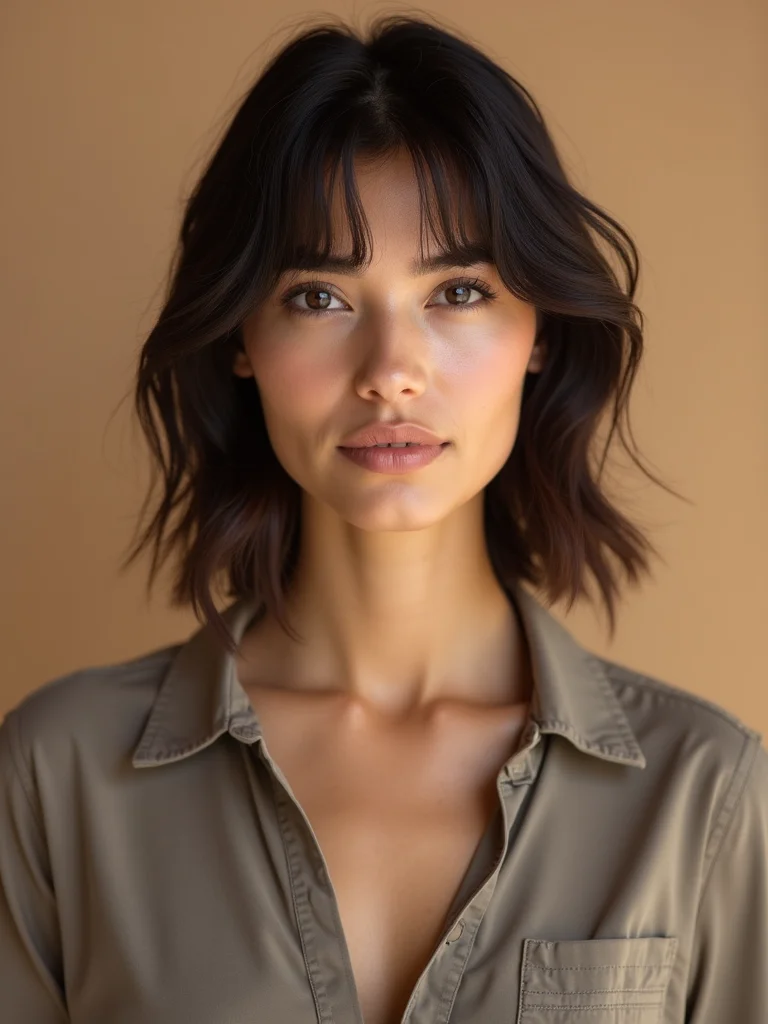
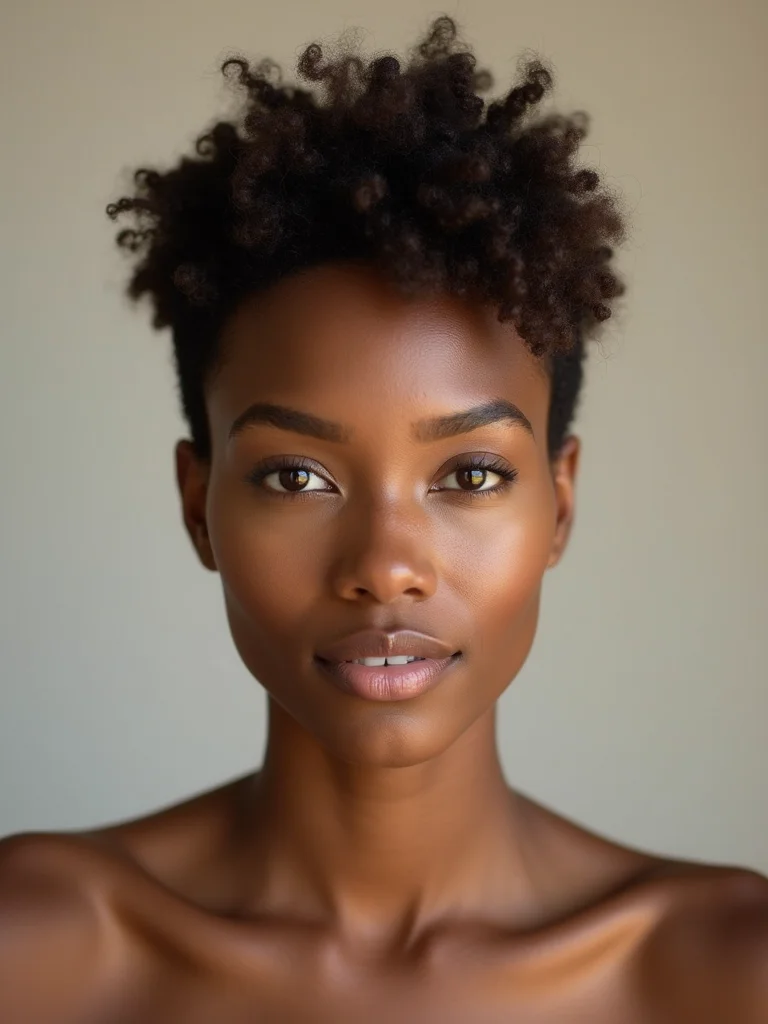
The idea that a pixie means picking one shape forever is mostly myth. A long pixie in particular holds enough length on top to look soft and feathered one week, sleek and glassy the next, all without a single extra snip in between.
Ten versions of that same length follow below, organized around mood more than face shape, from windswept and easy to sculpted and precise.
Why This Length Covers So Much Ground
The range comes almost entirely from the length kept on top. Real hair up there means the same cut can be feathered soft, smoothed sleek, scrunched wavy, or sculpted sharp depending on the morning, so one haircut effectively covers several different looks.
Upkeep stays fairly light at the sides and nape, since those sections hold their shape between visits better than a styled top does; most of the daily work happens with product, not another trip to the chair. Face shape still plays a role in which specific version flatters most, but it decides far less here than it would on a single fixed style.
Soft Feathered Side-Swept Pixie
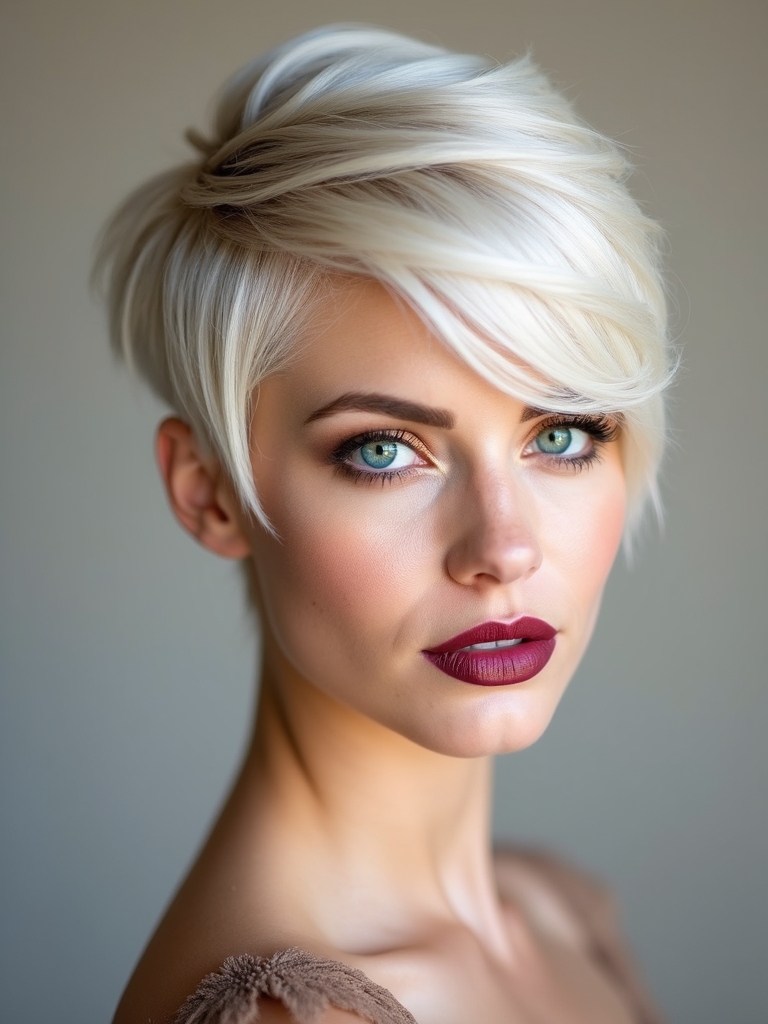
A feathered, side-swept long pixie is the gentlest way into this length, the top cut into airy, weightless pieces and swept toward one side rather than styled sharp. The effect comes across romantic more than bold.
The feathering does most of the flattering work, since fine layers soften whatever face shape sits underneath them, while the side sweep adds a slimming diagonal across the forehead. A rounder face looks narrower with the sweep angled low; a longer face benefits from keeping the fringe a touch higher and fuller instead.
A light cream worked through damp hair, followed by a loose round-brush pass, is close to the entire routine most mornings. Most pros point to this version as the safest first attempt at a shorter length, since nothing about the shape looks severe.
Textured Choppy Pixie

A choppy, textured pixie breaks the top into rough, irregular pieces for a worn, casual finish with real texture built in. The layers are cut short and uneven on purpose, giving the whole shape a relaxed, slightly undone energy.
- A pinch of clay worked between the fingers builds the separation.
- Product does more of the daily work here than the scissors did at the appointment.
- This version tends to look better a day or two past a fresh cut than right after it, once the pieces have relaxed slightly.
- Reaching for a dry texturizing powder near the crown on the second day tends to build more grip than a fresh wash would.
Building the choppy texture from scratch:
1Start on towel-dried hair
Damp hair holds product without weighing the shortest pieces down flat.
2Work clay between the palms first
Warming the product before it touches hair spreads it evenly through short layers.
3Pinch, don’t smooth
Twisting small sections between the fingers keeps the separation clearly defined.
Sleek Long Pixie Haircut

Smoothing a long pixie sleek turns it from casual to polished in a single styling session. The top gets blown flat and glossy, the pieces lying smooth against the head from root to tip, so the whole cut looks refined.
Where the Gloss Comes From
The sleekness puts the precision of the cut itself on full display, and that visibility is exactly why it only works well on a shape that was cut cleanly to begin with.
A shine serum worked through before a flat iron pass carries the gloss, and tucking the ends behind the ears keeps the line neat through the day.
Curly Long Pixie With Definition
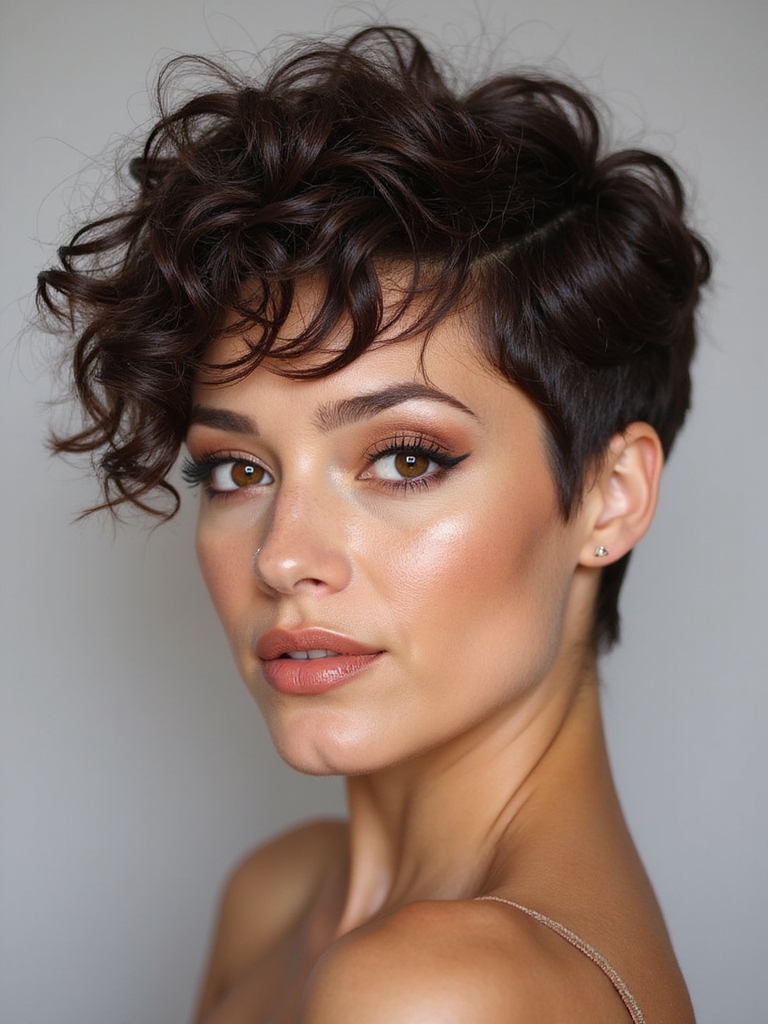
On curly hair, a long pixie gives the coils room to spring into a defined, bouncy shape on top without the extra length dragging them flat. The cut follows the curl pattern itself, so the coils sit in a balanced crown while the sides stay close underneath.
Definition depends almost entirely on product and drying method: a curl cream scrunched into damp hair, then a low diffuse or a full air-dry, does the actual shaping. A brush at any point breaks the curl clumps apart and undoes most of that work. Density matters too: looser curl patterns tend to need a touch more product per section than tighter coils, which hold their own shape with less help.
Asymmetrical Pixie With a Side Part
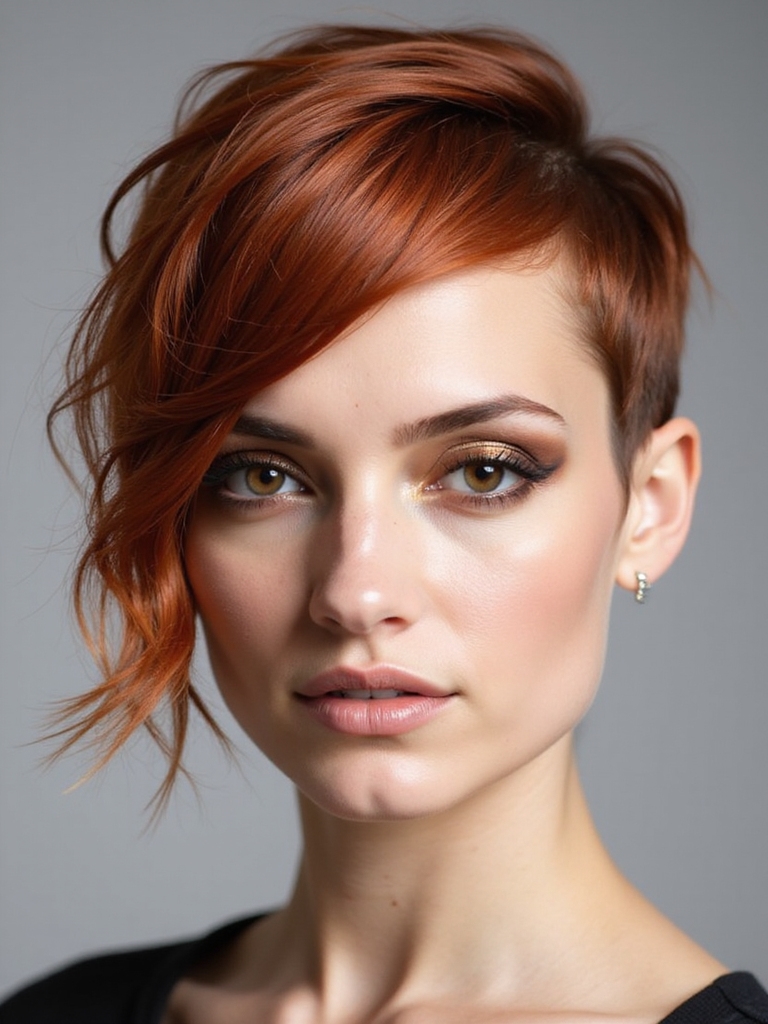
An asymmetrical long pixie with a deep side part suits anyone after a bolder, more modern shape. One side gets cut noticeably shorter than the other, and the part sits deep enough that the longer top sweeps at a real diagonal across the face.
A Deep Part Changes Everything
That diagonal line does the flattering, drawing the eye along a slimming angle rather than straight across the forehead. The deeper the part goes, the more volume builds on the heavier side. Choosing which side to part toward usually comes down to whichever eyebrow sits naturally higher, since the sweep tends to settle there anyway.
A little product directs the long side into place, and the deep part keeps feeding length toward it through the day. Switching the part to the opposite side occasionally gives the exact same haircut a noticeably different silhouette, without touching the scissors at all.
A couple of long-pixie assumptions worth checking:
❌ Myth: A deep side part only works on straight hair.
✅ Reality: Wavy and loosely curled hair often hold the diagonal line longer, since the texture keeps the swept side from falling flat by midday.
❌ Myth: Asymmetrical cuts need constant reshaping to stay sharp.
✅ Reality: The uneven line actually grows out more forgivingly than a symmetrical cut does, since there is no matching side to throw off.
Undercut Long Pixie for Contrast
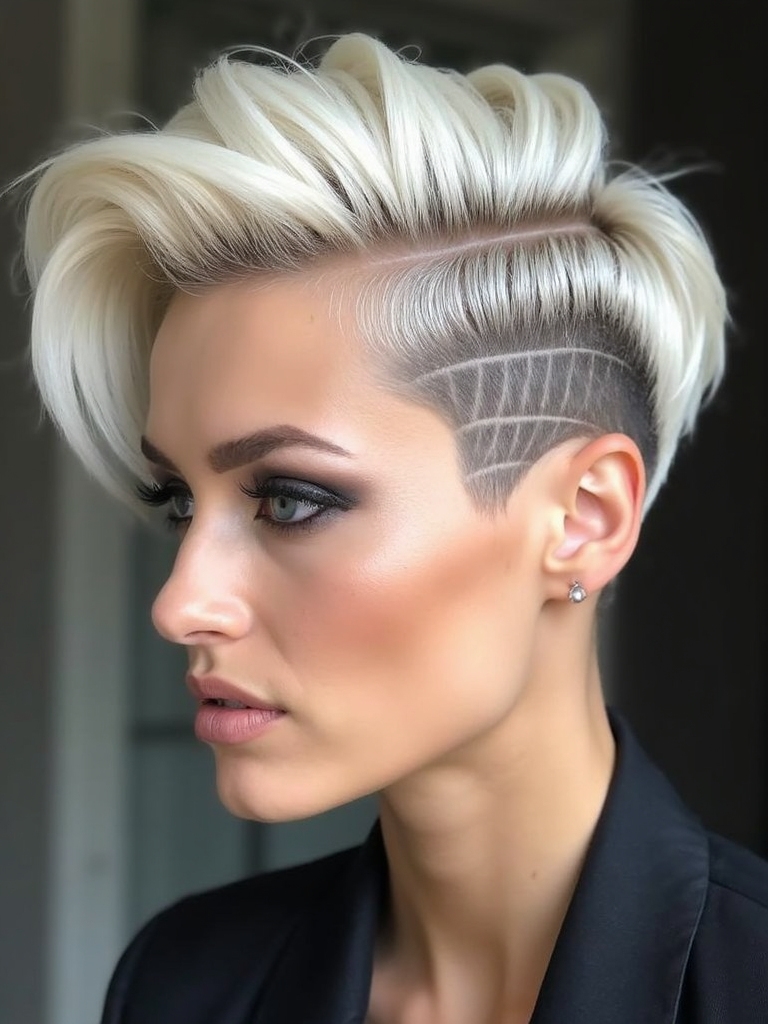
Adding an undercut gives a long pixie real edge, built entirely on contrast between a buzzed or closely clipped underside and a long, full top.
- Removes real weight, which helps thick hair that would otherwise sit heavy under this length.
- The buzzed section grows out slower in appearance than in fact, so a few patient trims blend it back over several months.
- The design itself can range from a simple clean buzz to something with an actual pattern shaved into it, depending on how much attention feels right.
- More bold takes on the technique live at undercut pixie.
Feathered Pixie With Wisps
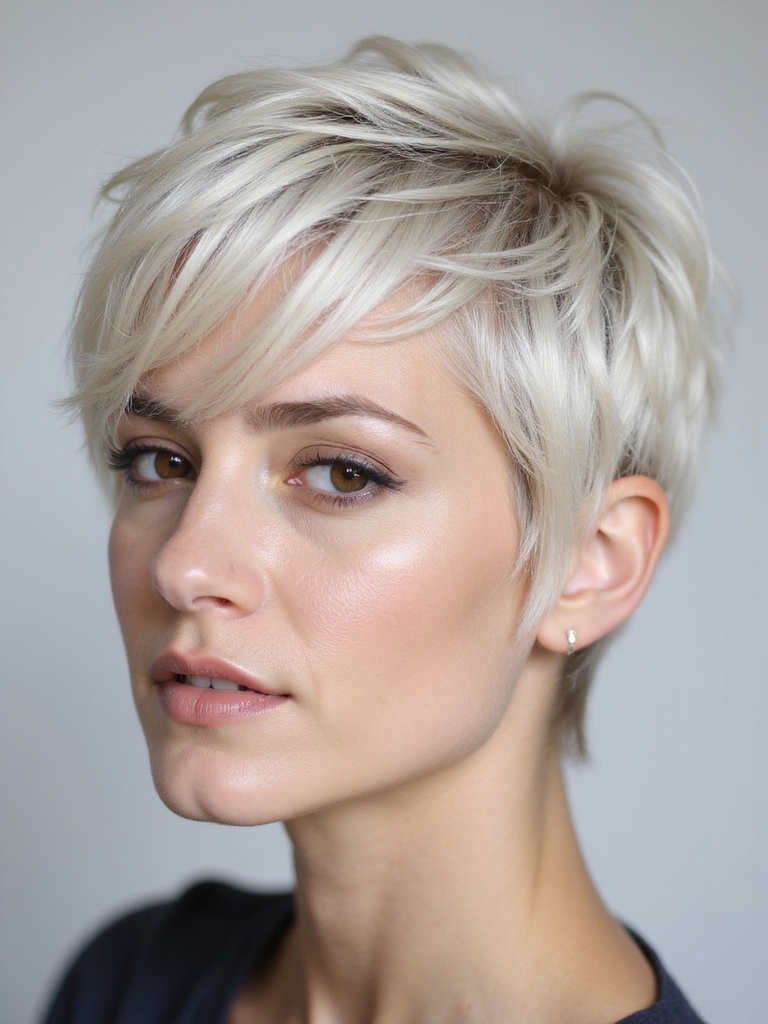
Leaving soft wisps around the face turns a long pixie into its most romantic version. Fine, feathered pieces stay loose at the temples and along the fringe, framing the face in strands that soften the whole shape.
Those wisps do outsized flattering work for how little hair is actually involved, breaking up any hard edge in the cut and pulling the eye gently toward the cheekbones. Because so little length gets left loose, the wisps grow out quietly too, blending back into the rest of the shape within a few weeks without ever announcing themselves.
- Loose pieces at the temples soften the whole frame.
- Works especially well for anyone who finds a sharper pixie a touch too severe.
- For the fringe technique alone, wispy bangs goes further.
Wavy Tousled Long Pixie
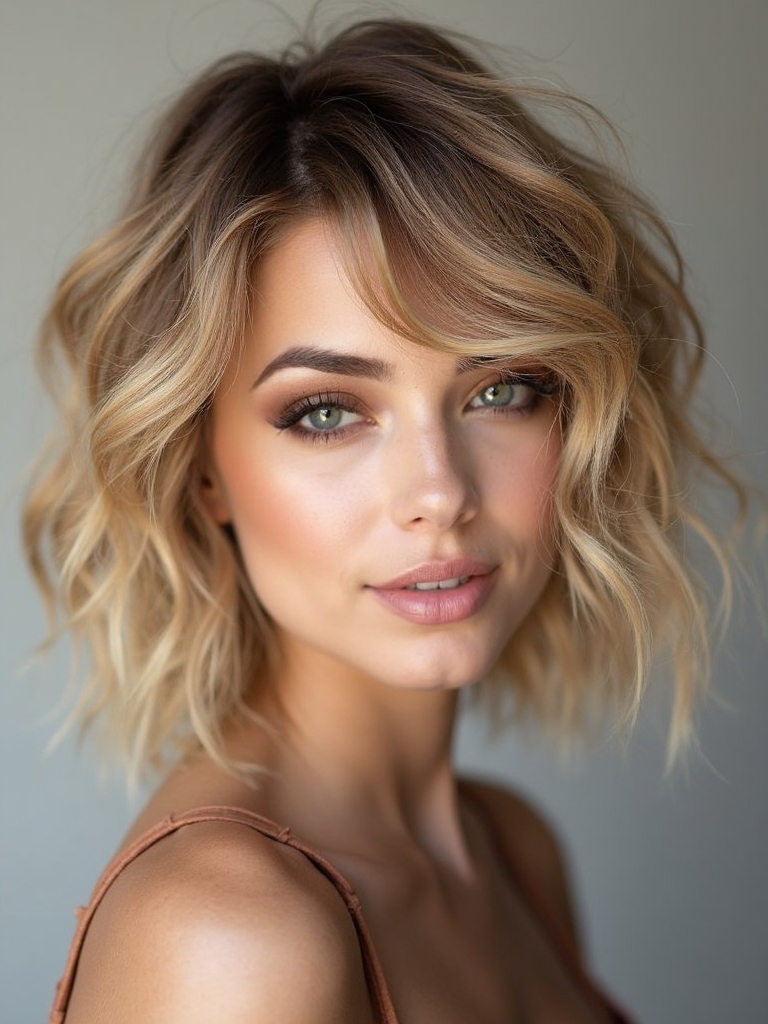
Letting natural wave take over is close to the lowest-effort transformation on this list, turning a long pixie windswept and a little undone with almost no extra styling.
Letting the Texture Lead
The waves bend the longer top into loose movement on their own, so the cut looks relaxed and easy, with nothing about it that comes across deliberately styled. Experts often flag this as the version that rewards whatever texture is already there, using tools only to enhance it.
A salt spray scrunched into damp hair lifts the wave pattern, then an air-dry or a diffuser finishes it.
Feathered Piecey Pixie Layers

Feathered, piecey layers land in the middle ground between soft and textured, giving a long pixie movement without any hard edges to manage.
- The layers stay feathered light and separated into distinct pieces that catch light individually.
- This version tends to need the least daily styling of anything on this list, since the pieces fall into place mostly on their own.
- A texture cream pinched carefully through the full length of the hair brings out the separation without adding any real weight.
“Ask specifically for feathered, piecey layers cut with real separation; a fully blended version can look similar in a photo but behaves very differently once the cut starts growing out.”
Sculpted Sleek Pixie With Shine
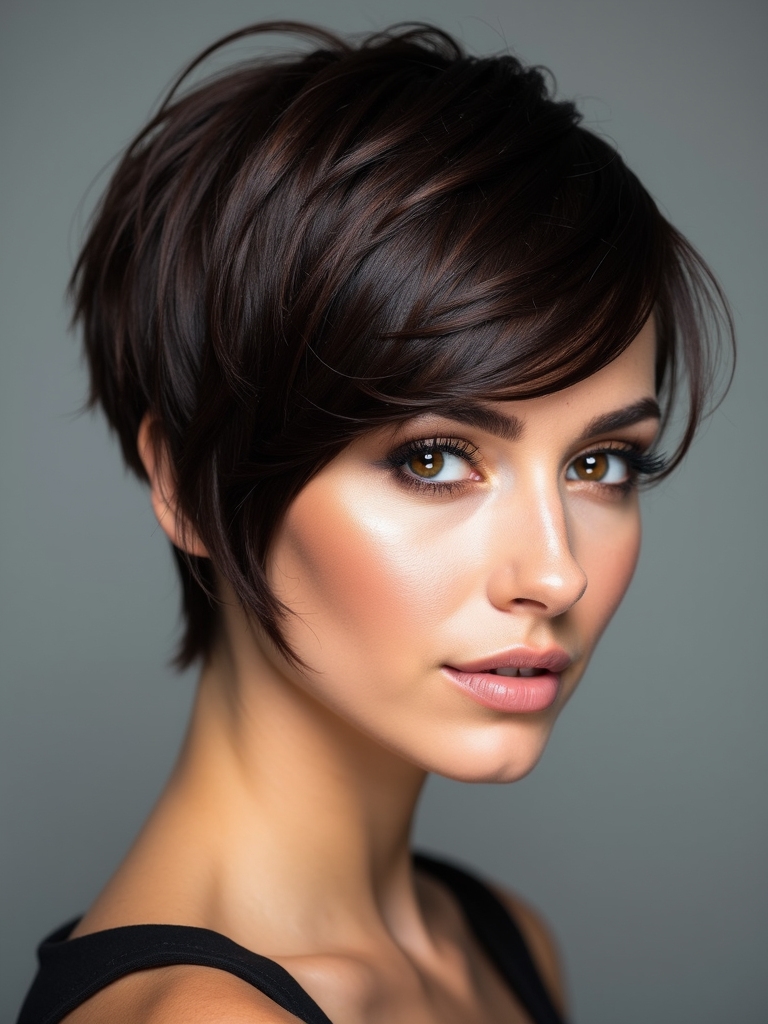
For the boldest, most high-fashion version of this length, a sculpted, high-shine long pixie turns the cut into something closer to architecture than hairstyle. The top gets shaped and smoothed into precise, deliberate lines and finished with real shine.
This is the long pixie built for a photo, an event, or simply a day that calls for something striking. It rewards a precise original cut more than any other version here, since sculpting only works on lines that were clean to start with. A slightly grown-out cut can fake most versions on this list; this one shows every flaw in the base shape almost immediately.
- A strong shine product or a wet-look styler carries the lacquered finish.
- Holds its sculpted shape best on hair with some natural body to grip.
- Browse the wider range of short shapes at pixie cut styles.
Maintenance & Care
A long pixie needs less daily effort than the styling variety suggests, but the sides and nape grow out faster than the top does, so a reshape on a fairly regular cadence keeps the shortest sections from creeping toward shapeless. Left too long between visits, the whole silhouette starts to soften into something closer to a bob than any of the versions above.
Between visits, a quick DIY clipper touch-up at the nape costs next to nothing for anyone comfortable holding the guard themselves. A professional shape-up runs closer to a standard haircut price, often somewhere around $40, and it keeps the line at the neck fully even in a way a home trim rarely manages on the first try.
One Cut, Several Different Moods
The reason this length rewards experimentation is that it was never really one haircut to begin with. Feathered and soft, sleek and sculpted, wavy and undone, or edged with an undercut, the same cut shifts direction with little beyond a swapped product and a few extra minutes at the mirror.
Which version actually matches most mornings, the low-effort texture or the polished sleek finish? Bringing a clear photo to a stylist who cuts short hair often tends to close that gap fast, and naming the specific version by name from a list like this usually starts the conversation faster than trying to describe it from memory.
Don’t Miss These