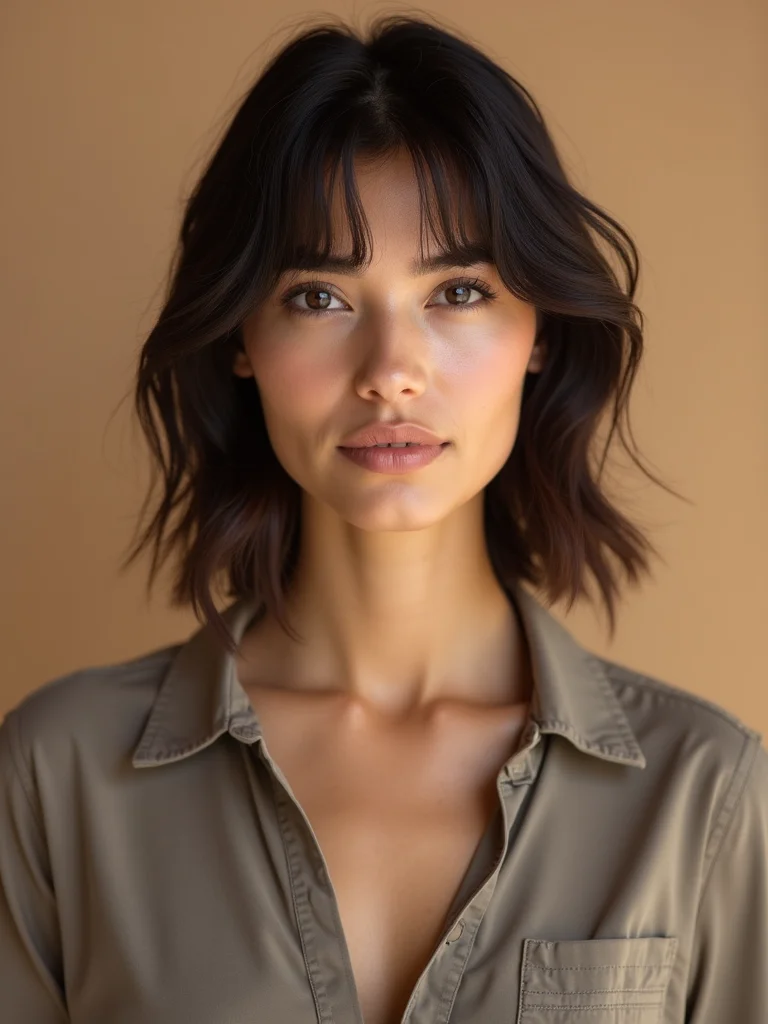
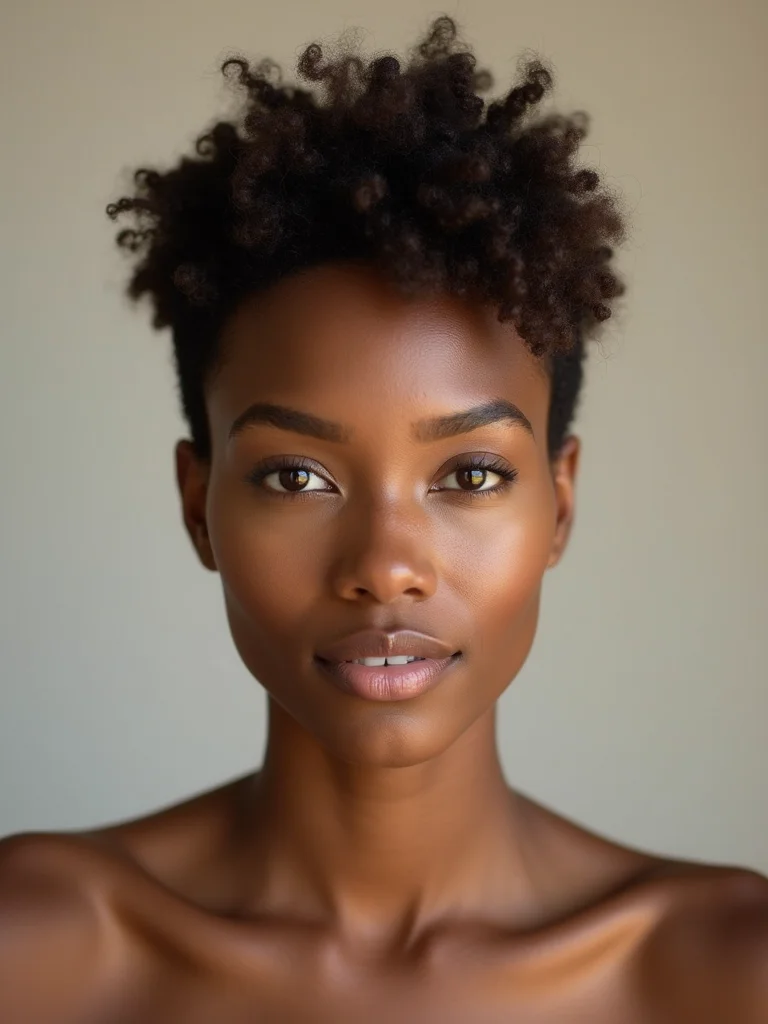
A stylist in a busy salon can usually spot the moment someone commits to a short bob: the scissors pass the shoulder, then the collarbone, and there’s a small pause before the final request lands right at the chin. What follows that pause is almost always relief, since a bob this short does more for a face than length ever did.
Sixteen versions of a short bob follow below, from a sharp one-length line to a shaggy, piece-y crop, each with honest specifics on who it flatters and what keeping it actually looks like.
What Decides Which Short Bob Works
- Length alone doesn’t define this cut; where the weight sits and how the ends are finished does.
- A deep side part, curtain bangs, or face-framing layers are the fastest ways to fine-tune how a bob flatters.
- Curly and coily patterns need a dry cut, since a bob measured wet almost always ends up shorter than planned.
The Timeless One-Length Chin Bob

This is the cut every other bob haircut variation gets measured against: one clean, unbroken line falling to the chin, with no layers to soften or distract from the shape. Most pros point to it as the purest test of precision cutting, since a single uneven inch shows instantly with nothing to hide behind.
- Best suited to straight or barely-wavy hair that holds a clean line without extra styling.
- Flatters oval and balanced face shapes especially well.
- A trim on a strict six-week schedule keeps the line from softening.
An Airy, Face-Framing Layered Bob

Adding soft layers changes the entire personality of a bob. The chin-length shape stays, but movement and face-framing pieces replace the single rigid line, softening the silhouette and extending how many face shapes it suits.
The face-framing pieces do the real work, sweeping along the cheekbones to shape the face rather than just frame it. Most stylists consider this the most broadly flattering of all the bob hairstyles here, the one recommended when a client is unsure which version to choose.
It also grows out more gracefully than a one-length cut, since the layers blend as they lengthen instead of dropping into an awkward single line.
The Sleek, Chin-Length Blunt Bob

Smoothed glassy and cut to one dense line at the chin, this is the most graphic, polished version of the cut. It asks for little beyond a flat iron, a drop of serum, and confidence in a clean line doing all the talking.
Balanced and oval faces wear it especially well, since the strong line frames the face without overwhelming it. On thick hair, the density reads rich rather than heavy.
Precision is the trade-off. A blunt line exposes every uneven end, so it depends on a sharp initial cut and a disciplined trim schedule to hold its shape.
ℹ️Where the Movement Comes From
The face-framing pieces are cut at a steeper angle than the rest of the layers, which is what lets them swing independently instead of moving as one solid mass.
A Tousled, Textured Bob

Take that same blunt shape, break up the ends, and rough up the finish, and the result is a looser, more relaxed cousin of the sleek version.
Undone by Design
A texture spray scrunched through day-old hair, finger-tousled rather than brushed, is typically the whole styling routine. The goal is piece-y movement over sleek polish.
It also forgives daily wear and a grow-out better than most bobs on this list, since the texture hides unevenness that a blunt line would expose immediately.
A French Bob With a Soft Fringe

Slightly shorter and a touch undone, this version usually sits right at the jaw, paired with a soft, piece-y fringe.
Where the Charm Comes From
The fringe is what defines the whole look. Soft, slightly piece-y bangs frame the eyes and keep the shape from reading too neat or formal.
It suits most face shapes, though the jaw-length combination with a fringe flatters longer faces in particular. The fringe itself needs the most frequent attention of any element in this cut.
A Root-Lifted Curly Bob

Curly hair and a curly bob pair beautifully when the cutting respects the pattern rather than fighting it. The dry cut is worked section by section, so each curl’s true fall and shrinkage is visible before anything is removed.
Why Dry-Cutting Matters
Cutting the same shape wet almost always backfires: curls stretched flat during cutting spring up shorter and boxier than intended once they dry. Dry-cutting is the entire difference between a bob that works with a curl pattern and one that fights it.
A little root lift, built in during the cut, keeps the shape from flattening or turning triangular. Diffusing at the roots and refreshing curls with water between washes extends the style day to day.
Keeping a French fringe in shape between full cuts.
1Watch the corners first
The outer edges of a fringe grow out and start hitting the eyes long before the center does.
2Book a standalone trim
Many salons will trim just the fringe between full appointments, often for a small fee or free.
A Polished Wavy Bob

This wavy bob functions as the everyday workhorse of the whole list, a chin-to-jaw shape worn with soft, controlled waves. The natural bend gives it movement and keeps it from reading severe.
A texturizing spray through damp hair, followed by bending the ends with an iron or simply scrunching, is typically the whole routine, polished enough for work and relaxed enough for a weekend.
- Flatters nearly every face shape.
- Works equally well with natural waves or a quick iron touch-up.
- Holds its shape reliably between visits.
An Asymmetrical Bob With Sharp Angles

An asymmetrical bob deliberately unbalances the shape, letting one side run several inches past the other to build a bold, modern edge that draws the eye.
Round and square faces benefit most, since the angle introduces length and movement those shapes often want. The longer side can be tucked back or styled forward for contrast.
- Best suited to anyone who wants their cut to be noticed, not just worn.
- Requires a precise initial cut and a reshape roughly every six weeks.
- Styling the longer side sleek amplifies the contrast between the two lengths.
🅰️Air-Dried Waves
Scrunch a texturizing product into damp hair and let it dry naturally for looser, more relaxed movement.
🅱️Iron-Set Waves
Bend sections with a curling or flat iron for a more defined, uniform wave pattern.
A Stacked, Graduated Bob
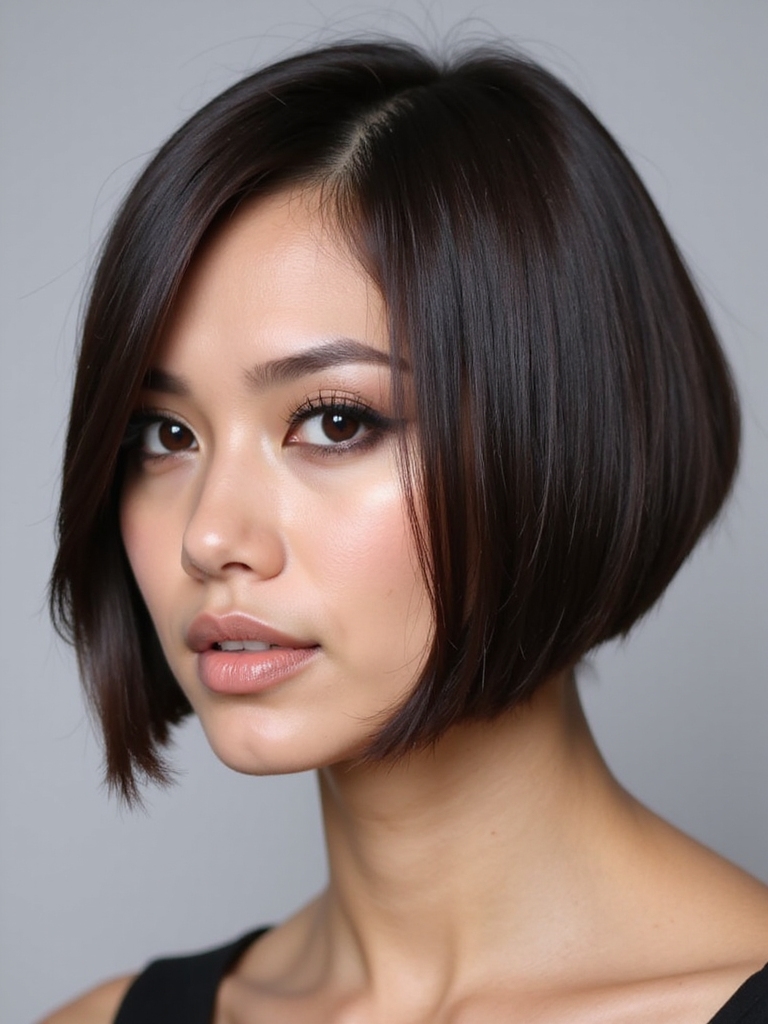
Rounded volume at the back comes from layers stacked short underneath and progressively longer on top, building real body at the crown.
Built for Volume
It answers a specific problem: flat or fine hair that a one-length bob simply cannot support. The stacking creates lift a blunt cut has no way to produce.
The graduated angle needs regular trims to stay sharp and polished, making this a more hands-on cut than a simple blunt line, but most who choose it consider the volume worth the extra upkeep.
The Crisp Inverted Bob
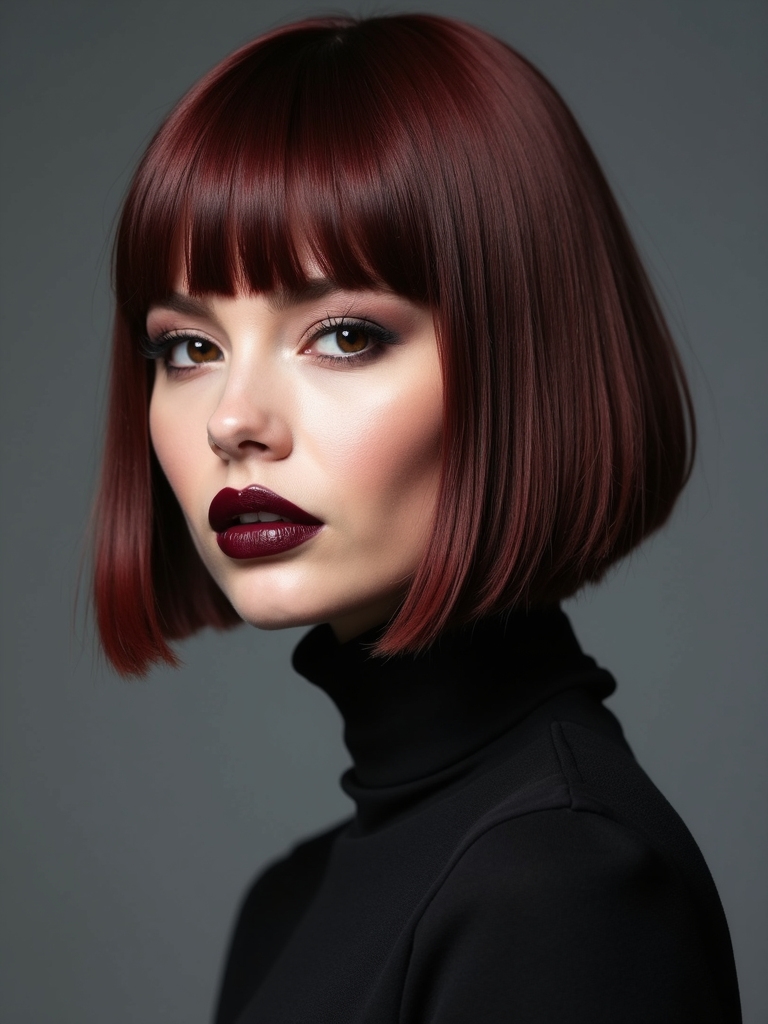
This takes the graduated concept further, angling sharply from a short, stacked back to noticeably longer pieces at the front, so the silhouette changes dramatically depending on the angle it’s viewed from.
The dramatic front-to-back angle reads bold and architectural, and the longer front pieces do real face-framing work. Precision is non-negotiable here; a regular trim keeps that angle crisp instead of letting it soften into something closer to a standard graduated bob.
An Airy Razor-Cut Bob

A razor gives a bob its softest, most feathery finish, tapering each strand to a fine point so the whole shape floats rather than sits.
The trade-off is that razoring rewards strong, healthy hair; it can split dry or fragile ends, so it’s usually reserved for hair that can handle the extra stress.
On thick hair, the technique works especially well, removing weight and turning a heavy bob light and airy. On fine hair, it needs a light hand so the ends don’t thin past the point of holding shape.
A Shaggy, Piecey Bob

This version trades the blunt line for choppy layers and face-framing pieces, then asks very little in return.
Scrunching in a little texture spray and letting the piece-y ends fall where they land is typically the entire routine. The cut looks intentional even while growing out, into soft layers rather than an awkward single-length stage.
- Best for anyone who wants a low-effort, textured everyday look.
- Style with texture spray and fingers; a brush works against the effect.
- A rare short cut that looks nearly as good on day five as day one.
Two persistent bob myths, addressed directly.
❌ Myth: A bob only works on straight hair.
✅ Reality: Curly, coily, and wavy patterns all wear a bob well; the cutting technique simply has to change to account for shrinkage and natural movement.
❌ Myth: Shorter automatically means lower maintenance.
✅ Reality: The shortest, most precise bobs, like a one-length blunt cut, often need the most frequent trims to hold their exact line.
A Clean Side-Parted Bob

Sometimes the styling choice matters more than the cut itself. A deep side part instantly makes any bob look more polished, adding volume on one side and a sweep of drama across the forehead.
It’s one of the fastest ways to dress up a bob for an event or the office, and it flatters round faces by breaking up symmetry and adding height.
- A deep side part adds instant volume and visual polish.
- Especially flattering on round faces, where it introduces asymmetry.
- Works on nearly any bob length or texture.
The Glossy Jawline Bob

Cut to hit precisely at the jawline and finished with noticeable shine, this version reads sharp and polished, with real presence.
Getting the Shine Right
The jaw-length line happens to be one of the most universally flattering spots on the face, sitting exactly where it sculpts the jawline. A shine spray or glossing treatment, plus a well-placed balayage if color is involved, is what pushes the line into looking healthy and deliberate.
Balanced and heart-shaped faces wear it especially well, since the jaw line draws attention toward the cheekbones. Keeping that line sharp depends on a consistent trim schedule.
A Collarbone Bob With Curtain Bangs

Sitting at the longer end of what still counts as short, this version pairs a collarbone length with soft curtain bangs for a gentler, more retro feel. That extra length gives anyone hesitant about going dramatically shorter a lower-stakes way to test the shape first.
- The friendliest version here for a first-time short cut.
- Curtain bangs flatter nearly every face shape.
- Grows out more gently than any of the shorter versions on this list.
A Face-Framing Highlighted Bob

Color can shape a bob as much as the cutting does. Brighter pieces placed specifically around the face draw the eye and brighten the complexion, adding depth to what is otherwise a fairly compact shape.
Placed along the layers and toward the front, highlights make the whole cut read fuller and richer, the difference between a flat bob and one that visibly catches light.
Dimensional highlighting on short hair is a genuine investment; plan on around $180 for a full application, though a root smudge technique can stretch the time between refreshes considerably.
Styling Tips
Across every version here, a few tools do most of the real work: a good round or paddle brush for smoothing and shaping the ends under, a light-hold texture spray for anything meant to look undone, and a quality flat iron for versions that need a crisp, glassy line.
The single biggest styling mistake on a short bob is over-brushing a texture-based version; brushing smooths the very separation that makes a shaggy or tousled bob work in the first place, so those versions call for fingers, not bristles.
Short Bob Questions
?How short is a short bob, exactly?
It typically runs from the ears down to the jaw, shorter than a lob but longer than a pixie. The most requested length sits right at the chin, since that spot flatters the widest range of face shapes.
?Does a short bob work well on round faces?
With the right details, yes. A deep side part, face-framing layers, or an asymmetrical or jaw-skimming length all introduce the angle and vertical line that balance a round face. A hard blunt line stopping at the widest point of the cheeks is the one version worth avoiding.
?Can curly hair wear a short bob without it turning into a triangle shape?
Yes, but only with a dry cut. A stylist needs to see exactly where curls fall and how much they shrink before removing any length, since cutting curls wet and stretched is the single most common cause of a triangular, top-heavy bob.
The Cut That Frames Everything
No length works harder for a face than a short bob does. Worn sleek and blunt or shaggy and undone, it draws the eye straight to the features and holds its shape through nearly any texture, provided the cutting technique matches the hair.
Which version suits best usually comes down to two honest questions: how much daily styling time is realistically available, and how precise a line the hair itself is willing to hold.
More Inspiration