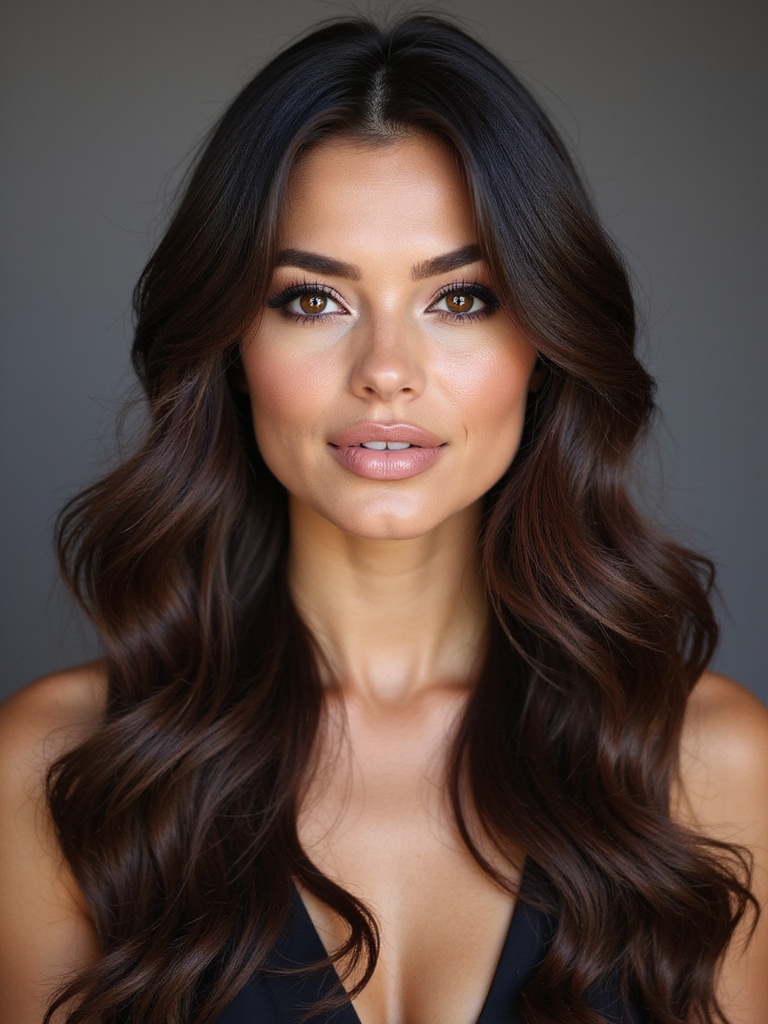
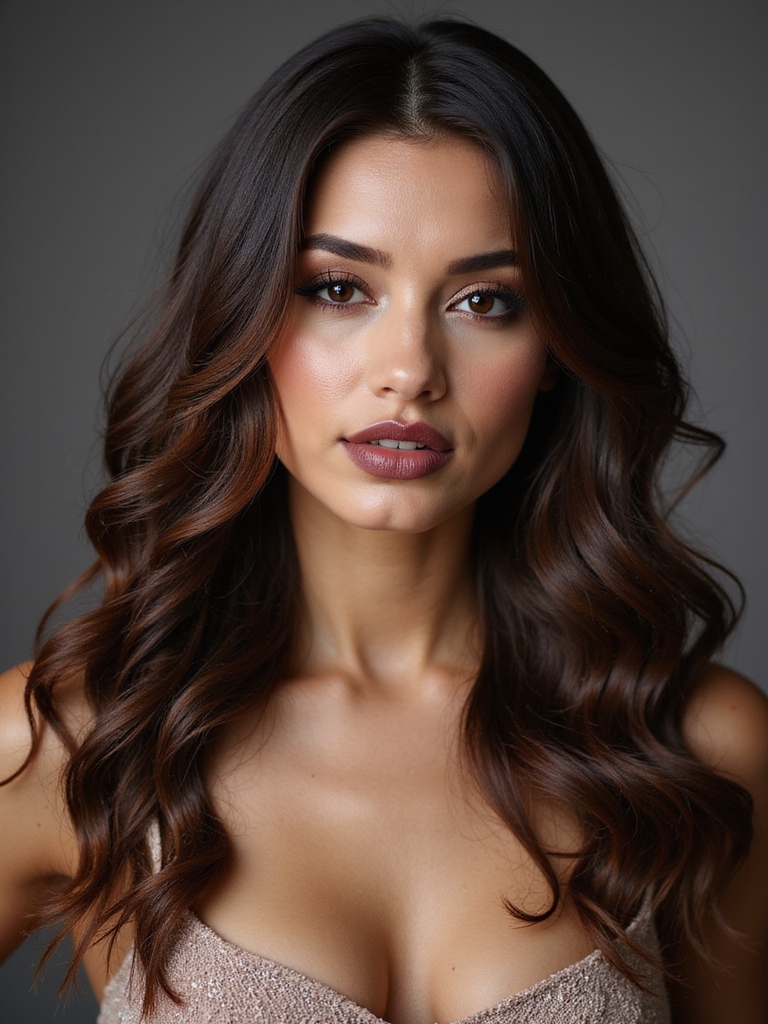
Most hair-color trends skew warm, all honey, caramel, and copper, which is fine news unless you are a True Winter. If warm tones make you look washed out and tired, your coloring calls for the opposite: cool, deep, clear shades with real contrast.
True Winter is the coolest, most saturated of the color seasons, the one that suits icy platinums, blue-blacks, and jewel tones rather than golden warmth. Here are fifteen hair colors built for cool undertones and high contrast, from the palest icy blonde to the deepest violet-black.
Quick Answers
What is a True Winter coloring? Cool undertones with high natural contrast, think dark hair and bright, clear eyes. Cool, saturated colors suit you; warm and muted ones wash you out.
What hair colors suit True Winter? Icy and ash blondes, cool browns, blue and jet blacks, and jewel tones like sapphire and berry. Look for anything built on a blue or violet base.
How do I know if I am actually a True Winter? High contrast between your hair and skin, and skin that leans pink, blue, or olive rather than gold. If gold jewelry looks better on you than silver, this palette is probably not yours.
Icy Platinum Blonde for Cool Undertones

Icy platinum is the boldest cool blonde there is, and a True Winter is one of the few who can truly carry it. Toned to a near-white with no warmth, it works on any cool complexion that can carry the contrast, and on deep cool skin the contrast it creates is the strongest on this page.
Is Platinum Worth the Upkeep?
It is a commitment, and the honest version of that word involves a clock. Going platinum means lifting to the palest level. Block out four to six hours for the first appointment, longer if you are starting from dark, and expect the colorist to insist on bond treatments partway through. After that, a toner refresh every three to four weeks keeps yellow from creeping back, and those visits run about forty minutes.
If you have the patience for the upkeep, nothing looks cooler. More cool blondes in blonde winter colors.
Ash Brunette With Silver Highlights

For a cool brunette who wants dimension without warmth, ash brown with silver highlights is a sophisticated choice. The ashy base quiets any red or gold, and the silver ribbons add a frosty, modern sparkle.
Keeping the Ash Cool
Silver goes around the face and through the lengths, with the contrast kept tight enough that it never separates into stripes.
A flat, solid dark head is the exact problem this solves.
Two True Winter color myths:
❌ Myth: Winter coloring can only wear dark hair
✅ Reality: Not true. True Winters wear icy platinum and silver beautifully, as long as the tone stays cool. It is about coolness, not darkness.
❌ Myth: Cool colors are always high-maintenance
✅ Reality: Some are. A deep cool brown or jet black needs almost no upkeep, while platinum and gray demand the most.
Deep Chocolate Brown for Olive Skin

Deep cool chocolate brown is the most wearable True Winter shade of the fifteen. It flatters olive and cool-neutral skin, and it needs no bleach at all, which is why it sits in a chair for ninety minutes instead of an afternoon. An ash base is also what keeps it from drifting orange by month two.
The formula wants an ash reflect and nothing else; a chocolate with any red in the base turns muddy against olive skin within a month. If brown is where you are staying, brunette winter colors goes deeper.
- A cool, ashy base that stays clean
- Flatters olive and cool-neutral skin
- Low-maintenance, no bleach required
Blue-Black Gloss for Dramatic Contrast

Blue-black is the cleanest of the three near-blacks here: a deep black with a blue reflect that comes across as sharpness more than as color. Choose it when you want the contrast and would rather nobody asked what shade you dyed it.
The finish carries this one entirely. Blue reflect only exists where light bounces, so on dull or porous hair the whole effect disappears and you are left with flat black. A gloss every six weeks is the difference.
One process, one appointment, maximum impact.
Which True Winter color fits you?
1Want to test the palette before committing?
Frosted pearl highlights or icy lavender accents. Both sit on a small enough section that a bad result is a small result.
2Ready for the full statement?
Icy platinum, blue-black, or steel gray.
Smoky Ash Blonde Balayage

Smoky ash blonde balayage is the softest way for a cool blonde to add dimension. Hand-painted ashy pieces blend into a cool base for a soft, low-maintenance grow-out. Every painted piece needs to land in smoky gray or beige; one gold ribbon in the mix and the eye finds it immediately. Because the painting is soft, the regrowth line stays invisible for three or four months, which is the real argument for it. More painted options in blonde winter ideas.
- Smoky gray and beige tones, no gold
- Soft balayage for an easy grow-out
- A grow-out line you can ignore for months
Cool Espresso With Face-Framing Lowlights

Espresso is the near-black that is still legibly brown, which matters if you have never gone dark before: black against cool skin is a hard line, and this stops just short of it. See dark winter shades for the darker end of the palette. Face-framing lowlights add depth without the commitment of a true black.
Lowlights woven around the face sculpt the features and cost you no bleach, which is why this is often what I suggest to someone dyeing dark for the first time.
- A near-black cool brown base
- Darker lowlights for subtle depth
- Sculpts the face without bleach
ℹ️Good to Know
True Winter is one of the cool seasons in color analysis. The defining traits are cool skin and a striking, high-contrast look, which is why deep, clear, saturated colors flatter while soft, muted ones fall flat.
Jet Black With Subtle Blue Reflections

Jet black with a subtle blue reflect is the classic True Winter power color. Where blue-black is dramatic, this is a softer version, a true black that simply shimmers cool in the light.
Why Black Photographs So Well
This one belongs to deep cool coloring and naturally dark hair, where it can often be reached with no lifting at all. That makes it the cheapest color on the page to get and the cheapest to keep.
Of everything on this page, this asks the least of your calendar.
Frosted Pearl Highlights on Dark Hair
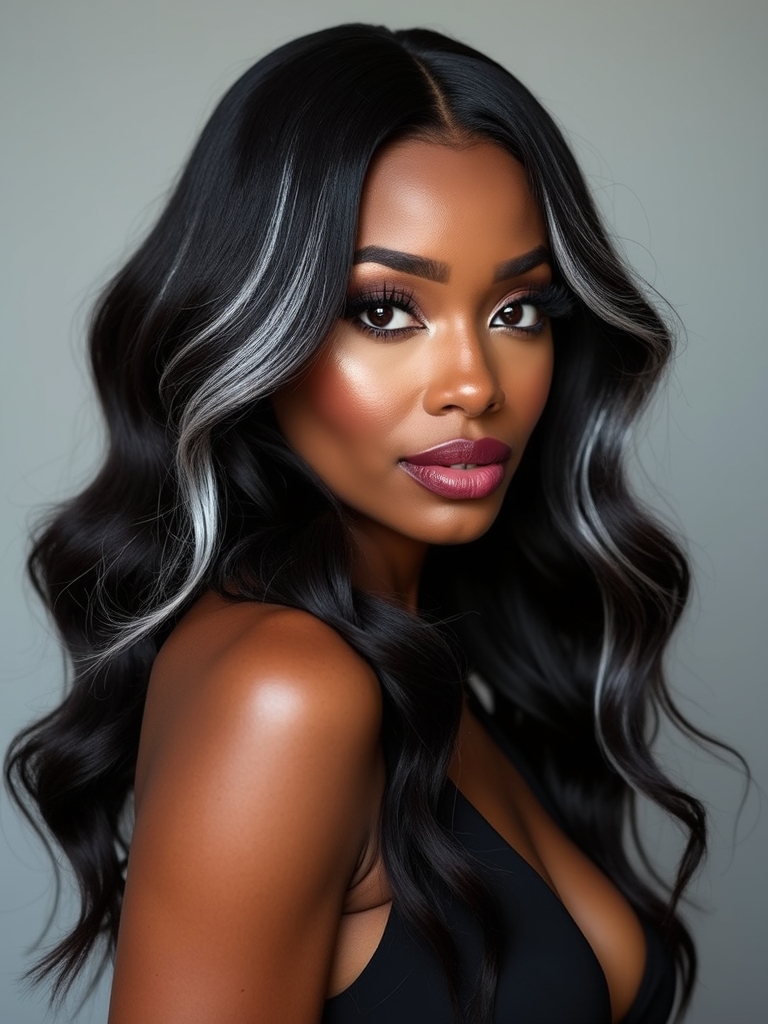
Frosted pearl highlights bring a cool, icy shimmer to dark hair without lightening the whole head. The pearly, almost gray-white pieces create a frosty contrast against a deep base.
Placed sparingly, five or six pieces at most, they look editorial. Placed generously they look like highlights growing out. Because only a handful of pieces are lightened, a bad result is a small result, which makes this the lowest-risk way to test whether icy tones suit you at all.
Most of your natural depth stays exactly where it is.
📋Before You Color Cool
- ✓A photo of the exact cool tone you want
- ✓An honest read on your hair’s health for any lifting
- ✓A realistic budget for toner refreshes
Rich Mahogany at the Cool Edge of Red

Mahogany is the shade people bring in when they want depth with some life in it, and it sits right at the boundary of what this palette allows. The version that works is a deep brown with a red-violet reflect. The version that does not is the same shade mixed a few degrees toward orange.
Where Mahogany Stops Being Warm
A violet base is what holds the red on the berry side of the line. It will still shift over eight or ten weeks, since red pigment leaves before anything else does, but it fades toward plum rather than toward copper.
Ask the colorist directly whether the formula has any orange in the base, because that single question decides whether this works on you.
Sapphire-Infused Dark Hair for a Jewel-Tone Pop

For the adventurous True Winter, a sapphire-infused dark base adds a jewel-tone pop without going full fantasy color. Deep blue is woven through black or dark brown hair so it shimmers in the light, then settles to near-black in shadow. Saturation is the whole point here; a diluted blue looks like damage instead of a decision. It fades over time, so plan on a color-depositing conditioner to refresh it.
- Deep blue woven through a dark base
- Jewel tones suit cool, clear coloring
- Color-depositing conditioner to refresh
Cool Taupe Caramel Kept Low-Contrast

Even True Winters who crave a little warmth have an option: cool-leaning caramel accents kept low-contrast against a deep base. The choice that makes it work is a caramel with a cool, almost taupe edge, so it does not fight your undertone. Here is how to make warmth work for cool coloring.
- Choose a cool, taupe-leaning caramel.
- Keep the contrast low so it blends into the base.
- Place accents away from the face to avoid sallowness.
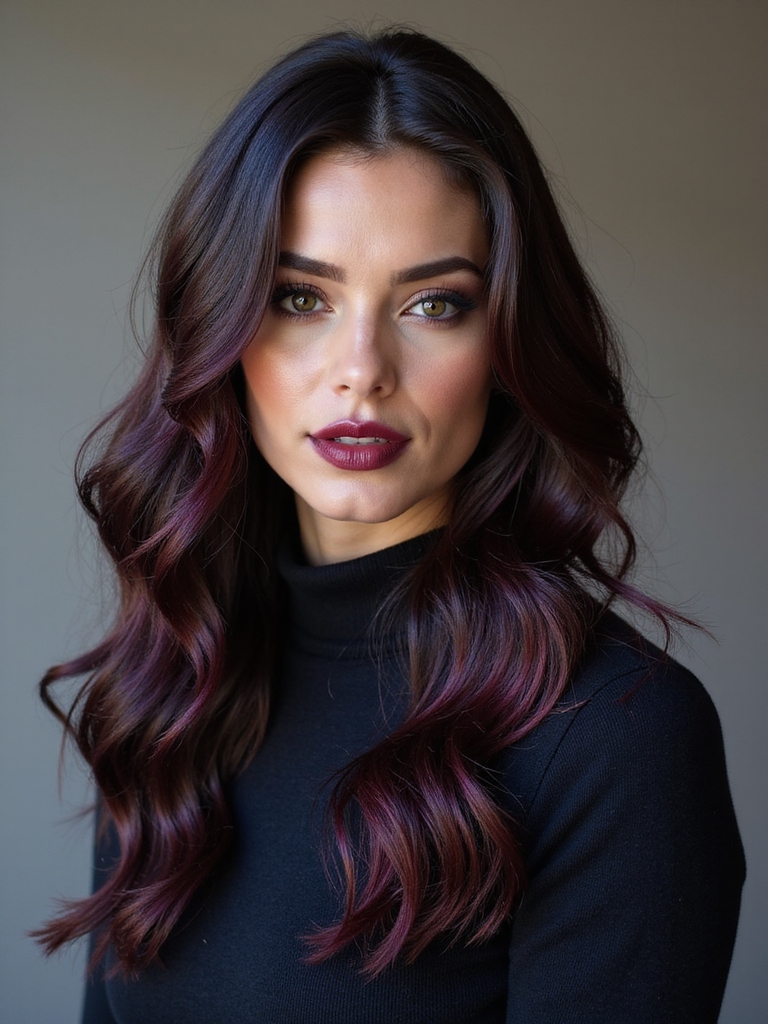
Violet-Black for Edgy, Cool Tones
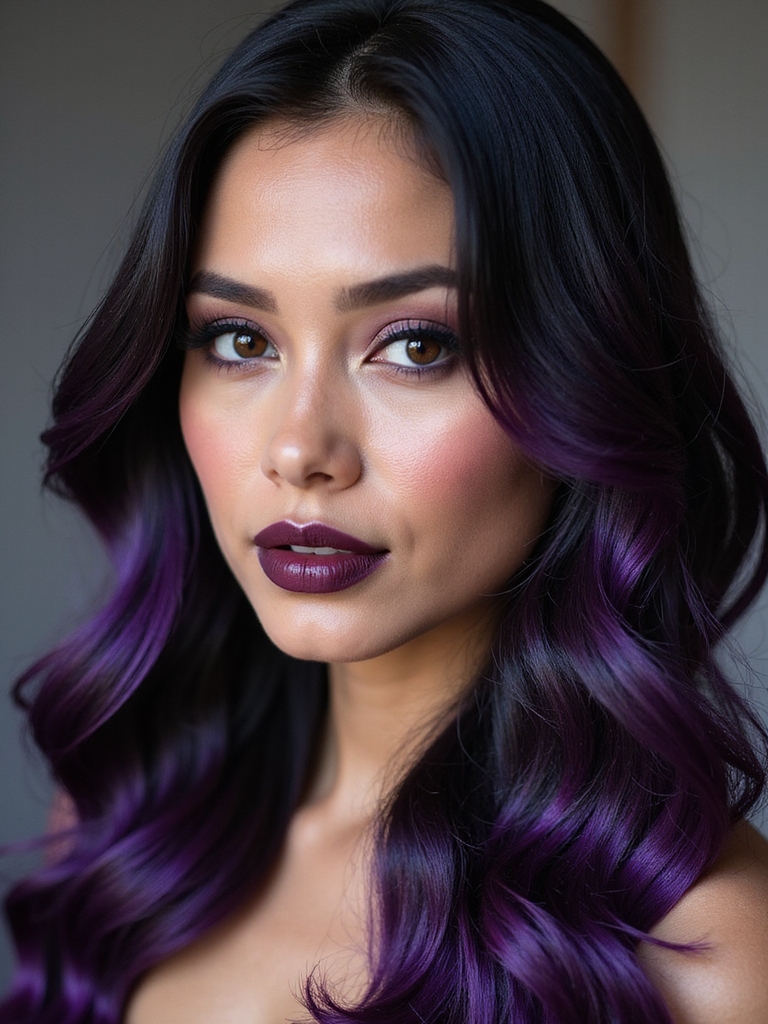
Violet-black is the moodiest of the near-blacks, a deep black with a purple reflect that shimmers eggplant under direct light. Where blue-black looks clean, this one looks saturated, and a camera picks up the gap between them faster than a mirror does.
Violet is the most forgiving reflect across the widest range of cool skin, from porcelain through to deep brown and blue-black complexions, where it picks up the same cool cast the skin already has. I keep it glossy so the purple catches the light instead of muddying into plain black.
- Deep black with a cool violet reflect
- Shimmers eggplant in the light
- Flatters the widest range of cool skin, from porcelain to deep brown
Steel Gray Shadow Root With Lighter Ends

Steel gray is the coolest fashion shade in the True Winter palette, and a shadow root makes it wearable. The darker, smoky root melts into lighter gray ends, so the grow-out stays soft and low-maintenance.
The Reality of Gray Upkeep
Gray is hard to achieve and harder to maintain, since it needs pre-lightening and constant toning to stay steely. I always set realistic expectations about the upkeep first.
Budget for it honestly: pre-lightening plus toning runs five hours the first time and wants you back roughly monthly. On the right coloring it is the most deliberate-looking shade here.
Cool Red Berry for Pink Undertones

Cool red berry is the True Winter red, a deep cherry or raspberry built on a clean blue base. It flatters pink and cool undertones beautifully, glowing where a warm copper would fall flat.
I formulate it with a violet or blue base so it stays jewel-toned and cool. Red pigment molecules are the largest of any dye and sit loosest in the hair, so this is the shortest-lived color here: expect noticeable fade by week four. A color-depositing conditioner and cold rinses are what stretch it. Other cool reds are laid out in winter red ideas.
Icy Lavender Accents on Cool-Blonde Base

For a soft, playful take, icy lavender accents on a cool-blonde base add a whisper of pastel without committing to full fantasy color. The lavender behaves almost like a cool toner sitting over platinum, sweet but still icy.
Pastel That Stays Cool
It needs a very light, cool base to show, so it suits existing platinums or those willing to lift. The lavender has to stay pale enough to read as a tint rather than as a color.
It fades into a soft silver rather than into anything ugly, which is most of why people try it.
True Winter Color Questions, Answered
?How do I know if I am a True Winter?
The clearest sign is a striking, high-contrast look: deep hair against bright, clear eyes, and skin that flatters silver jewelry. If warm colors leave you looking tired while cool ones wake your face up, you most likely lean True Winter, and a professional color analysis can confirm it for certain.
?Why does my cool hair color keep turning warm?
Cool tones drift warm as the toner washes out, exposing the warm pigment underneath. A blue or purple toning shampoo, cool-water washes, and a gloss refresh every few weeks keep it from going brassy. Washing less often buys you weeks, because tone leaves down the drain a little at a time.
?Can True Winters wear any warm colors?
Sparingly. A cool-leaning mahogany or a taupe caramel kept low-contrast can work, but golden, copper, and honey tones tend to wash out cool coloring. When in doubt, stay on the cool side of the shade.
Color Built for Cool, Clear Coloring
The reason warm trends never quite work on a True Winter is simple: your coloring is built for the opposite. Cool, deep, saturated shades with real contrast are what make your features pop, whether that is an icy platinum, a glossy blue-black, or a jewel-tone berry. Once you stop fighting your undertone and lean into the cool side of the palette, color stops washing you out and starts working for you.
Pick two or three from this page and take the photographs to a colorist who talks about undertone rather than about trends. Then say out loud how often you can realistically sit in a chair, because the icy and gray options here run about $150-$250 a session and want you back roughly every six weeks, while a deep blue-black can go three months between appointments.
Next Up