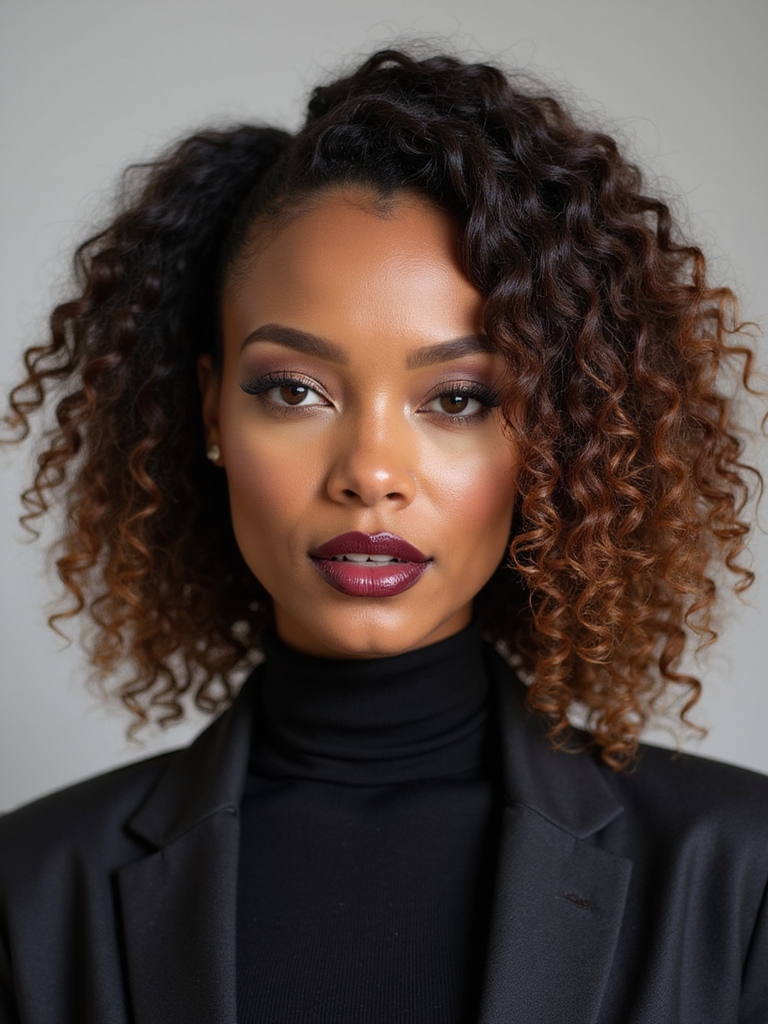
Every December, the same request lands in salons across the country, worded a dozen different ways: something cute that actually survives a beanie. Winter treats hair differently than any other season, between dry indoor heat, wool-induced static, and hats flattening whatever got styled that morning.
The looks that hold up in the cold share one trait: they were built with winter’s specific problems in mind, not just picked for how they photograph. Fifteen cute winter hairstyles follow, each one solving at least one seasonal headache, whether that’s hat hair, static, or hair moving from an office straight to a holiday party with zero time to restyle.
What Actually Makes These Winter-Proof
What actually makes a hairstyle work for winter? It needs to survive a hat, resist static, and keep the ends tucked away from dry, damaging air. Low buns, braids, and tucked ponytails cover all three at once.
Is fighting winter static mostly about product? Mostly about moisture. A leave-in treatment or a drop of oil on the lengths does more than any anti-static spray, since dry air pulling water out of the hair is the actual root cause.
Do these styles require serious time or skill? Most take under ten minutes and no heat tools, which matters most on a dark, cold morning when patience is already running low.
Soft Textured Low Bun With Face-Framing Pieces
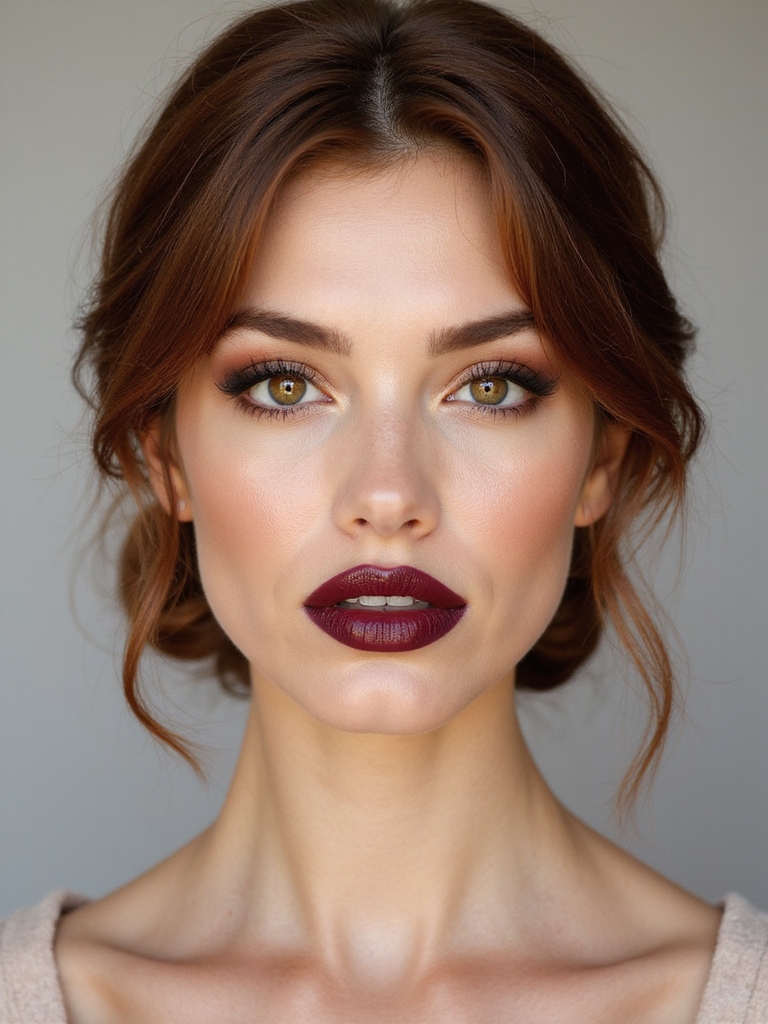
A low bun sits below any hat line by design, which makes it the most reliable winter style on this list: built soft and textured, gathered low at the nape, it survives a beanie without ever getting crushed flat.
- A dry shampoo or texture spray added first gives the bun something to grip
- A couple of pieces pulled loose at the front soften the whole shape
- Keeping the bun low, not tight, protects the hairline from strain

Braided Crown With Loose Waves

A braid wrapped fully around the head clears the face without asking for a hat truce, since the crown shape sits close enough to the scalp that most hats fit right over it, while the waves underneath still fall free.
- Waved lengths first, either with a curling iron or an overnight set
- Two sections braided back along the hairline, then pinned to meet at the crown
- A light mist holds the shape without stiffening the loose waves below
👍Why It Works All Winter
- +Sits low enough to survive any hat or hood
- +Textured hair grips better than freshly washed hair
- +Takes under two minutes once the motion is familiar
👎Where It Falls Short
- –Can look plain without the loose face-framing pieces
- –A too-tight version strains the hairline over time
- –Needs re-pinning if worn under a very tight hood
Textured Ponytail Tucked Into a Scarf

On the coldest, windiest days, a textured ponytail tucked partway into a scarf solves two problems at once: it keeps the ends shielded from dry air that splits them, and it reads as a deliberate styling choice rather than an afterthought.
- A low, roughed-up ponytail gives the scarf trick actual texture to hold onto
- The bottom few inches tuck directly into the scarf to protect the ends
- Silk or satin against the hair causes far less friction than wool
Beanie-Friendly Messy Bun

The beanie-and-bun pairing is close to a winter uniform at this point, and there’s a real technique behind doing it well: the bun needs to sit exactly where the hat isn’t. Our winter beanie hairstyles guide covers more placement tricks for hat-heavy days.
A high or crown-level messy bun pokes out the top or back of a beanie in a way that reads intentional, while the sides and back stay smooth underneath the hat itself. A bun placed too low just gets crushed flat under the weight of the fabric.
It’s one of the fastest styles here, closer to thirty seconds than five minutes once the placement becomes automatic.
Soft Halo Braid for Evenings
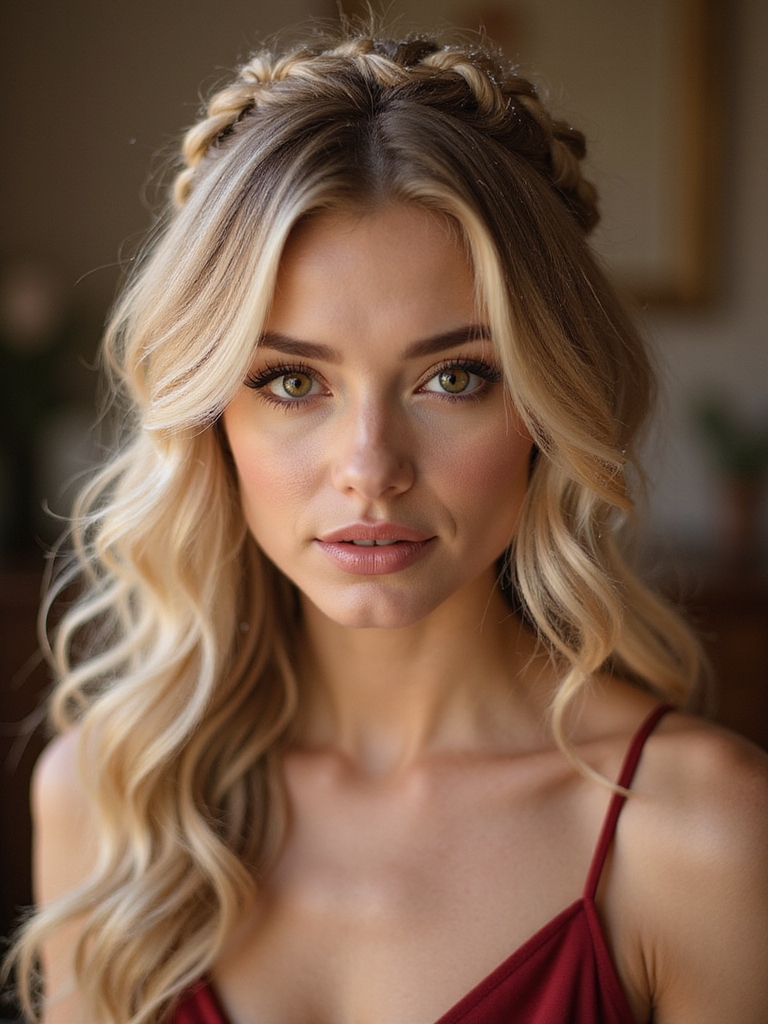
A halo braid wraps a single braid entirely around the head like a crown, working as the dressier, more polished cousin of the braided crown for evening plans.
- A Dutch braid started at one side of the nape, worked all the way around
- The tail pinned back under the starting point to close the circle
- Gently tugging the braid edges wider softens the finished shape
Sleek Low Pony With a Wrapped Elastic

A sleek low pony reads polished enough for work while sitting low enough to survive a coat collar or scarf without getting disturbed through the day. Compare it against the fuller options in our winter ponytail hairstyles guide.
- Smoothed back with a brush and a small amount of serum for shine
- A thin wrapped strand hides the elastic completely for a finished look
- A drop of oil over the surface tames the static winter air tends to create
Twisted Low Chignon
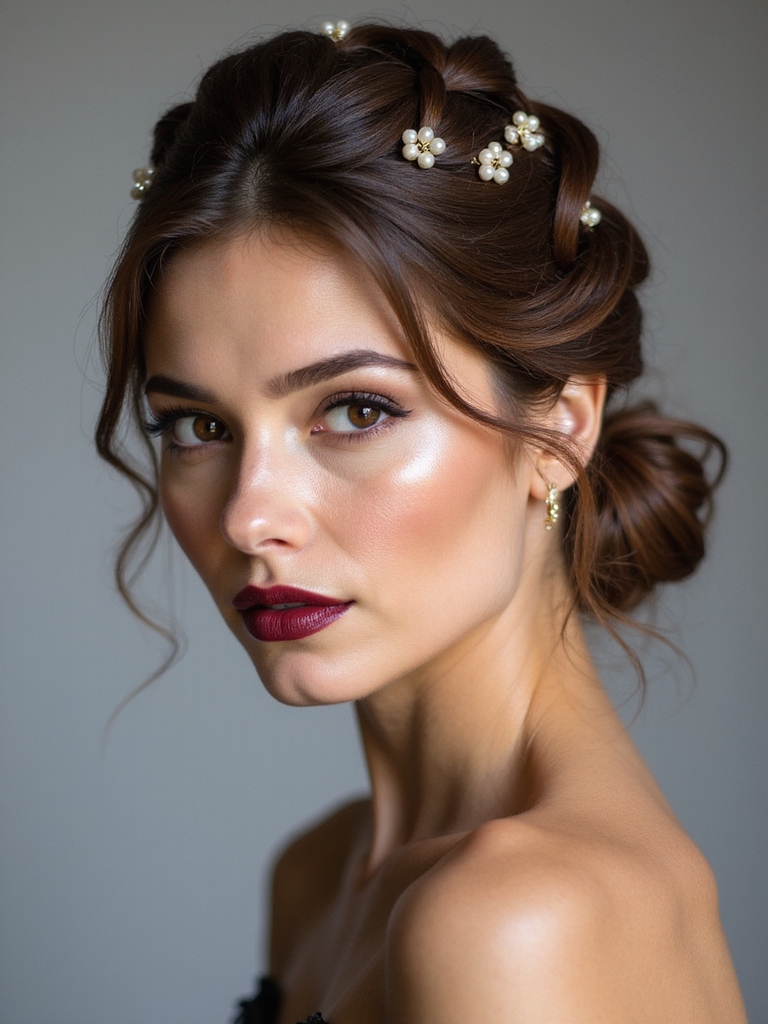
A twisted low chignon ranks among the most elegant options here despite being simple to execute, which is exactly what makes it hold up through an entire party season without feeling repetitive.
The hair twists into a smooth, compact knot at the nape, staying safely below any hat or hood while reading formal enough for an office party or a winter wedding alike.
- A few decorative pins turn the same basic shape festive instantly
- The twist itself locks the hair in place, needing very few pins overall
- Suits everything from a casual gathering to a formal event equally well
Half-Up Fishtail Braid

A half-up fishtail braid delivers both halves of the winter equation at once: hair secured off the face, and length still hanging down for warmth around the neck.
- The top half gathered and split into two sections to start the fishtail
- Thin pieces crossed from each outer edge toward the center, alternating sides
- Left loose, not tight, for a fuller, more relaxed finished braid
Building the chignon in three moves:
1Twist and Anchor
Twist the gathered length into a rope, then wind it into a knot right at the nape.
2Pin as You Wind
Secure with bobby pins every half-turn so the shape holds while wrapping.
3Smooth and Decorate
Smooth flyaways with a touch of serum, then add pins or a clip for shine.
Voluminous Blowout With a Deep Part

For hair worn down and big, a voluminous blowout with a dramatic side part stands out as the one truly dressed-up option here. A salon version typically runs around $60, and the volume holds especially well since winter air carries so little humidity to deflate it.
- A deep side part adds root lift and immediate drama
- Round-brushing in sections builds body through the mid-lengths
- A flexible-hold spray locks in the shape without stiffness
Rope Braids Tucked Under a Knit Warmer

Rope braids, formed by twisting two sections around each other rather than weaving three, make a sturdy, protective option that tucks neatly under a knit ear warmer or headband.
Built to Last Several Days, Not One
They keep the hair fully contained and the ends shielded, which matters most during the months when dry indoor air and constant friction against hats and scarves cause the most breakage.
This style also holds for several days at a stretch, which makes the extra setup time worth it compared to something that needs redoing every morning. Our winter protective hairstyles guide covers more options built the same way.
Cozy Dutch Braid Pigtails
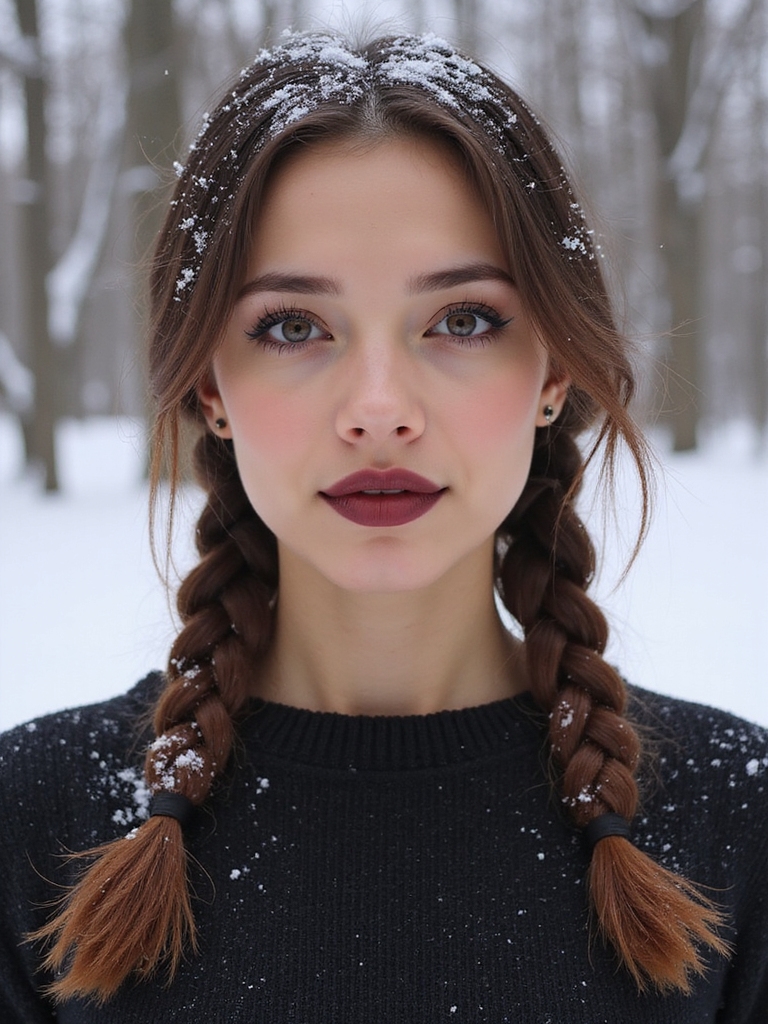
Dutch braid pigtails count as the classic snowy-day style, practical enough for hours outside and cute enough that they don’t feel like a compromise.
- Parted down the center, then split into two even sections
- Each side Dutch-braided by crossing strands underneath rather than over
- Braided fully to the ends and secured before gently loosening for fullness
Is a protective winter style actually worth the setup time?
1You’re Outside a Lot
If cold, dry air and wind are unavoidable most days, the extra setup time pays for itself fast.
2You Mostly Work Indoors
If dry indoor heat is the main issue, a lighter style refreshed more often may suit better.
Slicked-Back Glossy Holiday Look

A slicked-back, wet-look finish counts as the most editorial option here, and it happens to suit winter especially well by leaning into shine instead of fighting frizz. Worked into a low bun or ponytail, the high-gloss finish reads polished and event-ready with very little actual effort.
- A strong-hold gel worked through damp hair from the hairline back
- Slicked directly into a low bun or pony for the cleanest possible line
- A boar-bristle brush smooths the surface to a true glass-like shine
Bubble Ponytail With a Cozy Scrunchie
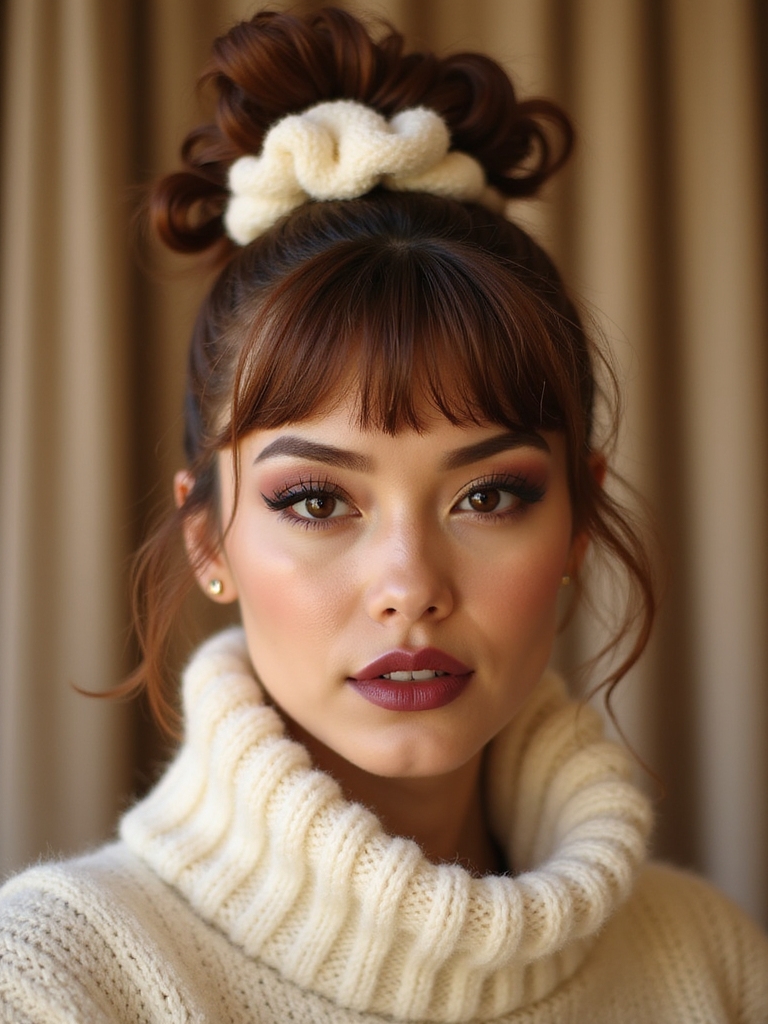
A bubble ponytail takes the most playful approach on this list, segmenting one ponytail into rounded sections with elastics spaced evenly down the length.
Beyond looking fun, the segments actually keep hair contained and off the collar without committing to a full updo, which makes it practical for anything from a casual gathering to a regular Tuesday that needs a small lift.
A velvet or satin scrunchie at the base suits the season visually and causes far less snagging than a plain elastic against winter-dry strands.
💡Fixing Stray Flyaways Mid-Event
A small amount of gel on a clean toothbrush or spoolie catches stray hairs along the hairline without disturbing the rest of the slicked shape.
Relaxed High Top Knot

A high top knot works as the fastest option here for mornings with zero patience to spare, which winter produces in abundance. Piled high and left deliberately relaxed, it pokes out the top of a beanie and clears hair completely off the neck and collar.
- Everything gathered at the crown before twisting into a loose knot
- Secured with a single elastic, then left soft rather than scraped tight
- A small amount of volume pulled back out at the front avoids a flat, severe look
Sleek Protective Flat Twists

Flat twists sit close to the scalp like cornrows but use a two-strand twisting technique instead of a braid, making them a protective option for shorter textured and natural hair through the driest months. See our winter 4C hairstyles guide for more protective options built for the season.
- Tension stays gentle at the roots and edges to protect the hairline
- A light oil sealed over the ends fights the dryness winter air causes
- Suits anyone wanting low-manipulation styling through the coldest months
Styling Tips
A few habits matter more than the specific style chosen. Hair should always be fully dry before heading outside, since strands are at their most fragile when wet and can stiffen and grow brittle in freezing temperatures. Anything styled too tight compounds the problem, since winter friction against hats and scarves already stresses the hairline on its own.
Moisture deserves the most attention of all. Dry indoor heat pulls water out of hair all season long, which is the real source of the static, dullness, and breakage most people blame on the cold air itself. For more length-specific ideas, see our winter hairstyles for long hair guide.
Winter Hair Questions Worth Asking
?Why does hair seem to go flat the moment a hat comes off, even styles that held all day?
Pressure and heat trapped under a hat temporarily flatten the hair’s natural shape, especially at the crown. It usually recovers within a few minutes on its own, but flipping the head forward and shaking the roots speeds that recovery up considerably.
?Is dry shampoo actually useful in winter, or is that more of a summer product?
If anything, it’s more useful in winter, since dry indoor heat already reduces how much natural oil reaches the ends. A light dusting at the roots on second or third-day hair adds grip for styling without adding to the overall dryness problem.
?Do protective styles like braids or twists need extra care in winter specifically?
Yes, mainly around moisture. Dry indoor heat pulls water out of hair faster in winter than any other season, so a protective style needs more frequent oiling at the scalp and ends than the same style would in summer, even though it’s touched less often overall.
?What’s the single biggest mistake people make with winter hair?
Going outside with hair that’s still wet or even mostly dry. In freezing temperatures, water left in the hair can stiffen the strand and make it prone to snapping. Drying fully, or choosing a style that can be set the night before, avoids the issue entirely.
The Best Winter Styles Solve Two Problems at Once
Every look above does double duty: something that photographs well and something that actually survives contact with a hat, a scarf, or a long walk through the cold. That combination, more than any single technique, is what separates a winter-proof style from one that just happens to be worn in December.
A couple of these, picked to fit an actual length and an actual morning routine, cover most of the season. The rest comes down to keeping the hair underneath it all properly moisturized, since no style holds up for long on hair that’s already fighting dry air on its own.
More to Browse