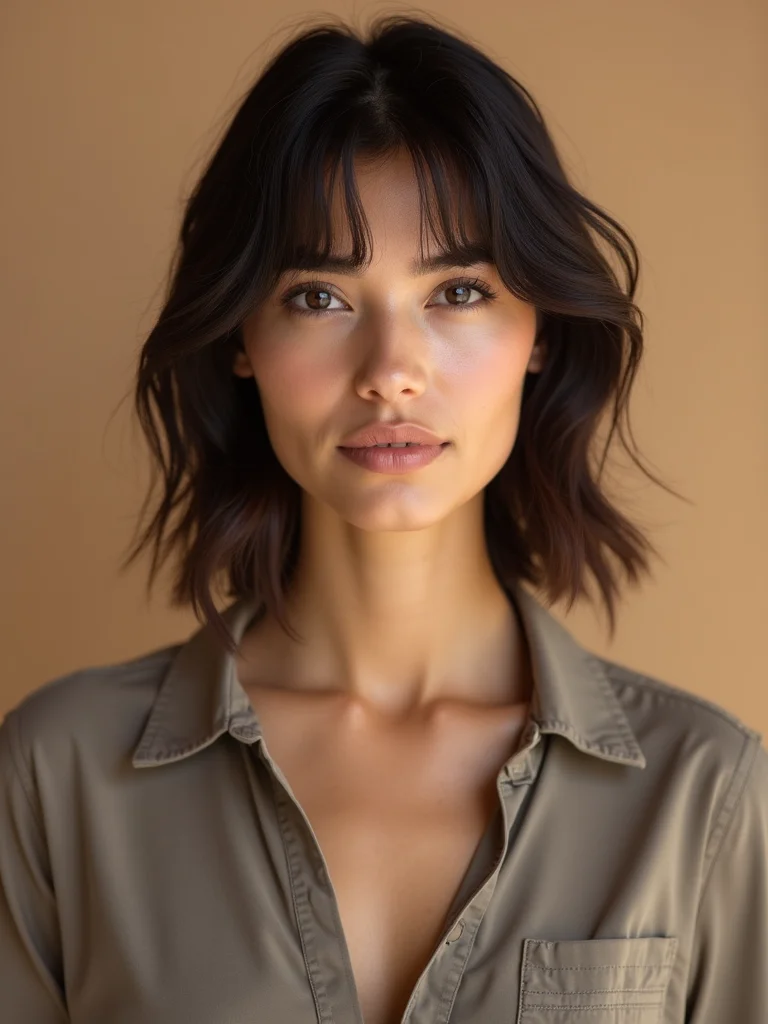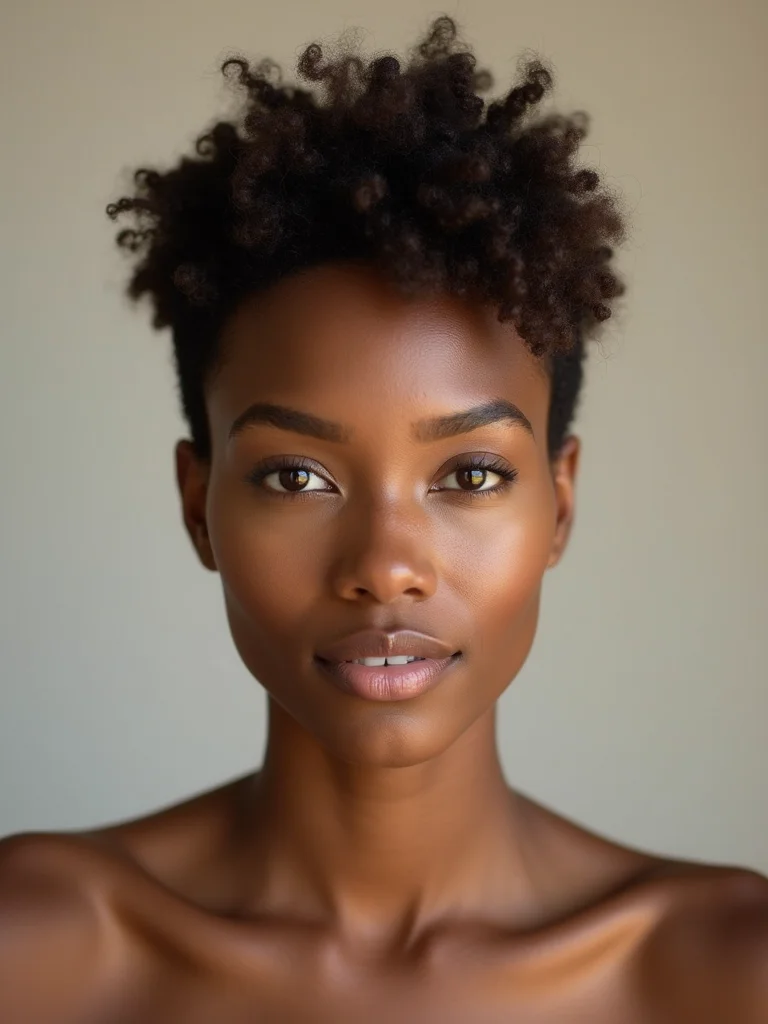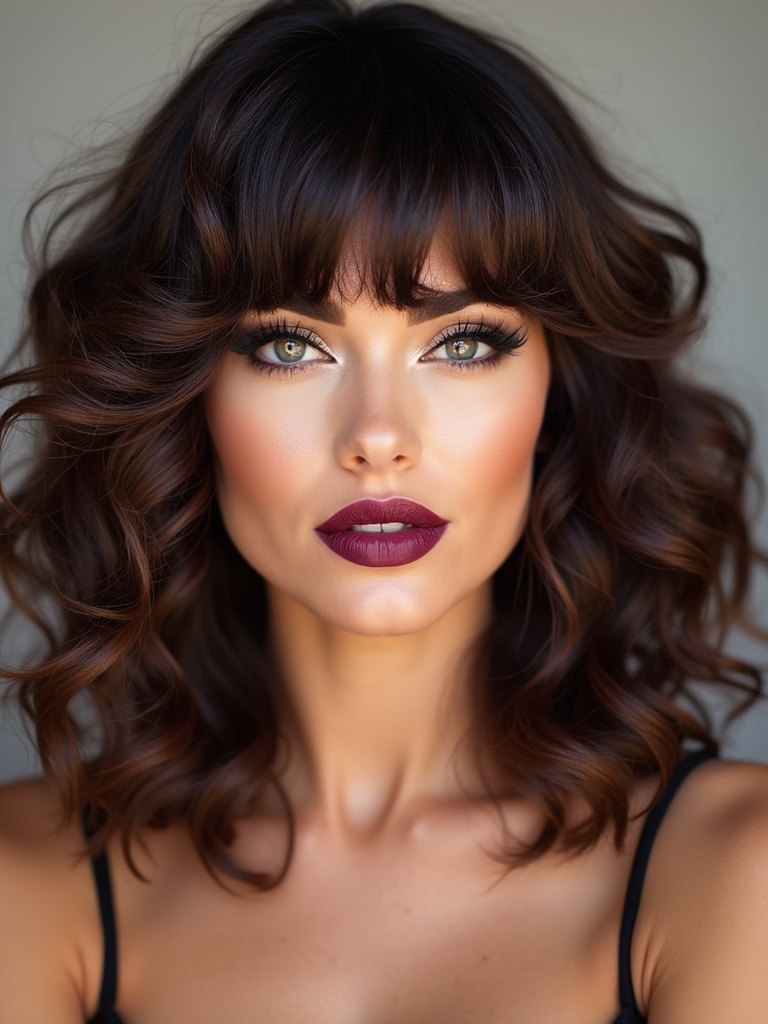
The myth going around is that curly hair is too much for bangs, that the curl will fight the fringe until one of them loses. The opposite tends to be true. Curly curtain bangs, parted and swept instead of cut blunt, move with a curl pattern rather than against it, so there’s no daily battle to smooth anything down.
The real risk isn’t the curl. It’s the cut. Cut without accounting for shrinkage, a curly fringe can dry inches shorter than planned. Cut with the pattern respected, it grows out cleanly and mostly styles itself. Fifteen versions follow, from soft waves to tight coils, each with the cutting detail that actually makes it work.
The Cut Decides Everything Here
- Curly curtain bangs work on every texture, from loose waves to tight coils; the cutting detail changes, not the shape itself.
- Cut dry, in the hair’s natural sprung state, or the fringe risks drying shorter than intended once shrinkage takes hold.
- A quick fringe-only trim around the two-month mark usually keeps the shape without a full cut.
Soft Wavy Curtain Bangs With Feathered Ends

Loose waves make the easiest entry point into curly bangs, since the gentle bend does most of the styling on its own. Feathered, point-cut ends keep the fringe soft and parted rather than blunt, so it frames the face without adding visual weight.
- Cut dry so the true wave length shows before any length is removed
- Point-cut and feathered ends replace one hard line with soft pieces
- A dime of curl cream through damp hair, then air-dry, is the whole routine

Curly Shag With a Face-Framing Fringe

A curly shag and a curtain fringe share the same instinct: let the layers do the work instead of forcing the curl into submission. The shag’s stacked layering gives curls room to spring and pile through the crown, and the fringe simply extends that layering into the front.
Why the Shag and the Fringe Work Together
The fringe here isn’t cut as its own piece; it’s woven directly into the layering around the face, which is exactly what keeps it soft and forgiving as it grows. There’s no single hard edge waiting to look awkward at the six-week mark.
This combination suits curly clients who want real movement without overhauling the whole cut. On denser or coilier textures, ask for a touch more length in the front layers so shrinkage doesn’t pull the fringe shorter than the rest of the shag.
Coily Curtain Bangs With Tapered Corners

Tight coils absolutely wear curtain bangs well, and tapered corners are the detail that makes it work. The taper softens the outer edges of the fringe so it sweeps back toward the hairline instead of stopping in a blunt corner.
Shrinkage Changes the Math Completely
Shrinkage is the entire conversation with coily texture, so the cut has to leave real, generous length. A coil that looks collarbone-length wet can spring up to half that length once fully dry, and the fringe shrinks by the same proportion.
A stylist experienced with coily hair cuts it dry, gently stretches each section to check the true spring, then trims conservatively. Cutting coily hair wet, skipping that step, is the single most common reason a coily fringe ends up too short.
Getting a curly shag with fringe to settle in, in three moves:
1Scrunch In Curl Cream
Work a coin-size amount through soaking-wet hair, focusing on the front layers first.
2Diffuse in Sections
Cup small sections in the diffuser bowl rather than blasting the whole head at once.
3Break the Part by Hand
Once fully dry, separate the front pieces with fingers, never a comb, to keep the shape soft.
Voluminous Ringlets With Feathered Bangs

Full, well-defined ringlets can read top-heavy without help, and a feathered fringe balances that by lightening just the front. The rest of the volume stays intact through the lengths, so the whole shape feels considered rather than like a lot of hair happening at once.
The mistake to avoid is over-thinning the fringe to control the volume. Ringlets need their density to hold the curl pattern, so the feathering should stay light, just enough to soften the very ends.
- Keep the fringe a touch longer than expected to balance the volume below
- A curl gel, scrunched in and left to cast, holds the ringlet shape best
- A satin pillowcase or bonnet protects the front curls overnight
Long Layers With Swooping Bangs

On long curly hair, a swooping curtain fringe brings movement to the front while every inch of length stays put. The bangs sweep out to the sides and blend into the long layers, so the face-framing effect shows up without a visible cut line.
It’s a low-risk way to try curly bangs, since the fringe stays long enough to tuck behind the ears or pin back if the change feels like too much. Long layers underneath keep the weight from dragging curls into a flat, triangular shape, and the swooping fringe extends that same movement to the front.
ℹ️The Density Trade-Off
Feathering a ringlet fringe too aggressively doesn’t make it look softer, it makes it look sparse once the curl springs up. A light hand here does more than extra product ever will.
Short Curly Bob With a Split Fringe
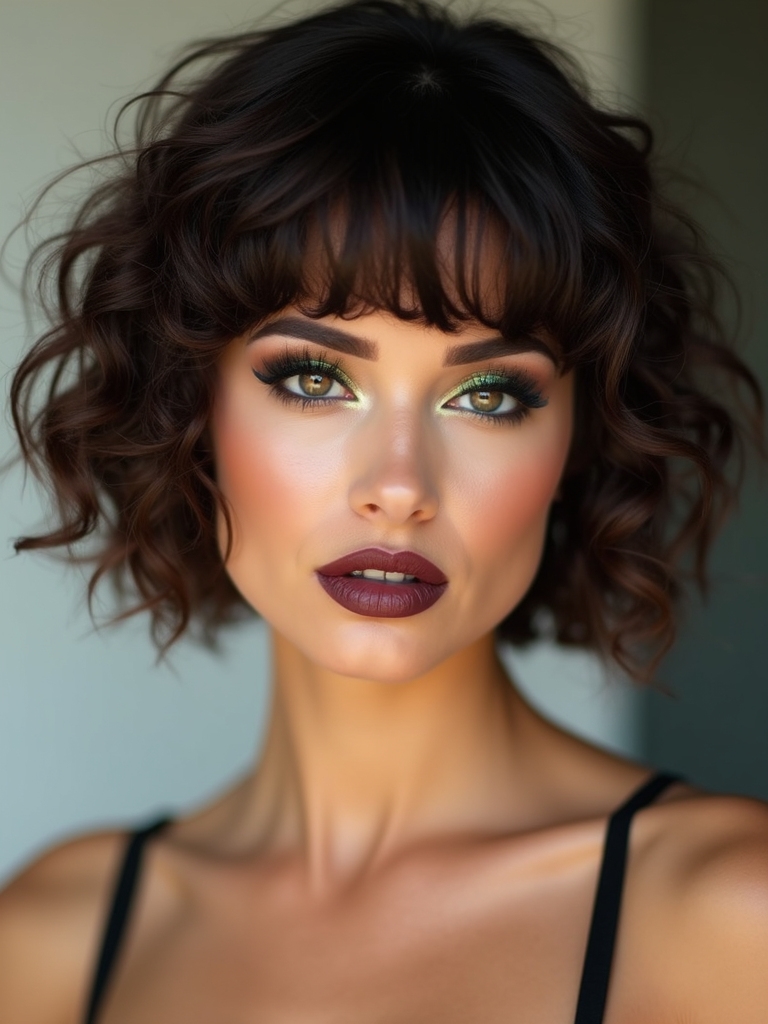
A chin-length curly bob with a split, center-parted fringe carries a bold, editorial energy on textured hair. The parted fringe opens up the face while the short bob keeps everything dense and full.
Short length and shrinkage pull in opposite directions here: shrinkage works in your favor for volume but against you for overall length, so this cut deserves a careful conversation before the scissors come out. A stylist needs to know exactly where the bob should land once fully dry, not while it’s still wet. Our short curly bob guide covers the sizing logic in more detail.
Styling stays fast once it’s cut right: finger-comb the part, add a curl cream, and let it dry. The bob does most of the remaining work on its own.
Mid-Length Curls With Airy Curtain Bangs

Mid-length curls sit at a particularly useful spot for curtain bangs: there’s enough length for real movement and enough structure to hold a defined fringe shape. An airy version keeps the whole look light rather than heavy.
Airy, here, means point-cutting the fringe rather than thinning it with shears. Point-cutting removes bulk while keeping the ends soft, so each curl still has room to form instead of getting choked off.
This length and cutting approach forgive a lot of first-timer mistakes, which makes it a reasonable starting point for anyone trying curly bangs for the first time.
Defined Coils With a Sculpted Center Part

A sculpted, precise center part turns a set of well-defined coils into a clean, symmetrical curtain shape on both sides of the face. The part itself supplies the structure; the coils on either side supply the drape.
This look rewards a solid wash-day routine. A curl-defining gel, applied to soaking-wet hair and smoothed down with the praying-hands technique, sets the front sections before they’re left alone to dry undisturbed. Refresh just the part and the front coils between full wash days to keep the shape crisp.
Beachy Waves With a Textured Fringe

Looser, beachy waves pair naturally with a textured fringe, since both share the same relaxed, undone energy. The fringe gets cut with broken-up, piecey ends that echo the wave pattern running through the rest of the hair.
The Most Forgiving Fringe Length
This sits at the lowest-effort end of the curly-bangs spectrum. Waves carry less shrinkage than tighter curl patterns, so the fringe length is more predictable, though cutting it dry still avoids any unpleasant surprises.
A sea-salt or texturizing spray, worked through damp hair, is usually all the styling this version needs beyond letting it air-dry.
Layered Wolf Cut With Curly Bangs

A wolf cut and curly curtain bangs share the same shaggy, piled-up energy, which is why the pairing works so naturally. The heavily layered wolf shape gives curls maximum lift and room to spring, and the fringe finishes that same frame at the front.
Curls take especially well to a wolf cut, since the layering removes bulk and lets each curl spring freely rather than getting weighed down by its neighbors. A wolf cut designed for straight hair looks noticeably different once translated to coils, so the layering needs planning around the curl pattern specifically. More detail in our wolf cut for curly hair guide.
🅰️Looser Waves
Less shrinkage means a more predictable fringe length. Still worth a dry cut, but the margin for error is wider.
🅱️Tighter Coils
Significant shrinkage means the cut needs real extra length. A wet cut here is the most common cause of a too-short fringe.
Off-Center Curtain Bangs for Lift

Shifting the part off-center is a quiet trick for adding lift to curly bangs, especially on hair that tends to fall flat at the crown by midday. Moving the part half an inch to one side pushes volume up and away from the forehead instead of letting it settle flat.
- Find the natural part first, then shift it slightly to one side
- Clip the front section up at the root while it dries to build in lift
- Diffuse with the head tipped toward the heavier side for extra volume
Curly Lob With Softly Blended Bangs

A curly lob, sitting just past the chin, stays endlessly wearable, and softly blended bangs finish it without adding a hard edge. Rather than a distinct fringe, the bangs melt directly into the pieces framing the face on either side.
That blending is really the whole point. The bangs and the front layers get cut to flow together, which is what keeps the whole thing low-maintenance and easy to grow out. There’s no separate line to maintain or grow past awkwardly.
It suits nearly every curl pattern, since the blended approach adjusts to however much shrinkage a given texture has. See more curly-lob ideas in our curly bob guide.
Micro Curtain Bangs for Tight Curls

Micro curtain bangs sit high and short on the forehead, and on tight curls they make a real, bold statement. The short, airy fringe shows off the curl pattern up close in a way longer bangs never do.
There’s No Room for Error Here
This is the version where a dry cut matters most, because there’s no spare length to fall back on if the cut runs short. A micro fringe cut even slightly too tight on tight curls can’t be fixed except by waiting it out, so a stylist who deeply understands curl spring isn’t optional here.
Once it’s cut correctly, styling is straightforward: a small amount of gel scrunched through the fringe, then left alone to dry and set on its own.
Side-Swept Curtain Bangs on Curls

Side-swept curtain bangs are probably the most forgiving curly fringe of all, since there’s no precise center part to maintain as the hair grows. The bangs sweep across and to one side, blending into the rest of the hair and flattering nearly every face shape along the way.
- Cut on the longer side so the sweep has enough length to work with
- Direct the fringe toward the preferred side while damp, then clip it in place
- Diffuse in that same direction to train the curl to sweep naturally
Two myths about micro fringes on tight curls, cleared up:
❌ Myth: Myth: A micro fringe can be evened out later if it’s cut too short.
✅ Reality: Reality: once curl spring pulls it up, there’s no length left to fix it with. Only time and regrowth solve it.
❌ Myth: Myth: Tight curls can’t hold a defined micro shape.
✅ Reality: Reality: the coils hold the shape naturally once cut correctly. The cut, not the curl pattern, is usually what goes wrong.
Low-Maintenance Curly Curtain Bangs
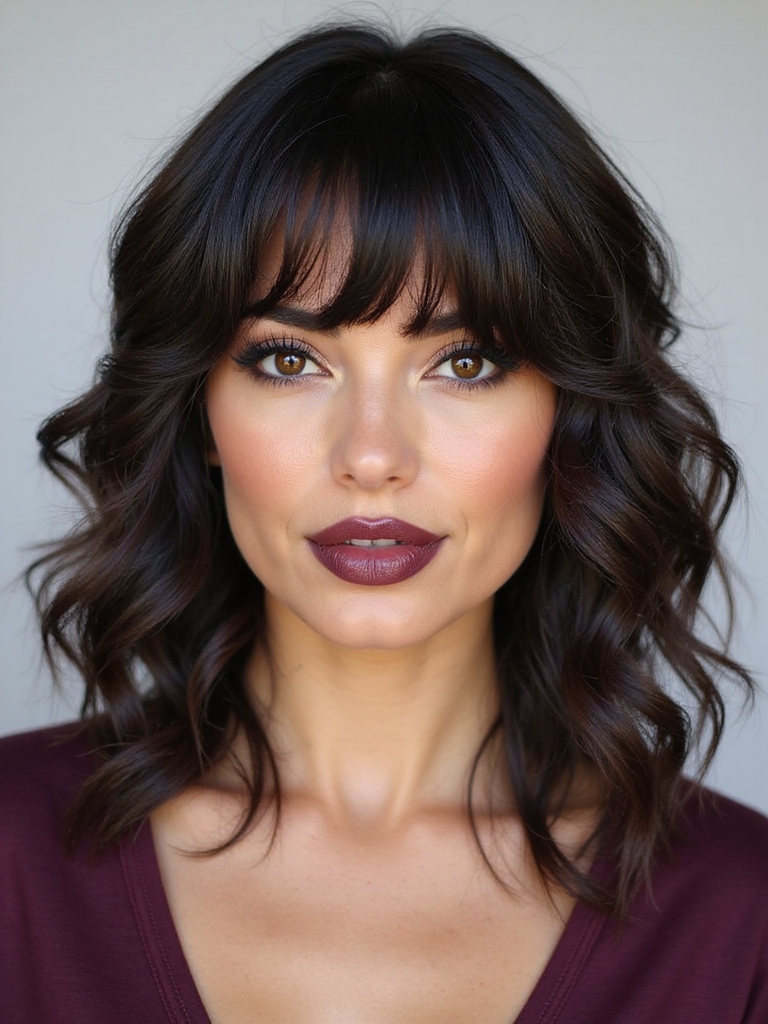
If everything above sounds like more than you want to manage, curly curtain bangs can also be the lowest-maintenance fringe option available. Cut long and soft, with the front pieces melted fully into the surrounding layers, this version asks for almost nothing day to day.
Length and blending, not product, are what keep this version easy. The longer and more integrated the fringe stays, the less it demands, since there’s no short, separate piece insisting on daily attention.
A quick fringe-only trim between full cuts usually runs about half of a $70 haircut, worth asking about if the shape starts drifting before your next full visit. Otherwise: wash, apply the usual curl product, dry however’s normal, then finger-style the front into place.
What to Expect
Curly curtain bangs suit nearly every texture, from 2A waves to 4C coils; only the cutting detail changes. Loose waves can go a little longer and looser, while coils need generous length and carefully tapered corners to account for shrinkage. For a broader look at the shape, see our curly bangs guide.
What it doesn’t suit is impatience during the growing-in phase. The first few weeks after a fresh cut, shrinkage can make a new fringe sit shorter than expected, and it takes a wash cycle or two for the curl pattern to settle into its final fall. Anyone wanting an exact result from day one should expect a short adjustment period first.
Curly Curtain Bangs Questions Worth Asking
?Why do stylists insist on cutting curly bangs dry instead of wet?
Because curls shrink as they dry, sometimes dramatically. A stylist cutting dry hair can see exactly where each curl lands and how much it springs before making a single cut. Cut wet, the same fringe often ends up inches shorter than planned once it fully dries.
?Can any curl pattern actually wear curtain bangs, or does it only work on looser waves?
Every pattern can wear the shape; the cutting detail is what changes. Looser waves can go longer and softer, while coils need tapered corners and generous extra length built in for shrinkage. The curtain shape itself flatters all of them equally well.
?How long does it take for a new curly fringe to settle into its real length and shape?
Usually a wash cycle or two. The first wash after a fresh cut often reveals more shrinkage than expected, and the curl pattern needs a couple of styling sessions to settle into its natural fall. It’s worth waiting that out before judging whether the length is right.
The Cut Respects the Curl, Not the Other Way Around
Every version above comes back to the same core idea: curly curtain bangs work only when the cut accounts for shrinkage and curl pattern from the start, not as an afterthought. Get that part right and the fringe grows out gracefully instead of fighting you the whole way.
Save whichever version matched your texture. When you book, ask the stylist directly whether they cut curls dry, before you get into which shape you want. That one detail decides more about the outcome than the specific style does.
Next Up