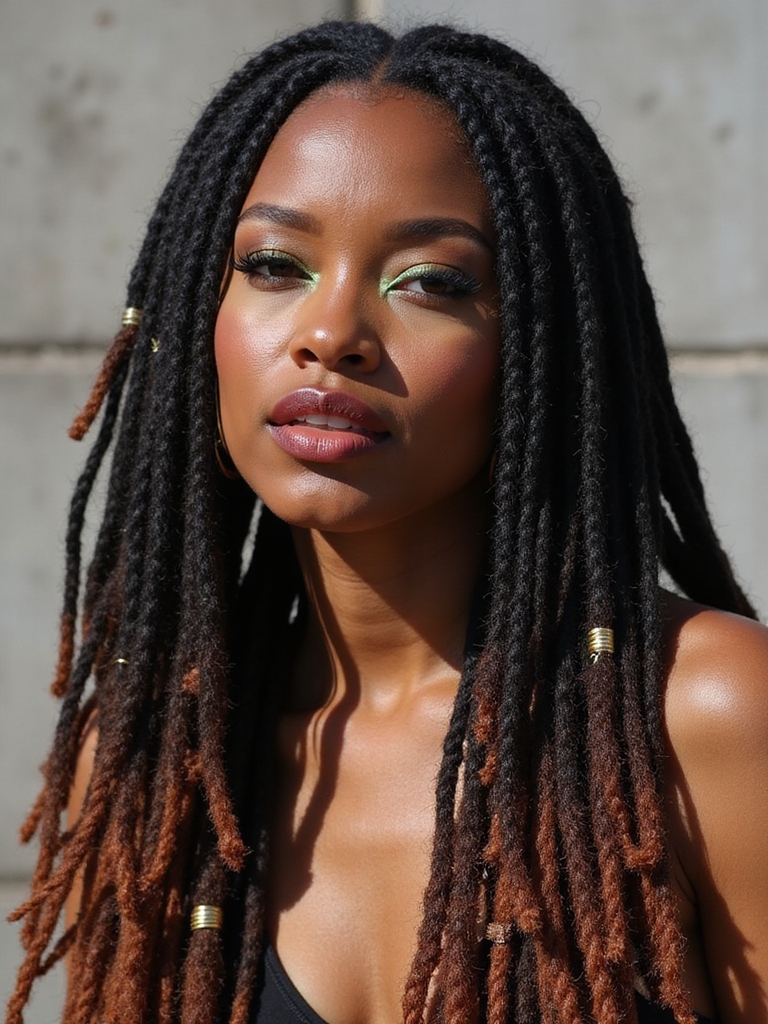
A fresh set of starter locs looks nothing like a mature one three months in, and neither of those looks anything like a set that’s been growing for two years. Short dreadlocks hairstyles cover all of that range: barely-there coils just beginning to lock, mid-stage sets tightening week by week, and fully locked crops that stay short on purpose.
Fifteen styles follow, covering every stage from first twist to polished finish, with real notes on upkeep, cost, and the one habit that damages a hairline faster than anything else.
Where Short Locs Actually Stand
- Locs move through three real stages, starter, budding, and mature, and short locs can sit at any one of them.
- A retwist close to once a month keeps the roots neat and the shape uniform between salon visits.
- A starter set often runs close to $200 depending on method and loc count; ongoing retwists cost closer to $50 each after that.
Starter Locs Paired With a Tapered Side

Every loc journey starts somewhere, and this is that beginning: fresh twists or coils that haven’t tightened yet, paired with a tapered side that gives the whole look a clean, intentional shape from day one. This stage is the one clients get impatient with fastest, and also the one that resolves itself quickest with a little patience.
- Most starter sets take one to three hours to install, depending on method and hair density
- The taper runs on its own refresh schedule, often closer to every three weeks than the locs themselves
- New locs stay fragile at the root for roughly the first six weeks; handle them gently until they firm up

A High-Top Silhouette With a Clean Fade

A high-top keeps volume and length up top while the sides fade down close to the skin, a sharp, barbershop-driven shape that looks modern the moment it’s cut. The contrast between full locs above and a crisp fade below does most of the visual work.
Keeping the Line Sharp
The fade needs its own upkeep schedule, separate from the locs. By week three, most fades have grown soft enough to need a fresh line, so a barber visit fits in alongside retwist days.
It’s a bold, fashion-forward way to wear short locs, and one that reads equally sharp on straight and coily crown texture.
Sponge Twists on Their Way to Locking

Sponge twists are a common, low-effort entry point into locs, made by working a twisting sponge in small circles to coil the hair up section by section. Over the following weeks, those coils tighten and bud on their own.
The in-between stage has its own look: coils slowly closing up into something more solid. A moisturized scalp and a bit of patience matter more here than any product; rushing the process tends to backfire.
👍Why People Start This Way
- +Gentle entry point that doesn’t require sectioning skill
- +Coils look neat almost immediately, even before they lock
- +Lower cost than most professional starter methods
👎The Trade-Offs
- –Takes longer to fully lock than twisted methods
- –Coils can loosen if not maintained consistently
- –Less structured part-lines than two-strand twists
Mini Locs Paired With a Sculpted Drop Fade

Mini locs sit between a standard set and true micro locs in diameter, roughly the width of a pencil, which builds a denser, more flexible head of texture without turning installation into a full-day marathon. Paired with a drop fade that dips low behind the ear, the result comes across detailed and current.
What the Density Costs You
Installing this many locs still takes real time, often several hours, and upkeep runs on a tighter schedule than a standard set. What it buys back is styling range: mini locs move and part almost like loose hair, in a way a standard-size set rarely can.
A skilled loctician matters more here than on a standard set, mainly because sectioning that many locs evenly takes real technique.
Barrel-Twisted Locs for Bold Texture

Twisting two individual locs together into one thick, rounded strand is the entire technique, and it builds instant volume plus a sculptural, rope-like texture across a short set.
This is a styling choice, easy to reverse; twist it in for an event and take it back out whenever. The chunky pattern photographs well and holds its shape for days at a time.
Compact Locs Finished With Curly Ends

Leaving the last inch or two of each loc soft and curly, instead of fully locked, softens an otherwise uniform set, breaking up the texture with a playful detail right at the ends.
- Curly ends add a youthful break in an otherwise even texture
- Works especially well on shorter, compact sets where the tips show
- Refresh curl definition with a little water and a light cream, not heavy oil
A Sharp Side Part for Instant Polish
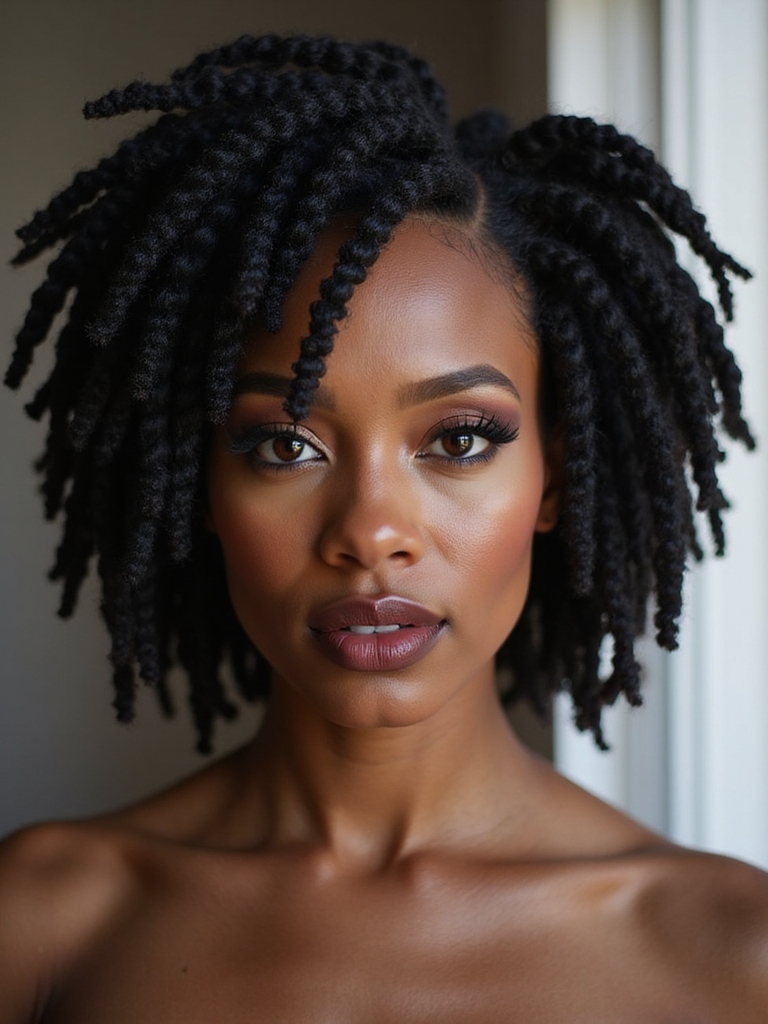
Sometimes the styling makes the look more than the locs themselves do, and a crisp, deliberate side part is proof: it lifts a short set from casual to done in about a minute. I reach for this trick constantly when a client wants to dress up short locs without spending extra time at the mirror.
Part cleanly, lay each section to its side, and set the line with a small amount of gel right at the part if it needs to hold through a long day.
- A crisp part reads polished with almost no extra effort
- Works for both everyday wear and dressier occasions
- Gel at the part line only; too much elsewhere weighs locs down
Dense Micro Locs With a Crown Taper

Micro locs go a size finer still than mini locs, often closer to the width of embroidery thread, which is what pushes installation past a full day for most heads. A crown taper on top of that density keeps the sides shorter while preserving fullness up top, and the overall effect lands full, detailed, and precise.
Why Micro Locs Take Longer
That extra fineness is also what buys the most styling flexibility of any loc size on this list: micro locs can be worn up, twisted, or left down with almost no added bulk.
Because each loc is so delicate, a loctician who specializes in fine locs specifically is worth seeking out, more so than for any other size here.
📋Living With Micro Locs Day to Day
- ✓Beads and cuffs still fit comfortably at this thinness, unlike on some thicker sets
- ✓Less bulk against a pillow, which some sleepers actually prefer
- ✓A shorter backup style is worth having in mind if a fill-in appointment ever gets delayed
Two-Strand Twists as a Starting Point
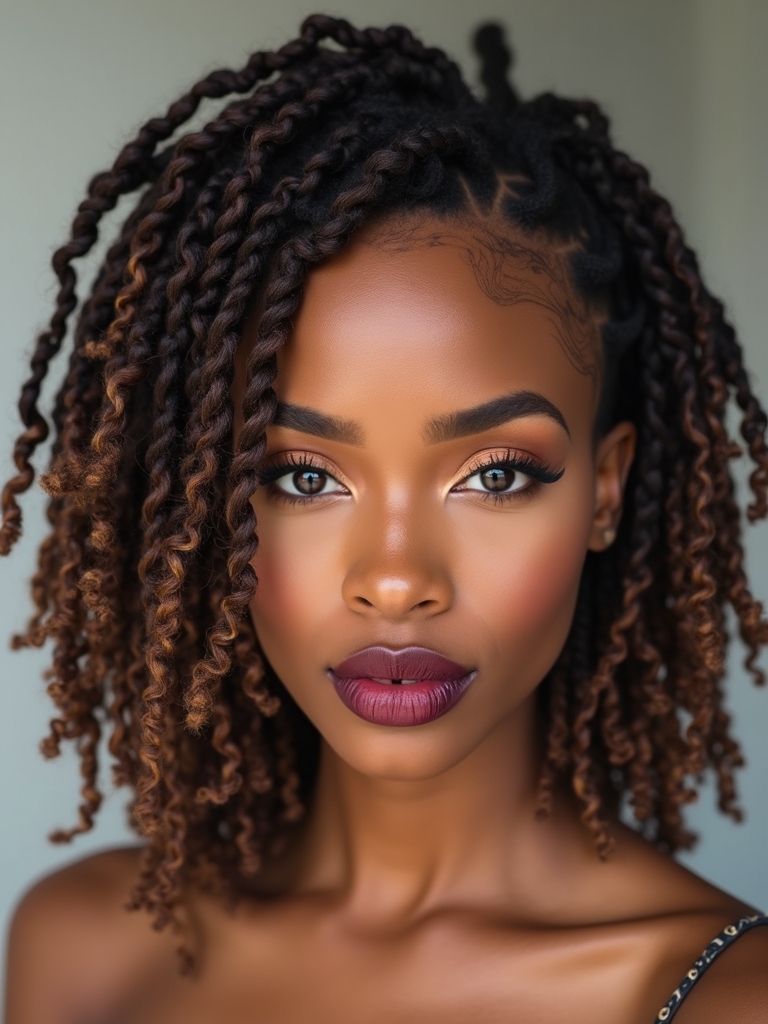
Two-strand twists remain the most common way to begin, dividing hair into sections and twisting two strands together per section. Worn on their own at first, they gradually bud and lock over the weeks that follow.
Why This Method Gets Recommended Most
It looks intentional from day one, which matters for anyone nervous about the earliest, least-finished stage of locking. Most coily and kinky textures take to this method easily.
Keep the twists moisturized and resist the urge to over-manipulate them while they bud. As locs grow past this stage toward medium length, patience does more work than product ever will.
Color-Dipped Tips on a Cropped Set

Dyeing just the ends, copper, burgundy, or honey among the more popular choices, brings a low-commitment pop of color without touching the rest of the head.
It’s easy to refresh or let grow out since the color only lives at the tips. On a cropped set, those dipped ends catch the eye and add real dimension to the overall texture.
| Color Choice | Commitment Level | Upkeep |
|---|---|---|
| Dipped tips only | Low, grows out easily | Refresh every few months |
| Full loc color | High, affects every strand | Regular root touch-ups needed |
| Semi-permanent gloss | Low to medium | Fades gradually, no harsh line |
A Blunt Loc Bob at the Jaw

A loc bob brings the classic bob silhouette to locked hair, cut to a clean, blunt line at the jaw for a sharp, put-together finish that proves locs can be precise, not just textured.
- Works best once locs have matured past the starter stage, so the blunt line holds cleanly
- Needs a loctician comfortable trimming locked hair, not just installing it
- Flatters a wide range of face shapes, much like a standard bob does
Coily Locs With a Crisp Temple Fade

Full, textured coily locs on top paired with a tight fade at the temples make for a clean, barbershop-sharp shape that reads precise from every angle.
The fade highlights exactly how full and coily the locs above it are, creating real contrast between soft texture and a hard, defined line.
It’s a higher-upkeep combination since two different services need attention on two different schedules, but the sharp result tends to hold its appeal between visits.
Two things people assume about fades on coily, locked hair:
❌ Myth: A fade only looks sharp on straight or wavy hair.
✅ Reality: A skilled barber can cut just as crisp a line into coily, locked texture as into any other.
❌ Myth: Getting a fade means restarting the loc process at the sides.
✅ Reality: A fade only removes length; the locs above the fade line keep growing and locking normally.
Mini Locs Dressed With Beads and Cuffs
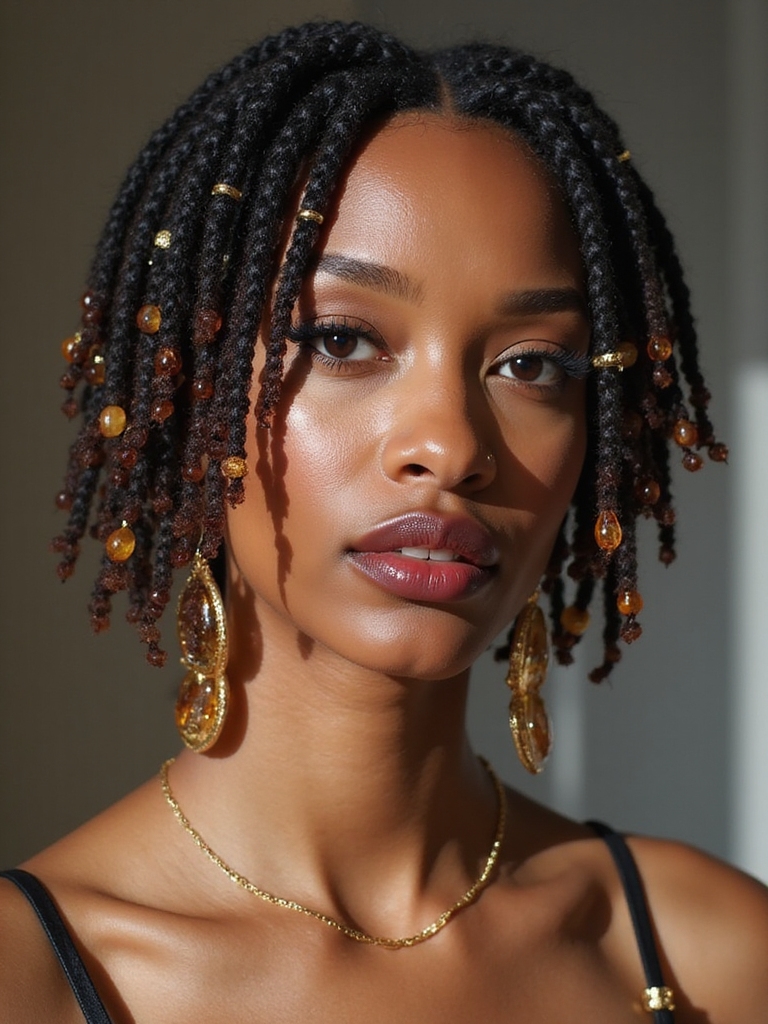
Adornment runs deep in loc culture, and beads or metal cuffs turn a simple mini set into something personal, threaded onto individual locs for color, sound, and meaning.
Styling With Intention
Mini locs suit accessories especially well since their smaller size lets beads sit precisely instead of sliding around. A few cuffs at the tips, or a scattering through the crown, changes the whole feel without touching the cut.
Keep pieces light and easy to remove. Cuffs slide off in seconds for a quick style change; threaded beads need cutting out, so place them with the next few months in mind.
Freeform Locs Left to Their Own Shape

Freeform locs lock with minimal intervention, forming their own organic shapes instead of the uniform, parted sections most other methods rely on.
- The most hands-off method on this list, by a wide margin
- Every loc forms its own individual shape; no two look identical
- Keep the scalp clean and moisturized, then largely leave the rest alone
Palm-Rolled Locs for a Polished Finish

Palm-rolling, rolling each loc between flat palms to smooth and round it, produces the most uniform, put-together short set on this list.
- Best suited to anyone who wants a neat, consistent look over a heavily textured one
- Usually done at each retwist appointment to maintain the smooth shape
- Takes slightly longer per session than other retwist methods
Styling Tips
I tell every new client the same thing: gentle tension now saves a hairline later. Short locs ask for very little daily effort beyond that, but a handful of habits keep them healthy long-term. A light mist of water plus a loc-safe oil keeps the scalp and locs from drying out, and sleeping on satin, or in a satin bonnet, cuts down on frizz and lint overnight. See more styling ideas across every length once a set grows past the short stage.
Wash with a residue-free shampoo so product buildup doesn’t dull the locs or irritate the scalp underneath. At retwist time, less tension is always better: a close, tight twist might look neat on day one, but it’s the single fastest way to stress a hairline over months of repeat visits. Budget-wise, a starter set often lands close to $200 depending on method and loc count, with retwists closer to $50 each after that.
Short Locs Questions Worth Asking
?How long does it take for short locs to fully mature?
It depends heavily on hair type and starting method, but most locs move through starter, budding, and mature stages over twelve to twenty-four months. Short length doesn’t change that timeline; it just means the process happens closer to the scalp.
?Do locs damage hair if they’re kept short?
Not from the length itself. The real risk is over-tight retwisting, which pulls on the hairline regardless of how long or short the locs are. Locs cut short and cared for gently stay just as protective as a longer set.
?Can straight or wavy hair lock the same way coily hair does?
It can, but the process usually takes longer and needs more consistent maintenance in the early stages, since looser textures don’t bud and tighten on their own as readily as coily or kinky hair does.
?Is it possible to switch loc methods partway through, like from two-strand twists to sponge twists?
Once locking has started, switching methods gets complicated, since each one shapes the loc differently at the root. It’s worth deciding on a method before the first appointment rather than mid-process.
?Do short locs need a different retwist schedule than long ones?
Not dramatically, though shorter locs can sometimes stretch a little longer between visits since there’s less weight pulling on new growth. A loctician can usually confirm the right interval after seeing how a specific set is holding up.
What Short Locs Look Like a Year From Now
Every stage on this list eventually moves into the next one. Starter locs bud, budding locs mature, and a style chosen today will look different, usually better, a year from now without much extra effort beyond consistent retwists.
Save the stages and styles that matched where locs are heading, and bring them to a loctician who can map out the specific timeline for your texture.
You Might Also Like