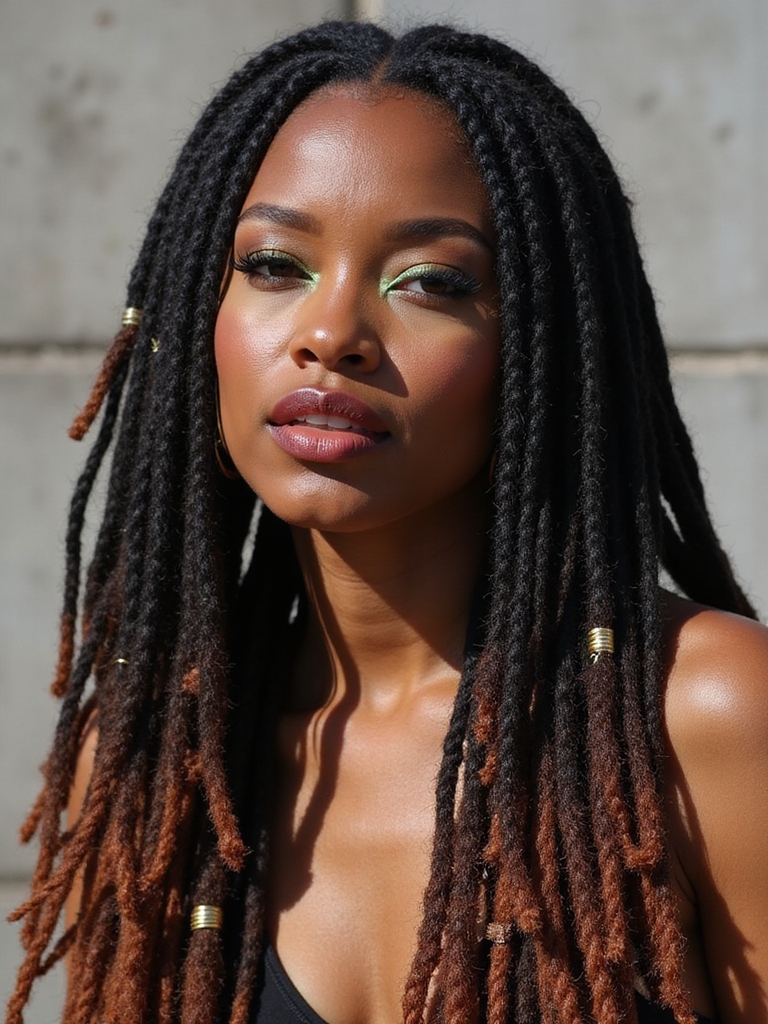
A retwist appointment wraps up, the chair spins around, and a full set of locs sits gathered at the crown in a shape that looks nothing like an afterthought. That is the appeal of a loc updo: the hair does most of the structural work on its own, since locs grip each other and hold a shape a single strand never could.
Sixteen updo directions follow, from a five-minute everyday bun to a sculpted, event-ready crown. Each one notes who it suits, how long it realistically takes, and how to place it so a night of holding your hair up doesn’t cost you tenderness at the hairline the next morning.
Loc Updos, Answered Quickly
Do loc updos damage hair or edges? The updo itself isn’t the problem. Tension at the anchor point is. A wide-based hold spreads the pull; a thin, tight one concentrates it exactly where hairlines are weakest.
Do locs need to be long to wear one? No. Shorter and budding sets handle low knots, wrapped ponytails, and rolls well; the tallest sculpted shapes are the ones that ask for length and maturity.
How much does a salon updo typically run? A quick wrapped style can cost nothing beyond a few minutes at home. A styled salon updo for an event typically runs $75 to $150, well above the $0 of a basic gather-and-pin.
The Sleek High Bun With Laid Edges
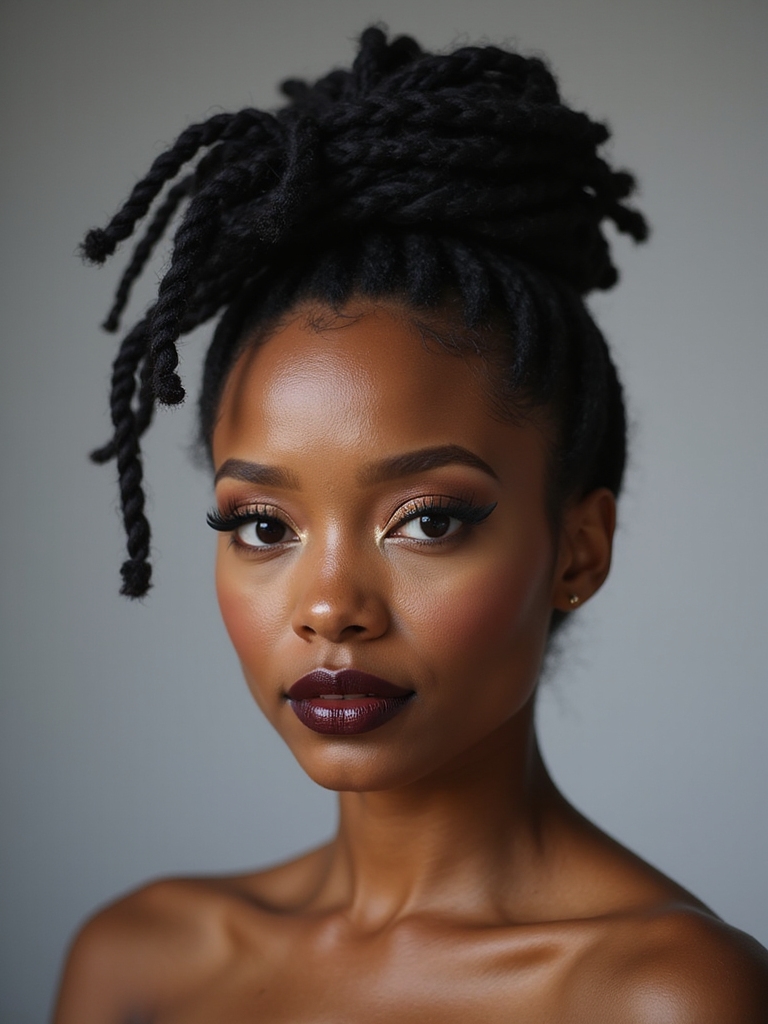
Gathered high and coiled into a single knot, this is the updo most loc wearers reach for first, since it carries an office day and a dinner reservation equally well without any real planning. Most stylists point new loc wearers toward this one specifically because the coil holds itself with barely any pins.
The trade-off is placement. A crown-height gather pulls hardest at the front hairline, so it works best in rotation rather than every single day. A wide, cushioned band spreads that pull far more evenly than a thin elastic ever could.
The Twisted Low Chignon
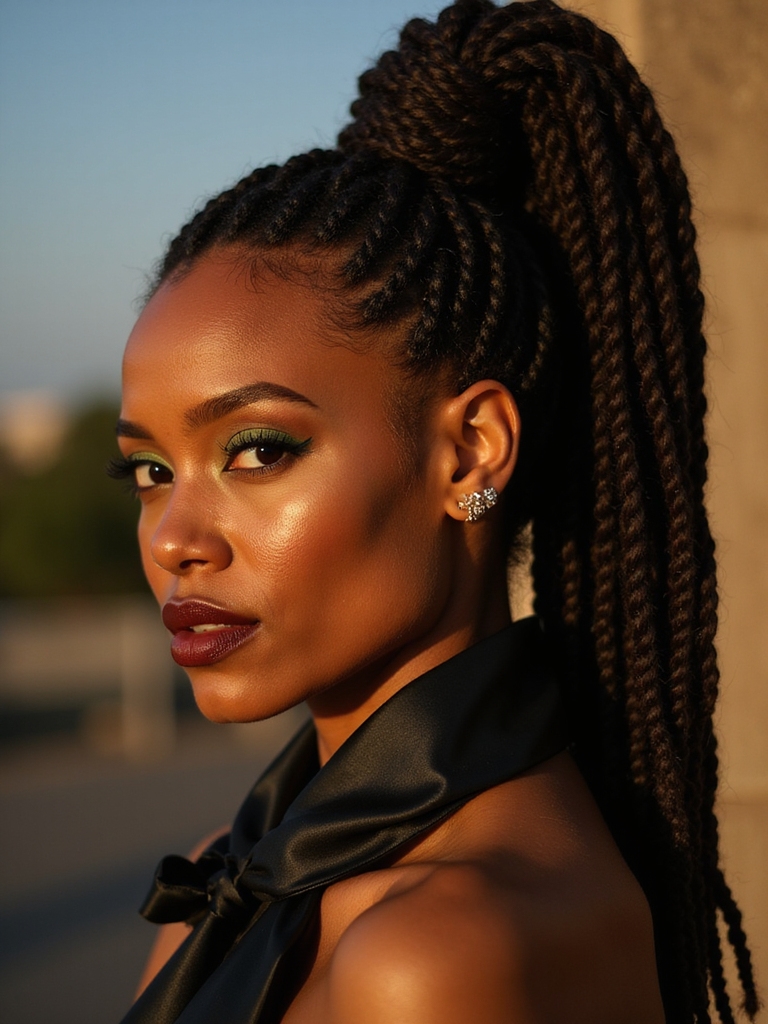
Settled low at the nape, the chignon is the gentlest formal option on this list, since the anchor sits well below the hairline and barely touches it at all. Loosely twisting the locs before coiling gives the shape a soft, rounded finish rather than a stiff knot.
It reads well under a veil or a hat brim without competing for attention, and it holds for hours because the low anchor has nowhere to slide. Experts often steer clients with sensitive edges toward this exact placement before any other formal style.
A Sculptural Stacked Crown
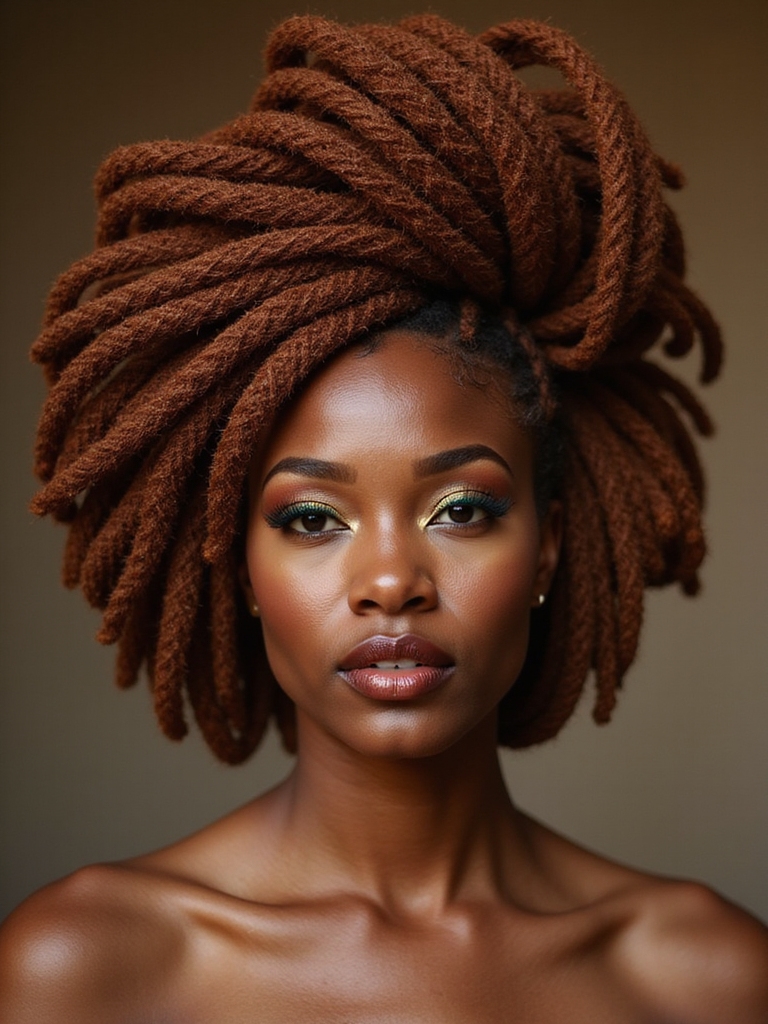
This is the showpiece of the set: locs pinned high and built outward into a sculpted crown that stands like architecture rather than a simple gathered style. The shape carries genuine cultural weight, since crowned updos have long been a way Black women have celebrated and honored loc’d hair.
Why This One Needs a Skilled Hand
It belongs to milestone events, galas, and photographs meant to last, not a Tuesday commute. Building it well takes a skilled hand and real time in the chair, closer to what an elaborate special-occasion service costs than a basic bun.
Mature, evenly locked hair holds this shape most reliably, since the structure depends on each section behaving predictably under the pins.
The Braided Halo Crown
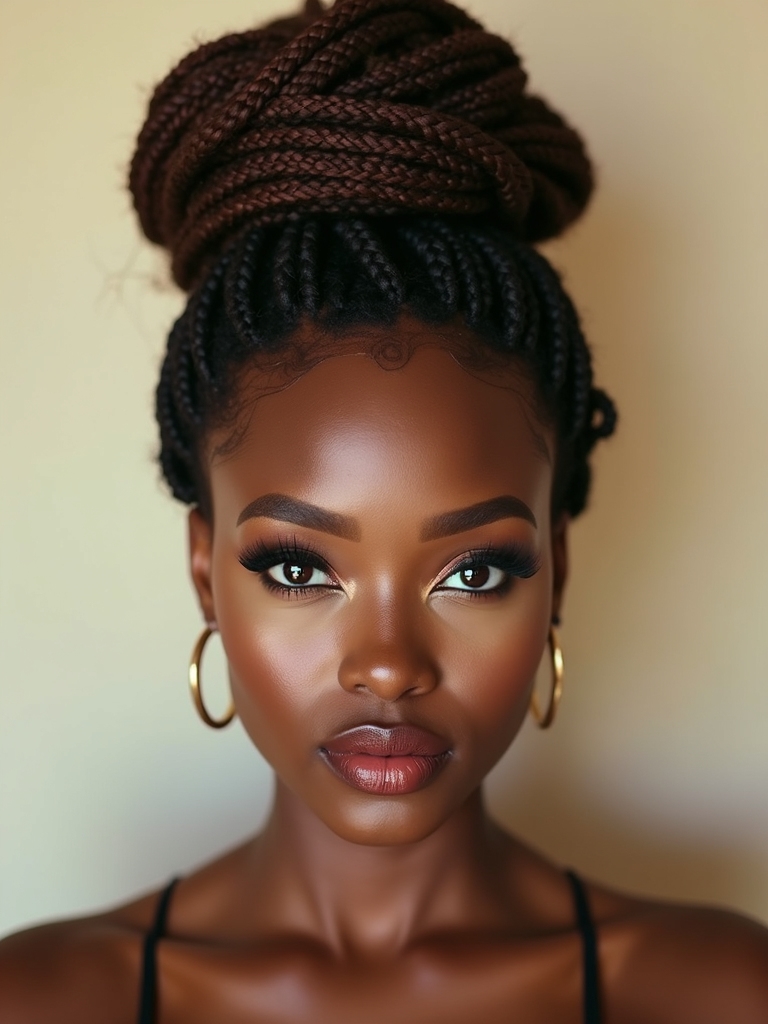
The halo wraps braided or twisted locs in a full ring around the head, framing the face from every angle at once. Romantic and regal at the same time, it shows up constantly at weddings and milestone celebrations for exactly that reason.
The Length This One Actually Needs
Because the weight distributes evenly around the whole circumference rather than concentrating at one point, it tends to feel more comfortable across a long event than a single tall bun does.
It does need enough length to travel the full circle, so mid-back sets and longer are the ones that pull this off cleanly. Shorter locs can approximate it with careful sectioning, but the full unbroken ring wants real length.
The Side-Swept Low Roll
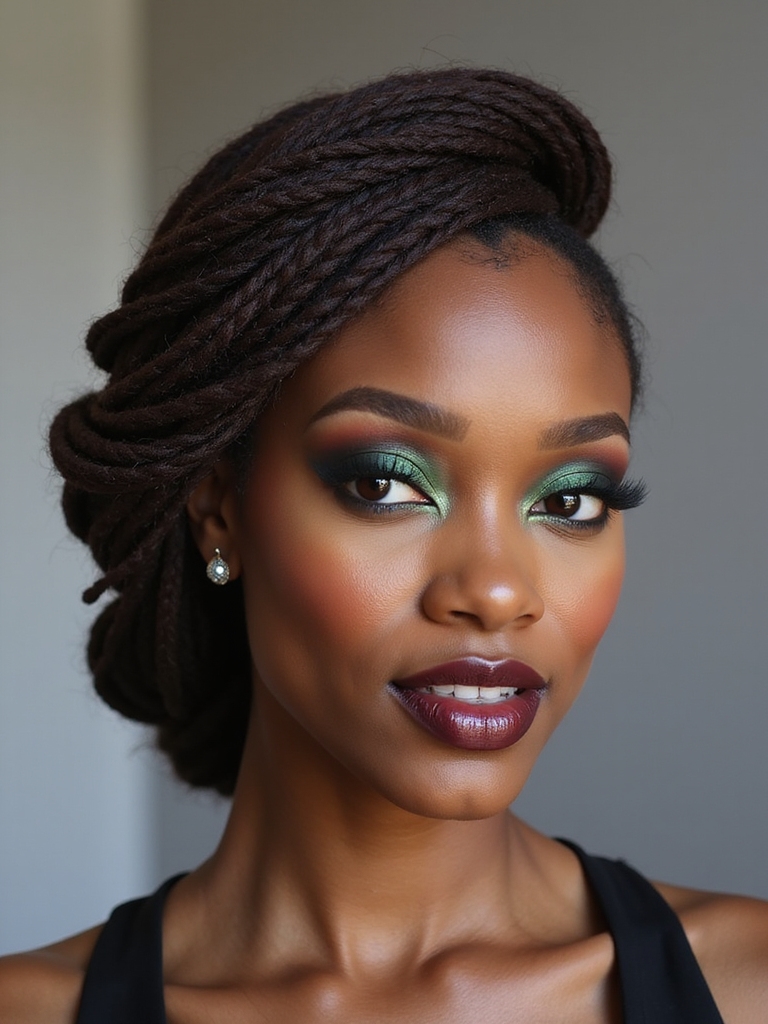
Sweeping the full set to one side and rolling it into a low shape creates an asymmetry that softens strong jawlines and looks put-together without looking fussed-over.
Dressed up with a cuff or two, it carries date nights and dinners; loosened slightly, it works just as well for a casual weekend. That range is most of the appeal.
- Part deep on one side, then sweep the full set toward the opposite shoulder before rolling.
- Tuck and pin along the underside seam so no hardware shows.
- Leave one shorter face-framing loc loose at the temple for softness.
Matching an updo to how much time is actually available:
🎯Five minutes or less
The high bun, the wrapped knot, or the minimalist low knot all come together with almost no setup.
🎯A relaxed twenty minutes
The side-swept roll, the vertical roll, or a rope-twist crown reward a little extra patience.
🎯A full salon appointment
The sculpted crown, the halo, and the basket-weave are built for someone else’s hands and real time in the chair.
The Woven Vertical Roll
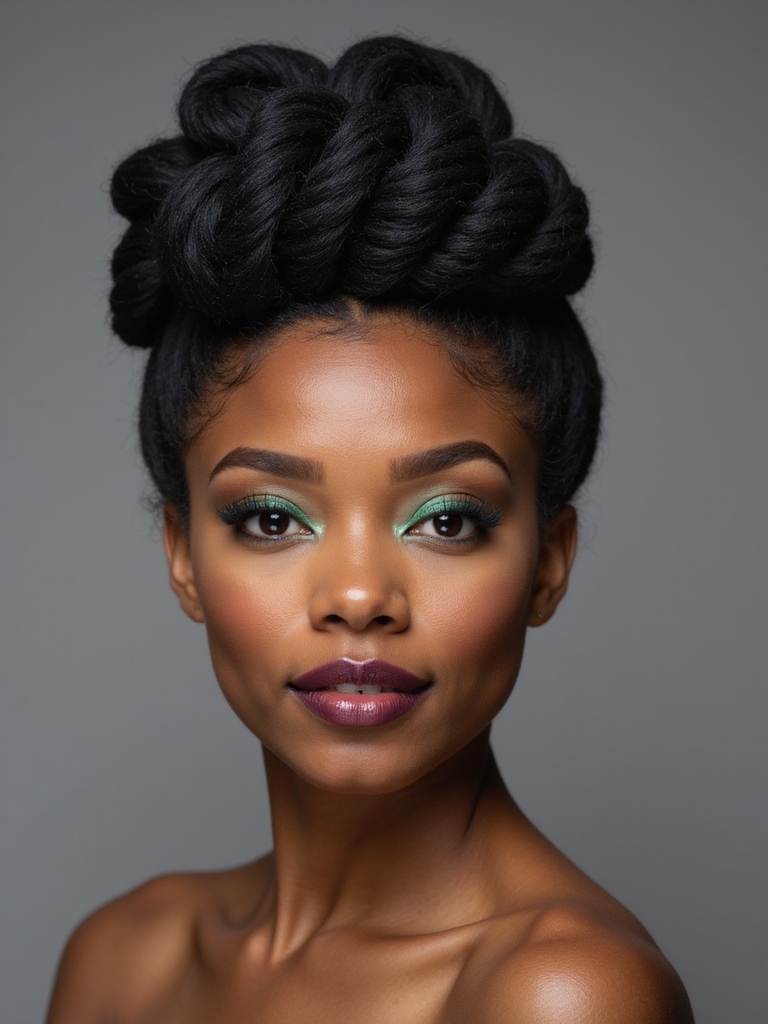
Folded vertically down the back of the head and pinned along the seam, this roll tucks every end out of sight for a clean, formal column. Every loc ends up shielded inside the fold rather than exposed to snagging or weather.
It counts among the more protective updos here for exactly that reason: nothing hangs loose to catch on a coat collar or a car door.
- Smooth the gathered set to one side before folding it vertically.
- Pin from the bottom of the seam upward, working in small sections.
- A light mist of water settles flyaways better than heavy product does.
The Wrapped High Knot
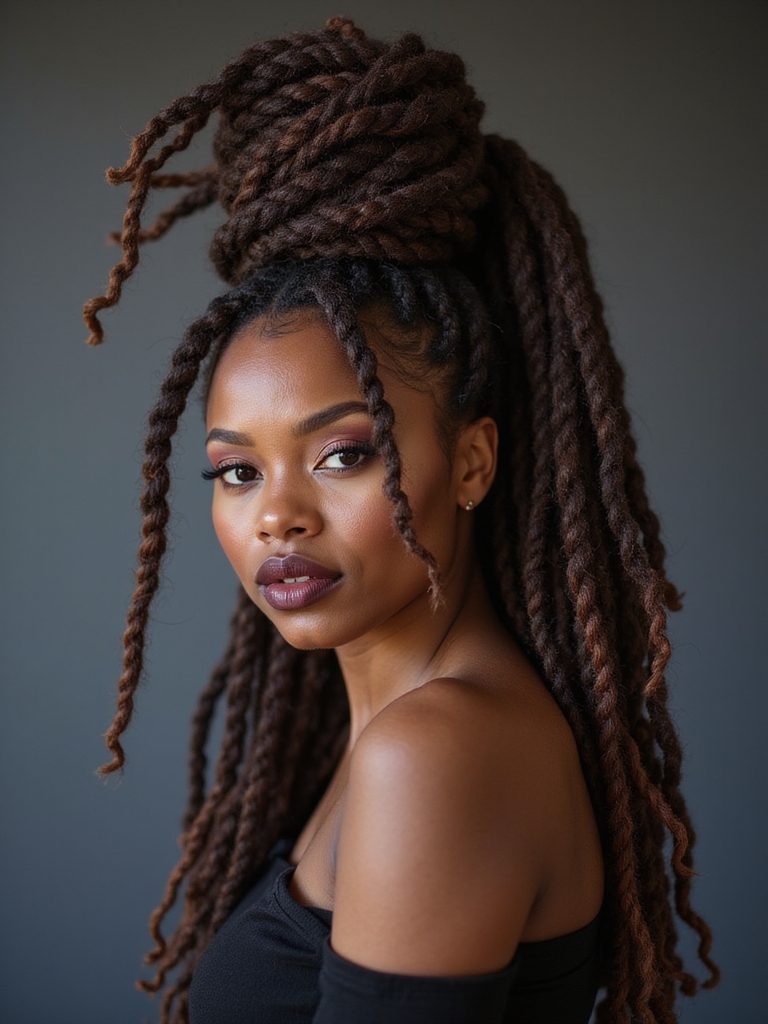
Coil a high ponytail once and wind the length around its own base, and the result is the quickest dressy option on this entire list, ready in well under five minutes.
Keeping It From Becoming a Daily Habit
It works for a presentation in the morning and a dinner reservation that night without needing to be redone in between. The one catch is the same as any crown-height gather: it pulls hardest at the front, so it earns a spot in rotation rather than daily wear.
Wrapping the loose length fully around the elastic, rather than leaving it exposed, keeps the finish sleek and hides the anchor point entirely.
ℹ️Where the Tension Actually Lives
It isn’t the updo itself that stresses a hairline, it’s where the weight anchors. A wide, cushioned base spreads pull across a broad area of the scalp; a thin, tightly cranked elastic concentrates that same pull onto a much smaller patch of hair, the patch most likely to thin first.
The Basket-Weave Updo
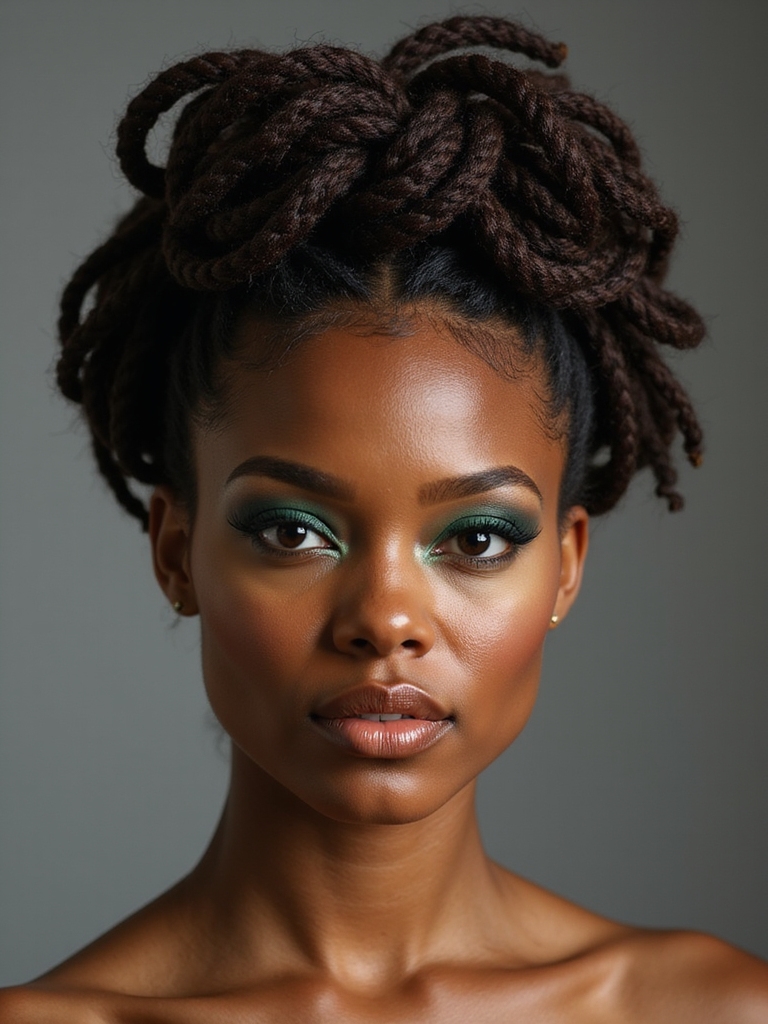
Sections of locs interlace over and under each other across the back of the head, building a woven texture that photographs like sculpture rather than a hairstyle.
What Makes This One Hold Its Shape
This is special-occasion, appointment-only work almost without exception, closer in complexity to a formal styling session than anything done at home the morning of an event.
Freshly washed, fully dry locs weave far more smoothly than damp ones, and even, mature lengths hold the pattern best; a very new set may not yet cooperate with the structure.
The Faux-Hawk Pin-Up
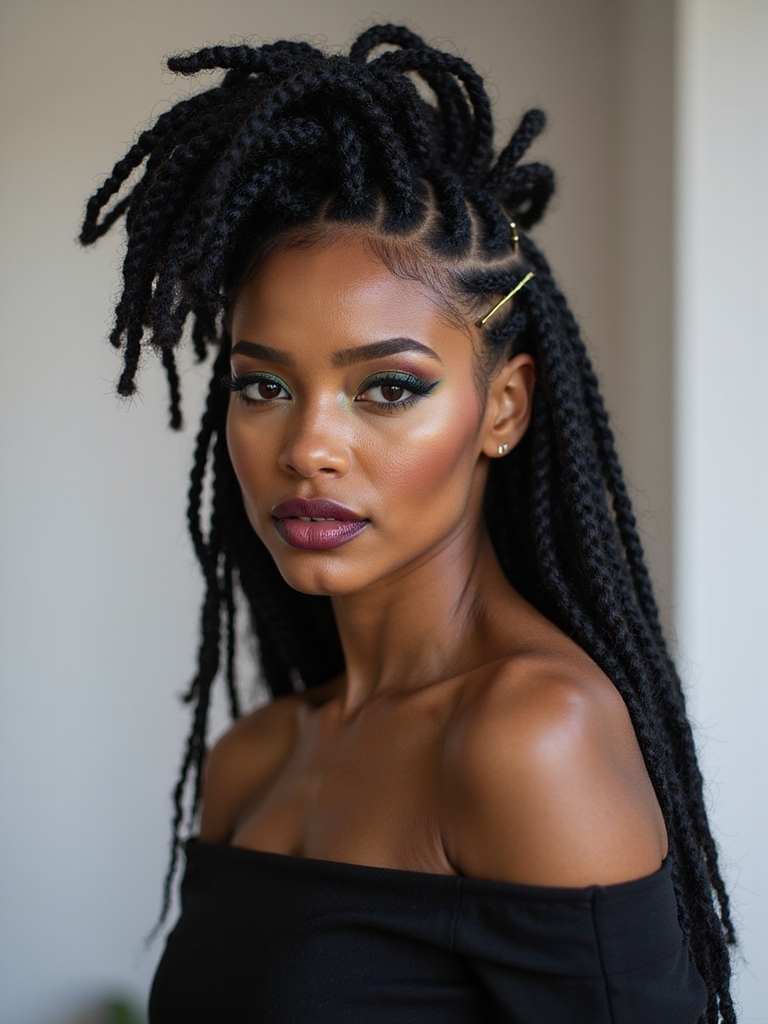
Pinning the sides flat and lifting the center locs into a raised ridge produces a faux-hawk: unmistakable, modern, and considerably louder than a plain bun.
- The sides stay pinned rather than gathered tight, which keeps most of the style low-tension.
- The raised center can pull if it’s over-secured, so a looser hold at that one point matters.
- Suits anyone comfortable letting the hair lead the room, from concerts to creative shoots.
The Rosette Bun Cluster
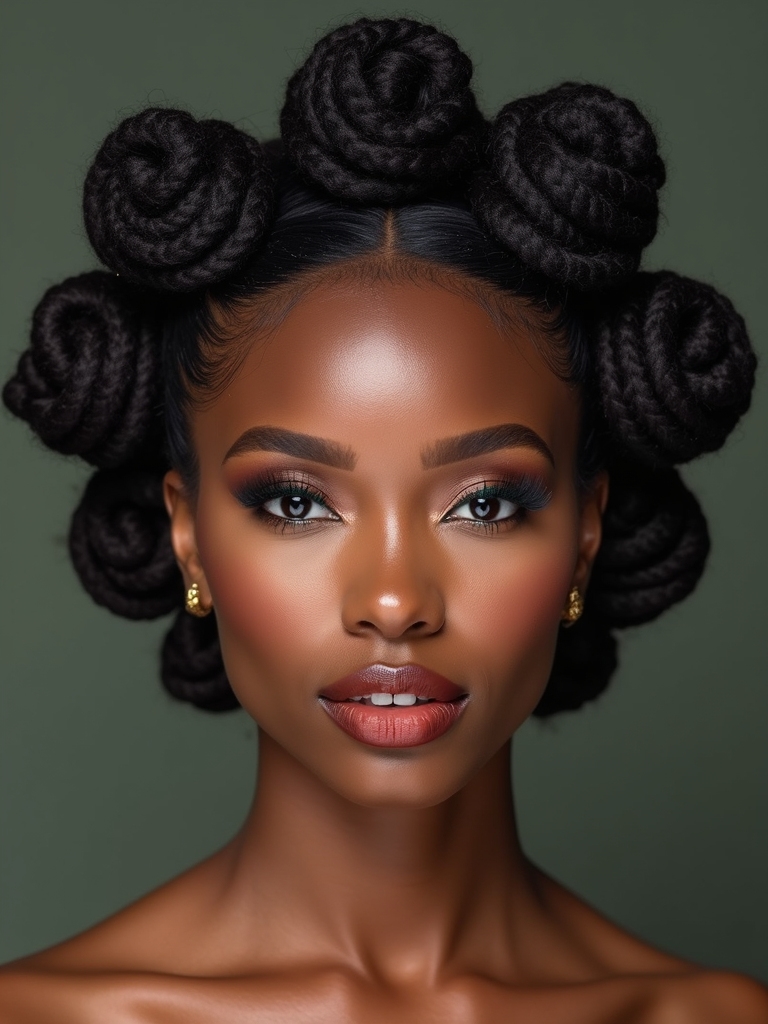
Coiling the set into several small buns arranged like rosettes turns a single gathered style into something with real pattern and personality across the whole head.
Why Several Small Buns Beat One Big One
Spreading the weight across multiple anchor points, rather than one heavy gather, tends to feel gentler than a single large bun carrying the same amount of hair.
It photographs with texture and reads as festival-ready rather than corporate, which makes it a favorite for events built around self-expression.
🅰️Crown-height gather
Polished and quick, but the front hairline carries the most pull. Best kept to occasional wear rather than every day.
🅱️Nape-level gather
Just as tidy, with far less tension on the hairline. The natural default for daily or extended wear.
The Off-Center Top Knot
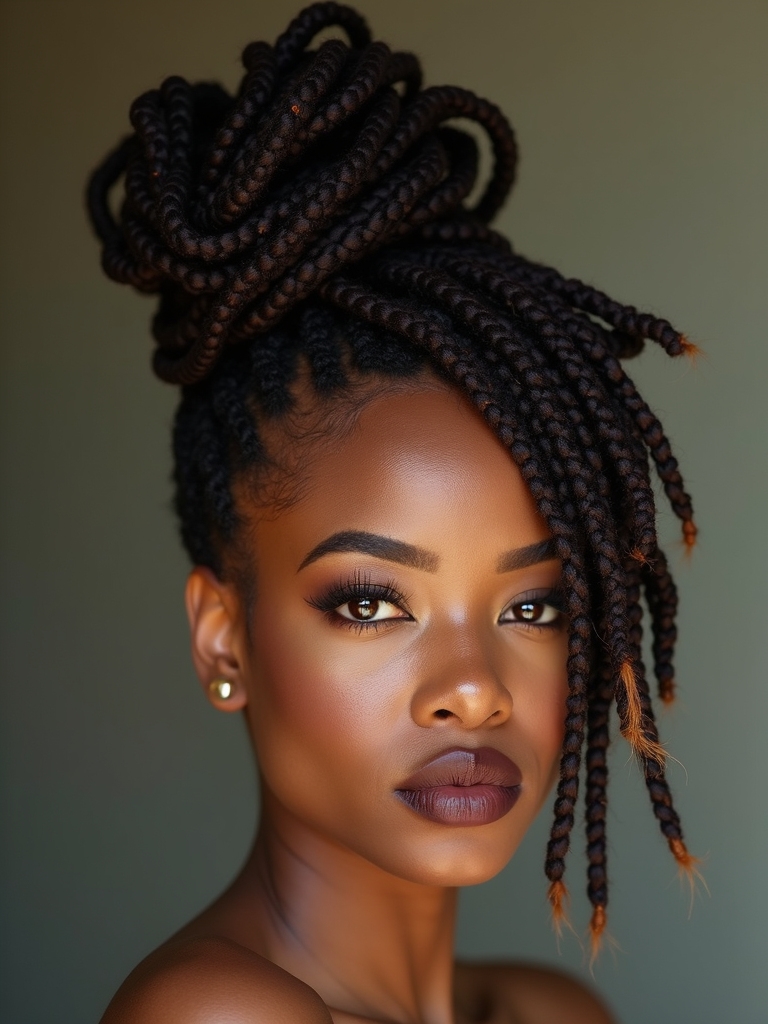
Shifting a simple top knot away from dead-center turns a standard style into something that reads as considered rather than default, without asking for any extra skill.
The asymmetry softens a center part that can otherwise look severe, suiting a broad mix of face shapes precisely because it breaks up a straight vertical line.
As a small side benefit, moving the placement off-center also eases the pull away from the single most tension-sensitive point at the very crown.
The Rope-Twist Crown
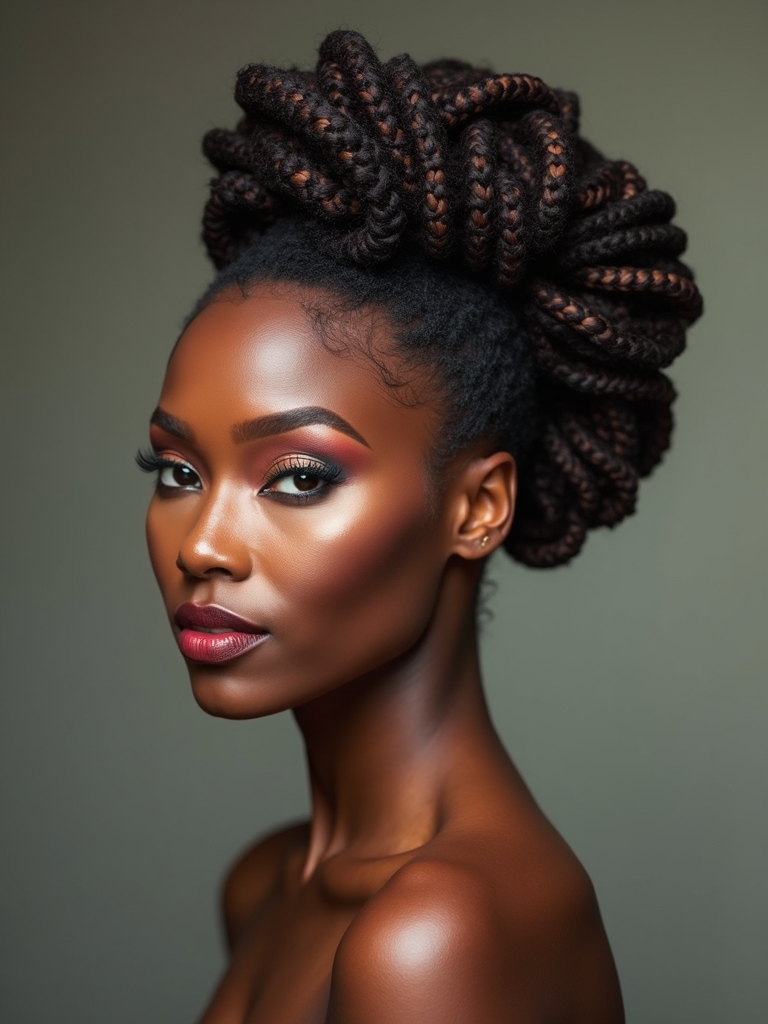
Twisting two or three locs together into rope-like cables before coiling them adds a defined, textured surface that a plain, single-strand coil simply doesn’t have.
One Technique, Two Very Different Moods
The cables hold their structure for days once pinned, even though the initial twisting takes a bit longer to set up than a straightforward gather.
Coiled low, the look reads understated; coiled high, the same technique turns considerably more formal. Either way, undoing the twists slowly at takedown protects the loc body from unnecessary stress.
The Sculpted Petal Bun
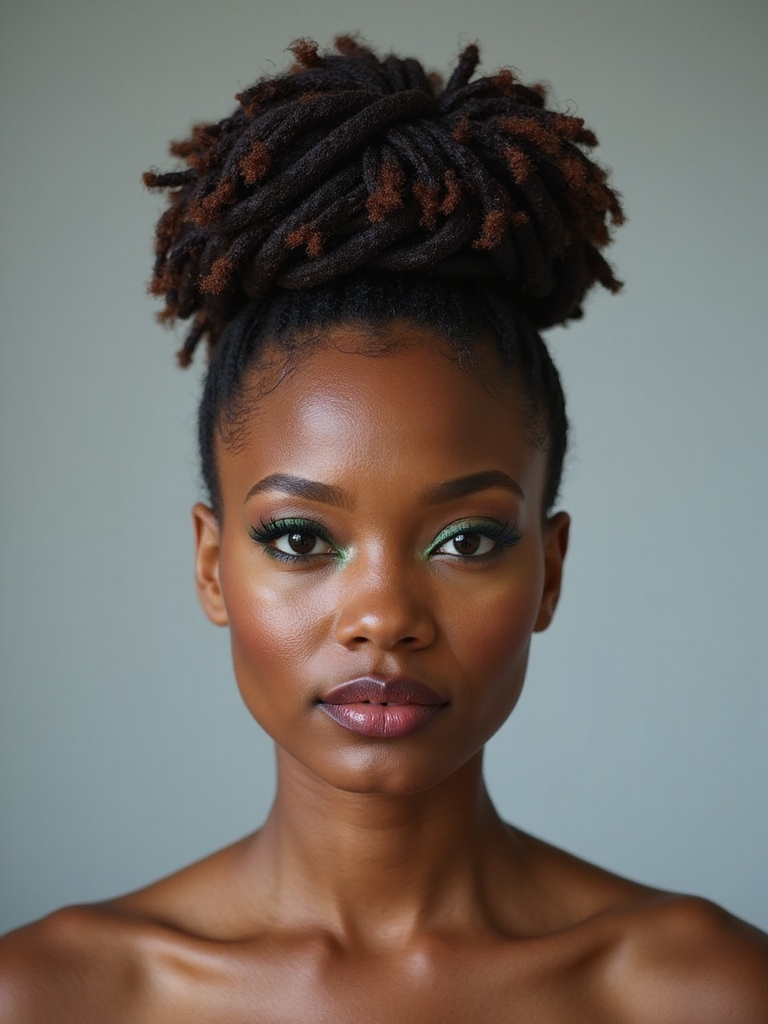
Folding and pinning sections of loc into flat, rounded petal shapes builds a bloom-like form, usually settled at the nape or crown, that uses the locs themselves as the material rather than any added piece.
- Each petal is a folded section pinned flat so the curve sits close to the head.
- Several petals together, layered slightly, build the full flower shape.
- Well-locked, mature sets hold the folds far more reliably than a newer, less settled set.
Which updo actually fits the occasion at hand?
1A formal event with photos involved
The sculptural crown or the braided halo both hold up under a camera and a long night.
2A regular workday
The high bun, the low chignon, or the minimalist knot ask for the least fuss and the least strain.
3Somewhere between the two
The side-swept roll or the rope-twist crown dress up or down depending on how they’re finished.
The Gold-Cuffed Twist
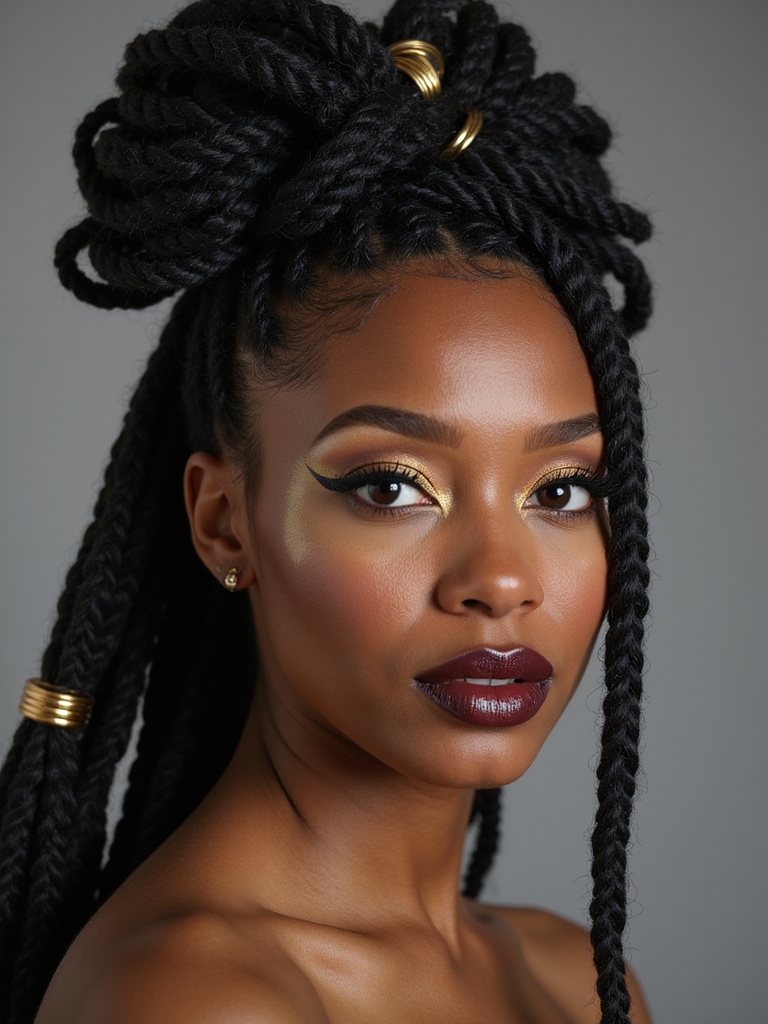
Metal cuffs added to a twisted updo bring both shine and history to the style, since adornment on loc’d and braided hair traces back through generations of West and East African tradition.
- Cuffs sit best positioned toward the top of the updo, where the added weight has less length left to drag.
- Spreading a few cuffs across separate locs distributes the weight; stacking several on one section concentrates it instead.
- A handful of statement pieces generally reads cleaner than many small ones scattered everywhere.
The Minimalist Low Knot
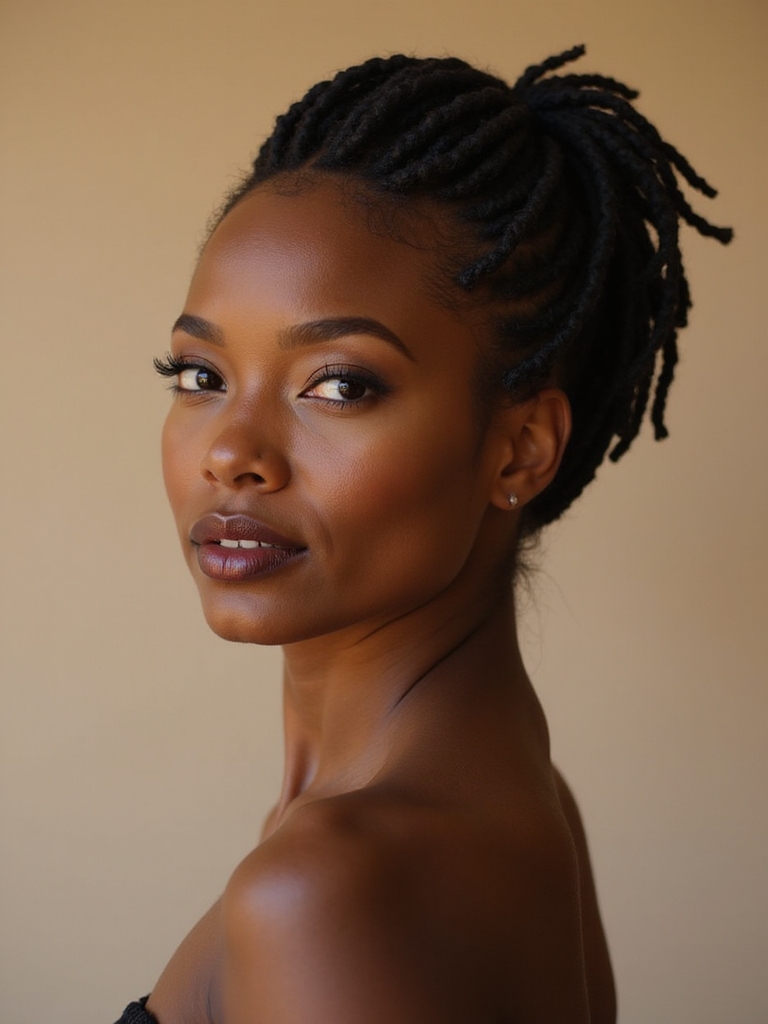
Sometimes the plainest option is the strongest one. A single low knot at the nape with one sharp, clean part says everything it needs to without a single extra flourish.
Of everything on this list, it asks the least of the hairline, since the anchor sits so low it barely registers as tension at all. It also takes almost no time, closer to two minutes than twenty.
This is frequently the style stylists recommend after a stretch of tighter, higher styles, purely so the front edges get a real rest before the next event.
Sixteen Ways to Wear the Same Crown
Every style above is built on the same underlying fact: locs already hold their own shape, so an updo is less about forcing hair into place and more about deciding where to rest it. Tension, not the updo itself, is the only real variable to manage.
Choosing well usually comes down to two questions worth asking honestly: how much time is there before walking out the door, and how the hairline has been feeling lately. Answer both, and the right style on this list becomes an easy pick rather than a guess.
Don’t Miss These