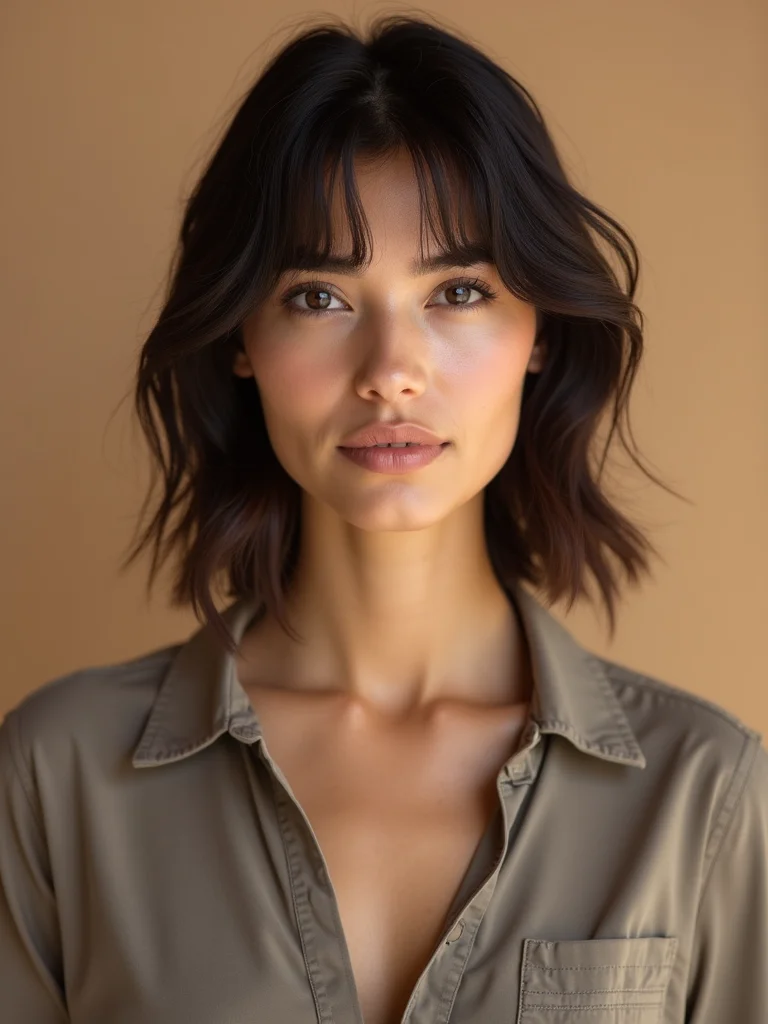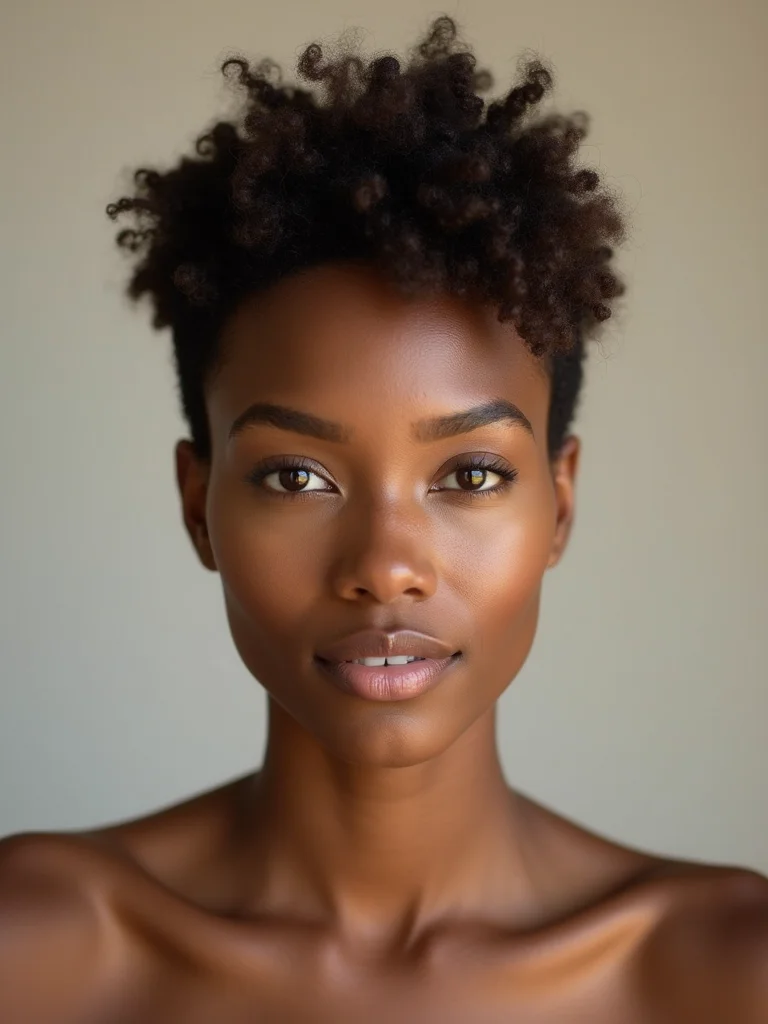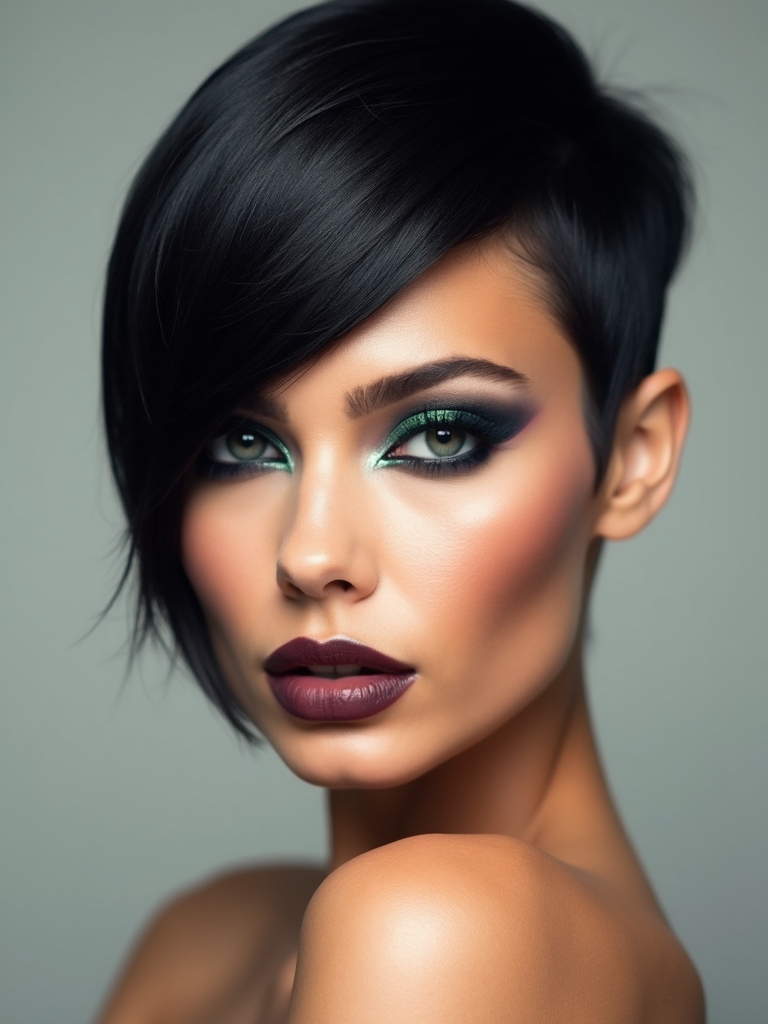
A symmetrical pixie plays it safe: even on both sides, tidy, predictable. Asymmetrical pixie cuts break that symmetry on purpose, leaving one side longer than the other, and that single choice is what lets the cut sit right on the line between cute and bold.
The look everyone screenshots is the easy part. Getting a version that works on your hair is where the real decisions live, because the same diagonal behaves completely differently on fine, thick, curly, and wavy hair. This guide covers those choices: how the cut is built, who each variation suits, and how to keep it sharp. For a gallery of finished looks instead, the asymmetrical pixie roundup has those.
The Basics, Answered
What is an asymmetrical pixie cut? A short crop cut deliberately uneven, with one side left longer than the other, usually swept across the face for a diagonal line.
How is it different from a regular pixie? A standard pixie is balanced side to side; the asymmetrical version builds in a length difference, from a subtle few centimeters to a dramatic shaved-to-long contrast.
Does it work on my hair type? Yes, but it’s cut differently for each. Fine hair gets weight left in for fullness, thick hair gets debulked, and curly hair is cut dry so the coils fall where you want them.
Setting Up the Long-Side Diagonal

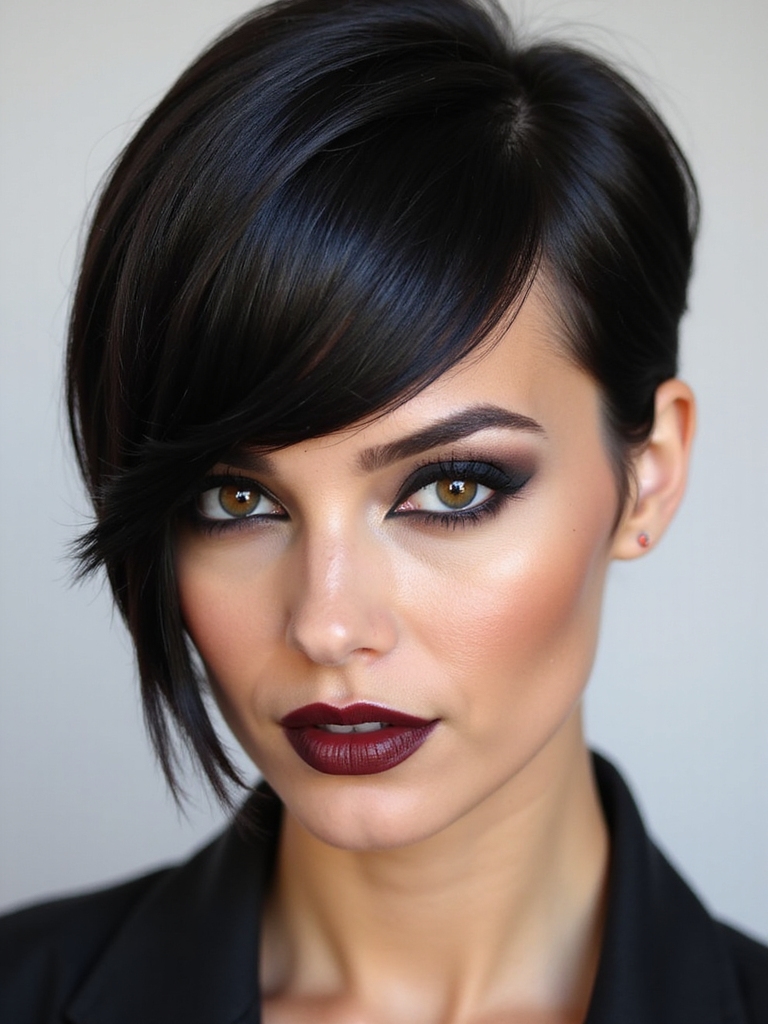
The engine of the whole cut is the diagonal: a longer piece on one side that travels down and across the face while the other side stays cropped. That single sweeping line is what your eye follows, and it is where a good stylist spends the most attention.
How steep you make that diagonal sets the mood. A gentle slope reads soft and pretty; a steep one, dropping from a very short side to a jaw-length sweep, turns graphic and bold. Deciding the angle of that line is the first real choice, and everything else, texture, fringe, color, builds on it.

The Sharp Diagonal Crop

At the bold end sits the sharp, graphic crop. Here the diagonal is cut clean and precise, with a defined edge and a strong contrast from short side to long, so the whole shape looks sculpted and intentional. It is architecture for your head.
For the Bold
This version leans on precision, which means it needs a skilled hand and healthy hair to hold that crisp line. It rewards straight or lightly waved textures, where the edge stays visible and doesn’t get lost.
It is also the most striking way to wear the cut, the one version that functions as a real style statement. If you want people to notice the haircut itself, this is the one to ask for.
The Soft Side-Swept Version

At the gentler end, the soft side-swept crop keeps the same idea but rounds off every edge. The longer top sweeps across in a soft curve, the length difference is modest, and the whole thing comes across flattering and easy to wear.
For Easing In
It gives you the diagonal’s slimming effect at a whisper. It suits nearly every face and setting, and that broad wearability is exactly what keeps it the most-requested take by a wide margin.
It also makes the easiest first step down from longer hair, since the sweep gives you a familiar piece to style while the back and sides go short. Ease in here and go bolder later if you catch the bug.
Choppy, Textured Cutting

Texture is a cutting decision as much as a styling one. Choppy, point-cut layers break the shape into separated pieces, so the asymmetry looks broken-in and casual, all separation and grit. How the stylist builds it:
- Point-cutting into the ends removes weight and creates the piecey separation.
- The longer side gets more texture so it moves, while the short side stays cleaner.
- It’s forgiving to grow out, since a broken edge blurs softly as it lengthens.
Cutting It for Fine Hair

Fine hair and the asymmetrical pixie are a natural match, because the cut can build the fullness fine hair lacks. The trick is what the stylist leaves in, not what they take out. What to ask for:
- Keep weight and length on the longer side, since that mass is what translates into fullness.
- Add short, stacked layers up top for height fine hair can actually hold.
- Skip heavy thinning, which only makes thin hair look thinner.
On fine hair, an asymmetrical pixie is the closest thing to instant volume. The weight you leave on the long side does the work a whole bottle of mousse can’t.
Cutting It for Thick Hair
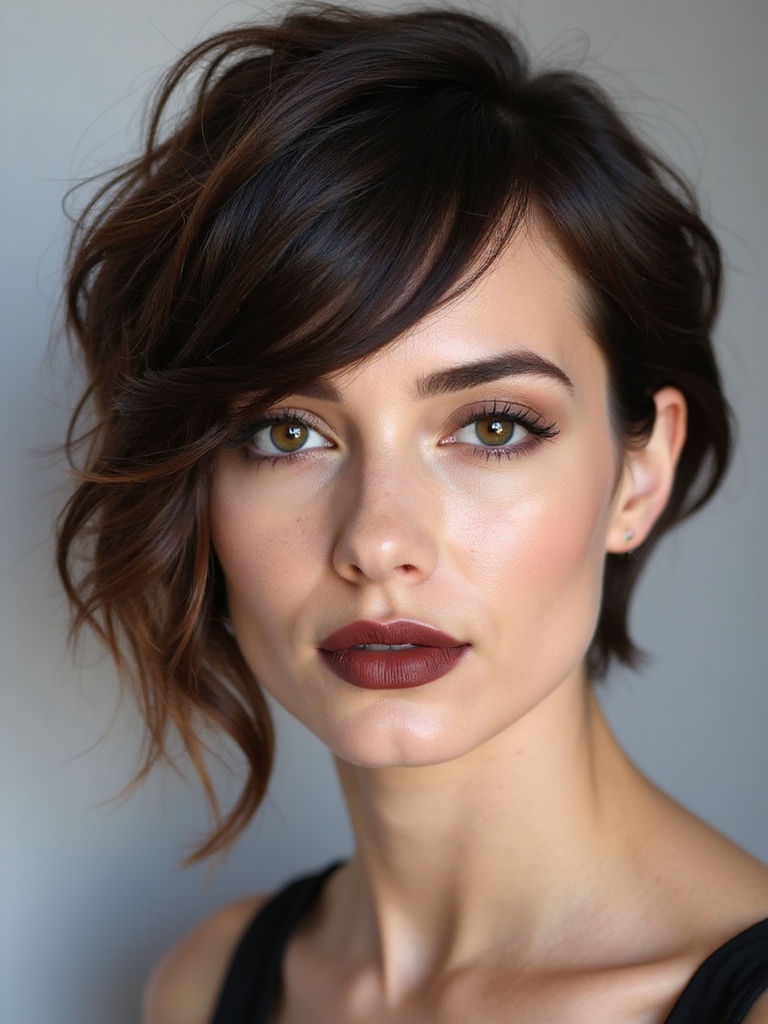
Thick hair brings the opposite challenge: too much bulk, which can turn a crop into a helmet. Here the cut is about removing weight so the shape lies close and the diagonal stays sharp. What makes it work:
- Internal debulking thins the underneath so the outline sits flat and close.
- The density actually helps hold a sharp, precise diagonal edge.
- Leave enough weight on the long side to keep the swing while losing the bulk.
The Curly Asymmetrical Pixie
Curls bring their own logic, and cutting an asymmetrical pixie into them is a specialist job. The golden rule is to work dry, shaping one coil at a time, because coils spring up far shorter than they sit wet, and a diagonal planned on wet hair lands in the wrong place once it dries.
Done well, the natural volume of the coils becomes the asymmetry, piling high on the longer side and cropping close on the short one. A stylist who knows a curly pixie will cut with your pattern so the shape falls where you want it, defined and springy and full of life.
A Wavy, Worn-In Edge

Wavy hair gives the asymmetrical pixie a soft, worn-in edge with almost no effort, since the natural bend adds movement the cut can lean on. The waves gather on the longer side and blur the line just enough. How it’s handled:
- The cut leaves length on the long side so the wave has room to show.
- Light layers encourage the bend without frizzing it out.
- Air-dry with a little cream and the worn-in texture styles itself.
A few cutting words that come up in the chair:
📖Point-cutting
Cutting into the ends at an angle to remove weight and create soft, piecey separation instead of a blunt line.
📖Debulking
Thinning out the hair underneath so a thick crop lies close, without changing the outer shape.
The Bob-Pixie Blend

Stretch the long side down toward the jaw and the pixie starts blending into a bob. This bob-pixie hybrid keeps a cropped back with a much longer front, so it wears like a pixie from behind and a bob from the front, a clever best-of-both.
It is the natural landing spot for anyone growing a crop out, or anyone who wants the boldness of a pixie with more length to play with. Treat it as a pixie-bob once the short side clears the ears, and the awkward stage disappears.
Deepening It With a Swept Fringe

A long, swept fringe exaggerates the diagonal more than any other single tweak, since it extends that longest piece right down across the forehead and cheek. It deepens the whole line dramatically. Why it’s such a common add-on:
- The long fringe stretches the diagonal further for more drama.
- It frames and softens the face where the crop meets it.
- It gives you a piece to style, sweep, or pin depending on the day.
| Face shape | Try | Why |
|---|---|---|
| Round | A steep, longer sweep | The strong diagonal adds length and breaks up width |
| Square | A soft side-swept angle | The curve softens a strong jaw |
| Long or narrow | More volume up top, gentler drop | Height and a shorter sweep keep it balanced |
The Micro-Fringe Contrast

The opposite move is just as striking: a blunt micro fringe, cut high on the forehead, set against a longer swept side. The clash of tiny bang and long sweep is graphic and fashion-forward. What to know:
- The blunt micro fringe is a bold, editorial statement all on its own.
- It puts the eyes and brows fully on display, so it rewards strong features.
- The longer side keeps the whole thing from feeling too harsh.
Two-Tone Color on the Diagonal

Color is a tool for drawing the eye down the diagonal. A two-tone treatment, a darker root or short side against a brighter long side, traces the asymmetry and makes the shape read even bolder. The cut and the color reinforce each other.
It doesn’t have to be extreme. A soft contrast adds subtle depth, while a hard line between two shades turns the whole thing high-drama, so you can pitch it wherever you like.
- A brighter long side pulls the eye along the sweep.
- A darker short side or root grounds the shape and adds depth.
- The harder the color line, the bolder the finished look.
“If you want the color to amplify the cut, ask your colorist to keep the brightest tone on the longest section. The eye chases the lightest, longest piece, which makes the diagonal look even stronger than the scissors alone made it.”
Adding an Undercut or Shaved Detail

For maximum contrast, take the short side all the way down. An undercut or a shaved detail buzzes one side or the back close, widening the gap between short and long as far as it goes. It is the boldest structural choice on offer.
It also hides on demand: worn down, the long side can cover the shave; tucked back, it shows it off, sometimes with an etched line. Anyone drawn to it should study a full undercut pixie first, since a shaved section needs frequent upkeep to stay crisp.
- The buzzed side maximizes the short-to-long contrast.
- You can conceal or reveal it depending on how you wear the long piece.
- It grows back slowly, so it’s a real commitment worth thinking through.
The Platinum Asymmetrical Pixie

Take an already-sharp cut and bleach it platinum, and the diagonal all but glows. A cool, near-white blonde throws the shape into high relief, so every line of the crop reads crisper. Bold cut, bold color, doubled impact. What it asks of you:
- Regular toning to keep the platinum cool; see icy blonde for the routine.
- Bond-building care, since the lift is hard on hair, though a crop means less to treat.
- Frequent trims, because pale color shows every soft or uneven edge.
Going Full High-Contrast

The boldest version of all simply maxes out every variable at once. A high-contrast asymmetrical pixie pushes the length difference to its limit, one side cropped or shaved, the other long enough to sweep past the jaw. It is the cut turned up to full volume. How to pull it off:
- Combine a shaved or micro-short side with a long, jaw-length sweep.
- Add color or an etched detail to push the drama even further.
- Commit to the upkeep, since this much contrast blurs the fastest.
Maintenance & Care
An asymmetrical pixie is only as good as its last trim, because the whole effect rides on that precise difference in length. On the sharper, shorter versions, plan on a shape-up about every four weeks, roughly $40, to keep the diagonal and any shaved detail crisp. If you’re in the middle of growing it out, you can push the gap longer and just neaten the short side between visits.
Day to day this ranks among the quicker cuts to manage. Most versions ask for nothing more than a dab of paste or a quick rough-dry for lift and separation, and the short length means product goes far. Keep the longer side and any bleached color in good condition with the right conditioner and the odd bond treatment, and finish however suits the look you chose, matte and piecey or smooth and swept.
Asymmetrical Pixie Cut Questions
?How do I ask my stylist for an asymmetrical pixie?
Bring a photo and talk about the diagonal specifically: how much longer you want one side, how steep the sweep, and whether you want a shaved detail. Mention your hair type too, since the cut is built differently for fine, thick, and curly hair. The clearer you are about the angle, the closer the result.
?Which face shapes does an asymmetrical pixie suit?
Most, with small adjustments. A steeper, longer diagonal flatters round faces by adding length; a softer sweep suits square faces by easing the jaw; and keeping more volume on top balances a long or narrow face. The asymmetry itself is broadly flattering because a diagonal line is more slimming than a straight one.
?How often does an asymmetrical pixie cut need trimming?
The sharper versions want a shape-up about every four weeks to hold the contrast and any shaved section. Softer, longer takes can stretch further, and mid-grow-out you can simply keep the short side neat while the long side catches up. The upkeep tracks how crisp you want the line.
?Can an asymmetrical pixie work on curly hair?
Yes, as long as it’s cut for the curls. That means shaping it dry, coil by coil, so the stylist accounts for how much each curl springs up once it’s dry rather than while it’s stretched wet. Cut this way, your natural volume becomes the asymmetry, falling long on one side and close on the other, and it looks fully intentional.
Which Diagonal Is Yours?
What makes the asymmetrical pixie such a rewarding cut is how much of it you get to decide. The angle of the sweep, the texture, the fringe, the color, and the way it’s cut for your particular hair all stack up into a shape that can be barely-there soft or all-out bold, and every one of those dials is yours to set.
So think less about copying a photo and more about the choices behind it: how steep a diagonal you want, and how much upkeep you’ll happily give it. Get those two right with a stylist who listens, and the rest falls into place. Where on that scale from cute to bold do you want to land?
More Ideas Here